Reptile & Amphibian Forums

Welcome to kingsnake.com's message board system. Here you may share and discuss information with others about your favorite reptile and amphibian related topics such as care and feeding, caging requirements, permits and licenses, and more. Launched in 1997, the kingsnake.com message board system is one of the oldest and largest systems on the internet.

Click here to visit Classifieds
Click for 65% off Shipping with Reptiles 2 You

NA Wood enclosure tips?

Horridus Jun 22, 2007 11:40 AM

If this has been covered before please point me in the direction, I've done a search but failed to find anything regarding the info I am looking for. If there's any websites you guys know of that I may not have found showing plans/examples of outdoor semiaquatic turtle enclosures please let me know about those as well.

I have a group of eight NA woods that I am building an outdoor enclosure for. What I'd like to know, from those of you who are sucessful with them is the following, what kind of barriers are you using around the enclosure? How much water (percentage of enclosure)? Do you run a filtration system i.e. koi pond style or do you just have a still pond for them? Plants that you have found to do well as cover for them?

Being in GA I plan to overwinter the guys outside similar to the way my friend does his box colony, do any of you provide outdoor hibernaculum for yours or do you bring them inside? Any and all help/tips/advice/concerns are welcome and appreciated. Also any photos of your enclosures would be great. I have kept several species Malaclemys, Pelusios, Sternotherus, and some other odds and ends before but have always kept them inside in stock tanks. I'd would rather have these guys outside so my children and I can see them in a more naturalistic way and perhaps see some more natural behaviors as well. Thanks and sorry to be so long winded.

Replies (9)

jgSAV Jun 29, 2007 08:09 AM

Be glad to help, but a couple questions first. What age are the Wood Turtles currently? Are these captive-bred or long-term captives you aquired (hopefully not wild-caught as they are protected throughout their range)? What part of Georgia do you live in? How much space do you have to be able to convert to Wood Turtle habitat?

Horridus Jun 29, 2007 11:56 AM

These are all captive hatched from a group that dates back 30 years. Were it not for the special circumstances of these particular animal's history and lineage, I wouldn't be working with them. There's too many questionable animals out there, and I didn't want to start with hatchlings. Unfortunantly, as a vendor over the years I've had plenty of opportunities to purchase adults that were "Captive Bred" before, had to respectfully decline. At the moment four of the guys are 5" and the larger four are 7.5"....the Atlanta area, and
probably 10 X 15' area max. I have found some excellent ideas at another site but would like to hear your input as well. Thanks.

jgSAV Jul 02, 2007 10:41 AM

Disclaimer-This may be long. Also the views I express are my own opinions and observations. They may contrast or may be congruent to those of other keepers, but I guess that is what can be good about these forums: keepers being able to share their own experiences, while learning from the experiences of others. Other Wood Turtle enthusiasts (Ken, dragoncjo, etc.)please chime in, as we can all learn from each other.

I have done field research and observations on G. insculpta and have cared for them in captive settings. I think we can agree that the basis for keeping any chelonian species in captivity is by understanding their natural habits, habitats, and interactions within their own and other species. I also believe that one of the main necessities in chelonian husbandry that does not get taken into account as strongly as the other husbandry necessities (lighting, filtration, temperature, food, etc.) is physiological well being, including stress factors. This particularly applies to Wood Turtles.

In both my field and captive observations of Wood Turtles I have found that 1. They need considerable amounts of space per turtle. Especially adult males who do not like to share area with other males. 2. Except during mating and hibernating congregations, they tend to be either solitary or found in very small congregations. In MY field experiences I have found no more than 3 Wood Turtles max in any one given stream pool outside of breeding/hibernation. It might be noted that when I have found a few per pool, they either consist of adults and sub-adults, a male and female, or a male fighting another male for rights to both a female and the stream pool.

Basically it comes down to space. Females can tend to get stressed when not given enough of their own space away from males, as males will find every aquatic opportunity to mount a female. Also, males can pose a threat to females by being over aggressive and/or holding them underwater too long. In addition males can be extremely aggressive to other males.

In a captive setting, I personally would go by NO LESS than 1 Wood Turtle per 4-5 sq.ft. of space. In the size parameters you are talking about 10-15 sq.ft this would equate to 3 adult Wood Turtles. In that size, a 1 male, 2 females ratio or 0 males, 3 females ratios would be most appropriate. Based on the equation, your 8 turtle colony would require at least an enclosure 32 x 32 ft. Preferably more. I am not trying to be discouraging just giving my truthful opinion.

As far as the enclosure goes, I think the three most important things to think about are the water feature or features, barriers (fallen logs, bushes, boulders, etc.) to break sight lines between turtles, and the enclosure wall.

Water - Cool, circulating or flowing water is a must, as these turtles naturally occupy clear-clearish streams and rivers for much of their time. In my opinion the best water feature for G. insculpta would be a lengthly stream featuring several deeper pools. Of course, this can be expensive, so at the minimum, a large pool with varying depths and circulating water. Wood Turtles are aquatic hibernators and breeders, being found in stream pools roughly 2 ft. or deeper during hibernation. (Breeding takes place in any depth of water, though shallower water is often recommended as more of an insurance policy for the safety of the female) Due to your living in the cooler Atlanta area, your Wood Turtles would need this deeper pool in which they will probably lay on the bottom or lodge themselves amongst underwater features such as rocks or driftwood snags during the winter months of the year.

Barrier - Place logs, boulders, hide-boxes, etc. to give more comfort to the individual turtles and to break sight lines. I would plant the enclosure with copious amounts of hardy small trees, shrubs, hostas, and any other hardy plant that both obstructs sight lines, provides shade and cover, and can withstand the trampling of adult wood turtles. You can also plant one area of the enclosure as a meadow or wet field to give various habitats and natural food resources. These turtles are like small tanks and will attempt to trample everything in their path. I had a friend who planted her G. insculpta enclosure with soft bodied plants, such as flowers, etc. only to have her two wood turtles lay waste to the entire enclosure in a short amount of time. Also, choose shrubs that offer hiding spaces and room to move about underneath them (ie. azaleas, rhododendron, yews, etc.) these will be more beneficial than such things as holly shrubs or blue spruce shrubs which offer very little movement underneath. Hostas are good plants to have in the enclosure as they are relatively sturdy, give shade, and are a favorite food of slugs and snails which the turtles will munch on.

Enclosure - I find the best enclosures for Wood Turtles are solid wood fences or barriers at least twice the length of the wood turle (7.5 in. wood turtle needs approx. 14-15 inch high barrier or more, or brick or concrete walls. Going back to the stress factor, having gaps in the enclosure where the turtles can see outside can lead to stress of them knowing their is a "world beyond their enclosure". I would definitely install a lip around top edge of the fence or barrier to deter them from trying to climb over the edge. Wood Turtles are excellend climbers so chain or wire fencing is no good. Also submerge either plastic or metal sheeting or stone slabs underneath the fencing to deter them from digging under.

As far as diet goes, they eat just about anything, but being naturally omnivorous, keeping a good variety of fruits, vegetables, and meats is best. They tend to eat out of the water, though may forage in the shallows and bottom for crustaceans, amphibian, and arthropod larvae.

Good luck! Let me know what you think! P.S. I am a fellow Georgian, living in Savannah.

-JG

steve fuller Jul 04, 2007 07:17 PM

Where raccoons, coyotes, dogs, etc. are present do you need to cover wood turtle enclosure? Thanks.

dragoncjo Jul 05, 2007 11:55 AM

Let me just say I agree 100 percent with what jigsav said. Wood turtles are a total step above any turtle as far as intelligence. They are the most aggressive turtle I've seen when it comes to bullying and mating. A group of eight turtles in a 10*15 cage would result in some carnage. A group of four at the most would be sufficient. While wood turtles are to me the most interesting turtle because of there puppy like friendliness, the are also a handful, and get bored very easy. They require almost constant stimuli to be satisfied. I'm not sure if your goal is to produce lots of eggs for a business of sorts, or simply pets for you kids. If it is the later I would go with one male and two females. Even if you get more females one male will probably dominate the rest. Also in the wild I've see dozens of wood turtles, but very few females. I trout fish so I see mostly adult males along and in streambeds. My suspicion is females get the hell away from the stream to avoid aggressive males, heading into upland forest.

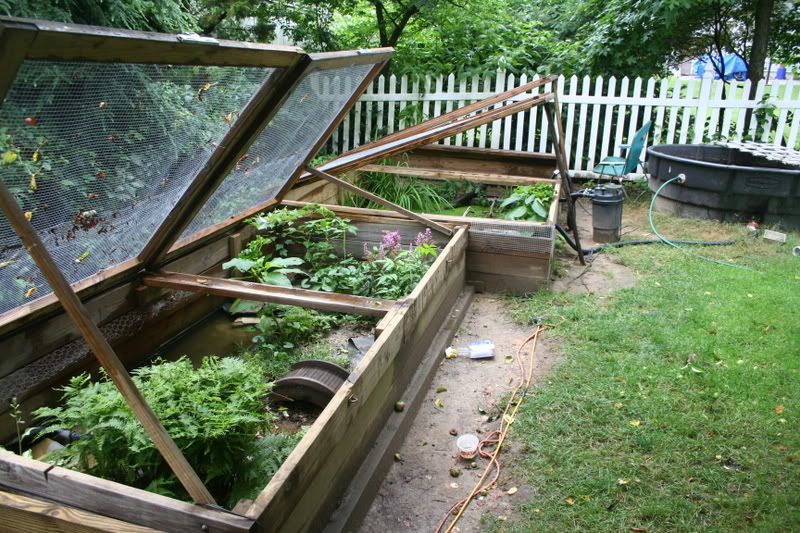
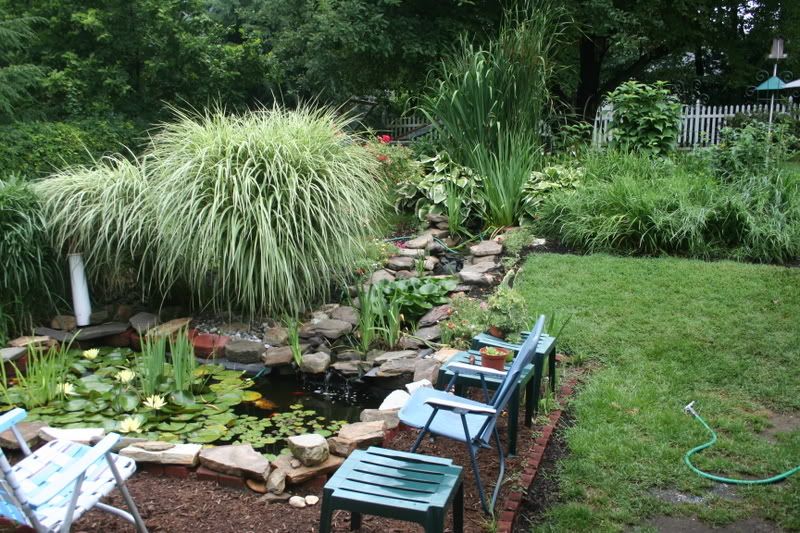
As for the enclosure make sure it has a lid on it. Wood turtles tend to sleep in water at night making them highly vulnerable to raccoons. You don't want to come out in the morning to a wood turtle on its back with its legs chewed off....not a good feeling. I would make to cage 65% water, 35% land. Land in a captive environment is really only used for foraging, getting away and basking. Most time is spent in the water. A stream flowing in to a good size pond is really the ultimate setup. A nice way to do this is use a preformed pond and place it higher up, then use some pond liner for a stream and a main pond at the end. The depth of the pond can be a 12-24 inches, but make sure the sides are sloped with plenty of things to climb onto. Hostas are great plants for land along with lots of ferns. To me ferns are the best as they don't take up lots of space but branch out as they get higher. Tomatoe, strawberry, and blueberry plants are good as well and will encourage foraging. As for hibernating the pond should be deep enough so they can hibernate at the bottom, mud and leaves are good at the bottom. Def. make sure you have a high powered pump and filter. As unclean conditions will cause further stress on the animals. Here are some pics of my two enclosures, I only have one sub adult wood turtle, and two juvies, but I've been studying this guys since I was a teenager in the wild so most of my info should be accurate. Good luck
30*10 fully enclosed, 10*10 land, 20*10 water features.


Here is my old enclosure, which was a fenced in backyard. Unfortunately a raccoon found its way in too much, now it is just a fish pond but still a great wood turtle set up,

Horridus Jul 10, 2007 12:01 PM

My intention is to keep these guys healthy and see what we (my wife, children and myself) can learn from them while enjoying them as captives. If I am lucky enought to reproduce them...great but it's not a priority. The majority of my collection aren't exactly child friendly species so getting the girls involved in the herps required going outside my wheelhouse so to speak. They enjoy the dragons as does my wife, but I have long wanted to have a nice outdoor setup for either Gulf Coast Boxes, Ornate Diamondback Terrapins, Spotteds (illegal here in GA), Blandings, Podocnemis unifilis, or Geoclemys hamiltonii I realize that some of these species are difficult and or protected, they just happen to be the species that "flip my switch" LOL. Woods happen to be the first ones that have come into my possesion as legal, healthy, captive examples so they will be the ones that I work with...as it seems space wise....exclusively. Thank you for the photos and plant suggestions, they have been very helpful. What brand/model pump do you use?

Thanks again

Horridus Jul 10, 2007 11:22 AM

JG

Thank you for the information. You have changed my plans substantially. I was planning on building two enclosures, the other was going to be for Gulf Coast Box turtles (another favorite that I will work with again sometime in the future) but after reading your thoughts and the thoughts of some others I have decided that both will house groups of four woods each for the time being and I will wait until I can provide another enclosure to obtain the boxes. Also, I don't think I mentioned this before but the number of turtles I keep will depend on the sexes I end up with. I hope to have 2.4 out of the group of 8, and would keep 1.2 in each enclosure. But I doubt I will be that lucky and will be happy if I can get 2.2 out of these. Can you provide any insights into sexing smaller woods? I am seeing some behaviors out of two animals in particular that lead me to believe they are males. But the guy from whom I got these said in his experience accurate sexing is very difficult, sevral times he was fooled by animals he was "sure" were one sex or the other. Thanks again for taking the time to type all that out for my and others benefit.

Horridus

jgSAV Jul 13, 2007 11:13 AM

Glad the information could help! G. insculpta is a very rewarding turtle.

As far as sexing goes, maturation may be something you gradually notice or may often be noticed after a hibernation. I have seen turtles on the edge of adulthood go into hibernation and after emergence in the spring, have their puberty hormones kick into full gear and experience a rapid expression of the secondary sex characteristics. Based on the size of your animals they should be getting close, if not only a year or few away, given a regular healthy diet.

Note for concaving in the males plastron and a migration of the cloaca away from the base of the tail coupled with swelling in this same region. These will be the first sex characteristics to express themselves. A mature male will exhibit a larger/wider head, longer/thicker tail, and is often but not always more highly domed and/or elongated. I have also noted minute differences in the eyes of males and female which is hard to descibe without visually comparing two.

Females tails can be quite long as well, but won't attain the length or girth nor experience this cloacal migration from the base. Try not to mistake natural tail size maturation in females for the swelling base found in males. In the wild females are very frequently found with only a nub for a tail due to aggression by males or predator attacks.

In the wild I have never found a female with concavity in the plastron. They may even be slightly convex. There of course may be exceptions though. One exception that may occur due to captivity is that sometimes in captive settings a minor calcium deficiency or rapid growth habit coupled with this can give shell growth results one would not find in wild animals. These abnormalities may cause slight concaving in females who would otherwise have grown normally. This is one reason why a correct and varied diet, UVB lighting, and adequate amounts of calcium are necessary.

One more thing we didn't go over as far as housing. Females can occasionally be aggressive towards one another as well, normally not to the severity of males though. This is just something to note so you can watch out for as well when housing multiple females in the same enclosure. An aggressive female may calm down or may meed to be removed from the group if she doesn't, which like male aggression can lead to stress in the other animals.

Good luck!

-JG

Horridus Jul 13, 2007 02:44 PM

Once again, I thank you for the information. If you ever decide to work with Southeastern crotalids....shoot me an email

Site Tools