wondering if these are somewhat common? Do they stay this color?


-----
The early bird may get the worm, but the second mouse gets the cheese in the trap!
Welcome to kingsnake.com's message board system. Here you may share and discuss information with others about your favorite reptile and amphibian related topics such as care and feeding, caging requirements, permits and licenses, and more. Launched in 1997, the kingsnake.com message board system is one of the oldest and largest systems on the internet.


wondering if these are somewhat common? Do they stay this color?
-----
The early bird may get the worm, but the second mouse gets the cheese in the trap!
Nice snake... If you kept the animal it'll be interesting to see what it looks like when it sheds out. That animal may be that color, or it might be colored like that due to pigments picked up from the mud etc that it lives in.
I had just the opposite happen to me a few years ago... Picked up a "typical" muddy cottonmouth, had it in captivity for a presentation animal to show people what they normally look like... It shed out and looked like this.
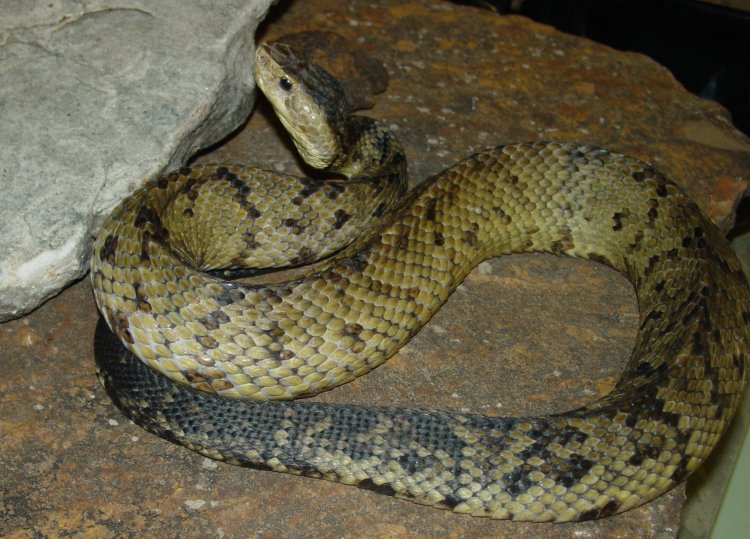
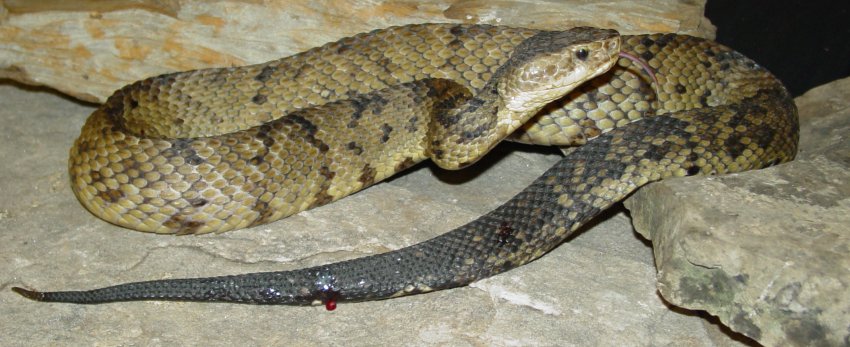
It seems to be getting more yellow as it ages.
Just for grins... here is a lil western cotton from a few years back. Around here, a lot of the western cottonmouths are very small. There are populations where a 3 footer is a very sizable animal. This animal was just a few centimeters short of record size for western cottonmouths (and a few people on here might get a laugh out of how silly I looked a few years back).

That’s hypomelanistic. I don’t know how big it is, but the tail isn’t bright yellow, and there’s no real trace of juvenile pattern, so I would guess it is going to stay that color, or at least never turn out like a normal. It would be of value for breeding into some of the other moccasin morphs showing up lately.
wow thats an awsome colored piscivorus ive been looking in my area for cottons but none so far
that looks like a typical cotton with tons of dirt in the scales. you can totally wet him and probably see some pattern and when he sheds, he'll probably look a bit black/green then fade to mostly green after a few sheds.
i've seen them look yellowy white depending on the type of soil they are in. in the summer, if the water drops a bit, they tend to get a lot muddier looking.
she was deffinately gravid too. Not legal to keep ANY native snakes here so i didn't chance it. You can't even keep honduran milks! I found her with 2 others in about a 5 foot radius. The others looked "normal". Just curios. Thanks again
-----
The early bird may get the worm, but the second mouse gets the cheese in the trap!
Help, tips & resources quick links
Manage your user and advertising accounts
Advertising and services purchase quick links
