Reptile & Amphibian Forums

Welcome to kingsnake.com's message board system. Here you may share and discuss information with others about your favorite reptile and amphibian related topics such as care and feeding, caging requirements, permits and licenses, and more. Launched in 1997, the kingsnake.com message board system is one of the oldest and largest systems on the internet.

Click for 65% off Shipping with Reptiles 2 You
https://www.crepnw.com/
Click here for Dragon Serpents
Shane_OK Nov 13, 2007 01:19 AM

Last May, I spent three exceptionally relaxing weeks in Japan. It wasn’t a herping vacation, but I spent quite a bit of time in the field. I hope most of you have a high speed internet connection……

This report will deal with the endemic “ratsnakes.” There are three ratsnakes that occur on the main islands of Japan. They are quite different animals, from habits to morphology. As far as I know, considering current taxonomy, only one of them, the Japanese Forest Ratsnake (Euprepriophis conspicillatus), has been split from the great lump of Elaphe.

The four main islands of Japan:
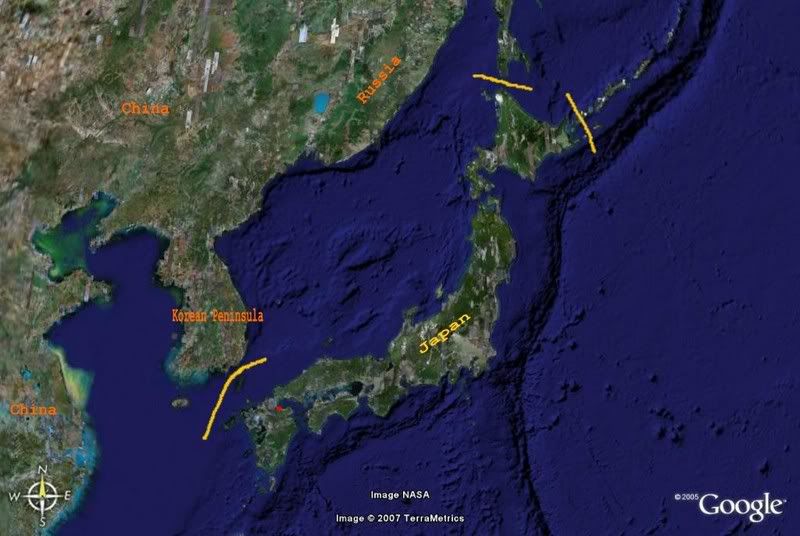
I herped the area of northern Kyushu that is marked with a red dot.

Here are some typical habitat scenes to give you a feel for the area. This first scene was taken from the mountains, looking out toward the ocean:
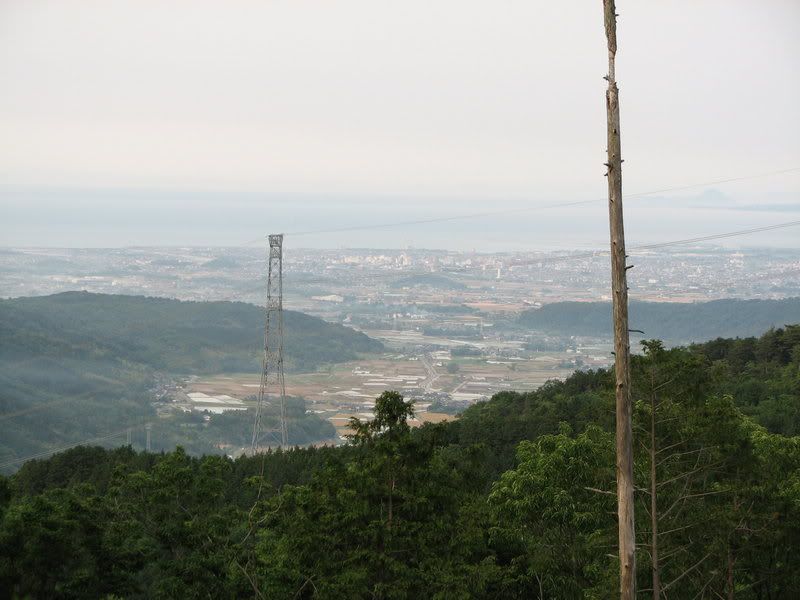
A closer view:
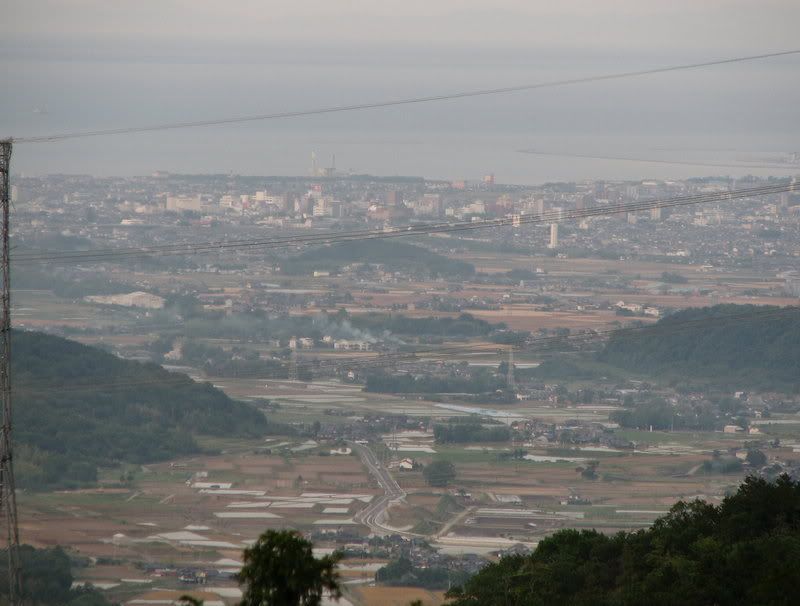
The flatlands are predominately used for agriculture, mainly wheat and rice in the area that I herped. In that scene, there is a moderate sized coastal city. Notice the road in that picture. It leads from the flatlands, and then follows a stream valley to higher elevations. As the valley narrows, so does the useable land for agriculture:
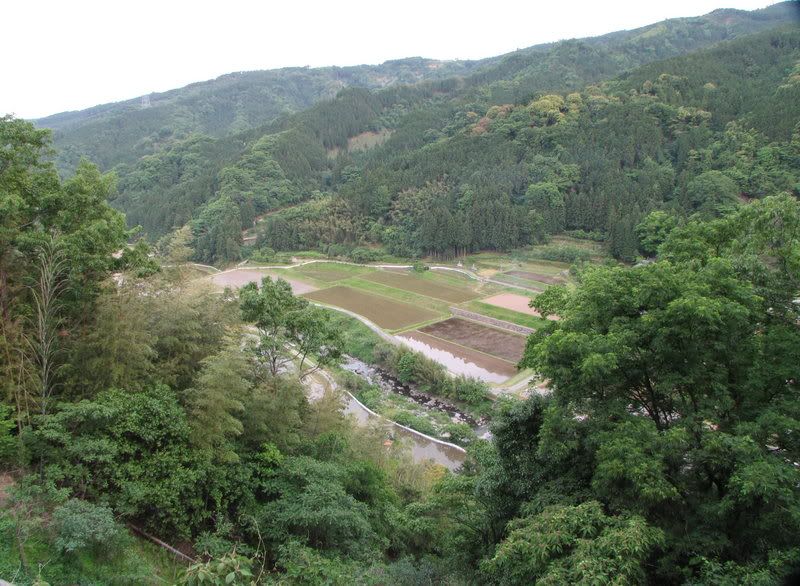
The upper sections of the valleys are where I preferred to search.

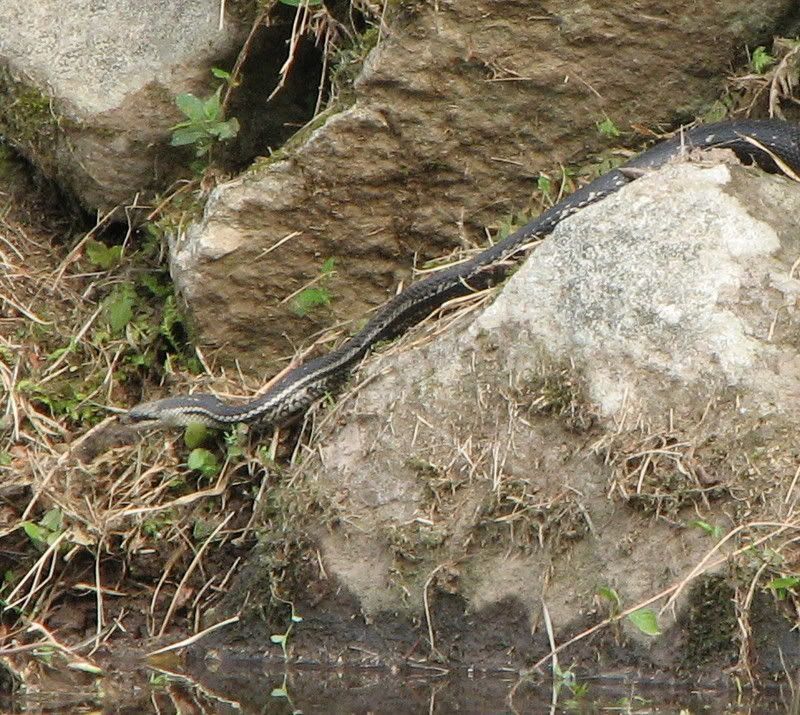
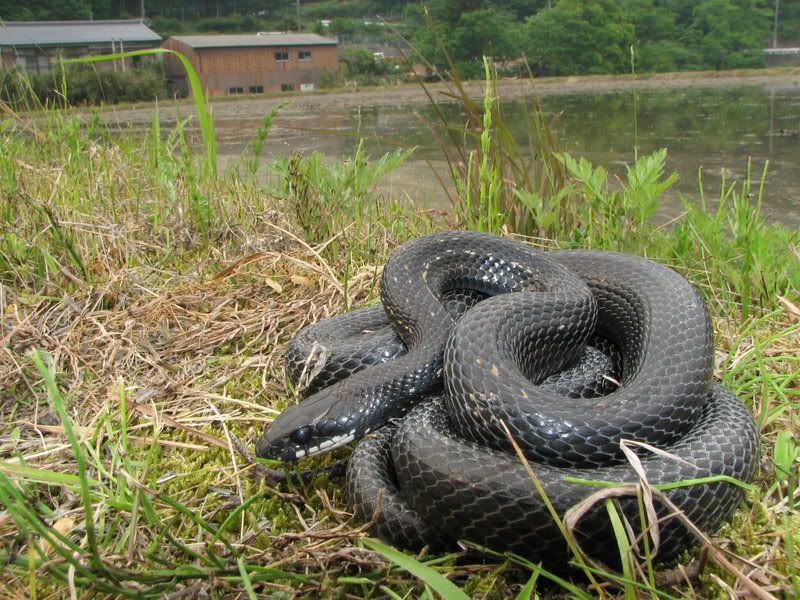
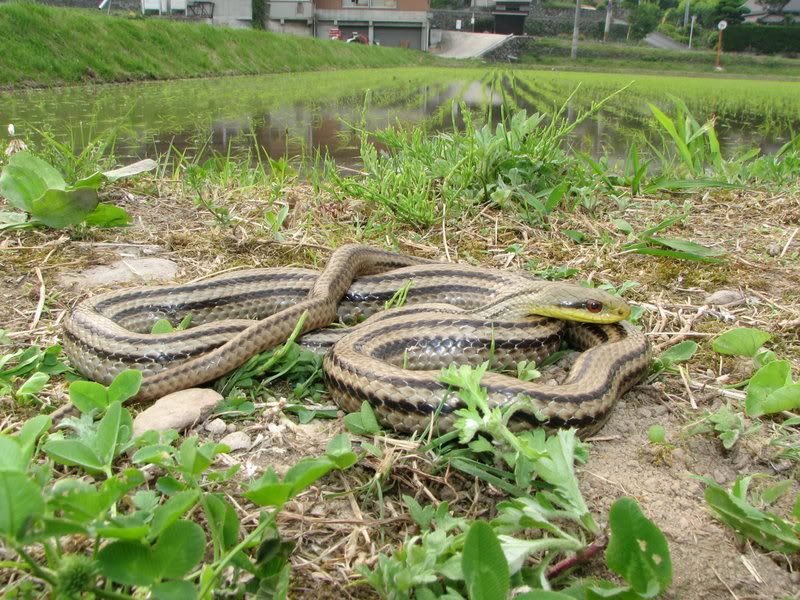
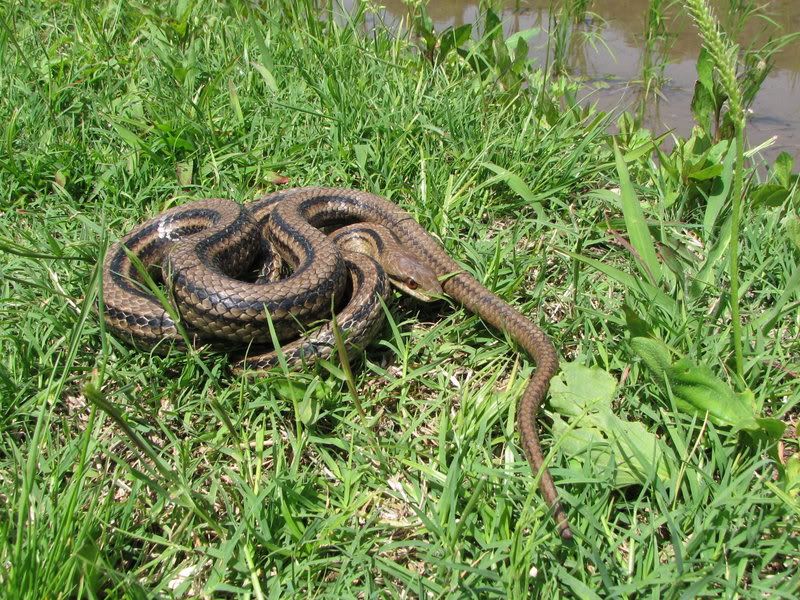
The most easily encountered of the three species is the Japanese Four-lined Ratsnake Elaphe quadrivirgata. I took many pictures of quadrivirgata, in various situations. There are two main variants: striped and melanistic, with a lot of variation among those. They are very racer-like snakes: diurnal, fast moving, nervous, and generalist predators.

The first quad that I saw on the trip was basking on a rock wall, so I guess it will be a good one to start with:
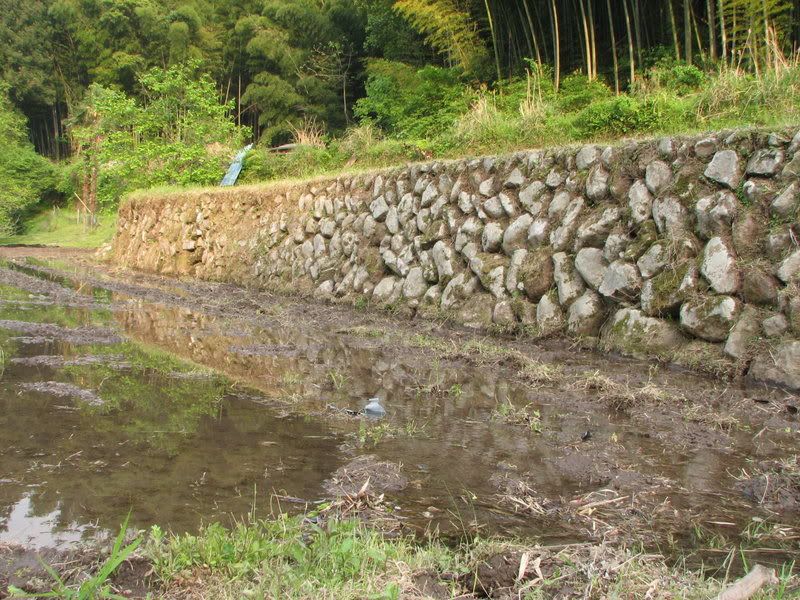
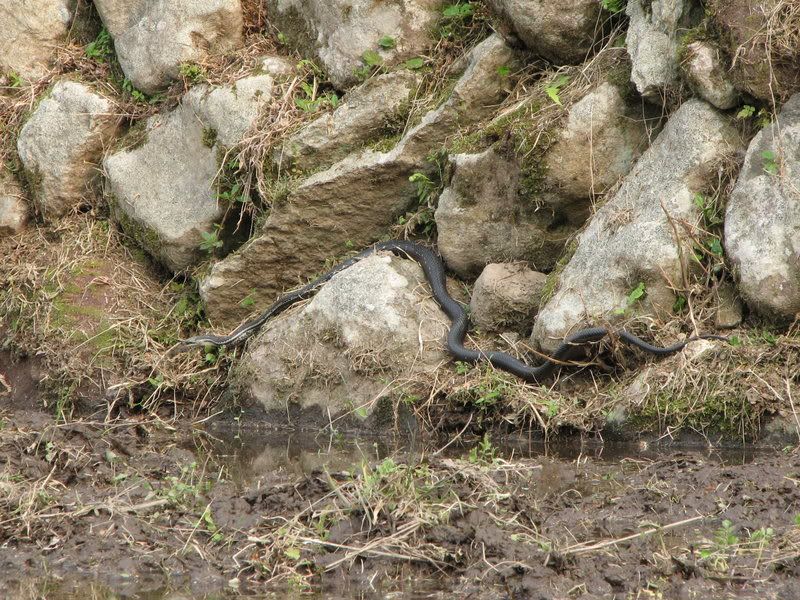
I like that variation. Unfortunately a cropped zoom was the best I could do, because I didn’t see any others quite like it on the trip.

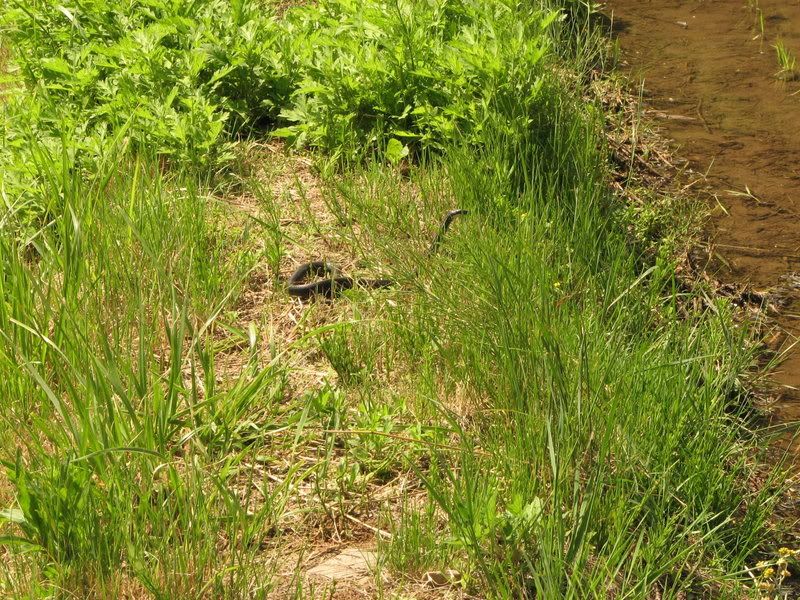
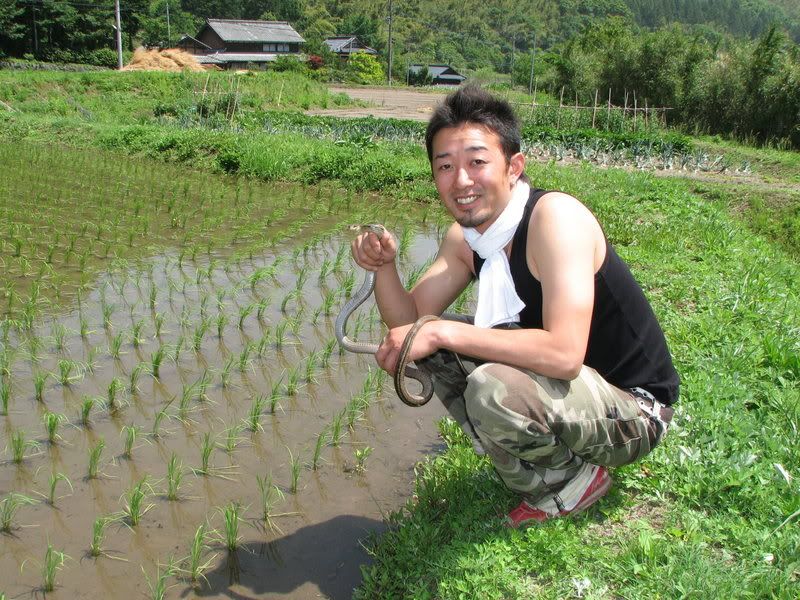
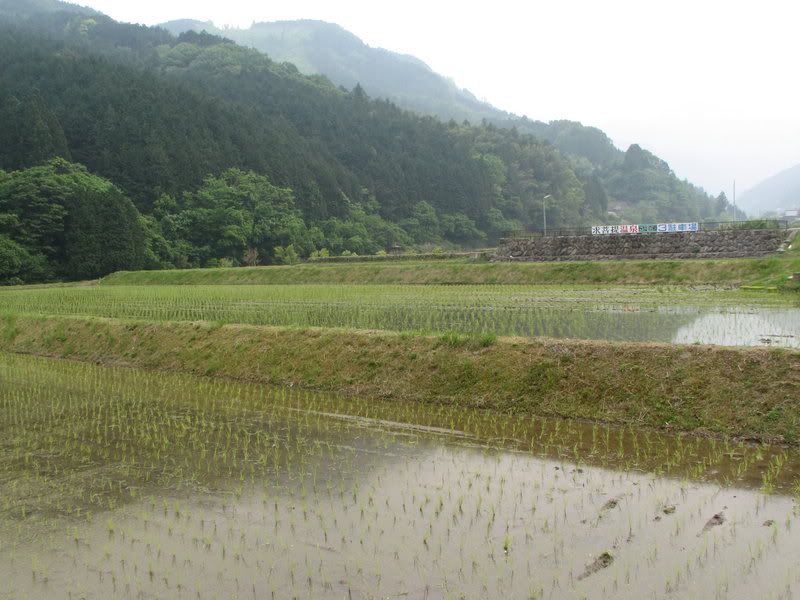
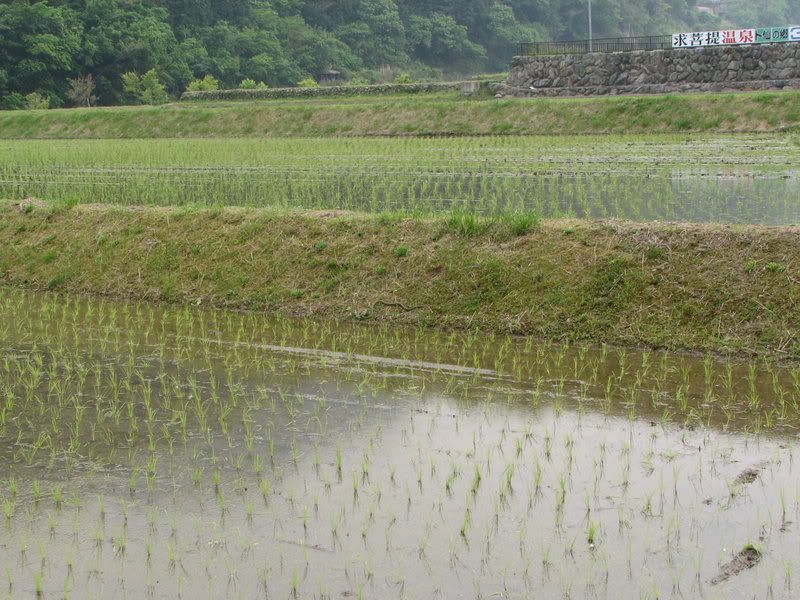
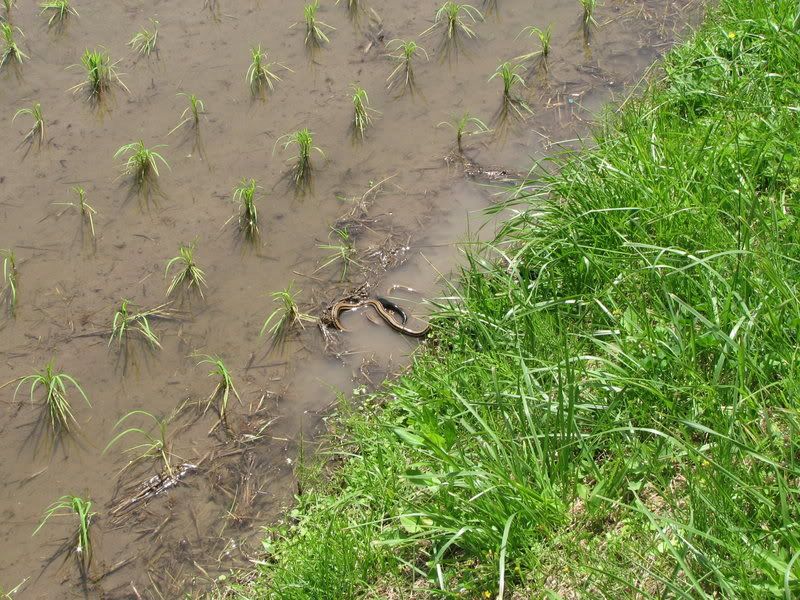
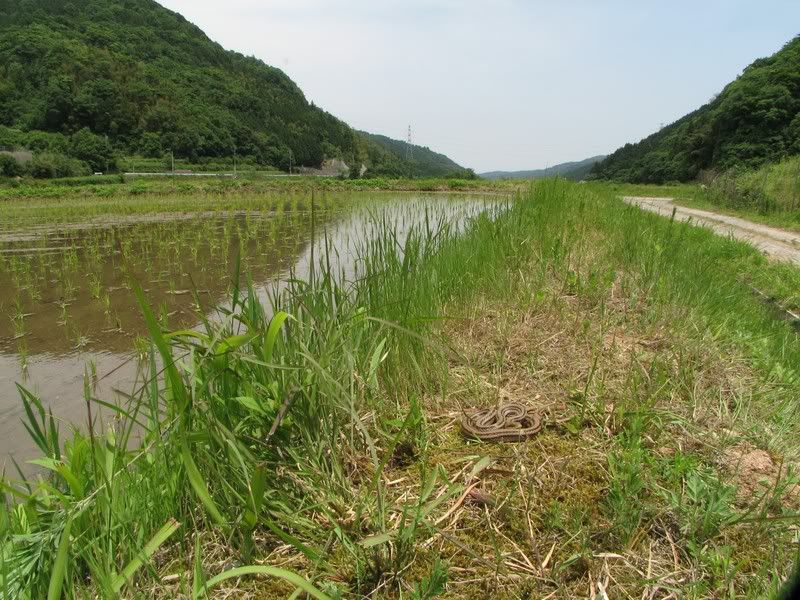
This is a common scene while walking the rice paddies:
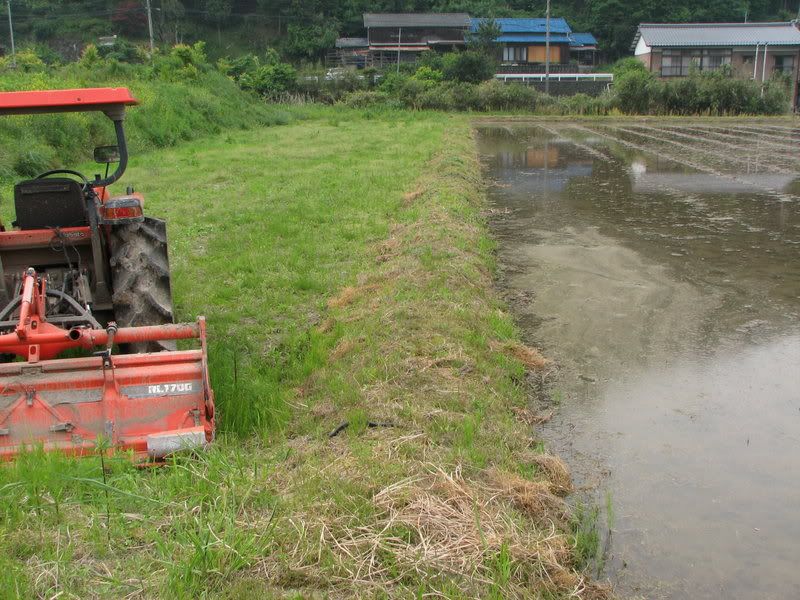
More, and more, and more…habitat and snakes, with a few comments…..most of these pictures were taken in situ, and a few posed:
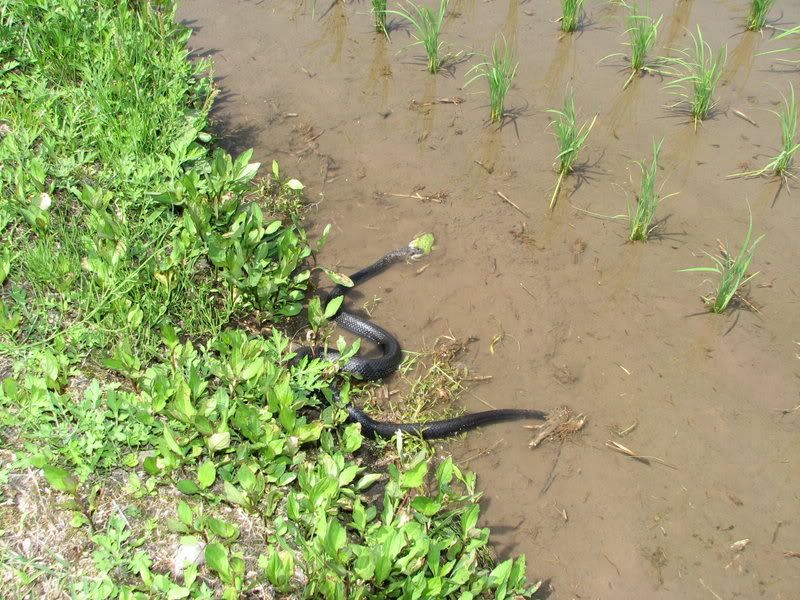
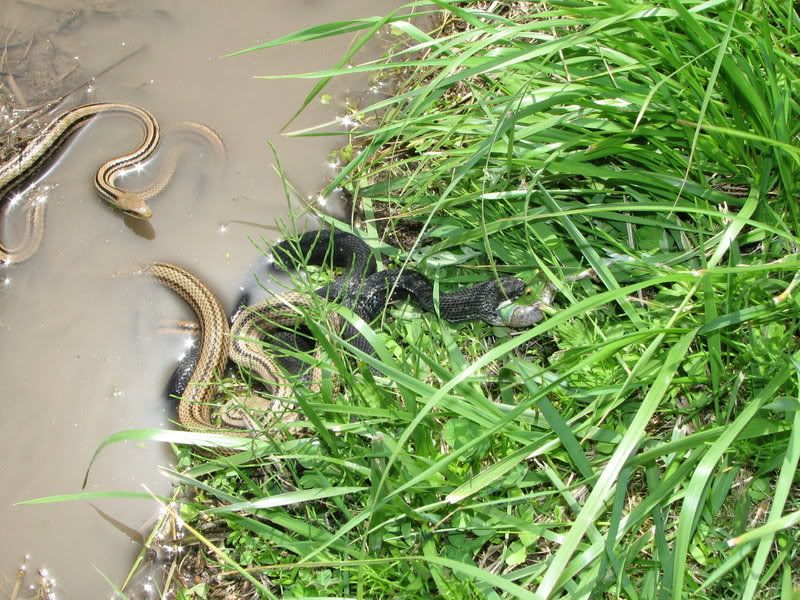
They normally try to escape via terrestrial methods, but some will flee into the water:
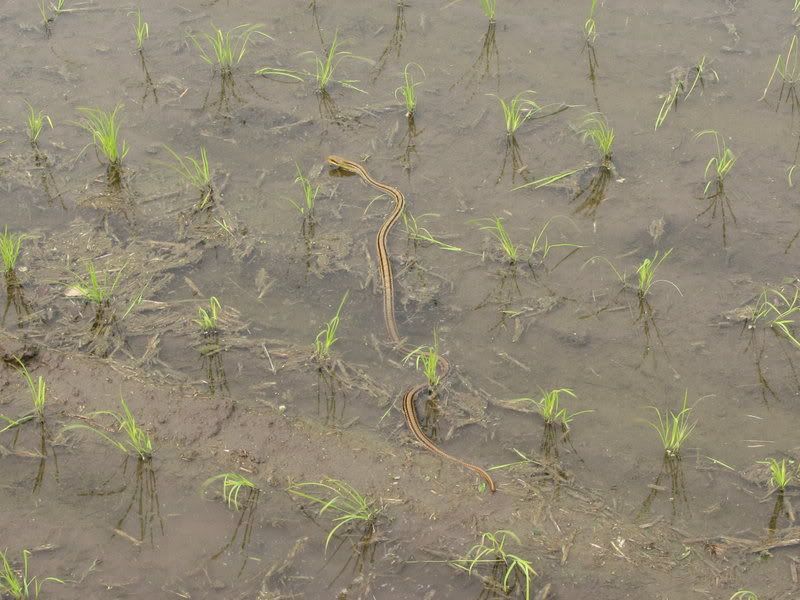
All of the snakes that I noticed in the paddies seemed to be on the move, not in forage mode:
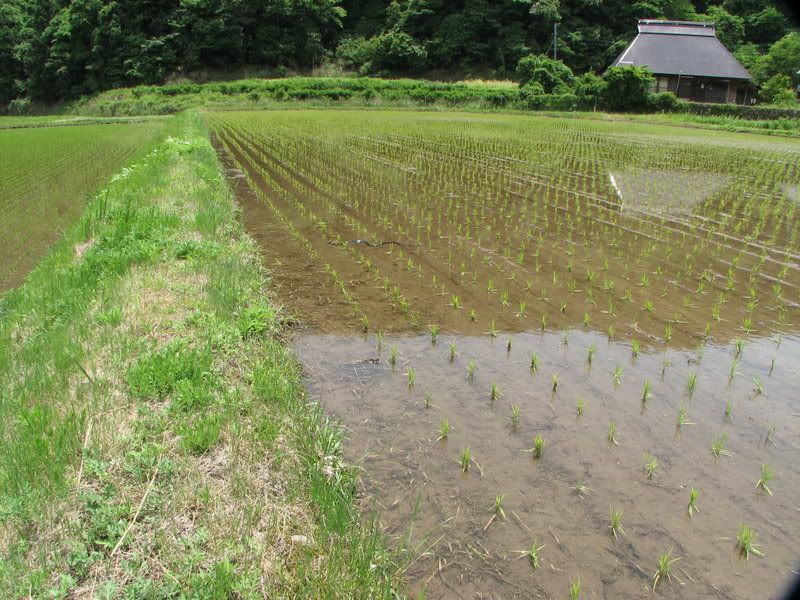
Don’t look at this pic too long, or you’ll get motion sickness:
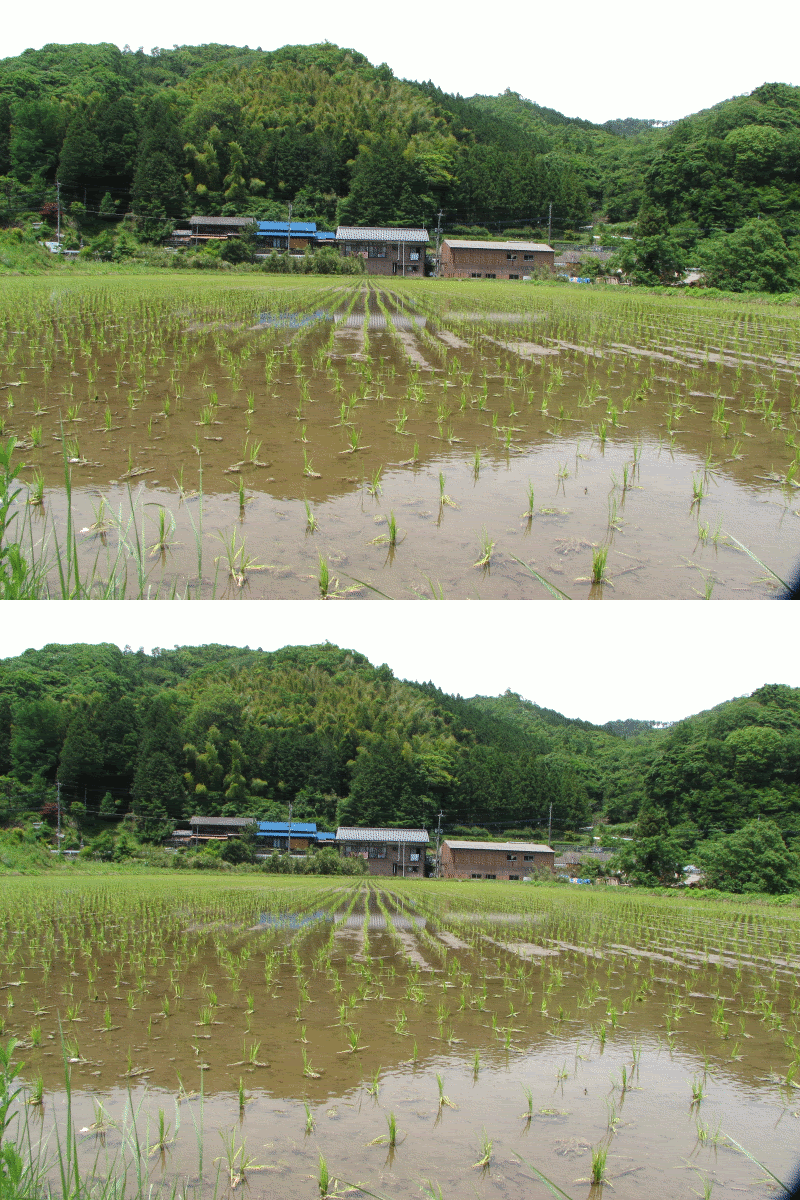
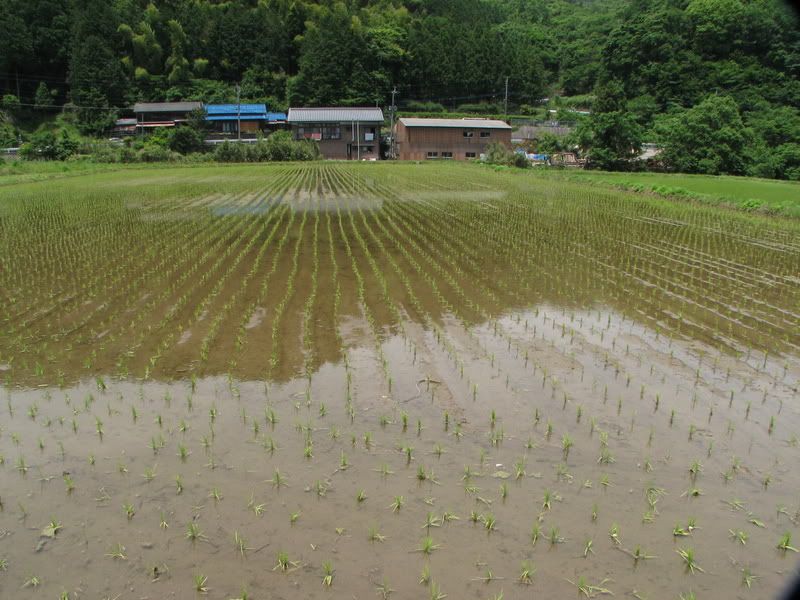
They certainly like to forage along the edges:
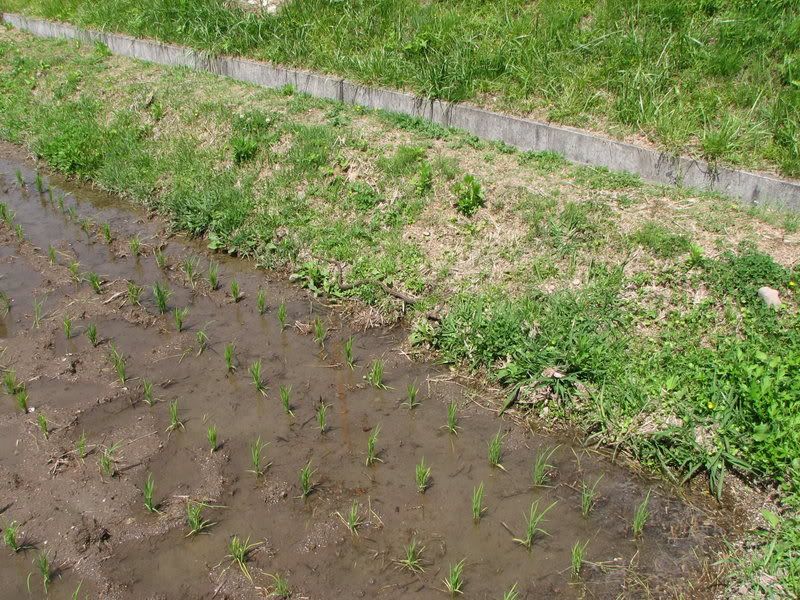
Found this one in a stream bed:
You see them in the forested areas, even the monoculture cedar plantations (snake is just to the right of the tree, in the trunk shadow):
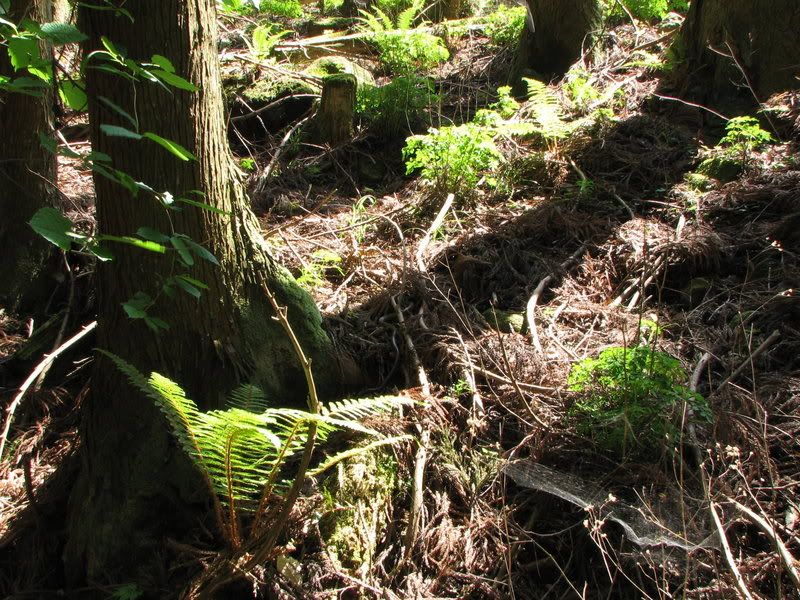
I sat down and watched that particular snake for about 10 minutes, and it nosed around in the litter at the base of that tree the entire time, sometimes disappearing under the branches, and me thinking it was gone, only to reappear again:

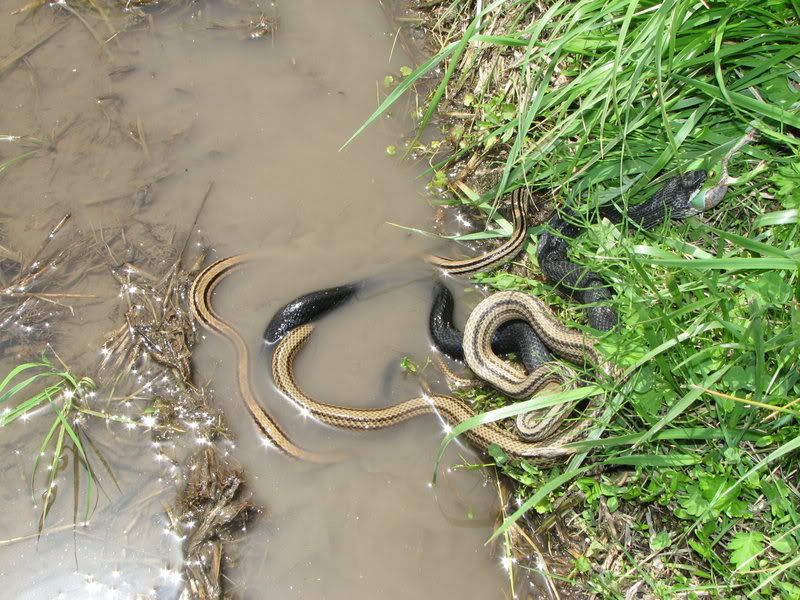
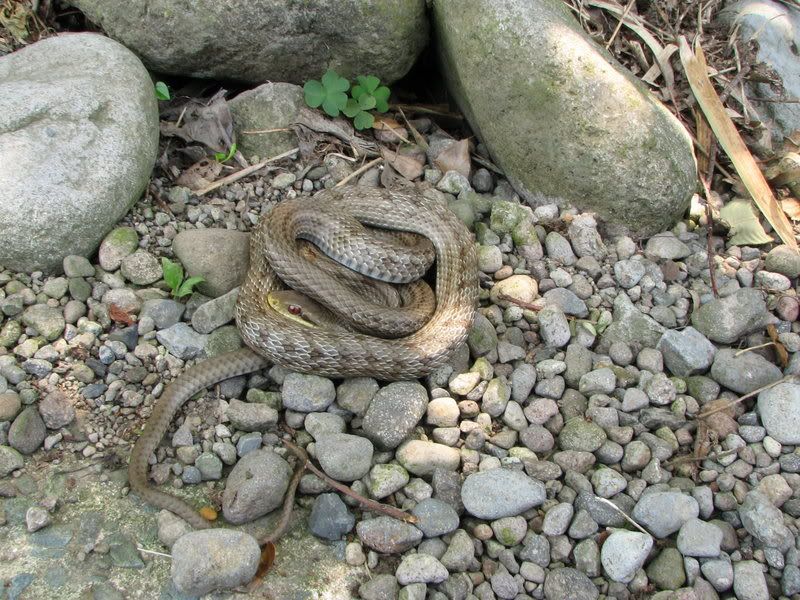
What’s going on here?:
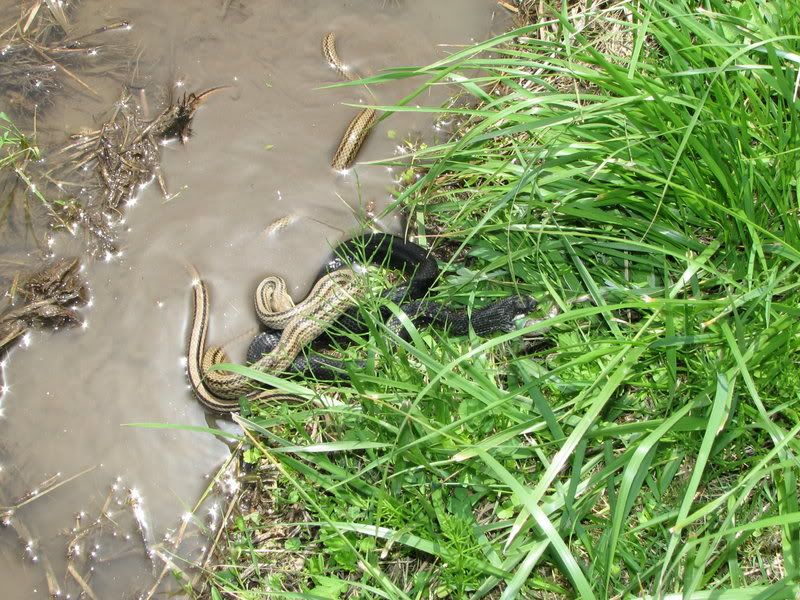
This was a big one:
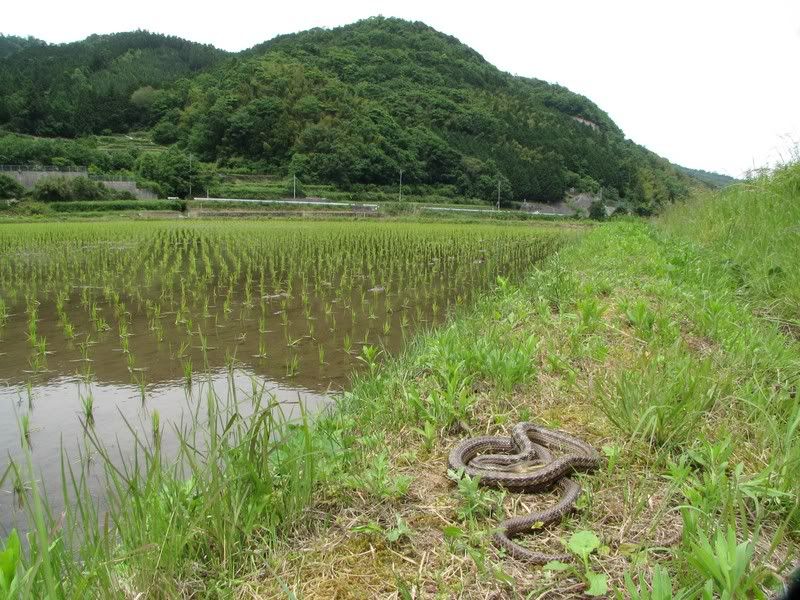
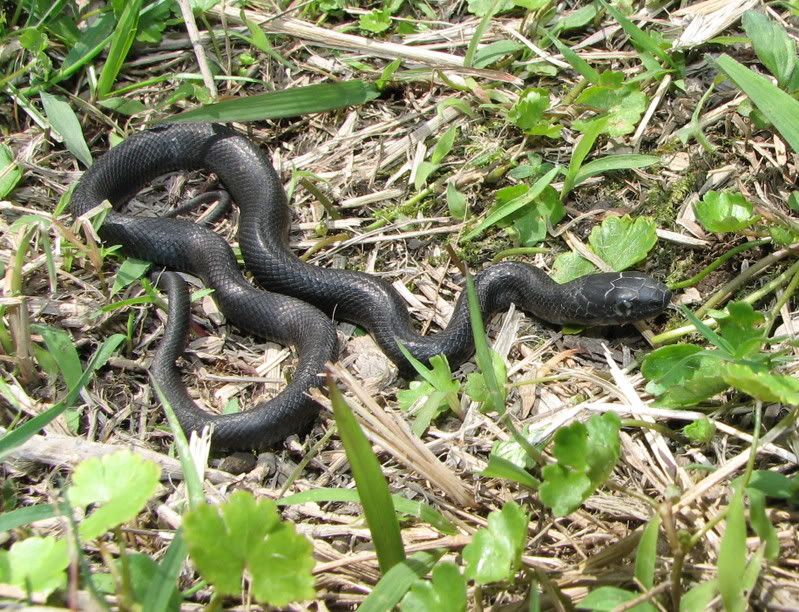
The melanistic snakes leave the egg that way:
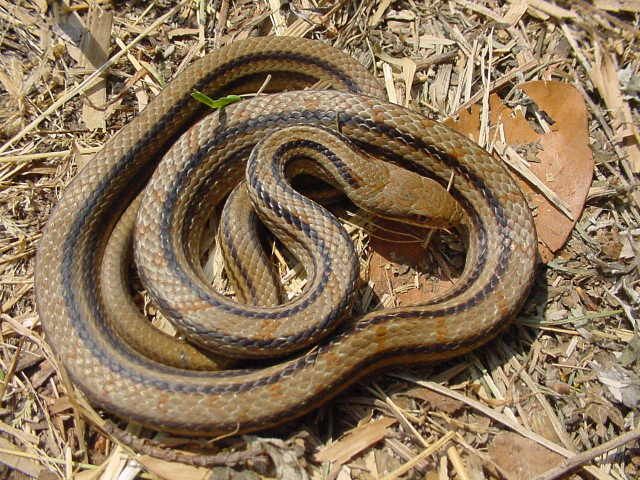
The striped snakes are born with stripes and transverse bars. This photo was taken in 2005, and the snake was likely in its second spring at that time, but it is the only photo I have of a smallish striped quad:
OK, you’re probably sick of looking at quad pics by now.

We’ll move on to the Japanese Ratsnake, Elaphe climacophora.

I have seen fewer climacs than any of the other species. They are not generally known as a hard-to-find species, however. I never focused on finding them, specifically, so that is probably the reason I haven’t found more.

In 2005, the only climac I was able to find was a DOR juvenile, and it is the only pic I have of a juvenile:
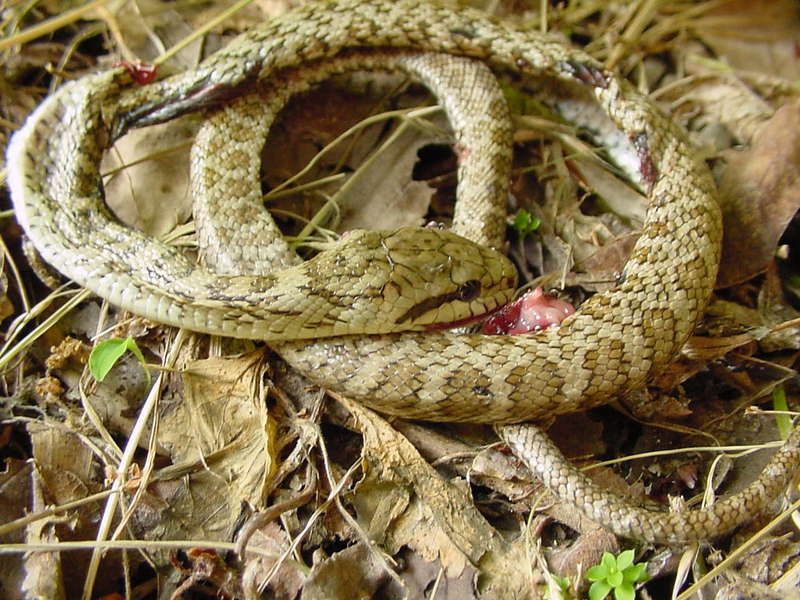
This year, I had more success, as I saw two in the field, three on the road (all alive), and one shed skin.

The first climac was found making its way onto the road, in an upper-valley area:
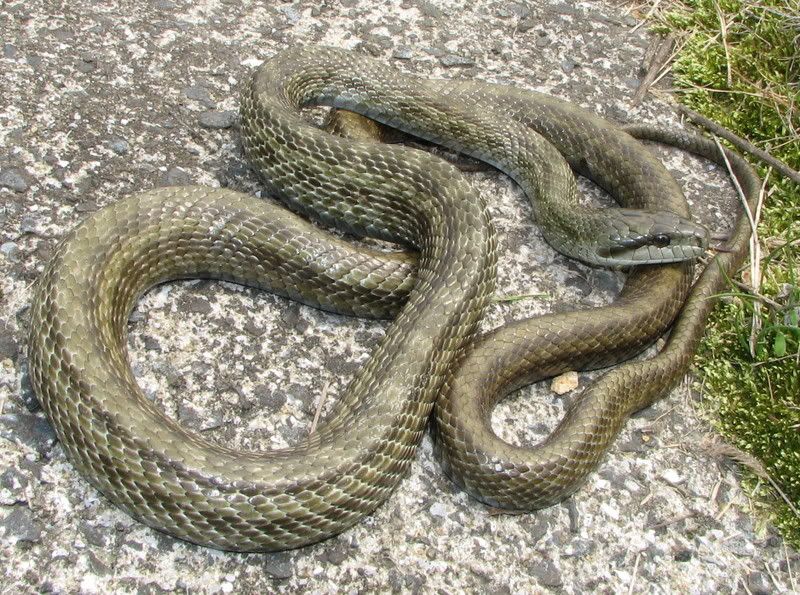
This one was found crossing a road in the mountains:
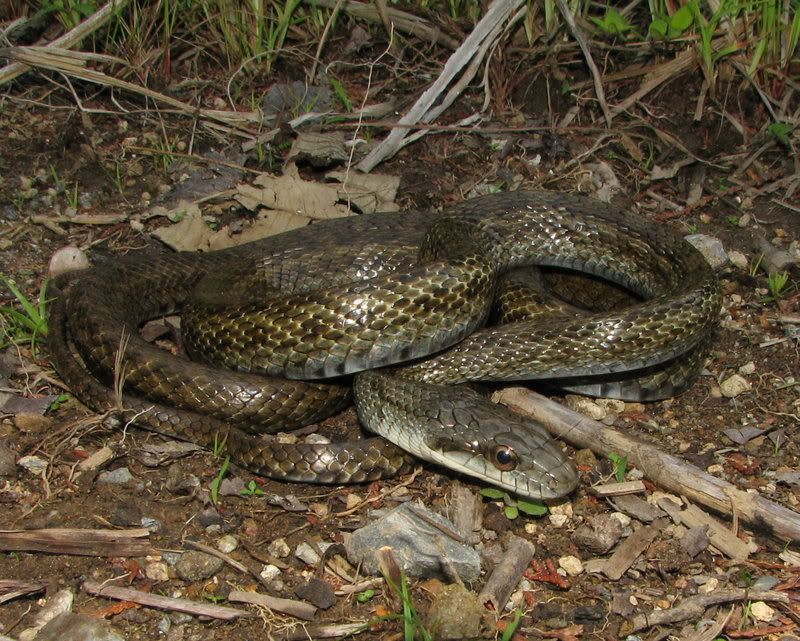
I thought this was a very nice looking climac, from low elevation:
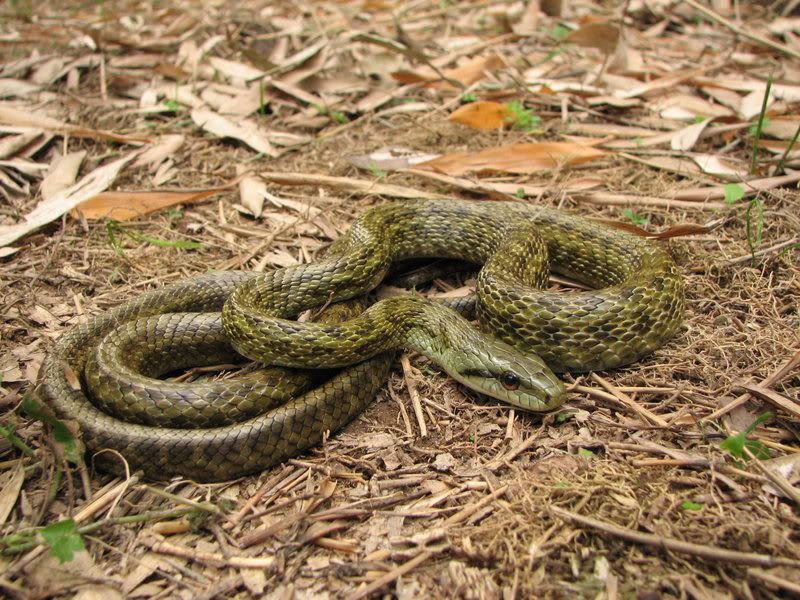
Beautiful green hue.

This one was found on the ground. I tried to slip my camera out to get a in situ pic, while it was still kinked, but it bolted shortly before I was able to get the camera ready. I grabbed it, and put it on a nearly vertical slope:
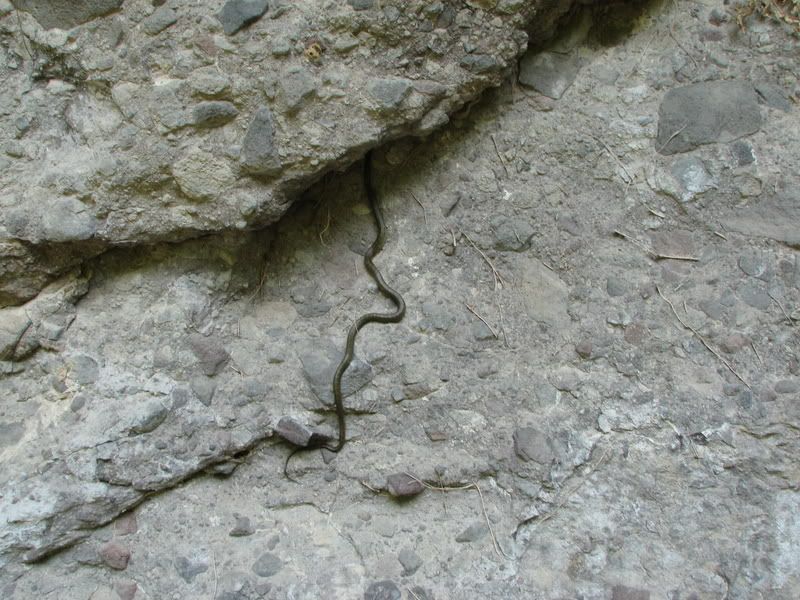
Good climber; both quick and deliberate in that situation. In that photo, it looks like the snake was escaping into a crevice, but that wasn’t the case. It did however elude further photos by finding one smallish, wedged rock to hide behind. It took me all of three seconds to decide an extraction for photos might get me killed……fragile geology there. I returned a short time later to see if the snake was still there, but it had moved on.

The other climac that I saw was crossing a mountain road, but upon approach, it quickly made its way off of the road, and into some thick cover. I tried to find it, but no luck.

Moving on to the last species, the Japanese Forest Ratsnake, Euprepriophis conspicillatus. Conspics have a reputation of being hard to find (alive anyway), but I have not found that to be the case.

On this trip, the first conspic was found under a piece of tin:
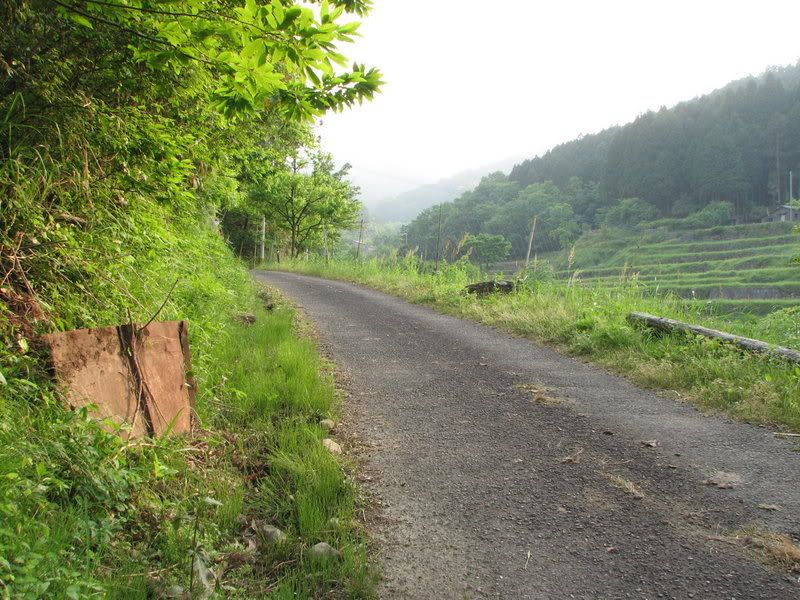
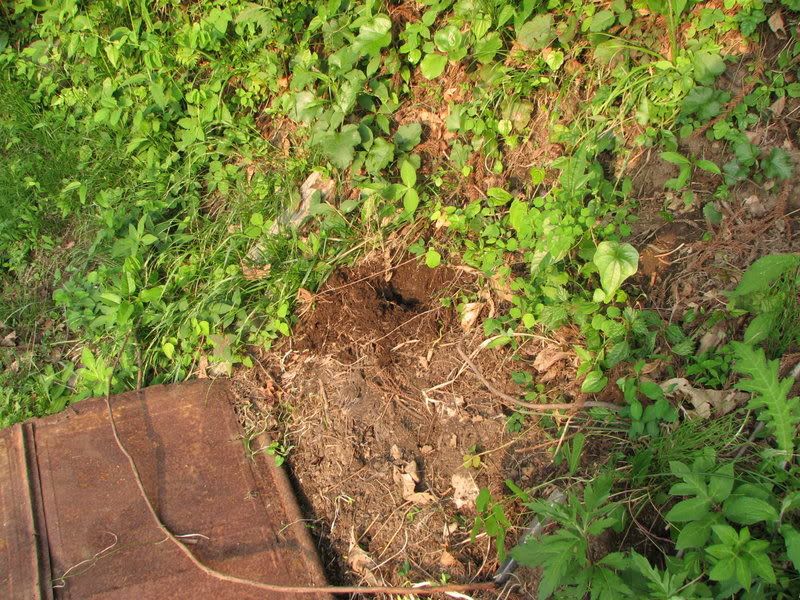
It was thermoregulating, but much of its body was hidden in a rodent tunnel. It quickly retreated back into the tunnel, where a bit of digging was necessary for safe extraction:
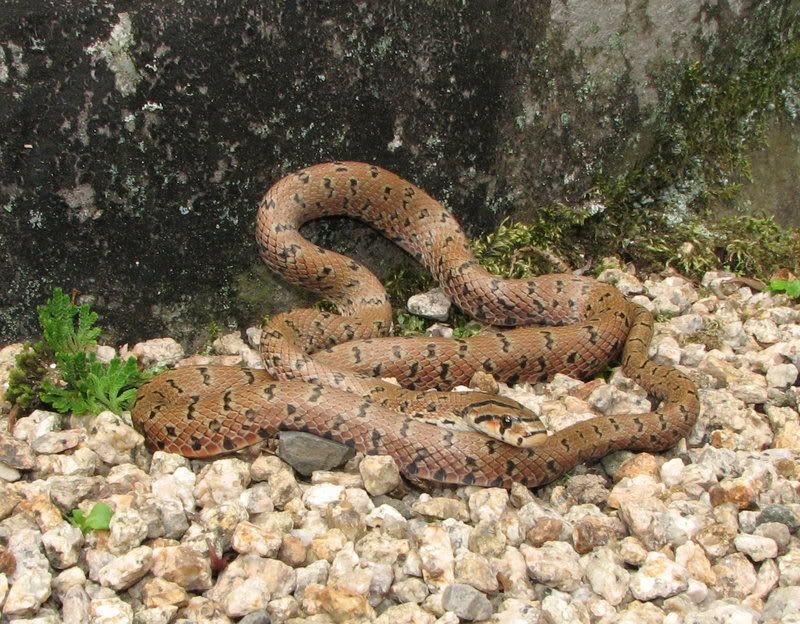
The snake:
In this low elevation habitat, I found three conspics:
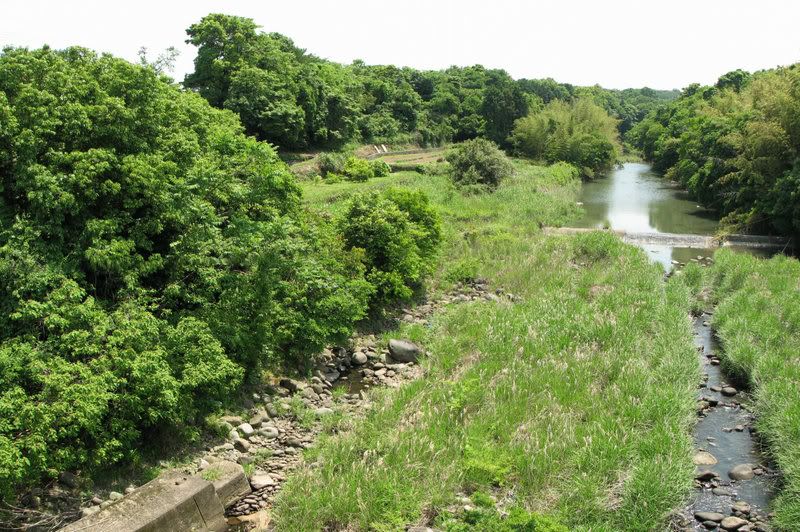
The first was found at the hottest part of the day, crossing a trail that went through the bamboo thicket on the left side of the river.

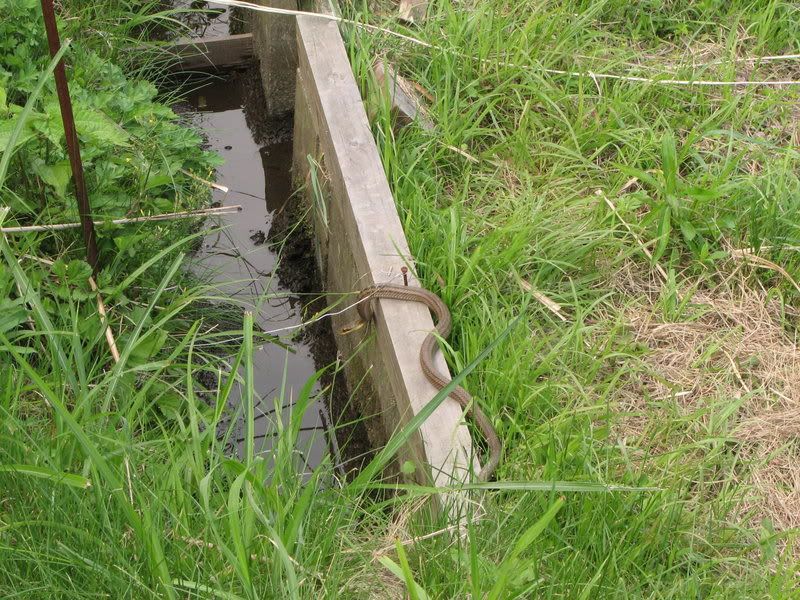
Number two and three were found on the same evening, but different day than number 1. They were both found in or entering this irrigation channel:
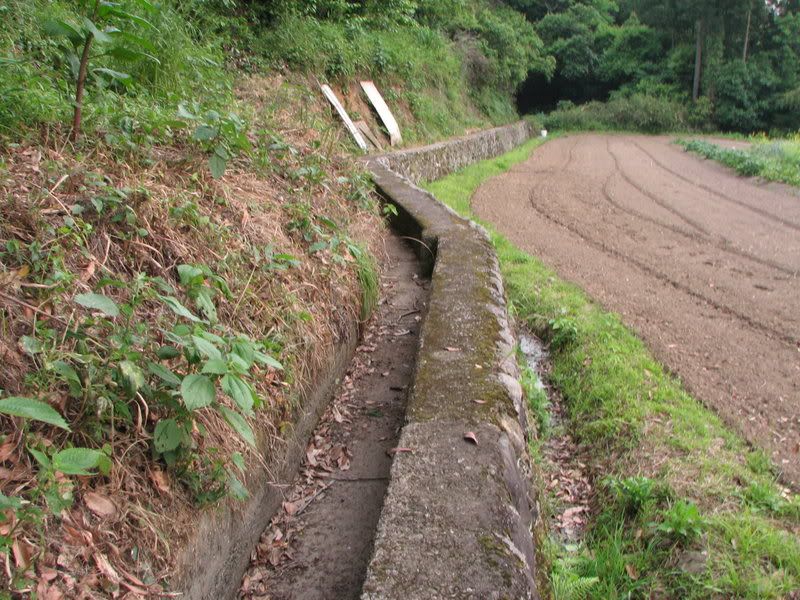
I didn’t have my camera on me for the first sighting that evening, but I tried to recreate the scene……kinked snake, noticed at a distance, crawling right in the center:
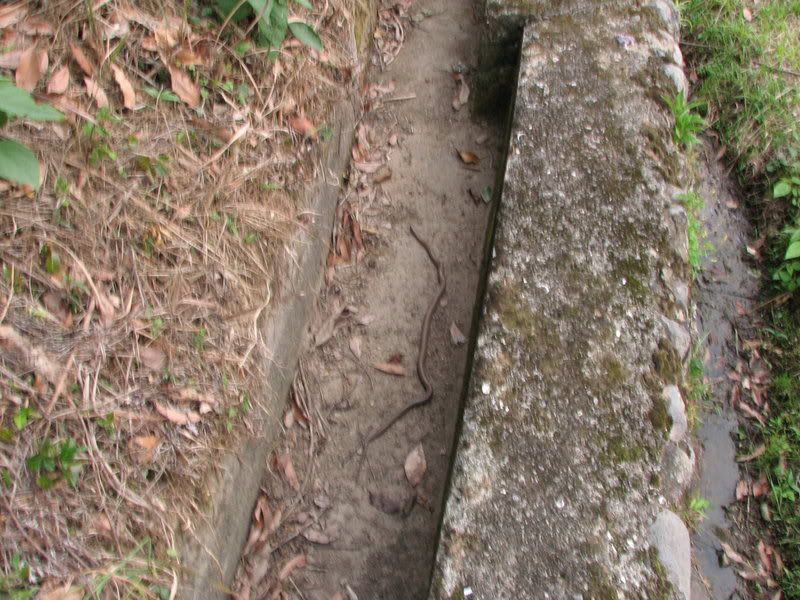
Not a bad depiction of the in situ moment.

I did have my camera on me for the second snake, and took this series, in situ……..horrible photography, which is normal for me anyway, but you get a feel for the encounter:
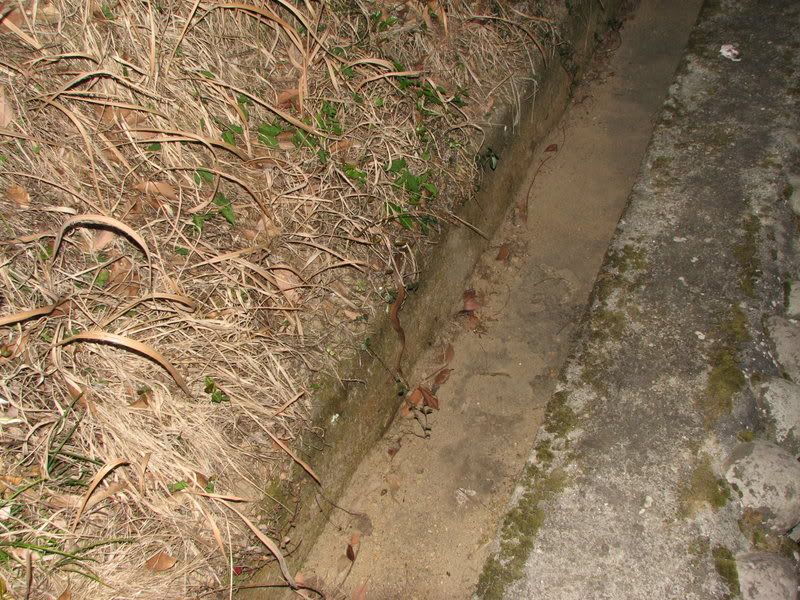
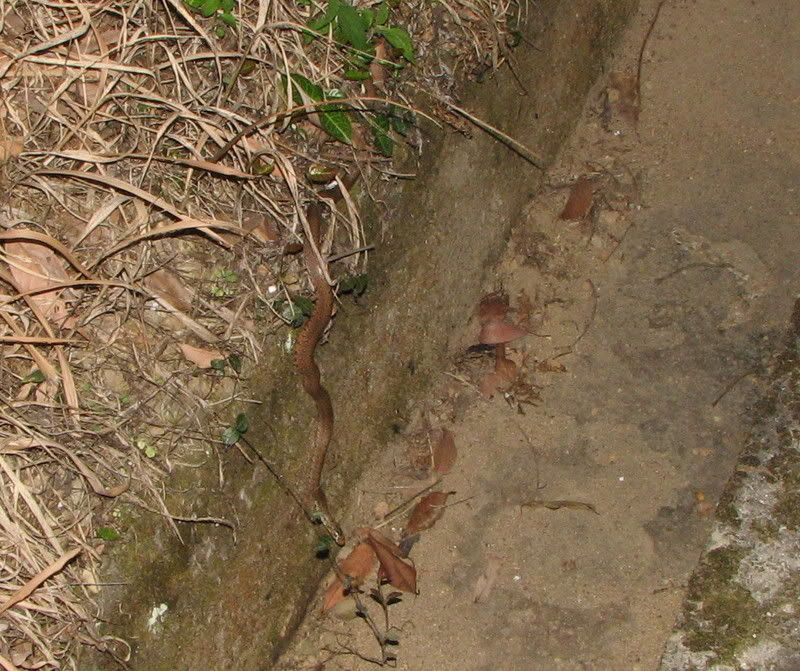
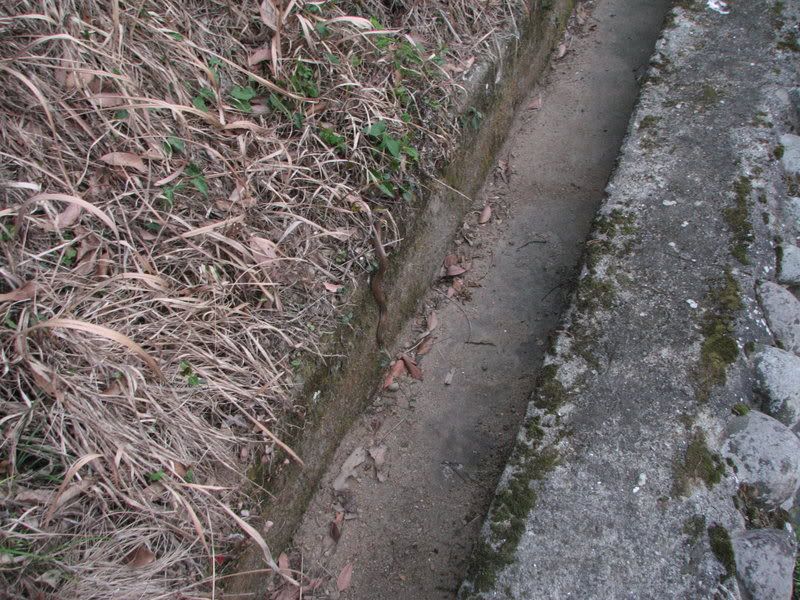
(more natural lighting on that one, though my eyes are better than what I can do with the camera)

After a pause with the photography, it continued along into the “ditch,” where I super-flashed it:
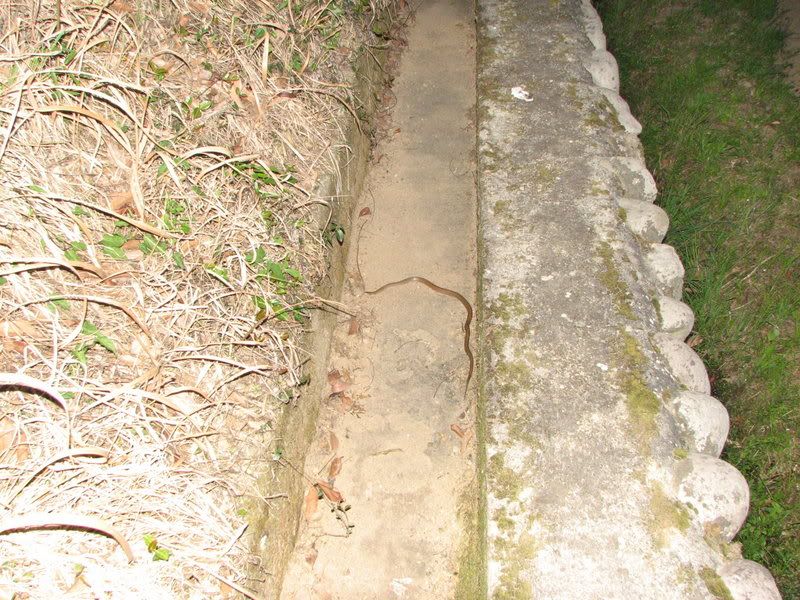
And, shortly after, with both in hand; good depiction of the available light at the moment:
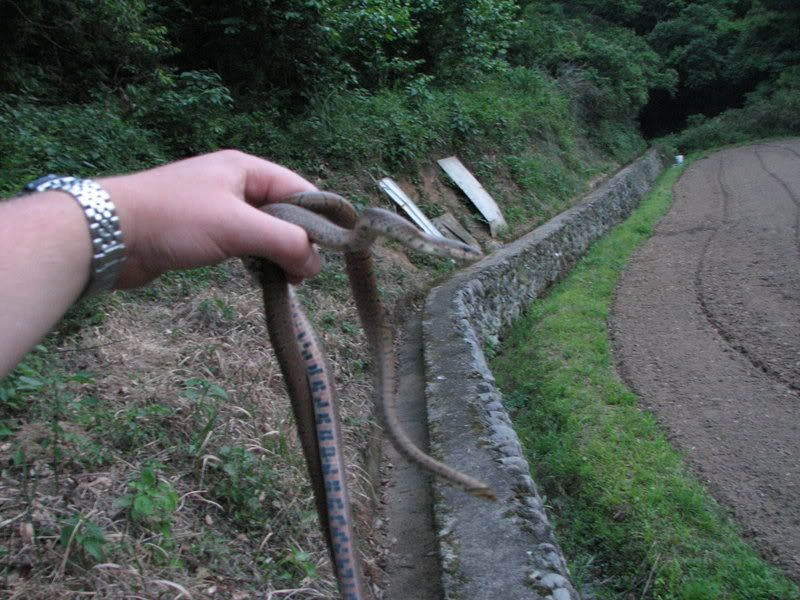
Great herping memory!

I haven’t taken a pic of the snake I found during the afternoon hours, but here are the two from that evening:
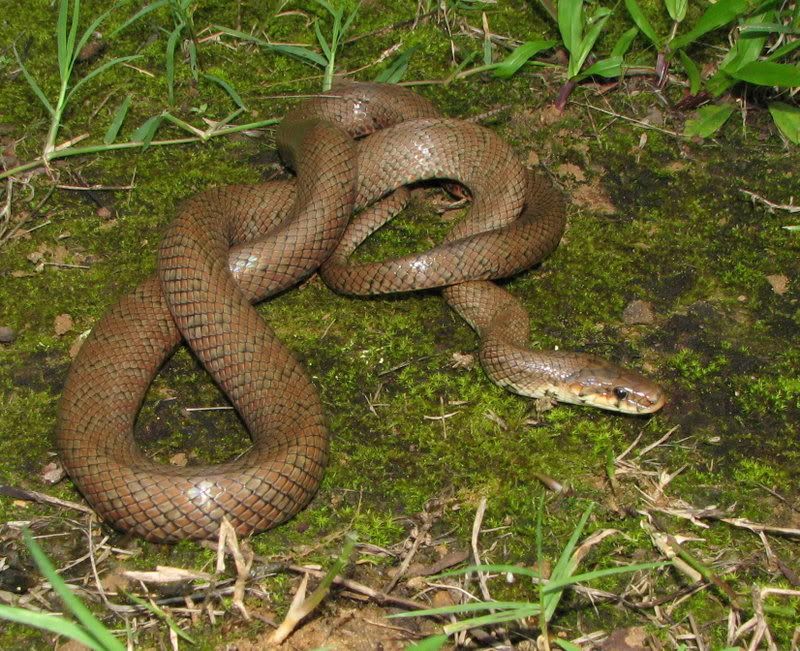
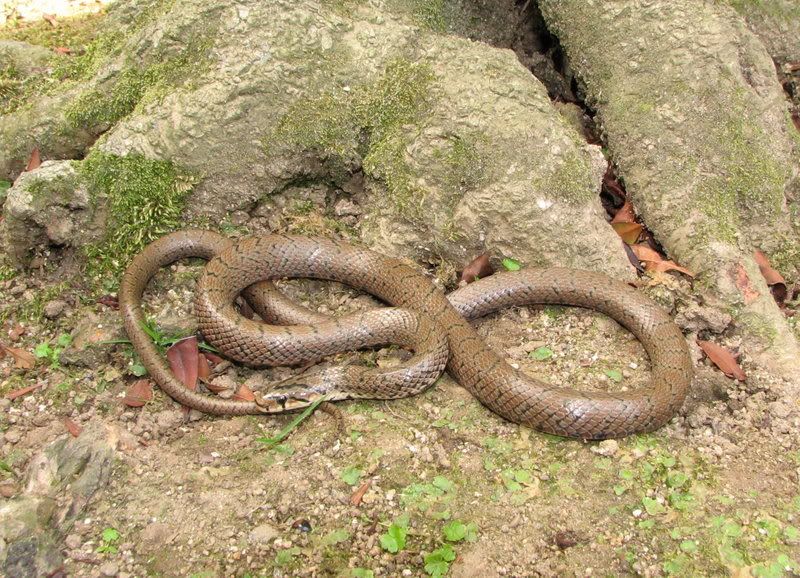
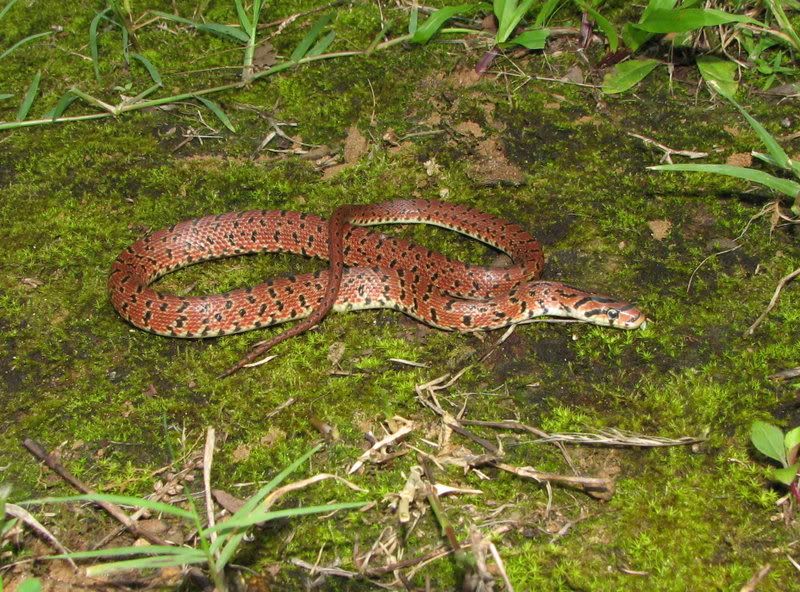
The last living conspic was from an area I had seen two others in 2005. Pretty little juvie:
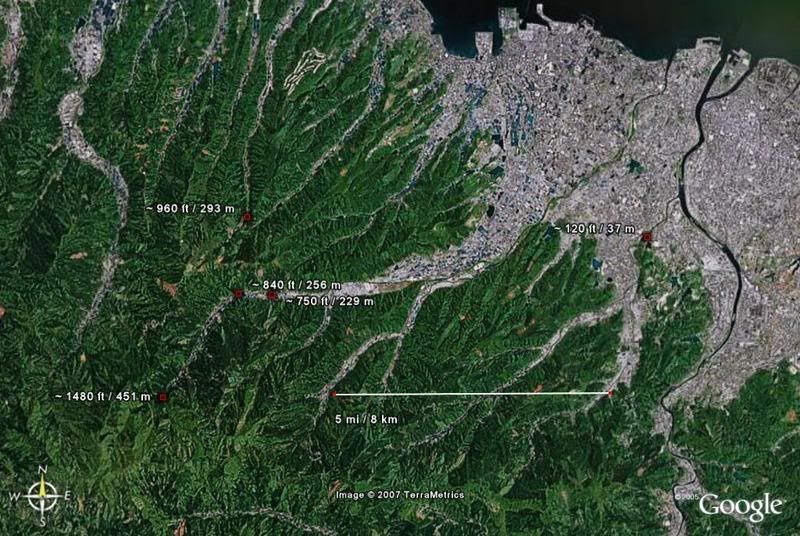
Here is a map I made to show the locations of most of the conspics I have found:
I apologize for the brief commentary. I am in the process of making a dedicated webpage regarding the main island ratsnakes. It will take me a while, but I’ll be slowly piecing it together.

Shane

-----
Lifelist

Replies (17)

ratsnakehaven Nov 13, 2007 06:47 PM

Shane, fantastic post.

Lots of variety in all three ratsnakes. I never get tired of seeing the variation. I love all the scenery that you added with the photos. Really helps for those of us that have never been there. The series of the mating quads was really cool. I love that species for all its primitiveness.

I've learned from you that the conspics aren't relegated to the higher elevations, but are at the lower elevations too. Too bad there's so little coastal area that isn't developed. The conspics might be occupying the coast too.

Thanks for the tour. I just wish my dialup connection wasn't so darn slow. I feel like I've been here all day.

Look forward to your new site.

Cheers....Terry

-----
Ratsnake Foundation

Shane_OK Nov 14, 2007 03:06 PM

Glad you enjoyed the report.

The first time I herped the mainland, I just couldn't come up with a good reason why some sources said that they only, or mainly, occured at a minimum elevation of 100-300m. I think it is entirely safe to say that they don't like it hot, but geez, what's the difference between 37m and sea-level? It's the forest, not the altitude, IMO. But hey, some genius coined the term Japanese Forest Ratsnake, not Japanese Mountain Ratsnake

One of these days you just need to plan a May trip to northern Kyushu! I'll be your field guide

Shane
-----
Lifelist

tbrock Nov 13, 2007 07:45 PM

Wow! Awesome post, Shane! I'm very impressed and jealous too, I might add. LOL I am a big fan of most of the Asian rats, and these three are very interesting species. I am also a big fan of habitat shots, and "in situ" shots of wild snakes, and these are excellent here, also. Also enjoyed the map of different elevations you found the conspics at.

-Toby

-----
The Ratsnake Foundation

Shane_OK Nov 14, 2007 02:46 PM

I like seeing habitat and in situ shots as well, and since the quads are so great for those opportunities, I had to take a bunch! What I did fail to do, which I now regret, is take more field guide type shots of them.

Japan is fun to herp, because it is exotic, but there really isn't much species diversity. South TX is much better.......I love south TX, but it's a pity there isn't much available to the public.

Glad you enjoyed the report,

Shane
-----
Lifelist

tbrock Nov 15, 2007 09:55 PM

Shane, It looks like the few species that Japan has are abundant in at least some areas. As I'm sure you know, it can be extremely difficult to find anything in some areas of South Texas. I agree that we have great species diversity here, though. Also, I agree with your statement about how hard it is to get to the habitat in the first place. Joe Forks and company at HCU are trying to change that. As for ridiculous laws concerning picking up or even just looking at snakes on the road. I was just picking up some aluminum cans...

-Toby
-----
The Ratsnake Foundation

Shane_OK Nov 17, 2007 10:55 AM

Yeah, the species diversity vs. abundance is interesting. Where I herped in Japan, the latitude is lower than where I am in OK. Species diversity is much better here, but it sure takes some time to find all of them.

However, in northern Kyushu, without any locality help, I was able to find nearly every herp native to the area.......granted my 2005 trip gave me a good headstart on what to look for.

The HCU is long overdue. I haven't joined yet, but Forks and company are fighting the good fight.

Shane
-----
Lifelist

althea Nov 13, 2007 09:05 PM

Shane--
Thank you for the wonderful posting--it made my day! There's still a big smile on my face, as I love the Japanese rats both in captivity and in situ. Even though I've been keeping snakes for a number of years, it still gives me a little thrill to see photos of species in situ that I have in my herp room. At present there are 2.4 E.climacophora residents not paying rent.
I find your mappings most informative. Hopefully I'll be doing some herping in Japan during the next couple of years (fingers crossed). I'm saving your posting for future reference.
rgds,
althea

Shane_OK Nov 14, 2007 02:30 PM

I'm glad you enjoyed the report. Hopefully you will be able to go to Japan for some herping. Feel free to contact me if you have any questions.

Best,

Shane
-----
Lifelist

jfirneno Nov 13, 2007 09:24 PM

That was a great post. Glad to hear you're setting up a site for the whole report. It's heartening to hear that a country as densely populated as Japan still possesses healthy ratsnake populations. Thanks for posting the great photos and info (especially the habitat shots and details).

John

Shane_OK Nov 14, 2007 02:24 PM

The website will be a combination of my anecdotes and more formal works. I will also try to get anecdotes from others who have herped in Japan. It will probably be six or so months before I publish it to the www.

I wanted to do a full herps of Japan webpage, because what is out there has very little to offer the English reader, but I simply don't have enough personal experience with a lot of the native herps. I may change my mind about simply doing a ratsnake page, however; I could do a fairly decent snakes of Japan webpage, with a lot more pics and commentary on the ratsnakes than the other species. We'll see.

Hope all is well,

Shane

-----
Lifelist

erikm Nov 15, 2007 12:32 PM

Very cool thank you for sharing your pics and info!
-----
-------------------------------
globalreptiles.ca

Shane_OK Nov 15, 2007 02:16 PM

Glad you enjoyed the report.

Shane
-----
Lifelist

Ophidiophile Nov 16, 2007 12:00 PM

Wow great post and I'm really impressed at what you found. I spent a week in Niigata in 2005 and didn't find near as much as you did (nor did I get the killer pictures like you did too!). Truly excellent!
Ophidiophile Farms
Ophidiophile Farms

Shane_OK Nov 17, 2007 10:40 AM

You're too kind with the photo comment! What all did you find in Niigata? I haven't communicated with many people who have herped in Japan, so it's always nice to hear about the different experiences.

I checked out your website, and you have some neat herps! I didn't realize that albino climacs were so rare in the U.S. hobby. I have spent time in Iwakuni, but I was never able to herp there. I'm not sure where the "center" of the albino population exists, but I'm under the impression that it is fairly near the city.

Just a minor nitpick, but Iwakuni is not a prefecture. There is Iwakuni city, which is within Iwakuni-shi (basically a county), and those are in Yamaguchi prefecture.

Thanks for the comments!

Shane
-----
Lifelist

jscrick Dec 17, 2007 12:17 PM

Such a nice report.
Looks like the people are very tolerant of snakes there.
Are they?
Do they have strong protective laws?
Thanks for sharing
jsc
-----
"As hard as I've tried, just can't NOT do this"
John Crickmer

Shane_OK Dec 25, 2007 02:48 AM

Thanks!

I wouldn't say that there is any special tolerance of snakes. The ignorance was fairly typical of most places I have visited.

Herp regs in Japan are largely unknown to me. I have researched the nationally protected animals, and those protected by Okinawa and Fukuoka prefectures; that's about all.

Shane
-----
Lifelist

WALL2WALLREPTILE Jun 03, 2009 03:48 AM

Hello Shane,

I really enjoyed your photos.
Looks like you had a wonderful time in Japan.

I will be visiting family in Furano City, Hokkaido Japan in July.
I am looking forward to doing a little herping too!

A few years back, a friend of mine (who works for a zoo in Japan) invited me to accompany him on a herp collecting trip to the Ryukyu Islands in search of a some Protobothrops species for the display at the zoo.
I was unable to go at that time....who knows, perhaps in the future?

It was great to see the concrete irrigation ditches featured in your photos...I have found a lot of nice snakes in these ditches while in Japan! They are a popular place for collectors (and snakes) to frequent.
Great pics and commentary.
Take care.

Your friend,
Harlin Wall - WALL TO WALL REPTILES!
970-255-9255
970-245-7611

Site Tools