Reptile & Amphibian Forums

Welcome to kingsnake.com's message board system. Here you may share and discuss information with others about your favorite reptile and amphibian related topics such as care and feeding, caging requirements, permits and licenses, and more. Launched in 1997, the kingsnake.com message board system is one of the oldest and largest systems on the internet.

Click for 65% off Shipping with Reptiles 2 You
Click for ZooMed
Click here for Dragon Serpents

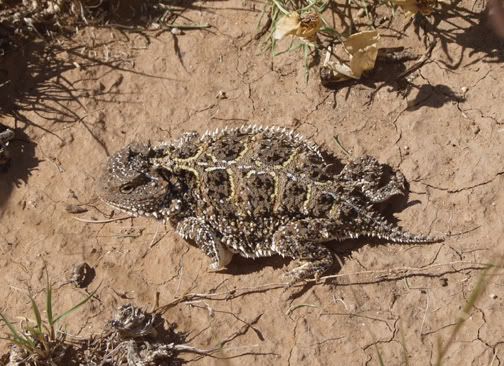
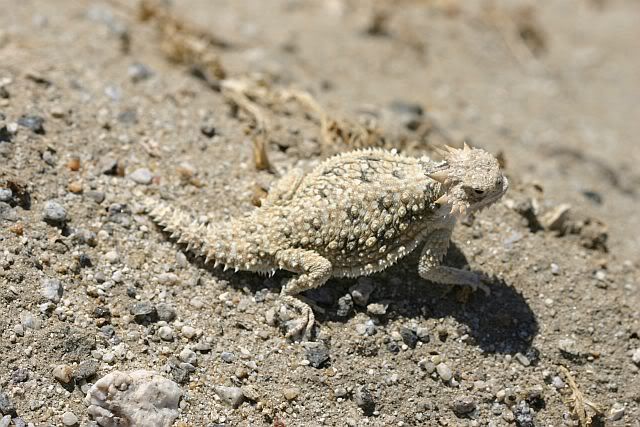
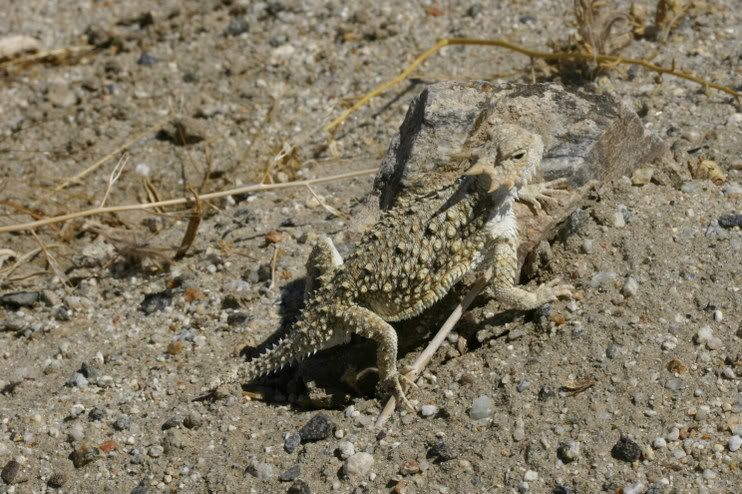
Horned Lizards In The Wild

Jeff Judd Nov 05, 2008 09:03 AM

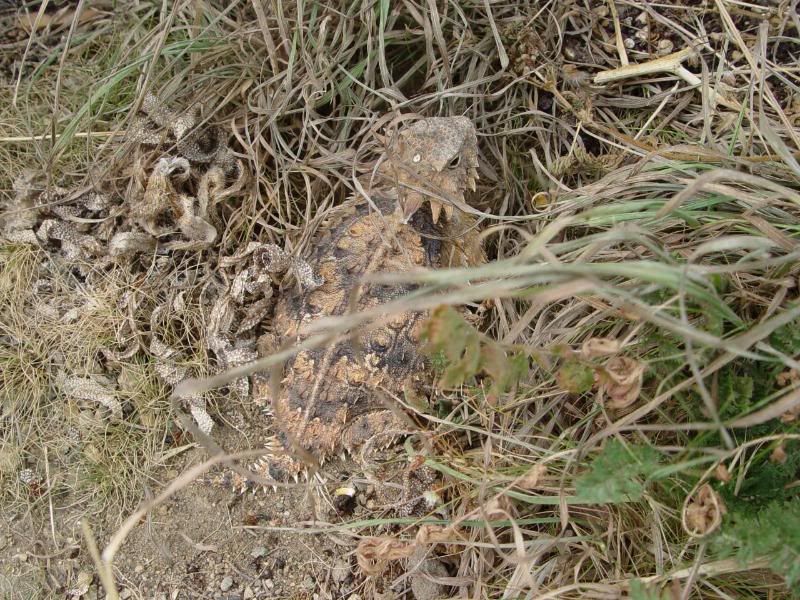
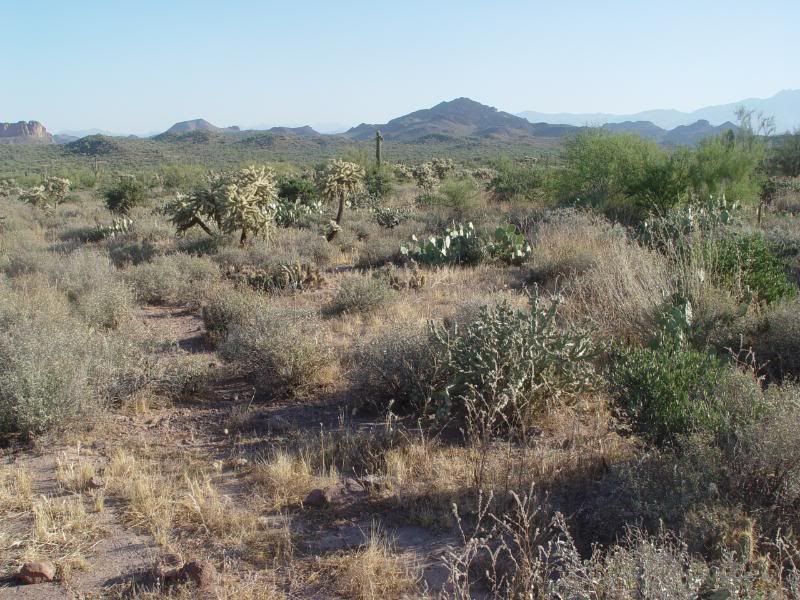
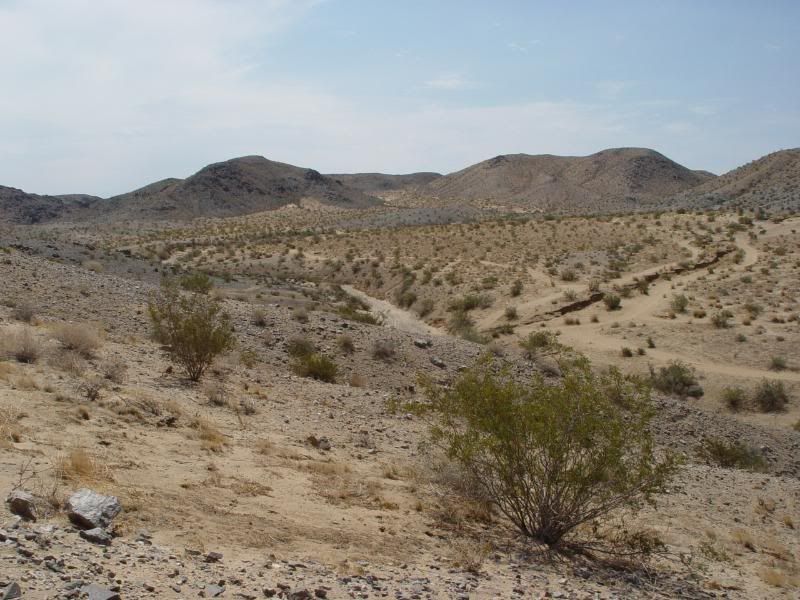
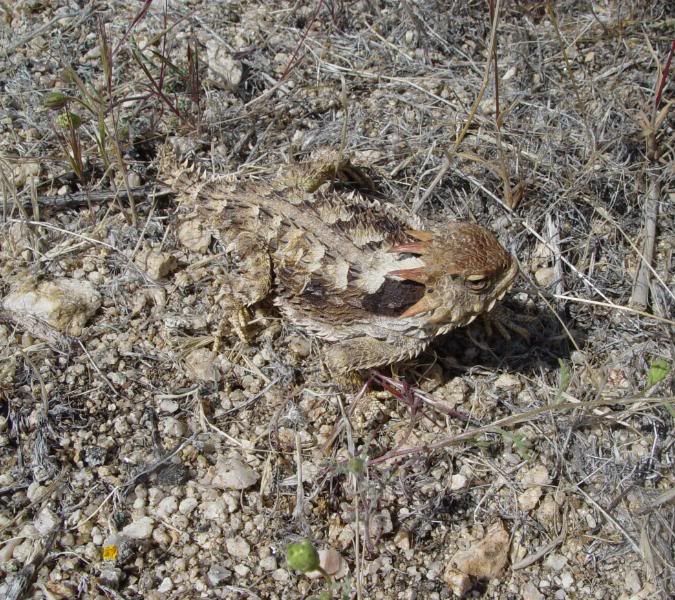
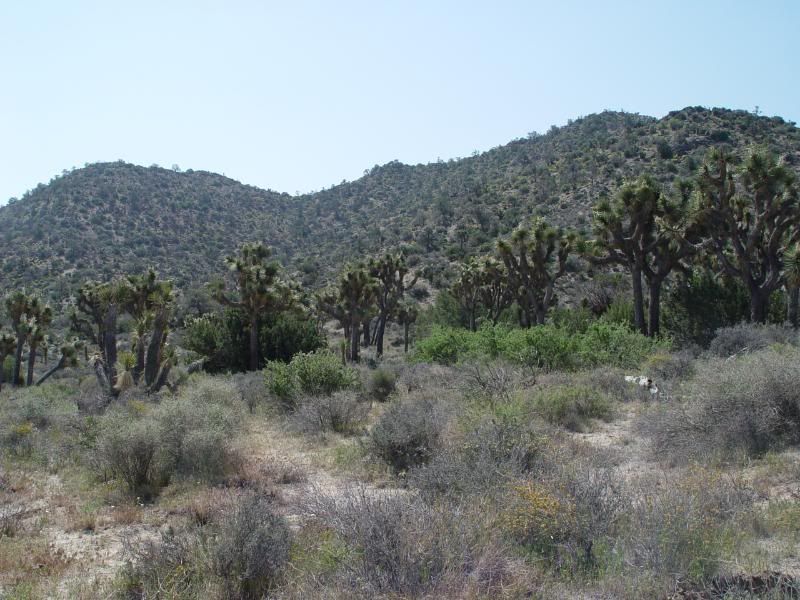
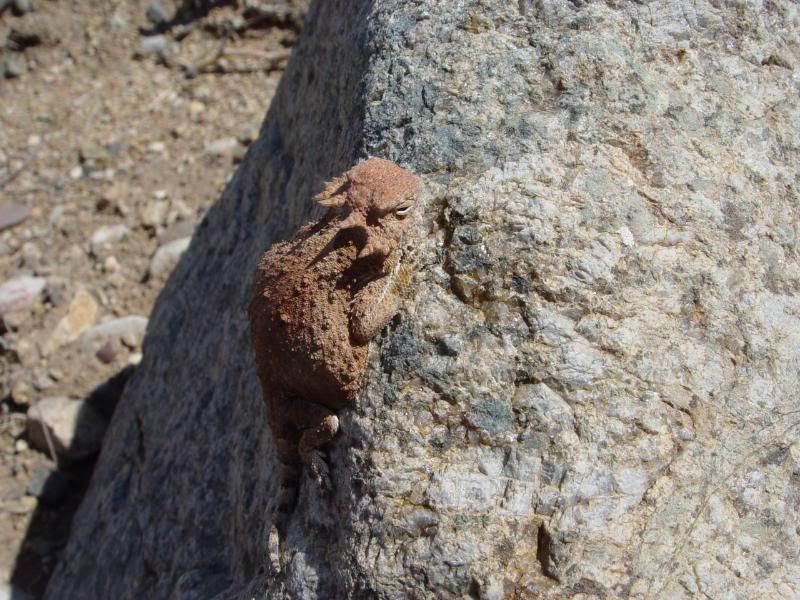
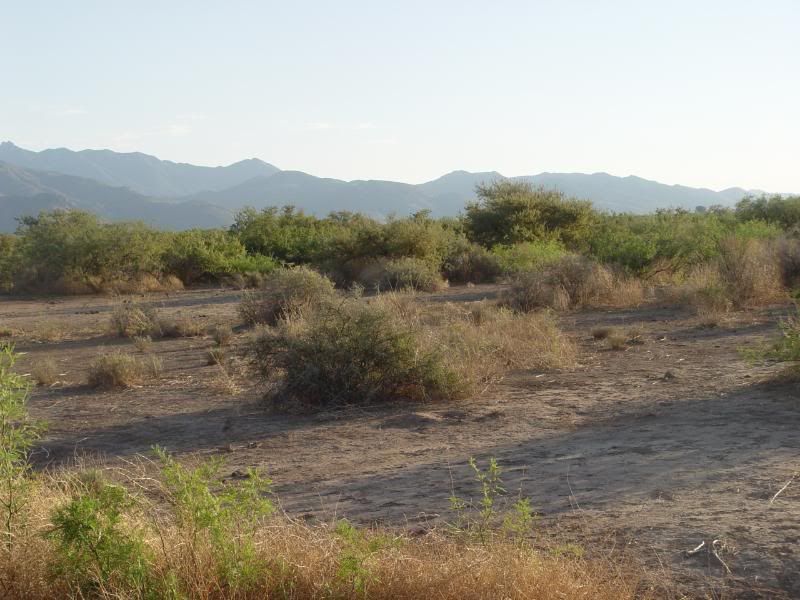
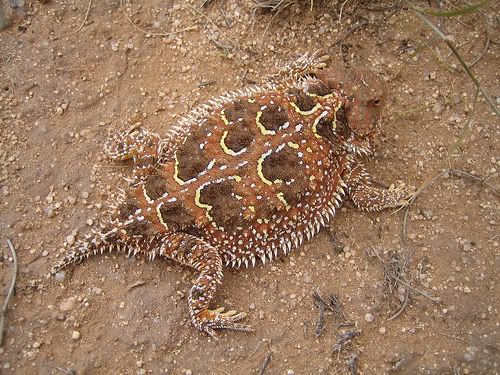
Regal Horned Lizard, Pima County AZ

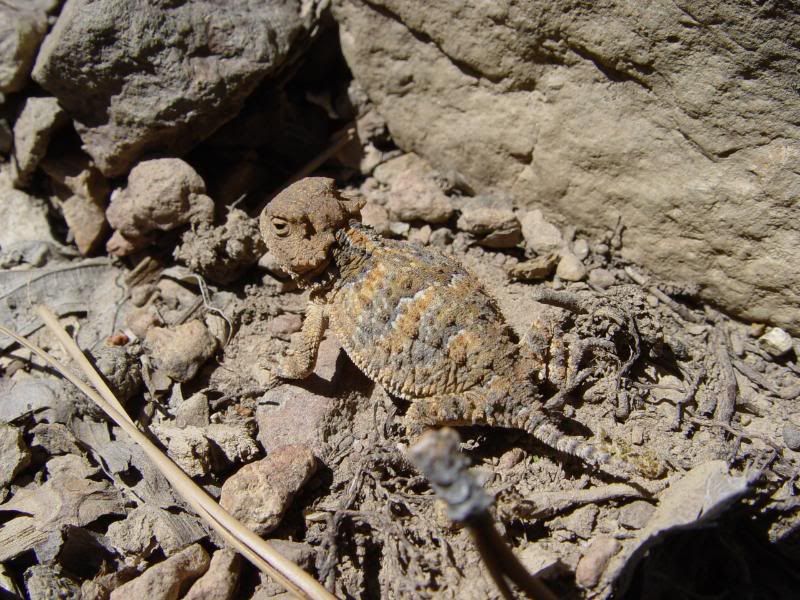
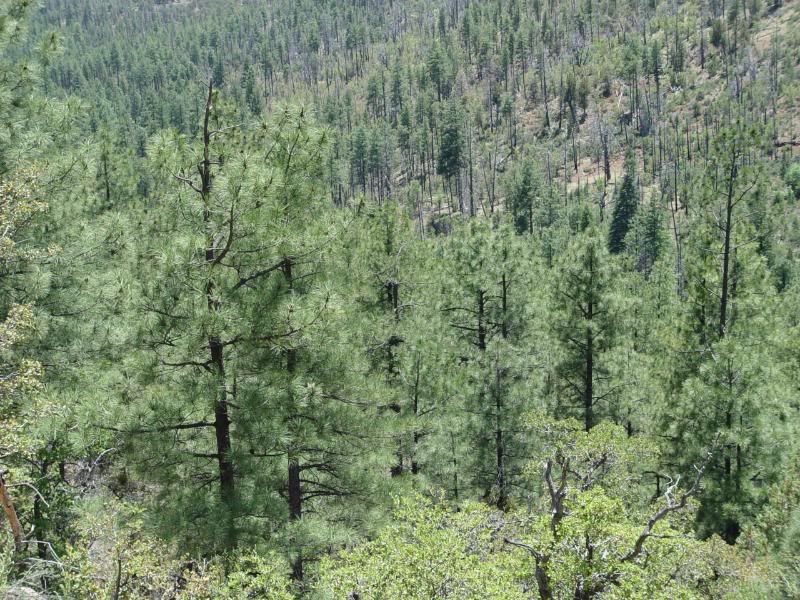
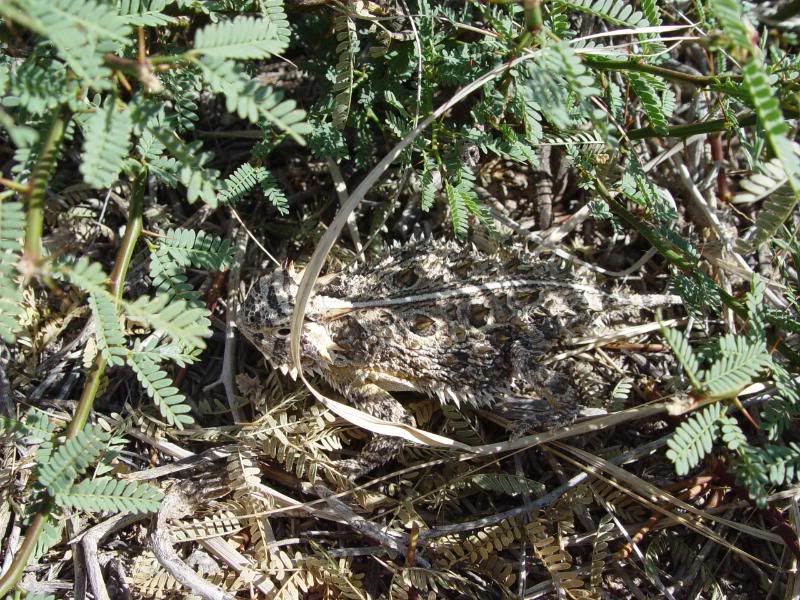
Short Horned Lizard, Gila County AZ

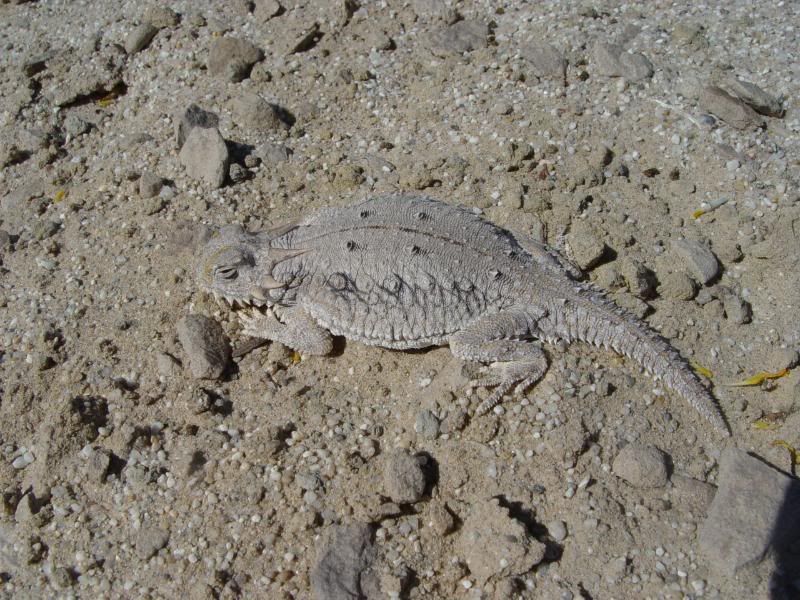
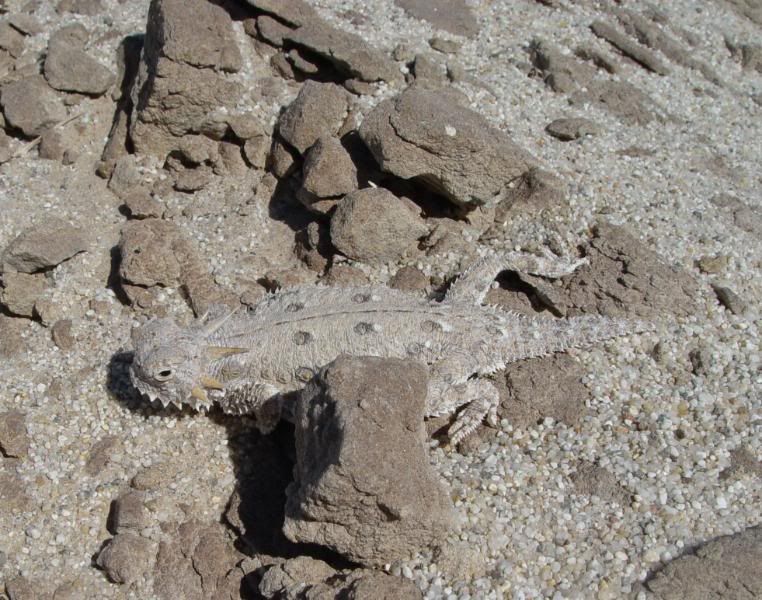
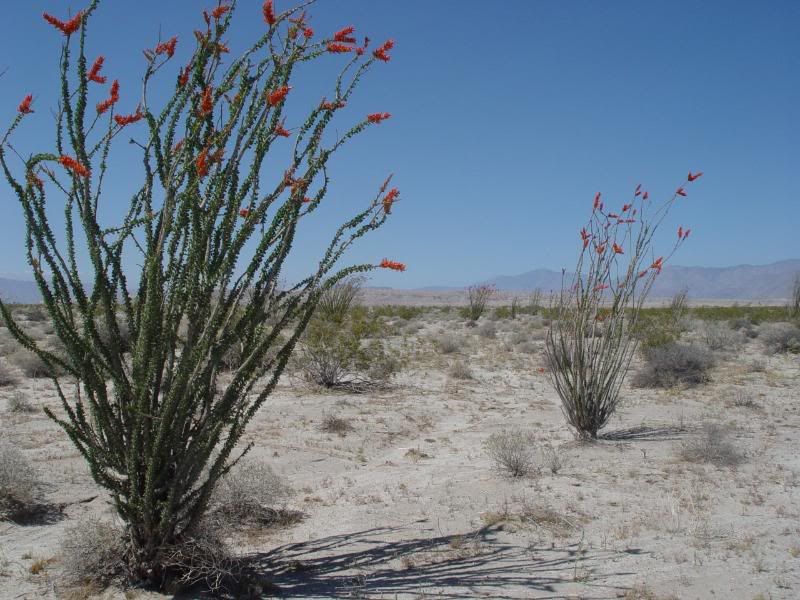
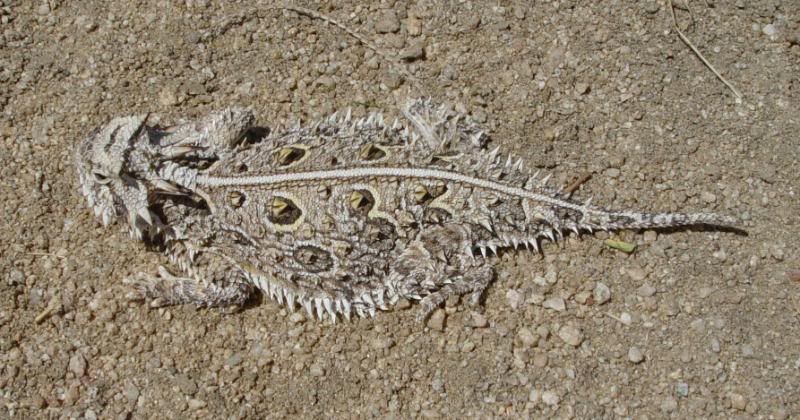
Flat-tailed Horned Lizard, San Diego County CA


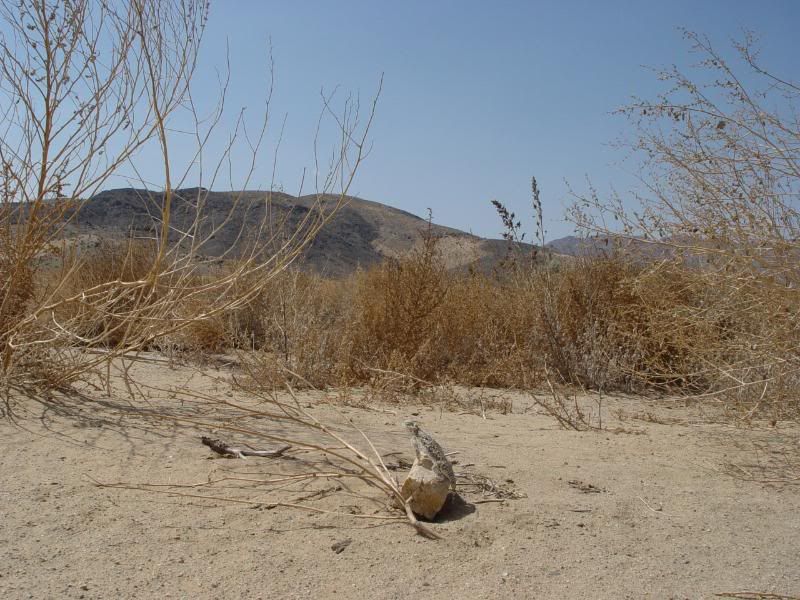
Desert Horned Lizard, San Bernardino County CA

Coast Horned Lizard, San Bernardino County CA

Round-tailed Horned Lizard, Cochise County AZ

Teaxas Horned Lizard, Cochise County AZ


Replies (22)

fireside3 Nov 11, 2008 04:27 PM

That short horn has a dorsal pattern and coloration that looks a whole lot like what is more typical in platyrhinos. What elevation was that?

>>Regal Horned Lizard, Pima County AZ
>>
>>
>>
>>Short Horned Lizard, Gila County AZ
>>
>>
>>
>>Flat-tailed Horned Lizard, San Diego County CA
>>
>>
>>
>>
>>Desert Horned Lizard, San Bernardino County CA
>>
>>
>>
>>Coast Horned Lizard, San Bernardino County CA
>>
>>
>>
>>Round-tailed Horned Lizard, Cochise County AZ
>>
>>
>>
>>Teaxas Horned Lizard, Cochise County AZ
>>
>>
>>
-----
www.groups.yahoo.com/group/HornedLizards
www.youtube.com/user/PhrynosomaTexas
Wichita Falls Reptile Rescue
Harvester Ants

Jeff Judd Nov 12, 2008 06:24 AM

This one was found at around 5000 ft. The hernandesi are so variable, it will be interesting to see how they are broken up once Richard Montanucci completes his research.

reptoman Nov 12, 2008 07:43 AM

I might be wrong but this is an example of the short horns I have seen that are more in the formerly douglassi mode, and while if it is a short horn it is all concluded under hernandesi, any one who handles these lizards knows that the hernandesi has a different frill, different color pattern and different horn arrangement. I know a hernandesi when I see one, but I also know there are several short horns that have been posted on the internet that I have argued are indeed should not be included under Hernandesi, and it will be interesting to see how Richard comes down on these as well. Cheers both of you!!!!
-----
www.phrynosoma.org

fireside3 Nov 14, 2008 06:52 PM

Right now these are all classed as strictly hernandezi ( as Montanucci spells it ), and only those in the Pacific NW ( Pygmys ) are regarded as douglassi. That is what Montanucci is working on, but something is going to need a new species name, or we are going to end up with more hernandesi subspecies I guess. After getting a few different examples of these from NM, I see that those I have seen from northern NM have cranium and bodies that look very much like the little NW douglassi, and I have seen this other I have from west-central NM which has a much more rakish/rearward facing and more pointed occipitals and less keeled dorsal and fringe scales.

I do see differences. These examples like this one Jeff posted look just like big versions of the Pygmy SHL, so I guess maybe they shuld be regarded as P. douglassi, and the Pygmy SHL regarded as their little brother subspecies, with a proper subspecies name.

>>I might be wrong but this is an example of the short horns I have seen that are more in the formerly douglassi mode, and while if it is a short horn it is all concluded under hernandesi, any one who handles these lizards knows that the hernandesi has a different frill, different color pattern and different horn arrangement. I know a hernandesi when I see one, but I also know there are several short horns that have been posted on the internet that I have argued are indeed should not be included under Hernandesi, and it will be interesting to see how Richard comes down on these as well. Cheers both of you!!!!
>>-----
>>www.phrynosoma.org
-----
www.groups.yahoo.com/group/HornedLizards
www.youtube.com/user/PhrynosomaTexas
Wichita Falls Reptile Rescue
Harvester Ants

fireside3 Nov 14, 2008 06:44 PM

Yeah, did you see the most recent poster on the yahoo group from NM? That hernandezi she has, has dorsal patterning that looks stunningly like the round-oval dorsal blotches ringed in bright white, as seen in many western examples of cornutum. Now that was an amazing example of viariability.

>>This one was found at around 5000 ft. The hernandesi are so variable, it will be interesting to see how they are broken up once Richard Montanucci completes his research.
-----
www.groups.yahoo.com/group/HornedLizards
www.youtube.com/user/PhrynosomaTexas
Wichita Falls Reptile Rescue
Harvester Ants

Jeff Judd Nov 14, 2008 10:48 PM

Yeah, I saw the pic. It is a Desert Short Horned P. hernandezi ornatissimum. They range from the four corners area south through the Painted Desert AZ down through central NM. They are a lowland form that eat pogos. Whats interesting is the Greater Short Horned P. hernandezi hernandezi occurs in the same range but at higher elevations. Here are a couple of pics I found on a search engine so I guess its alright to post them here.

fireside3 Nov 15, 2008 05:32 PM

Yeah, that's what it looks like. This gets confusing though. That's why we need Montanucci to straighten this out. Have you seen it called the P. hernandezi ornatissimum in any notable recent field guides like CNAH? See, I it was Phrynosoma douglassii ornatissimum given by Girard.

>>Yeah, I saw the pic. It is a Desert Short Horned P. hernandezi ornatissimum. They range from the four corners area south through the Painted Desert AZ down through central NM. They are a lowland form that eat pogos. Whats interesting is the Greater Short Horned P. hernandezi hernandezi occurs in the same range but at higher elevations. Here are a couple of pics I found on a search engine so I guess its alright to post them here.
>>
>>

-----
www.groups.yahoo.com/group/HornedLizards
www.youtube.com/user/PhrynosomaTexas
Wichita Falls Reptile Rescue
Harvester Ants

reptoman Nov 16, 2008 07:28 AM

I agree with Fireside, as far as the name, while all have been concluded under hernandezi--so one might assign that description, actually my understanding and I could be wrong is that too is just a P. hernandezi? And I have been harping on this for years, because those of us who do handle these lizards and have an experienced background certainly can delineate by the frill, and horns this lizard is not a P. hernandezi. There has been a move by university teaching I am aware of to simplify classifications, and I have seen this with Collared Lizards, yet there are distinct differences in certain collared lizards yet they too are concluded under one name C. collaris. I have a picture of a horned lizard from around Winslow Arizona which if I can find it can post you might find interesting as it too is orange in color very nice, but it has no horns on its head and a pronounced frill almost as large as hernandezi but but much larger than formerly Douglusii and has body similar to a solare or maybe like the one you just posted?
This one only has one horn on the out side quadrant of the frill. otherwise the horns are not evident not even nubs sort of like douglassi? My point is that there is a need for someone who handles these lizards and has a clear understanding of what they are working with to do something to change what is the current taxa on these lizards....Cheers. If I can find that picture I wil post it for your comments. It may be already something common, but the frill size and lack of horns even in a short horn makes me question it some?
-----
www.phrynosoma.org

reptoman Nov 16, 2008 07:41 AM

Hey guys, if you go to this link and you have to go down some when you get to the pictures you'll find three pictures in a row and the comment says Winslow, Arizona--this may be the same lizard not sure, I just know this one has an unusual head ornamentation--or should I say lack there of.
Image
-----
www.phrynosoma.org

reptoman Nov 16, 2008 07:42 AM

http://i306.photobucket.com/albums/nn279/Hunter-MX/PICT0215.jpg

This is the link, I didn't realize it would put the picture in for me as well...one of three shots.
-----
www.phrynosoma.org

Jeff Judd Nov 16, 2008 10:09 AM

I'm sure Montanucci will get this sorted out when he is finished with his research. When Kelly Zamudio elevated the subspecies P. douglasi douglasi to full species she stated all other sub species would now be under P. hernandezi. I didn't take it as all the subspecies merged just that they were all now under P. hernandezi.The picture you posted from the one north of Winslow (Painted Desert) is also from P. hernandezi ornatissimum. You can tell by the circular dorsal pattern, double neck blotches, upward directed horns. In the case of the one you just posted most of the horns are just worn down. If you look at the furthest right horn it is the last one standing. Here are a couple more shots of the same one to show my point.

Fireside3 Nov 23, 2008 11:06 PM

Wow, that's a smoker. Thanks for bringing that to my attention. It does look a whole lot like a solare in the body that way huh? Absolutely beautiful specimen.

>>I'm sure Montanucci will get this sorted out when he is finished with his research. When Kelly Zamudio elevated the subspecies P. douglasi douglasi to full species she stated all other sub species would now be under P. hernandezi. I didn't take it as all the subspecies merged just that they were all now under P. hernandezi.The picture you posted from the one north of Winslow (Painted Desert) is also from P. hernandezi ornatissimum. You can tell by the circular dorsal pattern, double neck blotches, upward directed horns. In the case of the one you just posted most of the horns are just worn down. If you look at the furthest right horn it is the last one standing. Here are a couple more shots of the same one to show my point.
>>
>>
-----
www.groups.yahoo.com/group/HornedLizards
www.youtube.com/user/PhrynosomaTexas
Wichita Falls Reptile Rescue
Harvester Ants

fireside3 Nov 26, 2008 07:56 PM

Not sure if I posted these here before, but since we're on the subject, here's some pictures to illustrate the difference between two "hernandezi", both from NM. The douglassi looking one is from Aztec, near Albequerque, and the other is from the mountains west of Luna, just a few miles from AZ.

-----
www.groups.yahoo.com/group/HornedLizards
www.youtube.com/user/PhrynosomaTexas
Wichita Falls Reptile Rescue
Harvester Ants

Jeff Judd Nov 27, 2008 08:48 AM

These are or were ornatum. They are different than ornatissimum. Like I was saying earlier there are isolated mountain ranges within the range of the desert short horns that have both hernandesi and ornatum in them. I think the habitat seperation is elevational.

Jeff Judd Nov 16, 2008 10:25 AM

I'll have to disagree with you on the simplification issue Lou. In the past few years the number of species of horned lizards has gone from 13 to 18. Wth P. goodei you can't even distinguish it from platyrhinos without a DNA test unless you have locality info. We showed some pics to the guy who wrote the article and he confirmed this to us. I thought naming species was for the purpose of distinguishing common groups for identification. This DNA thing is getting way out of line. Whats next,Are they going to start naming individual lizards as species because of DNA.

reptoman Nov 17, 2008 09:03 AM

Whether these lizards are all concluded under hernandezi
that doesn't bother me, but if it is a douglassi, or ornatissimum, or indeed hernandezi hernandezi, or some other designation, it seems at the moment that I see three different short horned lizard types in Arizona. There may be more but all three fall unto in my mind in he vain of the old descriptions of the short horns and the nuances that they display. There are distinctive differences(ergo the reason for posting the picture) I thought the picture was an interesting one, and I appreciate you pointing out what it probably and is actually.
I have a permit to actually keep hernandezi from Texas and might take a trip out to picture these and document these lizards when I go to Marks this Spring. These lizards while short horns indeed look different from the ones in New Mexico at 9,000 ft from Ruidoso which I have actually collected years ago. So there are nuances, I see them and I know you see them, I commented on this particular short horned because it was not in my opinion a douglassi, nor was it hernandezi in the sense of the old descriptions, the ornatissimum, is fine--I haven't spent a lot of time on this stuff Jeff, but I do see the differences, and so does one just forget scale counts because of DNA? Recently McGuire's work on Collared Lizards shows that reticulated collards have collaris DNA? So as the DNA thing becomes more aggressive I think we will see a lot of changes, as far as more difficult, or more species, I just meant that it seemed easy to me from my finite perspective and understanding; for someone to put all short horns under hernandezi. What I am referring too is--When I look at sites on states where short horns are found and described they are called Henandezi but rarely with any other designation yet I recognize these lizards as being different that the ones I collected say in New Mexico, different enough to be able to describe the differences in detail as the old scale counting herpetologists did. So I don't want to become inflexible especially in a field that is wide open, and I can learn new tricks for sure I am not that old, but I do see these differences and sometime it is a little hard to swallow, hopefully Richards work will make a difference. Also with respect to goodie, I have only seen a few pictures of goodie, and it seems as though these can be described by their nuance differences as well? Am I wrong about that? I believe I talked to Mark about the looks of the pictures I had seen of these and I immediately not knowing they were goodie thought they were great looking lizards and thought there was something slightly different. So your saying that experts are saying we must have DNA evidence to call it a goodie? It seems if they are indeed goodie, there should be some descriptive scale counts, head or horn shapes, tail length, femoral pores, etc. etc. or other descriptive that would make it different say than a platy?
As always its a pleasure to discuss this stuff with you, and I just wanted to make what I was saying a little more clear. And I do appreciate your input, and yes I may be a little bit of an old fart when it comes to this stuff, but I am also open--but open to reason, especially when it is clear to me the nuances are totally describable and the differences are clear.......
-----
www.phrynosoma.org


Jeff Judd Nov 17, 2008 10:04 AM

Thanks for your input Lou. The researchers admit in there paper that goodei is a species that formed out of hybridyzation between mcallii and platyrhinos. The study area is isolated by the Colorado and Gila rivers so gene flo is restricted. The visible characters for identifying goodei are a more circular dorsal pattern (intermidiate between mcallii and platyrhinos),
mostly white vental (like mcallii), double fringes (like mcallii) intermidiate horn structure with an extra temporal horn. The problem is the researchers failed to include the naturally occuring hybrids in CA. I know of 3 locations (North west Coachella Valley, Northeast Borrego Springs and Ocotillo where hybrids occur in CA that fit the description of goodei.Are these isolated populations of Goodei?

Here are examples of 2 different CA specimens that fit the goodei description.

reptoman Nov 17, 2008 10:55 AM

Jeff-I'll have to look back in my Hobart M. Smith book, but the California hybrids were described wayback when, I believe Ocotillo Wells if my mind serves me right was one area where hybrids could be observed???

Interstingly enough Jeff, the goddie pictures I saw are not at all like this hybrid california specie, this one you show here is very much a good cross breed between the two, certianly can see the McCalli in it, but the ones I saw from Arizsona do not have that distinctive look to it? IS that something that should be explored? IF I can look back in my e-mails I may have what was called a goodie and it looked very much like a different kind of Platy but I didn't ge the flavor of the Mccalli in it, or at least like that picture!! Let me get back on that. Who's studying this? Anyone?
-----
www.phrynosoma.org
Fireside3 Nov 23, 2008 11:16 PM

I always had more trouble distinguishing goodei from mccalli, than goodei from platyrhinos. Jeff, are you saying there are Ca. intergrades ( natural hybrids ) that say only have one row of fringes or something?

>>Jeff-I'll have to look back in my Hobart M. Smith book, but the California hybrids were described wayback when, I believe Ocotillo Wells if my mind serves me right was one area where hybrids could be observed???
>>
>>Interstingly enough Jeff, the goddie pictures I saw are not at all like this hybrid california specie, this one you show here is very much a good cross breed between the two, certianly can see the McCalli in it, but the ones I saw from Arizsona do not have that distinctive look to it? IS that something that should be explored? IF I can look back in my e-mails I may have what was called a goodie and it looked very much like a different kind of Platy but I didn't ge the flavor of the Mccalli in it, or at least like that picture!! Let me get back on that. Who's studying this? Anyone?
>>-----
>>www.phrynosoma.org
-----
www.groups.yahoo.com/group/HornedLizards
www.youtube.com/user/PhrynosomaTexas
Wichita Falls Reptile Rescue
Harvester Ants

Jeff Judd Nov 27, 2008 08:43 AM

Yes, There are several areas where hybrids have been found.

Fireside3 Nov 27, 2008 06:20 PM

No, I meant have you found what you think are goodei with single row of fringes?
-----
www.groups.yahoo.com/group/HornedLizards
www.youtube.com/user/PhrynosomaTexas
Wichita Falls Reptile Rescue

Edited on November 27, 2008 at 19:14:18 by PHGinger.

Fireside3 Nov 23, 2008 11:11 PM

I agree. I'm seeing this trend to. Much of this is people like Montanucci reclassing things and making new species out of formerly subspecies of things like coronatum, or splitting off pops that were frormerly regarded as the same species. The amount of species depends on who you talk to, some may say 13, and others 18. I think this might have a lot to do with the fact that there aren't enough real new species out there to discover anymore, and biologists need work. They appear to be resorting to this DNA "lets see if we can make a new species out of it" approach.

>>I'll have to disagree with you on the simplification issue Lou. In the past few years the number of species of horned lizards has gone from 13 to 18. Wth P. goodei you can't even distinguish it from platyrhinos without a DNA test unless you have locality info. We showed some pics to the guy who wrote the article and he confirmed this to us. I thought naming species was for the purpose of distinguishing common groups for identification. This DNA thing is getting way out of line. Whats next,Are they going to start naming individual lizards as species because of DNA.
-----
www.groups.yahoo.com/group/HornedLizards
www.youtube.com/user/PhrynosomaTexas
Wichita Falls Reptile Rescue
Harvester Ants

Site Tools