


Reptile & Amphibian Forums

Welcome to kingsnake.com's message board system. Here you may share and discuss information with others about your favorite reptile and amphibian related topics such as care and feeding, caging requirements, permits and licenses, and more. Launched in 1997, the kingsnake.com message board system is one of the oldest and largest systems on the internet.

Click for 65% off Shipping with Reptiles 2 You
Click here to visit Classifieds

AmazonDoc...........................

Tom Burke Feb 19, 2010 07:13 PM

The splitting of hairs and playing with semantics might indicate you have too much free time or that you enjoy the superior feeling you get by tutoring what you obviously consider less intelligent people. Either way I'll repeat what I've said in a different way as I've been accused of being a poor communicator by more than one person..............Even though mankind has been meddling in the Everglades for far too long, regulating the water levels in Lake Okochobee, dissecting the Everglades with irrigation canals and meddling with Mother Nature as often as they can........If we would like to have the Everglades (and the Keys) as pristine as is possible today......I am afraid banning Pythons and Boas will have little affect towards that goal. If the goal is truly to clean up the Everglades, it has to be looked at as an ecosystem and at the very least, ALL the invasive species be it mammal(including man), bird, fish, reptile or plant need to be addressed. I think putting a price tag (bounty) on ALL the invasive species in the Everglades is a great idea for the Everglades and for our economy!! It is only my opinion but I do think I could make much more money (bounty) from dogs, cats and feral pigs in the Everglades even if the numbers of Burmese Pythons were similar (although they are not). I also have to apologize that since the talk in the Senate of the Python Ban has crippled my business, (I strictly breed Boa Constrictors) I have to work twice as hard (more time) and can't follow the mindnumbing, non-productive nit picking I've seen going on here. Or maybe I'm just jealous that you seem to have so much free time!
Burke Reptiles

-----
Tom Burke
www.BurkeReptiles.com

Replies (141)

amazondoc Feb 19, 2010 08:26 PM

Surprisingly enough, I don't have a major argument with your statement.

I've been pondering the idea of bounties, and the big problem I can see off the bat is that John Q. Idjit is likely to start killing EVERY snake they see -- just in case it MIGHT be one of them pythons that they can git paid for. I'm not sure what would be a good way to get around that.

As for a bounty on cats and dogs, I think in a practical sense -- the good of the Everglades -- it might be a good thing. But, realistically speaking, you would NEVER get it passed because of all the legal, political, and emotional barriers involved. OTOH, I suppose it *might* be possible to get a "bounty" passed that pays for live-trapped dogs/cats rather than killed ones. Dunno!

Just some thoughts!
-----
----

0.1 Peruvian rainbow boa (Amaru)
2.0 Brazilian rainbow boas (TBA)
0.3 Honduran milksnakes (Chicchan, Chanir, Hari)
1.0 Thayeri kingsnake (TBA)
2.7 corns (Cetto, Tolosa, TBA)
1,000,000.1,000,000 other critters

jscrick Feb 19, 2010 09:11 PM

Yes. Live trap bounty is a very good idea.
Good local economic stimulus initiative.
Train, qualify, register, trap, pay.
Like I said before, it's just too straight forward and simple for bureaucrats to wrap their minds around.
jsc
-----
"As hard as I've tried, just can't NOT do this"
John Crickmer

brhaco Feb 19, 2010 09:37 PM

And one other little detail-though it would be far more potentially effective than any law so far passed or proposed........It STILL would have ZERO chance of eliminating the pythons.

Nor would it eliminate cats or feral hogs-although with these less cryptic species some degree of control might be accomplished.
-----
Brad Chambers
WWW.HCU-TX.ORG

Breeder of:
Green Tree Pythons
Jungle Carpet Pythons
Pastel, Pinstripe, FIRE, Piebald, Clown, Lavender Albino, Leucistic, and Spider Ball Pythons
Striped Colombian Boa Constrictors
Kenyan, Rufescens, and Conicus Sand Boas
Red Phase Western Hognose Snakes
Spider Western Hognose Snakes
Albino Western Hognose Snakes
Locality Trans-Pecos Mexican Hognose Snakes
Southern Hognose Snakes
Eastern Hognose Snakes
Tricolor Hognose Snakes
Hypo Checkered Garter Snakes
Eastern Blackneck Garter Snakes
Stillwater Hypo Bullsnakes
Patternless Bullsnakes
S. GA Eastern Kingsnakes
Locality Desert Kingsnakes
Albino Desert Kingsnakes
Hypo Desert Kingsnakes
Mexican Black Kingsnakes
Desert Phase, Striped Desert, Newport, and Coastal California Kingsnakes
Locality Mexican Milksnakes
Spotted Mexican Milksnakes
Tangerine Mexican Milksnakes
Locality Alterna
Abbott Okeetee Cornsnakes
Mexican Baird's Ratsnakes
Cape Housesnakes
Tangerine Albino African Fat -Tailed Geckos
Locality Spotted Turtles

jscrick Feb 19, 2010 09:48 PM

Sorry, in my last post, I was referring to trapping feral cats.
My post may have been out of place.
jsc
-----
"As hard as I've tried, just can't NOT do this"
John Crickmer

Tom Burke Feb 20, 2010 08:00 AM

I don't think you're giving enough credit to the Florida Fish and Wildlife department and their hunter licensing requirements. The logistics of live trapping might sound politically correct but it will not be as effective as putting a price on the head of all the invasive species. While no solution will ever be perfect and there will always be people you can label "John Q. Idjit", a bounty system, in my opinion, will be far more effective towards cleaning up the Everglades. Of course, that's only if removing the invasive species is truly the goal!! That begs the question.........how can people that are supposedly concerned with the invasive species in the Everglades think that banning pythons and boas will have any affect on the current (long) list of invasive species currently residing and damaging a fragile ecosystem?? Let's talk about the current mis-guided attempts at correcting an ecosystem that man has screwed up a long time ago in uncountable ways!! I don't know you but instead of playing with semantics, give us your thoughts on how to address the current list of invasive species damaging the Everglades taking into account the numbers of invasive species and having as a goal, the ultimate eradication of all non native species currently residing in the Everglades?
Burke Reptiles

-----
Tom Burke
www.BurkeReptiles.com

amazondoc Feb 20, 2010 10:22 PM

Hey there --

Sorry for my delayed response. I've been in Georgia all day today....left home at 3:30 this morning and just got back.

I will try to respond thoughtfuly some time tomorrow, when I'm more conscious!
-----
----

0.1 Peruvian rainbow boa (Amaru)
2.0 Brazilian rainbow boas (TBA)
0.3 Honduran milksnakes (Chicchan, Chanir, Hari)
1.0 Thayeri kingsnake (TBA)
2.7 corns (Cetto, Tolosa, TBA)
1,000,000.1,000,000 other critters

amazondoc Feb 21, 2010 11:59 AM

Okay, let's see if I can make a start on catching up. I won't be able to answer many posts right now, but I'll at least start working my way through them!

>>I don't think you're giving enough credit to the Florida Fish and Wildlife department and their hunter licensing requirements.

Could be! OTOH, I don't really think I'm dissing F and W so much as I am dissing John Q. Public.

>>The logistics of live trapping might sound politically correct but it will not be as effective as putting a price on the head of all the invasive species.

I agree with you. But ya gotta balance effectiveness with the reality of what is likely to be permitted given political realities.

>>That begs the question.........how can people that are supposedly concerned with the invasive species in the Everglades think that banning pythons and boas will have any affect on the current (long) list of invasive species currently residing and damaging a fragile ecosystem??

I don't think they particularly DO think it will effect the other species. I think the mindset may be something like: "Oh My God, look at all these other invasive species that it's too late to nip in the bud. Then look at these pythons that are just starting to be a problem. Maybe we can keep these pythons from becoming as big a problem as the other species already are. Let's go after them!"

>>give us your thoughts on how to address the current list of invasive species damaging the Everglades taking into account the numbers of invasive species and having as a goal, the ultimate eradication of all non native species currently residing in the Everglades?

Hydrogen bomb?

I don't think we will ever eradicate all non-natives. But that doesn't mean we should do nothing. And I dunno whether a ban would have any substantial effect or not -- but I understand the impulses behind the proposal. Folks feel like they ought to be doing SOMETHING, and a ban is something simple and easily understandable that makes them feel like they're Doing Good for the environment. And in this world of soundbytes, simple sells.
-----
----

0.1 Peruvian rainbow boa (Amaru)
2.0 Brazilian rainbow boas (TBA)
0.3 Honduran milksnakes (Chicchan, Chanir, Hari)
1.0 Thayeri kingsnake (TBA)
2.7 corns (Cetto, Tolosa, TBA)
1,000,000.1,000,000 other critters

Tom Burke Feb 21, 2010 01:52 PM

>>>Could be! OTOH, I don't really think I'm dissing F and W so much as I am dissing John Q. Public.

******
****It's counterproductive to "diss" anyone but the reality is that there will always be bad apples in almost any endevour we'd like to discuss but that doesn't mean we throw everything out because of them. I don't believe there will ever be a perfect solution for mankinds dismal attempts at "Fixing" Mother Nature and I certainly don't buy into the propaganda that the python ban is going to have an affect on the current and future populations of Burmese pythons in the Everglades. Of course, that's just my opinion.

>>>I agree with you. But ya gotta balance effectiveness with the reality of what is likely to be permitted given political realities.

*****
***The reality is this whole discussion was started by politician's and USFW propaganda that we need to clean up the Everglades and save our indigenous species. If we agree that is a problem, in my world, you identify the problem and come up with a solution...........I seriously doubt the python ban is that solution. We'll be spinning our wheels for nothing.........but that is becoming the standard accepted practice for all the reasons you mentioned above. It's the way we've allowed our government to operate but it still doesn't make it right. We need to demand more accountabilty from our government and the USFW and the FWC for that matter!!

>>>I don't think they particularly DO think it will effect the other species. I think the mindset may be something like: "Oh My God, look at all these other invasive species that it's too late to nip in the bud. Then look at these pythons that are just starting to be a problem. Maybe we can keep these pythons from becoming as big a problem as the other species already are. Let's go after them!"

*********
***Why are you so ready to accept so little from the people we've entrusted to supposedly protect what is a very fragile ecosystem?? The reality is adding pythons and boas to the Lacy Act won't stop burmese pythons from living and breeding in the Everglades and continueing their "march" to Washington. For that matter it won't stop Burmese pythons from being bred and sold in Florida for that matter and living in anyone's home that cares to have one as a pet. I don't think anyone associated with reptile breeding would argue that Burmese pythons don't belong in the Everglades and are more than willing to work with the government to come up with an actual solution............oh, actually we have.........the Florida ROC laws and the weather will pretty much go a long way towards that end but for some reason they expected that to work overnight. Either that or they all forgot they passed that law!!!

Hydrogen bomb?

*******
***Can't say that will be much help. I actually expected more from you but I guess you're still tired from your trip to Georgia........you weren't dropping of any Burmese pythons along the way by chance??

>>>I don't think we will ever eradicate all non-natives. But that doesn't mean we should do nothing. And I dunno whether a ban would have any substantial effect or not -- but I understand the impulses behind the proposal. Folks feel like they ought to be doing SOMETHING, and a ban is something simple and easily understandable that makes them feel like they're Doing Good for the environment. And in this world of soundbytes, simple sells.

**********
****I agree we will never eradicate all non-natives but I do expect the people that are currently in the news (Nelson, Meeks & Salazar at USFW) to come up with something better than the current BS and it shouldn't be about impulses! We should demand they approach this as a big picture and not the microcosm that is currently garnering all the publicity they want!! I believe, the current ROC laws will have the effect we're looking for and the Florida Fish and Wildlife needs to step up enforcement and give the law and the weather time to do their "thing! It's great for people to feel good but it's even greater when that feeling of good can come from actually accomplishing the goal unless the goal is actually BS propaganda and publicity. Then they've succeeded!
-----
Tom Burke
www.BurkeReptiles.com

amazondoc Feb 21, 2010 02:14 PM

Hey again Tom --

Yes, I'm still exhausted! I got 2 hours' sleep Friday night, then spent a total of 9 hours on the road, and the rest of the day walking all over the place and talking to lots of people, then came home and spent a couple hours taking care of critters before I crashed, then got back up at 3 this morning to finish taking care of critters before I crashed again. Fun and interesting and educational, but I'm worn out!

At this point in the discussion, I don't have major arguments with anything you've said. I don't know enough about the details of the problem to have a firm grasp on whether an international ban will be likely to help or not, I don't know enough about costs to have a firm grasp on how much increased enforcement of current FL laws would cost, I don't know enough about the history of bounties to know how effective they would be likely to be, and so on. I simply don't know enough about the subject to have an entrenched opinion one way or the other.

And no, I didn't leave pythons along the side of the road on my trip. I did transport several critters, but unfortunately they were coming home with me rather than going the other direction. I was at a poultry show! LOL!
-----
----

0.1 Peruvian rainbow boa (Amaru)
2.0 Brazilian rainbow boas (TBA)
0.3 Honduran milksnakes (Chicchan, Chanir, Hari)
1.0 Thayeri kingsnake (TBA)
2.7 corns (Cetto, Tolosa, TBA)
1,000,000.1,000,000 other critters

Tom Burke Feb 21, 2010 04:22 PM

Sounds like there's going to be a free range chicken barbesque soon........am I invited??
-----
Tom Burke
www.BurkeReptiles.com

amazondoc Feb 21, 2010 06:30 PM

>>Sounds like there's going to be a free range chicken barbesque soon........am I invited??

Not unless you wanna pay about 30 bucks or so per bird..... and most of the ones I brought back aren't even "show quality" birds, most of them are breeding projects.

OTOH I've got this one rooster that I just about strangled this evening.....ifn ya wanna slow cook some tough old roo, cmon down!!
-----
----

0.1 Peruvian rainbow boa (Amaru)
2.0 Brazilian rainbow boas (TBA)
0.3 Honduran milksnakes (Chicchan, Chanir, Hari)
1.0 Thayeri kingsnake (TBA)
2.7 corns (Cetto, Tolosa, TBA)
1,000,000.1,000,000 other critters

Tom Burke Feb 21, 2010 08:31 PM

Thanks but I think I'll stick with the chickens........I think the "roos" are in another camp!
-----
Tom Burke
www.BurkeReptiles.com
jscrick Feb 22, 2010 08:17 AM

With all due respect, AD, I think you miss the point. There seems to two different definitions of "occupying".

I agree with Upscale's assessment as being benign or beneficial, while you jump to the conclusion it has to be detrimental. Perhaps your experience is heavy on the domestic animal/clinical and not so much on the field study. Don't mean to ruffle your feathers.

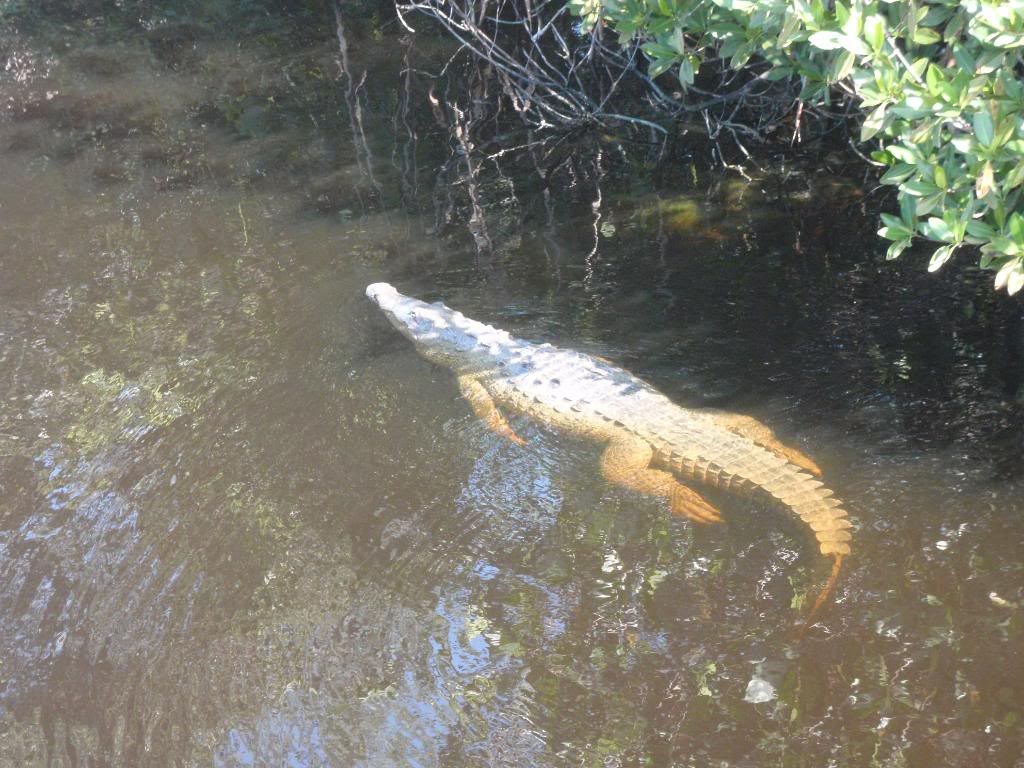
I can remember when protection of Alligators was put in place, as there was fear they would be extirpated. They've made a roaring comeback to the point of being a nuisance. Quite possibly predation of American Alligators by Pythons is beneficial.

I did come away with that from the Nature show on PBS. It was actually "documented" as happening. Proven to my satisfaction. No hypothetical.

jsc
-----
"As hard as I've tried, just can't NOT do this"
John Crickmer

jscrick Feb 22, 2010 08:20 AM

You see, the AR folks like to push the Python eating the Alligator example out there as a scare tactic. To show what a fearsome beast and how dangerous a Python can be, by taking on the ferocious Alligator and winning the battle. They don't even try to make the point that Pythons are harming the Alligator population.
jsc
-----
"As hard as I've tried, just can't NOT do this"
John Crickmer

Mcdowelli76 Feb 20, 2010 03:43 PM

I myself find it funny how we live in one of the few countries (as far as I know) that will treat one invasive species different than another based solely on what I would call curb appeal. I'm not saying that the culling of feral cats and dogs is right, but just because something is cute should have no effect on how they are dealt with. This is where our country proves it's not about cleaning up the Everglades but about what we can use as a scapegoat rather than have the majority of voters(cat and dog owners) get their undies in a bunch over a chance they are partly to blame for the state of the ecosystem.

Tom Burke Feb 20, 2010 04:03 PM

That's been my point. I find it hard to believe that a naturalist or environmental scientist would approach the problem of invasive species in the Everglades in the same way the State of Florida and our Senators and Congressman in the US Government are approaching the problem. The tunnel vision and short sightedness that is being used to create an almost hysterical atmosphere brings to mind Nero playing his fiddle as Rome burned all around him!
Burke Reptiles

-----
Tom Burke
www.BurkeReptiles.com

thecrocpot Feb 20, 2010 08:13 AM

Admittedly a tempting solution, however bounties have never worked, are prone to fraud, and tend to create more problems than they solve.

I am curious. Given that experts are working on the problem do you assume that they are incompetent and that the methods being developed and tested do not work?

I have noticed that that 1200-1300 pythons have been removed so they must be doing something right.

WSTREPS Feb 20, 2010 09:00 AM

" I am curious. Given that experts are working on the problem do you assume that they are incompetent and that the methods being developed and tested do not work? "

I have noticed that that 1200-1300 pythons have been removed so they must be doing something right.

The word expert is very subjective.

It could be said that its not an assumption that they are incompetent and that the methods being developed and tested do not work? Its a proven fact based on past performance. If you put any faith in the population estimates being bantered about 12 to 1300 being removed amounts to nothing. Far from an eradication effort, It could be classified as sustainable harvest. To collect that number of animals from a population as large as the one estimated requires not much in terms of "doing something right, you just have to go out and do some leg work and get a little lucky.

Many people including the scientist involved with the python projects use the brown tree snake as their template, a quick look revels that after decades of "research" and massive amounts of funding to date in invasives guru Gordon Roddas own words the tool box of effective eradication methods is EMPTY, They are no closer to having any answers today then they were 30 years ago and yet, they are pursuing the exact same path with the pythons that has led to no where in the past. At this time on Guam the brown tree snake population is estimated (guess) at somewhere around 80,000 , the annual take is about 5000 animals. Its no longer considered and erdacation program the new funding catch phrase is control program /i.e.,sustainable harvest program.

ERNIE EISON
WESTWOOD ACRES REPTILE FARM INC.

Tom Burke Feb 20, 2010 09:34 AM

I would have to disagree with you that bounties don't work. The reality in most instances is that there isn't any solution to total eradication although bounties have come close in many cases. Certainly the bounty programs implimented in the 1800's and early 1900's have had a significant impact on population control. Just look at wolves along with other predator controls used during that time period. I'd also like to add that today we have much more effective equipment to accomplish those goals than they had at the turn of the century. I think even recreational hunting has been a useful tool used by all the State Wildlife Agencies to control wildlife populations.
I would also have to ask where you got the information for your comment that 1300 pythons have been removed so far? I would look at that number and the person or organization making that claim with a very discerning eye!! Then again, I am very busy trying to pay the bills so I may have my head in the sand.
Burke Reptiles

-----
Tom Burke
www.BurkeReptiles.com

cychluraguy Feb 20, 2010 11:36 AM

Its hard to compaire a bounty on wild animals to animals people breed and keep as pets. If there was a bounty now every batch of kittens people are giving away in front of the store is worth $50 ea and every cat being given away on craigslist will be grabed up for a bounty. Some people will be breeding cats just for that purpose.
Bounties are still probobly a good idea because
60,000,000 cats X $50 ea = $3,000,000,000
80,000 pythons x $50 ea = $4,000,000
10,000,000 dogs x $50ea = $500,000,000
it totals less than 4 billion dollars witch on a scale of the checks the goveronment is writting lately is a drop in the bucket.
Think of how many unemployed poeple would be out catching cats dogs and pythons all over the country.

cychluraguy Feb 20, 2010 11:46 AM

We could sell all the meat to China and help the trade defficite.
Rob

antelope Feb 21, 2010 05:59 PM

Now we're hittin' on some solutions! Trade the meat to China to forego the turtles, pay John Q. Public that's outta work to get back to work, welfare goes way down, to get Food Stamps or whatever, gotta bring in a cat or dog, lol!
-----
Todd Hughes

TOM_CRUTCHFIELD Feb 20, 2010 11:18 AM

Personally I don't think ANY amount of collecting, trapping, paying bounties, etc will work or even make a dent in the population concerning the size of the Everglades Wilderness Area. Kevin Enge sent me pics of one snake caught by fishermen near the Shark River in extreme SW Florida. This entire area including the ENP, Big Cypress National Preserve, The Fakahatchee State Preserve, Picayune Strand State Forest, Florida Panther National Wildlife Reserve, etc are several thousand square miles in size of very hostile terrain with few roads. Are those numbers you quoted the TOTAL amount collected since the realization they were here? I do know that the last time I checked the liscened Python Hunters collectively have caught less than a hundred. You can be standing almost on the snakes and not see them. The freeze I'm reasonbly sure killed more snakes than all collectors have put together. I believe they are here to stay and also do not believe that they are anywhere close to the problem they are portrayed to be in nature. This whole thing is blown out of proportion and development is by far the biggest problem Florida faces along with the lack of quality water, mercury contamination, etc. I also do not believe that there are hundreds of thousands of snakes here as some people claim but they were [before the freeze at least] fairly common.
-----
Tom Crutchfield
www.tomcrutchfield.com

brhaco Feb 20, 2010 12:08 PM

As usual Tom, your on-the-spot assessment is probably 100% accurate. The burms will be there for the duration-or at least until ocean levels rise and cover the glades AND all those developments!
-----
Brad Chambers
WWW.HCU-TX.ORG

Breeder of:
Green Tree Pythons
Jungle Carpet Pythons
Pastel, Pinstripe, FIRE, Piebald, Clown, Lavender Albino, Leucistic, and Spider Ball Pythons
Striped Colombian Boa Constrictors
Kenyan, Rufescens, and Conicus Sand Boas
Red Phase Western Hognose Snakes
Spider Western Hognose Snakes
Albino Western Hognose Snakes
Locality Trans-Pecos Mexican Hognose Snakes
Southern Hognose Snakes
Eastern Hognose Snakes
Tricolor Hognose Snakes
Hypo Checkered Garter Snakes
Eastern Blackneck Garter Snakes
Stillwater Hypo Bullsnakes
Patternless Bullsnakes
S. GA Eastern Kingsnakes
Locality Desert Kingsnakes
Albino Desert Kingsnakes
Hypo Desert Kingsnakes
Mexican Black Kingsnakes
Desert Phase, Striped Desert, Newport, and Coastal California Kingsnakes
Locality Mexican Milksnakes
Spotted Mexican Milksnakes
Tangerine Mexican Milksnakes
Locality Alterna
Abbott Okeetee Cornsnakes
Mexican Baird's Ratsnakes
Cape Housesnakes
Tangerine Albino African Fat -Tailed Geckos
Locality Spotted Turtles

cychluraguy Feb 20, 2010 12:45 PM

The everglades is not really a very long term stable environment.
It is very young, 6000 to 8000 years old, does not have many endemic animals, most are just animals making to the most of its current status. In 10,000 years or so it will be either a shallow sea, mangrove swamp, or a compleetly dry forest with some lakes here and there. All this is completely natural, human interference or caused climate change may speed it up or slow it down but the evergaldes is a very temporary environment and some animals will move in and others out depending on which way it goes and I really don't think any animals,other than us, can destroy any "balance" there because there is no real natural balance.
Think of it as an intertidal area with a long tidal interval some times its underwater and sometimes it is completely dry and few animals survive in both extreemes most just move in and out.
I am all for keeping it clean and beautiful for us to enjoy but to act like somehow we will or can fix it or stop its change is futile. It will all work itself out in the end and in 25,000 years there will be another evergaldes exactly as it was 200 years ago.
Sorry but the everglades is not the amazon river or the rift valley it is here for a short time for us to enjoy and we should keep it clean and do what we can to keep it nice but not knock ourselves out trying to micro manage every detail.
Just a thought.
Rob

TOM_CRUTCHFIELD Feb 20, 2010 01:38 PM

The government's own Army Corp of Engineers, SWFWMD, AND PRIVATE DEVELOPERS WORKING HAND IN HAND FOR THE LAST 70 PLUS YEARS HAVE ALTERED THE EVERGLADES FOREVER ALREADY. The best they could do is to halt development and enforce as big a buffer zone as possible and just leave the Glades to hell alone. Mother Nature would then do the best she could with what's left....
-----
Tom Crutchfield
www.tomcrutchfield.com

brhaco Feb 20, 2010 02:09 PM

I think the only solution that has even a chance of working is to restore as much as possible of the pre-1950 flow patterns by diverting more water from the developed areas to the areas south of Okeechobee, then allowing it to flow south as unimpeded as possible. At least then perhaps the species which evolved with the system may have some competitive advantage over the invasives.

Anyone who knows a thing about ecology will tell you that it all comes down to habitat-without is, a species is doomed no matter what you do. But with sufficient good habitat, a species is all but impossible to extirpate-particularly cryptic, fecund species like your friendly neighborhood python
-----
Brad Chambers
WWW.HCU-TX.ORG

Breeder of:
Green Tree Pythons
Jungle Carpet Pythons
Pastel, Pinstripe, FIRE, Piebald, Clown, Lavender Albino, Leucistic, and Spider Ball Pythons
Striped Colombian Boa Constrictors
Kenyan, Rufescens, and Conicus Sand Boas
Red Phase Western Hognose Snakes
Spider Western Hognose Snakes
Albino Western Hognose Snakes
Locality Trans-Pecos Mexican Hognose Snakes
Southern Hognose Snakes
Eastern Hognose Snakes
Tricolor Hognose Snakes
Hypo Checkered Garter Snakes
Eastern Blackneck Garter Snakes
Stillwater Hypo Bullsnakes
Patternless Bullsnakes
S. GA Eastern Kingsnakes
Locality Desert Kingsnakes
Albino Desert Kingsnakes
Hypo Desert Kingsnakes
Mexican Black Kingsnakes
Desert Phase, Striped Desert, Newport, and Coastal California Kingsnakes
Locality Mexican Milksnakes
Spotted Mexican Milksnakes
Tangerine Mexican Milksnakes
Locality Alterna
Abbott Okeetee Cornsnakes
Mexican Baird's Ratsnakes
Cape Housesnakes
Tangerine Albino African Fat -Tailed Geckos
Locality Spotted Turtles

TOM_CRUTCHFIELD Feb 20, 2010 01:27 PM

Here is perhaps our answer as to the feral cat problem....LOL...IT'S NOT EVEN A STRAW MAN RESPONSE...

Italian TV Chef Giuseppe Bigazzi Suspended for Love of Cat Stew - AOL News

-----
Tom Crutchfield
www.tomcrutchfield.com

brhaco Feb 20, 2010 02:12 PM

" Bigazzi"-what a name for a chef !!!LMAO...
-----
Brad Chambers
WWW.HCU-TX.ORG

Breeder of:
Green Tree Pythons
Jungle Carpet Pythons
Pastel, Pinstripe, FIRE, Piebald, Clown, Lavender Albino, Leucistic, and Spider Ball Pythons
Striped Colombian Boa Constrictors
Kenyan, Rufescens, and Conicus Sand Boas
Red Phase Western Hognose Snakes
Spider Western Hognose Snakes
Albino Western Hognose Snakes
Locality Trans-Pecos Mexican Hognose Snakes
Southern Hognose Snakes
Eastern Hognose Snakes
Tricolor Hognose Snakes
Hypo Checkered Garter Snakes
Eastern Blackneck Garter Snakes
Stillwater Hypo Bullsnakes
Patternless Bullsnakes
S. GA Eastern Kingsnakes
Locality Desert Kingsnakes
Albino Desert Kingsnakes
Hypo Desert Kingsnakes
Mexican Black Kingsnakes
Desert Phase, Striped Desert, Newport, and Coastal California Kingsnakes
Locality Mexican Milksnakes
Spotted Mexican Milksnakes
Tangerine Mexican Milksnakes
Locality Alterna
Abbott Okeetee Cornsnakes
Mexican Baird's Ratsnakes
Cape Housesnakes
Tangerine Albino African Fat -Tailed Geckos
Locality Spotted Turtles

Tom Burke Feb 20, 2010 12:47 PM

I have to agree with you Tom C that the Burmese pythons currently in the Everglades will never be completely exterminated regardless of the methods employed. I also agree that mankind has been far more damaging to the Everglades by trying to do Mother Natures job rather dismally. I also believe we'll see even more python deaths in the coming months. The ones that were able to find shelter soon enough and didn't immediately freeze to death will soon start showing symptoms and dying of respiratory infections.
The bottom line is there are many problems in the Everglades and the ban of pythons and boas nationwide doesn't make much sense given the whole picture. If the people in power were actually trying to solve the Burmese python problem in the Everglades, Florida's current ROC laws will certainly be effective if they would give it time to actually work. Actually, it seems the people associated with the python ban in the government and Florida Fish and Wildlife conveniently don't even remember they have the ROC law in place in Florida. Of course, I honestly believe cleaning up the Everglades is not really what this is all about and if it is, it's certainly a doomed, mis-guided step.
Burke Reptiles

-----
Tom Burke
www.BurkeReptiles.com

TOM_CRUTCHFIELD Feb 20, 2010 01:32 PM

IT'S JUST ANOTHER ATTEMPT BY THE GOVERNMENT TO APPLY A STRAW MAN SOLUTION TO THE REAL PROBLEMS AT HAND..LOL
-----
Tom Crutchfield
www.tomcrutchfield.com

jscrick Feb 20, 2010 06:55 PM

I don't see a whole lot of lets get rid of the Python in the Everglades from the AR crowd. What I'm hearing is - "Look what the Python has done in the Everglades and now it is marching (slithering) upon our entire nation. We must stop it [through banning] before it does take over the country."

It is being attacked by the AR crowd for being INVASIVE. They cite the Everglades and S. Florida.

And they claim it is INJURIOUS. Not proven! A subjective call. The Woodrat is their Poster Child Straw Man for their Injurious case.

Let's be sure to make the distinction between Florida issues and U.S. issues, regardless of the fact that they both may have the same effect with the most recent Florida calls for legislation (S-318).

jsc
-----
"As hard as I've tried, just can't NOT do this"
John Crickmer

snakesatsunset Feb 20, 2010 01:57 PM

people have been catching and killing burmese for YEARS, and that number is whats recorded by researchers in mostly the ENP and a few waterways. I know the number is probably double that over the years for animals people have caught/ killed/ that have no idea of anything going on but are avid fishermen,hunters,bird watchers,and happen to stumble upon them. They do not report such things, they just kill them or catch them. I thinkwith predators(which they have many), people finding them by chance, cars, lawnmowers, hunters, fishermen, hobbyists, snake hunters(as by catch),and others that the numbers are pretty well in check.

Upscale Feb 20, 2010 11:52 AM

Fact is, the wilderness areas were in balance at one time, and throughout time. And given the current situation, including Burmese pythons, they are in balance right now. There is a niche for them to exist, a demand for them that no one wants to acknowledge. They are filling a void left by other predators that do not exist in those places anymore. You can not remove an apex predator and not create an imbalance. Indigo snakes are not going to replace killed pythons. They have been eliminated by current conditions. Without changing the conditions back to what favored them, you are just an idiot. You don’t get it. We need the pythons given the current environment where they are thriving.

jscrick Feb 20, 2010 10:39 PM

This is a very good point. The Pythons may actually be beneficial. Preying upon Felis domestica for example. Juvenile Pythons are a beneficial food source for others in the ecosystem.

It is generally agreed that they are established in a subtropical no-man's land of preserves in South Florida, but establishing sustainable populations further North is wild speculation, at best. It certainly has not been proven.

And as far as the Python's being injurious where established, all things considered, that has not been proven either.

jsc
-----
"As hard as I've tried, just can't NOT do this"
John Crickmer

amazondoc Feb 21, 2010 03:06 PM

>>Fact is, the wilderness areas were in balance at one time, and throughout time. And given the current situation, including Burmese pythons, they are in balance right now.

Ohhhhhhhhhhhhh come onnnnnnnnnnn............where is ANY evidence to back this up??
-----
----

0.1 Peruvian rainbow boa (Amaru)
2.0 Brazilian rainbow boas (TBA)
0.3 Honduran milksnakes (Chicchan, Chanir, Hari)
1.0 Thayeri kingsnake (TBA)
2.7 corns (Cetto, Tolosa, TBA)
1,000,000.1,000,000 other critters

Mcdowelli76 Feb 21, 2010 03:23 PM

In my opinion as many others we will never fully remove pythons from the Everglades. Given enough time(several hundred years) it would be possible for the pythons to adapt to the Everglades to where they find their niche in that ecosystem. While not in our lifetime we may end up with a distinct sub species of Burmese pythons. I doubt they would survive anywhere else in the US or they would have been there by now, but to completely rule out the chance they can find a niche is as bad as believing they could take over the US.

Upscale Feb 21, 2010 04:03 PM

It’s called opening your eyes. They are there, they are surviving. That is what the ecosystem out there consists of. It is perfect right now. It is always correct in any given moment in time. We want to call it imperfect and “correct” it. That is what is wrong. It is of course fluid and always changing and evolving. It is what it is right now. The ballance right now is the python has moved in to take the place of what was there before. A balance existed before, then we exterminated some of the top predators creating the opportunity for another to take their place. The balance is now restored, it is just different than what it was, which is completely normal. Attempting a “do over” is what is the fallacy of man. The evidence is the history that is written today. Not what you wish for, what it is.

TOM_CRUTCHFIELD Feb 21, 2010 05:49 PM

AMEN, UPSCALE..THIS IS THE MOST TRUTHFUL POST AND SHOWS GREAT INSIGHT ON YOUR PART. I had not thought of it in that manner but you really opened my eyes and gave me food for thought...
-----
Tom Crutchfield
www.tomcrutchfield.com

amazondoc Feb 21, 2010 06:33 PM

>>It’s called opening your eyes. They are there, they are surviving.

Survival of snakes isn't the same thing as a balanced ecosystem....not by a long shot....
-----
----

0.1 Peruvian rainbow boa (Amaru)
2.0 Brazilian rainbow boas (TBA)
0.3 Honduran milksnakes (Chicchan, Chanir, Hari)
1.0 Thayeri kingsnake (TBA)
2.7 corns (Cetto, Tolosa, TBA)
1,000,000.1,000,000 other critters

Upscale Feb 21, 2010 06:48 PM

>>Survival of snakes isn't the same thing as a balanced ecosystem....not by a long shot....

And here is the great difference for all to see. Survival of snakes IS crucial to a balanced ecosystem. Snakes NOT surviving is the imbalance. We have taken out what can not survive there, and we want to also take out what can. Pythons there is far more perfect than nothing there. In fact, it would be wrong to deliberately remove them. SOMETHING does belong there, or there would be nothing. "Nothing" is the enemy of the ecosystem, get it?

amazondoc Feb 21, 2010 07:02 PM

>>>>Survival of snakes isn't the same thing as a balanced ecosystem....not by a long shot....
>>
>>
>>And here is the great difference for all to see. Survival of snakes IS crucial to a balanced ecosystem. Snakes NOT surviving is the imbalance. We have taken out what can not survive there, and we want to also take out what can. Pythons there is far more perfect than nothing there. In fact, it would be wrong to deliberately remove them. SOMETHING does belong there, or there would be nothing. "Nothing" is the enemy of the ecosystem, get it?
>>

Sorry, but you really seem to be speaking gibberish. According to your logic, invasions of lionfish wiping out coral reef fish are "balanced" because the lionfish weren't there before...
-----
----

0.1 Peruvian rainbow boa (Amaru)
2.0 Brazilian rainbow boas (TBA)
0.3 Honduran milksnakes (Chicchan, Chanir, Hari)
1.0 Thayeri kingsnake (TBA)
2.7 corns (Cetto, Tolosa, TBA)
1,000,000.1,000,000 other critters

natsamjosh Feb 21, 2010 07:19 PM

>>Sorry, but you really seem to be speaking gibberish. According to your logic, invasions of lionfish wiping out coral reef fish are "balanced" because the lionfish weren't there before...
>>-----

Hmmmm, seems to me you are not following the simple logic. Your lionfish analogy is flawed. The pythons are not wiping out other snakes, they are TAKING THE PLACE of animals that WE HUMANS wiped out. The indigo snake example that Upscale used is excellent. Or are you going to claim, without evidence, that humans wiping out species like indigo snakes and other top predators don't have any effect on the ecosystem???

amazondoc Feb 21, 2010 07:31 PM

>>Hmmmm, seems to me you are not following the simple logic. Your lionfish analogy is flawed. The pythons are not wiping out other snakes, they are TAKING THE PLACE of animals that WE HUMANS wiped out. The indigo snake example that Upscale used is excellent. Or are you going to claim, without evidence, that humans wiping out species like indigo snakes and other top predators don't have any effect on the ecosystem???

Jeez, you really do seem to be obsessed with accusing people of making claims they haven't made...

Let's see...pythons are predators invading the Everglades. Lionfish are predators invading the Caribbean and Atlantic seaboard. Pythons were probably released in part because of hurricane damage. Lionfish were probably released in part because of hurricane damage. Pythons eat the native animals. Lionfish eat the native animals. Large predators have been removed from the Everglades. Large predators have been removed from the Caribbean.

No, you're absolutely right. There's no parallel at all. Really....LOL!
-----
----

0.1 Peruvian rainbow boa (Amaru)
2.0 Brazilian rainbow boas (TBA)
0.3 Honduran milksnakes (Chicchan, Chanir, Hari)
1.0 Thayeri kingsnake (TBA)
2.7 corns (Cetto, Tolosa, TBA)
1,000,000.1,000,000 other critters

WSTREPS Feb 21, 2010 07:36 PM

Sorry, but you really seem to be speaking gibberish. According to your logic, invasions of lionfish wiping out coral reef fish are "balanced" because the lionfish weren't there before...

What Upscale is saying is nothing like you have twisted it into,

If in fact the lion fish are wiping out the entire reef that they have been introduced to that would be a completely different scenario then a species assimilating into a new eco system, finding a nitch, reaching a balance as it appears that pythons will do. Existing at normal levels along with the other species in that system. In the case of the pythons they seem to be fitting into the everglades in the same manor as they fit into their previous range. When I confronted the researchers to present me with "new" information, something that they had uncovered that would indicate that pythons are doing something abnormal, something that I couldn't have predicted ............all they came back with was, well they are not eating as many cats as some people think. I don't know what some people think but I would have been shocked if they were in fact chowing down a lot of cats. So the answer was the researchers have found NOTHING to indicate that the pythons are doing anything but filling a natural role as a large predatory snake, and doing so in a typical fashion.

The fact is the pythons are not feeding more ravenously, they are not reproducing at a higher rate and by all indications not populating to densities that are higher then what is normal for the species. The pythons are not showing themselves to be any more or less dominate in the glades then a they are anywhere else in their range.

ERNIE EISON
WESTWOOD ACRES REPTILE FARM INC.

amazondoc Feb 21, 2010 08:14 PM

>> If in fact the lion fish are wiping out the entire reef that they have been introduced to that would be a completely different scenario then a species assimilating into a new eco system, finding a nitch, reaching a balance as it appears that pythons will do.

Upscale didn't say anything about "they might reach a balance in the future". What he/she said was: "It is perfect right now. It is always correct in any given moment in time. "

That is nonsense.
-----
----

0.1 Peruvian rainbow boa (Amaru)
2.0 Brazilian rainbow boas (TBA)
0.3 Honduran milksnakes (Chicchan, Chanir, Hari)
1.0 Thayeri kingsnake (TBA)
2.7 corns (Cetto, Tolosa, TBA)
1,000,000.1,000,000 other critters

WSTREPS Feb 21, 2010 09:26 PM

Upscale didn't say anything about "they might reach a balance in the future". What he/she said was: "It is perfect right now. It is always correct in any given moment in time. "

I never said that the pythons were not currently fitting in, If read thru the rest of what I said I go on to qualify my position by stating.

"In the case of the pythons they seem to be fitting into the everglades in the same manor as they fit into their previous range."

Within the total context of what I said,my complete statement has to do with how the snakes fit in currently and most likely how they will fit in the future within the on going process of environmental evolution.

Instead of defensively playing the cut and paste, Internet forum "sound bite game" you might be better served to view the statements as a whole and try to learn something or at least be inspired to look into the matter on a deeper level from someone who has put in more time, done more leg work and research, and has more actual experience on this subject then any body else who has participated in this discussion.

ERNIE EISON
WESTWOOD ACRES REPTILE FARM INC.

jscrick Feb 22, 2010 08:01 AM

You are correct. Playing God, even with the best of intentions rarely works. It certainly isn't cost effective. You can't put the Gene back into the bottle I'm afraid.
You see, we are dealing here with "what ifs" and "wouldn't it be nice if...". Moral platitudes.
jsc
-----
"As hard as I've tried, just can't NOT do this"
John Crickmer

thecrocpot Feb 20, 2010 11:01 PM

Is this more convincing? From the report

ECONOMIC EVALUATION OF THE ROLE OF BOUNTIES IN VERTEBRATE PEST MANAGEMENT

"Bounty schemes have been utilized throughout the world as a financial incentive to induce control of pest species and hunting. However, most schemes have been condemned by their implementing agencies as a costly, misguided and ineffective tool for addressing pest problems. Fraud has become synonymous with all bounty systems with well documented evidence of widespread abuse by scheme participants. Such payments are often introduced in the absence of an adequate assessment of alternative solutions to a perceived pest problem and as a response to political pressure...

Bounty payment is often considered by scheme participants to be an ongoing source of income rather than an incentive to increase control activity...

Despite these failings and with little evidence of the past success or potential of such schemes, pressure to introduce traditional bounty schemes to address certain pest animal problems still occurs."

Sorry it just won't work.

TOM_CRUTCHFIELD Feb 21, 2010 05:49 AM

Nothing is going to work effectively enough anyway with the exception of Mother Nature and the cold. The Everglades is too big and is too remote....This is my opinion...
-----
Tom Crutchfield
www.tomcrutchfield.com

brd Feb 21, 2010 12:55 PM

Well, this is my opinion and some of my thoughts.

In one of the wildlife management areas that I have hunted in, there are check points. Everything that is killed has to be photographed, weighed, and documented. For example, Chassahowitzka National Wildlife Refuge, I shot a hog a few years back and he was weighed, photographed, and it was documented.

If you give out a bounty license to people who apply and pay for one, if done properly, and with some thought and input from people, it could work.

First, designate certain weekends for bounty hunting. Don't set it up as to where people can go at their own convienence without check points and supervision. This will help stop the fraud that is associated with bounty's.

Second, establish check points, both coming in as well as going out. When you come in, you sign in, when you leave, you sign out. If someone's vehicle is inspected uppon arrival, they can't hide anything. Now, people might say, who is going to man the check points. Well, the herp community has said that they will help any way they can to help clean up the ENP. Maybe we could get volunteers from the herp community or even alternate between the licensed bounty hunters to monitor themselves. But somneone from FWC would have to be present somewhere to over see it all, and officialy document everything .

Third, you sent an amount for each invasive species. I don't think a cat's bounty should be as high as a burm bounty. Cats are easier to find, and if they were the same people would just load up on cats. Burms seem to be the main focus, so set their bounty higher. For example, $5.00 for a cat, and $50.00 for a burm. Regardless of animal, set a price for it. All animals must be destroyed. What you do with the dead animal is up to you, the bounty hunter. Have a disignated disposal location. No one is going to want to keep a dead cat. But someone will keep a hog, so they could clean it right there and take the meat home. Wild hog is pretty good. Some people even eat snake meat, and use their hide for leather.

If people really want to clean up the ENP, you can't single out one species over the other. I happen to like cats and I like all snakes. But it has to be viewed as a clean up project, or restoration project, so it may not always be a pretty picture, but the bottom line is, it must be done, like it or not.

If everone put their heads together, I believe a system could be designed, and work well. Lets all think of ideas and give them to USARK, they seem to be helping us the most. And if you are not a member of USARK, then join now.

What do you think?

antelope Feb 21, 2010 06:19 PM

Look, I'ma tell you what, you PAY me to HUNT pythons, I HUNT pythons, You Pay me to KILL pythons, I guaran-damn-tee you I'll KILL me some lotta pythons. If it were lucritive enough to do so, I'd do it. But, while I'm out there, I'ma gonna kill me some gatos! And monkeys.
-----
Todd Hughes

TOM_CRUTCHFIELD Feb 21, 2010 06:38 PM

Here's my girlfriend Patty, getting ready to go Python Hunting. She wants the right amount of firepower in case she's assaulted by a pack of angry ones...LOL


-----
Tom Crutchfield
www.tomcrutchfield.com

WSTREPS Feb 21, 2010 08:01 AM

Bounty payment is often considered by scheme participants to be an ongoing source of income rather than an incentive to increase control activity...

The same could be said of project funding. .......,

Placing a bounty on the burms would be worthless for many reasons. What's been going on is people all go to same "hot spots" and catch pythons. With enough hunting pressure. This will eventually cull the population in these areas, the same as it does in the animals natural range. Once these areas are cleaned out, the novelty of catching a big snake has worn off, or there's no more hype to aid ones own self promotion the hunting activity will die off and the snakes will return.

Over the past few years Ive spent a fair amount of time looking for pythons in places that no body else is, and where the pythons should be given the estimated amount of time they have been established along with perceived population numbers and migration ability's, if they are on the move they are doing it VERY slowly.

ERNIE EISON
WESTWOOD ACRES REPTILE FARM INC.

Tom Burke Feb 21, 2010 08:03 AM

I think the real point we're all trying to get at and what is generating all this discussion is the fact that the current bills being discussed in the US Senate and the Florida State Senate (S373 and the Florida 318)is also not the answer and will create as many problems (if not more) than it solves. Florida already has a very good plan with the current ROC law that just begs the question why they aren't willing to give it time to work.
Burke Reptiles

-----
Tom Burke
www.BurkeReptiles.com

TOM_CRUTCHFIELD Feb 21, 2010 08:33 AM

Considering the west coast of Florida the Pythons seem not to be very common west of Hiway 29. I saw 3 snakes that came from Collier Seminole State Park, saw one lg roadkill on Hiway 29 north of Alligator Alley about one mile, and I had a pic of a snake caught down by the Shark River and that's all I've seen or am aware of. Right where I am all the way north to Homestead Airforce Base on the coast and west as far as Ochoppee seems to be where you're more likely to see one. Around Shark Valley is a good place along the Tamiami Trail. To be honest with you it's been said the first ones were seen near Flamingo. It's rather odd that the hotspots are where they are. It is almost like a scientific experiment gone bad. I would really like to know where the original snakes came from because the average person wouldn't differentiate "wild areas" in terms of realease. We have the Flamingo and Shark Valley in the ENP as hotspots. The 3 snakes [perhaps more now] at Collier Seminole State Park etc all are well regulated patroled areas by law enforcement and other employees. Why are these snakes commonest in areas heavily regulated? It just doesn't make sense to me.....
-----
Tom Crutchfield
www.tomcrutchfield.com

Tom Burke Feb 21, 2010 10:17 AM

I am not a scientist and I'm not sure if this is actually possible but if I was a scientist, I would like to get DNA samples from all the captured pythons in the Everglades over a long enough period of time to establish (genetically as opposed to hypothetically) their growth or spread in the Everglades by natural reproduction as opposed to introduction! Am I crazy here or does that make too much sense??
Burke Reptiles

-----
Tom Burke
www.BurkeReptiles.com

TOM_CRUTCHFIELD Feb 21, 2010 10:27 AM

Tom, that's the most interesting thing of all and one of the reasons I just posted what I did. It seems that all or almost all the snakes DNA tested and it's quite a few seem to be very closely related. I've read the paper but not being a geneticst it's a bit hard to peruse BUT the gist is they came from the same gene pool. Weird isn't it and the hotspots are in heavily patroled regulated areas. My daughter once picked a Tilansia up and was immediately told that she could have been arrested for tampering with nature [at Flamingo at night was the time] and made to put the air plant back on the ground. Of course over time it will die on the ground....It would not be easy for someone to dump an unwanted pet at Flamingo....
-----
Tom Crutchfield
www.tomcrutchfield.com

Tom Burke Feb 21, 2010 11:20 AM

Tom, that's the most interesting thing of all and one of the reasons I just posted what I did. It seems that all or almost all the snakes DNA tested and it's quite a few seem to be very closely related. I've read the paper but not being a geneticst it's a bit hard to peruse BUT the gist is they came from the same gene pool. Weird isn't it and the hotspots are in heavily patroled regulated areas. My daughter once picked a Tilansia up and was immediately told that she could have been arrested for tampering with nature [at Flamingo at night was the time] and made to put the air plant back on the ground. Of course over time it will die on the ground....It would not be easy for someone to dump an unwanted pet at Flamingo....

I wasn't aware of the DNA studies you're refering to but if all the pythons tested were from a wide geographical area and were related, I'd be curious what the conclusions the scientists involved in that study arrived at themselves!! I'm not a scientist and I may be way off base but I would think if that was the case, depending on the geographic distance between individual pythons, the length of time studied and the number of pythons tested, there's only 2 conclusions I can see. One: the tested pythons are spreading through natural breeding from a small but related initial group in the Everglades. This conclusion would have to look at natural barriers, if any. Two: The pythons are being helped by car rides from a related source. HMMMMMMM.......who would want to do that?? If I was a private person that wanted to release my pets into the Everglades, I don't think spreading the gene pool geoographically would be my concern.
Burke Reptiles

-----
Tom Burke
www.BurkeReptiles.com

natsamjosh Feb 21, 2010 11:46 AM

Hi Tom,

The study is posted at:

http://www.usark.org/uploads/FloridaBurmGenetics.pdf

I'm not a scientist either so, but in my amateur opinion, the study was a bit of a let down. I think it was disappointing, if not suspicious, that the study was not taken to the next logical step, which would be to sample pet/captive pythons to compare to those captured from the Everglades.

Thanks,
Ed

amazondoc Feb 21, 2010 02:26 PM

>>Hi Tom,
>>
>>The study is posted at:
>>
>>http://www.usark.org/uploads/FloridaBurmGenetics.pdf

Thanks for posting that link.

I haven't read the whole paper yet, but I'm sure it'll be very interesting.

Here's the take-home message from the paper's summary: "The lack of genetic differentiation of most Burmese Pythons in ENP may indicate either a panmictic freely interbreeding population in the Park, or alternatively, limited genetic variation in the captive- bred populations that are the likely source of these snakes. "

Mostly, it just means that there don't seem to be genetically isolated populations of pythons within the park.

I'll try to read the rest of the paper tonight or tomorrow.
-----
----

0.1 Peruvian rainbow boa (Amaru)
2.0 Brazilian rainbow boas (TBA)
0.3 Honduran milksnakes (Chicchan, Chanir, Hari)
1.0 Thayeri kingsnake (TBA)
2.7 corns (Cetto, Tolosa, TBA)
1,000,000.1,000,000 other critters

jscrick Feb 21, 2010 09:29 PM

Most normal looking "Pet" Burmese Pythons are byproducts of captive genetic inbreeding specifically for desired morphological traits.

The probability that normal looking Burmese found in the wild would be heterozygous for at least one identifiable morphological trait should be at least 50%, if they were indeed released by pet owners as has been claimed.

If "Pet" Burmese released by the public are indeed breeding in South Florida, why has practically zero Burmese Morphs if any been found? If they have been found in any significant numbers please show me the data.

By the way, the figure thrown around on how many "Pythons are imported" is irrelevant in the case of Burmese. Those numbers are referring to Ball Pythons for the most part. Ball Pythons are currently not at issue. A convenient and significant ambiguity or omission of fact.

jsc
-----
"As hard as I've tried, just can't NOT do this"
John Crickmer

TOM_CRUTCHFIELD Feb 21, 2010 09:39 PM

John, to date I don't believe any morph Burmese of any kind has ever been found in the wild by researchers, hunters, or anyone else thus far....Before we get the jack-in-the-box pop up I'm reffering to animals in the ENP etc not perhaps some obscure news story of an escaped Python in Jacksonville or other City etc. I'm reffering to the established population here..
-----
Tom Crutchfield
www.tomcrutchfield.com

brd Feb 21, 2010 09:43 PM

Tom, do you know if they have ever found any Doberman morphs in the ENP? LOL

amazondoc Feb 21, 2010 09:53 PM

>>Most normal looking "Pet" Burmese Pythons are byproducts of captive genetic inbreeding specifically for desired morphological traits.
>>
>>The probability that normal looking Burmese found in the wild would be heterozygous for at least one identifiable morphological trait should be at least 50%, if they were indeed released by pet owners as has been claimed.

Not necessarily, especially if the majority of the founding introductions were from the 80s or 90s.

But in any case, their statement in the introduction -- "Because pythons have been sampled from geographically disparate locations in Everglades National Park (Snow, 2006), it is believed that these introductions are the result of several instances of pet release" -- doesn't have any effect on their DNA results.

>>If "Pet" Burmese released by the public are indeed breeding in South Florida, why has practically zero Burmese Morphs if any been found?

Maybe because the morphs are more expensive and also more easily saleable, and thus are less likely to be released? I dunno! I have no idea, myself, whether the majority of the founding escapees are from private owners or damaged import or breeding facilities. It would be interesting to do further DNA research to try to figure that out, though.
-----
----

0.1 Peruvian rainbow boa (Amaru)
2.0 Brazilian rainbow boas (TBA)
0.3 Honduran milksnakes (Chicchan, Chanir, Hari)
1.0 Thayeri kingsnake (TBA)
2.7 corns (Cetto, Tolosa, TBA)
1,000,000.1,000,000 other critters

TOM_CRUTCHFIELD Feb 21, 2010 10:52 PM

What is wrong with you. You need to get a life. First I started the Burmese morph deal or played a major role by obtaining the first albino Burmese in the early 80'. By the late 80's there were Green Burmese, Labyrinths, and albino's mixed in all. Normals were RARE even then. By the 90's you would have been hard put to find a normal burmese that wasn't a morph or het. You know nothing of the history of Burmese here or even Herpetoculture yet you delight in contradicting other people who do. Also you try to pick apart anyones statements like UPSCALE and others [anyone for that matter] just because you are not smart enough to understand what he really said. You have NO understanding of the history of the Glades or Herpetoculture for that matter. Your statements regarding morphs are a weak attempt to argue with someone. My girlfriend likes chickens also but she has a pet rooster [one]. She's only been into herps about 10 years and has forgot more about herps than you will ever know. The guys your attacking are guys who have done this as long as you've been alive. The statements you just made are not only false but downright stupid..I shouldn't even have answered you because it's like rewarding bad behaviour in a child.. Here's Patty , my girlfriend and a lover of chickens going Python hunting....The heavy fire power is if she's attacked by packs of them..LOL..


-----
Tom Crutchfield
www.tomcrutchfield.com

amazondoc Feb 21, 2010 11:32 PM

Kisses to you too, Tom.

Unlike you, I am not attacking *people* but rather *arguments* and *claims*. If you think my arguments or claims are faulty, feel free to offer evidence to the contrary.

As for the morphs -- you said:

>>First I started the Burmese morph deal or played a major role by obtaining the first albino Burmese in the early 80'.

If the FIRST albinos were obtained in the early 80s, then the albinos, much less any other morphs, would not have started becoming COMMON in the pet trade for several years AFTER that -- and would have been expensive probably for several years after THAT. So, if the releases occurred especially in the 80s and probably into the 90s, they would likely have been of normal animals. And notice that I'm not claiming that the burms in the glades DID come from pet releases -- I have no idea whether they did or not. I am only saying that the absence of obvious morphs in the glades does not disprove the theory of pet releases.

>>By the 90's you would have been hard put to find a normal burmese that wasn't a morph or het.

I've never done a scientific analysis of the ratio of normal vs. morph burms in the trade, but here's a very small start on a survey: if you type in "burmese python for sale" into google, then click on the first link, you'll get to an ad compiler called "oodles.com" . In their current listings of burmese pythons, as best I can tell (trying to eliminate duplicate ads) there are for sale:

granite -- 2
visually normal -- 23
albino -- 11

So, no, even today it isn't hard to find a burm that is at least visually normal. Of course, we can't tell about the hets without breeding em!
-----
----

0.1 Peruvian rainbow boa (Amaru)
2.0 Brazilian rainbow boas (TBA)
0.3 Honduran milksnakes (Chicchan, Chanir, Hari)
1.0 Thayeri kingsnake (TBA)
2.7 corns (Cetto, Tolosa, TBA)
1,000,000.1,000,000 other critters

Calparsoni Feb 22, 2010 12:50 AM

You're kidding me right you are actually going to argue python color morphs with Tom? He wasn't bragging when he said that he introduced color morphs in burms into this country (the rest of the free world?). You are more entertaining than that guy who was arguing with Tom about crocodiles on here.
You have truly inspired me. If I ever meet Ritchie Blackmore I am going to show him how to REALLY play that lead break in "Highway Star" and while I'm at it I'll give a few tips on how to play that riff to "Smoke on the Water" and while I'm at it I'll show Eddie VanHalen a thing or 2 as well.

amazondoc Feb 22, 2010 01:23 AM

>>You're kidding me right you are actually going to argue python color morphs with Tom?

Hey, Tom is allowed to forget dates just as much as anyone else.

That article by Bob Clark was written in 1996 -- 14 years ago -- much closer to the origins of those morphs than today. Unless you want to believe that Bob was lying about the dates when he wrote that article, then I'd say he's more of an authority on them than anyone else here.
-----
----

0.1 Peruvian rainbow boa (Amaru)
2.0 Brazilian rainbow boas (TBA)
0.3 Honduran milksnakes (Chicchan, Chanir, Hari)
1.0 Thayeri kingsnake (TBA)
2.7 corns (Cetto, Tolosa, TBA)
1,000,000.1,000,000 other critters

Mcdowelli76 Feb 22, 2010 01:29 AM

you do attack people for mis-spelling I noticed. As for the morph thing, My opinion is in favor of Tom hands down. I love the book "Lizard King" and while someone who might not be able to read it with a un-bias mind might get the wrong idea of all involved it tells alot of cool history. Cathy Love has a lot of great history on her site as well as Tom. I just wish I was old enough to have met Mr. Wong at the time.

amazondoc Feb 22, 2010 01:30 AM

>>you do attack people for mis-spelling I noticed. As for the morph thing, My opinion is in favor of Tom hands down.

Read the article by Bob Clark that I linked to in the "P.S." post, and then tell me what you think...
-----
----

0.1 Peruvian rainbow boa (Amaru)
2.0 Brazilian rainbow boas (TBA)
0.3 Honduran milksnakes (Chicchan, Chanir, Hari)
1.0 Thayeri kingsnake (TBA)
2.7 corns (Cetto, Tolosa, TBA)
1,000,000.1,000,000 other critters

Mcdowelli76 Feb 22, 2010 01:45 AM

My lap top wouldn't let me bet I do have the Reptiles magazine it's from. I'm a big fan of Bobs as well. I have yet to meet him but since I work in OKC at least a few weeks a year I may get to yet. I am but a lowly carpenter and was stating my opinion.

1.2 Coastal Carpets (Ursilla,Igor,Giselle)
1.1 Jungles (Fiona,Angus)
1 Ball normal (Nelly
1 Blackback (Carl)
1 Cinny Ball (Gustave)
1 BCo. (Chuey)

amazondoc Feb 22, 2010 01:49 AM

>>My lap top wouldn't let me bet I do have the Reptiles magazine it's from. I'm a big fan of Bobs as well.

It's in the April 96 issue, if you want to look it up.

In summary, the main points as related to this discussion are:

1. the first captive bred albino burms were hatched in 1986.
2. the first captive bred patternless green hatched in 1987.
3. the first captive bred labyrinths in 1989.
4. the first granites were brought from Thailand in 1996.
-----
----

0.1 Peruvian rainbow boa (Amaru)
2.0 Brazilian rainbow boas (TBA)
0.3 Honduran milksnakes (Chicchan, Chanir, Hari)
1.0 Thayeri kingsnake (TBA)
2.7 corns (Cetto, Tolosa, TBA)
1,000,000.1,000,000 other critters

amazondoc Feb 22, 2010 01:52 AM

>>It's in the April 96 issue, if you want to look it up.

Sorry, that should say MARCH 96. See, I can forget dates too!
-----
----

0.1 Peruvian rainbow boa (Amaru)
2.0 Brazilian rainbow boas (TBA)
0.3 Honduran milksnakes (Chicchan, Chanir, Hari)
1.0 Thayeri kingsnake (TBA)
2.7 corns (Cetto, Tolosa, TBA)
1,000,000.1,000,000 other critters

TOM_CRUTCHFIELD Feb 22, 2010 06:03 AM

On a serious marketing standpoint by the year 1990 albino Burms were already then only a few hundred dollars each I believe primarily because of Bob Clark and Mark Bell.Hets were the cheap rage in Herpetoculture then. I didn't have time to try to produce big numbers and I knew the price would drop rapidly. Even by the time of 1988 I believe I was only selling them then [albino's] for about $1,000 ea. That's about the point I lost interest because breeding for me was a sideline and not important in my business plan. I always strived to get the newest best herps for potential breeders. I alwas bred stuff but things I really liked and not just for money. My real passion then and today are West Indian Herps. I first bred Rhino Iguanas in the late 70's [huge deal then]. Cyclura and West Indian Boas were my real love. You have to remember EVERYONE was buying het albino's and any other het Burmese morph they could find. For a short few years the import of wild normal Burmese were almost if not completely stopped because Thailand shut down exports of living snakes and allowed only skins to be exported. Amazon Doc, if you're really interested and not just getting your jollies from trying to ridicule people you don't even know why don't you check the records of TRAFFIC. I have before for a program I developed. It means TRADE RECORD ANALYSIS OF FAUNA AND FLORA IN COMMERCE and is the arm of the world wildlife fund that monitors who's doing what and where worldwide. Give us the numbers and origin of all Burmese exported say from 1985 through 1995. I'm really interested in the year of Hurricane Andrew [not sure but maybe 1992]. This would be important in trying to track the origin of the feral snakes. I just don't have time and have mentioned it to several other folks but to the best of my knowledge it hasn't been done. Make sure to NOT confuse the records for skins with the living snakes. I can't put my finger on it but there is something about the feral populaion that doesn't make sense and doesn't add up. The fact that NO morphs show up is only one factor and locations of the snakes is another. The TRAFFIC info would be welcomed by me and others and if you do I promise to put my bug spray up and buy you a tiny Malaysian Chicken like Patty has. Really good ones are much smaller than Banty Chickens even. I'm not sure what they are but look like tiny Jungle Fowl [wild ones]....


-----
Tom Crutchfield
www.tomcrutchfield.com

amazondoc Feb 22, 2010 12:48 PM

The tiny Malaysian chickens are seramas. Nooooooooo, I don't want one!

But I will look around a bit and see whether it would be difficult to come up with the TRAFFIC numbers. Maybe tonight.
-----
----

0.1 Peruvian rainbow boa (Amaru)
2.0 Brazilian rainbow boas (TBA)
0.3 Honduran milksnakes (Chicchan, Chanir, Hari)
1.0 Thayeri kingsnake (TBA)
2.7 corns (Cetto, Tolosa, TBA)
1,000,000.1,000,000 other critters

TOM_CRUTCHFIELD Feb 22, 2010 01:14 PM

I think [know] you're better than I am in that sort of stuff and would be eternaly grateful if you can...thanks
-----
Tom Crutchfield
www.tomcrutchfield.com

amazondoc Feb 22, 2010 10:29 PM

I looked through the TRAFFIC site for awhile, and I found a lot of bulletins but no raw numbers. I'm working on another project so I can't spend more time on it tonight, but I'll try to contact the TRAFFIC folks tonight or tomorrow and ask for pointers to find those numbers. I don't know if they are findable or not, but I'll give it a shot.
-----
----

0.1 Peruvian rainbow boa (Amaru)
2.0 Brazilian rainbow boas (TBA)
0.3 Honduran milksnakes (Chicchan, Chanir, Hari)
1.0 Thayeri kingsnake (TBA)
2.7 corns (Cetto, Tolosa, TBA)
1,000,000.1,000,000 other critters

TOM_CRUTCHFIELD Feb 23, 2010 05:54 AM

Thanks
-----
Tom Crutchfield
www.tomcrutchfield.com

jscrick Feb 22, 2010 06:26 AM

AD, your current discussion on the veracity of Bob Clark's article is irrelevant to the point I was trying to make.

If you are saying the feral population in the Everglades was established prior to the 1990's then you are indeed confirming my point that the blanket statement "released by pet owners..." is patently false and unsupportable.
jsc
-----
"As hard as I've tried, just can't NOT do this"
John Crickmer

amazondoc Feb 22, 2010 12:50 PM

>>AD, your current discussion on the veracity of Bob Clark's article is irrelevant to the point I was trying to make.
>>
>>If you are saying the feral population in the Everglades was established prior to the 1990's then you are indeed confirming my point that the blanket statement "released by pet owners..." is patently false and unsupportable.

I'm not saying that they were or weren't. I'm just saying that the absence of morphs in the feral population does not preclude the possibility of pet releases, especially if those releases occurred during the 80s and/or 90s (at least early 90s).

I don't remember when the first burm was found in the glades, but I've seen the date around somewhere. Do you remember it? I *think* it was at least as early as the early 80's, but I could be remembering that wrong.
-----
----

0.1 Peruvian rainbow boa (Amaru)
2.0 Brazilian rainbow boas (TBA)
0.3 Honduran milksnakes (Chicchan, Chanir, Hari)
1.0 Thayeri kingsnake (TBA)
2.7 corns (Cetto, Tolosa, TBA)
1,000,000.1,000,000 other critters

TOM_CRUTCHFIELD Feb 22, 2010 05:01 AM

Better still call Bob Clark and ask him and he'll tell you you are NOT ONLY WRONG but are really dumb to continue your charade. Where do you think Bob Clark got his albino Burmese from? Admit your wrong. You nitpick everyone you can but you really have the significance of a gnat. You buzz around and are annoying but you can't even sting or bite..HAHAHA...LOL...You are not fit to clean the shoes of the people you try to emasculate. I had a conversation in person with UPSCALE recently and he showed me some pics and related some facts that I had no idea was even possible regarding herps and the freeze. You have contradicted him on one of the most profound post I've seen. I had never even thought about it on that level. It was too deep for your shallow mind to grasp so you try to ridicule him...ZZZZZ..Where's my fly swatter?


-----
Tom Crutchfield
www.tomcrutchfield.com

jscrick Feb 22, 2010 06:32 AM

jsc
-----
"As hard as I've tried, just can't NOT do this"
John Crickmer

cychluraguy Feb 22, 2010 08:25 AM

no one was releasing bermese in the 80's. People only release animals as a last resort and in the 80 even a normal had some value and a pet shop would pay you for it and would jump at it for free. I got my first albino male and het female from Jay at PP. in 90 for $500 for a pair and a het was worth about $150 and a pos het about $100.
Almost every normal being proguced was was a biproduct of the morph industry and almost all were either hets or poshets.
Hurricane andrew was in 92 and by that time albinos were common my now adult was worth about $300 and a het was the same as a normal so if people were releasing them in the numbers that would be needed to establish a viable population some would almost certainly be hets and even a het to normal breeding produces 25% hets so it is certain that some albinos would be found even with there increased likelyhood if being eaten. Albino berms have no reduced survivability due to albanism and being more active hunters at night there color does not make them more obvious targets for preditors against the white sand and yellow grass of the area.
Rob

amazondoc Feb 22, 2010 12:54 PM

Albino berms have no reduced survivability due to albanism and being more active hunters at night there color does not make them more obvious targets for preditors against the white sand and yellow grass of the area.

Bob Clark doesn't seem to agree with you.

From the article I cited earlier about the history of morphs in pythons:

"Some traits are decidedly a disadvantage for a free-living wild animal. A strangely colored animal might lack the adaptive benefits of the more cryptic normal coloration. This would make it more likely to become dinner for another animal up the food chain, and less likely to be an effective predator on those animals down the food chain. The color and pattern of an animal-indeed, all physical traits and behavior, as well-have been molded by eons of evolution. The current model of an animal has the attributes that makes it the most fit to survive and reproduce in its environment. Evolution depends on these spontaneous, random mutations. Those with a positive effect increase the survivability of the organism and are passed on to that organism's progeny. Those mutations that have a deleterious effect die with that organism. In a captive situation, a different set of rules applies. As rare, highly prized or expensive animals, color and pattern morphs can command high prices and an important place in collections. It is likely that these animals will receive special care and be more likely to reproduce. Initially, the occurrence of these mutations is very rare and their low survival rate in the wild make it extremely unlikely that they can be obtained and put into a captive-breeding program."
-----
----

0.1 Peruvian rainbow boa (Amaru)
2.0 Brazilian rainbow boas (TBA)
0.3 Honduran milksnakes (Chicchan, Chanir, Hari)
1.0 Thayeri kingsnake (TBA)
2.7 corns (Cetto, Tolosa, TBA)
1,000,000.1,000,000 other critters

cychluraguy Feb 22, 2010 01:57 PM

Bob is siting the basics of evelution and making it understandable but it is very complex. First all the albono mutations were found as adults or sub adults in the wild so they survived even where they were suposed to be taken out. now in the long run 100's or 1000's of years that is probobly not a mutation that will survive but in the short run it does fine. Next there adaptations and colors are for that environment with its colors and preditors not ours. I don't think albino would be a long term survival stratadagy here either but the point of all this morph stuff was that if many were let go over several years be many people it is virtualy a guarentee that many hets would be out there and so far non are known (to us) to be found which is an intertesting question as to why.
Rob

TOM_CRUTCHFIELD Feb 22, 2010 03:08 PM

Even Bob's opinion is just that because no one really know's what the survival rate of albino herp's are in nature. Personally I've had an adult albino Heterodon simus, subadult albino Heterodon platyrhino's brought to me caught wild and I purchased them. A few months ago a LG ADULT albino Coral snake wc was brought to Carl Barden [he still has it]. I observed a wild albino adult Nerodia floridana in the Fakahatchee Strand at the end of the boardwalk. 4 albino Crotalus adamanteus were brought to me that were 30"-35" long caught wild. There are many other examples. It might just be that albinism is such a rare trait in wild populations that they are rarely encountered BUT it may have more to do with the occurance being rare rather than an inability to hide from predators or possibly a combination of both. In any event your accepting what Bob Clark says as factual but if you really read what you posted it's still nothing more than speculation on his part which he imply's as such in his writing. Once more why do you always argue points built on a house of cards. This post is based on real facts. Those examples I gave either existed or still exist. Your claim is unproven and hearsay at best. You would be accepted more and in fact might prove invaluable to us if you would remove the chip from your shoulder and try to learn something rather than try to teach us something in our own field of expertise which you at best know little about. You are an intellegent person but why does someone with your raw intellegence not understand she is a minnow swimming in a pool of sharks? Only you can answer that. I think you should look in a mirror and understand your real deep down emotions and perhaps come to terms with yourself. Only then can you become respected and appreciated....I mean you no harm in this post but it is true as I see it...
-----
Tom Crutchfield
www.tomcrutchfield.com

amazondoc Feb 22, 2010 05:12 PM

>>Once more why do you always argue points built on a house of cards.

Oh baloney, Tom. I'm not even making a claim here, just posting Bob Clark's opinion.

And yes, of COURSE occasionally albinos survive in the wild. Heck, there are whole populations of albino deer and albino squirrels in some areas. That isn't the point. The point is only that there are good reasons why we might not be seeing albino burms in the glades, whether or not the glades burms are there from pet releases. That's a pretty obvious point, and I don't see why you even feel any need to argue about it.
-----
----

0.1 Peruvian rainbow boa (Amaru)
2.0 Brazilian rainbow boas (TBA)
0.3 Honduran milksnakes (Chicchan, Chanir, Hari)
1.0 Thayeri kingsnake (TBA)
2.7 corns (Cetto, Tolosa, TBA)
1,000,000.1,000,000 other critters

TOM_CRUTCHFIELD Feb 22, 2010 05:20 PM

Only because you do with everyone. All this is stupid but cheap entertainment at least for others...What would be useful, informative, and extremely interesting would be the info from TRAFFIC...
-----
Tom Crutchfield
www.tomcrutchfield.com

amazondoc Feb 22, 2010 05:23 PM

>>Only because you do with everyone.

Phhhht. You mean only because you are irritated at being proven wrong about so many of your claims lately....

I've got to go out for a few hours, but I'll see if those TRAFFIC numbers are obtainable some time after I get back tonight.
-----
----

0.1 Peruvian rainbow boa (Amaru)
2.0 Brazilian rainbow boas (TBA)
0.3 Honduran milksnakes (Chicchan, Chanir, Hari)
1.0 Thayeri kingsnake (TBA)
2.7 corns (Cetto, Tolosa, TBA)
1,000,000.1,000,000 other critters

TOM_CRUTCHFIELD Feb 22, 2010 05:53 PM

Let me explain to you a few things about this . First you can obtain info I've spoke about. Secondly I have only a few ideas where the snakes could have come from [meaning the name of the actual importer]. If you want to dig a little bit the names of the importers are a matter of public record. In other words you could look at the year of Hurricane Andrew and see if anyone DOWN HERE imported Pythons, where they were imported from, and how many came in. Then if more snakes could be obtained from the same source[meaning locale] and DNA were done on the snakes we might find a smoking gun....Being a breeder I don't want to be the one "discovering this info". Anyway thank you in advance....
-----
Tom Crutchfield
www.tomcrutchfield.com

cychluraguy Feb 22, 2010 07:25 PM

The lack of albinos is an interesting topic for the people who have been around the industry for many years.
There are 3 reasons why non are there
1. just no one has ever seen one.
2. every one gets eaten.
3. none or very few hets were ever released.
1 and 2 seem very unlikely unless it is a combo of both very few make it and those have not been seen yet??
3 seems unlikely if it was many releases over time. Unless a large group of newely imported wild berms let go or escaped in one event.
This is not arguing a point if it was solved it could help shed light on how they got there.
Rob

TOM_CRUTCHFIELD Feb 22, 2010 08:00 PM

It's puzzling particular in light of the fact that disgruntled snake keepers are held responsible. If they were where are the morphs?
-----
Tom Crutchfield
www.tomcrutchfield.com

Calparsoni Feb 23, 2010 04:12 AM

there are other color morphs that would do just fine out in the wild. Even if all the albinos got eaten, you would still have greens, labyrinths, granites etc. yet none of those seem to be found either.

TOM_CRUTCHFIELD Feb 23, 2010 07:06 AM

I'm in total agreement hence my interest in the real origin of the snakes....
-----
Tom Crutchfield
www.tomcrutchfield.com

cychluraguy Feb 23, 2010 08:24 AM

I concentrated my post on albinos because they seem like the most likely to be the hets that would be let go because they have been around so long and hets are about the same value as normals and would get mixed up. Many of the other morphs are newer and would have not likely been released 10 or more years ago. It is a interesting note tho that it is likely that few if any new ones have been released by anyone in the last 5 to 10 years because hets of others possibly would have been let go and they would have the same survivability as normals and to date none have been found either.
Rob

amazondoc Feb 23, 2010 10:35 AM

>>there are other color morphs that would do just fine out in the wild. Even if all the albinos got eaten, you would still have greens, labyrinths, granites etc. yet none of those seem to be found either.

You're absolutely right. BUT -- you knew there had to be a "but" -- these morphs are more recent in introduction than the albinos, and not as common. And more expensive? I don't know the market well enough to say.

Also, you have to remember that there are not millions of burms out there -- only thousands. And there would have been even fewer original releases, with the rest being hatched in the glades. IF the original glades snakes were pet releases, or if SOME of them were, you would expect the released ones to be mostly from the low end of the market -- the less valuable animals -- and thus less likely to be morphs or hets. If a couple of higher end morphs did get released, there's no reason why they would be released in the same area -- so they might not even meet up with each other.

This is all just speculation, of course!
-----
----

0.1 Peruvian rainbow boa (Amaru)
2.0 Brazilian rainbow boas (TBA)
0.3 Honduran milksnakes (Chicchan, Chanir, Hari)
1.0 Thayeri kingsnake (TBA)
2.7 corns (Cetto, Tolosa, TBA)
1,000,000.1,000,000 other critters

TOM_CRUTCHFIELD Feb 23, 2010 11:02 AM

Some of the ENP'S own researchers have said [on the NatGeo Show recently and many other times] that the population is likely in the hundreds of thousands NOT thousands...Many het morphs were and are the same price as normals. Even now with het albino Balls I sell as normals and just don't tell anyone. Even het male Pied Balls I sell as normals.. So do hundreds of other breeders. Many of these are sold en masse to wholesalers or at shows for $15 ea. The same thing happened with Burmese then and now. THERE SHOULD BE MORPHS POPPING UP AND THEY'RE NOT. Once again it raises the question of "WHERE DID THEY COME FROM"?
-----
Tom Crutchfield
www.tomcrutchfield.com

amazondoc Feb 23, 2010 11:16 AM

>>Some of the ENP'S own researchers have said [on the NatGeo Show recently and many other times] that the population is likely in the hundreds of thousands NOT thousands...

"Hundreds of thousands" is thousands, not millions.

>>Many het morphs were and are the same price as normals. Even now with het albino Balls I sell as normals and just don't tell anyone.

We are talking about burms here, not balls. Does anyone have actual sales records for morph and/or het burms in the late 80s/early 90s? Not just hazy memories, but actual sales records?

>>Once again it raises the question of "WHERE DID THEY COME FROM"?

And that's an interesting question, which nobody has proven an answer to yet.
-----
----

0.1 Peruvian rainbow boa (Amaru)
2.0 Brazilian rainbow boas (TBA)
0.3 Honduran milksnakes (Chicchan, Chanir, Hari)
1.0 Thayeri kingsnake (TBA)
2.7 corns (Cetto, Tolosa, TBA)
1,000,000.1,000,000 other critters

TOM_CRUTCHFIELD Feb 23, 2010 11:23 AM

"HAZY SALES MEMORIES". I sold them as normals or sometimes as hets but with normal prices. Several people who lived in this era have told you the same thing repeatedly about hets. Why do you suggest that we are not telling the truth? You admit not knowing and we knew you don't know. The analogy with Balls was to show you the same thing is happening as happened with the Burms....
-----
Tom Crutchfield
www.tomcrutchfield.com

cychluraguy Feb 23, 2010 11:29 AM

Here you go again amazon aguing for the sake of arguing thuosnads and hunderes of thousands are not the same thing and you know it you are trying to spin your statement. Tom explained a common thing in the trade that you would know if you were actualy in it and used ball pythons to show it is happening now just as it did then.
You want invoises from 20 years ago as proof that is rediculas even the IFS only needs them from 7 years ago. Plus the invoises would not say "These snakes are hets and pos hets that I want to wholsale out to the pet trade and not be used as breeders that I am selling you for normal price so don't tell your customers, Thank You."
If you want to be taken seriously here you have got to stop the kookyness.
Rob

amazondoc Feb 23, 2010 11:48 AM

>>Here you go again amazon aguing for the sake of arguing thuosnads and hunderes of thousands are not the same thing and you know it you are trying to spin your statement.

Jeez, and you guys accuse ME of nit-picking. LOL!

Here's my statement: "Also, you have to remember that there are not millions of burms out there -- only thousands."

Unless you want to dig up some odd new-math definition somewhere stating that 100,000 equals 1,000,000, then my statement is true.

>>Tom explained a common thing in the trade that you would know if you were actualy in it and used ball pythons to show it is happening now just as it did then.

I don't believe there have ever been as many burms on the market as there are balls now -- and there aren't as many burm morphs as there are ball morphs, either (and especially weren't as many morphs back in the 80s and 90s). So the two species aren't really comparable in terms of market pressures. If you have evidence to the contrary, I'd be interested in seeing it.

>>You want invoises from 20 years ago as proof that is rediculas even the IFS only needs them from 7 years ago.

Well heck, after that earlier claim about burm morphs supposedly being common on the market in years when they didn't even EXIST yet or had just barely come into existence, can you blame me?
-----
----

0.1 Peruvian rainbow boa (Amaru)
2.0 Brazilian rainbow boas (TBA)
0.3 Honduran milksnakes (Chicchan, Chanir, Hari)
1.0 Thayeri kingsnake (TBA)
2.7 corns (Cetto, Tolosa, TBA)
1,000,000.1,000,000 other critters

cychluraguy Feb 23, 2010 11:16 AM

This is such in interesting question becaues the answers are so important.
It takes quite a few being released in a limited area to start a viable breeding population.
If it was started by a small number the effects on a single het in the population would be great.
If it was started by a large number of founders then it would greatly increase the odds of hets being released.
If it was started by a very small number just a few animals by one or two people just a vary long time ago to get to the numbers we have now then why are we waisting all our time limiting people owning them because people are not letting them go it was an isolated event and has not been done for 20 years or so.
The other idea of a hurricane release if it was peoples personal pets then all morphs and hets would be there because it was not an intential release.
I think Toms theory is that a wholesaler in the area of the hurricane had many normals or fresh imports and was destroyed and a fairly large number of normals were released in one catastrophic event. Once again showing that iresponsible pet owners were not releasing them over the past 20 years and making the passing of national laws just agenda driven politics.
Rob

amazondoc Feb 23, 2010 11:24 AM

>>It takes quite a few being released in a limited area to start a viable breeding population.

Not necessarily -- well, depending on what you mean by "quite a few". For instance, the entire European starling plague was started by a release of about 60 birds in NY's Central Park.

>>If it was started by a small number the effects on a single het in the population would be great.

Good thought -- IF there were hets in the released population, and IF the hets reproduced.

>>If it was started by a large number of founders then it would greatly increase the odds of hets being released.

But would decrease the effect of that het on the overall population.

>>If it was started by a very small number just a few animals by one or two people just a vary long time ago to get to the numbers we have now then why are we waisting all our time limiting people owning them because people are not letting them go it was an isolated event and has not been done for 20 years or so.

Good question! No good answer right now!

>>The other idea of a hurricane release if it was peoples personal pets then all morphs and hets would be there because it was not an intential release.

For this we go back to the issue of releasing low end snakes rather than high end ones, and earlier releases being less likely to have hets or morphs.

>>I think Toms theory is that a wholesaler in the area of the hurricane had many normals or fresh imports and was destroyed and a fairly large number of normals were released in one catastrophic event.

And this is entirely possible. We don't know one way or the other, yet.
-----
----

0.1 Peruvian rainbow boa (Amaru)
2.0 Brazilian rainbow boas (TBA)
0.3 Honduran milksnakes (Chicchan, Chanir, Hari)
1.0 Thayeri kingsnake (TBA)
2.7 corns (Cetto, Tolosa, TBA)
1,000,000.1,000,000 other critters

cychluraguy Feb 23, 2010 11:40 AM

sorry amazon non of your answers were good this time.
60 birds in an 850 arce site walled off by a city is a significant number and and a poor compairison.
Hets would have an equal chance of reproduction.
You miss interprited the hurricane scenerio. The hurricane would have destroyed houses containing normal hets and morphs equaly therby making many morphs of all types in the population.
Rob

amazondoc Feb 23, 2010 11:58 AM

>>sorry amazon non of your answers were good this time.

Now you're even criticizing my answers when I'm AGREEING with you....

>>60 birds in an 850 arce site walled off by a city is a significant number and and a poor compairison.

Why? I already said it depends on your definition of "quite a few". And if you don't like the starling example, try monk parakeets in Chicago. There's a stable population there, started by a few releases in the late 60s or early 70s.

>>Hets would have an equal chance of reproduction.

Sure.

>>You miss interprited the hurricane scenerio. The hurricane would have destroyed houses containing normal hets and morphs equaly therby making many morphs of all types in the population.

That depends on the date of the hurricane.
-----
----

0.1 Peruvian rainbow boa (Amaru)
2.0 Brazilian rainbow boas (TBA)
0.3 Honduran milksnakes (Chicchan, Chanir, Hari)
1.0 Thayeri kingsnake (TBA)
2.7 corns (Cetto, Tolosa, TBA)
1,000,000.1,000,000 other critters

brd Feb 23, 2010 12:56 PM

I find it odd that Tom Cruthfield brings up Ball Pythons in the pet trade now, to compare to the Burm trade then, which made perfect sence to me.

I can't tell you how mant het albino boas I have sold as normals, especially to the local pet stores.

Then the amazon retaed jumps all over Tom for comparing the two.

But now amazon retard can compare her stupid birds to burms.

How is that possible, amazon retard?

amazondoc Feb 23, 2010 01:57 PM

>>I find it odd that Tom Cruthfield brings up Ball Pythons in the pet trade now, to compare to the Burm trade then, which made perfect sence to me.
>>
>>I can't tell you how mant het albino boas I have sold as normals, especially to the local pet stores.
>>
>>Then the amazon retaed jumps all over Tom for comparing the two.
>>
>>But now amazon retard can compare her stupid birds to burms.
>>
>>How is that possible, amazon retard?

I can't remember right who made the original posts, but one poster made a general claim that a stable wild population of animals couldn't be established without the release of a large number of animals. I gave examples to disprove that claim.

Tom made a specific claim, that the current ball market is the same as the burm market of 10 or 20 years ago. I gave reasons why that specific comparison is not likely to be accurate.

And that's how it's possible.
-----
----

0.1 Peruvian rainbow boa (Amaru)
2.0 Brazilian rainbow boas (TBA)
0.3 Honduran milksnakes (Chicchan, Chanir, Hari)
1.0 Thayeri kingsnake (TBA)
2.7 corns (Cetto, Tolosa, TBA)
1,000,000.1,000,000 other critters

TOM_CRUTCHFIELD Feb 23, 2010 03:31 PM

THERE YOU GO AGAIN. I said the same thing is happening NOT THE SAME NUMBERS. I never said that. People now are selling het balls similar to the het Burmese sales of bygone days. Where did I say it's the same numbers? All you do is give a spin to something to justify your posts..It's laughable really...
-----
Tom Crutchfield
www.tomcrutchfield.com

cychluraguy Feb 23, 2010 03:43 PM

ok this is getting rediculas

Tom made a specific claim, that the current ball market is the same as the burm market of 10 or 20 years ago. I gave reasons why that specific comparison is not likely to be accurate.

...Many het morphs were and are the same price as normals. Even now with het albino Balls I sell as normals and just don't tell anyone. Even het male Pied Balls I sell as normals.. So do hundreds of other breeders. Many of these are sold en masse to wholesalers or at shows for $15 ea. The same thing happened with Burmese then and now.

You are wrong AD Tom made a claim that that many het morphs were sold as normals and that could have been the end of the statement but he decided to point to a real world example of it happening today with balls and said the same thing happened then. He is not compairing the two he basicly saying we did it then with berms the same as its being done with balls today.

Now you see an opertunity to argue and try to look smart by compairing the dissimilarities to the ball market today.

Several people who were there at the time have said yes we did that and still you try to drive the argument to compaire balls to berms.
I don't know if your are stupid (I don't think you are)or just trying to argue because you have an agenda only you know about but you are starting to become a waist of everyones time and energy and distracting from the issue.
Now stop the kookyness or go to some other forum waist there time.
Rob

jscrick Feb 23, 2010 11:24 AM

AD, I think you are missing the point. No disrespect intended. Normal looking low end pet shop Burms can have any of the visual traits heterozygous. Quite often, breeders sell the normal looking ones as normal regardless of their potential genetics...regardless of how long the morph has been on the market... regardless of potential value.

Would be determined by the sellers/breeders judgment on the ultimate purchaser. There are various tiers of sophistication in the hobby. It is a dead end competition-wise, as far as the breeder is concerned, if the progeny go to the lowest echelon of the trade. Those genes are not likely to come back as competition later on. They would in effect be surplus animals that have not sold on the market as/for specific morph potential.

Probability these folks that bought these "Pet Shop" snakes are the ones "not capable of caring for and sustaining such a large snake in captivity". Using the AR people's argument -- these are the people that would most likely be "releasing Pythons in the wild" if anyone was.

Hope this makes sense. Don't want to be speaking out of turn. This is just my personal perception of the business model we are referring to.

jsc
-----
"As hard as I've tried, just can't NOT do this"
John Crickmer

amazondoc Feb 23, 2010 11:30 AM

>>AD, I think you are missing the point. No disrespect intended. Normal looking low end pet shop Burms can have any of the visual traits heterozygous. Quite often, breeders sell the normal looking ones as normal regardless of their potential genetics...regardless of how long the morph has been on the market... regardless of potential value.

I think you're probably right, for today's market.

But I'm not thinking of today's market.

The founding snakes in the glades weren't released today. They were released 10 or 20 or 30 years ago, when burms were less common than today and perhaps when the morphs didn't even exist yet.

Speaking of which, and jumping topics a bit -- that DNA paper referred to a mostly genetically homogeneous population, with a few distinct outliers. They speculated a bit about those outliers being representatives of isolated releases. As just wild speculation, I would suspect that those outliers would be the place to look for hets.
-----
----

0.1 Peruvian rainbow boa (Amaru)
2.0 Brazilian rainbow boas (TBA)
0.3 Honduran milksnakes (Chicchan, Chanir, Hari)
1.0 Thayeri kingsnake (TBA)
2.7 corns (Cetto, Tolosa, TBA)
1,000,000.1,000,000 other critters

cychluraguy Feb 23, 2010 11:55 AM

the flas in your arguement:
30 years ago you are absolutely right no hets would have been released but why is this just now an issue it is a distant event and has nothing to do with todays hobby and they should concentrate there efforts on erradication if that is what they want. But 30 years ago there were no low end berms a normal berm was worth something so why would you let it go if you could easyly sell it for $100 or more dollars.
Why do you think todays market would be any different than the past ball pythons are currently in the same possition today as berms were 20 years ago.
You want proof that it happened and you have several people who were there and doing it saying it happened but it is not good enough for you.
I think it is good you are here it keeps us on our toes but again if you want to be taken seriously stop the kookyness.
Rob

amazondoc Feb 23, 2010 12:03 PM

>>the flas in your arguement:
>>30 years ago you are absolutely right no hets would have been released but why is this just now an issue it is a distant event and has nothing to do with todays hobby and they should concentrate there efforts on erradication if that is what they want.

Right. If the problem is due solely to an earlier release, then today's hobby shouldn't be penalized for it. But if releases are ongoing, then restrictions on current hobbyists might still be important in preventing renewal of the feral population.

>>But 30 years ago there were no low end berms a normal berm was worth something so why would you let it go if you could easyly sell it for $100 or more dollars.

I may be wrong, but it seems to me that it has always been hard to place burms once they get really large. What's your impression of that?

>>Why do you think todays market would be any different than the past ball pythons are currently in the same possition today as berms were 20 years ago.

Nope. There are many more ball morphs now than there were burm morphs, especially 20 years ago, and I'm betting (nope, I don't have the data) that there are many more balls now than there were burms then.
-----
----

0.1 Peruvian rainbow boa (Amaru)
2.0 Brazilian rainbow boas (TBA)
0.3 Honduran milksnakes (Chicchan, Chanir, Hari)
1.0 Thayeri kingsnake (TBA)
2.7 corns (Cetto, Tolosa, TBA)
1,000,000.1,000,000 other critters

cychluraguy Feb 23, 2010 12:43 PM

The hurricane we have mentioned in previous posts was andrew and was in 1992 and there were plenty of albinos around and hets were being sold as normals at that time.
30 years ago it was not a problem getting rid of a large berm there were plenty of people, zoos, carnivals, traveling shows, roadside attractions, petshops and breeders who wanted them then.
20 years ago less of a market
10 years ago little market.
Again tho 20 years ago to today a large persentage (no way to know ecact) were hets of all types through the years.
You are correct that balls do outnumber brems in both number and morphs but the market for them is also astonomicly larger so 20 years ago the number of snakes and the market were simmilar to today as for a persentage. Again you are focusing on something that was ment for a reference for comparison of a situation that happened in the past that many people who was there has said was a common practice and now you are trying to argue it to the point that people just walk away.
How about it is proven that releases are ongoing befor we leap just not assume. If they are not going to begin a (real) eradication program than it is irrelevent if people release more and if they do begin a (real) erradication program then it will become apparent thru DNA testing and the pressents of hets and visual morphs if it is continuing then it could be addressed.
Rob

jscrick Feb 23, 2010 12:57 PM

"But if releases are ongoing, then restrictions on current hobbyists might still be important in preventing renewal of the feral population."

That is exactly what I'm saying -- The AR crowd puts releases in the context as an ongoing current issue, which it clearly is not, otherwise there would be Greens, Labyrinth, Albinos found in the wild, offspring from released Hets.

You seem to be agreeing with me on this.

I'm of the opinion it was possible for many genetic mutations to be in the lower echelon "Pet Trade", unknowingly heterozygous for those mutations, from as long ago as 1996.

jsc
-----
"As hard as I've tried, just can't NOT do this"
John Crickmer

amazondoc Feb 23, 2010 01:25 PM

>>"But if releases are ongoing, then restrictions on current hobbyists might still be important in preventing renewal of the feral population."
>>
>>That is exactly what I'm saying -- The AR crowd puts releases in the context as an ongoing current issue, which it clearly is not, otherwise there would be Greens, Labyrinth, Albinos found in the wild, offspring from released Hets.
>>
>>You seem to be agreeing with me on this.

I think it's a valid argument. Not sure I'd say "agree", because of all the caveats I've mentioned before. But I do think it's a good point to keep in the arsenal.

>>I'm of the opinion it was possible for many genetic mutations to be in the lower echelon "Pet Trade", unknowingly heterozygous for those mutations, from as long ago as 1996.

I'm comfortable with that date.

We know that burms were in the glades long before 96. We would naturally be seeing the population effects from those earlier releases -- less likely to be hets -- much more than from the later releases, which would be more likely to be hets. Perhaps in the next 10 years we WILL see morphs showing up.
-----
----

0.1 Peruvian rainbow boa (Amaru)
2.0 Brazilian rainbow boas (TBA)
0.3 Honduran milksnakes (Chicchan, Chanir, Hari)
1.0 Thayeri kingsnake (TBA)
2.7 corns (Cetto, Tolosa, TBA)
1,000,000.1,000,000 other critters

Calparsoni Feb 23, 2010 02:50 PM

Well I was selling wholesaling possible hets as normals 15yrs ago and I haven't sold any burms in almost 10yrs as I went on to other species. So I would fall into the window of your time frame and I'm just a small time hobbyist, one of many and that's not counting the big guys out there. The point is if individual pet owners were the primary cause of burms being released in the glades.
Btw amazon my original theory was that the burms we're coming from the tri-state area and being dumped here as a result of bans in that region and my knowledge of a lot of travel between that region and the Miami area by a certain sub-group of python owners. (long explanation.) it was actually Tom and his facts that convinced me otherwise a few years back. I am not sucking up to Tom here as I do not do that but I am a pretty smart guy. I am also a pretty stubborn guy so it is quite hard to change my mind but as stubborn as I am, I am smart enough to defer to someone like Tom who is smarter than I am and has much more experience with reptiles than I do both in the amount of time he has worked with them and in the number of species he has worked with. perhaps you should learn to follow suit you might actually learn something.

amazondoc Feb 24, 2010 11:29 AM

>>Well I was selling wholesaling possible hets as normals 15yrs ago

Right. That would have been roughly 1995, pretty much the same as JSCrick's estimate for a time period when morphs and hets were really becoming popular. Not the 80s or early 90s.
-----
----

0.1 Peruvian rainbow boa (Amaru)
2.0 Brazilian rainbow boas (TBA)
0.3 Honduran milksnakes (Chicchan, Chanir, Hari)
1.0 Thayeri kingsnake (TBA)
2.7 corns (Cetto, Tolosa, TBA)
1,000,000.1,000,000 other critters

Jaykis Feb 24, 2010 12:39 PM

Doc...you need a hobby, and it shouldn't be Tom. You aren't being taken seriously anymore with your agenda. And yes, it's an agenda.

amazondoc Feb 24, 2010 01:11 PM

>>Doc...you need a hobby, and it shouldn't be Tom. You aren't being taken seriously anymore with your agenda. And yes, it's an agenda.

My hobby is learning. Learning involves asking questions. It also involves challenging accepted wisdom and "authorities", rather than swallowing everything being handed out.

As the saying goes -- "Question Authority".
-----
----

0.1 Peruvian rainbow boa (Amaru)
2.0 Brazilian rainbow boas (TBA)
0.3 Honduran milksnakes (Chicchan, Chanir, Hari)
1.0 Thayeri kingsnake (TBA)
2.7 corns (Cetto, Tolosa, TBA)
1,000,000.1,000,000 other critters

Jaykis Feb 24, 2010 12:04 PM

"They were released 10 or 20 or 30 years ago, when burms were less common than today"

Until the ball market hit, Burms were the most popular python to keep. And I think Tom C can confirm that at least one wholesaler, 900 baby Burms were released in S. Florida when Andrew hit. That's enough to start a population, all pretty much genetically related from similar clutches.

amazondoc Feb 24, 2010 12:11 PM

>>And I think Tom C can confirm that at least one wholesaler, 900 baby Burms were released in S. Florida when Andrew hit. That's enough to start a population, all pretty much genetically related from similar clutches.

Sure. And that may well be where a lot of the current population came from.

Incidentally, I found that date about when the first burm was caught in the Glades. It was caught in 1979. That's a loooooong time ago!

Another question occurs to me: if there were already so many morphs and hets on the market in the early 90s, why would the burms from the wholesaler not include hets as well?
-----
----

0.1 Peruvian rainbow boa (Amaru)
2.0 Brazilian rainbow boas (TBA)
0.3 Honduran milksnakes (Chicchan, Chanir, Hari)
1.0 Thayeri kingsnake (TBA)
2.7 corns (Cetto, Tolosa, TBA)
1,000,000.1,000,000 other critters

cychluraguy Feb 24, 2010 12:28 PM

"Another question occurs to me: if there were already so many morphs and hets on the market in the early 90s, why would the burms from the wholesaler not include hets as well?"

wholesalers rarly sell hets because most of there animals go to pet shops where that is of no intrest to them that is why it is common for breeders to sell there large supply of hets to them so they don't go to someone who is going to breed them and compeeted with you. Also a het has no visual markers so you need to really trust someone you are buying from and no one is going to buy a het from a wholsaler and risk it.

BTW I did say that I got a het free with the purchase of an albino for $500 in 1990 so at that time hets had very little value.
Rob

amazondoc Feb 24, 2010 01:13 PM

>>wholesalers rarly sell hets because most of there animals go to pet shops where that is of no intrest to them

But we just heard from two or three other people that pet shops COMMONLY have hets, and that breeders FREQUENTLY wholesale their hets. Which one is it? Do they, or don't they?
-----
----

0.1 Peruvian rainbow boa (Amaru)
2.0 Brazilian rainbow boas (TBA)
0.3 Honduran milksnakes (Chicchan, Chanir, Hari)
1.0 Thayeri kingsnake (TBA)
2.7 corns (Cetto, Tolosa, TBA)
1,000,000.1,000,000 other critters

cychluraguy Feb 24, 2010 01:41 PM

OMG I am pouring the gas on myself as I type!!!

You are going to have to go and find where people say "pet shops COMMONLY have hets" because this entire thread has been about how breeders sell HETS as NORMALS to pet shops and wholesalers and hence the entire argument about people having unknown hets as pets.
Is that a DR. Seuss in the making??? Hets as Pets.
Rob

amazondoc Feb 24, 2010 10:07 PM

>>OMG I am pouring the gas on myself as I type!!!
>>
>>You are going to have to go and find where people say "pet shops COMMONLY have hets" because this entire thread has been about how breeders sell HETS as NORMALS to pet shops and wholesalers and hence the entire argument about people having unknown hets as pets.

Right. But the argument has ALSO been that the Glades burms can't be pet releases, because no hets have been found in the Glades. Because, supposedly, the pet stores are full of hets. Supposedly, the absence of obvious hets in the Glades is an indicator that the Glades burms actually came from escapes from a wholesaler.

HOWEVER, you just said that "wholesalers rarely sell hets because most of there animals go to pet shops".

So -- are the pet shops full of hets, or aren't they? Do the breeders sell their hets to the wholesalers, or don't they?
-----
----

0.1 Peruvian rainbow boa (Amaru)
2.0 Brazilian rainbow boas (TBA)
0.3 Honduran milksnakes (Chicchan, Chanir, Hari)
1.0 Thayeri kingsnake (TBA)
2.7 corns (Cetto, Tolosa, TBA)
1,000,000.1,000,000 other critters

RandyRemington Feb 25, 2010 01:55 AM

As the first python morph, the market for albino Burmese pythons and their hets followed a pattern that we have now seen followed by many ball python morphs.

By the 1992 hurricane Burmese breeders may still have been able to get a little extra selling hets as normals to pet stores rather than having to sell as normals to wholesalers. At any rate, it sounds like you are finding surprisingly large numbers of imported normals. I can just start to understand why. Even if they only made $10 each on those 900 imported babies they where probably enough cheaper than captive bred that the wholesaler could hope to make that $9,000.

1. I still think there maybe something to those 900 being from a more cold savvy location than the apparently mostly Thai morph lines. Maybe even only a pure northern locality type has the instincts needed to survive in the Everglades.

2. You've also presented a good theory that the roots of the Everglades population might go back before 1992 and even before morphs.

3. There is also the theory that captive adults don't make the transition well and large numbers of babies must be released for a breeding population to survive predication and the learning curve to recognize the alien concept of cold and how to avoid it. Was there any documentation on the genetic outliers on what time of year they where caught? Sure it’s arguable if there actually are any intentional captive releases but if there are do they make it through even one winter and breed?

amazondoc Feb 25, 2010 12:02 PM

>>3. There is also the theory that captive adults don't make the transition well and large numbers of babies must be released for a breeding population to survive predication and the learning curve to recognize the alien concept of cold and how to avoid it. Was there any documentation on the genetic outliers on what time of year they where caught?

I don't *think* they mentioned anything about that, but I'll take another look.

>>Sure it’s arguable if there actually are any intentional captive releases but if there are do they make it through even one winter and breed?

Dunno! But there's not a whole lot of learning going on with a snake, so I would *assume* that they could survive better on instinct than species that depend more on parental care as young'uns.
-----
----

0.1 Peruvian rainbow boa (Amaru)
2.0 Brazilian rainbow boas (Arco, Olho)
0.3 Honduran milksnakes (Chicchan, Chanir, Hari)
1.0 Thayeri kingsnake (Coatl)
2.7 corns (Cetto, Tolosa, Uce, TBA)
1,000,000.1,000,000 other critters

Calparsoni Feb 23, 2010 11:55 AM

Large pythons are an apex reptile predator that occurs only in the very southern tip of Fl. The other apex reptillian predator that occurs in fl. is the American Alligator and it ranges throughout the entire state. The last figure I was aware of for them was just over a Million in the entire state and that was several years ago and I am sure it is higher now but I bet number is not in excess of 2 million.
My point is large predator numbers are not only dependent upon how many are put into the environment but are also dependent upon the available prey items are available (among other factors.) so it may not matter how many are released out there the environment may only be capable of sustaining them in the thousands rather than the millions.
Ultimately as others have been saying on here if the initial introduction was not the only cause of them being here there would be other morphs being found out there and while greens granites and labyrinths are not as common as albinos they are still common an relatively cheap. Also as Tom stated lots of people sell off hets as normals.
When I bred Burms I wholesaled out my babies and usually did just that. I bred both albinos and greens although for the most part due to mix matched pairs the offspring were usually hets. I would always mention heritage to my jobbers but by the time they would get to whatever pet store they ended up at they were most likely sold as normals as are many hets.

amazondoc Feb 22, 2010 12:04 AM

btw --

According to Bob Clark, he hatched the first albino burms (at least in this country, I guess?), descended from that male he bought from you, in 1986.

"In the early summer of 1986, 1 hatched the first albino Burmese pythons. "

http://www.bobclark.com/a03_96.asp

If he hatched the first ones in 1986, then OBVIOUSLY pets that might have been released during most of the 80's could NOT have been albino....

Likewise, the first patternless wasn't even produced until 1987, and the first captive bred labyrinths weren't hatched until 1989. And Clark didn't obtain his first granites until **1996**. So your claim that "By the late 80's there were Green Burmese, Labyrinths, and albino's mixed in all. Normals were RARE even then" doesn't hold water.
-----
----

0.1 Peruvian rainbow boa (Amaru)
2.0 Brazilian rainbow boas (TBA)
0.3 Honduran milksnakes (Chicchan, Chanir, Hari)
1.0 Thayeri kingsnake (TBA)
2.7 corns (Cetto, Tolosa, TBA)
1,000,000.1,000,000 other critters

TOM_CRUTCHFIELD Feb 22, 2010 05:12 AM

I hatched them also about the same time. You see I owned half of all his production for the first year and received the hets the same time he did[unknown history]. Mark Bell bought a huge number at the time of albino's and that's how he made his money and now he's in the history books as one of the biggest breeders on the planet. You see you don't know the unwritten history. By the later 80's there were so many hets you would have been hard put to find normals. I imported in 1984 a labyrynth from Ari Van Mourik [Netherlands] who got it from Dang. Not sure who I sold it to. First Calico Retic I imported in 84. Pic is on my website with myself and Dang holding it. Again contradict me and others. You look better and better. Bob Clark was the most famous one but was NOT the only one. History you would never know...
-----
Tom Crutchfield
www.tomcrutchfield.com

TOM_CRUTCHFIELD Feb 22, 2010 05:16 AM

Did you know also that Ed Chapman about a year after me imported MORE hets and one albino Burmese that he sold elsewhere and NOT to Bob. Did you know I later imported 2 additional albino Burms not counting the original 2.1 that went to 2 doctors in TX? When I say later I mean only 6 months or less later than the first. One came from Dang and another from Ari Van Mourik....ZZZZ swat..LOL
-----
Tom Crutchfield
www.tomcrutchfield.com

RandyRemington Feb 22, 2010 08:17 AM

My view is limited because I didn't become even remotely aware of captive reptile breeding until the late 80's early 90's. However, I get the impression there wasn't much of it being done. Apart from a few corn snake keepers and a very few python people like Bob Clark I think the albino Burmese pythons MADE the python market.

Even when they fell to $1,000 each that was a good incentive for lots of people (me included) to become interested in figuring out how to breed pythons. I really don't think het and morph Burmese had a huge number of normals to replace in the mid 80's. The capitalist system worked wonders for meeting the new demand for python morphs and the morphs and hets where quickly produced and quickly became the standard. The falling prices of Burmese python morphs is a good testament to how quickly they where produced in numbers.

Other than imports (which I still don't understand how there could have been much market for) it seems quite plausible to me that morphs and their hets (or at least possible hets) dominated captive production by 1990.

TOM_CRUTCHFIELD Feb 22, 2010 09:14 AM

Your assumption is very accurate and you have a deep understanding of the marketing strategies. I always think of it as a pyramid. The real money is when you get near the bottom especially when you started it at the point. You are far ahead of everyone else and have the numbers to sell in quantity before it bottoms out and everyone is selling the same herps. You have few customers when you have the first ones because of the price and those few wealthy that buy are always slightly behind you until it bottoms out. She doesn't understand how it works or what really happened because she wasn't involved at all. All those responses are based on an article in a magazine that has little to do with real life....Just another feeble attempt to "correct someone"...She could be very enlightning if she were to look up the figures on TRAFFIC as I requested. This would be very imformative not only for her but for everyone. I'm still interested and puzzled about the origin of the Pythons...
-----
Tom Crutchfield
www.tomcrutchfield.com

TOM_CRUTCHFIELD Feb 22, 2010 09:22 AM

Imports of Burmese DIED in the middle 80's because Thailand suddenly closed down for exports. In 88 I got a few hundred normals in from Malaysia but that was about it as far as import normals go. Most of those I re-exported I believe as well...There just weren't many normals around that were not hets of some sort. Why then are no morphs found? This is a troubling factor to me..
-----
Tom Crutchfield
www.tomcrutchfield.com

Jaykis Feb 24, 2010 12:18 PM

Tom, about 5 years ago...maybe 1 or 2 more, I went to the Philly show. A panel of Ralph Davis, Kevin McCurley and a few other BP experts were giving a talk on breeding BPs and making money. They took questions. I asked what I thought was a fairly obvious one of....."what happens when the Beany Baby effect hits?". That is, when the market gets flooded and prices plummet. I was told that it wouldn't happen because of low clutch sizes. Wrong. It just took more people breeding them. Look at what happened to Spider Balls.

TOM_CRUTCHFIELD Feb 24, 2010 03:36 PM

As I said earlier think of the customer base as a pyramid. Lot's of money at the top and cheap at the bottom as the customer base grows and prices come down. The Ball Python pyramid was just a much bigger pyramid and took longer to hit the bottom...
-----
Tom Crutchfield
www.tomcrutchfield.com

jscrick Feb 22, 2010 06:16 AM

"Maybe because the morphs are more expensive and also more easily saleable, and thus are less likely to be released? I dunno! I have no idea, myself, whether the majority of the founding escapees are from private owners or damaged import or breeding facilities. It would be interesting to do further DNA research to try to figure that out, though."

I'm sorry. You missed my point. People would be unknowingly releasing "normal" looking Burmese that were heterozygous for "Morph" traits and those animals would have a high probability of producing unnatural looking "Morphs", if they were indeed breeding in the wild. Does not appear to be the case.

That was the point I was trying to make.

jsc
-----
"As hard as I've tried, just can't NOT do this"
John Crickmer

TOM_CRUTCHFIELD Feb 21, 2010 12:25 PM

All those questions you asked are why I posted the "hotspots" or so it seems...thanks
-----
Tom Crutchfield
www.tomcrutchfield.com

Jaykis Feb 21, 2010 02:18 PM

In conclusion, our results indicate that there is limited genetic differentiation among populations
of Python molurus bivittatus in Everglades National Park, suggesting that the Burmese python
populations are not genetically differentiated, with the exception of the outliers noted above,
which may represent independent introductions. This lack of genetic differentiation could be the
result of a freely interbreeding panmictic population, or alternatively, isolated populations
separately introduced from a genetically uniform captive-bred source population. Further studies
of genetic variation among native range Burmese pythons as well as those in the reptile trade
could further clarify provenance and genetic heritage of the ENP pythons. Additional
investigations should also include samples from pythons now occurring throughout South
Florida on the periphery of the “core” distribution as described in this report.

Site Tools