What do you guys use for UV? I'm looking into MV bulbs but would like to find a good brand. Thanks
Steven
Reptile & Amphibian Forums
Welcome to kingsnake.com's message board system. Here you may share and discuss information with others about your favorite reptile and amphibian related topics such as care and feeding, caging requirements, permits and licenses, and more. Launched in 1997, the kingsnake.com message board system is one of the oldest and largest systems on the internet.



StevenOrndorff
Mar 21, 2010 09:05 PM
Replies (19)
StevenOrndorff
Mar 21, 2010 09:06 PM
I'm building outdoor ponds but for winter they will come inside since they are still pretty small.
lep1pic1
Mar 21, 2010 09:44 PM
I a long time ago Used metal halide .Some guy got busted growing dope and I ended up with them.They cost to much money to run so I gave them to an iguana guy.He loved them he just had to be careful how close they were to his animals as they can cook something very quick.Now they have so many kinds that is easly avoided.I do not think they if used right would hurt anything and most likely over the next few years we will know there benifit for sure as long as people start useing them.
-----
Archie Bottoms
CDieter
Mar 22, 2010 08:55 AM
You don't need UV, I would just keep your money in your pocket.
-----
CDieter
'Reason, observation, and experience; the holy trinity of science.'
lep1pic1
Mar 22, 2010 04:38 PM
That is kind of what I thought I only used one one time my animals have always fed and grown well.
-----
Archie Bottoms
StevenOrndorff
Mar 22, 2010 06:51 PM
Thanks guys. I'll save my money.
hbelo
Mar 23, 2010 06:28 PM
I know you already have your answer but hey Im bord lol I use uv but theres no need at farms gators sometimes dont see light for a year or so only at feeding time so that should tell you something right there no one knows more about what gators need then farms in my opinion.
mrfisher
Mar 24, 2010 07:43 AM
Don't farms cull their stock by 3 years old? What if living in total darkness means they grow large quickly but die by age 15?
Forgive my cynicism but my opinion is they're only there for profit, not for the best husbandry... I don't think they really care if the animal has diseases, as long as it grow out by that time..
Mr. F
-----
Real time Rogue, a captive Palp
hbelo
Mar 24, 2010 10:25 AM
I personaly wouldnt keep my gators in the dark I never have all my animals with heat bulbs have uvb but farms also keep alot of there gators as breeders and there are some old ones so Do I think its ok to keep them in the dark? (no) do I think it will effect the animal in the long run prob not. Hugo B
CDieter
Mar 24, 2010 11:37 AM
The breeders are not kept in the dark. They are usually in natural marsh environments. Only the animals raised for hides/meat are kept in the dark. This helps reduce stress and promotes growth.
That being said UVB in my experience is simply not necessary for the raising of healthy animals if your diet contains the proper supplements.
-----
CDieter
'Reason, observation, and experience; the holy trinity of science.'
hbelo
Mar 24, 2010 01:21 PM
Sorry if I didnt clarify I meant when the breeders are young they are kept the same, in the dark then put into natural ponds as they get larger and are determined to be breeders.
Carmichael
Apr 04, 2010 05:20 PM
We keep a number of crocs at our facility/zoo and feel that there are tremendous psychological benefits to providing UV/full spectrum high quality light sources. I think that's something that many folks fail to address. Of course, keeping them outdoors is by far the best way to keep them, however, for northern climates we are relegated to do things a bit less natural (although we sill get them outside as much as possible). I have observed much more inquisitiveness in their surroundings, better feeding responses, and overall better health when exposed to good quality light. We provide lots of hide areas but more often than not, they seek out basking areas. Just my .02.
>>Sorry if I didnt clarify I meant when the breeders are young they are kept the same, in the dark then put into natural ponds as they get larger and are determined to be breeders.
-----
Rob Carmichael, Curator
The Wildlife Discovery Center at Elawa Farm
Lake Forest, IL
CDieter
Apr 04, 2010 09:59 PM
Hi Rob,
I find your observations interesting as I long ago gave up on UV after not seeing any differences at all in crocodilians raised with it as opposed to those raised without it. In any of the categories you mention. Literally no difference at all. We only briefly used it on smaller animals before moving them outdoors.
I have a few questions:
1. How many animals are you keeping there?
2. How large are they? Do they move to adult enclosures outdoors eventually?
3. What is the distance between the bulb and the animal?
4. Don't you keep gators and specs? Also a small salt? They are 3 of the least shy species particuarlly once acclimated.
Really like what you have done with that facility up there.
-----
CDieter
'Reason, observation, and experience; the holy trinity of science.'
YourVetTech
Apr 09, 2010 04:02 AM
I believe as trough any other living thing in this planet everything needs a little light to be healthy. Sunlight is an important source of vitamin D and deficiency could result in impaired bone mineralization, and lead to bone softening diseases. Although I have seen gator farms raise their gators in complete darkness I do not know if those gators were to grow full grown would they acquire any diseases?(as “mrfisher“ mentioned earlier) Yet this would be an interesting subject to study. Even tho surrounding temperatures can reach in their high 80's to 100 in certain areas crocs and gators still do love to bask during the middle of the day for some reason, but do they actually need it? it would be interesting to know if these animals were fed with proper artificial vitamins if they should grow with any bone problems, even so being that they are low active animals I couldn’t see how one would break a leg or bone unless it fell off a cliff or something. As for now I still like to keep a basking lamp on a 12hr timer for my 2 yr old croc that I keep indoors which he seems to enjoy for most part of the day and especially after he eats in my opinion it helps him digest his food a bit better and gives him a nicer healthier color compared to other crocs I’ve seen that get little light tend to grow with darker colors.

(^Appx. a year ago^)
hbelo
Apr 10, 2010 05:52 AM
In my opinion lights probably give the animal better quality of life. That's why farms put the gators they keep out doors. Its hard to know when these animals are happy,no tale waging with these guys but I'm sure the more natural we can make there environment the better. Hugo B
CDieter
Apr 10, 2010 02:38 PM
I don't think anyone disputes that light will give the animal a better quality of life. The queston was whether UVB lights are necessary to raise a healthy happy animal and that merits the cost. In my experience they have shown no discernible benefit at all.
-----
CDieter
'Reason, observation, and experience; the holy trinity of science.'
hbelo
Apr 10, 2010 03:39 PM
So lets just say if ppl want to use UVB go for it if not thats ok too its up to the person I guess, but I think use it cant hurt
kachunga
Apr 11, 2010 09:42 PM
Well as someone who raises 9' plus alligators, I have to agree with Chris Dieter on this one. To my knowledge the leucistic and albino alligators require no UV/UVA/UVB rays at all. All reptiles love to bask but its just not possible with these sun sensitive mutations. Mine gets very limited sunshine and I seriously doubt the Lucy's ever get any real sun. They all seem to be doing well. Normal colored animals would need even less precautions.
Like what was said before, there is no doubt they like basking in the sun, but in my experience it has not been required for a healthy animal.
-----
1.0 Albino American alligator, "Smoke"
1.1 American alligator,"Al Bite Ya & Molly"
1.1 Purple Albino Reticulated Pythons, "Gumbo & Abita"
0.1 Eastern Gaboon Viper, "Gabbie" Recently passed away at 24 years old 
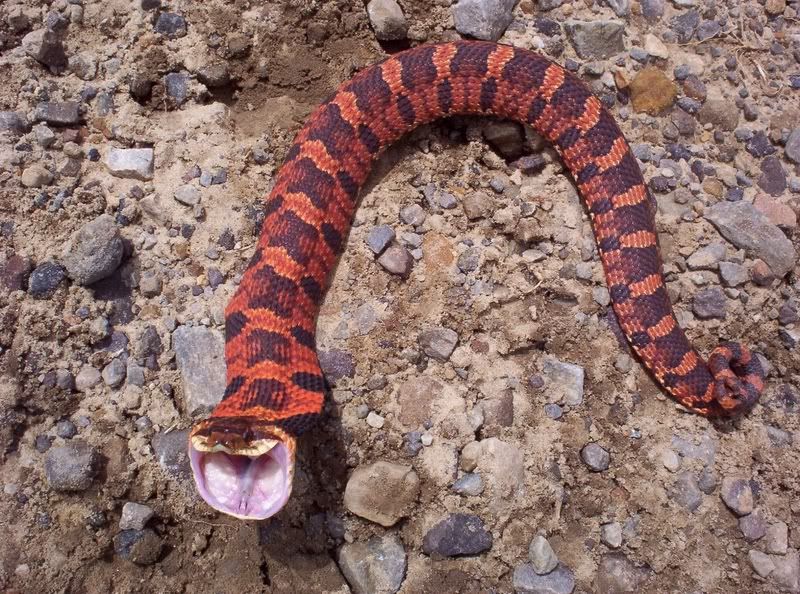
Help me find this snake!
Danny Conner
Apr 12, 2010 11:32 AM
I caught one, totally black, this weekend.
First one I've seen in 30 years.
Growing up in Houston we had tons of them but fireants have all but destroyed the gulf coast toad.
I have caught them where their primary color was yellow, green, bluish, red and black.
That's a pretty one there. D.C.
PoeMan
Apr 28, 2010 12:02 AM
Rob I completely understand where you are coming from, being from Detroit I know all about the climate problems. I also agree that natural sunlight is by far the best. I however agree with Chris on the point of the UV lighting.
I can personally acknowledge how my animals began showing measured improvements in coloration, feeding, and general attitude upon being placed outside for the summer and getting real sunlight. I saw no difference in any of those cases with UV lighting and man did I spend a LOT of money on some of that lighting.
When we got into the new facility we made sure the animals never worried about it again. We added large plexiglass panels to the roofing. I got sheets of hockey glass, from my local rink, and put em in place. You can actually watch the animals walk over and plop down in the sunlight.
As for the Albino specimine it is completely different. Having discussed this at length with the folks down at St. Augustine I found that direct sunlight seems to be nad for them. They, however, get the light from the reflected light around them so they still get some of the affects.
As for the farming, welp I have been a LONG TIME outspoken advocate of farming. It helped to bring back the populations in the wild. I do not agree with the way they keep the animals, but, how many of us think about things like that when we buy chicken at the grocery? I have seen examples of crocs from farms with malformed jaws, weakened bones, and other problems. I would prefer seeing the animals kept in a large out doors holding ponds, but, it's the factory and quantity mentality over quality.
-----
2 A. Miss at 8'
5 A. Miss at 3'-5'
1 C. Nil at 9'
1 C. Croc at 6.5'
and
6 A. Miss/C. Croc 2'-3'
