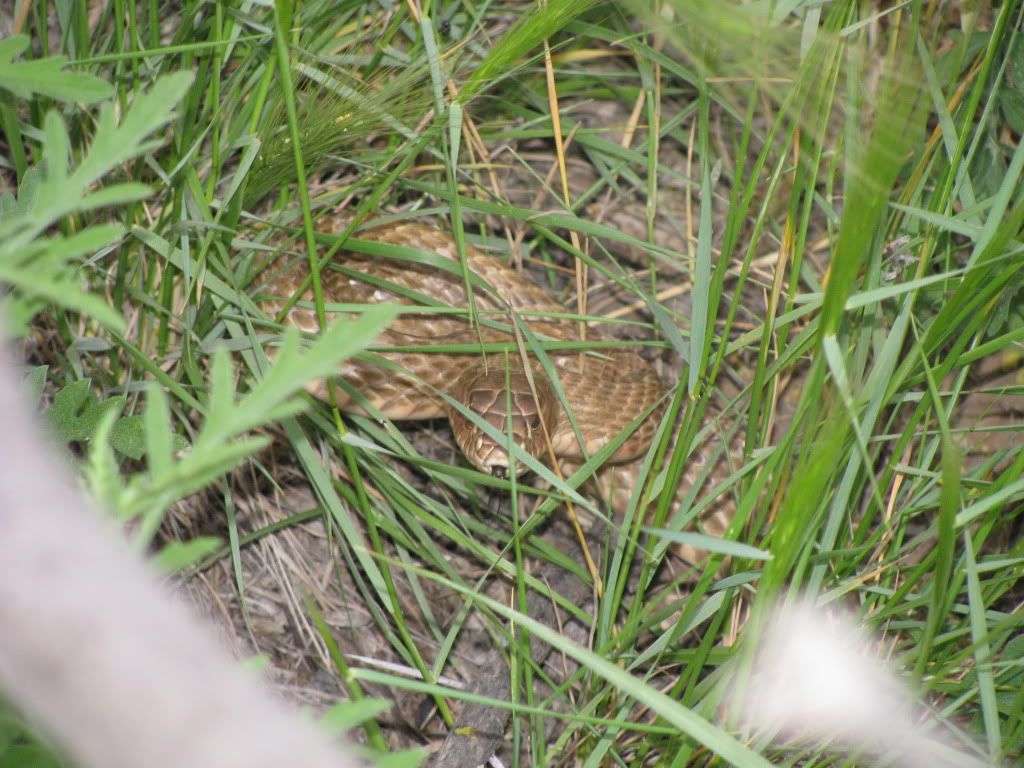
Plenty of snakes prefer a tight spot and solitude. They don't like being out in the open--makes them nervous. Coachwhips, on the other hand (if they had hands) don't like confinement.
Coachwhips are creatures of open spaces, light and air, Big Sky snakes. They don't like being boxed any more than an eagle would. It's likely all snakes are fairly intelligent but coachwhips wear it on their sleeves (or would, if they had sleeves). They learn to recognize the face of their principal caretaker, to recognize a keeper's movements associated with feeding, to understand what the latch holding the cage closed means, and what it means when the latch opens. They are more expressive than many other species of snakes, and it makes them seem more emotional. They show frustration, anger, excitement and pleasure.
While wild coachwhips, taking life on their terms, are explorative, opportunistic foragers, wild-caught captives are stressed and probably feel vulnerable. If that assessment is accurate, it might make them uncertain and hesitant about eating, perhaps the most vulnerable time for a snake. I suspect they miss their freedom and rue their confinement for some time, which might induce the reptile equivalent of depression. When I've kept coachwhips and racers for brief periods to photograph them and then released them at their capture sites, the snakes get very wiggly even while still inside the bag, as if they smell home and can't wait to return.
Nevertheless, I've had good luck feeding wild-caught coachwhips for the most part. Most of the wild-caught animals I've kept accepted dead mice placed at the edge of their hiding place where the snakes could eat with a sense of security. A friend has a fresh-caught young Western Coachwhip which accepted dead mice two days after capture and continues to feed regularly.
I did have two individuals which ate well for a while, but in each case something happened which caused them to go off feed. Both times, the trigger was a scare at feeding time. These were wc animals and very nervous. While both eventually recovered, one took over a year to get around to eating reliably. During that period, as I practically begged this snake to eat, it occurred to me more than once that I might like a new hatband.
The other animal is still with me (the one described above was placed at a Nature Center where it has settled into being a very good captive). The one still with me was coaxed back to vigor with live fuzzy mice. Now, when I think she's ready to eat, I open her cage and hold up a small mouse. If she gives the mouse the "eye", I'll put it into her cage. She's a full-grown snake and needs several small mice to satisfy her appetite. Subsequent mice are thrown dead into the cage, and if I time each offering right, she catches the dead mouse on the first bounce. It almost seems as if she enjoys making a game of catch out of feeding time. One by one, as she swallows the previous mouse, another is tossed in to be grabbed as it hits the ground. It took a long time to get her to accept food with me just a few inches away and the cage door open but it's clear she has grown comfortable with the arrangement. What a difference from Cujo, my largest Texas Pink Western, who rips defrosted rats off the foreceps so violently that he sometimes leaves bits of fur behind. Cujo is one of the Texas Pinks I raised from a hatchling and is utterly without fear.
I do strongly believe that all coachwhips and racers need good light. I've never tried to keep any coachwhip, wild or cb, under insufficient lighting. No Sterilites for these high-octane racehorses of the reptile world. Having never even temporarily kept a coachwhip under anything but top-quality full-spectrum light, perhaps that explains why my captives accepted food with less fuss than reported by other keepers, although to be fair, I do not have details as to those keepers' maintenance techniques. Maybe they did keep theirs under good lighting and I've just been lucky to find individual snakes that were willing to eat. From my own experience breeding many different species of herps, I do admit there are always individuals who will never eat, and others who eat as if they had invented food.
Captive-hatched coachwhips are easier to acclimate but sometimes difficult to get started feeding. Baby coachwhips eat different prey than adults and may strongly incline toward natural prey rather than small rodents, something they might eat only after growing a bit if they were wild. When I've hatched whole clutches of coachwhip eggs, some babies ate right away and some needed coaxing.
Coachwhips are widely reported to be challenging captives, a reputation which can be daunting. True, coachwhips and racers are not Boa constrictors, which will eat in a shipping box, but I find that with a bit of attention the per-capita acceptance of food is about the same as other Colubrids. Proper maintenance protocols are more demanding than some species but a lot easier than others--Asian Ratsnakes come to mind, or Emerald Tree Boas.
One thing about coachwhips: even when they seem determined not to eat any snake food I offer, they sure don't seem to mind trying to eat me.