Reptile & Amphibian Forums

Welcome to kingsnake.com's message board system. Here you may share and discuss information with others about your favorite reptile and amphibian related topics such as care and feeding, caging requirements, permits and licenses, and more. Launched in 1997, the kingsnake.com message board system is one of the oldest and largest systems on the internet.

https://www.crepnw.com/
Click for 65% off Shipping with Reptiles 2 You

Tortoise diet supplements

jscrick Aug 21, 2010 12:18 PM

I'm thinking of adding/including the following to my baby tortoises diet:

1) Finely ground almond [in a coffee/spice grinder].
2) Pure virgin Olive Oil.
3) Greek Yogurt.
4) 12 grain bread.
5) Avocado.
6) Artichokes (fresh).

Simply added in trace amounts, same as calcium and vitamin/mineral supplements. About once a week.

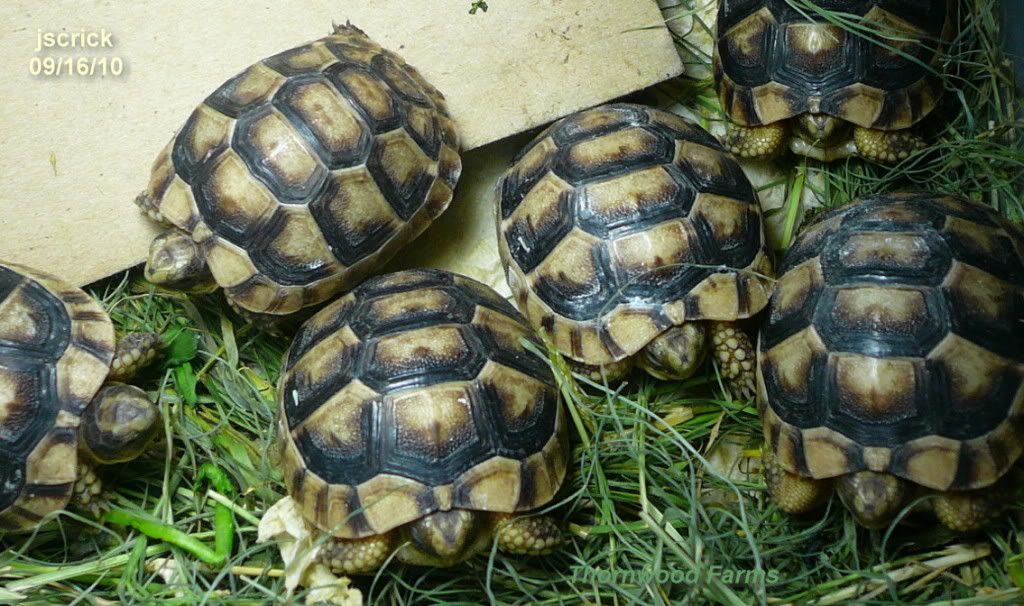
They currently eat wild grasses, Dandelions, weeds, Prickly Pear, mixed vegetables, Collard Greens, Carrots, mixed Spring Greens. Apple skins, Banana, and Melon once a week when available. No -- Spinach, Broccoli, Cabbage, Brussel Sprouts, Iceberg Head Lettuce.

They get Calcium with D3 and a Multi-vitamin Supplement at every meal. I also add a tiny bit of the local Sugar Sand (very fine, not much at all) as I would the Calcium about twice a week. I may add some very very fine red clay, too. The outdoor adults get those naturally occurring elements inadvertently, as a matter of normal feeding and their shells are perfect.

My theory on the casual mineral ingestion is just one more piece of the puzzle in the battle against pyramiding, providing minerals for assimilation and grit to the gut to aid better absorption of herbaceous nutrients. Probably slows the digestion process, too. Pyramiding is simply Metabolic Bone Disease manifested in Tortoises. Tortoises with Metabolic Bone Disease lay flat on their Plastron with legs sprawled out. Healthy Tortoises walk erect with their Plastron very far off the ground. Legs vertical, on their toes.

Just my opinion/observations.

jsc

-----
"As hard as I've tried, just can't NOT do this"
John Crickmer

Replies (6)

jscrick Aug 21, 2010 12:58 PM

LOOK AT THESE GULF COAST BOX TURTLES...THEY EAT A TON OF DIRT WITH THEIR MEALS...

They live in the dirt. They're all about dirt.

jsc
-----
"As hard as I've tried, just can't NOT do this"
John Crickmer

Mandolynn Sep 09, 2010 09:02 PM

First of all, avacodos are toxic to ALL tortoises, they should not have condensed fats such as oil of any kind, ANY grains cause pyramiding, and they should not have dairy, or any human food at all except some fruits and veggies. If you are feeding your tortie correctly, you should only very rarely have to add calcium or vitamin supplements at all, their diet should provide what they need. You should make sure you have the correct amount and type of UVB light if they are indoors, and that they are able to get at least 6 in. away from a tube florescent and 12 in. away from a coil, otherwise, it's almost pointless. And make sure you change coils every 12 months and tubes every 6, at least. Vitamin supplements should be designed for the specific species diet, and should very rarely be given, like in times of high stress. Very often they end up having Vit. D3 and VA toxicity. For calcium, the most reliable and safe method is putting a cuttlebone in the habitat with them, they will munch on it when they need it, and it also helps keep their beak trimmed. What you are feeding them sounds about right, as long as there is alot of variation, NO PELLETS, and you don't want to overdo the carrots either. I understand your wanting to ward of pyramiding and MBD because I adopted 2 RFs with moderate pyramiding and MBD. But especially when you're dealing with very young torties, you should always have a reliable and up to date book, then it's alot more likely to be correct. It would be heart breaking to see someone trying to improve an animals life and then end up causing major damage if not death. I hope I helped and didn't upset you by being so blunt. I am pre-vet and have had or cared for many species of tortoises if you have any ?s.
Good Luck!

EJ Sep 19, 2010 06:34 AM

I'd suggest you broaden your resources on turtle and tortoise information. You're pretty well mistaken on a good amount of the advice you are passing along to other tortoise keepers.

If you are prevet you should check out Medicine and surgery of turtles and tortoises compiled by Stuart McArthur.

Your quotations of a certian individual are quite short sighted and very misleading.

>>First of all, avacodos are toxic to ALL tortoises, they should not have condensed fats such as oil of any kind, ANY grains cause pyramiding, and they should not have dairy, or any human food at all except some fruits and veggies. If you are feeding your tortie correctly, you should only very rarely have to add calcium or vitamin supplements at all, their diet should provide what they need. You should make sure you have the correct amount and type of UVB light if they are indoors, and that they are able to get at least 6 in. away from a tube florescent and 12 in. away from a coil, otherwise, it's almost pointless. And make sure you change coils every 12 months and tubes every 6, at least. Vitamin supplements should be designed for the specific species diet, and should very rarely be given, like in times of high stress. Very often they end up having Vit. D3 and VA toxicity. For calcium, the most reliable and safe method is putting a cuttlebone in the habitat with them, they will munch on it when they need it, and it also helps keep their beak trimmed. What you are feeding them sounds about right, as long as there is alot of variation, NO PELLETS, and you don't want to overdo the carrots either. I understand your wanting to ward of pyramiding and MBD because I adopted 2 RFs with moderate pyramiding and MBD. But especially when you're dealing with very young torties, you should always have a reliable and up to date book, then it's alot more likely to be correct. It would be heart breaking to see someone trying to improve an animals life and then end up causing major damage if not death. I hope I helped and didn't upset you by being so blunt. I am pre-vet and have had or cared for many species of tortoises if you have any ?s.
>>Good Luck!

-----
Ed @ Tortoise Keepers
Trying to keep the fun in Chelonian care

EJ Sep 19, 2010 06:27 AM

Just so the other readers understand... pyramiding is not a form of MBD. You can have a perfectly healthy pyramided tortoise with perfect bone development.

It's a total false assumption that rate has anything to do with pyramiding.

>>I'm thinking of adding/including the following to my baby tortoises diet:
>>
>>1) Finely ground almond [in a coffee/spice grinder].
>>2) Pure virgin Olive Oil.
>>3) Greek Yogurt.
>>4) 12 grain bread.
>>5) Avocado.
>>6) Artichokes (fresh).
>>
>>Simply added in trace amounts, same as calcium and vitamin/mineral supplements. About once a week.
>>
>>They currently eat wild grasses, Dandelions, weeds, Prickly Pear, mixed vegetables, Collard Greens, Carrots, mixed Spring Greens. Apple skins, Banana, and Melon once a week when available. No -- Spinach, Broccoli, Cabbage, Brussel Sprouts, Iceberg Head Lettuce.
>>
>>They get Calcium with D3 and a Multi-vitamin Supplement at every meal. I also add a tiny bit of the local Sugar Sand (very fine, not much at all) as I would the Calcium about twice a week. I may add some very very fine red clay, too. The outdoor adults get those naturally occurring elements inadvertently, as a matter of normal feeding and their shells are perfect.
>>
>>My theory on the casual mineral ingestion is just one more piece of the puzzle in the battle against pyramiding, providing minerals for assimilation and grit to the gut to aid better absorption of herbaceous nutrients. Probably slows the digestion process, too. Pyramiding is simply Metabolic Bone Disease manifested in Tortoises. Tortoises with Metabolic Bone Disease lay flat on their Plastron with legs sprawled out. Healthy Tortoises walk erect with their Plastron very far off the ground. Legs vertical, on their toes.
>>
>>Just my opinion/observations.
>>
>>jsc
>>
>>
>>-----
>>"As hard as I've tried, just can't NOT do this"
>>John Crickmer
-----
Ed @ Tortoise Keepers
Trying to keep the fun in Chelonian care

jscrick Oct 03, 2010 08:08 AM

To all, thanks for the comments. That's what I was looking for. No hurt feelings at all.
The Tortoises have not had any Avocado as of yet, and the other "off menu" items are in very limited amounts.
The absolute best thing I think they are getting is the natural "sugar sand" or dirt sprinkled on their food same as Calcium. Just my opinion, but I believe most feed a way too refined and sterile diet. That's part of the pyramiding problem I think. There are some awfully bad looking tortoises posted on the classifieds and other pages.
My baby tortoises are outside since last night. We'll see how it goes.
To the concerned, rest assured I have considerable experience with turtles and tortoises. See the two links. These guys are popping!
==============

==============
LINK
==============

==============
LINK 2
-----
"As hard as I've tried, just can't NOT do this"
John Crickmer
CDieter Oct 21, 2010 08:33 AM

In my experience pyramiding seems to have more to do with humidity level/water than any mineral/protein portion of the diet.

I think many people keep their young tortoises far to dry and this results in the shell problem. When we have raised tortoises with a 'wet' end and a 'dry' end we rarely see a hatchling with any shell problems.
website

-----
CDieter
'Reason, observation, and experience; the holy trinity of science.'

Site Tools