I was told he was hypo, but I'm pretty positive that he's not. Is he just a normal? Someone also threw out the idea that he was an Okatee. Any thoughts?

Reptile & Amphibian Forums
Welcome to kingsnake.com's message board system. Here you may share and discuss information with others about your favorite reptile and amphibian related topics such as care and feeding, caging requirements, permits and licenses, and more. Launched in 1997, the kingsnake.com message board system is one of the oldest and largest systems on the internet.


What type of corn snake is this?
CuChulainn417
Apr 04, 2011 10:12 AM
Replies (2)
chrish
Apr 04, 2011 11:16 AM
He looks like a fairly normal wild-type cornsnake to me. The problem is that there are so many morphs in captivity that look like normal wild populations of corns, it is almost impossible to be sure. It does look a little hypomelanistic possibly.
I would suggest posting this on the cornsnake forum to get more information from the cornsnake pros.
It certainly doesn't look like on Okeetee phase corn. They have much more contrasting colors.
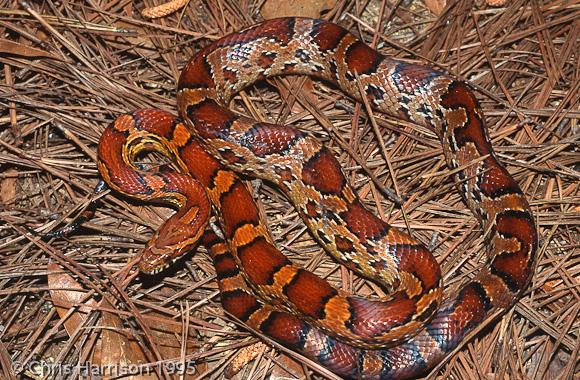
Here'a a more typical young "Okeetee" looking snake (from coastal SC). It was a young snake when I found it so the orange in the forebody should replace the brownish in the posterior parts as it matures.
-----
Chris Harrison
San Antonio, Texas
DMong
Apr 04, 2011 04:51 PM
Well, it really doesn't look to be a hypomelanistic corn to me. Even the strong flash from the camera didn't wash-out the thin black borders on the saddle blotching. It's black pattern is somewhat reduced, but is still very black looking. There are many naturally-found cornsnakes that fall into this category too.
Here is a hypo corn I have here right now. Note the very milky translucent coloring on what would normally be the black borders.
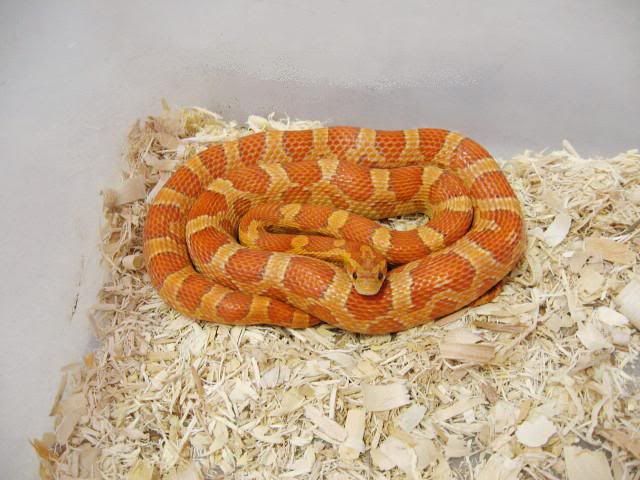
here is another very reduced black pattern corn, but it isn't technically a hypo. It could esily be passed-off as a hypo by looks alone, but it is simply a very reduced pattern animal, but wouldn't pass this on to all the young if it were bred to another hypo.
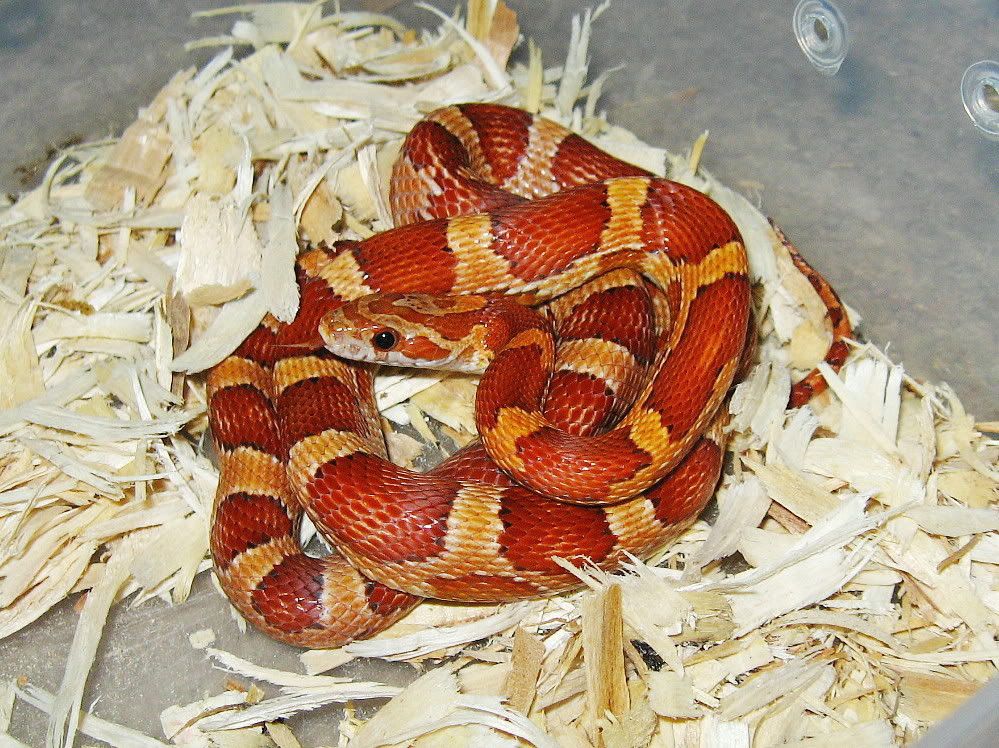
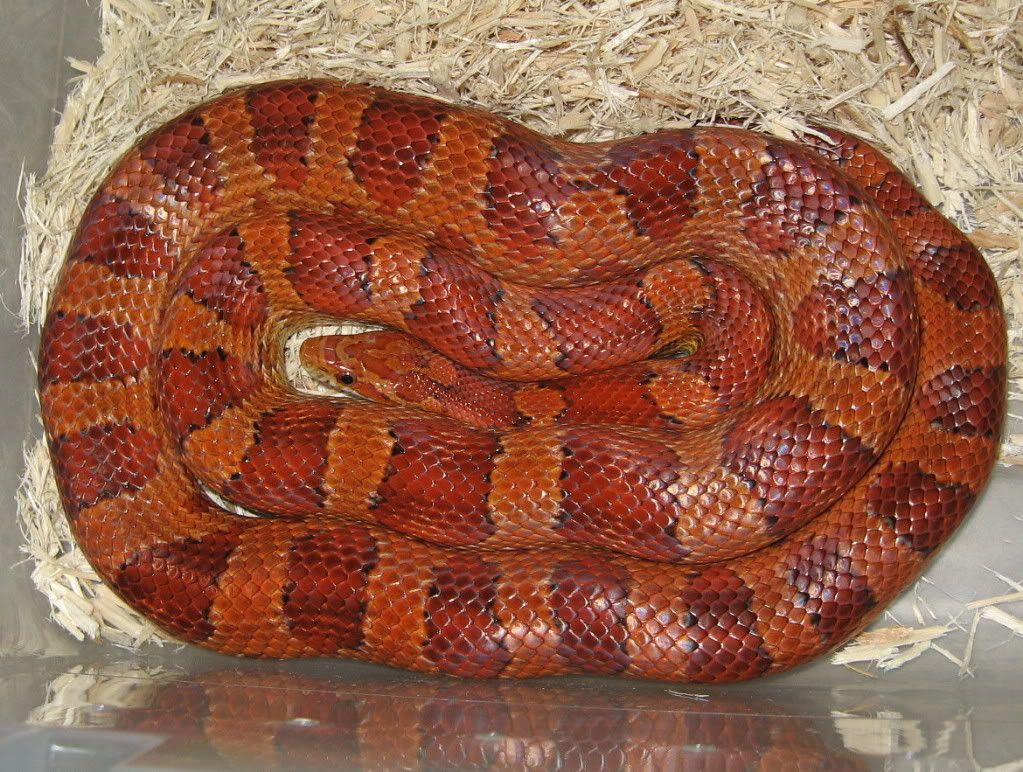
This is the above youngster's very dark, and red wild-caught mother, so I know her above offspring that looks similar to a hypo, really isn't a hypo, it's black pattern is just very reduces as compared to many other types of corn.
-----
"a snake in the grass is a GOOD thing" 
my website -Serpentine Specialties
