Reptile & Amphibian Forums

Welcome to kingsnake.com's message board system. Here you may share and discuss information with others about your favorite reptile and amphibian related topics such as care and feeding, caging requirements, permits and licenses, and more. Launched in 1997, the kingsnake.com message board system is one of the oldest and largest systems on the internet.

Click here to visit Classifieds
Southwestern Center for Herpetological Research
Click here to visit Classifieds

Why are rubber boas so hard to find?

trex8692 May 05, 2011 03:31 AM

Im not referring to collecting them in the wild.

I cant seem to find any rubber boas anywhere for sale. Ive checked reptile shows, pet stores, kingsnake classifieds, breeder websites, everywhere..

I know that they are illegal in some states but i live in texas and there are no laws regarding them as far as i know. I also know for sure i wont find any rubber boas in the wild in my area lol.

They are my absolute favorite snakes because of their tiny sizes and cute looks. Id love to be able to own one someday.

P.s. I realize theres a thread about rubber boas under mine, but i idndt want to hijack that post

Thanks guys

Replies (21)

markg May 05, 2011 02:53 PM

There are a few breeders in states where they can breed and sell them. Search posts of folks displaying pictures of them. They can tell you where they got theirs, or perhaps provide you with one.

Although they are quite hardy, there are nuances to keeping them. They require attention to moisture (don't let them dehydrate!) and should avoid excessive temps moreso than rosyboas and sandboas for example. Rubber boas can refuse food much of the year, so when they are feeding it is important to feed them alot. And give them access to cool temps so they can conserve calories when they aren't feeding. This makes them not be the choice for a huge breeding program for the average keeper.

Their protection status weighs in heavily. They are not rare (can be very hard to find, but they are still common where they occur) here in California for example, but they cannot be sent out of state without permit, even if CB. So this huge resource will do nothing for you out of state.

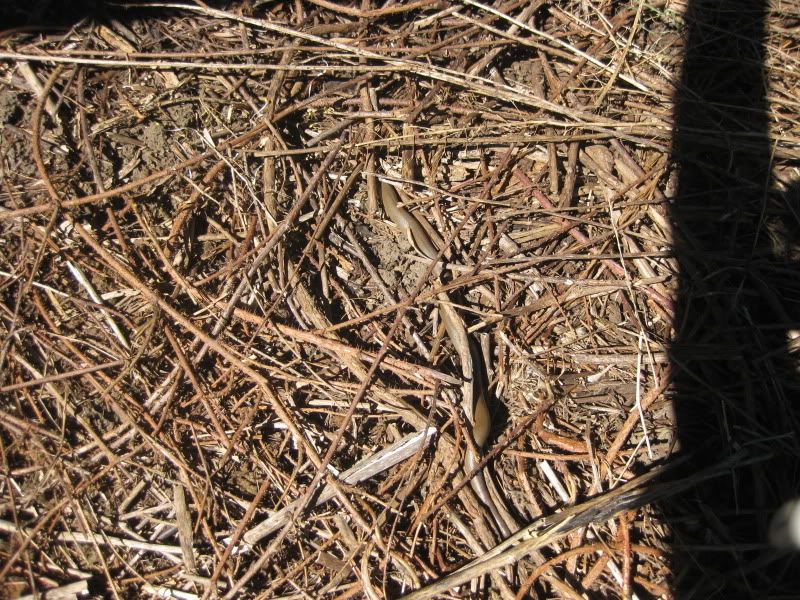
Here is some So Cal rubber boa habitat. The boas here cannot be collected per state law.

-----
Mark

trex8692 May 05, 2011 07:25 PM

They are rather hard to take care of when compared to rosies and sand boas?

Some sources i looked at said they wre similar in care requirements. I guess they might wanna alter their information a little bit.

You also said that they will go off food on occaisions. Is this kind of behavior as bad as the ball python reputation?

The main reason i liked rubber boas so much was because of their small size and i wanted a snake that wasnt prone to biting. The rubber boa seemed best for that crtieria bc ive heard sands and rosies get nippy..

markg May 06, 2011 02:27 PM

This is a lesson that many online care sheets are very general - too general.

It is true that most snakes seek out a similar range of temps at certain times. However, there are differences in how they do it and how long they need these temps for certain tasks. There are also differences in ability to retain mositure and how that is achieved.

True that their care is reasonably similar on certain levels. The difference is that rubber boas are all about higher elevation living and being able to digest at much cooler temps than rosyboas and sandboas. And while rubber boas will bask at similar temperatures that rosies and sandboas do for short periods of time, they also retreat to cooler temps more often than the others, I mean where they come from they probably have little choice. In my experience with rubber boas, they can reach their preferred body temps very quickly with very little heated area, and they don't sit their all day unless pregnant or for certain other specific reasons.

Rubber boas seems to have thinner skin and they surely dehydrate easier. More care must be taken to prevent them from dehydrating compared to sandboas and rosies. Seems that rosies and sandboas rarely need to drink or have access to moisture beyond what their food supplies them. Caresheets should mention these things, but most just say "Aspen and a plastic box. Feed once a week. The end."

Feeding is generally not an issue. Rubber boas in the wild can have short seasons, and they seem to do this in captivity. Feed them while they are willing to eat and provide cool temps when they are not eating. Where I live it is providing cool temps that is difficult, and that is reason #1 that I do not have a rubber boa. Sandboas can go on fasts too. Many snakes do to some degree and for various reasons. It is not a bad thing if they are fed well when they are eating. I had a sandboa fast a good 6 months and he looked no less chubby then as when he first stopped eating. He was not in any danger obviously.

Not all sandboas or rosies are bitey. Plenty of sandboas avail online. The ones that are not bitey probably won't become bitey (reasonably true, not 100% guaranteed). I think a seller would be willing to sell you the one that has never bitten. Most rosies are fine too in that regard. The ones I have had that were biters were biters from very early on. The ones that did not bite by age 1.5 yrs didn't bite later. I had some females that would not hesitate to eat my hand, and they were fat and well fed. But they did that very early in their lives, so I knew what I was dealing with.

-----
Mark


markg May 06, 2011 02:33 PM

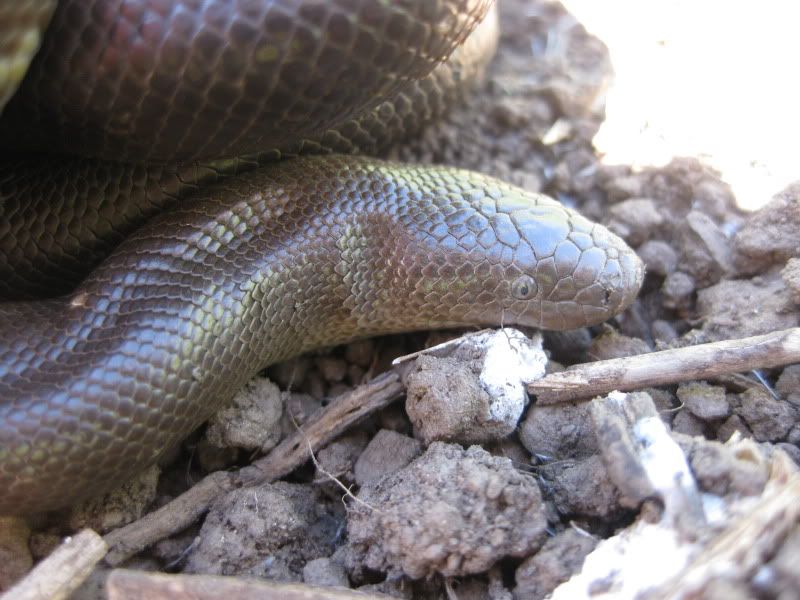
Rubber boas will gorge themselves on thawed baby mice placed in a pile like a nest. This rubber boa was still swallowing thawed fuzzy #2 when I picked her up and snapped the bad pic (old pic). And she ate another right after despite me bothering her. True she fasted much of the year, but when she was "on" she was "ON!." I think this is very typical of rubber boas.

I felt bad trying to keep them cool over summer. Just too warm. I gave her away to a friend who had a better setup for a snake like this.

-----
Mark

Zach_MexMilk May 05, 2011 08:45 PM

I must agree, they are amazing and adorable snakes. Although I do not keep any, I find tONS while herping the Bay Area here near San Francisco. I know a few people who keep them and I have heard that they can be iffy about feeding. Although care, as in set up, temps, etc would be a breeze, feeding seems to be an issue. As stated before, they can be finicky and prone to seasonal bouts of fasting.
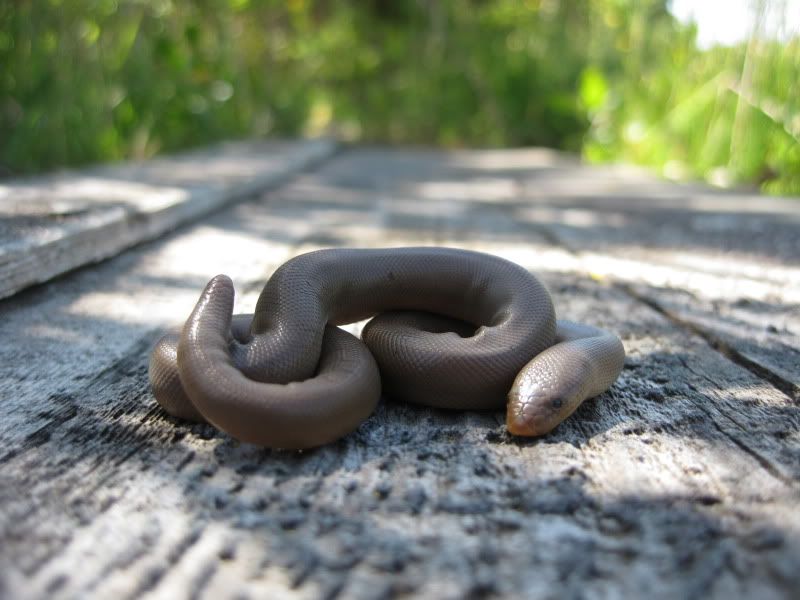
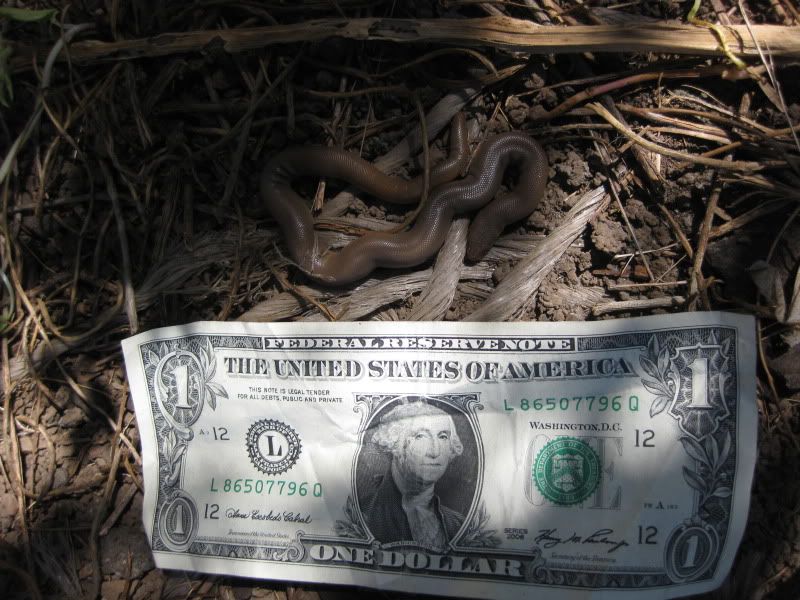
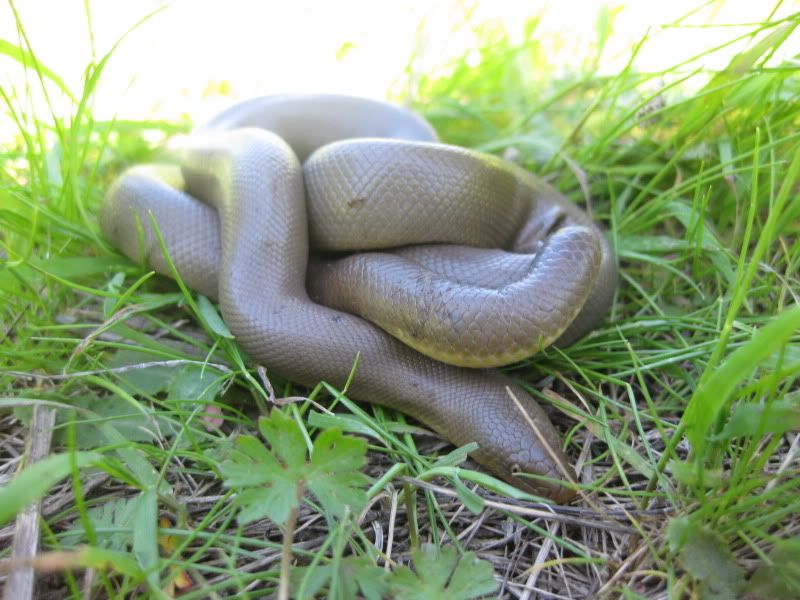
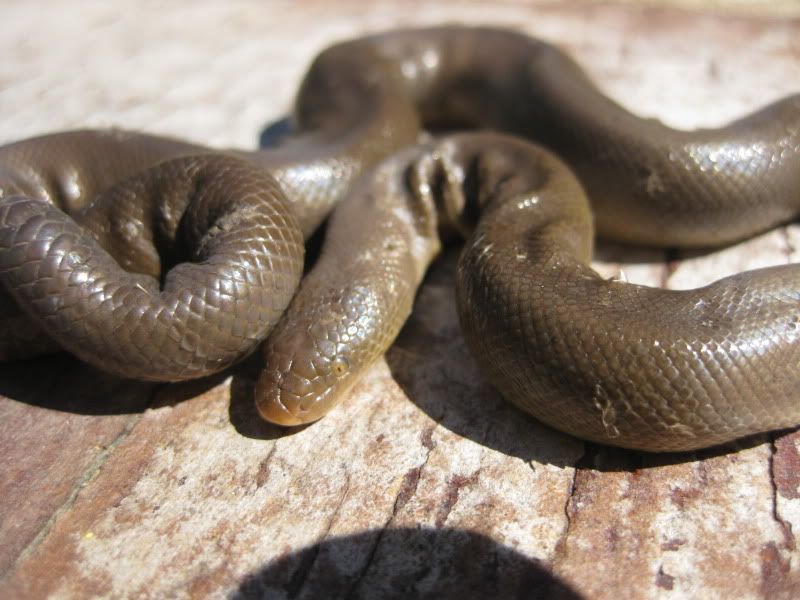
Here are a few I found this month.

(A black-eyed yearling I found ocne before last season as a neonate, found again a few days ago)

Others:


trex8692 May 05, 2011 08:57 PM

Those pictures are absolutely amazing.

I just wish i was able to attain one for myself

Why exactly are they so protected? Last i heard they werent endangered or anything. Do they spread diseases?

Zach_MexMilk May 05, 2011 09:07 PM

Only the southern species, Charina umbratica, is protected by the CA fish and game. The northern species, C.bottae, is allowed to be collected, with a limit of 2. CA residents with a non-captive breeding permit can breed them I believe (like L.zonata), but can only keep a limit of 30 (who needs thirty rubber boas lol).

I think it is due to habitat destruction that many Southern CA herps, like L.zonata pulchra and C.umbratica, are heavily protected.

I love rubber boas, but feel they are best left outdoors where they can live out thier rubbery lives

trex8692 May 05, 2011 11:34 PM

Hopefully they arent endangered in any way right?

And do you happen to know of any good "rubber boa alternatives"?

Im really looking for the smallest available pet snakes on the herp market. And at the moment i can only think of blind snakes and the rubbies

drewkore May 06, 2011 08:30 AM

Are you shying away from a rosy because you heard they can be "nippy"? It sounds like you may be overlooking a great snake due to misinterpretation. They stay small and generally quite docile. There are always acceptions but I believe most references to nippy rosies refers to babies with strong feeding responses. With regular handling they can easily become one of the calmest and docile of adult snakes. Hope this is helpful.

Zach_MexMilk May 06, 2011 10:57 AM

Have you had any snakes before, or are you looking for a "beginner snake"? If the latter is the case, I would totally shy away from rubber boas (Charina)due to the difficult nature of feeding (at times/instances), temperature control (you live in TX, so pretty hot, right?), and a few other factors.
If you wanted something similar, VERY similar, that is somewhat easier to care for a forgiving, try a captive bred Calabar Burrowing Python. They are tiny, very docile, look just like a rubber boa, but are more colorful. They are pretty much the african cousin of the rubber boa. Some may argue that this may be best reserved for a more seasoned hobbyist, but if you don't want a rosy (which would be my first choice for you), then maybe try one of these?

Captive bred is the way to go in terms of these Calabars, especially if they are eating frozen/thawed mice. Nothing sucks more then a snake that "requires" live baby rats...so pricey and sometimes hard to get.

But, as said before, don't give up on Rosy boas. They can be quite personable and rather docile. Although anything with a mouth can bite, I have not heard many accounts of them being the nippy type. The rosy boa would be the first choice, in my opinion.

trex8692 May 06, 2011 10:52 PM

Yes i am shying away from the rosies bc ive heard they are nippy. And yes i am looking for a beginner snake for later.

I mainly want a snake that is as small as possible without being downright tiny like the brahminies.

Im also kinda scared of bites bc i know most bites from large mouths hurt. My only pet, a leo gecko atm, has bitten me on several occaisions and they have all drawn blood bc he tends to bite hard. The cases were all my fault though.

Zach_MexMilk May 06, 2011 11:27 PM

The thing with getting bit is that you have to understand that anythign with a mouth can bite lol. I am a firm believer that snakes are not out to bite and cause alarm to people for fun, but rather if they are stressed, scared, or in feeding mode, all of which are basic animal and human nature.
Personally, I have never been bitten by any pet snake I have ever had, neonate to adult. Funny enough, I keep only Lampropeltis/kingsnakes and milksnakes, which are often deemed as the more skittish and nippy of the pet snakes lol! However, herping and picking up wild snakes can be a whole different story!

It is good that you know that your gecko bit you not cuz it was his intention, but rather due to your own error. Nothing is worse then people blaming the animal.

Since it is going to be a beginner snake, you may want to try your hand at an adult rosy boa, if you wanted to go with something a bit smaller. If you can afford the extra foot or so, maybe go with the popular corn snake. All are noted to be excellent beginner snakes and are quite fascinating in their own ways.

Beware, you will get hooked on snakes

trex8692 May 07, 2011 12:36 AM

Ya im aware things with mouths have the potential to bite, im just worried about the pain factor, to be completely honest.

Id rather not get HURT by a snake because im afraid i might get shocked and jerk my hand back, injuring the snake in the process.

At lesat with smaller animals, their bites dont hurt. Ive been bit by numerous anoles/house geckos and i never jerk away because they dont hurt.

Is there a reason you suggest ADULT snakes over young ones? Is it because they are less likely to be flighty? I thought young was a better option because it is easier to acclimate them to handling.

Zach_MexMilk May 07, 2011 04:28 PM

I said adult as they are less flighty and can be less prone on being nippy. But what should have been said was well adjusted adults that have acclimated to captive life.

Baby snakes are awesome, but can often be flighty due to thier nature of being prey for everything in the wild. However, they do calm down.

RichardFHoyer May 06, 2011 04:42 PM

Zach, others:
A number of issues are contained in Zach's post which I will dwell on individually in separate posts.

Elevating the subspecies Charina bottae umbratica to species status (Charina umbratica), was premature as was the scientific community's willingness to recognize the new species based on a single published account. In reviewing a pre-publication draft of that mtDNA paper, I informed one of the co-authors of a number of glitches but the paper was published containing those glitches .

Within the past two years, a more comprehensive mtDNA study was completed that involved a master thesis project. The thesis project is likely to be completed by next month. There is some reasonable expectations that the results of that study will eventually get published, at least that is my hope and the hope of the grad student.

Combined with information of a morphological nature I have recorded on various C. bottae populations found throughout parts of S. Calif., results of this new mtDNA recent study not only challenges the separate species scenario, but doubt may also arise about the subspecies designation for Charina bottae umbratica or Southern Rubber Boa which officially is designated to occur only in the San Bernardino and San Jacinto Mts. east of L.A. I can provide additional detail if anyone is interested.

Richard F. Hoyer (Corvallis, Oregon)

RichardFHoyer May 06, 2011 04:54 PM

A second issue in Zach's post pertains to the listed status of the SRB. Form my perspective, unquestionably the subspecies should never have been listed in the first place. There is absolutely NO factual information that remotely suggests the SRB should be listed as a 'Threatened' subspecies in Calif.

I suspect that most individuals believe that state wildlife agencies list species via professional, science-based standards and processes. After all, just like myself, agency biologists graduated with degrees in wildlife science with the emphasis on 'Science'. Nothing could be further from the truth. The state of Calif. is not alone in using unprofessional and unethical methods for listing non-game species in some category of concern. The listing of the SRB is a classical example.

In 1971, the SRB was listed as "RARE" (later changed to 'Threatened') in S. Calif. Rather than using accepted science-based methods, the CDFG based their listing on the personal opinions and perceptions of a panel of herpetologist that the SRB was rare along with the fact there were few locality records and vouchers. The latter may seem as the type of evidence to justify listing but in reality, few numbers of vouchers and sight records have more plausible explanations other than a species being rare.

Richard F. Hoyer

RichardFHoyer May 06, 2011 04:58 PM

A third issue is CDFG placing a limit on take or possession of herps. Oregon has no such limits and my home state is not running short of Gopher Snakes, Night Snakes, Rubber Boas, S. Alligator Lizards, Rough-skinned Newts, etc.

From a wildlife mgt. point of view, bag and possession limit are needed where demand has the potential of being so great as to affect the sustainability of desired species. That simply isn't the case with most species of herps with turtles being a glaring exception since they are prized for their food value.

Like so many other states, Calif. is managing species that are not in need of being managed.

Richard F. Hoyer

RichardFHoyer May 06, 2011 05:05 PM

A forth issue mentioned by Zach is that of 'habitat destruction'. The relationship between species and habitat are a given. So when it comes to loss in a species' or subspecies' numerical abundance, one needs to examine the amount (percent) of lost habitat in relation to the original distribution of a species in any given region. If 50% of a species habitat in a given region has been converted or change in any manner to prevent the species from continued existence, then it is likely the species has lost about 50 percent in numerical abundance.

Having completed a 5 year study of the SRB in the San Bernardino Mts. (1993 - 1997), and having visited the San Jacinto Mts. on a few occasions, I can attest that the loss of SRB habitat in relation to its overall distribution is relatively small percentage wise in both regions.

For instance and in comparison, the distribution of the Rubber Boa use to include San Francisco County as well as neighboring San Mateo and Santa Cruz and western Santa Clara Counties to the south. It may still exist in some undisturbed habitat in southern S.F. county and perhaps on the Presidio (US Army) grounds but otherwise the species has been effectively extirpated over the large part of that county taken over by the city of San Francisco.

The percentage of lost habitat to the species has to be much greater in those West Bay counties than in the San Jacinto and San Bernardino Mts. Where I believe the species has possibly incurred the greatest percent loss of habitat however is in the East Bay regions of Alameda and Contra Costa Counties. The species is also known to occur in the Mt. Hamilton region of eastern Santa Clara County but I have not visited that region so can't say anything about loss of habitat for the species in that area of Calif.

If there is an area where the species might be considered most vulnerable, it would be my belief the East Bay region is the likely candidate for such a scenario. But I wouldn't list the species in any category of concern until proper science-based processes were employed.

As for Zach's view that the Rubber Boa be left to live out their lives in the wild, I share that view but of course, make exceptions. The major thrust of my study of the species involves mark / recapture efforts. It is always a pleasure to find an 'old friend' I originally captured and released in prior years.

Richard F. Hoyer

Zach_MexMilk May 06, 2011 09:34 PM

Hi Richard Hoyer,
I hope you did not get the impression that I was trying to provide false information about ruber boas. I was merely just relaying what I kind of understood about the Southern Rubber boa, based off of what is at my grasps, be it CAFG website, californiaherps.com, etc. In no way am I an expert or trying to be an expert, but merely just giving my 2cents.

I am very interested in finding Charina bottae in SF, my hometown. I am actually going to lay some boards in the Presidio to try my luck. You mentioned the potential of boas being found in the Southern patys of SF...this is very intriguiging...

RichardFHoyer May 07, 2011 12:38 AM

Zach:
Your original post was completely accurate as far as the information at your disposal. Sorry if my responses appeared to be critical as that was not my intent.

I was just setting the record straight, particularly with respect to the listed Southern Rubber Boa as the CDFG documents and other semi-official sources contain erroneous or even outright false information.

In years past here on Kingsnake and on other herp forums, the topic of '"habitat destruction" has been discussed. From my point of view, that issue has been misunderstood as well. To me, habitat destruction is when habitat is altered to the extent that species can no longer sustain viable populations. Thus, bulldozers, graders, earth moving machinery and any other method used to clear land or degrade habitat (excessive use of chemicals) to the extent species can no longer sustain themselves is what I consider as habitat destruction.

Rock, woody debris, and artificial cover objects that have been moved and not put back has often been referred to as 'habitat destruction. To my way of thinking, those situations are simply habitat disturbances or a rearrangement of habitat features that are unlikely to have any negative effect on the numerical abundance or densities of species occupying such
habitat.

I would be interested to learn if the species still can be found in San Francisco County. A number of years ago, I traveled down highway 35 (Skyline Rd.) along the spine of the Santa Cruz Mts. from S.F. to San Mateo County on south. And although I couldn't tell just where the county line occurred, it seemed to me there still might be some suitable boa habitat at the extreme south end of S.F. county. Just in the back of my mind, I believe I once was told or perhaps there is a voucher specimen that was found on the Presidio back in the 1950's.

Richard F. Hoyer

Twosnakes May 16, 2011 03:51 AM

I agree completely they are incredibly hard to find cb but easier than cb calabar boa which I was looking for.

Site Tools