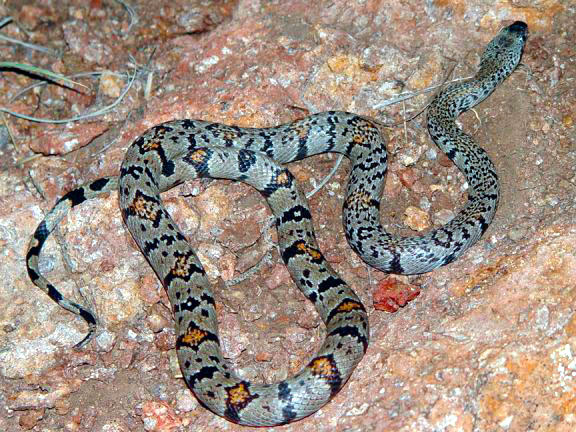
Here are the few Limpia's that I have hatched so far this year.
First three are from a wc X wc.
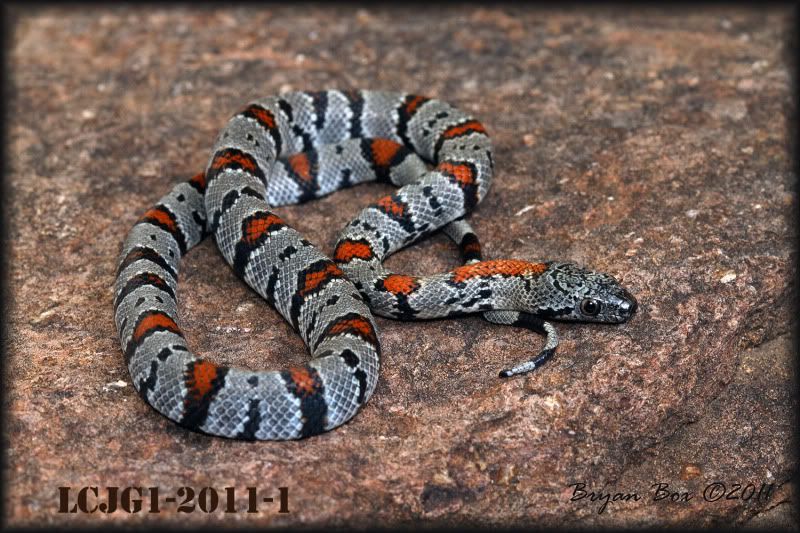
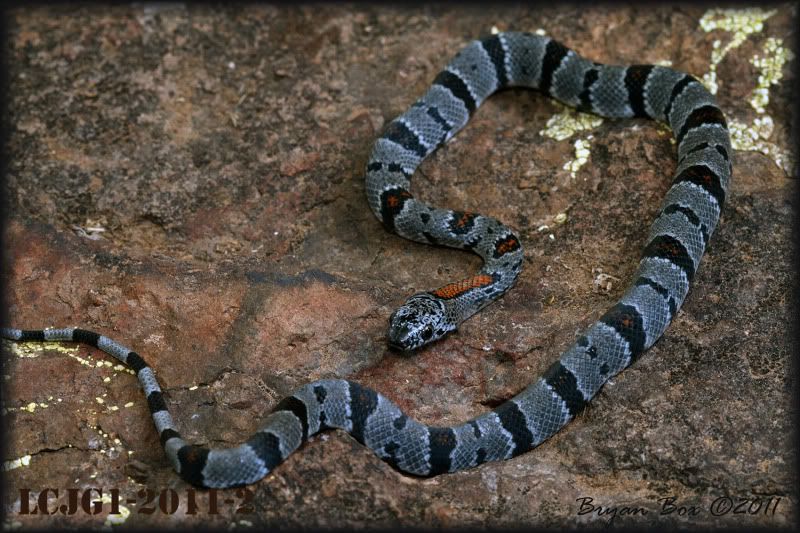
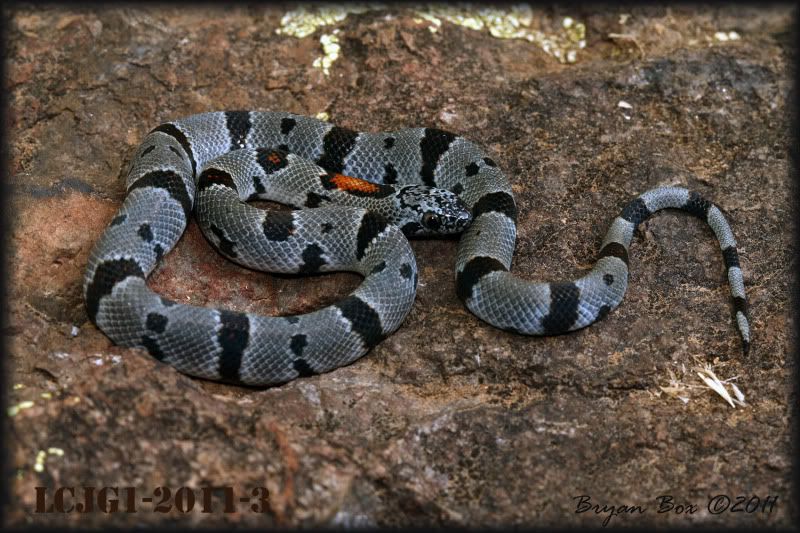
Next two are from a wc X F1
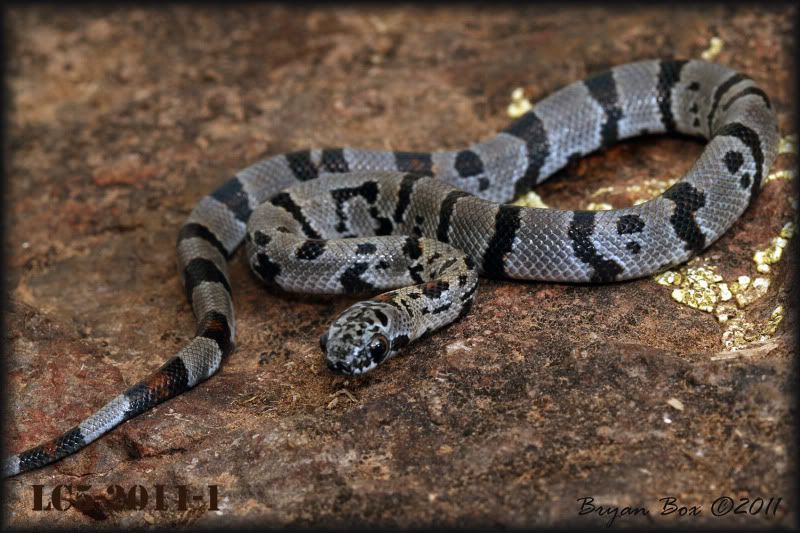
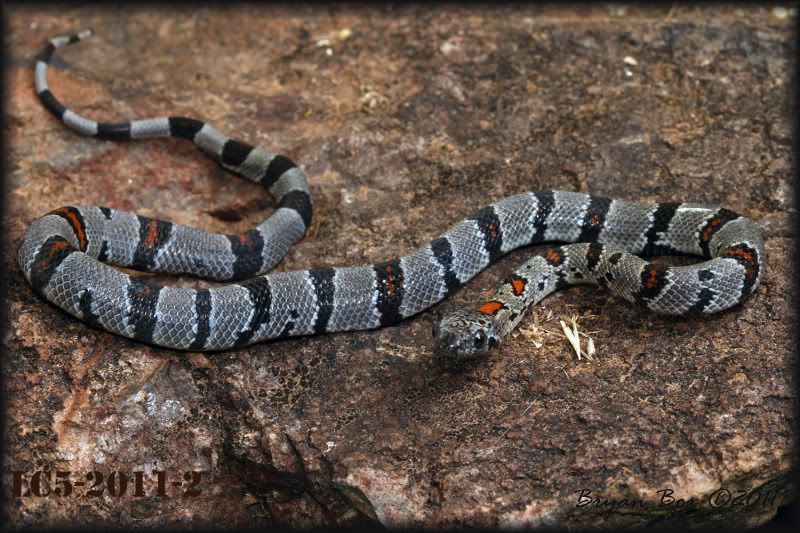
Still waiting on one more clutch. I think that I may get two out of that clutch. All of these are males!
Welcome to kingsnake.com's message board system. Here you may share and discuss information with others about your favorite reptile and amphibian related topics such as care and feeding, caging requirements, permits and licenses, and more. Launched in 1997, the kingsnake.com message board system is one of the oldest and largest systems on the internet.



Here are the few Limpia's that I have hatched so far this year.
First three are from a wc X wc.
Next two are from a wc X F1
Still waiting on one more clutch. I think that I may get two out of that clutch. All of these are males!
Top snake is the bomb. Again congrats on a great year!
StevenX
Very nice. Just curious, what do you call those wc X F1 offspring? Do you call them F2's or F1.5's? I've always called mine F1.5's but I'm not sure if that's correct. Then again I've seen some people call anything that includes a wc breeder F1's, even if it's wc X F5, etc.
-----
www.hcu-tx.org/
Aaron,
The term F1 refers to the offspring of a test cross between two pure bred individuals. I am actually using the term incorrectly (as are the rest of the alterna breeders). We are using the term to represent the first generation of captive produced animals. Many people count offspring as "F1s" if either parent is wc. If I call something a "F1", then both parents are wc. I will just label the others "wc x F1" or whatever. A true F2 is a line bred animal from sibling F1 animals and I do not think that is what many people are producing. Some of you genetics experts step in here and correct me if I am wrong or am doing a poor job of explaining. I am on vacation and my wife is giving me that "look" to get off of the computer so I cut this a little short.
Bryan
F1 generally refers to a inherited phenotypic trait. Since all phenotypic traits are based on the genotypic expression, then in reality F1 refers to the genotype. My argument is that the wild-type is a phenotypic/genotypic trait. I could easily argue it the other way around, Im just throwing this out there since Ive heard people say that F1 is an incorrect term in this application. For instance, when we hatch a clutch of gaps from parents from the same cut, then holdback the exceptional ones, breed those, we produce babies that display traits not necessarily representitive of that particular gene pool. Since this man-made trait is abstract, its hard to categorize as an inherited genotypic trait, but isnt it? I know its not something easily seen like albinism, an inherited mutation, but it is still a reference to the snakes inherited genotype. I dont know.
The way I always understood it, "F" was shorthand for "filial generation". It's a measure of relatedness and has no bearing on the number of generations removed from the wild. The terms F1, F2 etc. are very often misused by alterna breeders to represent just that. By definition, F2s can only be created by the pairing of siblings (F1s).
I think you're understanding is correct as far as the way geneticists use the term but it isn't unprecedented to use it to describe generations from the wild. I believe Ross and Marzec in "Reproductive Husbandry of Pythons and Boas" suggested it be used that way in Species Survival Plan studbooks and by private herpetoculturists.
Either way it's very useful for alterna breeders. Maybe we should start using W1, W2, W3, ect. instead?
-----
www.hcu-tx.org/
Bryan, Very nice snakes, congrats...JF
Bryan,
Nice! I could have told you from the pics that they looked all males. Do your females have specs? I have noticed that there appears to be a sexual dimorphism.... Whatcha think based on your collection or observations of Davis animals?
I know it is not all positive but, seems to be a pretty good guess.
ECTimaeus
Eric,
I only have one wc Davis that is speckled and yes, she is speckled. I have not personally seen a speckled male from the Davis, but I believe that there are some out there. From my observations, speckled Davis do tend to be females. I believe that the Davis lepidus follow the same trend. It would be nice to hear thoughts from some other people on this topic.
Bryan
Here is a wc speckled male that Shannon Brown and I collected off the 118 Observatory long cut. We are sure he's a male because he has fathered 3 clutches. The first two clutches were all males, 3 each clutch, and all were highly speckled but the female used was a cb one. The first 2 clutches were produced by me and the 3rd clutch was produced by Shannon so I don't remember what was in it other than there was at least one speckled female that I got when we split the clutch.
I have only collected one other Davis alterna and it was another male from the same cut. He is not speckled but he does have some broken alternates in the nuchal region. I don't have a pic uploaded but I'll try to put one up tomorrow. The pic of the wc speckled male is in the link below.
Speckled Davis Mtns. male.
-----
www.hcu-tx.org/
I'm not sure if this fits everyone's definition of speckled, but this wc male Boy Scout is the closest I've found. Also have a female that is similar.
John

this year?
Colin,
No luck this year. I was in El Paso for work for breeding season, and a friend was caring for my alterna. The plan was for him to breed them, which occurred, but he had some unforeseen circumstances that necessitated me picking up those animals in June. One female appeared gravid when I received her, but never developed eggs. Assuming these animals are in a stable environment next season, I hope to produce a few clutches of Boy Scout alterna and celaenops.
John
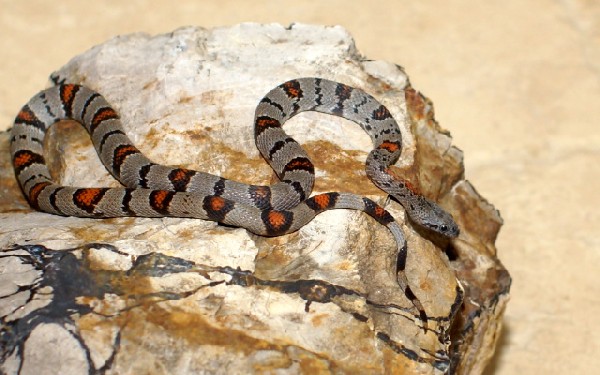
Yes, you need to experience the utter “joy” of rearing babies. I friend of mine in Mesa loves alterna, but has opted to forego this joy in favor of rearing a less joyful species, corn snakes…LOL!
Robert
I'm currently experiencing the utter "joy" of raising a baby... my wife and I had our first child early Friday morning. A two week herp trip can't hold a candle to the last 4 nights' sleep deprivation, lol.
John
So you did produce a baby. LOL.
Robert
I would call that speckled.
I would guess that it's possible that speckling is a sex linked trait rather than true sexual dimorphism. In the Striped/Abberrant Blackbelly phase Caifornia Kingsnakes the trait seems to take an extra generation(or more) to manifest in females and striped/abberrant females are much less common than males in the wild.
-----
www.hcu-tx.org/
Another Boy Scout speckled male
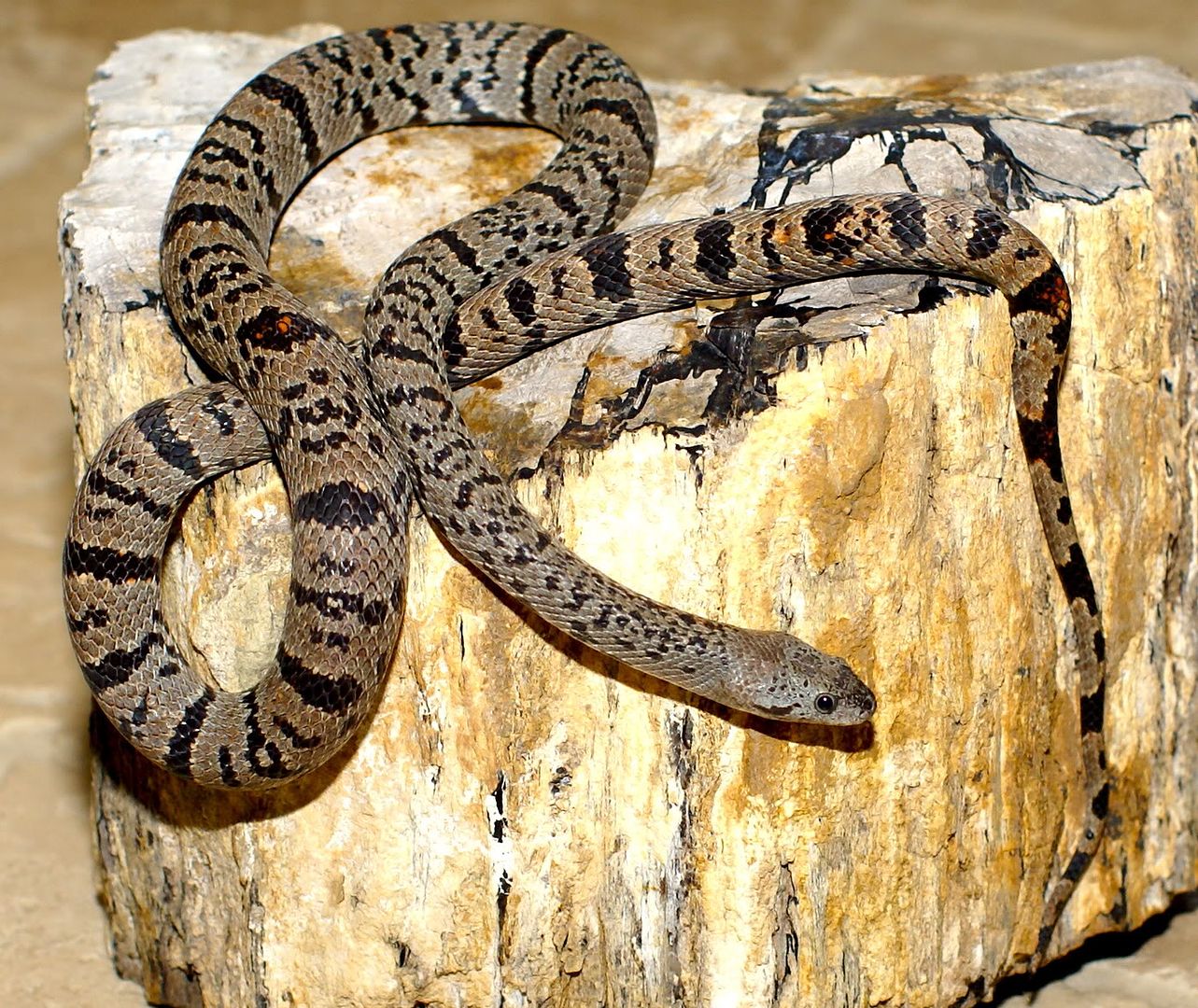
John
Very nice John. How many BSR animals do you have? I love going out there but havent had any luck in the 4 times i've ran it.
Chris
Chris,
I have 10 wc Boy Scout alterna. Far more males than females, and unfortunately lost a pair in a friend's care during the last year.
John

Help, tips & resources quick links
Manage your user and advertising accounts
Advertising and services purchase quick links