


Reptile & Amphibian Forums

Welcome to kingsnake.com's message board system. Here you may share and discuss information with others about your favorite reptile and amphibian related topics such as care and feeding, caging requirements, permits and licenses, and more. Launched in 1997, the kingsnake.com message board system is one of the oldest and largest systems on the internet.

Click here to visit Classifieds
Click for ZooMed
Click for 65% off Shipping with Reptiles 2 You

Some thoughts on hatchling behavior...

Aaron Sep 15, 2011 12:22 AM

... and feeding habits.

I suspect the main reason hatchling alterna are so finicky is because in the wild they look for a safe place to brumate before they "think" about feeding.

It makes sense to think about what can kill a hatchling the quickest. Aside from predation, temperature can kill in a matter of hours, dehydration can kill in a matter of days and starvation can take weeks to months to kill.

So I think the hatchlings' first order of business is to find a place that has proper temperature range. Heat is very easy to find, it's pretty much anywhere on the surface. Harder to find is a place that's safe from overheating, freezing and flooding. Actually such places are probably not very hard to find in their natural limestone and volcanic rock habitat but unless you're lucky enough to have a cellar they are much harder to duplicate in captivity.

I think a common mistake is to think that since we are offering them heat they should eat. But heat is comparatively easy to find, at least during the hatchlings first month or two of life. I think what the hatchlings are really looking for is a place that constantly stays within 40 to 55 degrees farenhieght, with good drainage to prevent flooding, that's dry to the touch yet humid in the air. Such a place would also likely be completely dark since in nature it would have to be underground below the frost line.

I think once a hatchling locates such a place it will then begin to seek out food and suitable sites in which to digest that food, "knowing" that it can retreat to the cold, dry area and conserve energy as soon as it's food is digested. Also "knowing" that if an early storm or cold front moves in it won't be caught in a freeze and won't drown underground.

A snakes #1 survival tool is quite possibly it's ability to lower it's metabolism through temperature selection. Since they have no learning experience they cannot concieve of the notion that the heat tape is going to stay on all year or that the water bowl is going to be refilled every few days. Especially as hatchlings when they have only instinct to go on. I think as they get older some of them can "learn" that they live in a really good spot that always has heat, food and water. Ok now I'm just rambling. Anybody else think this is a good theory?
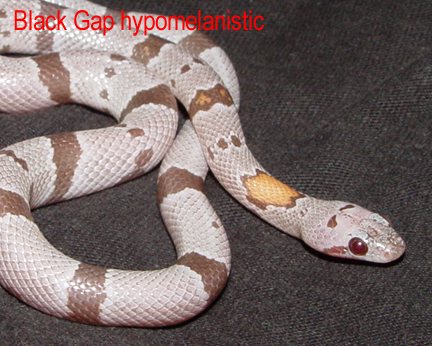
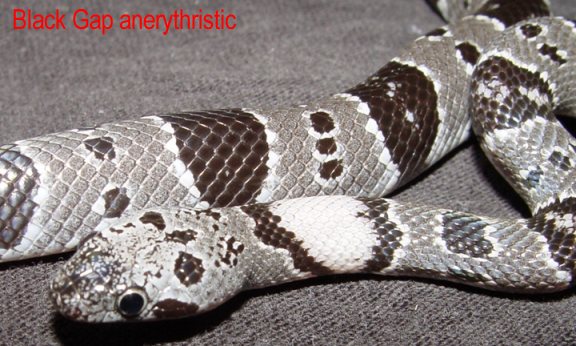
-----
www.hcu-tx.org/

Replies (15)

DISCERN Sep 15, 2011 06:43 PM

I firmly believe you have spoken some very well educated and wise words my friend. Great post!
-----
Genesis 1:1

Aaron Sep 15, 2011 11:50 PM

Thank you. I wonder if anyone reading this has kept them in cellar and could report on their experience?
-----
www.hcu-tx.org/

maxrr Sep 15, 2011 08:59 PM

One of the best posts in a long time. I'm often pondering what reasons there might be for hatchling alterna behavior and you articulated some really good theories; some I've thought of and others I have not...
-----
Snakes to the Max

stevenxowens792 Sep 16, 2011 09:39 AM

Aaron, great post sir. Topic like this should make the next published application in my opinion!

StevenX

Damon Salceies Sep 16, 2011 01:54 PM

While gray-banded kingsnakes have a reputation amongst those that work with them in captivity as being "finicky" I feel that the reputation has been earned through our ineptitude and not their predisposition toward earning it. Hatchling alterna are notoriously picky when offered fare that is not preferred, but offer them a small Sceloporine lizard and you'd be hard pressed to find one that won't eat after the first or the first few offerings. Alterna are not by nature rodent feeders... not until they grow large enough to take advantage of them (even then I don't feel that rodents compose a significant part of their wild diet). As hatchlings they are lizard feeders. For me, initial feeding successes with mice of any sort often fall in the ~10% range. When utilizing young Uta for the first feeding attempts that rate jumps upwards of 90%. Most that so eagerly take live Uta on their first attempt will transition to mice only 4 or 5 feedings later.

Just a side note... of the alterna I've collected from the wild only two had rodent hair in their feces. The vast majority had lizard scales of some sort. I've seen either regurgitated lizards or parts in the feces that were indicative of Cophosaurus texanus, Sceloporus merriami, Sceloporus poinsettii, Coleonyx brevis, and some unidentified Aspidoscelis.

ectimaeus Sep 16, 2011 04:04 PM

NOW THIS IS A GOOD POST. You have hit it on the head. You probably have a few years experience actually observing alterna and learning their husbandry. The people who have finiky alterna are not giving them what they want. I have not only hatched but caught numerous hatchling alterna. I have on several occasions plucked a hatchling off of a cut, put it in a container and offered it s scelop - and guess what? In captivity 5 minutes and a "finiky" alterna is eating out of my hand.

ECTimaeus

rpelaez Sep 17, 2011 09:36 AM

Generally speaking, here has been my experience with offspring. Depending on when the first meal is offered, I can get between 40 - 60% of the clutch to take a lizard scented f/t pink. Waiting on the first meal increases the percentage. The lizards I use are uta, urosaurus and earless. Usually, the remaining offspring will take a f/t lizard of appropriate size, but there may be one or two that prefer the movement and the scent of a live lizard. Once switched over to unscented pinks the offspring will take f/t lizards or mice, but this opportunism may be a function of size and age. I routinely make 8-10 lizard runs each year and drive up to 150 miles one way to put myself in a good position to noose lizards. Not only do I provide lizards to my offspring, I provide larger species like Plateau, Spiny and Zebra-Tail to my adults.

Here has been my experience with wc adults. The first two meals offered to an wc alterna are always lizard-scented and small (fuzzy/hopper), but I go one step further. I bring back the rocks. Yes, boys and girls, yours truly will pack up the rocks found in the snake's immediate environment and bring them back home to put in their enclosures. Am I a nut, or what. I figure that familiarity (lizard scenting the first couple of meals and the rocks) will provide a smoother transition to captivity. So far, all the alterna that I've collected are alive and doing very, very well. Call it a labor of love...

RP

rbichler Sep 17, 2011 10:23 AM

>>Generally speaking, here has been my experience with offspring. Depending on when the first meal is offered, I can get between 40 - 60% of the clutch to take a lizard scented f/t pink. Waiting on the first meal increases the percentage. The lizards I use are uta, urosaurus and earless. Usually, the remaining offspring will take a f/t lizard of appropriate size, but there may be one or two that prefer the movement and the scent of a live lizard. Once switched over to unscented pinks the offspring will take f/t lizards or mice, but this opportunism may be a function of size and age. I routinely make 8-10 lizard runs each year and drive up to 150 miles one way to put myself in a good position to noose lizards. Not only do I provide lizards to my offspring, I provide larger species like Plateau, Spiny and Zebra-Tail to my adults.
>>
>>Here has been my experience with wc adults. The first two meals offered to an wc alterna are always lizard-scented and small (fuzzy/hopper), but I go one step further. I bring back the rocks. Yes, boys and girls, yours truly will pack up the rocks found in the snake's immediate environment and bring them back home to put in their enclosures. Am I a nut, or what. I figure that familiarity (lizard scenting the first couple of meals and the rocks) will provide a smoother transition to captivity. So far, all the alterna that I've collected are alive and doing very, very well. Call it a labor of love...
>>
>>RP
>>
>>

Hi Robert,
Lol,I suppose now, will start seeing locality rocks on the classifieds.LOL
Makes sense to me.
Bob Bichler
-----
R.Bichlers Colubrids
http://www.webspawner.com/users/rbichler/index.html

rpelaez Sep 17, 2011 10:48 AM

I knew it was a mistake to share my rock thing...LOL!

Robert

DISCERN Sep 17, 2011 05:10 PM

The rock idea is superb, IMO. Very good idea! Thanks for sharing!
-----
Genesis 1:1

rpelaez Sep 18, 2011 10:11 AM

Obviously, there is more than one way to skin a cat. The idea here is to create a pact between the keeper and the kept...that if you're going to remove an animal as majestic as this kingsnake from the wild then you should do whatever it takes to acclimate it to captivity. If that means working with the animal for a year or two, then that's what it means. Believe me, I've heard a few very disappointing statements from people that should have known better, like "if the snake doesn't eat mice from the get go, then it's in trouble at my house" or "the snake must be sick if it doesn't take mice". Really some mind boggling stuff...

RP

DISCERN Sep 18, 2011 04:22 PM

" Believe me, I've heard a few very disappointing statements from people that should have known better, like "if the snake doesn't eat mice from the get go, then it's in trouble at my house" or "the snake must be sick if it doesn't take mice". Really some mind boggling stuff... "

That is very sad to hear, and I agree.
-----
Genesis 1:1

Unusual1 Sep 23, 2011 03:05 PM

Injoyed this to, interesting.

mrkent Sep 23, 2011 12:41 AM

Very interesting and helpful post. I am new to starting hatchling gray-bands, and am finding it to be a real challenge.

I do alot of reading on this forum, but don't feel like I have much to say!

Thanks for sharing your thoughts.
-----
Kent

1.1 Hypo (het lavender, striped) corn snakes, 2010
1.2 Gray-banded king snakes, blairs phase, 2008
0.0.17 Gray-banded king snakes, 2011
1.1 Oregon rubber boas, w/c 2000 and something

Colossians 3:17

Unusual1 Sep 23, 2011 03:03 PM

I injoyed ready this.

Site Tools
