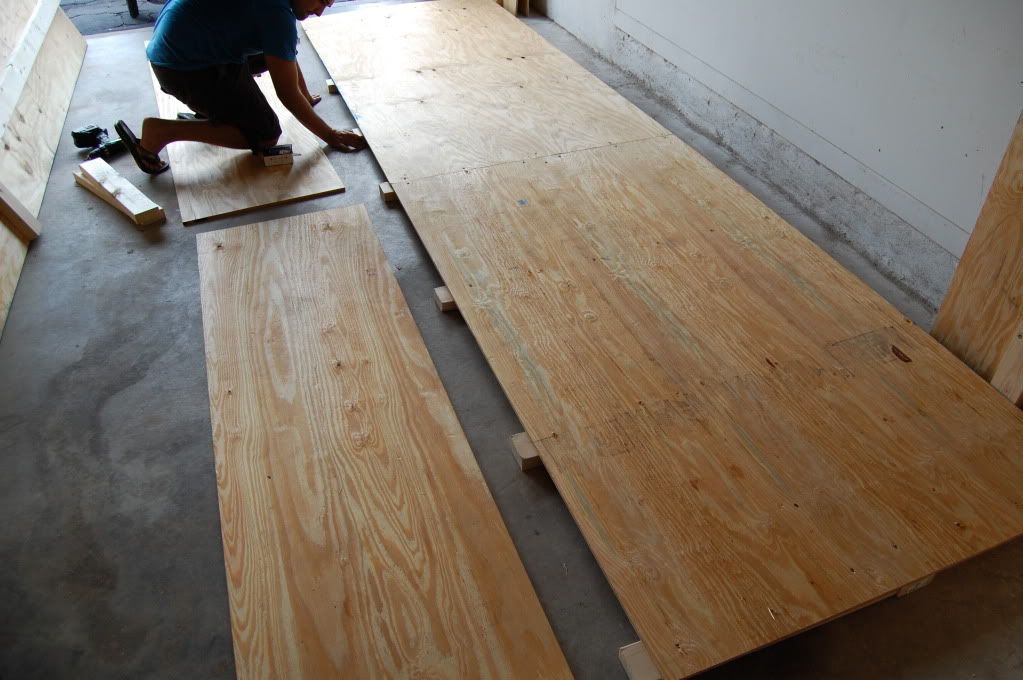
Today a friend came by to help me start to build the enclosure for the incoming waters. After moving everything off of the wall I intend to use I found a few extra feet of space. Total Deminsions on this one will be 15' X 6' X 6'. Currently there is just a bunch of wood on the floor, tomorrow I will take a few pics as it comes together. Really excited about this one, these could be the only reptiles I keep for the rest of my life! It really doesn't get any better then a monitor lizard as far as reptiles go!
-----
John Light
JPLReptiles@gmail.com
(954) 903-8061
Reptile & Amphibian Forums
Welcome to kingsnake.com's message board system. Here you may share and discuss information with others about your favorite reptile and amphibian related topics such as care and feeding, caging requirements, permits and licenses, and more. Launched in 1997, the kingsnake.com message board system is one of the oldest and largest systems on the internet.



I thought many of you would enjoy this..
JPLReptiles
Sep 29, 2011 09:07 PM
Replies (16)
murrindindi
Sep 30, 2011 01:45 PM
Well I have to agree with you, varanids are VERY special animals, and Asian Water monitors are one of my favourite species too.
Good luck with the new enclosure!
JPLReptiles
Sep 30, 2011 09:27 PM
These aren't your typical asian waters....
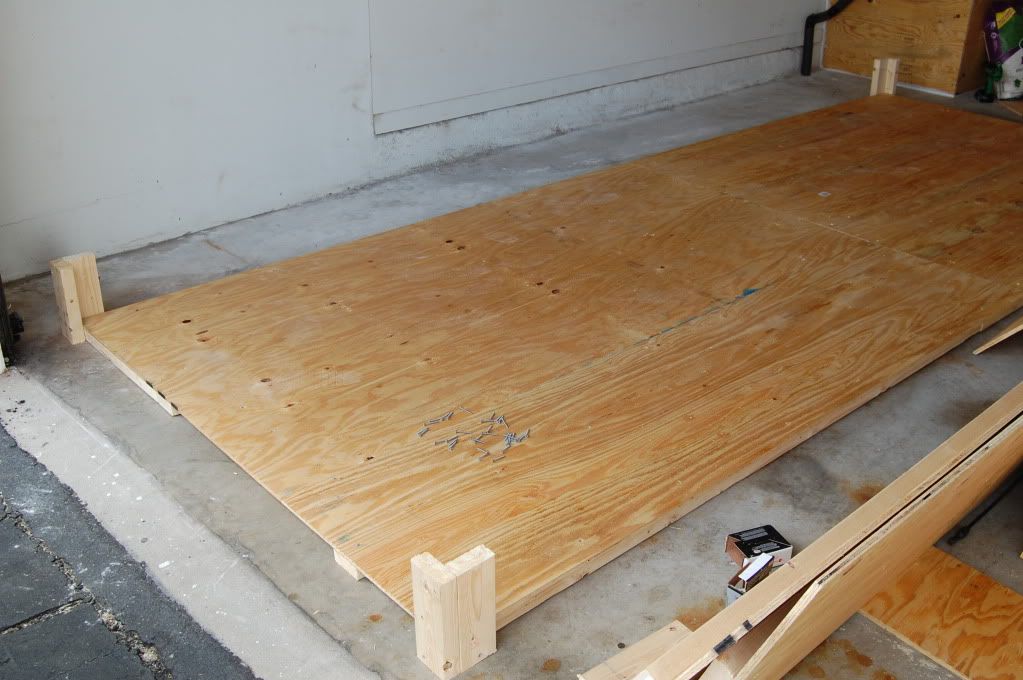
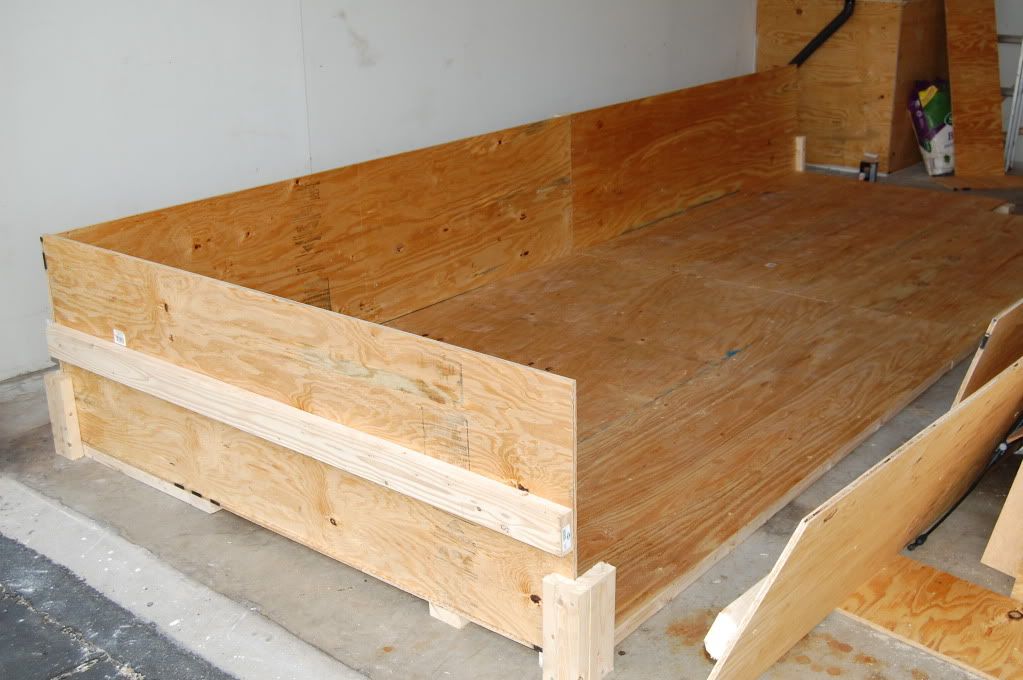
well heres the beginning, alot more to come!
-----
John Light
JPLReptiles@gmail.com
(954) 903-8061
murrindindi
Oct 01, 2011 02:27 PM
Hi again, what sub species are they?
Also, can you explain what you`re going to seal the wood with (I assume you`ll use a sand/soil substrate)?
FR
Oct 01, 2011 02:57 PM
Even sealed, it will not hold up to deep substrate of any kind. I think its a bit to late to help thought.
JPLReptiles
Oct 01, 2011 05:12 PM
Varanus cummingi
The wood is going to be sealed with epoxy, still not 100% sure which I will use. I may also put down FRP or Tile Board as well. The base is almost completed and then I will get into the rest of the enclosure. The substrate will be 2ft depth, more towards the rear of the enclosure. I still have to reinforce the walls to handle the weight. I'd like to use mainly leaf litter. I have already begun getting leaves together to dump into this monster. Due to it's size I will likely need to use some "fill" as well. I intend to keep dumping leaves into the enclosure untill It's at a level my animals are happy with...going to take a ton of leaves!
This is my first big build. Already I wish I could go back and change a few things. One more of these may follow and then I will be out of room.
-----
John Light
JPLReptiles@gmail.com
(954) 903-8061
fr
Oct 01, 2011 05:23 PM
Hi John, I guess thats the point, I have built a lot of large cages, so I already consider what is needed.
FIrst off, you cannot design around the easist lightest material, Like leaflitter. With design you prepare for the heavyist load possible, not the lightest.
First off, two feet is absolutely shallow for any salvator. Its about like putting an ackie in four inches or less of substrate.
ALso leaf litter in my experience suitable for salvators. Sandy soil is.
I have not seen how your going to reinforce your bottom, but to me, any after the fact type reinforcement will not work. If you ever poured concrete into forms you would understand what happens with moist heavy materials thats constantly being dug and redug(vibrated) It will simply blow out seams.
If I would you I would fiberglass the whole bottom. A couple layers of Mat will work. I know, nasty but it will stand the test of time and the constant digging the monitors will do.
I built forms and poured the walls for our cages. IT worked and does not age.
For instance, it will take you three or four years, on average to get your monitors going. By then the cage will have rotted out or broke apart. Funny thought huh.
JPLReptiles
Oct 03, 2011 04:00 PM
I really like the fiberglass idea and I'm currently looking into it! Finally found some windows so I'm just about ready to get moving again. I'll post pics of the changes...
-----
John Light
JPLReptiles@gmail.com
(954) 903-8061
jdmjames
Oct 03, 2011 10:02 PM
hey FR, I'm building my monitors enclosure and was thinking of lining the bottom in FRP and for the seams instead of caulking or silicone I was thinking of using fiberglass to seal it because I know silicone won't hold up to the digging. any thoughts on this? thanks in advance.
19cobra93
Oct 03, 2011 06:59 PM
My enclosure for my 6 year old, 6 foot Black Throat is much smaller than that, and it still has over 4,000 lbs of substrate that your floor couldn't even dream to support. When you think of dirt and sand and leaves you don't imagine it being as heavy as it really is. Especially when it has the correct amount of moisture. That plywood you're using just isn't strong enough for it. Wherever there is no support under it, it will sag and crack over time (probably 6 months). Reinforce that floor, reinforce and seal up those seams tight and you might make it last.
I'm 4 years now on my enclosure without a hiccup. I attribute that to the information I got from this forum, and countless hours of research I did before I even started my build. Initially I thought I might have over-built my enclosure. Now I'm glad it's as tough as nails.
Anyway, my suggestion is, as soon as you think it's strong enough, make it stronger. Reinforce your reinforcements.
JPLReptiles
Oct 09, 2011 09:15 AM
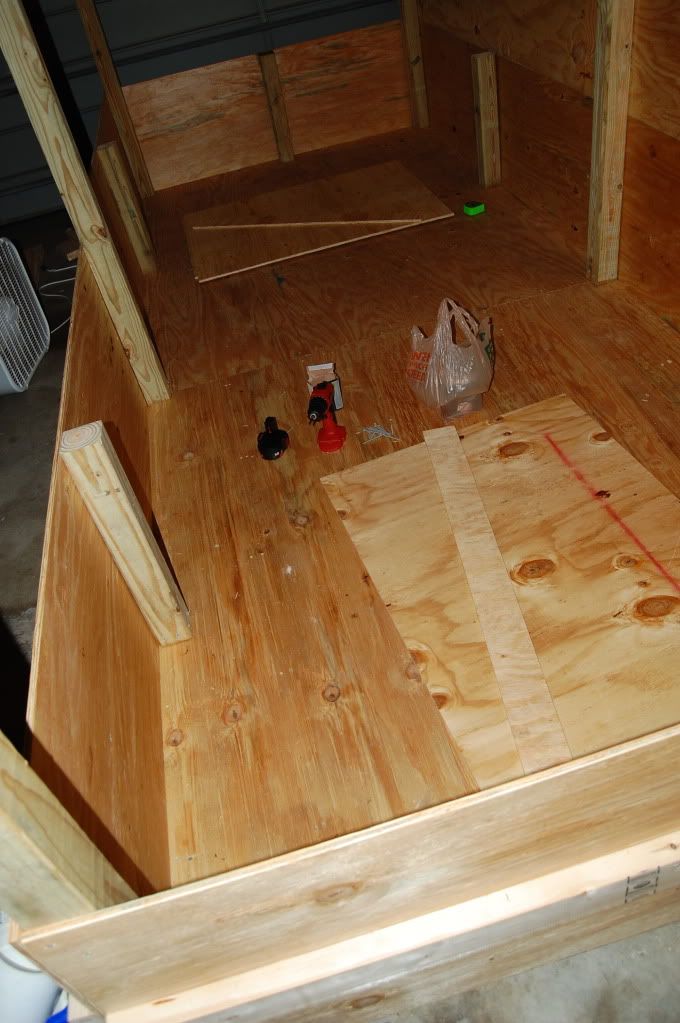
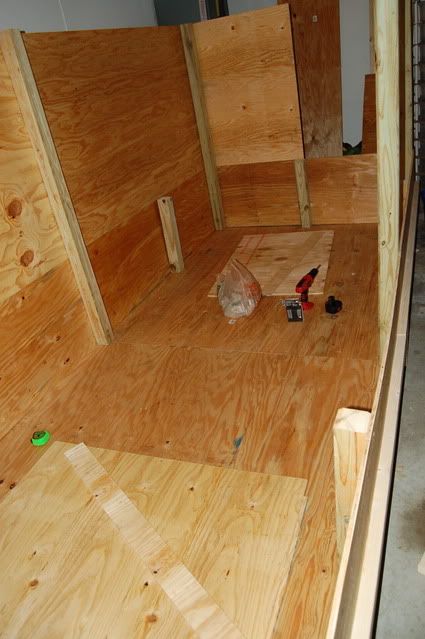
It's been slow going but I'm getting somewhere. I'm going to construct the entire thing before I get into fiberglass if I go that route which is looking promising. I added 4X4's for support which has made a huge difference! Still more to come and lots of changes...
-----
John Light
JPLReptiles@gmail.com
(954) 903-8061
Calparsoni
Oct 10, 2011 02:45 PM
I do not think your cage is going to hold up well the way you are constructing it. That said I would like to congratulate you on working on a cage as not a lot of people actually do go that far.
that said here is some advice that is meant to be constructive and help you as I have built many cages some indoors some outdoors some that have worked and some that haven't. I have learned from all of them. Judging from your photos I can tell that you do not seem to be very experienced with carpentry. There is no shame in that many people are not and when I built my first cage I had limited carpentry experience. I had worked setting house trailer and had done groundskeeping for one of the major amusement parks in NYS at the time so I had a bit of knowledge but not much.
Yo give you some insight I cut a hole in the plywood bottom of my first monitor cage to accommodate a kiddie pool and used a skil saw to do it (Quite difficult and not very bright although I did pull it off.) We have all been there at some point of not really knowing how to do things like this.
That said,if I were building a cage in what appears to be a garage with a concrete floor as it looks in your photos, considering that you are considering putting 2 and a half feet of dirt in it I would utilize a base of 8x8x16 in. concrete blocks I would top that with a layer of 4x8x16 in. solid blocks I would dry stack them and then coat them with a surface bonding cement product like quick wall since I am a much better carpenter than a mason. Personally I would fill the hollow cores of the blocks with sand or a sand/portland cement mixture to make it a bit more stable (it does so with either..(portland cement/sand is obviously more stable) as for setting the first course of blocks on a layer of mortar as I said I am a better carpenter than mason and since you aren't build a house or outbuilding why worry? It isn't going anywhere. this is a much cheaper option than plywood and definitely much more sturdy..
Calparsoni
Oct 10, 2011 03:13 PM
All said with a block base which is much cheaper and more sturdy than plywood (after you coat it with God-knows-what.....those fumes will be great too...tell Jim Morrison I said hi lol.) if you insist on using plywood it will not work how you are building it. It is not going to be structurally sound and is going to fall apart when you fill it with dirt after you have spent a lot of money on it.
IF YOU INSIST the first thing you will need to do is dismantle what you have done now and build a proper frame first. Attaching plywood to 4x4's that are basically freestanding is not going to work. Using 4x4's is an excellent idea HOWEVER in order to join them properly and have a frame you can attach plywood to and have the plywood properly secured is going to require mortise and tenon type of joinery (timber framing) which is most likely a bit beyond your skill level (not to mention requiring extra specialized tools like chisels and a mallet, specialized saws etc.) even then doing mortises and tenons on 4x4's is tricky as 4x4's are a bit small for timber framing and tend to split easily if you are not careful.
I would suggest going and getting some books at home depot or tractor supply on basic carpentry and study up on basic framing. I mention tractor supply because books on building small barns and out buildings and animal enclosures are great and can help you think a bit outside the box (so-to-speak) from standard frame home construction which you will need to do. You will ultimately want to build a hyper-reinforced frame to put your plywood on. There is more I would advise at this point but I don't want to all day on kingsnake. You may find if you go the plywood route that it would be cheaper to cover the plywood with a concrete fiber board product such as Hardee plank and seal the corners accordingly. All that said building a base out of blocks is a much cheaper option. Good luck on your cage. BTW if you look through my posts on here I keep waters as well.
JPLReptiles
Oct 20, 2011 07:31 PM
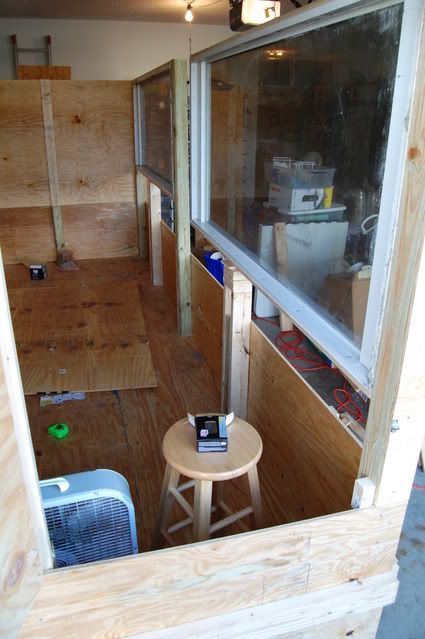
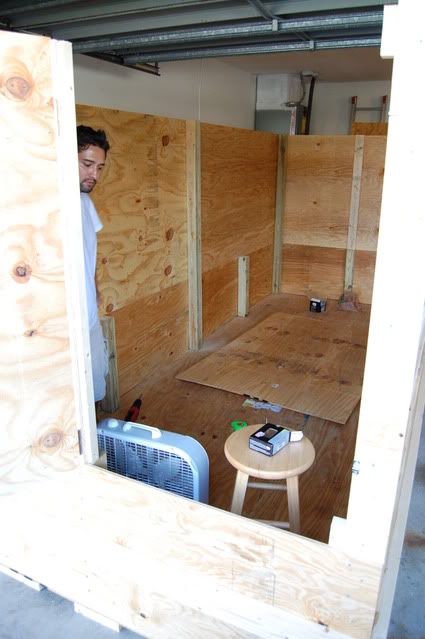
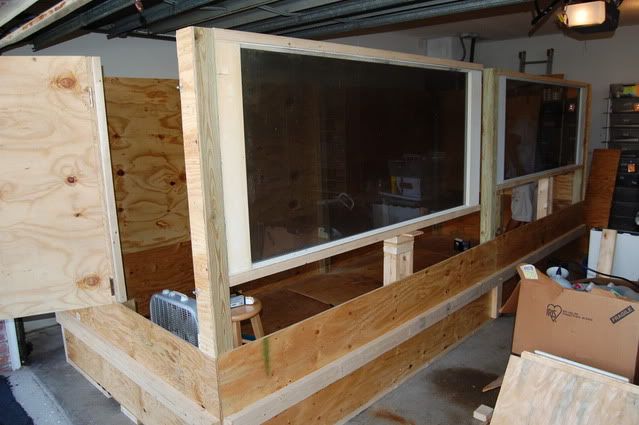
Well everything comes down to money. As much as I'd like to do this right it's just not going to happen the way I wanted it to. Regardless it will still work but I will need to patch and play as time goes on...it is what it is. The enclosure is inside my garage so it should hold up awhile. Anyways...I'm going to silicon the voids and water seal everything. Once that is done I will put in a 91gallon pond and the 2 nesting sites. Last I will add substrate. I still need to add supports to the top, sides, front window, and add some plywood to a few more spots. Once that is all done I can add the lumber! I'm just about done and running over budget. I'm sure the animals will enjoy the space. The only thing I didn't get pics of was when Alex and I put the top on as I still have to run 2x4's to support it. I can't tell you how excited I am about this project! The only lizards I have hatched thus far that I personally bred were Rio Fuerte Beadeds and these guys won't pack the punch as babies! I'm sure they will be alot more fun to watch grow! Here are some updated pics:
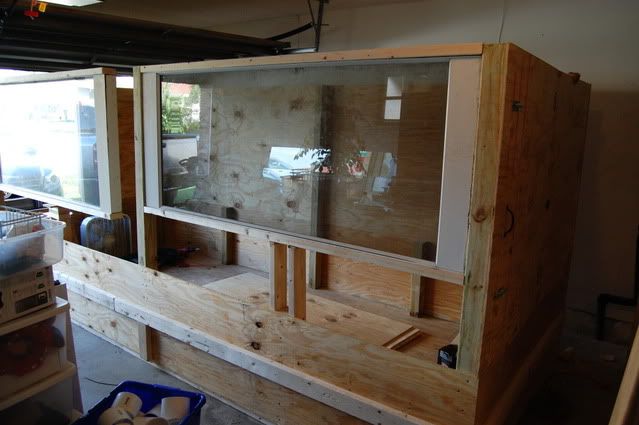
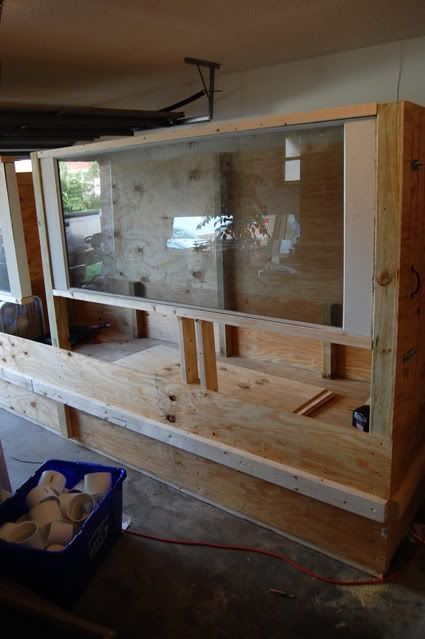
-----
John Light
JPLReptiles@gmail.com
(954) 903-8061
Alejandro45
Oct 22, 2011 07:09 PM
Hello John and Alex.
Please consider how much dirt and mess will form in the pond. By looking at the massive pvc piping it looks to me that you’re going to set up a large drain?
Have you considered using a two part epoxy like the ones used to seal garage floors?
JPLReptiles
Oct 22, 2011 09:37 PM
Looking at the epoxy paint for garage floors currently. I'm thinking of placing a small wall across part of the cage and putting leaf litter closest to the pond which should help. I'm also planning on putting it on a raised platform. Alex is good with filters which should also help. I will have it piped and connected to a flex hose for draining. I put the top on today and added additional supports. I'll put up some new pics soon.
-----
John Light
JPLReptiles@gmail.com
(954) 903-8061
JPLReptiles
Oct 24, 2011 05:46 PM
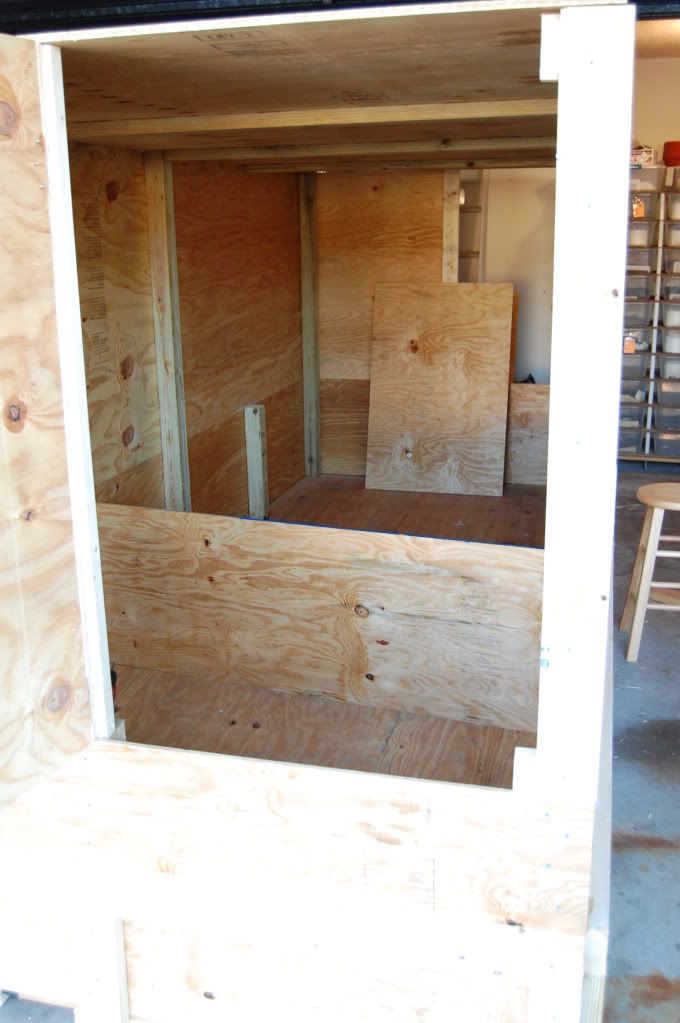
Here is a just about completed shell. Still working on what I'm going to use to seal it.
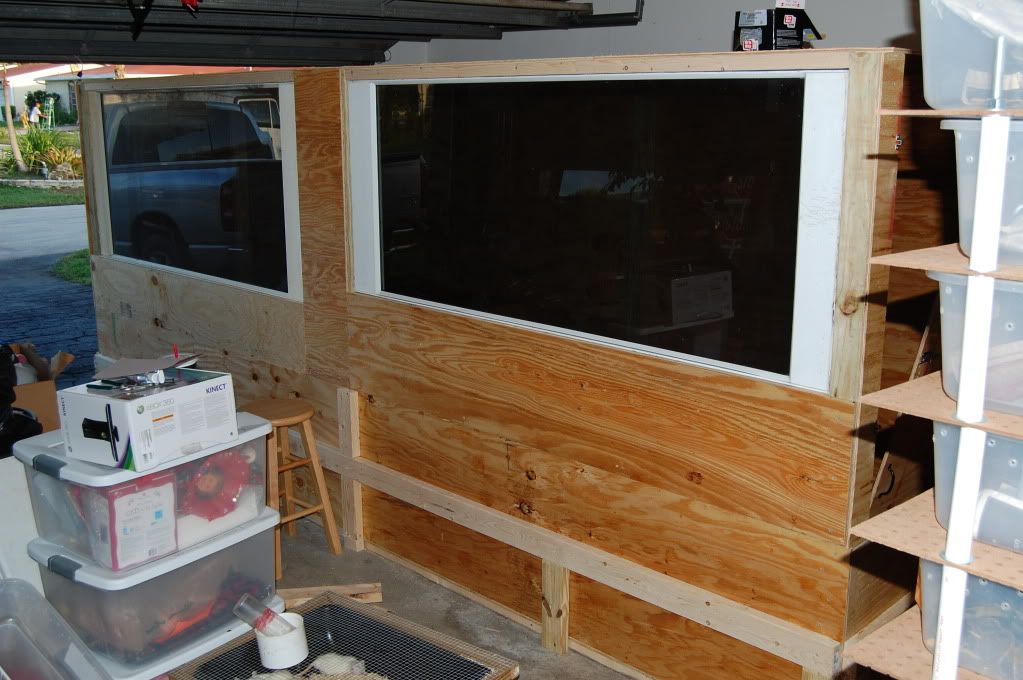
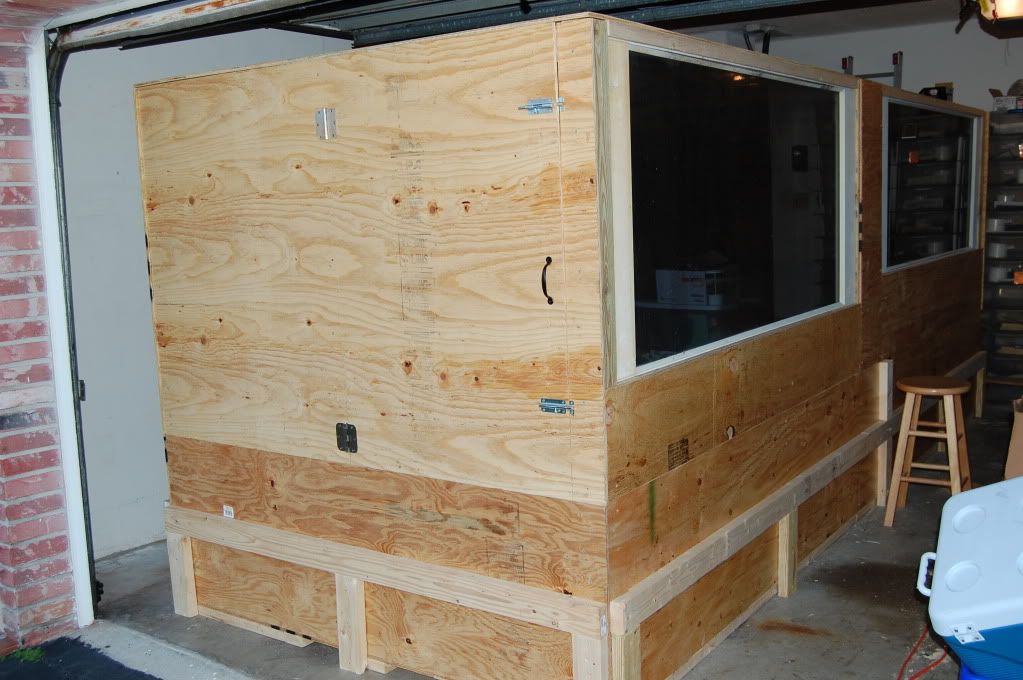
-----
John Light
JPLReptiles@gmail.com
(954) 903-8061
