
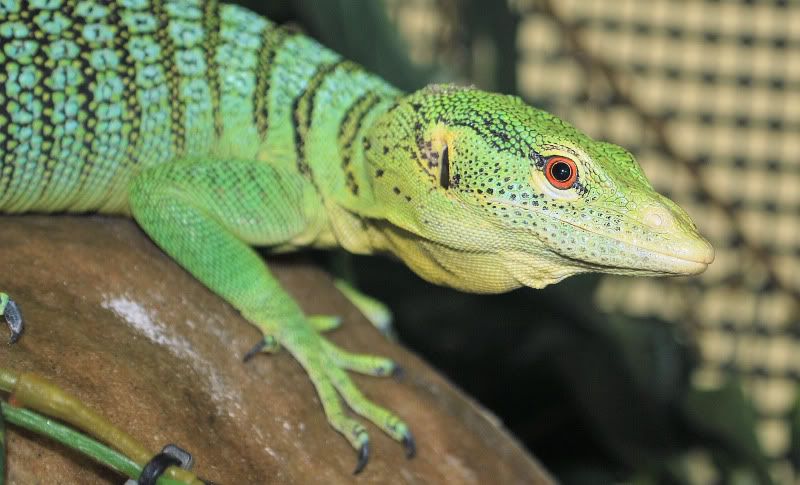
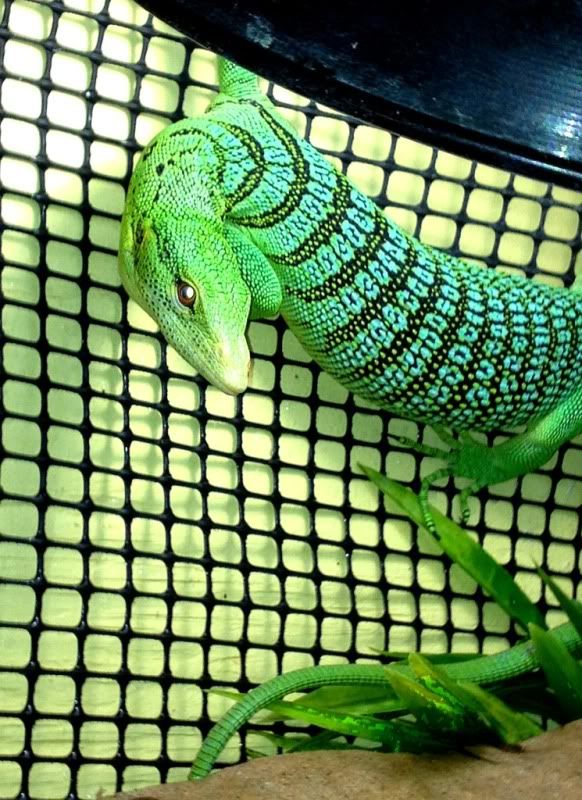
Would be cool to see some more prasinus complex pictures from other people (from other groups too, sure!).
Someone had the PE GTM babies (sorry, I don't remember your name, my friend). How are they doing?
Welcome to kingsnake.com's message board system. Here you may share and discuss information with others about your favorite reptile and amphibian related topics such as care and feeding, caging requirements, permits and licenses, and more. Launched in 1997, the kingsnake.com message board system is one of the oldest and largest systems on the internet.



Would be cool to see some more prasinus complex pictures from other people (from other groups too, sure!).
Someone had the PE GTM babies (sorry, I don't remember your name, my friend). How are they doing?
Hey! I'll try to get some pictures posted here soon, but I thought I would take some time and update folks on our Prasinus groups and breedings.
Sorry we haven't posted more info here, but with our fire and trying to recover from that (clean up, insurance, fire inspectors, the mental part of holy crap what just happened to us!) I just haven't had the time 
We hatched another clutch of four eggs (five were laid, one went bad about a week into incubation) about three weeks ago. All four are doing great, feeding and being super awesome and cute as all Prasinus babies are. We have two more clutches cooking and so far all those eggs look great. All four clutches (the two that hatched and the two that are cooking) were from the same group of 1.2. We do have other groups and some of those females are gravid as well. We had a female go down to nest a week or so ago and she come back up skinny so I assume she absorbed those follicles.
All the groups are set up the same. The cages is 5 ft wide, 2 ft deep and 4 ft high. There are 3 45 watt bulbs which provide the hot spots and the room temps are around 78-80. There are branches and cork bark for them to bask on and hide in. We use a sand and coco bark mix for nesting. It holds burrows well and at least one of our groups likes it as a nesting spot. When I get good eggs from the other groups, I'll feel much better about our nesting mix and call it a success. Until then, I just say, it "seems" to work as a nesting material. They are fed a mix of crickets, roaches and mice parts (for the younger smaller ones) and hopper mice (for the adults). Lights are on a 12/12 cycle. The groups seem to be completely socialized, as we can move males or females around without stress or fighting. They all share the food, basking spots and hide spots.
The eggs take 5 months to hatch at about 85.5. The eggs are buried a inch or two under very slightly damp vermiculite. I choose this method after seeing Kevin use it with his waters. I thought about how a Prasinus would nest in the wild, she would most likely use a pile of rotting leaves in a tree hollow. They would be completely covered the entire time. I'm guessing the contact with the incubation medium helps weaken the egg shell as the eggs start to turn colors and get really soft towards the eggs of incubation. We have tried other methods with Prasinus eggs (with no success) and I never saw the eggs turning colors or getting soft like I see with this method.
The babies grow so fast. The babies that were born in August are three to four times the mass they were born at. If they keep up the same pace, I can see them laying eggs by their first birthday!
I must say this. They are not easy to keep well or breed. They are also not super hard, but there is some learning that must be done before you could really expect to do well with this species. I suggest working with ackies for awhile and find success with them first. Ackies are very hardy and will teach you a lot about keeping and breeding monitors. And they handle keeper mistakes so much better than Prasinus.
Chad
Hi Chad,
I hope you're doing well, considering all that has happened.
"The babies grow so fast. The babies that were born in August are three to four times the mass they were born at. If they keep up the same pace, I can see them laying eggs by their first birthday! "
I'm really blown away with how fast they are growing as well!
I'm wondering, since you think they likely nest in rotted leaves, have you tried those as well?
The mix you are using seems to be doing the trick. I was just curious more than anything.
Colin,
I've thought about it, both as a nesting material and as a incubation material. As of now, I think the way I'm incubating is working great, so no changes there.
One of our girls has had slugs twice and she clearly didn't like her nest box the last time she laid. She must of had 15 burrows going. Same nesting set up as my other girls who seem to be quite happy with theirs. Weird, right? She has good sized follicles right now, so I'm expecting her to lay soon. If she nests poorly again, I will give the leaves a try.
Chad
I have a couple eggs in a SIM container. So far, so good, it seems. They are some 55 days in and have grown nicely.
I wouldn't risk to say they will hatch because the gestation was longer than average. But they certainly look nice and have grown.
Hi Guys,
What your using Chad is what I used many years ago with Blacktrees. Coco fiber and sand mix. I use that for colubrids as well.
One thought for leaflitter. Its normally only a few inches deep, then it composts into something like coco fiber.
When we where breeding lacies, we used deep leaflitter and it always break down into that compost material.
When gathering leaflitter, it was the same. Deep leaflitter was compost.
Recently I acquired a trio of greentrees and they without question burrow in ackie nesting material. deep sandy material. I do cover it with leaflitter. One female likes to sit in her burrow, with her nose sticking out of the leaflitter.
About the ground or elevated nesting.
I think people are the ones who get fooled by thinking about whats on the bottom of cages as the ground. People tend to think something on the bottom of the cage is the ground. And something higher up is aboreal. When all the while monitors are smarter then us and much less literal, They take whatever it is, as what it is. Not the ground or aboreal. Its merely something on the bottom of the cage. Not terestrial or aboreal, etc. Just material they can use.
If you think about it, its the ackies that get fooled. If the nesting substrate is on the bottom of a trough, then its above the ground level and is in fact elevated or aboreal. So shame on the ackies.
Why keepers think the substrate is the ground is truely amazing. It must be a human thing. As its clearly not.
Anyhow Congrats Chad and it was horrible to hear about your fire. Take your time and work through it slowly. Best wishes
I actually stumbled on to this today (their 1st time ever). I raised this pair from small imports here. It'd be 2 years in Feb 2012 since I got them.
Sorry for the cellphone video and me spooking the female with it, but I caught part of it.
http://s6.photobucket.com/albums/y230/jburokas/?action=view¤t=prasinusmating11411.mp4
I'm a bit slow, I was looking at the blurry pic for awhile thinking WTH am I supposed to be looking at? LOL
Nice to see Justin. Hope it turns into eggs for you.
Yeah, you have to "click the pic". I have yet to figure out how to embed the Youtube or Pbucket thing on a post. Thanks Nate.
Help, tips & resources quick links
Manage your user and advertising accounts
Advertising and services purchase quick links
