Reptile & Amphibian Forums

Welcome to kingsnake.com's message board system. Here you may share and discuss information with others about your favorite reptile and amphibian related topics such as care and feeding, caging requirements, permits and licenses, and more. Launched in 1997, the kingsnake.com message board system is one of the oldest and largest systems on the internet.

Click for 65% off Shipping with Reptiles 2 You
https://www.crepnw.com/
Click for 65% off Shipping with Reptiles 2 You

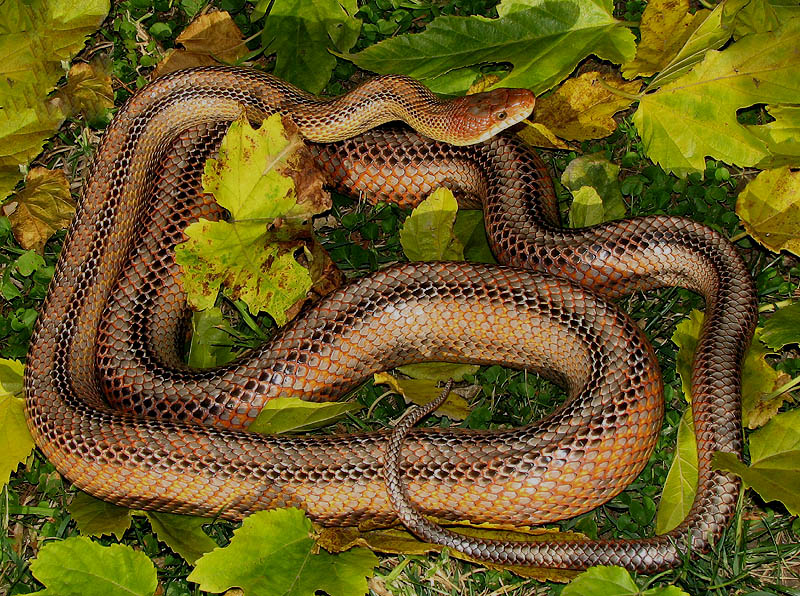
Baird's Gurging

monklet Dec 04, 2011 11:42 AM

Hey all,

My big male Baird's is in gurg mode and can't keep down anything but very small meal. It's been going on since July 1st when he gurged up one of two medium rats (total weight 170gms, his biggest meal). Since then if I feed him more than a couple fuzzy rats or small mice he'll gurge at least one. He does digest some and but sometimes there is partially digest content in his feces.

At first I thought he'd just get over it but now it's becoming very worrisome. Outwardly he appears healthy as ever but is much more laid back than usual.

Oh yeah, in late October he got a dose of flagyl but can't say if that helped at all.

Hoping for some good suggestions etc.

Thanks,
Brad


-----
See all my snakes at SerpenTrack.com

Replies (31)

MikeMurphy Dec 04, 2011 01:57 PM

Nice looking snake. Try witholding food for 14 days then feed him something very small. Wait another week or so and feed again, but again small. Hopefully that will get him back on track, assuming it's not something bacterial, in which case you may need the help of a vet.

RandyWhittington Dec 04, 2011 05:14 PM

Like Mike mentioned I would also wait a minimum of a couple weeks before feeding a single small meal. Since it has been going on a while now, I would keep the meals small, only one food item at a time and less frequent meals for at least a couple months to let it's system calm down for a period of time. I would also try to get it's hot spot temp up some to help it digest but still keep a cooler side to the cage.
-----
Randy Whittington

BillMcgElaphe Dec 06, 2011 11:09 AM

Very nice Baird's, Brad..

Only anecdotal, but I've had very good response with adding probiotics to a rat pink body cavity, after a wait.

This is especially true after Metronidazole, since it is very thorough in killing gut flora.
-----
Regards, Bill McGighan

DMong Dec 06, 2011 09:23 PM

I agree Bill. I think I would give it a dose of Flagyl(Metronidazole) at the rate of 50 mg/kg of body weight and wait about 12-14 days, then see how things go starting off with very small meals to absolutely ENSURE it doesn't risk any more regurges and it's gut is back to working properly. Yes, the probiotics(good bacteria) would indeed work great in conjuction with the Flagyl AFTER the 12 to 14 day medication period to kill any intestinal bacteria(both good and bad) and allow it's stomach acids, electrolytes and gut flora to replenish itself once again to normal working order. This very often works just as sure as the sun rises..

~Doug
-----
"a snake in the grass is a GOOD thing"


serpentinespecialties.webs.com

monklet Dec 07, 2011 11:10 AM

Hah, seems you've intuitively answered the follow-up questions I just posed to Bill's helpful response. Very clear now. Thanks much Doug, will abide!

Brad
-----
See all my snakes at SerpenTrack.com

DMong Dec 07, 2011 12:31 PM

Sure thing buddy!

I think that will VERY likely resolve the entire issue.

BTW, excellent looking animal, I must say!..

~Doug
-----
"a snake in the grass is a GOOD thing"


serpentinespecialties.webs.com

monklet Dec 07, 2011 02:38 PM

Thanks, I shall follow-up.
-----
See all my snakes at SerpenTrack.com

monklet Dec 07, 2011 07:40 PM

"a dose of Flagyl(Metronidazole) at the rate of 50 mg/kg of body weight" - DMong

Curious about that as I have other indications for a higher dosing particular to reptiles, 150 mg/kg - sourced by a friend from the Willowbrook Pharmacopeia

Naturally I assume you have a good basis for that dosing level. Just trying to learn how this all works.

Brad
-----
See all my snakes at SerpenTrack.com

DMong Dec 08, 2011 01:44 PM

Yes, when one researches the doses for Flagyl (Metronidazole). you will find doses that vary greatly in books and on the internet, and they also depend on what type of reptiles, the species, and what is found to be the problem through fecal exams, etc...

I have reasearched LOTS of different recommended dosages in the past, and it was pretty confusing, but I found that 25 to 50 mg/per kg is the most consistent and widely accepted safe dose for most colubrid snakes, and it has been said that tricolors, Indigos, and some Crotalids shouldn't be dosed over 40-50 mg/kg.

one sourse states....

Metronidazole (Flagyl). Used on intestinal flagellates and for amoebiasis at a dose of 100-200 mg/kg PO, repeated in 2 weeks. A dose of 40-50 mg/kg PO should be used in colubrid snakes since there have been some problems with the higher doses in some species. There are reports that Flagyl works as an appetite stimulant in reptiles. This drug is also good for anaerobic bacterial infections. A recent pharmacokinetics report recommends a dose of 20 mg/kg PO Q 48 hours in yellow rat snakes (Kolmstetter et al. 2001).

In the book "Understanding Reptile Parasites" by Dr. Klingenberg recommends this dose and cites Dr. Funk in specifically saying:
"Do not exceed 40mg/kg in tricolor snakes, indigos or Uracpam rattlers."

Markels "Kingsnakes and Milksnakes" book cites a dose of 40 mg/lb., and that would equal to 88mg/kg.

it is very effective on....

Entamoeba invadens
Trichomonas
Balantidium
Rhizopoda
Flagellates
Ciliates

Anyway, my reasoning is, out of all the different dosages I have ever reasearched, the most common dose I consistently come across seems to be 25-50 mg/kg of body weight for snakes. So given that other doses can be substantially higher, I tend to think the slightly higher-end dose of the most commonly accepted dose of 25 -50 mg/kg for colubrids is probably a very safe effective bet.

I have used this very same dose personally a few times over the years, and it worked like absolute MAGIC!. I have posted this to other people in the past many times too, and I have had people email me back later on saying their once very thin CONSTANTLY regurgitating snake that was literally on deaths front door prior to following my recommendations for the dosing and administration technique to the the very letter was absolutely thriving again after some Flagyl administration. When the person contacted me again out of the blue a couple months later, his earlier almost dead snake was now three times the body weight it was a while ago, and was now chowing down huge rat pups like no tomorrow..LOL!

Also, a few years ago, I had a subadult 300 gram Anery Hondo that I produced from the egg, all of the sudden started regurging out of nowhere, even when given VERY small meals. It wasn't even holding these down, so I immediately knew right then that it was time to break-out the "big guns" and administer some Flagyl at the rate of about 50 mg/kg. I did this and waited for about 12 or so days, and it held down every meal ever since and ate like an absolute glutton. The snake is now a huge proven breeder several times over now..

I have used it since then on a couple animals I acquired from other people at the rate of 50 mg/kg, and those snakes did fantastic afterwords for me too.

Fouled water is a very common culprit of this if they should accidentally ingest some before you notice and change it out.

If you get Flagyl in 250 mg. pill form, the dose for a 300 gram snake is 1/16th of the pill, so you have to do your best at judging what 1/16th would be, but I really don't think a bit one way or the other is going to have any adverse affects given the fact that it is pretty reptile tollerant if not gone way overboard on. Using a very accurate scale that measures tiny amounts such as a jewlers scale would make it very easy and very accurate.

cheers, ~Doug
-----
"a snake in the grass is a GOOD thing"


serpentinespecialties.webs.com

monklet Dec 08, 2011 02:47 PM

This is awesome Doug, BIG THANKS from me and everyone else who will benefit from your hard work putting it all together.

Forgive me but, is the 25-50mg/kg a daily dosage or a one time thing, then wait?
-----
See all my snakes at SerpenTrack.com

DMong Dec 09, 2011 12:36 AM

You're very welcome Brad!

Well, it is generally recommended most of the time to give the snake an initial dose, then wait 12-14 days then repeat again. During this entire period you do NOT want to attempt ANY feeding at all because the antibiotic Metronidazole kills all the bacteria both good AND bad. A period of 12-14 days AFTER the last dose allows the acids, enzymes, gut bacteria to replenish back to a normal state so the animal can even begin to digest properly. Then when you do feed next, make sure it is a small meal and slowly and gradually work back up to normal sized prey.

I have been successful with just ONE dose and waiting 12-14 days before feeding, but on extremely emmaciated thin snakes time can be VERY crucial with getting them back to feeding and getting nutrition as soon as possible. but with a huge robust looking snake like your big bairdi, it could easily go that time preiod if you wanted to.

Also, a probiotic such as Bill was talking about, or "Nuti-Bac" another very well-known brand would be given a good while after the dosing because that in itself is "good bacteria" the snake needs in the gut to digest properly and you don't want the medication killing the good bacteria and counteracting that in the process.

Just triple check you are dosing correctly for it's weight, and hold the snake head and neck very upright, and administer the medication with a tad of water down its throat a good ways and press it in slow so it doesn't run back out it's mouth, and all is well, and if already in liquid form, of course no water would be needed..LOL!

cheers, ~Doug
-----
"a snake in the grass is a GOOD thing"


serpentinespecialties.webs.com

monklet Dec 10, 2011 12:16 PM

More great and detailed info Doug, thanks again. Obviously there is a lot of information out there and it isn't always in sync. I have a good friend who is highly studied and experienced in "para-vetrinary" practice, reptiles, birds and mammals and he is offering some conflictory information regarding what Flagyl and probiotics actually do. I'm posting this below not to debate his or your information but to extend the discussion. I believe it should be helpful to us all regardless of the utimate correctness of any of this. You're both obviously well studied on this issue but I believe you've had much more practical experience in application. Whatever the truth is, your highly positive results pretty much tell me that, however, whatever, the prescription works ...and that is by far most important to me

Selected excerpts from a train of email correspondence... I know, tons of information and lots to digest (pun intended).

===========================================================

Part of the confusion lies in single dosing vs dosing over 7 - 14 days. A single large dose targeted on a known pathogen will not lead to organ failure and death. Smaller doses over a longer period may do a number on kidneys and/or liver. When we are treating anorectic snakes, we seldom do kidney/liver function tests before treatment and thus will not know if primary kidney/liver disfunction is in fact at the heart of the problem. In human medicine, this would be malpractice.

Still not clear whether DM is discussing a single treatment or treatment repeated every day over 7 to 14 days. Funk and Klingenberg are very reliable practitioners, Markel is a hobbyist. But, hey! I believe in Magic! Bring it! (Even when the anecdotal information addresses treatment of symptoms and not specific pathogens or pathology. If it works, don't knock it.) - PT

===========================================================

The only microorganisms flagyl affects in the gut are Protozoa and such anaerobes as the Clostridia. The latter include C. botulinum, tetani, schottmuelleri (gas gangrene), and the increasingly deadly difficile. These do not contribute to the health of the gut. And they can flat kill their hosts. There a few dozen more genera of anaerobes, none of which you can't live without in your gut.

Flagyl belongs to a group of drugs known as imidazoles that as a group are somewhat more deadly to commensals than to their hosts. They are not drugs about which anyone with a high regard for the truth would say, "Well, it can't do any harm." Why they work only on anaerobes is interesting: in a reducing environment inside the organism, metronidazole yields hundreds of daughter products such as sulfanilamides that do a job on on the organism. Another compound in this group. fenbendazole, has been found somewhat more effective against Giardia, even though the labeled use is as an antihelminithic drug (Panacur). - PT

===========================================================
Here is what DVM Doug Mader says about Flagyl -

Thought of as anti-protozoal agent but is also excellent anti-bacterial agent (anaerobes)
Metabolized by the liver, excreted by kidneys
Compromised liver necessitates lowering dose
Excellent penetration of tissues to target anaerobic bacteria
Best used with an antibiotic such as Amikacin to extend its spectrum
Flagyl [in reptiles] is dosed at 50 mg/kg PO SID for 7 to 14 days; Amikacin at 5. mg/kg loading dose, dropped to 2.5 mg/kg every third day
Refs in reptilian literature suggest dosages up to 275 mg/kg
Higher doses have been reported to cause such problems as star gazing, head tilt, locomotion problems; this has not been reported for 50 mg/kg even over a 14 day period. Problems have been reversible over a period of months
Deaths have occurred in Calif and Ariz Mtn King Snakes and Indigo Snakes at doses above 100/mg/kg, and in Uracoan Rattlesnakes at doses of 40 mg/kg with 14 day dosing. "A lower dosage might be prudent."
To summarize, 50 mg/kg is a safe dosage for your snake. Mader et al. suggest a regime of this dose for 7 days minimum. From my experience with birds I am concerned about such long term use in an already compromised snake. Furthermore, Amikacin belongs to a group of drugs, the aminoglycosides, with known toxic effects on birds and reptiles. I would rather combine it with a safer group of drugs, Lincomycin/Clindomycin. I have forgotten the length of treatment your correspondent suggested, but I suggest we try dosing on alternate days for a week at the scaled dosage of 60 mg Flagyl and 5 mg Lincomycin SID. I can load some syringes for you to give the snake PO. After a week, we can consider extending the treatment for another week, either consecutively or with a two week break. - PT

===========================================================

Flagyl (el Metronidazolo) BeneBac© . Flagyl is selective in gut sterilization. It controls obligate and facultative anaerobes and protozoans in the gut and deep wounds/surgical fields. It does not control the plethora of gram neg/pos bugs in the gut. Frequent small meals of low residue food are the way to go. That would be rat pups before they become furry and/or grown mice with their bodies degloved. That means, leave the fur on the head and present that to the snake, but pull the fur back via a circumsizing incision just caudal to the head. As the snake's digestion improves you can progress to larger unclipped fare. My colleague, Bob, can identify fecal Coccidia, and might see some other stuff like Balantidia. [Balantidium coli is a parasitic species of ciliate protozoan that causes the disease Balantidiasis.[1][2] It is the only member of the ciliate phylum known to be pathogenic to humans.] This organism is not confined to mammals, but is seen in Chelonians. It is treatable with Flagyl. - PT
-----
See all my snakes at SerpenTrack.com


monklet Dec 07, 2011 11:08 AM

Thanks Bill and sorry for the late response.

So, would Nutri-bac be a probiotic? ...and for that matter, just what IS a probiotic?

Also, what would be the indications for treatment with Metronidazole and is it available to the hobbiest?

Thanks again for the help.

Brad
-----
See all my snakes at SerpenTrack.com

BillMcgElaphe Dec 08, 2011 01:30 PM

"So, would Nutri-bac be a probiotic? "
.
I haven't seen or read any difference in the brands, so Nutri-bac is fine. I've been using PROBIOS for puppies and it seems to work.
.
.
"...and for that matter, just what IS a probiotic?"
.
Short answer is "good bacteria".
.
The gut of all vertebrates is a virtual battle ground of all sorts of organisms that work for and against the animal’s system to reach some sort of equilibrium.
.
Unfortunately, some we call “bad”; salmonellae for example.
.
Metronidazole, Flagyl (brand name), and some antibiotics do a great job of indiscriminately attacking gut bacteria, but takes out good with bad.
.
The concept of probiotics is to replenish some of the good ones, or at least give them a head start over with colonization. Snakes get gut floras often from the creatures that they eat.
.
(PS
It got the term “flora” from the days when all life was either fauna or flora. Bacteria is neither.)
.
.
“Also, what would be the indications for treatment with Metronidazole and is it available to the hobbiest?”
.
Last I saw, you need a prescription from a veterinarian, although it’s an “over-the-counter” drug in many other countries and sold often for fighting amoebic dysentery in humans (Montezuma’s Revenge, Green Apple Highstep, etc.)
.
As Tony said, one large mouse or small rat per week is usually reasonable maintenance level at a mean 78 F.
.
Another helpful technique is to split the skin, 3 or 4 times, of a frozen thawed pink for easier digestion.
-----
Regards, Bill McGighan

DMong Dec 08, 2011 02:03 PM

Right-on Bill!..

Also, Brad......you can "sometimes" find it at fish aquarium specialty shops too. At just $8 or $10 bucks for a tiny vial of it in powder form beats the hell out of the hassle and price of a vet visit. And you might even stumble upon some in big bottles there like some other antibiotics are.

Call around and see what some of the local shops say. Also make SURE you tell them BOTH trade name and drug name Flagyl (Metronidazole), because many employees don't know anything about certain things like this, and might only be familiar with ONE of these names it is known as.

~Doug
-----
"a snake in the grass is a GOOD thing"


serpentinespecialties.webs.com

monklet Dec 08, 2011 02:49 PM

Thanks much Bill for the kind, respectful and detailed reply. I'm sure others will benefit as well!
-----
See all my snakes at SerpenTrack.com
RandyWhittington Dec 10, 2011 12:05 AM

Hey Bill. Some great info there but I have a question. Were you recommending a constant temp of 78 degrees. I know a lot of breeders/people use a constant temp for their snakes for various reasons but in my experience, providing a snake that has been kept at a constant temp with a temp gradiant which includes a hot spot of 85 degrees or more can frequently stop this type of problem quicker than other treatments(in most cases)before resorting to more aggressive treatments such as meds. I really don't mean to undermind or be disrespectful what so ever but just think it tends to be the best place to start with these types of problems.
When I first starting keeping asian rats years ago I went with a common thought back then which was to keep them cool. I would have an occaisonal regurge. I started keeping them all with a warm spot while still keeping the other side just as cool, although their warm spot was not as warm of a hot spot as with most other colubrids. I immediatly stoped having thost problems. A lot of people do the same with some pits. I keep those same pit species with a warm spot and they do great. I was talking to a very well known pit keeper/breeder, who you all know, years ago and he said back when he switched to having a warm spot for all pit species that they all did much better overall for him and he stoped having similar problems.
-----
Randy Whittington

BillMcgElaphe Dec 25, 2011 10:49 AM

Hey Randy
.
If you even read this since it’s been so long…. LOL
.
First, big apology… I’ve been out of network access until yesterday (camping) …
.
I agree with your variance of temps, and Brads there already.
.
I was referring to metabolic activity at a statistical mean Temp of 78 F. between highs and lows.
Sorry for the confusion...
-----
Regards, Bill McGighan

Tony D Dec 08, 2011 08:00 AM

flagyl works best as a three dose course over a 21 day period but I wouldn't suggest meds without a fecal. Bill's suggestion of pro-biotis is a good one.

You might need to look at the environment too. A proper gradient is necessary, cool to hot. Also it could be a nervous reaction. A good hide on each side of the thermal gradient can help that.

I would suggest a rest for the animal and then feed it small meals either weekly or every five days. The idea is for it to be small enough for the animal to digest completely before you offer it another meal. GRADUALLY increase the size of the meal until you see the animal putting weight back on then keep it at that level until you see a return to health.

After an animal has had this its my experience that they don't take to heavy feeding again. my take is that the cause was a mismatch between environment and feeding regimen. keep in mind that not all animals will tolerate nor do all conditions support such heavy feeding. In my experience 2 small rats is a LARGE meal for a bairds. I've have very good luck with feeding a single jumbo mouse every 5 - 7 days. At that feeding level with my conditions my animals achieve a weight that is just a bit more than you would expect for a wild animal.

Anyway just some thoughts. Good luck that is a beautiful animal!
-----
Nothing is at last sacred but the integrity of your own mind. Emmerson

WWW.TDSNAKES.BLOGSPOT.COM

monklet Dec 08, 2011 10:19 AM

Thanks Tony for the thoughtful and detailed response.

As for environment and all, this is a snake I've had for four years and I do understand basic husbandry so that is not likely an issue. But, the begninning of this is coindcidental with that on exceptionally large meal so I am suspecting that did trigger a gurge syndrome.

I will begin treatment today and follow-up.

Brad
-----
See all my snakes at SerpenTrack.com

DISCERN Dec 17, 2011 08:10 PM

" In my experience 2 small rats is a LARGE meal for a bairds. I've have very good luck with feeding a single jumbo mouse every 5 - 7 days. At that feeding level with my conditions my animals achieve a weight that is just a bit more than you would expect for a wild animal. "

I would agree as well, Tony.
-----
Genesis 1:1

RandyWhittington Dec 09, 2011 11:00 PM

Brad, if you don't mind me asking, what is the snakes temp range or is it kept at a constant temp?
-----
Randy Whittington

RandyWhittington Dec 10, 2011 10:28 AM

Brad don't feel the need to awnser but if you have time, read my post just above.
-----
Randy Whittington

monklet Dec 10, 2011 11:47 AM

Hah, no problem answering Randy. You're trying to help me out ...thanks.

But, one would expect that after reading and/or contributing this forum everyday for the last 3 or 4 years, I would have a clue about basic hubandry

My experience is that my colubridae seem to prefer the mid to lower ends even while digesting. In fact it surprises me that they rarely move to the warm end. As when/if they are out in the room, in between meal/digestion cycles, they typically prefer the coolest areas in the high 60s to low 70s. But those inclined to be active seem to kick in to gear at about 74F.

One thing I've found is that temp guns, thermocouple probes, bi-metal gauges and mercury thermometers show different temps. I've had two different temp guns, a cheap one and a decent ProExotics PE2. Those both read highest of all instruments but the PE2 is closest to mercury at about 2F.

Brad
-----
See all my snakes at SerpenTrack.com

RandyWhittington Dec 10, 2011 12:06 PM

From your posts and our discussions in the past I assumed you most likely provided a range.
Often when I bring things up in a post like yours, I'm just mentioning it as it relates to the subject and not necessarily directing it to the poster. That's just one of those things that seems to be a great thing for people to consider early on with this type of issue.
By the way that Bairdi is smokin!!!
-----
Randy Whittington

monklet Dec 10, 2011 08:01 PM

Very well taken Randy. I get your wisdom
-----
See all my snakes at SerpenTrack.com

monklet Dec 10, 2011 11:38 AM

Most of his time is in a tub with a high end of high 80s and a low end of low 70s.
-----
See all my snakes at SerpenTrack.com

RandyWhittington Dec 10, 2011 11:50 AM

Obviously your on top of that. Great temp range. Since it wasn't talked about I just wanted to put it out there as it's what I have seen to be the most common cause of that type of problem in the past.
-----
Randy Whittington

monklet Dec 10, 2011 08:05 PM

Certainly a well warranted contribution. I am appreciative of the high quality discussion on this thread. Thanks all!!!.
-----
See all my snakes at SerpenTrack.com

monklet Dec 10, 2011 08:17 PM

I and probably many others, really appreciate the intelligent, highly informative and civil discussion in this thread. It definitely demonstrates the best of what public forums can offer.

Doug, Randy, Bill, and Mike help put the 'Q' in quality here and it's these and other fair minded blokes who bring developing keepers like me here.

So, I've initiated the treatment regimen with a dose of 60mg Flagyl. The plan is to follow Doug's recommendation of one dose at 50mg/kg, wait 12-14 days, then feed small low roughage meal. ..e.g, fuzzy rat.

The snake is currently 1275gms. His max is 1500gms. He is just about exactly 72" tip to tip and appears and responds healthfully at this weight.

For any following, I will start a new thread to log the treatment and outcome.

Brad
-----
See all my snakes at SerpenTrack.com

DISCERN Dec 17, 2011 08:12 PM

Brad,

That Bairds is so awesome! Great line as well!!
-----
Genesis 1:1

Site Tools