Reptile & Amphibian Forums

Welcome to kingsnake.com's message board system. Here you may share and discuss information with others about your favorite reptile and amphibian related topics such as care and feeding, caging requirements, permits and licenses, and more. Launched in 1997, the kingsnake.com message board system is one of the oldest and largest systems on the internet.

Click here to visit Classifieds
Southwestern Center for Herpetological Research
Click here to visit Classifieds

Results, for FR, from below

crocdoc2 Feb 08, 2012 05:09 PM

I apologise for starting yet another thread, but I've learned from experience how these things go. Once the conversation turns into a pissing contest (and let's face it, you and I both know that's exactly what it is) about 'results', it quickly goes downhill and then the moderators remove the whole thread. There's some good factual information in the posts below and I'd hate to see all of that wasted, so I'm starting fresh here.

Originally I had typed out a longer response to your post(s), but then realised that this discussion will get bogged down in unnecessary detail and will be too distracting to follow. Especially as you don't like me separating your posts to comment on things one at a time to make it clearer (no, I haven't taken your comments out of context). Consequently I'm going to summarise things instead.

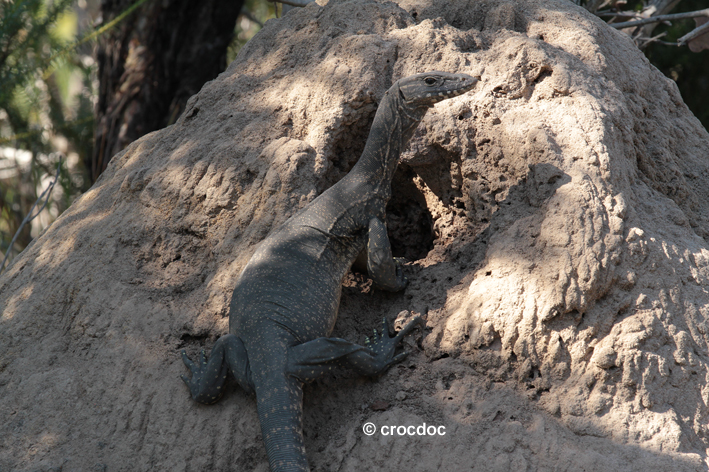
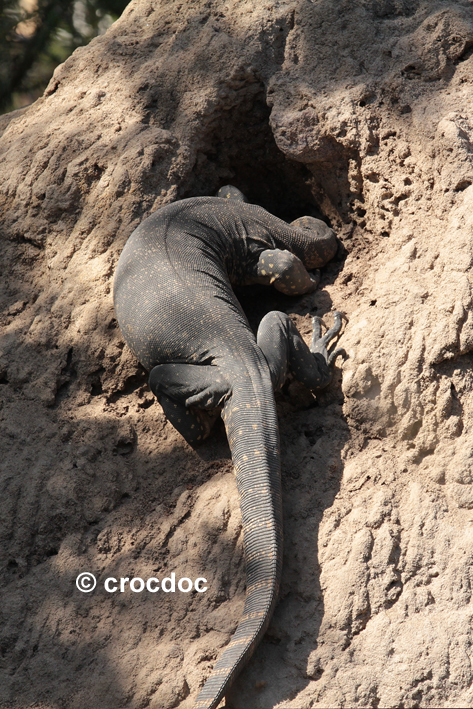
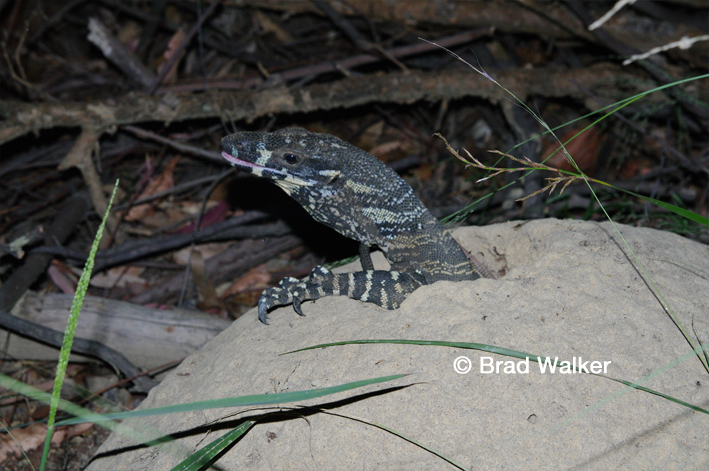
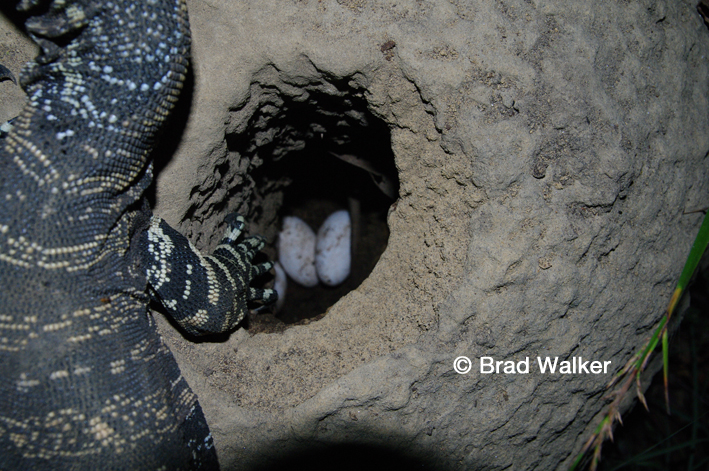
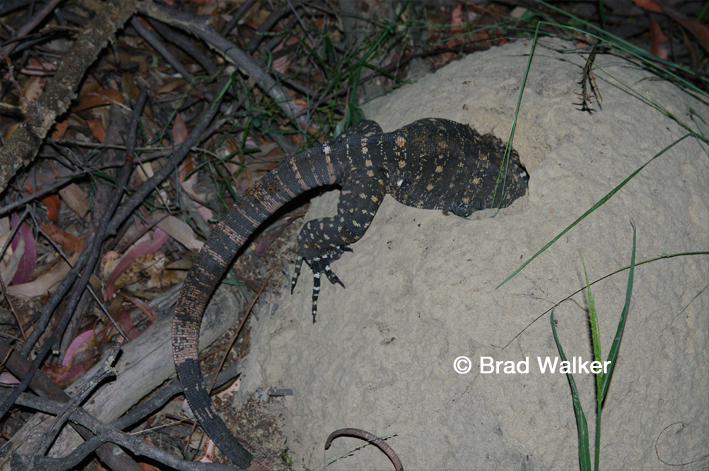
Female lace monitors are known to nest in termite mounds in the wild. You doubted it, I showed photographic proof. You think that in some parts of their range (certainly not the parts that your or my animals come from) lace monitors may nest in conditions other than termite mounds. This has never been proven and you certainly have no proof by way of photographs.

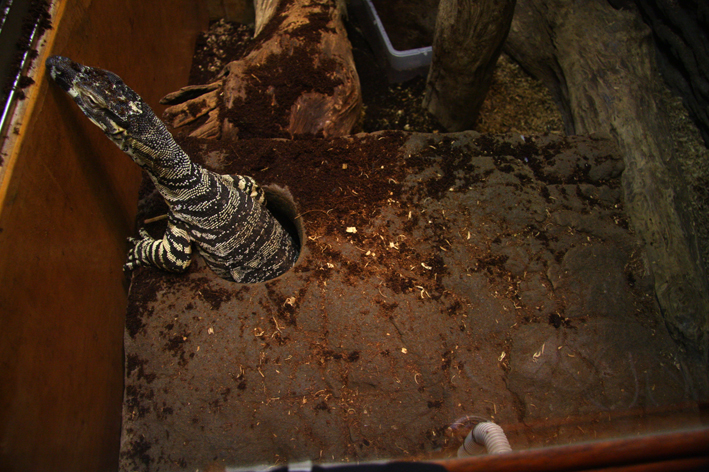
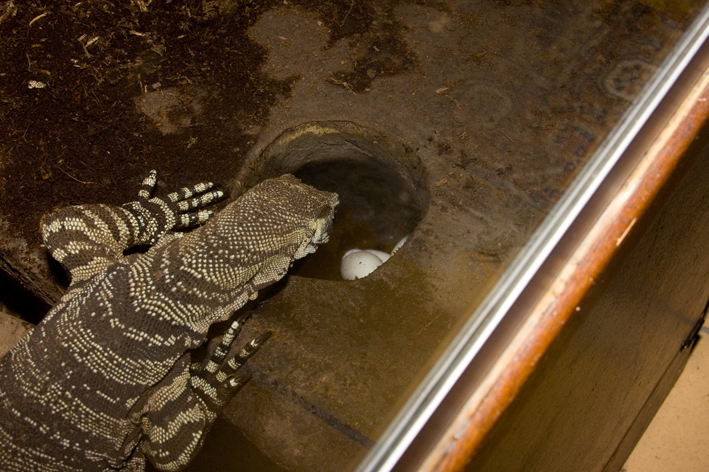
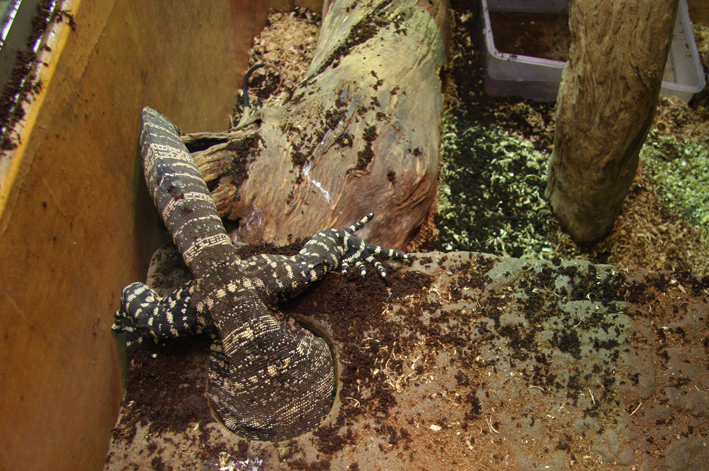
It has been shown that nest boxes are a good way to simulate a termite mound. Not just under my conditions, but under the conditions of several other breeders I know. No one ever said that nest boxes were termite mounds, but clearly female lace monitors treat them as though they were and that's what's important. It's not the termites they care about, it's the conditions within the mound.

Rather than base your nesting husbandry on what the wild populations are known to do, you'd rather base your nesting husbandry on what you guess a tiny proportion of the wild population, in areas outside the range from which your animals come, may do.

In the absence of nesting conditions they can recognise, your lace monitors have nested in sawdust within a hollow log and in leaf litter, two situations which would assure death of the eggs in the wild. Your female lace monitors have shown delayed nesting, a sure sign of improper nesting conditions, to the point that you've come to think of 6 week (45 day) gestations as being 'normal' for the species when, in fact, they are widely known to lay in 30 days or less when conditions are right.

You've told Mike that if a female dies of reproductive complications, it's not really considered success. To back up that statement, you went on to say that every female lace monitor you've had has died of reproductive failure because you hadn't got nesting right. Now you're presenting those very same results to me as proof of success. You've also included the results of another keeper, whose female lace monitor nested in the ground, as success, even though his female also died of reproductive failure.

All this to avoid offering your females the added option of a nest box.

However, despite all of the above, you want to compare results. You say it isn't a pissing contest, but you and I both know that's exactly what this is. It's how you measure things, though, so here goes.

You have a higher pile of female lace monitor carcasses than I do, for I've never had a female die of reproductive complications. No contest there.

You've had a female or two produce five clutches a year. My female produces two clutches per year, three on some years. I've never pushed my female beyond three. I could, but I have no interest in doing so, for numerous reasons. Two is as many or more than I want or need, especially as the second and third clutch is invariably larger (9-10 eggs) than the first of each season. However, I know numerous clutches means a lot to you, so even though I have chosen not to enter that particular race, I concede you have more 'result's there.

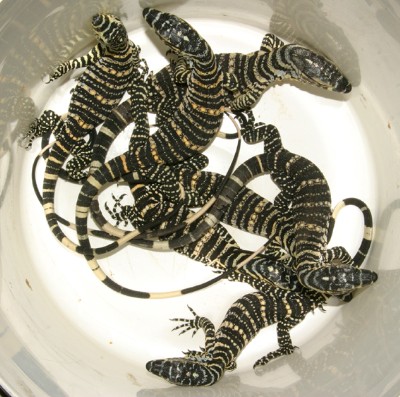
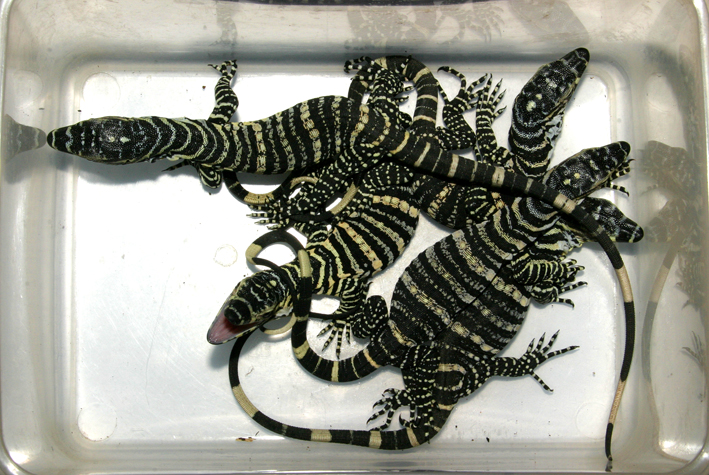
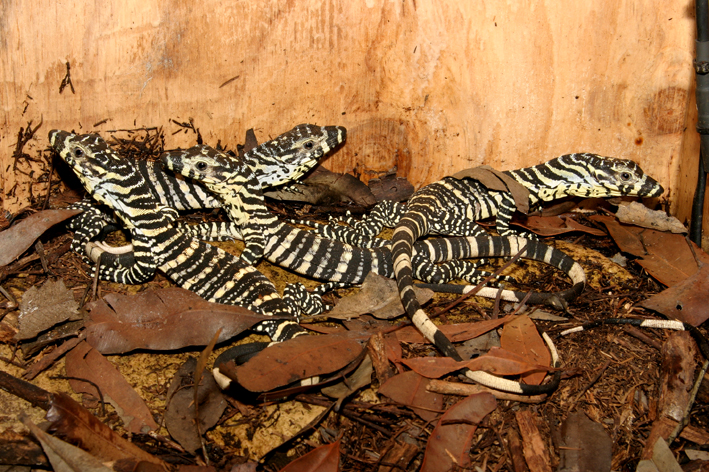
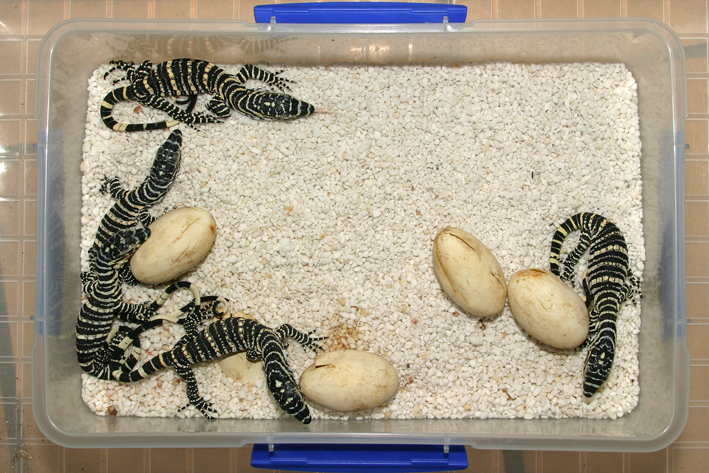
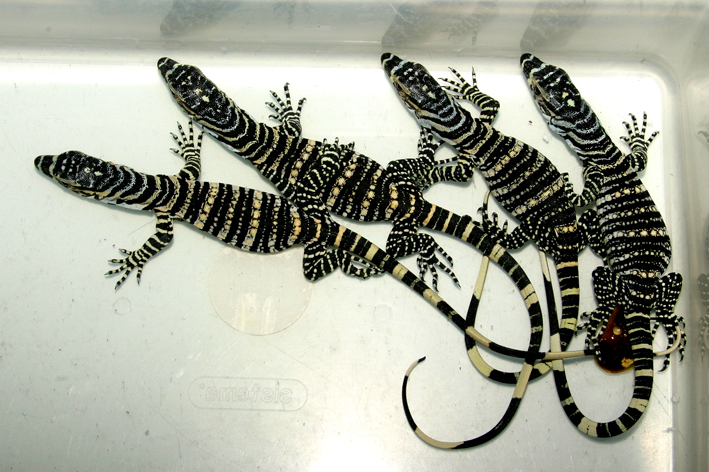
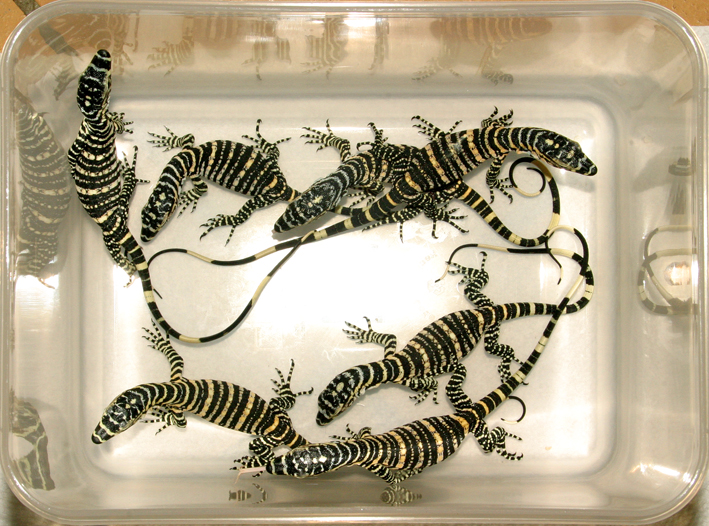
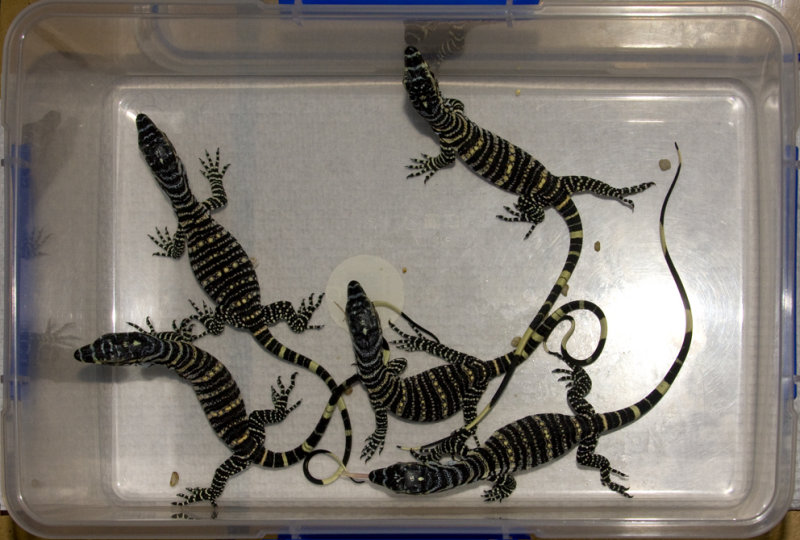
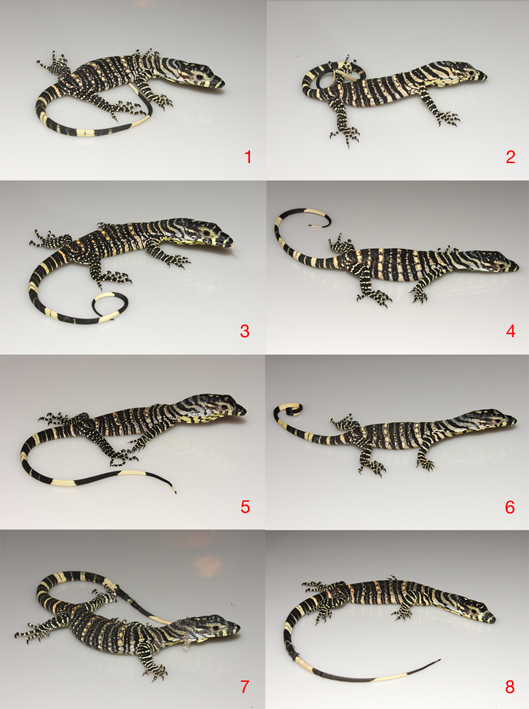
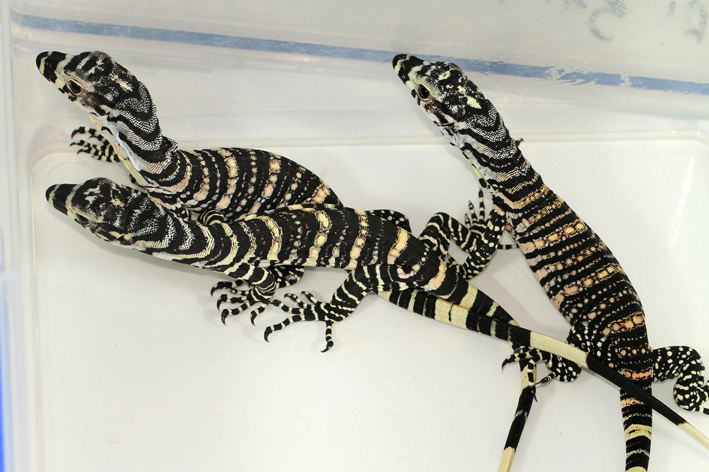
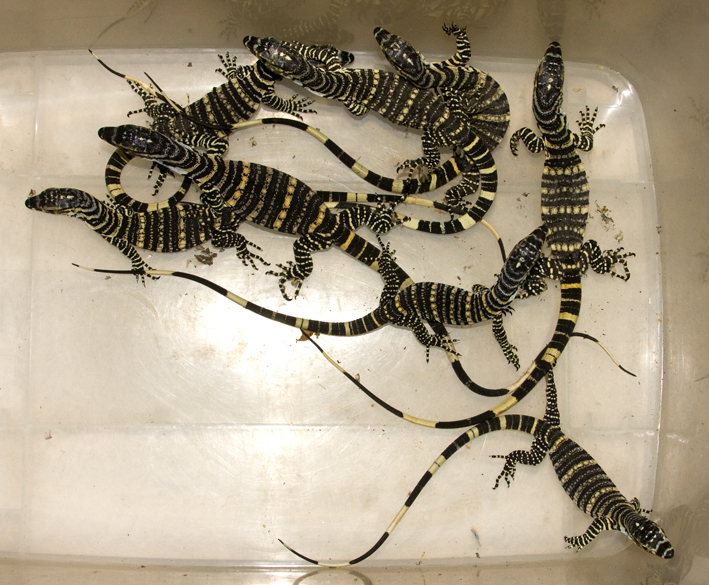
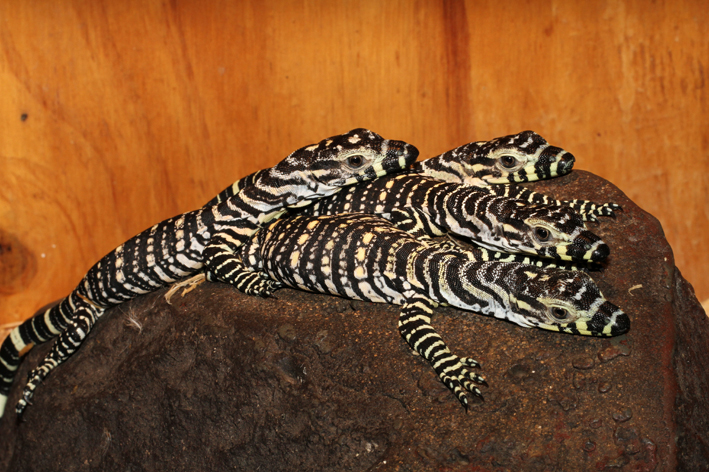
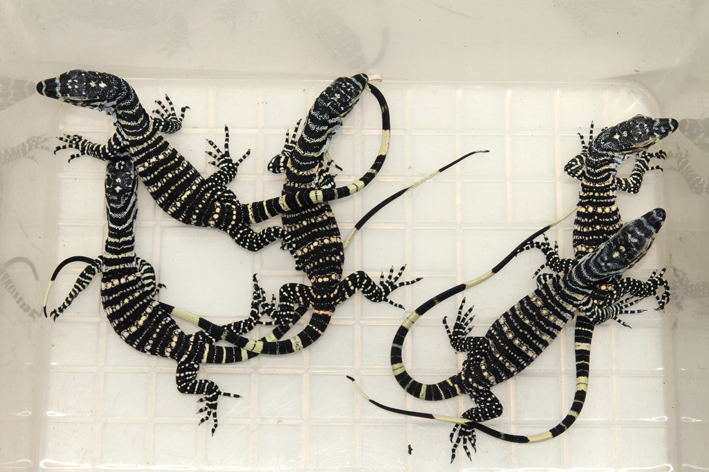
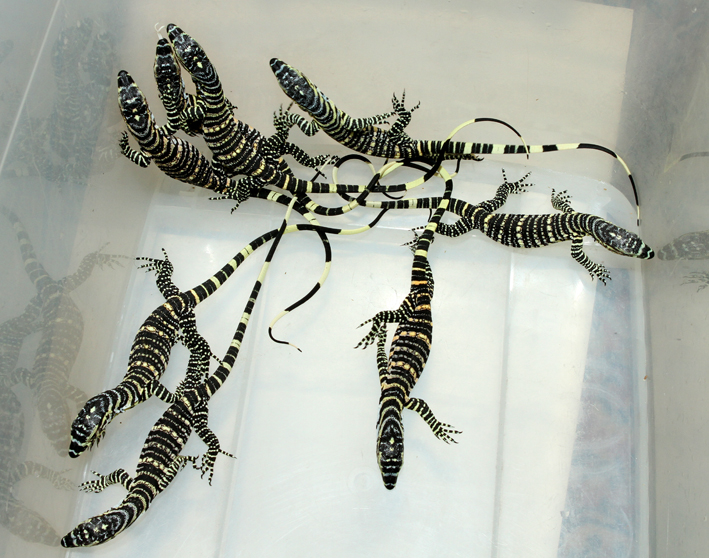
Number of babies? This is where it gets interesting, as what's the point of producing five clutches if the number of babies doesn't match up? You say you've produced well over a hundred babies (your quote from the conversation with Mike). It seems no one can account for more than around 25 lacies from your bloodline to have appeared in the trade in the US over the past 10-12 years and we know the same half dozen adults (recognisable by pattern) have been bouncing around from dealer to keeper to dealer for the past five or so years, with no fresh blood. Even assuming a number have quietly disappeared into the hands of people that have nothing to do with the rest of the keeping community, online or offline, we're still probably looking at 30-40 tops. But let's say, for the sake of argument, that you haven't applied a Frankematical formula to the numbers and you have produced over 100 babies. My lone female has produced over 150. Remember that, living in Australia where reptiles are kept under licence, I have to keep records of each and every one. In other words, my numbers are verifiable. So, my results trump yours.

Races are all about pace. Next year my female will produce more eggs and this past year's eggs will have hatched, so that number will increase. You've currently got one(?) female which had a failed reproductive event last year and you may be trying. Last I heard you were trying to get a breeding loan of someone else's female so that you could breed them again, because your current female has had failed reproductive events and doesn't seem good for the long haul.

Replies (34)

FR Feb 09, 2012 10:14 AM

Hi Crocdoc,

That is not the data or results I am asking for.

In order to compare any method in husbandry, one must take data. So lets act a bit like biologists. Lets take data first, then that will allow for discussion, thanks

Please list,

1. number of females
2. age at first clutch
3. number of eggs per clutch, fertility, hatchrate
4. number of clutches per year, with above details
5, reproductive longevity.

With this information, we hopefully can get somewhere.

After we have a base to work from, we can then discuss other areas of husbandry that may effect reproductive effort and success.

We can then discuss possible comparisons to their natural history.

We can then discuss how these methods are related to the parts of the world we live in, etc.

Without the above data(results) we are indeed pissing in the wind. All REAL discussions require a foundation, and these results are the foundation.

Thanks for your imput. Best wishes

crocdoc2 Feb 09, 2012 03:43 PM

I see, now we're at the inevitable part of the discussion where you start moving the goal posts and start trying to divert the discussion from its original course. The discussion was about lace monitor nesting: Where do they nest in the wild and the best ways to simulate this in captivity.

Here's the link to the original conversation: more on nestboxes, from below

You, as per usual, wanted to turn it into a pissing contest. What you specifically asked for was results and the results you wanted were numbers.

Some quotes:

FR:" For instance I asked how many clutches per year and how many eggs. This is yearly reproductive effort. Reproductive effort is how you gauge success."
(link: forums.kingsnake.com/view.php?id=1965756,1966173)
FR:"So what has your female(one or more females) reproductive effort/s been like. Number of clutches per year, number of eggs etc."
(link: forums.kingsnake.com/view.php?id=1965756,1966122)

Against my better judgement I stooped to your level, joined your pissing contest and gave you those numbers: Reproductive effort. Clutches and babies. Unfortunately for you, my lone female's reproductive effort surpassed all of yours and you lost at your very own pissing contest, so now you want to move the goalposts by comparing something else. i.e. you're grasping at straws.

You want numbers? Let's do some math. According to you, you've produced over 100 babies. Now let's look at some of your statements:

FR:"As I mentioned, we had at least three females produce five clutches a year. These clutches were normally five eggs. So a total of 25 eggs per year."

3 females x 5 clutches x 5 eggs per clutch = 75 babies

Let's say you had another 4 females produce 1 clutch each with an average clutch size of 7 eggs. But you wouldn't be happy with one clutch each, as that suggests failure. So we'll make it 1 female producing 4 clutches with an average clutch size of 7 eggs per clutch.

1 female x 4 clutches x 7 eggs per clutch = 28 babies.

Add the 75 from earlier

75 plus 28= 103

We're already over 100. That's all of them. All of the babies you claim (a claim which everyone doubts) you've ever produced. Even if we throw in another female or two and a few more clutches, can you see what's wrong with this picture? All of these females produced multiple clutches in a single year each and then never produced another again, because they were dead.

No female has lasted more than a single reproductive year, according to your very own numbers.

Remember that this conversation is all about nesting. You have been telling people for years that it's easy to get eggs out of monitors and I agree with you there. You've also been saying that it's difficult to get good nesting and the result is bad eggs and/or females dying of reproductive failure. I agree with you there, too. Which is why I find it so surprising that you want to discuss reproductive output when every single one of your female lace monitors has died of reproductive failure.

Going into the minute details of eggs per clutch, eggs per year, age of first laying etc when every single one of your female monitors has failed is like rearranging the deck chairs on the titanic. Does it not even embarrass you in the slightest that you're trying to compare the reproductive output of several female monitors over (according to you) several generations with a single female monitor kept in a one bedroom apartment? You've got way more space, way more facilities - everything you could possibly need to succeed with the species if you applied it properly, but because of a stubborn refusal to believe that lace monitors commonly nest in termite mounds in the wild you refuse to give them the one thing they need.

FR:" We can then discuss possible comparisons to their natural history. "
You forget, you live in Arizona and I live in Australia. How can we possibly have a meaningful conversation about lace monitor natural history? The problem with coming here for a few weeks at a time on a visit compared to living here 24/7/365 is that you don't get a sense of the seasonal differences or changes in the weather from year to year. Consequently you start imagining that eggs can survive a 9-10 month incubation in sawdust or leaf litter. If you lived here, you'd know why lace monitors nest in termite mounds in the areas your lace monitors and my lace monitors come from and we probably wouldn't be having this conversation.

FR:" Crocdoc lives exactly where lacies occur. Which means his overall conditions are exactly what those animals were designed for."

Yes, because we know that no one has ever bred a reptile outside its home country, like Burmese pythons, bearded dragons, carpet pythons, boa constrictors...

Remember DWS (that paragon of monitor husbandry), FR? He once presented the same argument when he was grasping at straws, too. If my monitors were housed outdoors, that'd be a valid argument. However, you and I both know they are housed indoors, under controlled conditions. I've already told you that I can time their reproduction using thermostats and light timers. My female produces two to three times the number of clutches of eggs the local wild ones do, because her conditions are different. What's more, she starts earlier (if I want her to) and has often laid her first two clutches before the wild ones even start nesting. The only difference between housing them indoors here and housing them indoors anywhere else in the world is the Australian air coming in through my windows, but if you're naive enough to believe that makes a difference I'll happily help you part with your money by selling you bottled air. If you're really nice to me, I'll include crushed gum leaves for smell and maybe a sound recording of a kookaburra for the complete picture.

But I warn you, you'll probably want to build a nest box.

Here's the thing: If you had started off by saying something you'd hinted at in some of your posts (amid the rest of the 'stuff'), namely that your conditions are different because it's hot in summer and your monitors are outdoors, so nest boxes are difficult, we could have had a meaningful conversation. Or, you could have read my post on nest boxes and lace monitors, thought to yourself "well, that's all fine but I couldn't do that here because it's too hot", and not joined the conversation. However, you decided to justify not using nest boxes by attacking the idea that they nest in termite mounds in the wild and then by carrying on about 'results'.

I'm going to be away from the computer for a few days, so you can take your time thinking of your next diversionary tactic.

WRC1228 Feb 09, 2012 04:35 PM

Why on earth would a keeper try his darndest to get his hands on multiple Lace monitors (most probably illegally imported) in an effort to establish a USA stock only to turn a blind eye to the importance of nesting, even now after all these years?

Goes against everything the keeper initially set out to do.

Gregg_M_Madden Feb 09, 2012 06:08 PM

Franks way is the only way CrocDoc. Didnt you know that? Even though you have shown numerous photos of dug out termite mounds, done so by lace monitors, as per Frank, there are only a handful of documented cases of laces nesting in termite mounds. I imagine you have the only documentation of this? LOL.

And nest boxes will not work as Frank states even though you posted photos of your monitors using them. LOL

Also, your photos of a couple of dozen lace monitors hatching is not proof of you success with the methods you use. LOL

Lets face it CrocDoc, no matter what you say, type, or show, Frank "the lizard king" will always be right. You can not possibly know what Frank knows even though you work with these animas daily and practically have them living in your back yard.

Dave,
For what it is worth, (and I am sure I speak for others when I say this) the informaion you took the time to post is very valuable and highly appreciated. Thanks!!!

varanusaurus Feb 09, 2012 07:04 PM

Ugh, this guy... Don't tail a cohesive argument because you couldn't form your own, bro.

Anyway, speaking of this argument, I have something for those involved (mostly just crocdoc) to consider.

You said yourself that these discussions are meaningful, ultimately, for the purpose of informing others. I agree. However, I do not think you have done that. All that you really did was show a bunch of photos of termite mounds with holes in them. Yes, yes, but the "telltale scar"? Well, while you and Retes may see them for what you have alleged them to be, they simply remain anonymously-invaded termite mounds to everyone else. I am telling you that is not conclusive evidence of anything, and until those photos include someone tearing it open and pulling out lacie eggs, it will remain evidence of nothing.

Who cares if some guy got a shot of a female lacie in a tree? You just came down on someone else for nonsensical proof... But you just did the same thing.

...Do they teach the scientific method in Australia? :P

Seriously, I commend anyone for hatching a bunch of varius. I don't mean to be insulting, but you must understand that you have done nothing for yourself here. You have not show any concrete evidence of lace monitors as obligate termite nesters, and that is a fairly bold claim. All you did was successfully engage Retes.

Gregg_M_Madden Feb 09, 2012 07:10 PM

Not tailing an argument. just recapping and speaking a bit of truth. And I aint your bro.

murrindindi Feb 10, 2012 09:45 AM

Hi Gregg,
I second what you`ve said about the info crocdoc2 has offered, I also have the article by D.B. Carter, and the whole publication, and it`s NOT the only one on the subject.
I too have seen the openings on the side of termite mounds on a number of ocassions in Australia, and believe many WERE dug by Lace monitors.
As has been stated, it would be a serious offense to start breaking them open to check for eggs/hatchlings, so I`ve never done that...
Crocdoc`s information might also encourage the keepers of other known regular termite nesters such as niloticus, exanthematicus etc, to place "on top of substrate nest boxes", which might prove a to be a success there, too?

varanio09 Feb 09, 2012 07:58 PM

And where would you reside, since it seems like this idea of them nesting in termite mounds is soooooo far fetched? I guess no one really took into account that going to some of these termite mounds and mucking about with them with a shovel just to photograph eggs might be a crime.............after all most of these mounds are in govt protected parks, and from what I have seen Aussie folks really do take their wildlife seriously hence the no exporting out of their country thing..... that one kinda sticks out to me.

Quit being a minion not everything said out of Arizona is gospel.

varanusaurus Feb 10, 2012 12:12 AM

"...since it seems like this idea of them nesting in termite mounds is soooooo far fetched?"

On the contrary, the idea is not far-fetched, which is precisely why it has been pointed out. There is indeed science behind the idea of nesting in a termite mound out of necessity.

I am a minion for no one. :P Rather, I am concerned with a man possessing the arrogance to come down on another for the same reasons he has purported himself. Furthermore, the implication of those photographs, one after another, as indisputable evidence of the claim is personally insulting. Sufficient evidence to the learned eye? Perhaps. Evidence to anyone else, to the aim of informing? Absolutely not.

(now more pointedly to Mendyk)

I never once denied the lace monitor to be an obligate termite-mound nester, thus I am not concerned with the study. Indeed I saw the comparison of a wild lacie to crocdoc's captive, however, that was never the issue.

Hmm. It seems my post has been taken out of context.

crocdoc2 Feb 12, 2012 06:01 AM

I say minion trying to defend a hero, too.

Your post wasn't taken out of context, you took the photographs out of context.

The only way those photographs can have no meaning is if one ignores all of the known information on lace monitor nesting in termite mounds. Information that has been published many times by many people, observed many times by lay people and herpers alike and is common knowledge everywhere but Arizona. You'd also have to ignore all of the other photographs of actual lace monitors nesting in termite mounds, shown in this very discussion - how else would you miss the similarities?

On top of it all, you'd also have to have no understanding of the Australian bush to be able to imagine there's a mystery animal out there making holes that look exactly like lace monitor holes.

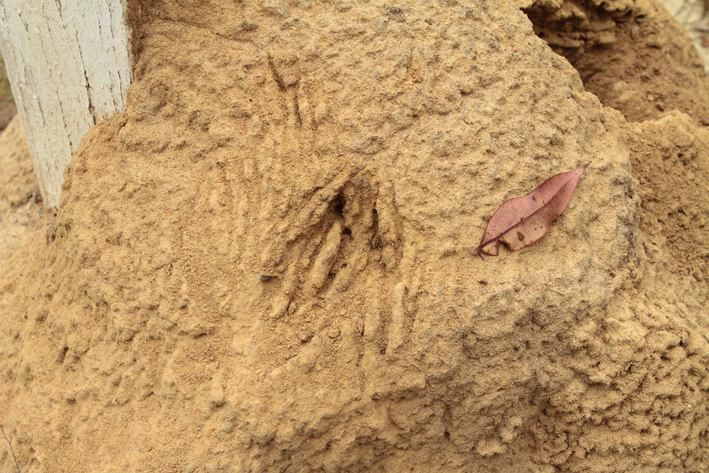
I was told that 'if' lace monitors nested in termite mounds there'd be scars to show for it. I showed some examples of those very scars. As I said, some of those mounds had nests in them, some were test holes made in dead mounds. If you think I'm stupid and arrogant enough to open every live mound and remove the eggs just to prove a point to a stubborn guy in Arizona, you really are a fool.

varanusaurus Feb 12, 2012 08:57 PM

For all intents and purposes, I think we can both agree neither of us are fools.

crocdoc, I even mentioned the claw marks in my post. I was well aware of your emphasis on that fact. The thing is; not everyone here is well versed, or even versed at all, in the Australian bush. As I alluded to, perhaps you and Retes see those claw marks for exactly what they are, but not everyone does. I'd argue most don't. And unless all of this really was just a competition between you and another user, your argument would do well to elaborate, for the purpose of informing all users.

I mentioned elsewhere on this forum that there is indeed science behind the necessity of nesting in termite mounds. It's not as if I'm joining up to pick on you.

crocdoc2 Feb 12, 2012 09:24 PM

You have to admit, they are pretty compelling scars, especially in light of the accompanying photos of female lace monitors in the act of making similar scars. I don't think the average forum member would immediately jump to the conclusion that the scars were made by something else given the topic being discussed and the photos accompanying that particular set. Certainly no one else posted to suggest they were made by another animal.

jburokas Feb 12, 2012 11:00 PM

The reason WHY they need the mounds is pretty compelling. The ground temperatures and moisture wouldn't support the eggs for 10 months plus. Look at the climate in and around Sydney, particuarly the winters. Now imagine there's a natural mound of earth that retains humidity and that magical 30°C (86°F) plus repairs and protects the eggs within. Think those eggs buried in the ground and passing through winter would make it without the termitaria? Anyone with experience hatching Monitor eggs can put 2 and 2 together. They're allowed to exist so far south, as are Heath Monitors, because of the use of the termitaria and long incubation times required.

I've asked about the more northern QUSLD animals (Lace) nesting and the consensus is that nobody sees them regularly enough to 'know' what they nest in up there. But in and around the more heavily human-settled Sydney area, people see these animals and what they're doing regularly and have reported it plenty of times. They're laying in the mounds - I'm convinced.

In captivity, you could heat the ground of the cage up to 86°F and the Lace would very likely use the ground, or a box, or whatever. But stick them outdoors in the cold USA winter months and the ground is unsuitable to nest in without added heating measures. So the animals are likely retaining the eggs and having egg complications due to poor nesting options. From a 3rd party perspective, it sounds that simple to me....

crocdoc2 Feb 12, 2012 11:53 PM

Regarding the far north Qld animals I have an interesting, albeit incredibly inconclusive, aside.

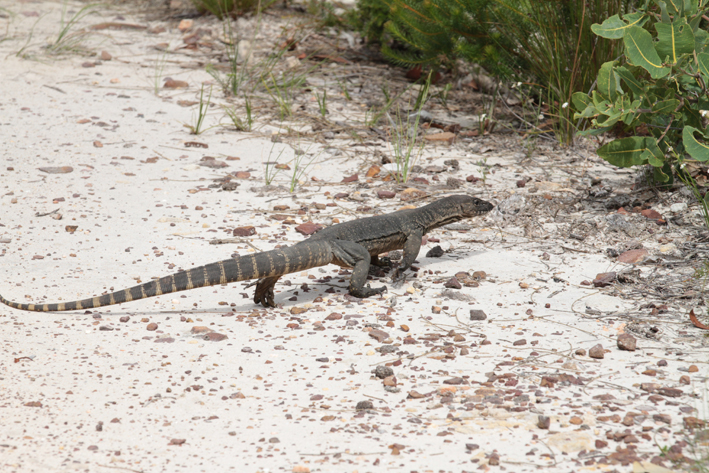
A few years ago I was on Cape York with some friends, driving south from Cooktown towards the Daintree. We were driving some beautiful tall forest when a male lace monitor scooted across the road. I wanted to get a photograph of it for my collection, for it was at the extreme north of the range for the species. I followed it into the bush but it was long gone. However, on my way back to the car I stumbled upon a termite mound of the same genus that makes the mounds in which they nest further south. Whether they use them or not up there may be queried, but the same type of mound is definitely up there if they are so inclined.

Robert_Mendyk Feb 09, 2012 11:11 PM

varanusaurus wrote:

"I am telling you that is not conclusive evidence of anything, and until those photos include someone tearing it open and pulling out lacie eggs, it will remain evidence of nothing."

I believe he did provide photos which clearly showed a female lace monitor nesting within a termite mound (eggs are clearly visible); perhaps you missed it (scroll down the page where he compares the nesting behaviors of wild females to his captive female):

forums.kingsnake.com/view.php?id=1965756,1965867

But if you are still skeptical, despite the supporting photographic evidence provided by Dave, you can check out the following study on lace monitor nests in the wild:

Carter, D.B. 1999. Nesting and evidence of parental care by the lace monitor Varanus varius. Pp. 137-147. In Horn, H.-G & W. Boehme (eds.), Advances in Monitor Research II, Mertensiella 11. DGHT, Rheinbach.

Should you not have direct access to the study, the abstract (summary) of the article reads:

"The nesting habits of lace monitors was investigated in southeastern Australia. Lace monitors lay their eggs in mid summer in the centre of termite mounds. The eggs incubate within the mound for about 290 days and hatch in mid spring. At hatching time, adults (probably the mother) dig burrows into the termite mounds to release the young. The advantages of this reproductive strategy are discussed".

To further summarize this study, since the abstract does not provide specific details about its results - a total of 28 lace monitor nests were discovered over the course of field work inside mounds of the termite species Nasutitermes exitiosus. And yes, there are even pretty photographs of "torn open" nests and the eggs within which accompany the article, as well as extensive clutch and egg measurements, as well as measurements of the resulting offspring.

I highly recommend checking out the article; you might learn a thing or two that you didn't know beforehand.

Best,
-----
Robert W. Mendyk

"The less you read, the more you impede"

crocdoc2 Feb 12, 2012 05:25 AM

Thanks, Bob, I think you've answered a question that's been plague me for years!

Ever since I had a conversation with FR about Carter's thesis, he has been telling people that I told him only eight lace monitor nests in termite mounds have ever been found in the wild. I must have mentioned that the study had involved twentyeight nests and FR must have assumed these were the only lace monitor nests ever found.

crocdoc2 Feb 12, 2012 05:18 AM

varanusaurus: "they simply remain anonymously-invaded termite mounds to everyone else. I am telling you that is not conclusive evidence of anything, and until those photos include someone tearing it open and pulling out lacie eggs, it will remain evidence of nothing."

I'm going to assume you missed this post and the photos within:
forums.kingsnake.com/view.php?id=1965756,1965867

But even if you have and are still adamant the other holes I showed were anonymous invasions and the resemblance to known lace monitor nests is only coincidental, I'm going to ask you a question. This is your chance to prove me wrong and solve a riddle at the same time:

Name the mysterious Australian animal with the following physical and behavioural traits, based on the evidence it leaves behind.

1. We know it makes holes in termite mounds. The holes are too small and round to be made by an echidna and are also usually too high up on the mound. Echidna holes are quite distinctive a they are wide, flattish and at ground level. They're also very shallow - don't need to go far into a termite mound to start eating termites. Kookaburras nest in arboreal termite mounds, not ground mounds (that I know of) but these holes are not found at the same time of year that the kookaburras nest, anyway.

2. The holes come in two sizes. The larger of the two sizes has a diameter that's roughly (by wild coincidence) the size of a female lace monitor. The smaller holes are roughly (again, a wild coincidence) the size of a female heath monitor.

3. The holes appear at only certain times of the year. The larger holes appear in spring, at exactly the same time (another wild coincidence!) female lace monitors are starting their cycles. The larger holes start appearing again at exactly the time (amazing coincidence!) female lace monitors start laying eggs. The larger holes do not appear before or after those two time periods. The smaller holes occur a bit later than the larger holes, coincidentally at exactly the same time heath monitors lay eggs. My friends have found gravid lace monitors making holes and I have found gravid heath monitors making holes (in the very same mounds and often at the very same spot I've seen the mysterious holes before) in the times of the year that lace monitors and heath monitors lay eggs. Maybe they eat the mysterious hole-making animals? I can't wait until you tell me what the mysterious animals are so I know what these monitors are doing! I guess they must expect more of the mysterious hole making animals to appear, because the females hang around for a while and then take off, never to be seen again until the following year at the same time.

4. The mysterious hole-making animals not only have claws just like a monitor (the tell-tale traces of which are often all around the hole), but they have similar feet, because sometimes there are footprints around the mound.

5. The mysterious hole-making animals are affected by climate. Too much rain and/or cold and the holes appear later than usual. Lots of sun and heat and the holes appear a bit earlier than usual.

Oh, I'm so excited. I can't WAIT to find out that I've inadvertently discovered an entirely new species of animal in Australia!

Seriously, I don't mean to be insulting.

I said I was only going to ask one question, but I confess I have a second: Have you ever spent any time observing lace monitors in the wild?

crocdoc2 Feb 12, 2012 05:30 AM

Dang, I posted too quickly and forgot two important characteristics of the mysterious hole-making monsters.

5. The larger holes appear in areas with a healthy lace monitor population. I know this because I usually find them when I'm looking for lace monitors.

6. The smaller holes appear in areas where one would expect to find heath monitors.

There's a bit of overlap in hole size, of course, but I've never seen a hole the same size as the smallest hole I've found, in a lace monitor area and I've never seen a hole the same size as the largest hole I've found, in a heath monitor area.

crocdoc2 Feb 18, 2012 03:28 AM

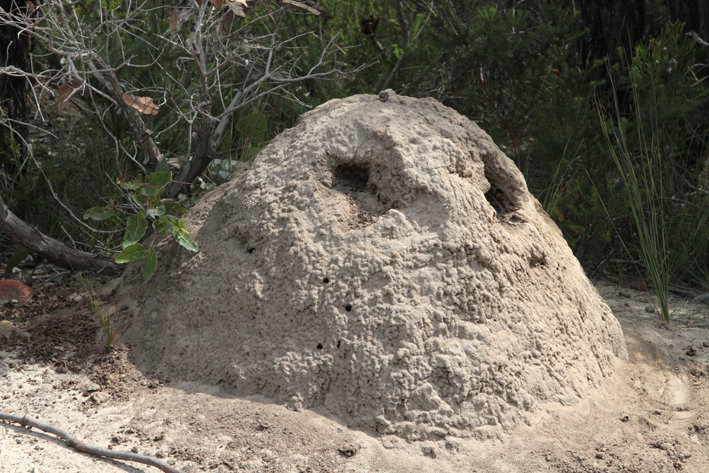
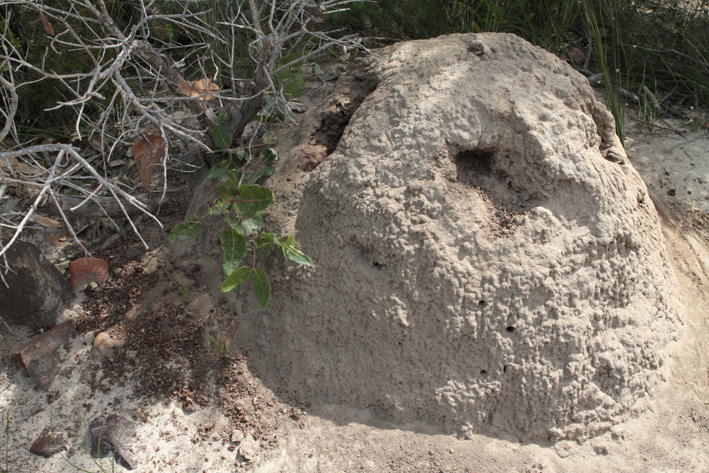
It's that time of year again, when the 'small' mystery hole-making monsters makes their appearance, so today I went for a quick drive (and walk) with my camera, just in case.

One of the mounds I checked out is very familiar to me (I really should give it a name - Monty the Mound?) and I have many photographs of it with and without assorted scars. I'm pretty sure there's even a photograph of it among the other, 'large' hole mounds in my earlier post. I do have photographs of a female heath monitor surprised while making the scars in this mound one year - but to avoid being seen as 'arrogant', varanusaurus, I'll assume that in all photographs in which a female heath monitor can't be seen the holes were made by something else. Someone on another forum suggested 'unicorns', which beat my suggestion of 'low flying miniature aircraft' hands down.

So, I present seasonal 'small' unicorn scars:

This mound had three holes - two visible in this shot.

All three holes visible in this shot.

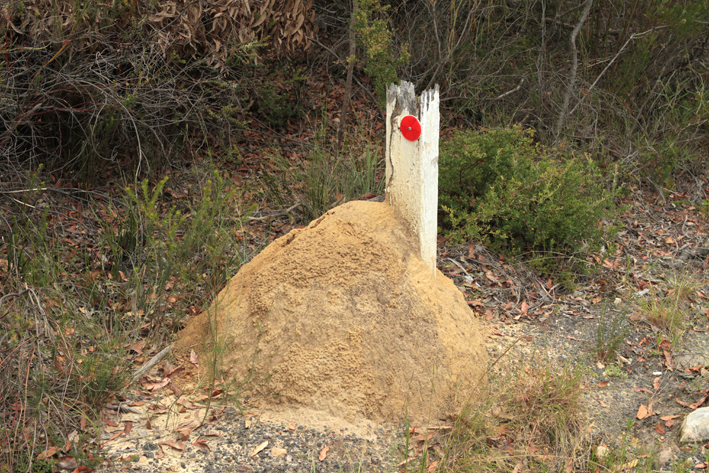
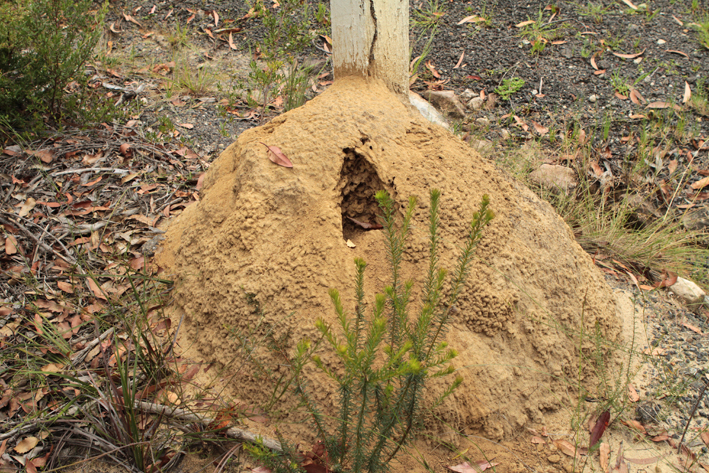
On the drive home I stopped to photograph another termite mound. One day I'll get into trouble for craning my neck, while driving at high speeds, to look at a termite mound on the other side of the road.

Interesting scratches near the sides of the holes. Perhaps unicorns have poor aim (I can imagine a blind spot in the middle of one's forehead).

What's interesting is that all of these seem to be test unicorn holes, for it's still a week or two early for the main show. None went particularly far in. The second mound may even be dead, but I'll give it a week to see if it just has a small colony that is slow to make repairs.

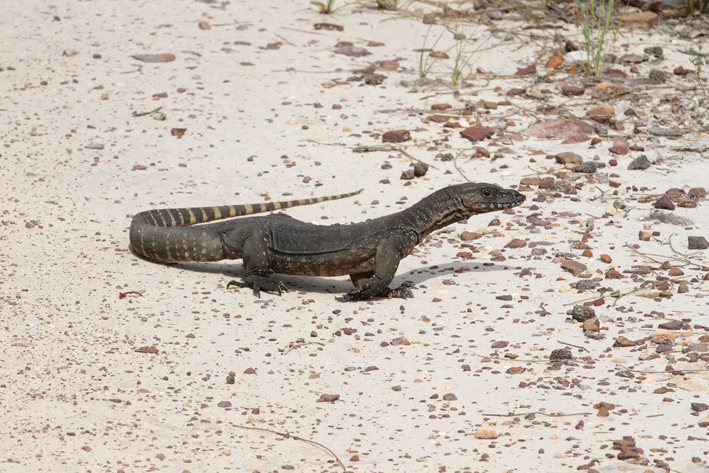
I did mention that the 'small' unicorn holes are always found in areas in which heath monitors occur, so it's probably no great surprise that I found this animal (which appears to be a male) in the same 'general' area as one of the mounds. This has nothing to do with unicorns or holes in termite mounds, but as this is a monitor forum I figure I'd better add a couple of photographs that are on topic.

Note: This post has nothing to do with nest boxes or lace monitors and I have no desire to waste more time on that 'discussion' again. Seriously. It's merely a sampling of the photographs taken on this afternoon's outing, nothing more, just in case someone, somewhere is interested.

crocdoc2 Mar 05, 2012 04:24 AM

Well, maybe not. Turns out it wasn't unicorns making those holes, after all.

Took these photographs today.

Also visited this mound again to show how ephemeral the scars are.
From my last post:

Today

That one, of course, was definitely a unicorn because there's only a hole in the photo.

crocdoc2 Feb 12, 2012 05:03 PM

varanusaurus:" You have not show any concrete evidence of lace monitors as obligate termite nesters, and that is a fairly bold claim."

As I have said, the holes in the mound were in response to FR's assertion that 'if' lace monitors commonly nested in termite mounds they'd leave telltale scars. I was merely showing that they do leave scars and that they are common. In a separate post I showed evidence for how the scars were made.

My comments about lace monitors being obligate termite mound nesters were not based on those scars (or even on the other photos, for that matter). Nor did I say I had concrete proof: What I had actually said is that I think they are obligate termite mound nesters in much of their range because the climate in a huge chunk of their range (including the areas from with the lace monitors owned by FR and myself originate) would not allow them to nest successfully in leaf litter, sawdust (or the ground, for that matter). When combined with all of the known evidence (not just my own, but scientific evidence, as well as observations by lay people and herpers alike) that they nest in termite mounds, compared with virtually no evidence of them nesting anywhere else in the wild, it presents a pretty strong case. I then went on to ask why someone would base their nesting husbandry on a guess of what a very small proportion of the population might do in an area outside of the area from which their very own animals came, rather than base it on what, at very least, the vast majority of that population does.

varanusaurus:"...Do they teach the scientific method in Australia? :P "

Do they teach reading comprehension in America? :P

crocdoc2 Feb 12, 2012 04:43 AM

Thanks, Gregg. As I said to Mike, I was hesitant to start going into detail as I knew it would be lost on the only other lace monitor keeper on here, but I'm glad others are getting something out of it.

The stubbornness is bizarre, but you hit the nail on the head. It's all about information flow. He's only happy if the information is flowing in one direction - from him.

It's unfortunate when ego gets in the way of husbandry. When I first started keeping and breeding lace monitors I spoke to many keepers here about them and still have ongoing discussions with other breeders in which we exchange ideas (those that are open to it, of course). I also read a lot of the scientific literature about them and started spending more time out in the field watching them.

I tried having a few conversations with FR and they were all identical to this one. The conversation that sticks out in my mind the most was the one we had about termite mound nesting, around 10-11 years ago. I had just been to the university, where I had dropped in to photocopy the thesis of someone that had done their PhD on reproduction in wild lace monitors. I'd already known by then that they were termite mound nesters (it was, and is, common knowledge), but the thesis was full of incredibly useful information on the mounds themselves. Excitedly (and naively) I tried having a chat with FR about it on an old irc monitor chatroom, for he'd mentioned once he had problems with getting his lace monitors to nest properly. His response was bizarre (and hasn't changed, 11 years later). He thought the information was useless academic crap because no one had termite mounds in their monitor enclosures. He later told people that 1. I had told him there were only 8 instances of termite mound nests being found in the wild and 2. that I suggested to him that he put a termite mound in his enclosure.
Anyway, what's pretty much where we went our separate ways with lace monitors. I decided to use the information to build a nest box that would mimic the conditions, FR continued doing what he was doing and the rest, as they say, is... well, visible in the current exchange.

Speaking of termite mound nesting being general knowledge, you may be interested to know that the parents of the lace monitors at the Bronx Zoo were hatched from eggs removed from a termite mound in the early 80s. A member of the public had contacted the zoo here because he had watched a female lace monitor go through the whole process of digging a nest into a termite mound that was visible from his kitchen window. The zoo sent two keepers out there to collect the eggs and two of the hatched babies were kept for zoo stock. One of those keepers is a very good mate of mine, so I've known about lace monitors nesting in termite mounds for almost 30 years.

crocdoc2 Feb 12, 2012 07:33 AM

To clarify: when I said I chatted to people 'here' about lace monitors, I meant Australia.

I'd also forgotten to mention that I added the Bronx zoo lacie story because of where you live, Gregg. Figured you may be familiar with those animals.

FR Feb 10, 2012 10:39 AM

Crocdoc this is simply not important to me to go on and on with you.

Its my opinion, that if you want to get anywhere in a conversation like this, you must make it simple and clear.

The only way to actually judge methods is to compare results.

In all of this, its been nest boxes vs. whole cage nesting(options) The termite mounds in nature are just support for your approach, which is fine and dandy.

As we are keeping LACIES in captivity, and we do have results and data, we can easily do list results. As I mentioned, we can then take that data and use it in any way we want.

We can use it to compare to natural history, or simply what conditions each type of nesting would be best.

But for some reason, you shy away from that. And you are allowed to for whatever reason you want.

The reality is, its not about you or I, you are going to do what you want, and your doing a great job with your pair. And I will do what is necessary here, and I have been a great job.

Which is why our conversation could be of value to others.

I have no idea why your refrain from listing your females results. That is for you to know, Not me.

So either do it simply and straitforward, or I wish you luck and success with your varanid endovers. Thanks

Gregg_M_Madden Feb 10, 2012 03:23 PM

FR says
"Its my opinion, that if you want to get anywhere in a conversation like this, you must make it simple and clear.

The only way to actually judge methods is to compare results."

Well Frank, CrocDoc has made it clear and has shown results in just a handful of post that far exceed anything you have said or shown here in years.

All you do is type your opinion and show photos from 10 years ago.

Murindindi,
I believe a nest box should be used for any and all species of varanid. As CrocDoc points out it is not a substitute for deep substrates. From what I have seen, even with the option of full cage nesting, the HUGE majority of the time females pick a properly set up nest box to lay eggs in over any other part of the cage.

FR Feb 11, 2012 09:23 AM

How about putting up or shutting up. You do not have the experience to recomend or think anything. Your actually harmful to others.

You do understand, you doing this is very harmful to your relationship with your friend that actually does monitors.

murrindindi Feb 11, 2012 10:22 AM

Hi again Gregg,
you will need to state the species and number of times they nested in "nest boxes" versus other parts of the enclosure, and if they do choose the box rather than other parts, were all the other parts providing EXACTLY the same conditions as said box?
Myself and crocdoc2 had a short discussion on whether termite mound nesters (Lace monitors in that case), might be more prone to using a box on top of the substrate because it at least bears a resemblance to the object they usually choose in the wild (if we can call a termite mound a "box" on the ground, which in effect it is).
Not that we have a definitive answer to that (yet), just hypothesising!

FR Feb 11, 2012 12:47 PM

Don't ask Gregg, some of my east coast friends know him and his only experience is with hognose. he has none with monitors.

Also, this is the point I am trying to make, a wooden box above the substrate is not a termite mound, does not look like one, does not feel like one, does not smell like one and has not termites controlling temps and humidity.

Lacies and other varanids also nest in hollow limbs, so yes, lacies are NOT restricted to ground nests.

The concept that completely confuses most here and Apparently Crocdoc is, The floor of our cages is not the ground. Its the floor of our cages. A box on the floor is not a termite mound, its a box on the floor of the cage.

An example, I breed many gouldi types, We breed them indoors and out. Outdoors they nest in the ground and it is the ground. Indoors they nest in cattle troughs, which is above the ground on casters, Its in all reality above the ground. At times we nest them on the floor of cages that are five feet above the floor of the room.

The key is, they surely nest better outside in the ground, the indoors is whole cage choices, but not the ground.

This confusion over reality and what we call places in the cage is very very odd to me. Cheers

murrindindi Feb 11, 2012 01:33 PM

Hi Frank R.
no, I think you`re confusing what myself and others were saying:
WE know it`s just a box in a box in another box.
If much of the time in much of the Lace monitor`s range it very regularly chooses termite nests which DO sit on the ground (or in trees), then offering a "termite mound box" that has all the conditions they`re looking for, might just be advantageous to keeper/s.
It really doesn`t matter whether there are termites in it, because if they`re dead mounds in the wild, the conditions inside would not be suitable, and they wouldn`t lay eggs in them...
The point should also be made that when keeping the larger species in relatively large enclosures, it`s very difficult to get the whole substrate suitable for nesting, rather than something smaller, as described...
Should we say we are decreasing our chances? No, because we`ve succeeded in providing the conditions, even though they`re in a smaller space. They aren`t looking for a LARGE area to deposit eggs, rather, a SMALL, very secure location offering the right conditions is what they seek and require!

Gregg_M_Madden Feb 11, 2012 01:48 PM

Firstly Frank, name one of your "East coast friends" who told you I have no experience with varanids. Name one who said that all I do is hognose snakes. LOL. You just reach and make stuff up like most of your successes. Truth being Frank, you do not have any "East Coast friends" who know me if you really have any at all.

If you really did a small amount of digging up on me you would be adding quite a few more species to the list of reptiles I have successfully kept and bred. Like I have said, I have kept numerous varanids before I dove into venomous snakes. Just because I do not keep varanids in my home anymore, it does not mean I do not have plenty of experience with them. I know enough to keep them alive and healthy and enough to breed them myself if I ever want to keep them here at my house. So until I have the space to keep them here, I will just work with Johns collection and with animals and with projects I am part owner of.

I guess because I am not buying everything you say and because I am not one of your brown nosers, it makes me your target. That is fine Frank, because what you say has no effect on me.

So, tell me, how will offering nest boxes to varanids be harmful? How can offering an extra option be detrimental to someones monitors? Remember, I have said it is not a substitute for deep substrates.

Now for Frank and Murindindi.
Why do we need to use data to determine if nest boxes work? Possitive results do not need to be put in the form of data. They do work and they work well. If you do not want to offer the option of a nest box, that is fine. Your animals, your choice. You want data on them working but Frank has offered no data of them not working.

Also, there are many species of reptiles that are commonly bred in captivity that do not lay their eggs in termit mounds yet they reliably lay eggs in nest boxes. The reason they do this is because they are looking for the right conditions like temperatures, humidity levels, and security, not because it looks like something they would deposite eggs in if they were in the wild. A properly set up nest box offers all of the above. Some of the FR lovers seem to ignore this fact. Just offering deep substrates will not make you successful. Offering options will. A nest box is just another option. One that has been very useful and successful from my experience. Yes Frank, my experience even if it is "just" experience working with a collection other than mine.

RickAlbig Feb 11, 2012 02:21 PM

Gregg, nest boxes do not always work with every species (or the majority of them as your put it) even if "set up properly" as you put it.

In the same way the "MAJORITY" of Lace monitors would be comfortable with a nestbox to simulate the conditions of an active termite mound, other species of monitor would be comfortable using an alternative such as deep substrate.

Certain species just ignore nest boxes and try to find a suitable spot in the substrate and if they can't find that they will either reabsorb or splash them out on top of the substrate.

Gregg_M_Madden Feb 12, 2012 09:11 AM

Hi Rick,
Thanks for you post. I do have a question.

RickAlbig says,
"Certain species just ignore nest boxes and try to find a suitable spot in the substrate and if they can't find that they will either reabsorb or splash them out on top of the substrate."

Are we talking a species on a whole or just a certain individual of a species? And if what you are saying is by some chance true, what certain species are we talking about? Do you have any data? LOL. J/K...

I can tell you from what I have seen, individuals may ignore a nest box one clutch then use a nest box for the next clutch. Where a reptile will nest has less to do with its location or what it is and more to do with the actual conditions. Security, temperature, and humidity.

crocdoc2 Feb 12, 2012 05:44 AM

FR:"Lacies and other varanids also nest in hollow limbs, so yes, lacies are NOT restricted to ground nests."

You state this as though it is a fact, yet you have absolutely nothing to verify it.

Everyone knows you've based it on a single instance of a captive female scraping out the inside of a hollow log, for lack of anything better to nest in. A female that, I should add, later went on to die of reproductive complications which is usually a sign of bad nesting.

In all honesty, the first time I read your sawdust story many years ago the very first thought that entered my head was "that poor animal - how desperate must it have been to start scraping at the inside of a hollow log?"

FR:" The concept that completely confuses most here and Apparently Crocdoc is, The floor of our cages is not the ground. Its the floor of our cages. A box on the floor is not a termite mound, its a box on the floor of the cage."
It doesn't matter what it is, it's what the female lace monitor uses it for.
wild

captive

wild

captive

wild

captive

The only confused person here is the one that thinks killing every single female lace monitor he's ever owned through reproductive complications is 'success' and worth not adding the single added option of a nest box.

crocdoc2 Feb 12, 2012 04:21 AM

Right. I'm back.

FR:" The only way to actually judge methods is to compare results.
... But for some reason, you shy away from that. And you are allowed to for whatever reason you want.
... I have no idea why your refrain from listing your females results. "

What a weird thing to say, as I did list the results relevant to this conversation. This conversation is about nesting husbandry. I told you how many clutches my female laid per year and how many babies she's had in total. Go back to my post and read it. The only questions from your previous post vaguely relevant to this conversation that I did not answer were hatch rate and number of eggs per clutch. Here you go, just for fun:

Egg viability is around 95% at laying, meaning I'll get an egg now and then that fails a few weeks into incubation. Of the remaining eggs, the hatch rate is over 99%. Every one has hatched but a single full term dead-in-egg a couple of years ago.

Egg number per clutch: One year she had a weird clutch of only 3 eggs, but aside from that the number of eggs per clutch varies from 5 to 11, with a calculated mean of 8.

A more important stat/result: My lone female's reproductive effort has already surpassed the combined total of every single female lace monitor you've ever owned and she's still going. According to you, you were on F3 by the time I started so you've had several years' jump start on me.

THE most important result in a conversation about nesting husbandry: Every single female lace monitor you've ever owned has died of reproductive failure. I can't think of any result more relevant to a conversation about nesting husbandry than that, for we all know the connection between poor nesting and reproductive failure. You said it yourself here:
FR:" Just to make it a bit real, I produced well over a hundred lacies, from four females, some laying five clutches a year, AND I STILL DID NOT HAVE NESTING RIGHT. As I lost each and every female to early reproductive failure."
(link: forums.kingsnake.com/view.php?id=1958520,1958673)

As I said earlier, ignoring that stat to discuss other 'results' is like rearranging the deck chairs on the titanic. To use another metaphor/idiom, that 'result' is the elephant in the room that cannot be ignored. It is crucial to this conversation.

That's why I found it so odd that you've created all sorts of theories about wild lace monitors nesting in sawdust and leaf litter based on those results, and then had turned around to Mike and said this (from the same link, above)
FR:You see, you may want to make theories over, one situation what was marginally successful. "

But to humour you by discussing results, now it's my turn to ask for you to share a few facts and figures about your female lace monitors which are far more relevant to this conversation:

1. Time from mating to egg laying. Minimum, maximum (I already know your average is six weeks)

2. Reproductive lifespan - number of years laying eggs before death by reproductive failure, total number of clutches per lifespan. Minimum, maximum, average.

Site Tools