Reptile & Amphibian Forums

Welcome to kingsnake.com's message board system. Here you may share and discuss information with others about your favorite reptile and amphibian related topics such as care and feeding, caging requirements, permits and licenses, and more. Launched in 1997, the kingsnake.com message board system is one of the oldest and largest systems on the internet.

Click here to visit Classifieds
https://www.crepnw.com/
Click here for Dragon Serpents

lace monitor nesting simplified

crocdoc2 Feb 12, 2012 07:33 PM

The discussion on nesting in lace monitors has now gone on several diversionary tangents, so I'm going to try to rein it back in to the basics. Let's try to keep the responses simple:

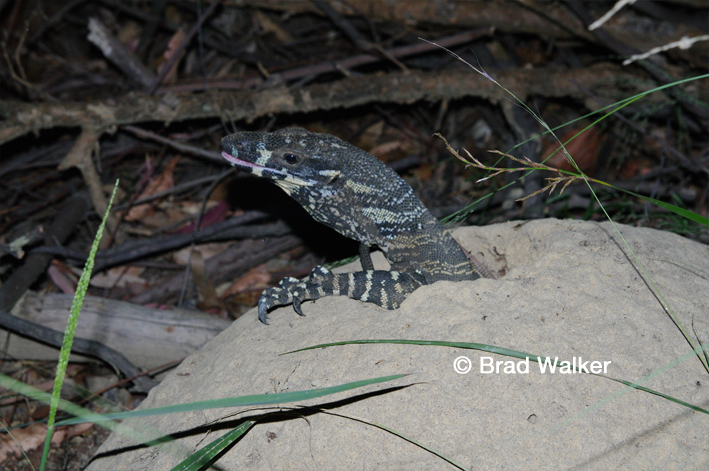
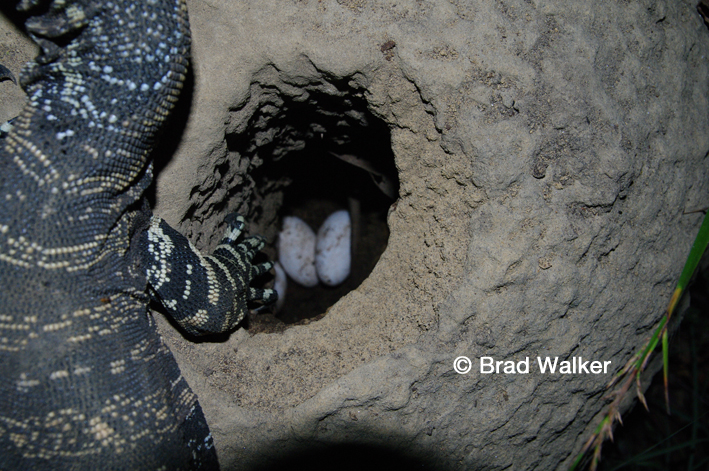
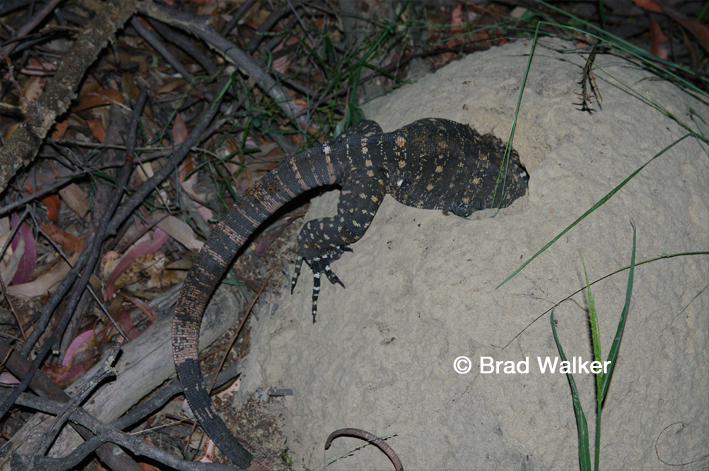
There's been much discussion about whether or not lace monitors are obligate termite mound nesters in the wild. We know (well, some of us do) that there is overwhelming evidence from many sources that lace monitors do (at very least) commonly nest in termite mounds, so doubting that is pretty pointless. There is even 'caught in the act' photographic proof available. So far, there is no solid evidence that they nest anywhere else in (at very least) much of their range, particularly in the areas from which the lace monitors being discussed originally came. However, let's suppose, for the sake of argument, it's possible or even probable that they do nest elsewhere on occasion.

Here's my first question: Why would you base your husbandry on what a tiny percentage of the population may do rather than what the vast majority of the population is known to do?

Let's pretend, for the sake of argument, that I don't know anyone else that's ever used a nest box with lace monitors. Based on my understanding of what the wild population is known to do (at very least, the vast majority of them in the areas from which the lace monitors being discussed come) I have proposed that it is important for breeders of this species provide a heated nest box, designed to simulate the conditions within a termite mound that are conducive to nesting, as an additional option. Still keep your deep substrate and hollow logs (as I've mentioned before, I have both in my enclosure) but add a nest box. We'll call that Option A.

The opposing argument (Option B) is to not add a heated nest box, with the assurance that lace monitors can nest successfully in leaf litter, hollow logs or dirt.

Fortunately, we don't have to wait for the results to come in. Kind of like a cooking show, both sides can say "here are some I prepared earlier" and show the results as we look back on the two methods.

The results from using Option A with a single female has been a huge number of eggs and babies and that female is currently still alive to breed again.

The results from using Option B on several females is a large number of babies. The combined effort of several females being roughly .66% of the total reproductive output of the lone female using Option A.

However, every female in the Option B trial went on to die of reproductive failure after a number of clutches. The person trialling Option B has stated this is due to nesting failure.

My second question is: If you were a new keeper viewing the results, which of the following would you choose?

Option A: One female, but high success rate (1.5x the combined reproductive output of all animals in the Option B trial) and still going.

Option B: Several females, 66% reproductive output of Option A, but ultimately 100% reproductive failure rate as all of the females died.

Keep in mind that there's no gamble involved in using Option A, for it's about adding something extra (a nest box) rather than replacing things (such as deep substrate and hollow logs) which are available in Option B.

As a scientist, I'm aware that n=1 (remember, this is an imaginary world in which I don't know anyone else that has ever used a nest box) isn't a large sample size, but as the alternative seems to be certain death, wouldn't you at least have a shot at trying Option A?
Replies (29)

varanusaurus Feb 12, 2012 09:07 PM

What do you use for a medium in that nest box?

crocdoc2 Feb 12, 2012 09:42 PM

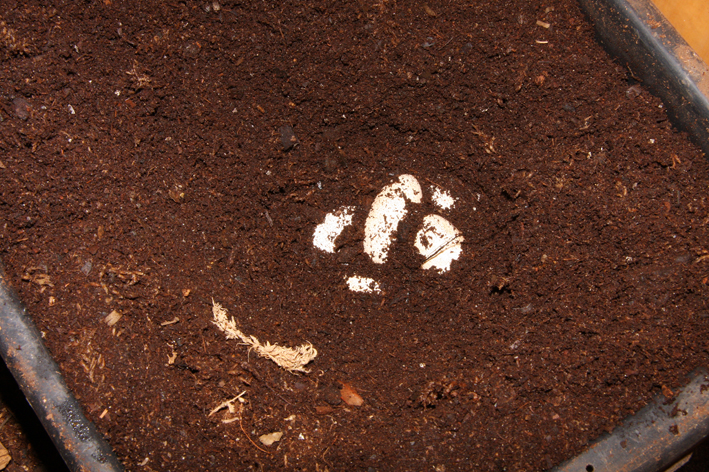
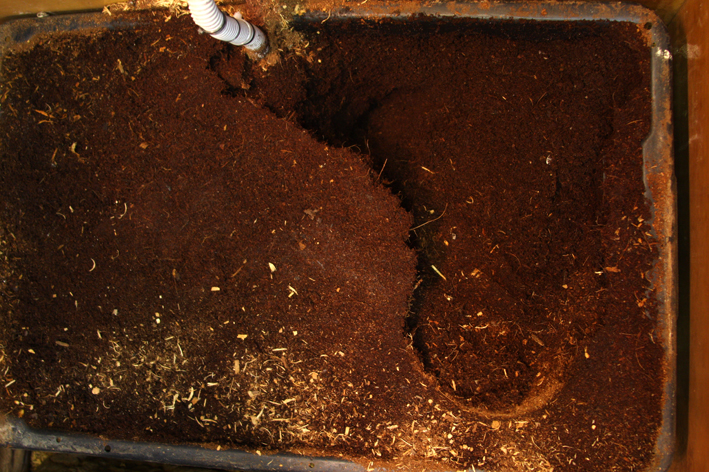
It's sold as 'coco-peat' here. I think it's called coconut coir there. Packed solidly - I open the top of the nest box, pile it in so it's above the edges and then pack it down and tie the lid down with cable ties so that it's pretty compacted.

Early on I used to mix in sphagnum moss and other things, but I haven't done that for years. Some of my photos have other stuff in the mix, others don't.


RoadSpawn Feb 12, 2012 10:36 PM

At what temperature do you keep the nest box? What method do you use to heat it and maintain the temp?
RoadSpawn

varanusaurus Feb 12, 2012 10:45 PM

I imagine the box maintains its own heat and humidity to a degree, assuming a usable level of decomposition is achieved. That is, in effect, what the lacie eggs require from the termite mounds.

crocdoc2 Feb 12, 2012 11:33 PM

I've never noticed heat from the coir decomposing, but relying on decomposition would be dangerous on a few levels, anyway. I use a heat pad.

Termites have quite complex mechanisms for controlling mound temperature and use a variety of methods to do so. Everything from managing heat from the sun by opening and closing vents, to producing their own metabolic heat. They also have to keep the mounds at near 100% humidity so they don't dry out, as the termites themselves have really thin exoskeletons.

varanusaurus Feb 12, 2012 11:36 PM

Why do you say dangerous?

jburokas Feb 12, 2012 11:43 PM

Decomposition can and does create extremely high heat at times. It consumes oxygen. Eggs need stability of oxygen gas in/CO2 out and the temperatures for eggs shouldn't exceed the lower 90's or it kills the eggs. If you test coconut coir fiber by wetting it down and packing it in a bucket with a lid, it is not decomposing very readily and heating up vs the ambient room. If you take grass clippings from your lawn and do the same, it gets warm...real warm as it composts.

crocdoc2 Feb 13, 2012 12:02 AM

As jburokas pointed out, decomposing vegetation can reach dangerous temperatures (even, in the case of grass clippings, temperatures which can cause burns). Animals that use decomposing vegetation to aid incubation, such as some megapodes (mound nesting birds), constantly remove and add substrate to keep the temperature stable.

Paradon Feb 13, 2012 01:03 AM

that's quite fascinating! Looks like you have it down to a science, building nest boxes.

crocdoc2 Feb 12, 2012 11:20 PM

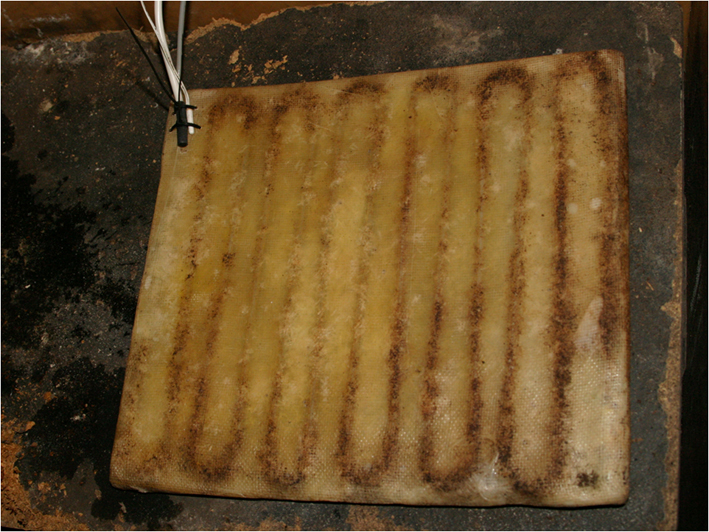
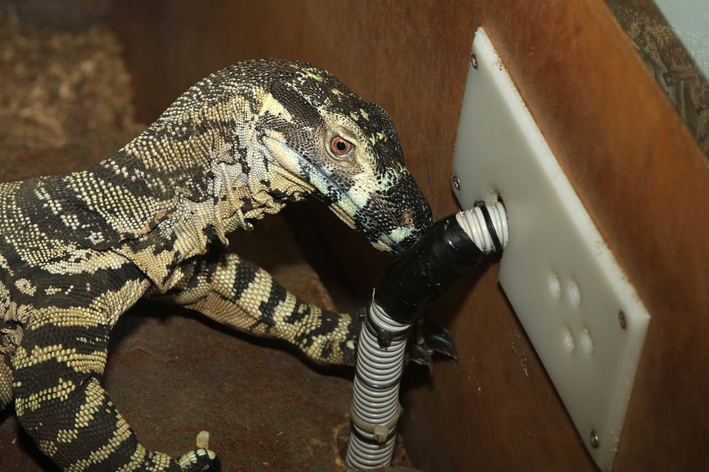
I made a heating pad by zig-zagging heat cord on a piece of PVC and then coating it with a really thick layer of epoxy soaked woven fibreglass to make it goanna-proof. There are thermostat and thermometer probes cable-tied to the surface and the cords are protected by conduit, leading to the outside of the enclosure.

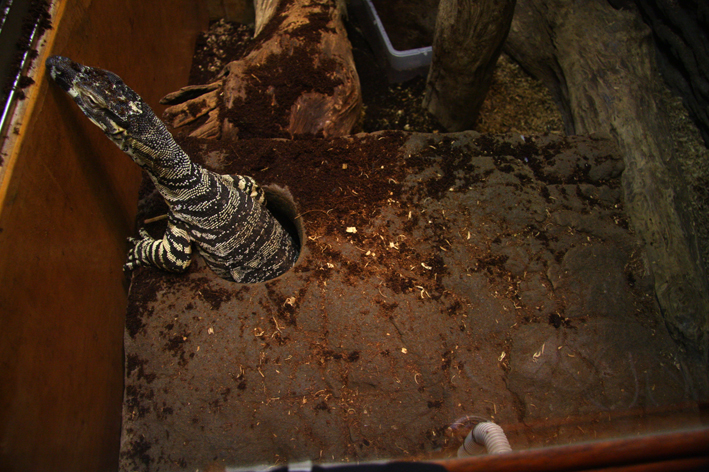
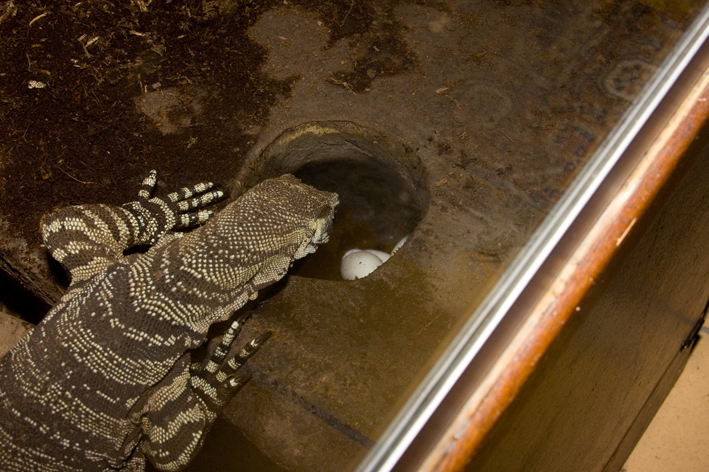
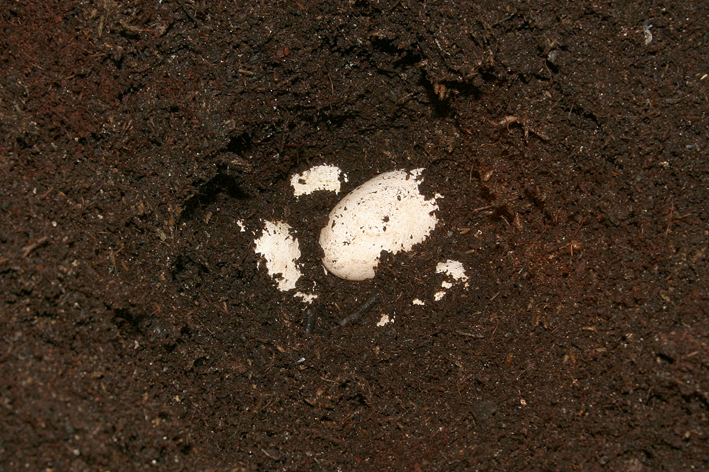
Here's a photograph taken the last time I took the nest box apart, around five years ago (without the conduit):

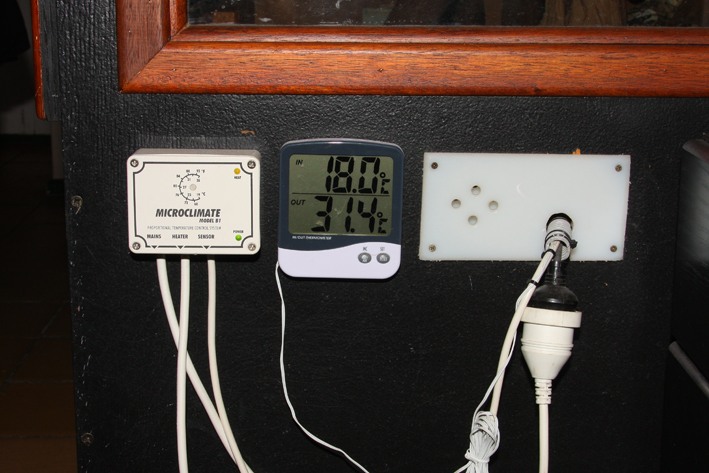
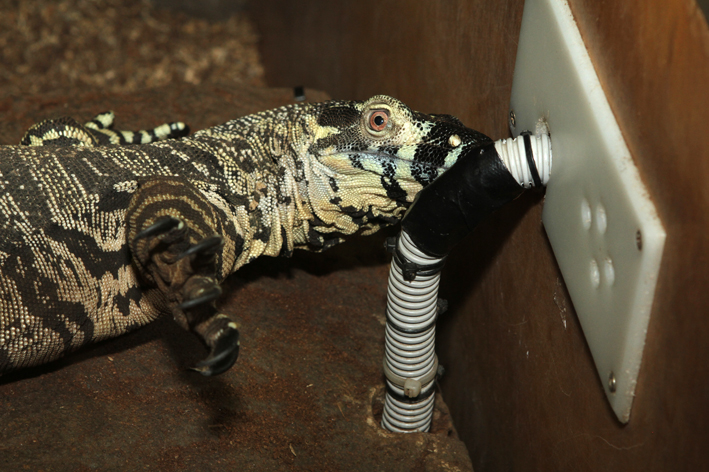
This is what it looks like on the outside of the enclosure. The photograph was taken in spring, so the room temperature was around 18C and the nest box was 31.4 at the bottom. I normally try to keep the heat pad at around 30-32C

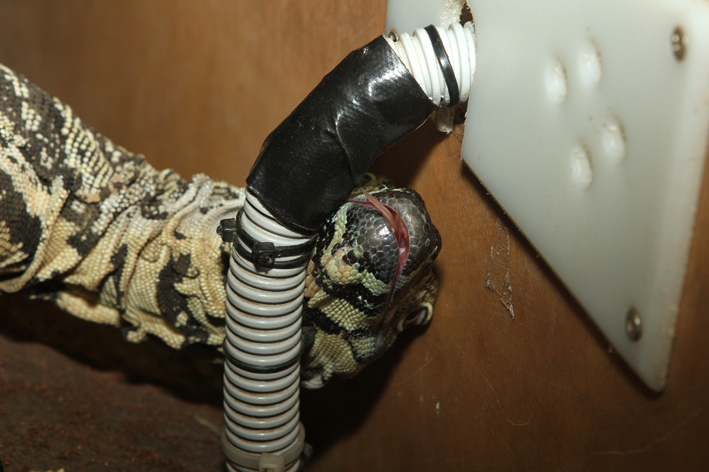
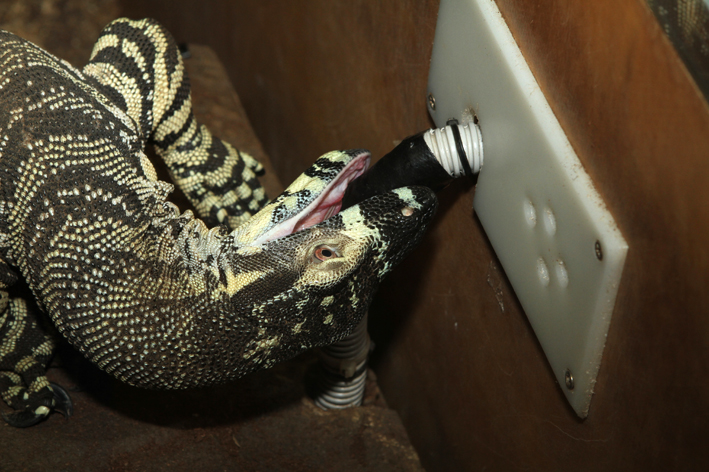
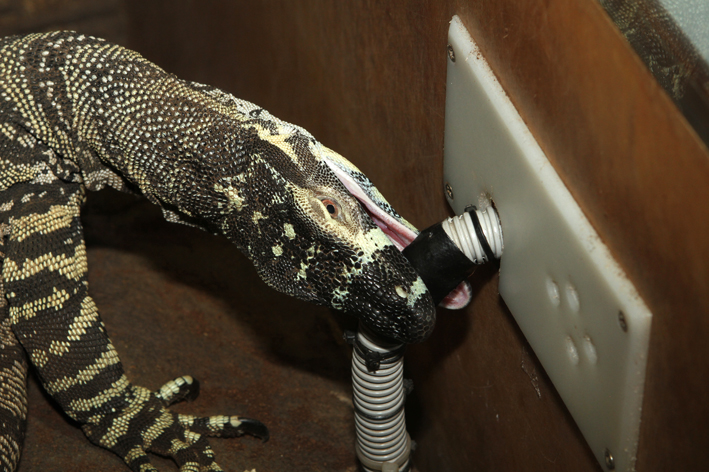
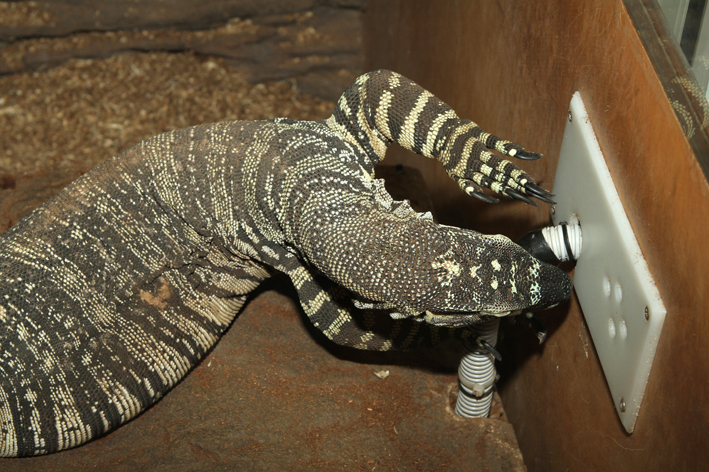
I'll have to pull it apart this coming winter and install a new piece of conduit. Every now and then the female obsesses about something she sees as 'foreign' near the nest site and last year she went to town on the conduit, clawing at it incessantly to the point of creating a crack. In a pinch I put some gaffer tape around the crack, but the tape clearly had its own smells that piqued her interest and she obsessed about it even more.


Elidogs Feb 13, 2012 01:55 AM

Sir I choose option A. There is no harm in adding a nest box... It doesn't matter to me if someone has had thousands of monitors or 2. Weather you have kept them 5 years or 50. Its how well they are cared for thats important to me. To just get bored with a species and let them have nesting failure....in other words let them die....aweful!

If I was done digging up eggs I would get the female spayed.

Paradon Feb 13, 2012 02:22 AM

I wonder if spaying them is such a good idea. I know some women that have had their ovaries removed. They have to take vitamins and hormones for the rest of their lives. My good friend would get a severe migrane headache if she did not take certain vitamins everyday. I don't how that will affect Varanid if you removed their ovaries. [shrug]

Paradon Feb 13, 2012 02:31 AM

In dogs they neuter and spay them at a very young age to avoid complication, if I'm not mistaken.

FR Feb 13, 2012 09:48 AM

Heres the problem Crocdoc, as a scientist, you have forgotten what the word "obligate" means, that is, unless you take it very very loosely.

Its means Lacies are obligated to nest in termite mounds, which means they cannot reproduce without them.

So, how come they have nested in dirt burrows and hollow logs and leaflitter?

We could discuss more scientific principles, like the ability to adapt and change key behaviors of survival, but that indeed would be against sciences current beliefs. If you could prove then Lacies can adapt and change their abilities to nest, then that would be an important paper. Currently, its believed that reptiles can only "do" what they have done. Currently its believed that that type of evolution takes time, not the taking of one individual out of nature and have it adapt to new conditions in captivity. That would show an extreme ability and would be revolutionary.

ALso, many varanid species nest in termite mounds, under certain conditions, they are very useful. But there is no species that is "obligated" to nest in termite mounds.

I have no idea why you think they can only(obligated) nest in termite mounds. Or why its so important to you.

Its already been proven by me and others, they can and do nest in several other ways and very successfully.

I have no doubt that in certain areas, termite mounds were the avenue that allowed lacies to survive. But that is not LACIES as a whole.

Also as a scientist, Lacies have no physical adaption that indicates they are obligated to nest in termite mounds.

Also as a scientist, I would question the need for Lacie eggs to diapause if they had a naturally consistant perfect temp to incubate at, as you say termite mounds have. Yet they do diapause. To diapause is an adaption to survive non suitable conditions, is it not?

Whats interesting is, many many varanid species diapause, with the exception of a few western species such as V.caudolineatus, and V.kingorum. etc. Whats of interest is, in captivity, we had lacie eggs diapause and not diapause. That is, had eggs from one clutch hatch very quickly, while others took an extremely long period of time(1 year 7 weeks) All that indicates is, they, the eggs, have the ability to survive hatch under very different conditions. Which also indicates they are not "obligated" to a consistant hatching enviornment. AS mentioned, we did have lacie eggs that were laid outside, overwinter under extremely variable conditions.

Lastly your "Termite mound" focus is a bit, off topic to this forum, the keeping and breeding of varanids(in captivity) as lacies have successfully nested without termite mounds. In fact, you do not nest them in termite mounds, you use a wooden box, that contains no termites. Consider, a termite mound is no longer a termite mound if there is no termites.

Your arguement about their ability to nest in a some place, was never argued, we nested them in hollow logs long before you ever kept lacies. There was never a discussion that lacies required long burrows.

Also many others have successfully nested lacies in captivity, in a varity of conditions that are not termite mounds.

We could discuss(argue) which method is better, or better under Certain conditions, but that discussion would not include the word "obligate".

Thank you and best wishes

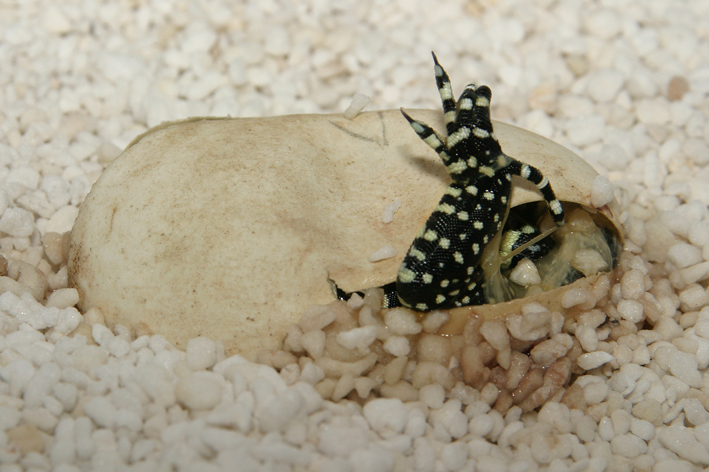
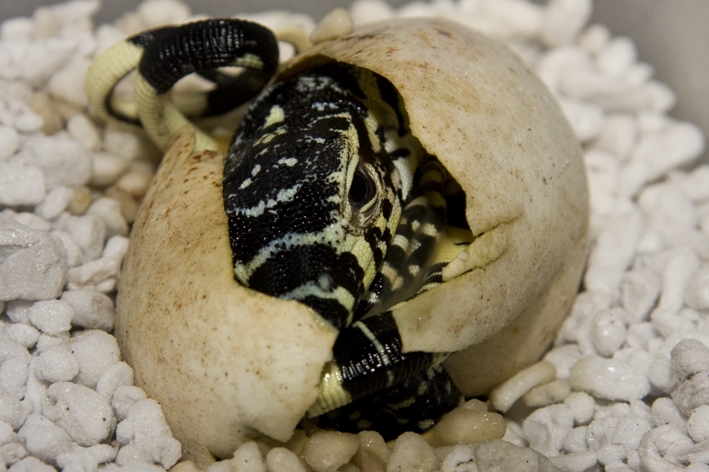
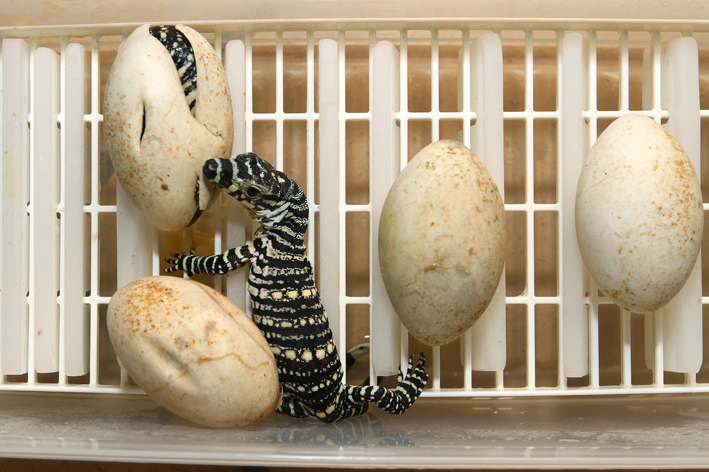
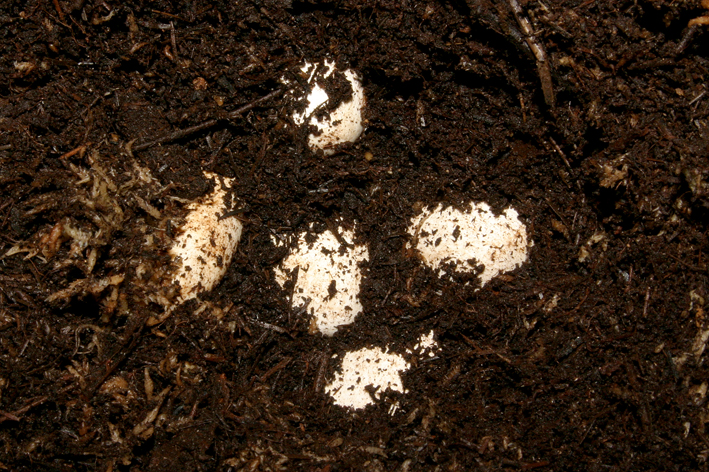
This is hatching now,

rickalbig Feb 13, 2012 02:06 PM

Frank, you don't understand that actual termites are not needed in order to simulate the conditions within a mound? Can we get past that obstacle now?

murrindindi Feb 13, 2012 04:00 PM

Hi rickalbig, I agree, the ONLY thing that matters to the female/s are the CONDITIONS inside the little box, not whether WE (or they) know it`s not a real termite mound!
If it bears just a TINY resemblance in appearance (being an object on the ground, not under) to the object they usually nest in in most of their range, it`s got to be worth a try.
Clearly, it works VERY successfully, and more to the point, REPEATEDLY over many years, and BEST OF ALL, no adult female was lost during the whole time crocdoc`s used the method. So why change, just to prove a point, and put the animal at possible great risk?
Losing females after just a few successful nestings/years is FAILURE in my opinion, not "very successful", as was stated...

crocdoc2 Feb 13, 2012 04:33 PM

FR::" Heres the problem Crocdoc, as a scientist, you have forgotten what the word "obligate" means, that is, unless you take it very very loosely.
Its means Lacies are obligated to nest in termite mounds, which means they cannot reproduce without them.
So, how come they have nested in dirt burrows and hollow logs and leaflitter?"

I haven't forgotten anything. In the wild, in at very least much of their range, they must nest in termite mounds in order for the eggs to survive. Yes, they'll make do in captivity in the absence of a termite mound. Yours have nested in dirt burrows, hollow logs and leaf litter.

Yours have also all died of reproductive failure, which is a sign of less than ideal nesting. We seem to keep overlooking this detail.

If you'd seen what a termite mound nest looks like, you'd have recognised the behaviour of the female scraping at the insides of a hollow log for what it was. Digging and/or scraping at things that aren't termite mounds isn't a revolutionary change in behaviour. Clearly the instincts to dig, lay eggs and cover the nest will still be played out, but they play out faster if the conditions are more appropriate. In lace monitors, this means 21-30 days from first mating to egg laying instead of 45 days. You and I both know that delayed nesting is a sign of inappropriate nesting conditions. What's more, under the right conditions the female recovers quickly and lives to breed again.

If you put a monitor in an enclosure with nothing but a bookshelf and she laid her eggs in that, you wouldn't jump to the conclusion that lace monitors nest in bookshelves in the wild, would you? Your animals nested in leaf litter and hollow logs because that's what they were offered, not because that's what they do in the wild.

This still doesn't explain why adding a heated nest box as an added option is such an issue for you. My female has had access to leaf litter (and other substrates I have trialled) and hollow logs, but nests in a heated nest box because there is one on offer.

FR::"I have no idea why you think they can only(obligated) nest in termite mounds. Or why its so important to you."

It's not important to me whether or not it is obligate. It is clearly the most common and widespread behaviour shown by the species, though. Which leads me to the question I had asked which you've overlooked: even if it isn't an obligate behaviour, why base your nesting husbandry on a guess of what a small proportion of the population may do, when you can base it on what the vast majority of the population is known to do.

Especially when your females have been dying of reproductive failure. It isn't important to me what you do - I'm suggesting that it should have been more important to you. If you're happy with your results, then who cares what I say?

FR::" Also as a scientist, I would question the need for Lacie eggs to diapause if they had a naturally consistant perfect temp to incubate at, as you say termite mounds have."

That's an easy one. They don't diapause. Slowed development is slowed development, fast development is fast development. Diapause is a full stop. Variations in temperature and incubation substrate moisture levels both affect incubation times. It's a known scientific fact and there are papers on it. I've also experimented on it with my own clutches, for I used to get staggered hatchings in the beginning and now get coordinated hatchings. In the post in which I showed photographs of a handful of clutches, that's why the earlier ones only showed a few hatchlings whereas the later photographs had large clumps of hatchlings - I usually photograph them when I'm moving them from the incubator into the enclosure and in the early days there were only ever a few out at a time, rather than the whole clutch.

FR::"Lastly your "Termite mound" focus is a bit, off topic to this forum, the keeping and breeding of varanids(in captivity) as lacies have successfully nested without termite mounds.."

Yes, you've told us about that success.

FR::" AND I STILL DID NOT HAVE NESTING RIGHT. As I lost each and every female to early reproductive failure."
(link: forums.kingsnake.com/view.php?id=1958520,1958673)

FR::" In fact, you do not nest them in termite mounds, you use a wooden box, that contains no termites. Consider, a termite mound is no longer a termite mound if there is no termites."

As I've said probably a dozen times in this discussion, lace monitors don't nest in termite mounds because they like termites, they nest in termite mounds because the termites keep the mound heated and humid, which is how a nest box functions. That you keep repeating this, and also continually compare nest boxes to hollow logs, indicates that this detail has escaped you.

As far as my female monitor is concerned, her nest box is a termite mound, with or without termites. Tell me you can't see similarities in these photographs.

termite mound

nest box

termite mound

nest box

termite mound

nest box

This discussion has been going in circles for a while now and nothing said here hasn't been said several times already. You seem to be happy with your results, so there's no sense me trying to convince you of anything. Although you haven't answered my two questions directly, you have through inference.

I think we've both wasted enough time on this topic. I suspect the difference between us is that we have different goals. I'm achieving my goals, you're achieving yours. It's not up to me to say whether or not you should be happy with your goals, so I'll leave it up to other readers of these threads to decide for themselves.

Gatorhunter Feb 13, 2012 07:19 PM

We have got down to exactly what I suggested with pictures. Sorry Rick that I foreseen we would end here.
Great post Dave! Here are my questions now that we are to this point and would be good for the general audience

1) What are the temps of termite mounds vs your nest box?

2) What humidty do active termite mounds typically stay at? -bet it is more humid then the surround landscape

3) What is the medium texture/ make up of an active termite mound? Is it sandy, packed or whatever and does it have any similarties to the medium that you use in your nest box?

These are the important questions that will move us in a forward direction that others can benefit from

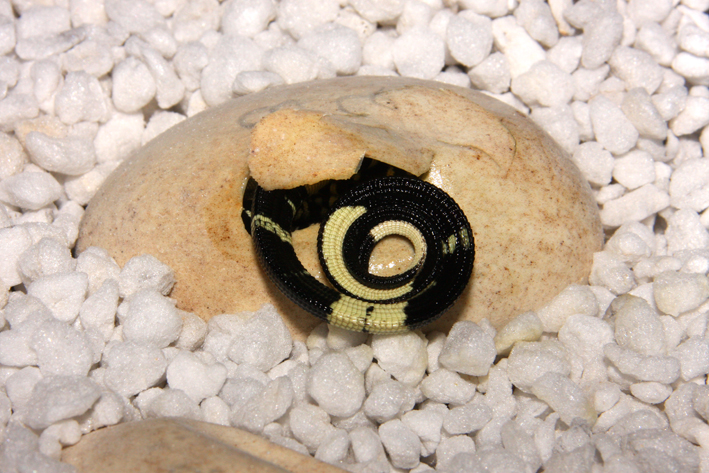
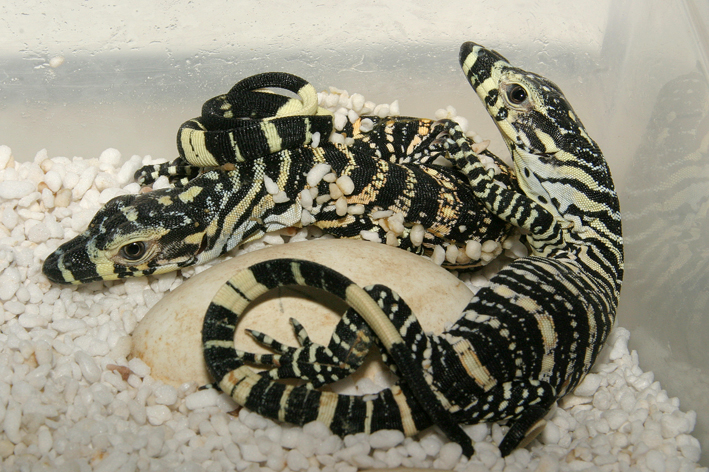
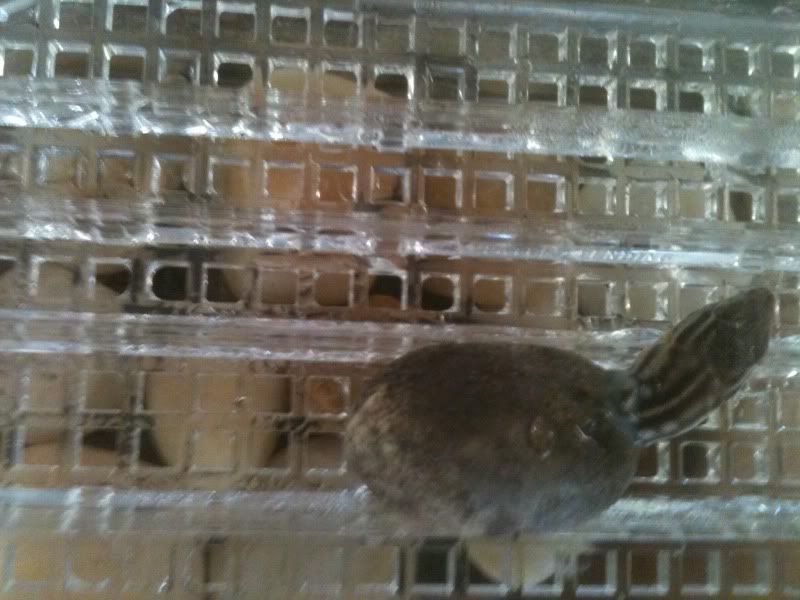
Must be a day for hatching

Gatorhunter Feb 13, 2012 07:32 PM

http://beanfarm.com/product_info.php?cPath=1204&products_id=5599

I think these are close to what you have designed. What do you think Dave? For those you may be thinking about doing the same? I recently used them to warm a spot and my salvadorii loves it. I plan to find a way to mount one vertical into the substrate to create temps in mid 80's so I can start finding my salvadorii eggs easier. My ackie is easy and lays 6in away from my center lights beam on the ground and is normally about 13ins down. Temps are mid 80s and just right on the moisture.
Link

crocdoc2 Feb 13, 2012 08:44 PM

I saw those Kane pads for the first time a few years after I built my nest box. Had I known about them, I would have used one for sure. I haven't seen one in person, only online, but as long as they are moisture proof and tough, I think they'd be excellent.

Gatorhunter Feb 14, 2012 11:39 AM

I haven't had mine long but my female hasn't destroyed it yet. My crocs love to destroy things so anything that last longer then 2 weeks is success in my book lol.
I spray the cage down once a week to keep humidty at min of 75% so its holding up there also.

crocdoc2 Feb 14, 2012 04:01 PM

"I haven't had mine long but my female hasn't destroyed it yet. My crocs love to destroy things so anything that last longer then 2 weeks is success in my book lol."

I know where you're coming from! My male destroys things accidentally, through size and blunder, but my little female destroys things intentionally, through persistence. Every now and then, usually after laying but occasionally before, she'll become obsessed with something near her nest site that she feels shouldn't be there. It's hormone and instinct fuelled behaviour, so nothing can stop it. As I mentioned in another post, last year she decided to obsess about the conduit protecting the heat pad, thermostat and thermometer cords. She spent a full day robotically scratching at, and then biting, it. You can't imagine how annoying the repetitive noise of these activities was for me as I tried to work at my computer, which is right next to the enclosure.

What you don't want is for the female to dig a nest hole down to where the cords enter the Kane mat and decide that cord shouldn't be there, so make sure it is protected. I've got conduit going right down to my home made heat pad.

Gatorhunter Feb 14, 2012 04:39 PM

haha Dave. I have seen the pics of your female going at it. Mine does the same. She shifts things and moves things to her liking. I plan to use a 36inx18in kane pad and mount it vertically near a wall to create side heat. It should be a 48inx30inx30in area that will be heated. She seems to like to dig so I'm going to play on that and get it dialed in.

I once had a male croc they destroyed lights and domes just for entertainment value haha. No so much the breaking stuff but so he could watch me work my butt off to fix everything

MikesMonitors Feb 14, 2012 04:59 PM

Hunter
I use Kane heat mats both horizontally and vertically.
Kane heat mats are super tough, I would watch out if your planing on using them within the enclosure.

Where the cord goes into the mat is it's only weak spot.
Not only for chewing and clawing but I'm sure water (moisture) can seep in...that would not be good.

Good luck to you.
Post some photo's Brother.
Mike
-----
Mike's Monitors!

Gatorhunter Feb 14, 2012 05:37 PM

Thanks Mike.
I didn't go in detail and should because you never know who is lurking. I use marine epoxy where the cord goes in and will do with my other mats when I rebuild. I'm a fan of pvc and work with it off and on. 2in pvc is very stout and makes it easy to run the plug through the tube. Last 6 inches (at the mat) I will reduce it to 7/8s spilt duct flex tubing.

crocdoc2 Feb 13, 2012 08:43 PM

"1) What are the temps of termite mounds vs your nest box?"
The temperatures of termite mounds varies a bit, but is usually around 29-31C for a healthy colony. I keep my nest box heat pad at a little over 30C so that it is 30C somewhere in the middle. That's the temperature the female always seeks to lay in.

Termite mounds do drop a bit in temperature in winter, but are always much warmer than their surroundings. In the study I read on wild lace monitor reproduction, some mound were considered 'important' mounds and were nested in very regularly because they were good at maintaining temperature.

"2) What humidty do active termite mounds typically stay at? -bet it is more humid then the surround landscape"
They're at around 99%, from memory. Way more humid than their surroundings most of the time.

"3)What is the medium texture/ make up of an active termite mound? Is it sandy, packed or whatever and does it have any similarties to the medium that you use in your nest box?"
The outer shell is really hard, but ever so slightly crumbly. Beyond that there's what's known as 'carton' material, which is the chambering in which the termites live. When fully functional and repaired it consists of densely packed tiny chambers. When the females dig into it, it crumbles a little more easily than the outer shell. The substrate in my nest box isn't very similar to the carton material as it's a bit softer, even when tightly compacted. It does resemble the repair material that termites create after the hole is dug, but I wouldn't read much into that. Females scrape back the walls of the burrow to cover the eggs and the termites then build the carton material all over the eggs. When I saw photographs of the eggs collected for the zoo, many years ago, I can recall that they still had the zig-zag pattern of the column walls on their surfaces.

Gatorhunter Feb 14, 2012 11:53 AM

Very informative Dave and that sounds like the temps and humidty I aim for in my incubator
How long on average does it take for your eggs to hatch (I know but for audience)?

FR-same questions that Dave? Do you aim for substrate temps within the same range, humidty, etc? Time for eggs to hatch?

Both: Incubation setup? 200 days is a long time to maintain temps and humidty.

crocdoc2 Feb 14, 2012 03:45 PM

"Very informative Dave and that sounds like the temps and humidty I aim for in my incubator"
Funny that (and of course, as you are aware, no coincidence).

"How long on average does it take for your eggs to hatch (I know but for audience)?"
I don't really have a straightforward answer to that, for if there's one area in which I've really experimented a lot it's been incubation. My minimum and maximum are currently at (from memory) 174 days and 295 days, but average is around 240-250. I like to slow-cook them, for I've found that hatchlings emerging from a long, humid incubation are larger than those emerging from a shorter, drier incubation.

One of the things I first started experimenting with was altering the tendency for staggered hatching. As FR has pointed out, it's not unusual to have two eggs from the same clutch hatch at completely different times. I started playing around with the eggs by moving them strategically around the egg box during incubation to see if I could influence this and managed to get much more coordinated hatching.

After using perlite for the longest time, two or three years ago I decided to experiment with suspending the eggs over water. The trigger for this was seeing the size of the hatchlings a mate was producing and seeing his incubation setup - he's been incubating all of his reptile eggs over water for years and he produces way more lace monitor eggs than I do because he has multiple females. Coincidentally, John and Gregg were developing their SIMS at the same time so as soon as they launched them I got a couple from John to test. I also used a container that I had slapped together myself. The first season I used tradtional eggs on perlite for one clutch, suspension over water for another clutch and suspension over perlite for the third clutch. Now I'm incubating all of my eggs suspended over water (I use a bit of aquarium filter wool to soak up the water and stop it from splashing around).

All of this started happening the year I finally found a source of perfectly sized perlite in large bags, so I gave away my huge bag of perlite.

Hatch rate has never been an issue, but the two main advantages to using the suspension method have been not having to use perlite (great for incubation, terrible for lungs and eyes) and an increased average hatchling size. It's early days still, but so far they're around 15% larger on average and practically come out of the egg running. There's a third advantage, too, which is that I don't have to play around with the eggs to get coordinated hatchings.


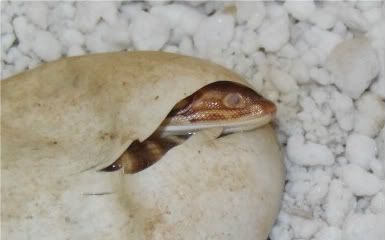
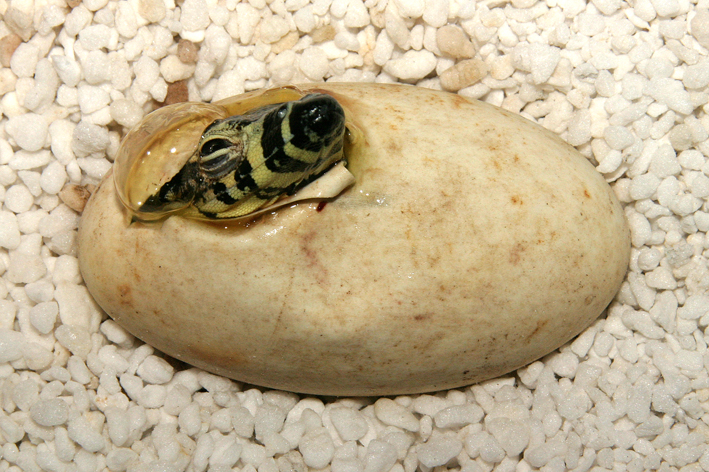
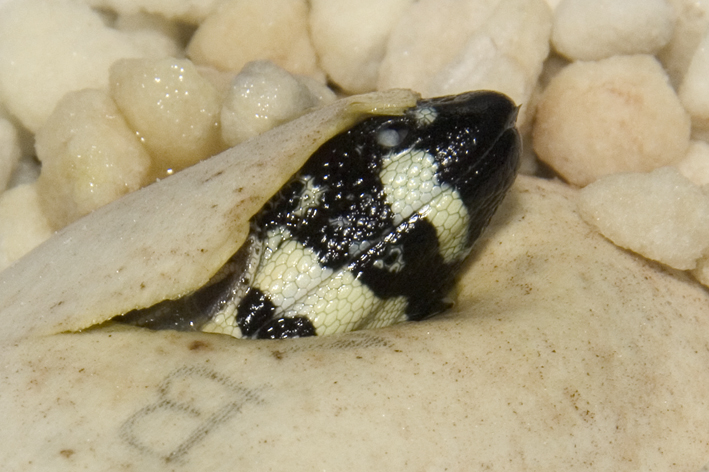
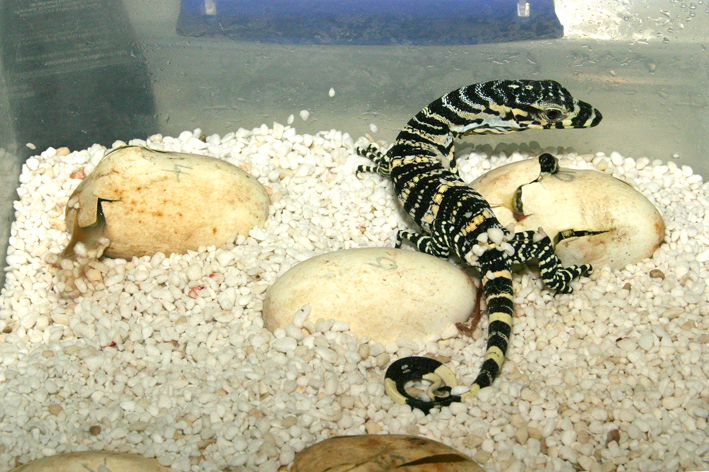
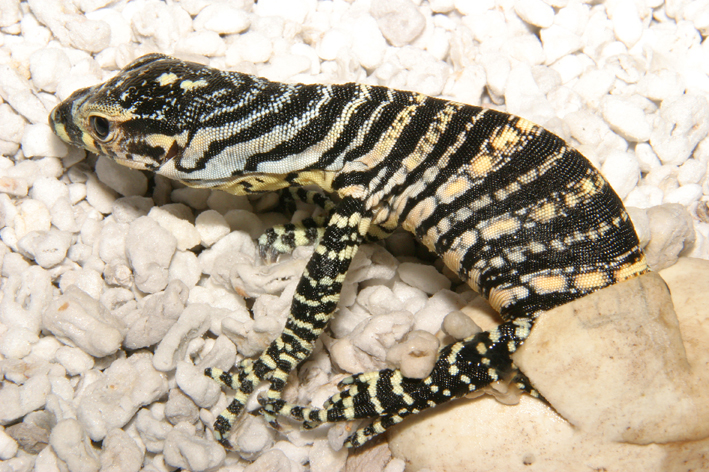
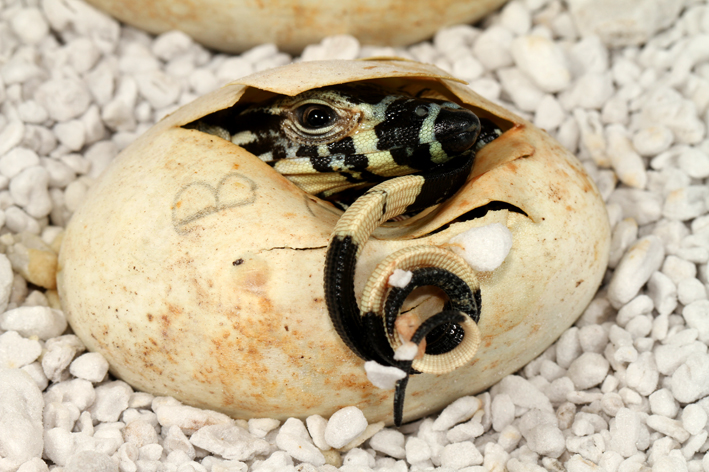
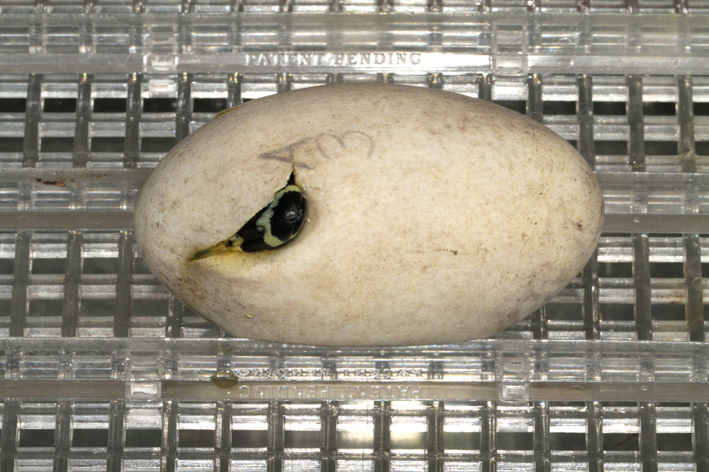
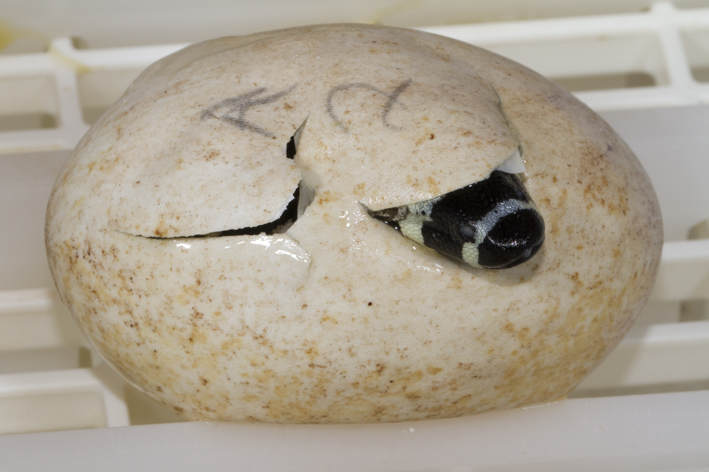
You can see the egg tooth on these.


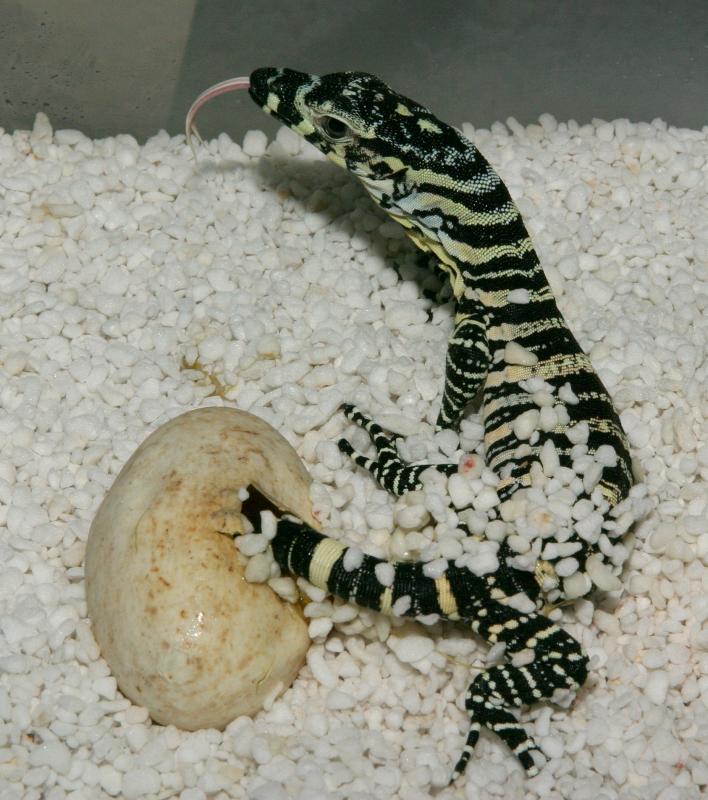
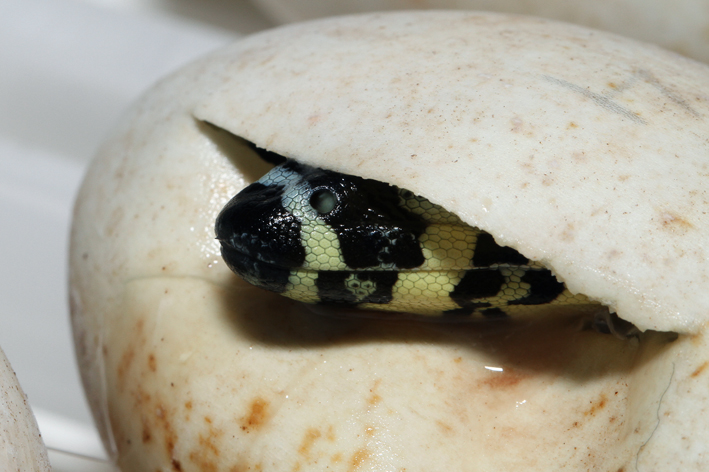
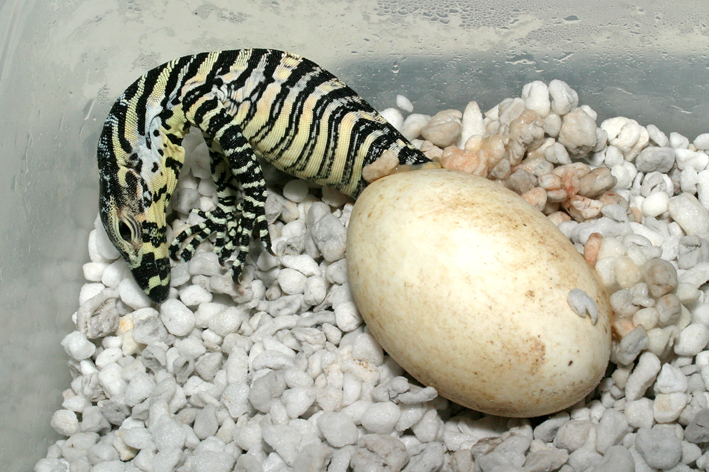
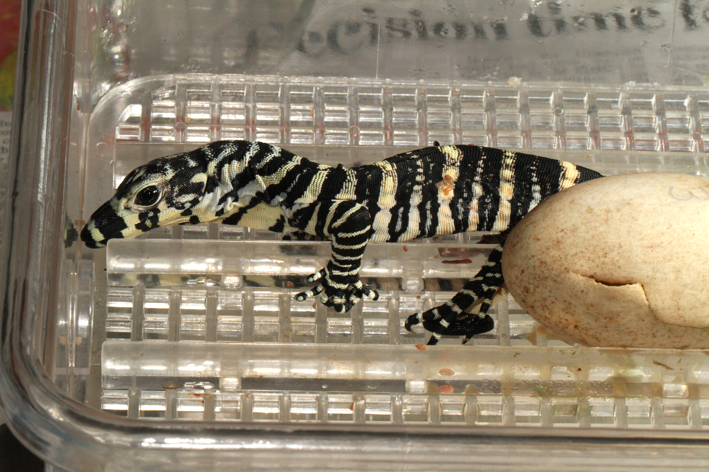
wrong way, go back!


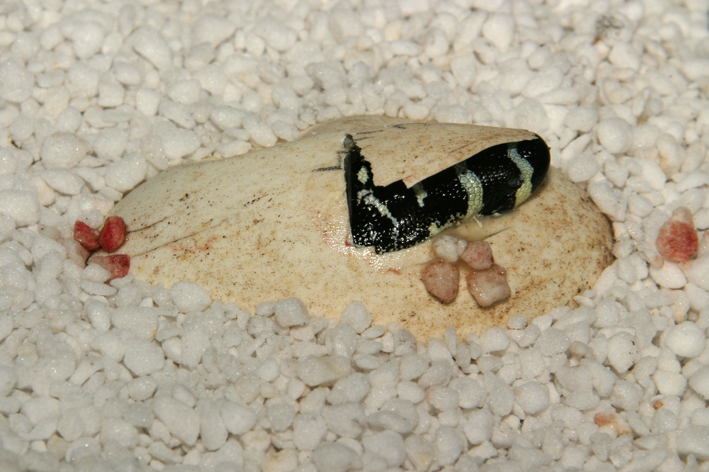
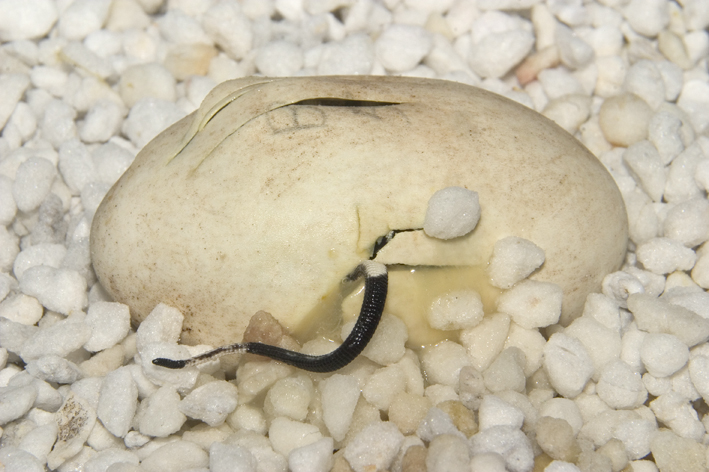
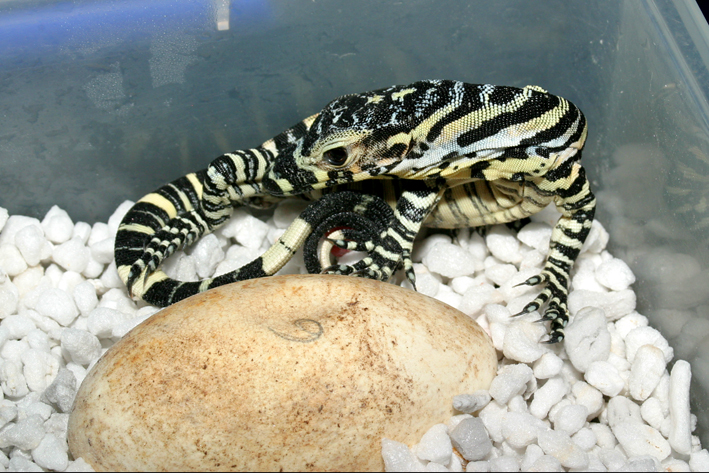
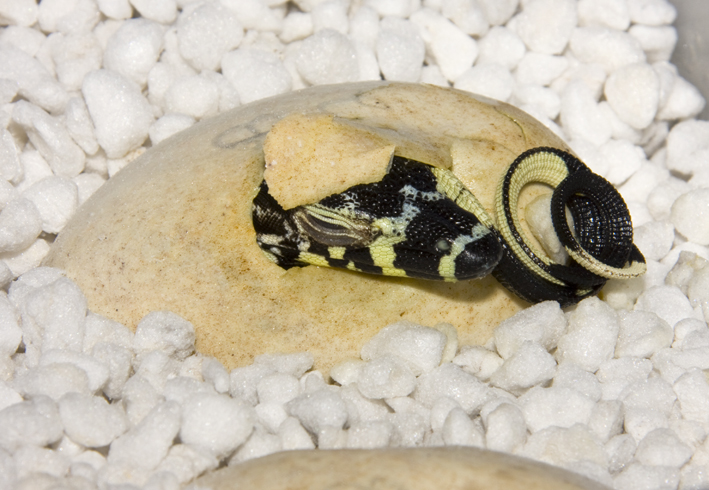
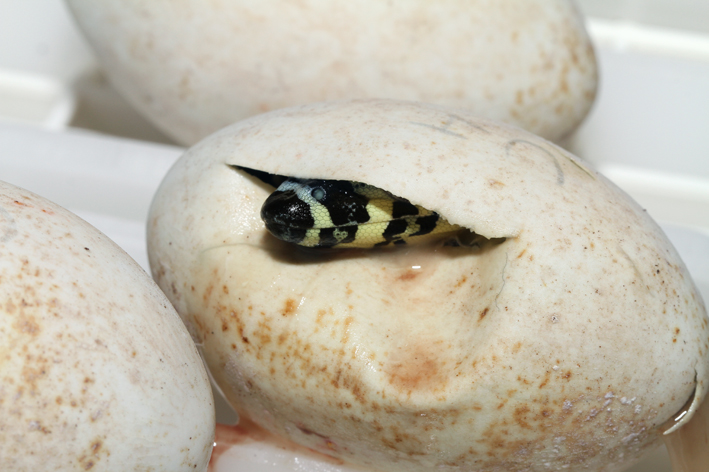
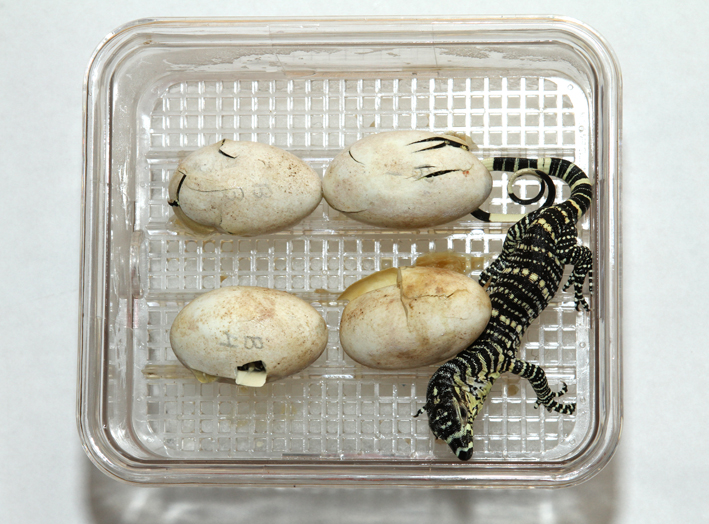
Often they slice the egg to ribbons before emerging, but every now and then one tries to squeeze out of the tiny slit through which they originally pipped. They make it, but it doesn't look like much fun.

The sensible way


Gatorhunter Feb 14, 2012 04:50 PM

I use the suspended water method which I was learning about from Green tree python guys about the same time John A and Gregg put out there SIMs container. I jumped on the container and skipped the whole water to perlite ratio mess haha. First eggs was 2 out of 9, 2nd clutch was 1 out 10 but I think I got it down a little better (stable). 3 have hatched from this clutch and three more eggs have slits so possiable 6 of 10 and the best looking eggs are still left lol. Hoping for 8/10 at least. Thats using an ice chest and a 30gallon aquarium heater lol. Can't wait to get my wine cooler wired up and in operation soon.

Think I going to run 4in heat tape along the sides and bottom to help keep an even heat through out the wine cooler.
Cheers

Site Tools