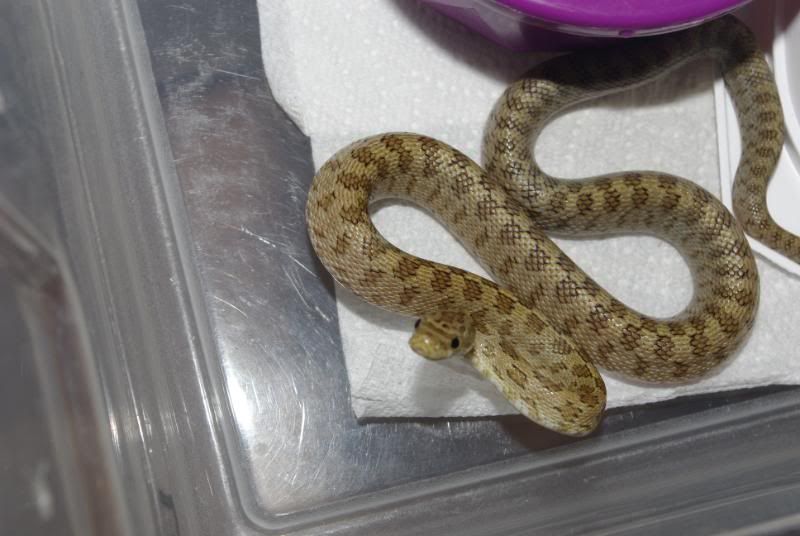
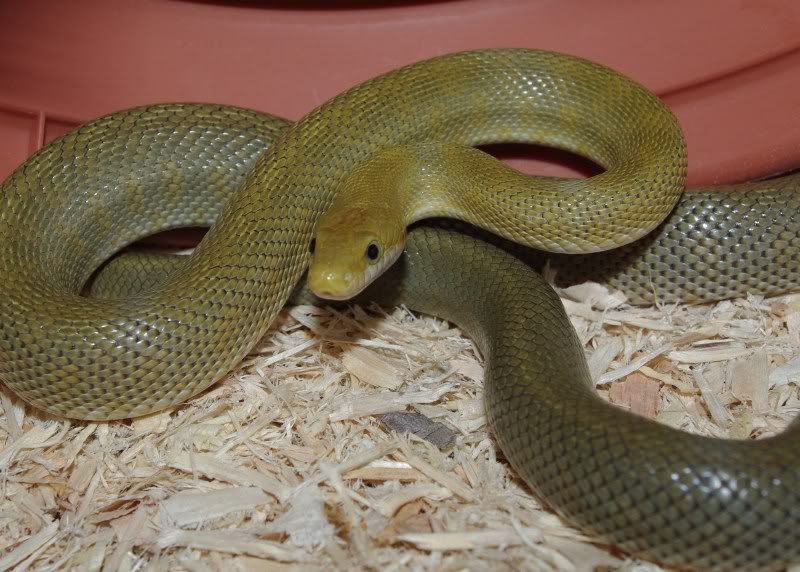
I always wanted frenatas, and finally I got a pair!


Welcome to kingsnake.com's message board system. Here you may share and discuss information with others about your favorite reptile and amphibian related topics such as care and feeding, caging requirements, permits and licenses, and more. Launched in 1997, the kingsnake.com message board system is one of the oldest and largest systems on the internet.



I always wanted frenatas, and finally I got a pair!
Those are incredible. They have been at the top of my have to get list for a couple years now. Beautiful species.
-----
Randy Whittington
Wow! Very nice juvies! This is another species which is high on my want / must have list. Some day...
-----
-Toby Brock
Southwestern Center for Herpetological Research
Very Nice! I have wanted a pair of those as well. I don't have any green snakes and I can't decide which of these three species to go with: frenata, prasina, or Rhincophis boulengeri. I wish I coudl afford all three.lol. Like I wrote in an earlier post, I purchased a pair of mussuranas(one pied) the last time I some substantial snake money. Hopefully after this years hatchling sales I'll be able to pick up a pair of one of the green species. For those who have kept any of the three I mentioned, which species would you recomend?
-----
Matt Kauffman
You forgot Senticolis triaspis intermedia, Matt - our New World greenie! LOL
-----
-Toby Brock
Southwestern Center for Herpetological Research
I agree with Toby. I'd try triaspis first. Then again, it partly depends on where you live. If you're in a humid climate, any of the above might fare well. In a really dry climate, I'd try triaspis first.
Terry
>>You forgot Senticolis triaspis intermedia, Matt - our New World greenie! LOL
>>
>>-Toby Brock
>>Southwestern Center for Herpetological Research
Thanks Terry - As you know, I live in a very humid climate (Gulf Coast) and these snakes have done quite well for me - considering. Of course, my central a/c dries the air somewhat, but it is over 50% in the house even when the a/c runs all day, in the summer. I think very good ventilation is key, plus a himid / moist hide. Even in humid, coastal south Texas, this species will dessicate and begin having shedding problems if they are not provided with a moist hide - I know from experience, after allowing one's moist hide to dry out when it was in a shed cycle. So - I would kind of liken them to being very similar in (general) needs to those Asian green rats - except with a drier substrate, and more ventilation - but still with a very moist hide. That said though, I am sure they do well in dry climates too - with the provisions I mentioned...
I know this is not exactly what you were talking about - but just thought I'd throw it out there. I am sure you are right about Senticolis most likely doing better (in a dry climate) than those green Asians...
Now, as far as handling - I would somewhat retract my promotion of Senticolis (generally not very fond of being handled), and would suggest Rhynchophis. Rhinos are very peaceful and handleable snakes - which is also in contrast to the other green Asians...
-----
-Toby Brock
Southwestern Center for Herpetological Research
Toby, you have described some things we have learned over time and by comparing notes which I pretty much agree with. My oldest, biggest green rat (triaspis) is being kept in a room with temps that vary from the high 50's to high 60's each day. She is in a generally dry terrarium with a humid hide (box). The ambient humidity in the room is generally 45 to 55%. She uses the humid hide about half of the time with the rest of the time hiding in or under objects in the cage. I think she's doing quite well this winter without feeding. The males are all doing well too with similar conditions.
I just think the Asians come from climates that are very humid, at least in summer. Triaspis is in a dry climate, but can move into humid microhabitats when it needs humidity the most. The Asians have a hard time getting away from the humidity, so may have more tolerance for it, imho. But this is just an educated guesstimate.
How are the Rhyncophis doing for you? How big are they getting? Do they handle like corns?
TC
>>Thanks Terry - As you know, I live in a very humid climate (Gulf Coast) and these snakes have done quite well for me - considering. Of course, my central a/c dries the air somewhat, but it is over 50% in the house even when the a/c runs all day, in the summer. I think very good ventilation is key, plus a himid / moist hide. Even in humid, coastal south Texas, this species will dessicate and begin having shedding problems if they are not provided with a moist hide - I know from experience, after allowing one's moist hide to dry out when it was in a shed cycle. So - I would kind of liken them to being very similar in (general) needs to those Asian green rats - except with a drier substrate, and more ventilation - but still with a very moist hide. That said though, I am sure they do well in dry climates too - with the provisions I mentioned...
>>
>>I know this is not exactly what you were talking about - but just thought I'd throw it out there. I am sure you are right about Senticolis most likely doing better (in a dry climate) than those green Asians...
>>
>>Now, as far as handling - I would somewhat retract my promotion of Senticolis (generally not very fond of being handled), and would suggest Rhynchophis. Rhinos are very peaceful and handleable snakes - which is also in contrast to the other green Asians...
>>
>>
>>-----
>>-Toby Brock
>>Southwestern Center for Herpetological Research
>>Toby, you have described some things we have learned over time and by comparing notes which I pretty much agree with. My oldest, biggest green rat (triaspis) is being kept in a room with temps that vary from the high 50's to high 60's each day. She is in a generally dry terrarium with a humid hide (box). The ambient humidity in the room is generally 45 to 55%. She uses the humid hide about half of the time with the rest of the time hiding in or under objects in the cage. I think she's doing quite well this winter without feeding. The males are all doing well too with similar conditions.
>>
>>I just think the Asians come from climates that are very humid, at least in summer. Triaspis is in a dry climate, but can move into humid microhabitats when it needs humidity the most. The Asians have a hard time getting away from the humidity, so may have more tolerance for it, imho. But this is just an educated guesstimate.
>>
>>How are the Rhyncophis doing for you? How big are they getting? Do they handle like corns?
>>
>>TC
>>
>>
>>>>Thanks Terry - As you know, I live in a very humid climate (Gulf Coast) and these snakes have done quite well for me - considering. Of course, my central a/c dries the air somewhat, but it is over 50% in the house even when the a/c runs all day, in the summer. I think very good ventilation is key, plus a himid / moist hide. Even in humid, coastal south Texas, this species will dessicate and begin having shedding problems if they are not provided with a moist hide - I know from experience, after allowing one's moist hide to dry out when it was in a shed cycle. So - I would kind of liken them to being very similar in (general) needs to those Asian green rats - except with a drier substrate, and more ventilation - but still with a very moist hide. That said though, I am sure they do well in dry climates too - with the provisions I mentioned...
>>>>
>>>>I know this is not exactly what you were talking about - but just thought I'd throw it out there. I am sure you are right about Senticolis most likely doing better (in a dry climate) than those green Asians...
>>>>
>>>>Now, as far as handling - I would somewhat retract my promotion of Senticolis (generally not very fond of being handled), and would suggest Rhynchophis. Rhinos are very peaceful and handleable snakes - which is also in contrast to the other green Asians...
>>>>
>>>>
>>>>-----
>>>>-Toby Brock
>>>>Southwestern Center for Herpetological Research
>>
>>
Terry,
My adult w/c Santa Ritas greens are brumating at basically the same temps you mentioned - with a warm spot in the back of the tub from heat tape. They have mostly stayed in the middle of their tubs, between warm and cool ends - about mid 60's average I'd say, throughout brumation. However (and interestingly IMO) today when I checked in on them in room temps of 59 - 61 F, the male was out wandering around his tub!
I would tend to agree with you regarding the high humidity that the green Asians live in - as opposed to the general dryness of the sky islands of southeastern Arizona.
My pair of Rhyncophis boulengeri handle even smoother than most corns I've had. It seems as if they consider my hands to be branches - mostly just hang out when picked up. Both have bitten / struck at me a time or two - but only half-heartedly, and settle down to very calm almost immediately. They just seem to regard people / hands as no threat. They are summer 2010 snakes, and I'd say they are about the size / girth-wise of 1.5 year old corns. I cooled my male for 1.5 months but kept the female warm and feeding throughout the winter. I did this because the female was a bit small-ish going into winter (due to my having to force-feed her for a long time / getting her feeding well on her own, etc.) whereas the male was large and beefy - and males are larger in this species according the Rob Stone. So - I am trying to give my female a head start on the male, if he is going to end up bigger then her...
-----
-Toby Brock
Southwestern Center for Herpetological Research
Sounds great on the Rhyncophis, Toby. I didn't know they handled so well. I hope I can get back to Corpus Christi one of these days and get to see them in person.
Best...Terry
Yeah - come on down, Terry!
-----
-Toby Brock
Southwestern Center for Herpetological Research
I'm in Louisiana, so the Asians do well for me.
-----
Matt Kauffman
Matt - I am in southern coastal Texas - and Senticolis have done well for me - see my reply to Terry...
-----
-Toby Brock
Southwestern Center for Herpetological Research
I know I did. They are in the running as well. I just don't know if I can provide the right conditions to get them to breed. If I did they would be very high on my list,and I as more people, such as yourself, learn and pass along husbandry techniques, they are becoming less intimidating to work with.
-----
Matt Kauffman
I haven't worked with the frenata yet but their care is pretty much like the others Matt. They all do great if set up right. Their basic needs are pretty much like the coxi you have already bred but the other three could benifit from a little more of an arboreal set up. Temp, moisture and humidity levels are about the same which you already know and have delt with with the coxi.
The others will prefer live prey sometimes although mine generally take thawed with no problem.
-----
Randy Whittington
Thanks for the info. Randy. I'm getting to a point in the hobby where I'm not exactly sure what direction I want to go in(rats,kings,pits,etc). It's funny, a few years ago I would have been very content just to get a couple good clutches from a couple average species(and there is nothing wrong with that). Now I find myself wanting to get rid of some of the more common species and fill my collection with the more challenging and rare species. I guess it's kind of a natural progression, I just don't want to get to caught up in the whole breeding thing and forget my life-long love of all snakes. Sorry for all the info. I just don't have many people to talk snakes with.
-----
Matt Kauffman
Hey Matt - I can relate to all of that! Specialize in rats please - need more of us around! LOL I like other snakes too - kings especially - although I am not going to specialize in them over rats.
-----
-Toby Brock
Southwestern Center for Herpetological Research
I can relate. While I keep more ratsnakes than anything else, I like and keep some of everything because I enjoy working with different species. Due to that I have given up trying to totally narrow it down to one group.
I am definatly caught up in the whole breeding thing and have been for years. That is the part of the hobby I enjoy the most. I love learning to fine tune my care to each individual species, watching them thrive and reproduce. Seeing those little heads piping out of the egg or being born live is the cream of the crop for me.
-----
Randy Whittington
Well, I can say I'm definitely getting caught up myself. I guess I just meant getting caught up in the finacial aspect of it. Don't get me wrong, I don't mind making a few dollars every fall, but I can't see myself investing lots of money in "the next big thing", ie. ball pythons. I too love seeing the hatchlings come out, I just don't want to produce a bunch of snakes that noboby wants. I had a hard time getting rid of my bairdi and meallhmorum hatchlings last year. I guess the solution to that is to not breed them this year, and that's what's bothering me. I feel like, if I can't sell or give the hatchlings away, then I want to sell the breeders to make room for something else. You know what I mean?
-----
Matt Kauffman
Matt - I know what you are saying, but if everyone sells off their breeders of "unpopular" species, then who has those snakes? Will they breed them / sell offspring - represent them properly? I've thought many times about getting out of meahllmorum because they don't sell well - but I don't because I really like them - and maybe some day, others will start to value them as I do...
BTW - there is nothing wrong with taking a break from breeding a species. It has been 3 years since I bred meahllmorum - I will be trying the possible het reverse-striped which are also Nueces County locale this season...
And... This might be somewhat controversial for some - but I don't have a problem with folks feeding unwanted babies off to other things (indigos, kings, snapping turtles, whatever..) and have even given some of my extra babies to a friend for food for his animals. I think this might actually be preferable to selling a bunch of babies to a wholesaler and then seeing your babies in the classifieds selling for way too little for a year or more - BEEN THERE - won't do it again...
-----
-Toby Brock
Southwestern Center for Herpetological Research
Thanks for the reply Toby. I feel the same way about the babies. I have several snake eaters and I have fed deformed or unwanted hatchlings in the past. I guess I'll just see what happens this year, it's not like I have hundreds of snakes or anything, but I am getting up there toward fifty. I think I am being a bit haisty in wanting to get rid of breeders, especially when I had to wait years for them to mature to this point. Thanks.
-----
Matt Kauffman
One of the interesting things about my collection is that I work mostly with snakes I can find in the wild...several localities of Emory's rats, Slowinski's corns, green rats, Sonoran gophers, desert kings and Cal kings, for instance. I like being able to work with them in the wild too, as well as the fact that I can collect my own breeder stock. Producing babies is fun, but I only do it when I need to continue the line, such as with my Brazos Island ratsnakes.
I believe a keeper needs to really like the species they work with to be the happiest with what they are doing. I may start up with a couple Asian species again now that I know that I have a good climate and operating room for them. My bimacs and diones have done very well for me here and I believe I could do well with a couple more like Orthriophis sps and/or mandarinus.
Cheers....Terry
>>Matt - I know what you are saying, but if everyone sells off their breeders of "unpopular" species, then who has those snakes? Will they breed them / sell offspring - represent them properly? I've thought many times about getting out of meahllmorum because they don't sell well - but I don't because I really like them - and maybe some day, others will start to value them as I do...
>>
>>BTW - there is nothing wrong with taking a break from breeding a species. It has been 3 years since I bred meahllmorum - I will be trying the possible het reverse-striped which are also Nueces County locale this season...
>>
>>And... This might be somewhat controversial for some - but I don't have a problem with folks feeding unwanted babies off to other things (indigos, kings, snapping turtles, whatever..) and have even given some of my extra babies to a friend for food for his animals. I think this might actually be preferable to selling a bunch of babies to a wholesaler and then seeing your babies in the classifieds selling for way too little for a year or more - BEEN THERE - won't do it again...
>>
>>
>>-----
>>-Toby Brock
>>Southwestern Center for Herpetological Research
What a COOL-LOOKING rat snake!!!
-----
Carl
Help, tips & resources quick links
Manage your user and advertising accounts
Advertising and services purchase quick links
