Reptile & Amphibian Forums

Welcome to kingsnake.com's message board system. Here you may share and discuss information with others about your favorite reptile and amphibian related topics such as care and feeding, caging requirements, permits and licenses, and more. Launched in 1997, the kingsnake.com message board system is one of the oldest and largest systems on the internet.

Click here for Dragon Serpents
Click for ZooMed
Click for 65% off Shipping with Reptiles 2 You

Breeding Savu Pythons

chefdev Mar 04, 2012 10:59 AM

There is not too much info out there. I have read some others experiences for breeding but I still have yet to chat with anyone with actual breeding experience with these.

I would like to know what temps you brumated them at and the frequency of feeding during breeding season.

Thanks in advance!
-----
Check out my collection on Facebook...
http://www.facebook.com/pages/Houston-Herpholics/185272254884373

Replies (8)

Phil Peak Mar 06, 2012 01:35 PM

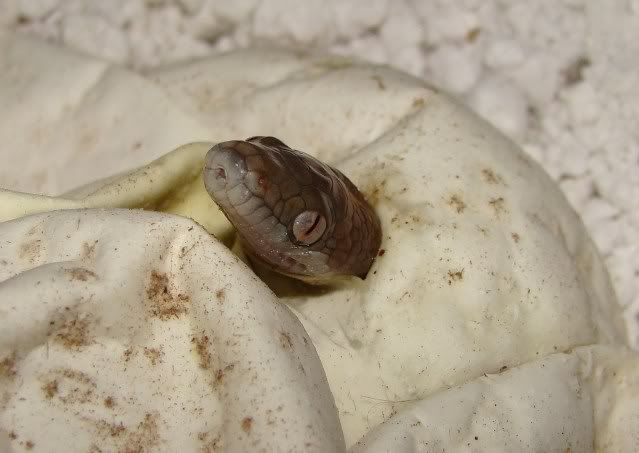
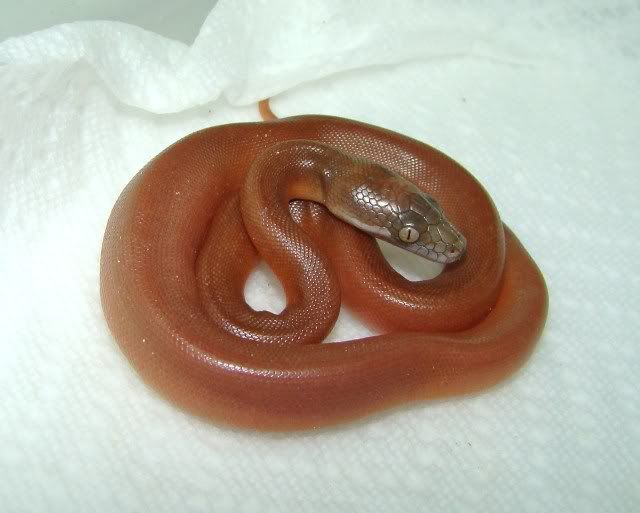
Through the winter of 2010 - 2011 I tried the conventional cool down period but this seemed to have no effect in prompting these snakes to reproduce. I researched exactly what the conditions are on Savu Island and discovered there really is no cool period. This tiny island is usually hot and dry and receives warm breezes from the arid interior of Australia. Most of the rain fall occurs in the monsoon season which led me to believe this may be a more important component than an actual cool down. In the late spring my male went off food which made me think he may have been interested in mating. I introduced him to the females enclosure the first of June. She was housed in a 72 quart sterlite box in a heated rack system on cypress mulch. The background temperatures were DTHs in the mid to upper 80°F with NTLs of 80°F. The heated portion of the box was set with a temperature probe and thermostat to 90°F. Weekly I would mist the cypress mulch and the sides of the box with water that was mildly warm. They did not seem to like this, but shortly after beginning this process frequent copulations were observed. Each time I checked in on them they were either coiled together or actually copulating. The female became obviously gravid by Sept and the snakes no longer seemed to have an interest in each other. The male was removed and he subsequently began feeding ravenously. The female shed on 9-4-11 accepted one meal on 9-6-11 - at this time she frequently layed on the heat tape, sometimes in an inverted position. I returned from a five day field herping trip on 10-1-11 and found the female coiled around a clutch of eggs. From what little info I could find I read that these snakes usually produce small clutches of several eggs, but this first time female had a clutch of ten. I set the eggs up on perlite at 89°F and 90-95 % humidity. Since the eggs were layed while I was away I had to incubate the eggs as a clump and was unable to separate them. The result was two of the eggs on the top of the mound desicated and held dead babies inside that were well advanced. All eggs were fertile and the first baby pipped at 56 days plus probably a couple additional days since I was unable to know exactly when they were actually layed. I hope you find some of this info useful.

Phil

Tom Keogan Mar 06, 2012 08:53 PM

Phil, great post!! Very informative!

Phil Peak Mar 07, 2012 06:23 PM

Thanks Tom! They are one of my favorite species to keep.

Phil

chefdev Mar 07, 2012 08:13 PM

Very informative... I spray lightly every day and offer a moist hide. Temps are 70s ambient with 85 belly heat. Its been kinda cool lately . My female who is of what I understand to be a young breeding age and size is feeding like crazy right now. Everytime I open her cage she is ready to pounce on something. How often do you feed and how many for the male and female? They are together right now and appear to be snuggling under the cypress.
-----
Check out my collection on Facebook...
http://www.facebook.com/pages/Houston-Herpholics/185272254884373

Phil Peak Mar 08, 2012 05:45 PM

My experience has been these pythons tend to prefer it warmer than most. Under the same conditions, my savu's hang in the warmer portions of their boxes far more often than the other species I keep. I feed my adults weekly on one thawed small rat. The females feed virtually year round only passing on a meal occasionally whereas the males seasonally fast for several months, sometimes longer. When they're on its as if someone turned a switch on.

Phil

chefdev Mar 08, 2012 07:44 PM

I have observed the same in the summer months... when I cooled however, both male and female chose to sit on the cool side around 70. Periodically during the month of feb. After a fast during cooling i resumed once a week feeding for two weeks. This week my female took three weaned rats in two days... I realize this is a lot to feed this species but I wonder could this trigger ovulation?
-----
Check out my collection on Facebook...
http://www.facebook.com/pages/Houston-Herpholics/185272254884373

Kelly_Haller Mar 09, 2012 02:40 PM

I don’t believe heavy feeding alone can induce follicle maturation or subsequent ovulation, but pythons that are underweight will many times not ovulate due to obvious energy constraints even if all the environmental signals are in place. However, pythons that are gearing up to move into an ovulation period due to seasonal environmental cues will show an increased appetite in order to build up energy reserves for an impending ovulation. If those reserves can not be built up to a certain point, then ovulation will be delayed until next year’s reproductive cycle.
Environmental factors such as temperature, seasonal weather pattern changes, and differences in photoperiod will stimulate follicle development in female pythons. Follicle maturation into fully developed ova and their subsequent release into the oviducts are usually initiated by courtship and the following copulation activity, as most snakes are considered induced ovulators. The female will absorb immature follicles that do not develop into mature ova due to lack of courtship by a male. Fully developed and mature ova that are not fertilized for some reason cannot be absorbed and are released later by the female python as unfertilized shelled eggs, or unfertilized ova or “slugs” with boas.

Kelly

chefdev Mar 09, 2012 05:15 PM

Well all factors you have mentioned will be in place... time will tell I suppose. They may be young still, only three. Thanks for all the great info.
-----
Check out my collection on Facebook...
http://www.facebook.com/pages/Houston-Herpholics/185272254884373

Site Tools