Reptile & Amphibian Forums

Welcome to kingsnake.com's message board system. Here you may share and discuss information with others about your favorite reptile and amphibian related topics such as care and feeding, caging requirements, permits and licenses, and more. Launched in 1997, the kingsnake.com message board system is one of the oldest and largest systems on the internet.

Click for 65% off Shipping with Reptiles 2 You
https://www.crepnw.com/
Click for 65% off Shipping with Reptiles 2 You

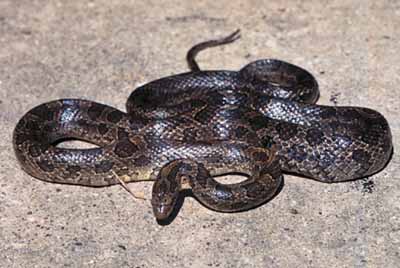
ID Help Please -Pics & Location Included

Sly May 24, 2012 12:25 PM

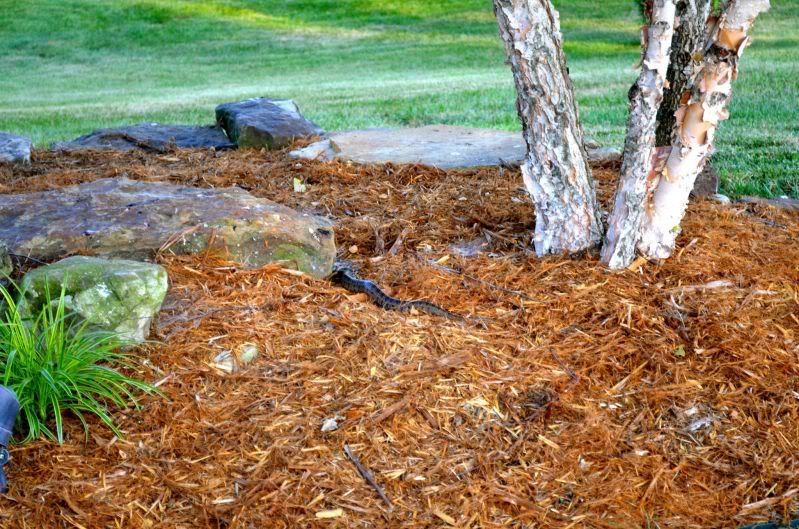
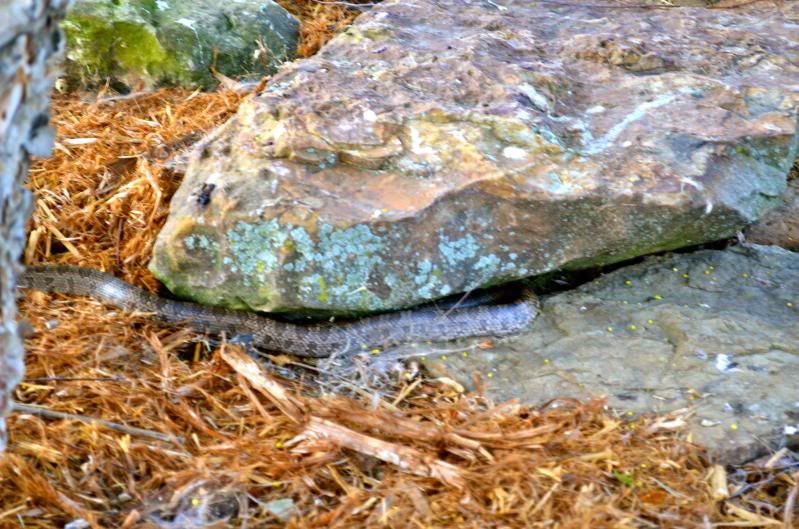
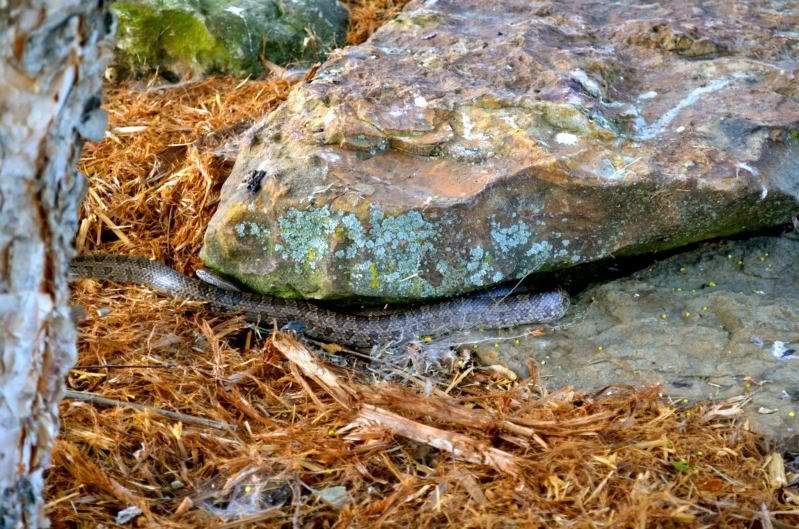
Found in an acquaintance's yard. She has kids & dogs that play in the yard and I'm trying to convince her that it's harmless, but she wants a positive ID and I haven't been able to nail one down. Copperheads can be in the area, but I don't think it is one. Ditto for rattlesnakes. But what is it? Fox snake? Juvenile Black Rat? Looks too big to be a juvie. Milksnake? Prairie King? Help Please!

Can see head just a bit:

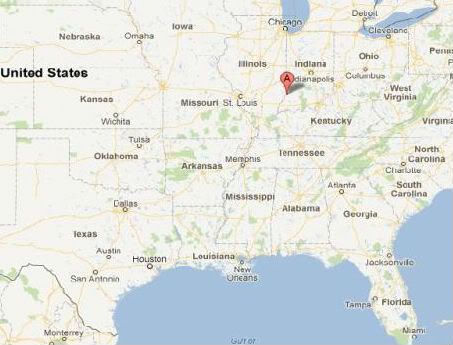
Location found:

These are all of the pics I have. I'd hate to see this gorgeous, apparently healthy, well fed, adult harmed

Replies (19)

megalon May 24, 2012 12:49 PM

Definitely not venomous, likely a fox snake (or other ratsnake).
-----
0.0.2 cb'12 crested geckos
1.1 cb'09 gargoyle geckos
Mississippi mud turtle,3-striped mud turtle
Mexican red-knee tarantula
Mexican fire-leg tarantula
1.0 cb '03 homo sapien(Kaelan)
"jesus is coming-when i count to 3,everyone jump out and yell SURPRISE!!"

Sly May 24, 2012 01:59 PM

Thank you!

DMong May 24, 2012 01:52 PM

That's definitely a very harmless and typical Prairie Kingsnake (L.c.calligaster) from the northeastern portion of their range.

No chance of harming ANY dogs or kids whatsoever..

~Doug
Image
-----
"a snake in the grass is a GOOD thing"

serpentinespecialties.webs.com


"some are just born to troll and roll"

Sly May 24, 2012 01:58 PM

Thanks Doug! Much appreciated!

DMong May 24, 2012 02:21 PM

n/p
-----
"a snake in the grass is a GOOD thing"

serpentinespecialties.webs.com


"some are just born to troll and roll"

PeeBee May 24, 2012 07:03 PM

I agree with Doug. It's a prairie king snake.

wolfpackh May 25, 2012 09:57 AM

Prairie kings are common in western Indiana. There is no species of snake in that section of Indiana / Illinois that pose a threat to pets or people. Anyone who tells you different are wrong. I know the area well. Watersnakes are mistaken for copperheads or water moccasinss. Any snake that vibrates its tail is mistaken for a rattlesnake. Fox snakes do not occur that far south in Indiana.
-----
2 tham radix
1 Chicago Tham s. semifasciatus
2 elaphe vulpina
1 gray tiger salamander
4 Aphonopelma hentzi
1 G rosea
1 Haplo minax
1 Brachy angustum
1 Brachy sabulosum
1 Brachy vagans
1 Cent. hentzi scorp

Sly May 25, 2012 10:01 AM

Thanks so much! I will pass on the info. I'm in Northern California, so not familiar with that area at all. Heck, I was happy that one of my top four guesses was correct... actually top 3 because I never thought it was a black rat. Everyone else kept suggesting it so I included it as a possibility. Anyway, will definitely pass the info on to the homeowner Thanks again!

DMong May 25, 2012 12:59 PM

I'm not really disputing any of that because I don't personally know otherwise, but what about the Eastern Massasauga (Sistrurus catenatus catenatus), Northern Copperhead (Agkistrodon c. contortrix), and Timber Rattlesnake (Crotalus horridus)?. I have some range maps that put the Massasauga as far south right about up TO that area the poster designated. Also, I have a couple range maps that depicts the Northern Copperhead (Agkistrodon c. contortrix) as ranging right about UP TO that pin-pointed area the poster gave as well. I certainly do realize that most range maps are not absolute "hard boundaries", and ranges on the very outer fringes of maps that aren't a good bit more interior of their depicted ranges can often be somewhat questionable, and of course this depends on the accuracy of the individual map itself and the researched sources the map illustrator used. I am not from that area at all, so I am simply stating this from literature I have come across.

I do know a very dedicated and hardcore herpetologist in southern Illinois that I will run this by to get his opinion on it too. He does LOTS of hands-on field work and rersearch and is about as hardcore about accurate data and taxonomic identification as you could possibly get..LOL!

Anyway, I'm not personally disputing what you said, because I am only going by the maps I have here, and both the species I referred to come VERY, VERY close to meeting that area. Now as to if the specific habitat in that area the snake was found in can support either of the two snakes I mentioned, I couldn't say either way either.

I also have a range map or two that shows the Timber Rattlesnake ranging ridiculously close, if not right UP TO that exact area too.. With all three of these snakes seeming to range right slap up to this area, it would seem reasonable that possibly some of these snakes could in fact be found there, although they might not be nearly as abundant as they would closer to the centers of their respective ranges.

cheers, ~Doug
Image
-----
"a snake in the grass is a GOOD thing"

serpentinespecialties.webs.com


"some are just born to troll and roll"

wolfpackh May 25, 2012 05:59 PM

Hello Dmong,
I appreciate your input. Massasaugas are only found @ a few localities in extreme northern Indiana. The locality for the praire king is in the lower Wabash Vally floodplain: a flat habitat devoid of the rolling rocky hill country. The hill country is to the east about 1 1/2 hours drive. It is there where copperheads are common and , unfortunately, timbers are now restricted to just a few counties. The IL side is farmland as well. One would have to travel @ least 2 hours south to hit copperhead/timber country. It never ceases to amaze me how animal diversity changes as one explores different habitats. cheers, wolf
-----
2 tham radix
1 Chicago Tham s. semifasciatus
2 elaphe vulpina
1 gray tiger salamander
4 Aphonopelma hentzi
1 G rosea
1 Haplo minax
1 Brachy angustum
1 Brachy sabulosum
1 Brachy vagans
1 Cent. hentzi scorp

DMong May 25, 2012 11:40 PM

Yeah, there's no question at all about the Prairie king being well within it's range there.

This map shows the Timber Rattlesnake (Crotalus horridus) very close to that area too, and it doesn't seem like it's a 2 hour drive south......... unless the car is only going about as fast as a bicycle...

Again, it could be off a bit, but not by a WHOLE lot I wouldn't think....

~Doug
Image
-----
"a snake in the grass is a GOOD thing"

serpentinespecialties.webs.com


"some are just born to troll and roll"

DMong May 25, 2012 11:54 PM

......it looks like I could throw a rock to Timber Rattlesnake territory from the precise point the poster depicted on the map.

Keep in mind though, this isn't about the Prairie king ID, because that identification was already established as soon as I saw it, this is just regarding the Timber range map I posted just above and how it correlates with the precise point where the person lives that photographed the L.c.calligaster. Looking at the two maps, there doesn't look like much distance if any to me to get to Timber range. Maybe the Timber Rattlesnake map was drawn by Ray Charles, who knows..LOL!

Is this map really THAT far off?......

~Doug
Image
-----
"a snake in the grass is a GOOD thing"

serpentinespecialties.webs.com


"some are just born to troll and roll"

wolfpackh May 26, 2012 01:38 AM

Those maps include fossil records. "Most recent Indiana records of the Timber Rattlesnake are from the rugged hill country of the Shawnee Hills and Highland Rim upland regions, but even here its distribution is spotty. However, Richards (1990, he found these remains in caves where the bones didn't succumb to the elements) found skeletal remains of Timber Rattlesnakes in seven sites in Shelby, Decatur, and Jennings counties as well as at a number of other sites where the species no longer occurs." Sherman Minton, Amphibians & Reptiles of Indiana 2001. So far as driving time goes, we're talking winding roads deep into what is left of virgin forest in southern Indiana. The same applies to southern IL, Shawnee is a huge state forest. Shawnee is further south than the southern tip of IN itself. You have to trek deep into these areas for rattlesnakes. They do not occur in the Wabash flood plains and are very rare in the Ohio valley counties. I have a copy of the herps of IL. The northeastern timber range are old records, from 75 - 100 yrs ago. It's fun to debate. I wish these animals existed within their original range, but they don't in my opinion. That's from 20 years of exploring these areas myself, and communicating w/ state biologist who work with timbers in Indiana.
-----
2 tham radix
1 Chicago Tham s. semifasciatus
2 elaphe vulpina
1 gray tiger salamander
4 Aphonopelma hentzi
1 G rosea
1 Haplo minax
1 Brachy angustum
1 Brachy sabulosum
1 Brachy vagans
1 Cent. hentzi scorp

DMong May 26, 2012 04:48 PM

Very interesting stuff,....thanks for the detailed information there......

~Doug
-----
"a snake in the grass is a GOOD thing"

serpentinespecialties.webs.com


"some are just born to troll and roll"

gerryg May 28, 2012 03:54 PM

Damn nice to see/read such a civil exchange aimed at clarifying range information... don't see enough post by wolfpackh given the insect forums are so infrequently visited as of late.

Gerry

Sly May 28, 2012 03:56 PM

Agreed! Thank you both very much!

wolfpackh May 29, 2012 10:50 AM

i wish the spider forums were busy like the used to be. cheers
-----
2 tham radix
1 Chicago Tham s. semifasciatus
2 elaphe vulpina
1 gray tiger salamander
4 Aphonopelma hentzi
1 G rosea
1 Haplo minax
1 Brachy angustum
1 Brachy sabulosum
1 Brachy vagans
1 Cent. hentzi scorp

Greg Longhurst May 31, 2012 06:40 AM

Gentlemen, that was as intelligent & moderated an exchange as I have seen on the internet in years. That was fun to read.

Doug: I am getting better every day, my friend.

DMong May 31, 2012 01:32 PM

I thought it was great too. My good friend in Illinois (Scott Ballard) did verify the same things wolfpackh mentioned regarding the venomous snakes in that precise area too. So there was indeed some extremely useful information shared here regarding what does and what doesn't seem to be in that immediate area.

I don't think he would mind if I posted his email to me clarifying all of this either, so here is what he had to tell me.

Thanks for the helpful information, Scott!

Quote:

That map looks to be depicting a locality near Vincennes, Indiana in Knox County. From more accurate range maps than the general ones found in the Peterson field guide series, there are no venomous snake species known from Knox County, Indiana. Known copperhead localities are more south one county, east two counties, and northeast 2-3 counties of that locality, and known timber rattlesnake localities are at least two counties east of there. Historically, massasaugas are limited to the northern half of Indiana. But recently I'd bet massasaugas are even LESS abundant than that today as they have seriously declined throughout all of their range.

Across the border in Illinois (which would be Lawrence County), there are also no venomous snakes known in the immediate area. Recent known localities of the copperhead and timber rattlesnake from Illinois are 3-4 and 4-5 counties to the southwest, respectively. Massasaugas now occur only in 2-3 counties in Illinois and are no where near that locality.

Keep in mind that some of the more general maps used in the Peterson field guides incorporate both historic and recent occurrences, and usually are inaccurate in their depiction of the actual current range of the species in any given area. Hope this helps.

end quote

Also, Greg,....I am VERY happy to hear that you are feeling much better. That's just wonderful my friend!..

~Doug
-----
"a snake in the grass is a GOOD thing"

serpentinespecialties.webs.com


"some are just born to troll and roll"

Site Tools