Reptile & Amphibian Forums

Welcome to kingsnake.com's message board system. Here you may share and discuss information with others about your favorite reptile and amphibian related topics such as care and feeding, caging requirements, permits and licenses, and more. Launched in 1997, the kingsnake.com message board system is one of the oldest and largest systems on the internet.

https://www.crepnw.com/

I love intergrades (pics)

Kevin Saunders Aug 06, 2012 12:20 AM

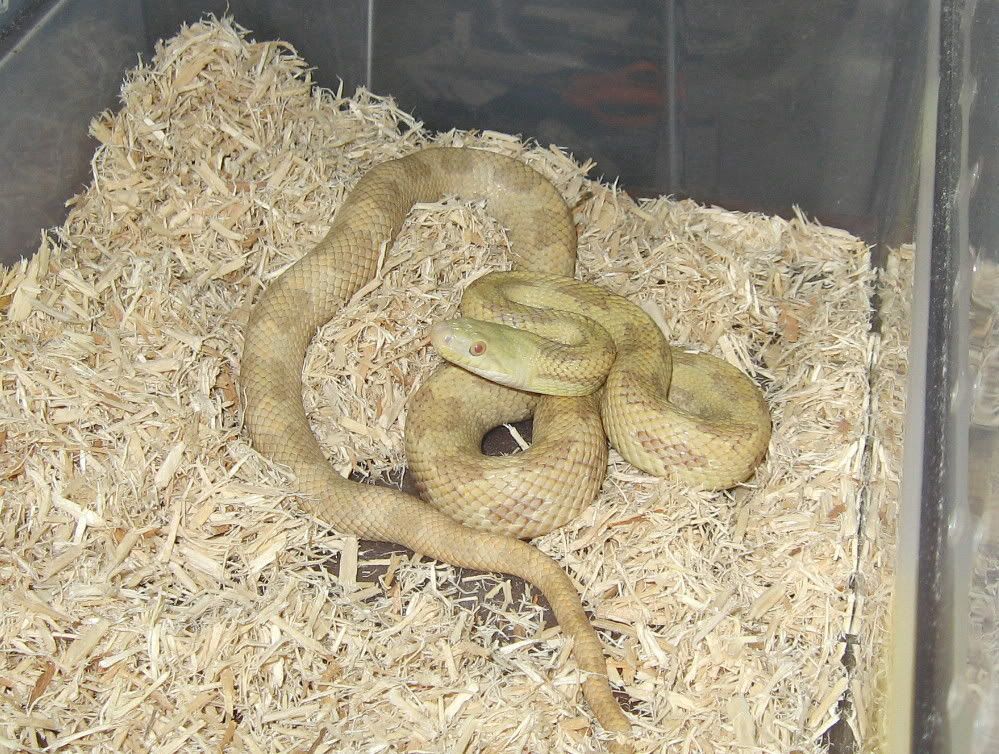
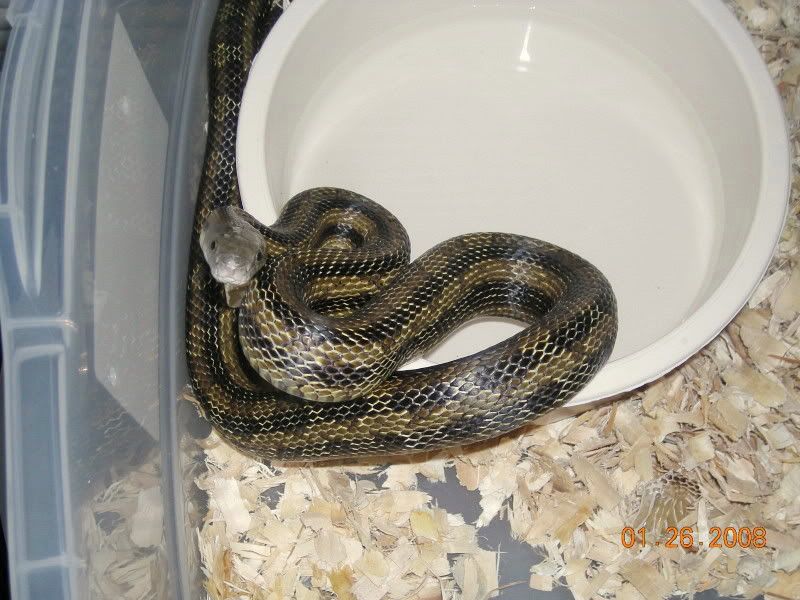
Just felt like sharing a few pics. Here's a male locality Gulf Hammock produced by parents collected in Levy County, FL.

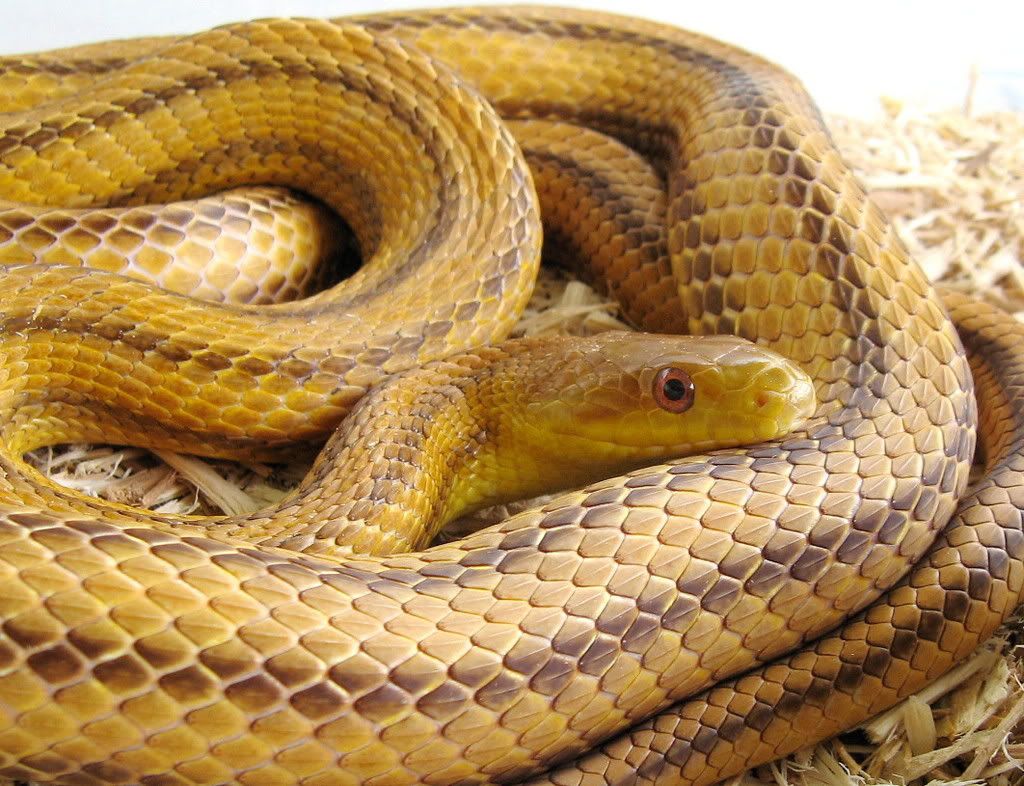
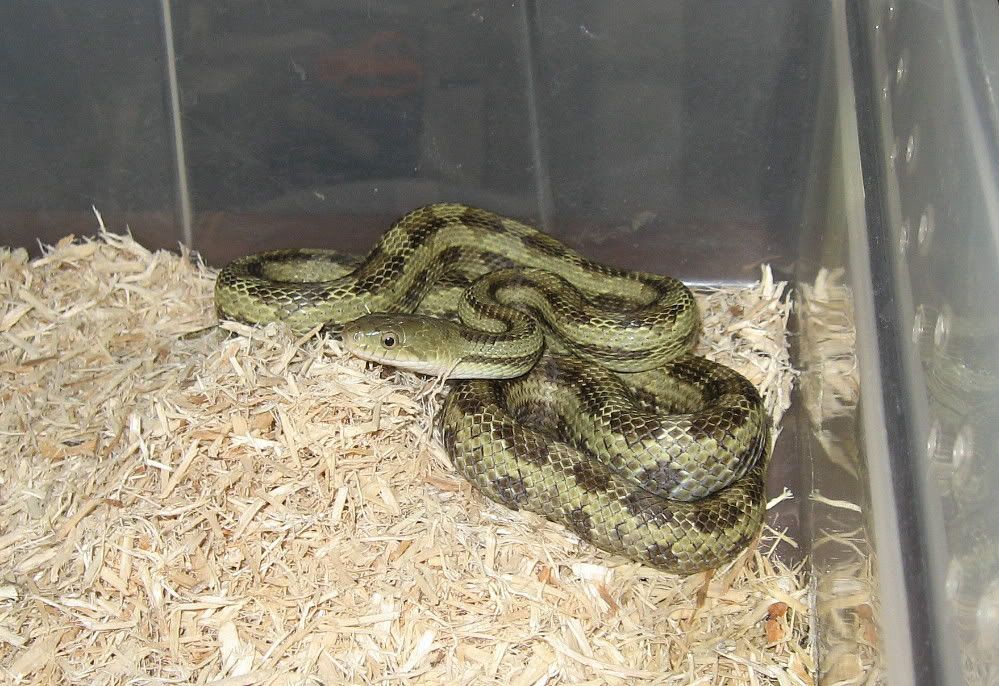
This is a female greenish rat I'm particularly fond of. I can't do her coloration justice on camera unfortunately (WAY brighter in person), but this one should give you a reasonable idea what she looks like.

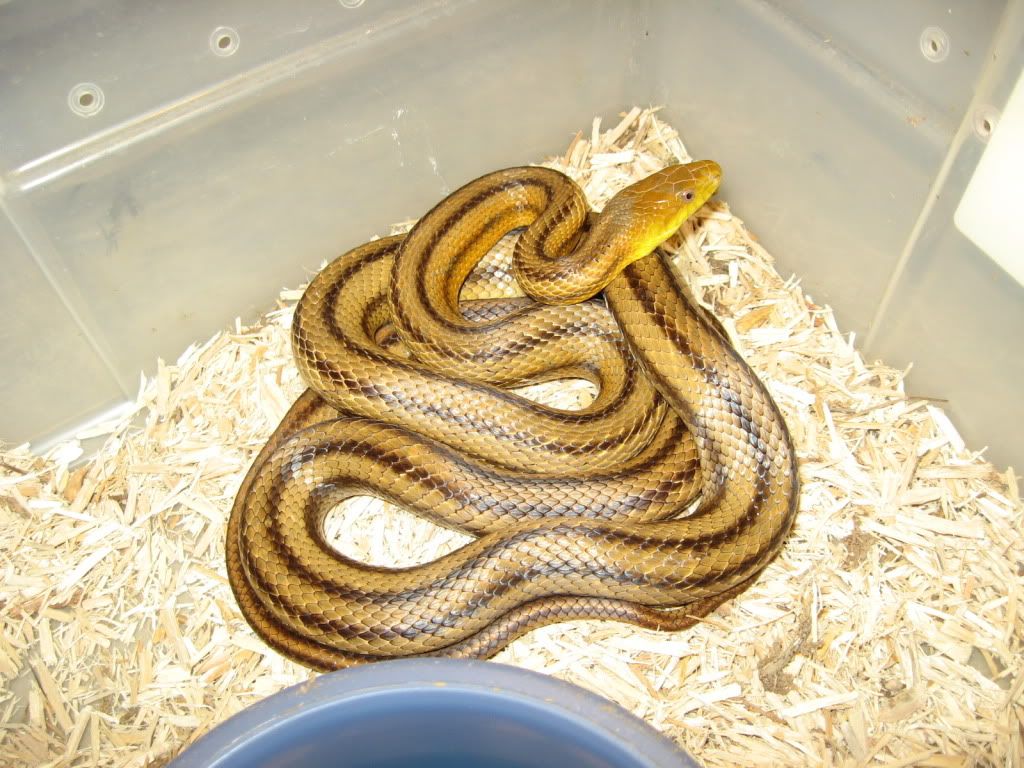
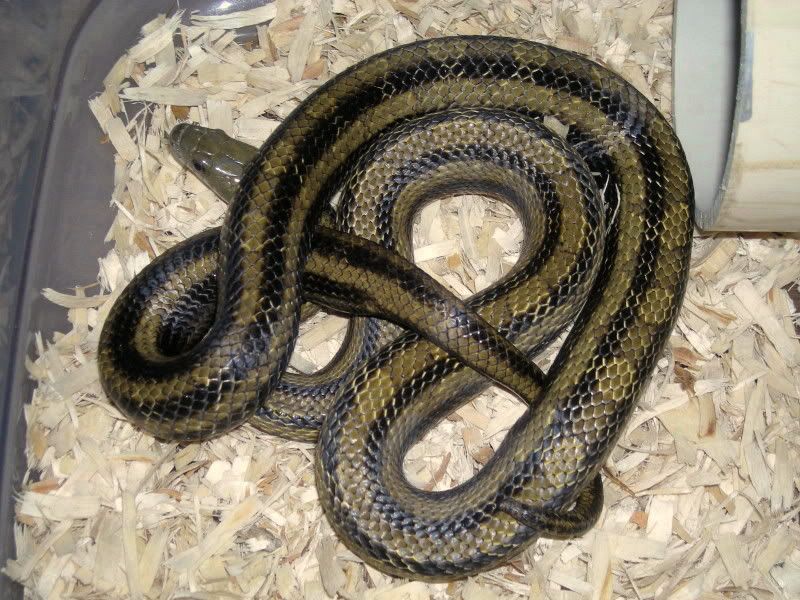
This one is horrible as far as color accuracy, but shows of those nice dark stripes pretty well.

Replies (8)

DMong Aug 06, 2012 11:01 AM

Very nice Gulf Hammock Kevin. Was that one you acquired from Parker?

Sweet "greenish" rats too. Are those het "moonshine" by any chance, or normal wild individuals?

~Doug

One of the het "moonshines" (old pic)

One of the morphs (old pic)


-----
"a snake in the grass is a GOOD thing"

serpentinespecialties.webs.com

Kevin Saunders Aug 07, 2012 07:34 AM

Nice ones Doug. The Gulf Hammock is from Steve G. on this forum and the greenish is from someone at a local herp show who claims to have 2 breeders that look nicer than the average intergrades. So far this girl is living up to expectations in my eyes.

DMong Aug 07, 2012 11:37 PM

Thanks Kevin! Yes, I certainly agree the ones you acquired are very nicely colored..

~Doug
-----
"a snake in the grass is a GOOD thing"

serpentinespecialties.webs.com

elaphefan Aug 09, 2012 03:50 PM

Great photos and nice looking animals.

As far as their being intergrades, if you suscribe to the name Pantherophis alleghaniensis, then the greenis rats aren't intergrades. I also don't know about the Gulf hammocks being true intergrades either. Do you really find yellow rats in that area, or just gray's and gulf hammocks?

Since none of us are analizing their mtDNA, we will never know for sure.

What ever the case may be, they are splendid looking animals. I have a golf hammock myself, so I only put this out for thought and not as a slight against your reasoning.

What I tell people is that I like what nature cooks up. Thanks for posting the photos.

Kevin Saunders Aug 10, 2012 12:43 PM

I personally put very little stock in Burbrink's reclassification of North American rats. It seems greenish rats have been accepted as intergrades for a long time, but some still seem to look at Gulf Hammocks as possibly something more, though I don't recall anyone still clinging to E. o. williamsi as a valid subspecies. My understanding was that this form was always thought to be a relict intergrade between yellows and grays if not a current mixing zone.

I don't have experience with any of them in the field except for black rats, so I can't weigh in with much authority. I think I recall Jim Godfrey stating that the area where he found the original moonshine only has greenish rats, no phenotypical blacks or yellows. I don't know if that holds true throughout a large area or if it applies to the Gulf Hammock region as well though. Most people I've talked to consider them to be intergrades though, so I just lumped them in for convenience. On a sidenote, I'm heading down to SC for a few days this weekend and hope to see a rat snake or two along the way.

DMong Aug 10, 2012 03:25 PM

That's right. Jim Godfrey told me very specifically that in his immediate general area he hasn't seen a Black OR Yellow Rat personally in at least 20 years, and he has seen and captured COUNTLESS natural intergrade "greenish" rats there over the years. To the west from there are Black phenotypes, and to the south and southeast there are more Yellow phenotypes, even though many range maps have them depicted going up all the way into extreme North Carolina where it just meets Virginia. I am betting "Yellows" do get up into there, but I am also pretty sure these would all be very dark examples that are being called Yellow Rats from their Black rat influence. I guarantee they don't look like these two Yellows I have captured here on the coast of central and southeastern Florida a couple years ago..

Male (Brevard County)

female (Brevard County)

Here are pics of two wild-caught "greenish" females that Jim personally captured there and photographed that were bred to his original male moonshine morph. I will kiss anyone's arse if these are Yellow Rats OR Black Rats..LOL!!

cheers, ~Doug
-----
"a snake in the grass is a GOOD thing"

serpentinespecialties.webs.com

Elaphefan Aug 11, 2012 05:29 PM

I live in SE Va, and have been down in NE NC and I ave never seen nor heard of anyone seeing a Yellow Rat Snake. I have seen refferences to a Black Rat with stripes found on the Outter Banks, but I have also not seen one.
I do have a question about Greenish Rats. If you cross two Greenish Rats, do they breed true? Are 100% of the offspring greenish in coloring?

DMong Aug 11, 2012 09:31 PM

" If you cross two Greenish Rats, do they breed true? Are 100% of the offspring greenish in coloring?"

Well, I think this would depend on where the two parents came from in their natural overlap range. Some would naturally vary from individual to individual just like any type of snake would in their natural range, but I seriously doubt any would ever look like either textbook Black or Yellow parent like if you tossed two textbook examples of Black and Yellow Rats together in a captive-produced project in an F-1 generation and so on. If some were bred from the very fringes of an intergrade zone where you tended to find Yellows, Blacks, and intermediate phenotypes it could be very different story though.

The animals in Jim's immediate area seem to prove this as well along with what he has produced. My locality-specific normal het "moonshine" pair I got from him vary slightly, but both still look like perfect intergrade "greenish" phenotypes through and through.One is a tad grayer, and the other is a bit greener, but both are still very green with the typical patterning of both subspecies they are derived from.

~Doug
-----
"a snake in the grass is a GOOD thing"

serpentinespecialties.webs.com

Site Tools