Reptile & Amphibian Forums

Welcome to kingsnake.com's message board system. Here you may share and discuss information with others about your favorite reptile and amphibian related topics such as care and feeding, caging requirements, permits and licenses, and more. Launched in 1997, the kingsnake.com message board system is one of the oldest and largest systems on the internet.

Click for 65% off Shipping with Reptiles 2 You
Click for ZooMed
Click for 65% off Shipping with Reptiles 2 You

Anery Litter Update

BoidMorphs Oct 06, 2012 05:43 PM

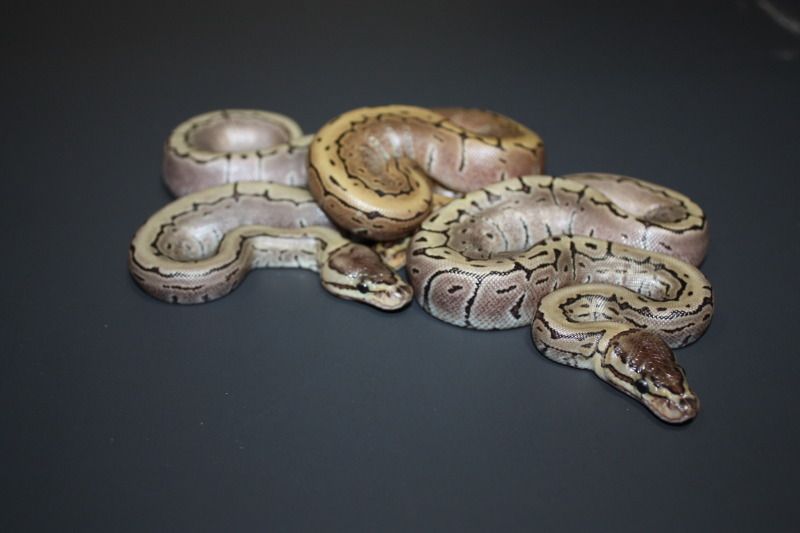
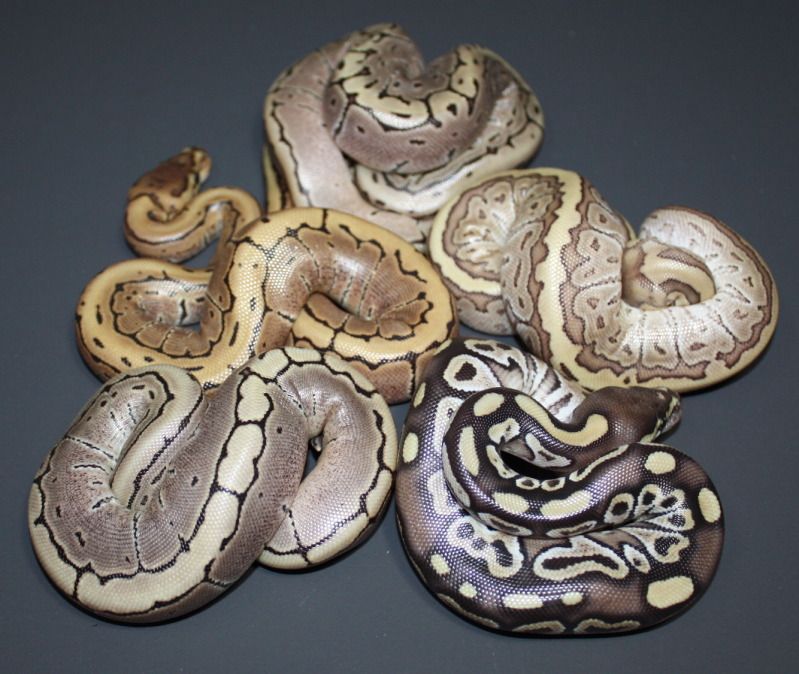
I posted a thread on 9/22 entitled "Today's Litter, Anery?" and snapped a few post shed pics of the babies today. There are definitely three anerys, a few babies that look exactly like their father did early on, as well as a few normals. The pic with two babies is an anery with normal. The pic with three babies shows these same two babies along with one that resembles their dad at this age. I'm not sure whether or not these "intermediate" looking animals are not just a different look of anery. At a minimum, the dad must be het anery, but I've always felt he may be a new pastel looking type of anery if you will, that doesn't resemble the silver/black anerys as we know them. More breeding trials with other morphs and time will tell!

Replies (11)

BoidMorphs Oct 07, 2012 11:32 AM

Over three months ago, I posted a current pic of the father of this litter, as well as his baby pic post shed. Here they are again for comparison with the pic posted above of where his "intermediate" form is present in this litter. I'm hoping this may be the future of anerys to come. In looking at a picture of Mike Lockwood's ghost after two years, I see a LOT of yellow present. Maybe the high yellow animal that Tim Frazier had, which my line originated from, may very well have been the first ghost Brazilian, whatever the source? If nobody had ever seen one before as an adult, how would it have recognized as such at the time? Tim told me he had never seen anything like that animal before....possibly for good reason.
I now have anerys present in my collection, but no hypos, so that is an argument against this theory. But what if Tim's animal was a combination of anery coupled with a "pastel" gene or?
There's obviously something genetic going on here and I'm the first to admit, I'm not exactly what it is. It could be as simple as the original pair of animal's I obtained from Tim Frazier are het anery. If they are, he has no knowledge of it. It still doesn't explain what the pastel looking "intermediate" form is. The father of this latest litter was the one and only animal like this produced in the original litter. There were several more produced in the second litter of the same pairing. Now, with this litter, that first pastel looking male put back with his mom produced three anerys and several babies that look exactly like him. Are these unusual looking animals just normal variations within a litter? I honestly don't think so.
So where do I go from here to prove out the genetics? I'd like to take the quickest and most scientific approach possible. I could introduce the hypo gene to produce ghosts down the road, but this may only complicate things by introducing another gene into the mix. Any opinions and ideas on what approach you would take to investigate and prove out the genetics here are greatly appreciated! Thanks in advance.

waspinator421 Oct 07, 2012 08:16 PM

I was also amazed to see how yellow the Ghost is becoming. Almost looks Hypo now. Very well could be the case with your project. Love to see how that develops.
-----
Aubrey Ross


www.SlipstreamSerpents.com

rainbowsrus Oct 08, 2012 04:28 PM

I'm with Cliff on this one, cool stuff and very interesting but you really don't know what you have so trying to label it now is premature.

Visual dimorphism in a litter is not unheard of and by itself does not mean you have a morph going on. Look at this picture of a few babies from my 2009 Wendy x Rosco litter....

There were clearly two different looks in the litter. I kept the whole litter for several months. After they colored up the lighter ones were just normals and the brighter ones turned into very high reds.

Looking at the pics of your male I see a very nice high yellow animal. Not a hypo since the black outlines are still very dark and vivid. Also not an Anery as we are used to seeing from the Sharp line with white crescents as it matures.

Remember, "Ghost" in BRB's is the combination of two separate recessive morphs. In any Ghost litter unless both parents were ghosts there should be some qty of visual Ghosts, Hypos, Aneries and Normals.

Totally possible that any breeder, myself included could have a hidden recessive gene in their collection and not know it. Only when two animals, both of which posses the same recessive gene, are bred together will the recessive morph have a chance of showing up. So yes, Tim could have a "x" gene in his collection and not know it with you being lucky enough to acquire a pair of babies both of which posses the gene.

Where to go from here - IMO first step is to raise up the oddities and see how they turn out. Maybe over time they will turn more amazing, maybe not. In the meantime you could try to re-create the results by pairing the parents back together.

Once the odd ones are old enough to breed then you can do the various breeding trials to prove out what you have.

Again, still cool, still worth working on, just need to put in the time and breeding trials to figure it out.
-----
Thanks,

Dave Colling

www.rainbows-r-us-reptiles.com

0.1 Wife (WC and still very fiesty)
0.2 kids (CBB, a big part of our selective breeding program)

LOL, to many snakes to list, last count (02/01/2010):
42.61 BRB
27.40 BCI
And those are only the breeders

lots.lots.lots feeder mice and rats

BoidMorphs Oct 08, 2012 08:02 PM

WOW Dave! That is one intense pic and I love that bright colored animal. Yeah, as I mentioned in my response to Cliff, all I can do is wait to see what happens to this litter and do more breeding trials in the future. Thanks for both of your responses.

rascal_rascal_99 Oct 08, 2012 09:55 PM

First off, congrats again on the litter and hitting on the anery gene! That adult is a beautiful animal too!

For what to do next, obviously where you decide to go is your choice, whatever you decide to do it's definitely going to be a long time coming to really prove out what is what here. Personally, I still think proving it against at least the most common line out there would be a good idea and important. The ball python world is a mess in a bunch of different places because of people finding something, screaming new morph, naming it their own and putting it out there without actually proving what it was. I think it's just as important to prove what it is, as to prove what it's not...still speaking of the bp world, there are different hypo lines which are visually identical, but not compatible for example. This has happened with other gene's that have shown up too through the years, back in the mid 90's I was shocked when I bred a pair of lavendar albino cal kings and got a whole clutch of black and yellow normal appearing babies. If I were a buyer, I'm going to want to know what line I'm getting into, how common it is, and what it is/isn't compatible with. On the flip side, there are a number of gene's out there with multiple names because of two different people getting hold of one and not taking the time to work through that it wasn't a gene that was already known. I know we're not talking bp's or cal kings, but proving out genetics is still just the same and it's not hard to look at the bp world and see what a mess things are because of people rushing to name something as their own new morph and not taking the time to be more responsible about figuring out what they have first.

I'm thrilled for you that you hit on anerys and I don't think anyone here is questioning that that's what they are now. Exciting stuff! What I do question, is what you believe may be a pastel or something else when I feel like it could be easily and more likely explained simply by natural variability. I wouldn't be surprised either if it turns out that the odd ones you're seeing are something along the lines of visual hets.

Whatever you decide to do with it, good luck and I hope you have a lot of fun out of it. I'll be looking forward to seeing how things progress and what the little ones grow into!

Charlie

BoidMorphs Oct 09, 2012 06:36 AM

Everything you say makes perfect sense and I agree that part of proving out the genetics is finding out about what this is or isn't compatible with. I also feel the odd colored animals may be visual hets. I held back one female "normal" from the first litter that will be bred with her sibling brother (father of this litter). She should be 66% PH from the original het to het breeding so this is the next thing lined up for this season.
What I'd like to emphasize is, it was not a coincidence I picked up the original pair from Tim. I bought them in the hope they would be het for the high yellow animal. My golden male looks nothing like his grandfather but an anery gene has shown up upon putting him back to his mom. I think there's something else hidden in there which I hope to hit on. That's my ultimate goal since I've not seen anything out there like Tim's original male. I'm very grateful to have this project to focus on and I hope to discover exciting things in the future! Thanks for your reply.

rainbowsrus Oct 09, 2012 10:54 AM

Hmmm, Visual hets....

I have a litter of DH Ghosts and several have a lighter appearance. Could be that some of the hets display a lighter color. But not all of them.
-----
Thanks,

Dave Colling

www.rainbows-r-us-reptiles.com

0.1 Wife (WC and still very fiesty)
0.2 kids (CBB, a big part of our selective breeding program)

LOL, to many snakes to list, last count (02/01/2010):
42.61 BRB
27.40 BCI
And those are only the breeders

lots.lots.lots feeder mice and rats

rascal_rascal_99 Oct 09, 2012 08:08 PM

I don't mean to keep pointing towards ball pythons, but the bp world is where I see the most genetic diversity and examples right now. What really made me think of this, is there is a strain of albino bp's out there, that the het's often hatch out looking absolutely black and white axanthic. It's crazy, if you google it you'll probably turn up stuff on it where people actually thought that they just got axanthics at times...they don't stay that way, often by the time they go through their first shed they've started to color up like normal, and when they do it's usually a pretty fast change. I don't know that it's trusted enough still to sell them as definite hets out of a het to het breeding, although I have seen them being marked up over the other possible hets and people told that "these are most likely going to be the hets out of the clutch". A friend of mine had this strain of albino, I'll see if I can link in some pictures late tonight when I get home from work. (btw, I'm calling it a strain for lack of a better term, it's not a different albino gene, it's the normal common one out there, just some for some reason do this).

Genetics are fun and exciting, often confusing and even leave the experts scratching their heads coming up with answers for whats going on sometimes (research banana/coral glow being sex linked sometime for some real craziness). I'm sure no expert on it by far, I have a good grasp on understanding a lot of what I think I need to know, sometimes I may not be the best at explaining things. I do know that I've seen things that make no sense sometimes, and others there's a little sense but no definite explanation for why it happens sometimes... another friend of mine hatched out a clutch of pastel yellow bellys het pied that had so much white coming up the sides of them they could have been sold as pieds...but with the only pied gene coming from one parent who was a visual, we know that they're 100% hets. Obviously the pied gene is finding a way to bleed through, how exactly or why is anyones guess.

Anyways, sorry if I rambled, but just thinking through what's going on here with this new litter, brainstorming reasons for "why" other than simply natural variability in color, it crossed my mind that there could be the anerys, normals, and then the others which could possibly be giving away that they're anery hets. It's possible anyways and it wouldn't be the first time. Maybe this actually is a new gene of anery that leans in the direction of being incomplete dominate instead of totally recessive? Or it could be natural variability in color and totally wild luck that they happened to have tied into an existing line somewhere along the way and the gene has been being passed along totally unknown until now.

Fun stuff, guess we all get to sit back and have fun watching where it goes from here!

Charlie

rascal_rascal_99 Oct 11, 2012 06:24 PM

This was a clutch produced by my friend John Woolard, it's been awhile since I'd seen these and I do have to admit that they have a little more color to them than I remembered, although I also don't know just how long from hatching these were taken, so they could have started a little more axanthic looking. They're still off colored enough that you can see the obvious difference though.

In this picture, the center one is normal colored, the other two are "expected hets"

In this one, it's the bottom left and top center that are abnormally colored what are expected to turn out to be hets.

Anyways, finally got hold of the pics that I said I'd share just to give you an example of what I was talking about. Dave I do think it's possible for some babies to be influenced by the genetics they carry and only some of them out of a litter show it, I'm pretty sure that is what happens with the splash gene in kenyan sand boas, and also in the het pied litter of bp's hatched out by a friend of mine this year...so it definitely happens in other snakes, seems logical that it would happen with with brb's also.

Charlie

BoidMorphs Oct 12, 2012 06:22 AM

No need to convince me Charlie. You're preaching to the choir lol.

BoidMorphs Oct 08, 2012 07:51 PM

I hear you Cliff. I think I may have confused everyone here. I'm sure I don't have any ghosts here, but I do feel I've 1.2 anerys present. The original animal from Tim Frazier looked like a more intense yellow version of Mike's ghost pic at 2 years old. It appears that animal had an anery gene which was passed down through my pair. If this is the case, it could be the same gene as what's already out there, or something different is all I'm saying.
I'll just have to raise these up and see what happens. I remember waiting for Tim's pair to grow up, then the lone unusual male from that pairing to do the same. Now here I am waiting on this generation from him. Long process, that's for sure.

Site Tools