Reptile & Amphibian Forums

Welcome to kingsnake.com's message board system. Here you may share and discuss information with others about your favorite reptile and amphibian related topics such as care and feeding, caging requirements, permits and licenses, and more. Launched in 1997, the kingsnake.com message board system is one of the oldest and largest systems on the internet.

Click for 65% off Shipping with Reptiles 2 You
https://www.crepnw.com/
Click here for Dragon Serpents

Venom, Fangs, and Herpetolgy...

Gregg_M_Madden Aug 11, 2013 11:31 PM

So Will,
What school are you going to in order to get your masters in herpetology? Oh wait, I know, you are not. There is no such thing as a degree in herpetology. No Uni offers a degree program in herpetology. So, what is the next line of BS you are going to hand me?

On to venomous...
Show me one bit of literature where it states that in order to be considered venomous, the snakes needs to have hollow fangs. One little sentence will do. Can you provide one link where it states that rear fanged venomous colubrids are "toxic" but not venomous? If there has been an actual classification change, we really need to know about it and we need the literature to back it up.

Now, what are fangs...
Here is the dictionary definition.

fang
1 [fang]

noun
1.
one of the long, sharp, hollow or grooved teeth of a venomous snake by which poison is injected.

2.
a canine tooth.

3.
a tooth resembling a dog's.

4.
the root of a tooth.

5.
one of the chelicerae of a spider.

Replies (25)

Gregg_M_Madden Aug 11, 2013 11:53 PM

So, lets recap.
Hognose snake have a Duvernoy's gland which is a venom producing gland. Fact...

They have a venom which has been studies already by Dr. BGF. The toxins have been identified and documented by the leading researchers in the field. Fact...

Like all venomous colubrids, the western hognose snake has fangs that are used to work the venom they have into the wound they inflict with said fangs. Fact...

Even with all of this factual information, some of you still choose to ignore what is actually documented. So, instead of coming to terms with the fact that Heterodon nasicus is indeed a rear fanged, venomous colubrid, one or two of you choose to make up a new classification and call it "toxic"? WTH??? My mind is seriously blown by the thought process behind it. I really can not figure this out. Oh wait, I have figured it out. It is all about politics. But not government politics. It is your own political agenda. Your agenda is to protect you ability to keep, breed, and sell hognose snakes. So instead of sharing factual information, you downplay the facts to fit what you want with no interest in providing good, solid information.

Gregg_M_Madden Aug 12, 2013 12:57 AM

First you say this. Quoting you in red...

Now if you look at a boomslang (which I think you brought up in another post comparing the hog to the boomslang) which is truely a rear fanged venomous, the delivery system is the same as with all front fanged vipers. Through hollow fangs...Why do you think a boomslang bite is considered so serious? Not only because of the level of toxicity, but because of the delivery system.

Then you say this again, in red...

I know no colubrid has hollow fangs. The debate is all in the delivery system.

A bit inconsistent, no?

So which is it Will? Boomslangs are a rear fanged colubrid, correct? Yes, that is correct. They are indeed a rear fanged venomous colubrid.

You so boldly stated that boomslangs are a "true rear fanged venomous" and have hollow fangs and then go on to say that you know that no colubrids have hollow fangs. So, are you now going to reclassify boomslangs and take them out of the colubrid family because you just feel like it? Keep in mind that boomslangs are not the only medically significant rear fanged colubrid. There are at least a couple of dozen species.

wohlerswi Aug 12, 2013 10:02 AM

In response to this, I was recanting my statement about hollow fangs in boomslangs. I was simply addmitting that I do not know every animal on a species basis, and it was a good example with nonfactual information. My second statement was a simple admission of that. People are wrong sometimes no matter their level of education. Hognose are still simply toxic.
Will

Gregg_M_Madden Aug 12, 2013 05:03 PM

Will writes....

In response to this, I was recanting my statement about hollow fangs in boomslangs. I was simply addmitting that I do not know every animal on a species basis, and it was a good example with nonfactual information. My second statement was a simple admission of that. People are wrong sometimes no matter their level of education.

But you were so certain in your information and you presented it as fact in some lame attempt to prove me wrong. Why not do your research first before you blurt out incorrect information?

Hognose are still simply toxic.

Again, this is a broad brush stroke. Lets say for argument sake you are correct. Lets look at the definition of "toxic".

From the American science dictionary.

toxic (tksk)

1. Relating to or caused by a toxin.

2. Capable of causing injury or death, especially by chemical means; poisonous.

And again, you keep saying that hogs are not venomous, but instead toxic. Can you post literature that clearly states this? Troy and myself have offered numerous links and literature to prove that they are indeed venomous. Some of you are trying to dispute it but can not come up with a single thing other than your opinion based on your own agenda.

FR Aug 12, 2013 06:29 PM

Its simply a word, and it does not change the fact there is no or a poor delivery method. Its not injected.

has anyone become seriously sick from a hog bite? I mean, troys hand is no thing. Sorry, it is no thing.

Besides, many of Troys post are venomous to me. hahahahahahahahahahahahaha Look, I switched it up

Gregg_M_Madden Aug 13, 2013 12:40 AM

Frank,
Troys posts are not venomous to you. They are just simply toxic. LOL.

Anyway, nowhere, in scientific literature, does it state that venom needs to be injected through hollow fangs or otherwise.

Also, snakes are not classified as venomous, toxic, and nonvenomous. They are either venomous or nonvenomous. With that being said, venomous snakes are indeed toxic. Toxic because they are venomous.

wohlerswi Aug 13, 2013 08:10 AM

Gregg you are starting to get it. Its just a word, and yes in the zoological field you are taught that venom has to be injected. When I get a chance I will hunt down some information for you.

Fact is, its only a word. If you dont like the word, okay thats your prerogative. I have no ill agenda in trying to keep hogs listed as toxic as opposed to venomous. I keep and breed a lot of different species of snake, and I do see merit in letting customers know the potential hazards of any animal I sell. I was simply stating by zoological defination they arnt technically venomous. That opened a whole 'nother can of worms.

Like I said before all venoms are toxins, but not all toxins are venom. Just think about that statement objectively for a moment.

Gregg I think you will find we agree on more than you believe. You are simply getting upset with me because I made a statement you do not agree with. I dont agree with the way you come off on the forums sometimes, but do I flame you, or find personal issue with you? No, not at all. I would still have a beer with you and welcome friendly debates if you came to town. Hell I would still do business with you. Thats because I realize everyone is different, as well as everyone's approach to the same outcome is different. I for one am glad Troy posted what he did. It gives us another clear account of what the potential dangers are in keeping hogs.

But plain and simple hogs are still toxic

Will

FR Aug 13, 2013 09:39 AM

You get one and you want more and more and more, its a disease, and toxic disease. Have a great day

Gregg_M_Madden Aug 13, 2013 11:53 AM

They are technically venomous. Venom does not need to be injected through hollow fangs. It needs to enter the blood stream through a bite or sting.

Do you consider heloderma to be venomous?
Do you still consider boomslangs to be venomous?
What about a platypus?
How about moles, shrews, and solenodon?

Lets look at the definition of the word venomous.

ven·om·ous
adj \ˈven-ə-məs\

Definition of VENOMOUS
1

: poisonous

2

: having a venom-producing gland and able to inflict a poisoned wound.

FR Aug 13, 2013 08:16 AM

Gregg, I agree with you here. As I have said, ITs not about those words. As they all can be used, its about whether they should be used.

My stance is, and I am sticking to it(hahahahaha) Hognose and other colubrids, were considered harmless before Dr.GBF came along and they have not changed.

As I mentioned on my first post, Deleterious bites can and DO occur with any and all harmless snakes.

Localizied swelling such as what Troy had, can be caused by a minor allergic reaction, or more likely by a gram-negative bacteria.

Sadly, the reality is, wild healthy snakes, rarely if ever carry gram-negative bacteria. But almost all captives do.

I also agree with Will, not on terminology, but that its likely that some yahoo lawyer or politician can grab on to words like venomous and run with it.

The reality is, there are too many underhanded ways to pass legislation, and its much harder to get it out, once its in.

Like the Texas road hunting law. It failed on its own, so they simply attached it to a popular bill and it passed.

ALso its true, I do not link to confirm anything I say. If I hadn't seen it, or have seen it and reported it, that's exactly what I am saying. If I have nothing to contributed, I will luck and read.

Published literature, does not have to be right and in many cases its simply poor. In most cases its not about how good the author is or nice or smart. The study methods for reptiles sucks period. That is changing, but has not changed yet. ALso herp biology is based on many areas that are assumptions, things arbitrarily accepted and never challenged.

FR Aug 13, 2013 08:23 AM

As you know, I challenged those assumptions and proved them wrong with varanids. What most do not understand is the methods I used with varanids were developed and perfected with snakes.

About herp degrees, your both right again, The degrees are normally in some area of biology, including evolutionary bio. with an emphasis on herp. But you graduate as a herpetologist.

Back to the subject, toxic, venomous etc. The error here is one of those biology assumptions I mentioned. The error is, no snake is actually harmless. with the exception of such species as blindsnakes, or others so small that even eating them is ok.

I did mention that early on. The word harmless is what should be questioned.

Last night herping was not so good, Three adult tiger rattlesnakes, two longnose, and one rear fanged venomous snake, a spotted night, which venom much more toxic then a hognose.(did you like this sentence? it included both venomous and toxic)

Thank you guys for this thread, its something this forum needs. And that is more true then most of what was written. Best wishes

caracal Aug 12, 2013 01:20 AM

"Oh wait, I have figured it out. It is all about politics. But not government politics. It is your own political agenda. Your agenda is to protect you ability to keep, breed, and sell hognose snakes."

First of all, as I said earlier I'll go along with the accepted label of rear-fanged venomous - you seem to making this whole thread about that one bone of contention,(maybe that's the most convenient way for you to fight against other peoples' points of view, by ignoring anything else they have to say).
But with regards to the original sentiment and concern expressed by several people including myself, you're damned right, I believe we should exercise discretion to protect our ability to keep, breed, and sell hognose snakes.
Every link you brought says that the venom of hognoses is "medically insignificant" and that they make wonderful pets, so I can sleep peacefully with my stance.

Gregg_M_Madden Aug 12, 2013 07:20 AM

Jonny,
I only address what is important to the conversation Jonny. Plus there is a limit on how much we can type per post.

The point being, this conversation was never about the potency of their venom. Obviously it is enough to swell a hand but not enough to land you in the ER.

Jonny,
As far as keeping quiet about the facts goes, that will do us more harm than good. Way more harm than a puffy hand can do.

Lance,
Good for you for diving into this subject and putting things together for yourself. That is what you are supposed to do. I am sure once you have been presented with more facts, you will know for sure they are venomous and not just "toxic". LOL.

One thing that puts me off is the word hemotoxic. Again, it is a broad bush stroke and does not point to anything specific. It certainly may have some hemotoxic properties. but what are the specifics? That is where Dr. BGF came in and got much more specific. So, which do I go with? Someone who is making a good educated guess, or someone who actually did the study and has a specific answer? I think the choice is easy on that.

One thing you need to look at with information is how long ago it was stated and if the person or doctor stating it has actual studies or is just taking an educational guess.

FR Aug 12, 2013 08:45 AM

Lets talk about rear facnged venomous, lyre snakes,

They too are rearfanged venomous colubrids(?)(for the moment)

Its well known, that Lyresnakes kill or immobilize prey with their venom, Is that true, Is there any evidence that occurs with hognose?

For the moment lets say, there is no proof or evidence that suggests that occurs. Ok, so what is this venom and delivery system for. Consider, in order to call it something, it has to actually do something.

What does it do, There are many rear fanged snakes like tantilla(blackheaded snakes) Spotted night snakes, who's venom knows the holy crap out of lizards. And causes severe tissue damage in lizards. What does hognose venom do?????? Please, not fighting, I am serious.

So far in my work, I see no use for that, other then to aid in digestion. Which is what all venom does and saliva does.

So, venomous snakes commonly use their venom to secure prey, as a defense and to aid in digestion. Hognose do not use this system as a defense, or to secure prey, so its left to do what spit does in the rest of the animals, to begin breaking down tissue for digestion. Your spit is for sugars and carbs, snakes are not in need of that so its evolved to break down other materials. Which is exactly what Dr.GBF is looking for, and seeking funding(grants) to look for.

FR Aug 12, 2013 09:36 AM

Part 2,
In the field, we treat hognose as if they are not venomous, dangerous or even bite at all. As do everyone I know. I say in the field, but I actually mean in a practical sense, keepers, at shows, etc. WE don't handle them like we would a Coachwhip or a tree boa, that will bite the beans out of you and cause you to bleed out. Or even a dang gardersnake who will bite the beans out of you and crap and musk you into smelling like a French brothel.

The whole point is, all colubrids can produce a dangerous or deleterious bite. The question is, do hogs increase that chance. Another good question.

Also, of the hogs I have encountered(over 100), not a single one attempted to bite. Even an occasional Rosy boa will bite you.

I think Wills point is valid, while being technically and academically labeled venomous(recently), in a practical sense, street sense, field sense, they are indeed harmless or as Dr.GBF said, medically insignificant as are gophersnakes, kingsnakes and and various other reptiles Dr.GBF has labeled as having venomous or toxic saliva. Dr. GBF also considers them harmless.

The part that's bothersome to me is, treating people as stupid. I am learning that its a point of sensitivity. As the world is doing that. Take Harley Davidson. The owners manual and repair manual, include warnings on everything, even changing the plugs, It says, use only Harley parts and Harley repair mechanics. Or you can suffer serious injury and or DEATH. Injury and death, can be had without Harley or hognose. Hognose are far less likely to injure someone then your local dairy queen. and I don't mean a cow with an alternate lifestype.

The whole world is doing that. If you have to warn folks to not stick their hands in the mouths of something with large teeth. then telling them about "possible" deleterious spit is not of much value. Sorry for the ending rant. Have a great day

Gregg_M_Madden Aug 12, 2013 05:13 PM

Can you link me to something that says hogs do not use their venom to subdue their prey? I have seen them use it first hand on live pinkies.

FR Aug 12, 2013 05:38 PM

I am sorry Gregg, I am not into linking on forums like this, I believe if we have people with experience, I would rather here it from them, and you, like you just did.

personally, I have not seen it. Mine hogs, past and present, simply wolf down their prey and in any direction.

I have seen grasp hold and sudue, with many species such as lyresnakes and spotted nights. Holding and chewing then waiting until the prey is dead or paralyzed. When spotted nights grab geckos, you can see the tissue destruction occur.

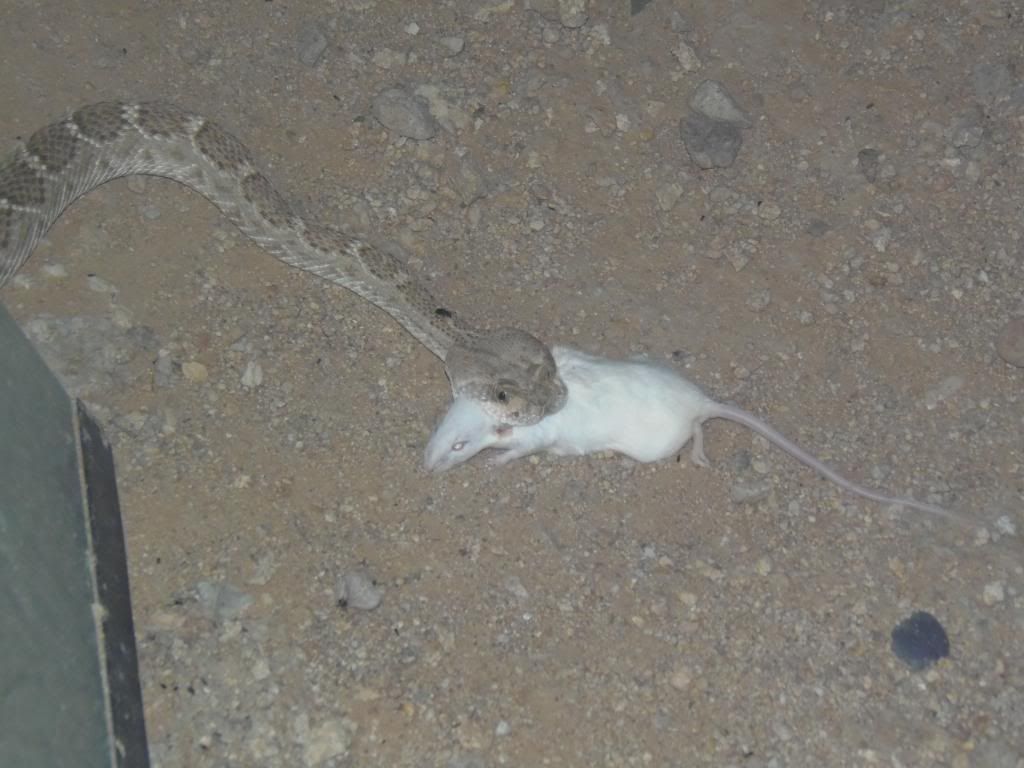
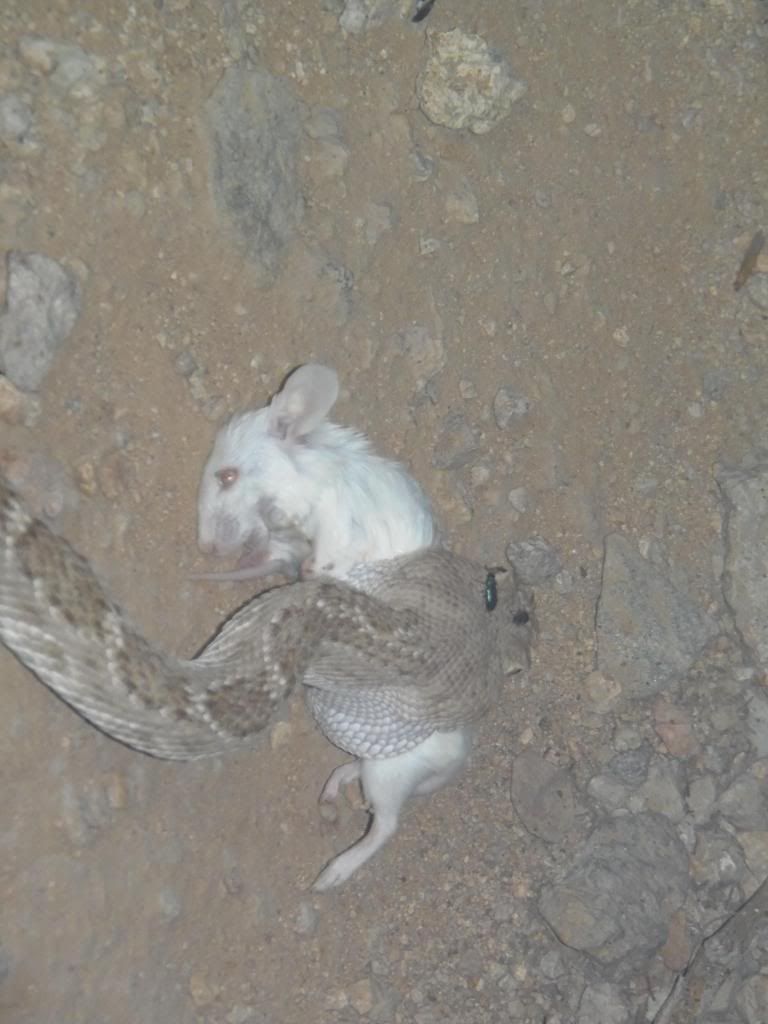
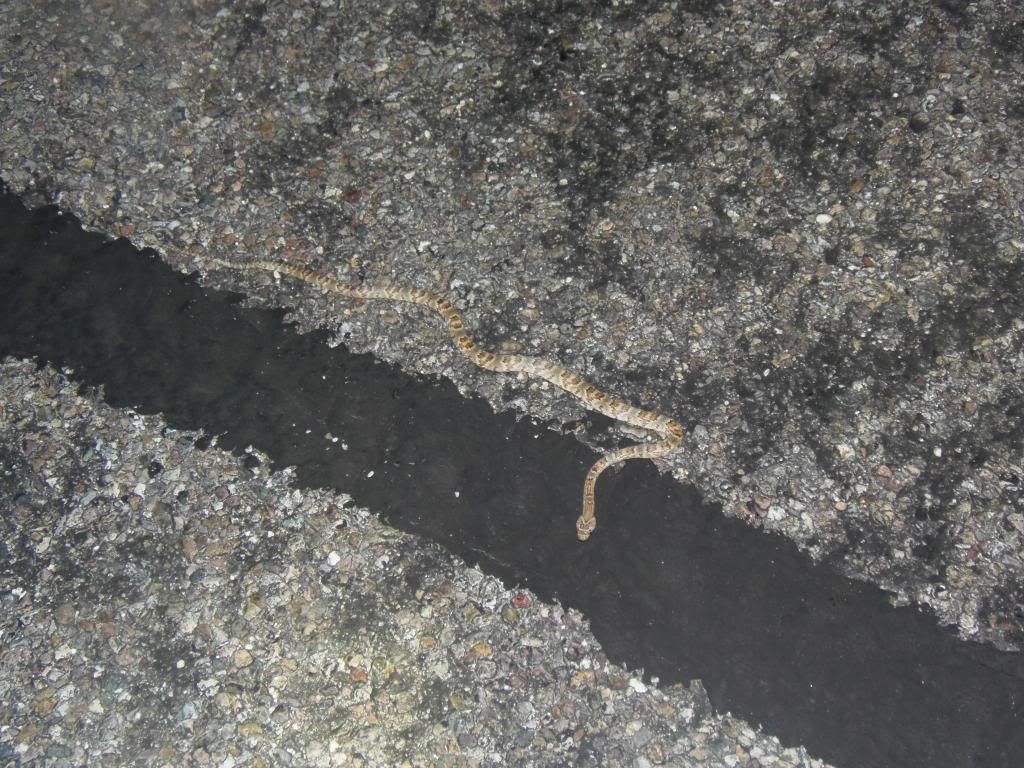
Here's a pic from last night, its my girl that grew up here, she is wild free ranging and comes to feed in a certain spot. She has done that for about 6 years. Started as a youngster, She feeds a little in the spring, then comes back as soon as she drops her babies. Which she appears to have done. Also, I am sure she feeds elsewhere. Shes doing the grasp and subdue

She either bites releases then finds the prey, or bites and holds on until the prey dies. Normally she releases the first mouse or two, and holds on to the last ones.

If you could describe what you have seen, I surely will keep it in mind and see if I can duplicate it here.

Lastly, I am not sure a tiny forum like this should speak for the world. I have a feeling, the experience here could be very compelling.

about other information, even Dr. GBF's, the information, is often out of context to the use intended. Which again causes confusion. I would rather stick to useful stuff. Thanks

caracal Aug 12, 2013 08:56 AM

"I only address what is important to the conversation"

That was exactly my point!!
You are determining what you perceive to be important to the conversation and ignoring what the other person has to say - in other words a monologue, not a dialogue.

"this conversation was never about the potency of their venom"

I beg to differ - if you are going to imply that it is "irresponsible" to not inform people that they are venomous, then the venom's potency (or lack of) is very much the point.

"As far as keeping quiet about the facts goes, that will do us more harm than good"

I don't agree - I'm quite happy that Florida doesn't categorize hogs as venomous with regards to licensing, and keeping quiet about it suits me fine.

You seem to be only looking at this thread in very black and white terms, and as a result haven't allowed yourself to hear other points of view. "keeping quiet" doesn't mean lying or deceiving or not ever discussing it with potential customers - many of us just feel discretion is called for when posting online. That is a very reasonable position, but you seem to be overreacting to it and responding quite aggressively.

Anyway I'm done - at this point I'll just agree to disagree.
I'll just say one more thing:
If you find yourself saying "maybe this will come off as rude...." or "maybe I sound like a condescending jerk...."
- a piece of advice - take a deep breath and rewrite it in a way that doesn't.
I have deleted many sentences or posts because I was letting my ego and emotions influence my writing - though not always

Peace

Lance86 Aug 12, 2013 01:50 AM

Why does this come up when i am reading about this subject one expert no sorry Doctor says one thing and another says this also a Doctor in the field of venom research?! I really want this chapter to be over in my Herper brain i keep reading evidence to suggest things like the Duvernoy's secretions Gland,If you are allergic to a protein made in that gland then boom you get a fat hand and if not lucky you, Is Dr. Stephen Mackessy at University of Northern Colorado wrong about it being a hemotoxin Gregg?You need to inform him, If hes wrong! Heres the docs email stephen.mackessy@unco.edu, I sent him a mail with a link to the forum but something tells me when he reads everything hes going to stay out of this arguement but dam it i want to know 100%! not 80%,This is a cut out from another source:

Hognose snakes have enlarged rear maxillary teeth and some believe they may use this feature to deflate toads which may puff themselves up with air to unswallowable proportions. The teeth are more likely used to assist in the introduction of saliva into prey, however. I mentioned earlier these snakes were non venomous, but there is some evidence that they may be mildly venomous. Although hognoses have fangs, they apparently have no ducts or grooves through which venom could be administered. They also have no venom glands but two species, the western H. nasicus and southern hognose snakes, H. simus, contain parotid glands. This appears irrelevant, however, as many cases of envenomation have been caused by the eastern hognose H. platyrhinos which lacks the parotid glands. Due to studies,it is thought that the venom is hemotoxic. It is not known whether it is an actual venom that is produced or reactions due to saliva or bacteria. These snakes can hardly be induced to bite, even in the wild, and therefore cases are rare. There are more cases involving H. platyrhinos so please refer to the account on Heterodon platyrhinos, the eastern hognose snake.qoute from http://www.herpnet.net

wohlerswi Aug 12, 2013 10:00 AM

Is that what google told you? lmao. Ill say it one more time since you cant read. I already have a bachelors in bio. Used that to join the University of Michigan's ms biology program with an emphasis in herpetology. Is that simply enough for you to understand?
Will

Gregg_M_Madden Aug 12, 2013 04:39 PM

So. again, you made an incorrect, statement in order to mislead people. See, most people do not know that you can not get a degree in herpetology and that is what you were banking on. An emphasis in herpetology does not equate to a degree in herpetology yet you said numerous times that you were going for your degree in herpetology. Not that it matters. Just pointing out your misleading ways.

And no, my knowledge that there are no degree programs for herpetology has nothing to do with google. It has to do with me actually looking into universities for herpetology courses including Michigan State University.

FR Aug 12, 2013 06:00 PM

This is getting silly, I do not think hes was attempting to mislead anyone. As I mentioned, many of my friends have degrees and studied under well known herpetologist, like D.Cruz and James Dixon and the late Dr. Lowe(founder of the Mexican blacking.

ALso will did say some things that were not true, but they were not what was important. He like me, often says to much. He actually didn't need to say anything about boomslang fangs to make his point.

And hes absolutely right about the poison, venom, toxin approach. Or at least hes right about that being taught, as that is what I was taught as well.

I know what I will do, I will go and pick up all my hognose and not stop them from biting me. Oh wait I did that today and day before yesterday etc. Sorry being a smartarse, but its true. Just pick them up. I also do that with lyresnakes. observed and picked up a handful the other night, and will again tonight, have pics too.

wohlerswi Aug 13, 2013 08:25 AM

Yes Frank when I feel passionate about something I often cannot shut my mouth lol.

You are correct. I didnt try to mislead anyone. When I graduate with my emphasis in herpetology, I would consider myself a herpetologist, with a degree in herpetology. I already have a degree in biology, I am going back specifically for the herpetology part of the masters program.

The reason I said a degree in herpetology is because its a whole lot easier to type, then having to explain there is no direct herpetology degree, you have to have it as a emphasis on your major. All that is unimportant to what we were talking about. You attempted to trash me and my degrees, and I was simply stating my credentials in order to show some merit in what I speak of. not to try and rub them in anyones face or give myself a pat on the back. Thats it.

Oh yeah, and Gregg, hognose are still toxic

Now can we all just get along since we all have the same dog in this fight? Instead of being counterproductive and fighting each other, we need to stand together and fight the potential legislation this hobby will continue to see in the future. Gregg I can see you are well spoken, and see to have intelligence about you. I have seen you make incorrect statements before. We both know the potential harm in this. That is why as a man, and a scientist I recognize that I made an incorrect statement and recanted it. Are we jumping on people now for making incorrect statements, as well as recanting them? If I meant to mislead anyone, would I have been so quick to admit fault?

Will

Will

FR Aug 13, 2013 09:19 AM

You made another mistake, I FR, did not attack you for your degrees, In fact, I explained how many of my peers and partners have degrees and are herpetologist. And like you consider their degrees in herpetology. I did ask you what field work you were doing.

I also agreed with your actual point, of some folks using this new current terminology in a negative way.

As a field herper, I do not take or worry about exact meanings, as most have nothing to do with the actual animals.

common words such as nocturnal,

noc·tur·nal
[nok-tur-nl]

adjective
1.
of or pertaining to the night (opposed to diurnal ).

2.
done, occurring, or coming at night: nocturnal visit.

3.
active at night (opposed to diurnal ): nocturnal animals.

4.
opening by night and closing by day, as certain flowers (opposed to diurnal

crepuscular(Crepuscular animals are those that are active primarily during twilight, that is during dawn and dusk.)
And diurnal, these terms are misleading and all lump into one area, TEMPERATURE PEMITTING.

Of the NOCTURNAL species we study, they are primarily active in the day, moving, hunting, breeding etc, in the day, and only moving from site to site(in the open) at night when its cool. Same for crepuscular.

These are just two things that are taught in error and there are many more. Even how they see is totally misleading in literature. Cheers

wohlerswi Aug 13, 2013 09:40 AM

I wasnt referring to you attacking me at all. That all was meant towards Gregg. We are good buddy lol. I know exactly what you are saying.

Currently my field work is with peregrine falcons. They nest on one particular bald faced mountain we have here in western nc. They only nest there, to their own demise actually. This is one of the heaviest climbed areas in our state, and the mountain climbers seriously interfere with them. Last nesting season we found many abandoned and aborted chicks. We are doing work in making false nesting sites in more remote areas, and attempting to relocate some birds (which is an extremely difficult task, birds hardly want to stay where you want them to lol) to track the possible success or failure with this in the future. We are also trying to figure out why they only nest there, as opposed to what seems like other perfectly suitable habitat. We did manage to lobby the local governing bodies, and convince them to close the mountain to climbers, and actually get fish and game to enforce it, during the nesting season. So far this has been our greatest accomplishment unfortunately.

Most of my work here in North Carolina before was with Timber Rattlers, and I still help some in that study, but for the most part Im helping birds for the moment.

Will

Site Tools