Why are female western hognoses so much larger than males? I think western hogs (not sure about easterns or southerns)have the greatest difference in size between sexes of any North American colubrid. At least that I can think of. Ratsnakes, kingsnakes, bullsnakes show a little difference, but nothing like western hogs. Indigo boys are larger, but they combat. I checked out some of this forums pictures on breeding pair and it is so obvious the girls are much bigger. I do not think you see the difference with other species in nasicus's range, do you?
Reptile & Amphibian Forums
Welcome to kingsnake.com's message board system. Here you may share and discuss information with others about your favorite reptile and amphibian related topics such as care and feeding, caging requirements, permits and licenses, and more. Launched in 1997, the kingsnake.com message board system is one of the oldest and largest systems on the internet.


Why are the girls so much bigger?
tbrophy
Apr 04, 2014 09:35 AM
Replies (24)
DanKrull
Apr 04, 2014 11:11 AM
This is a very complex and interesting evolutionary concept. The size of an animal is being pulled in many directions at once by many positive and negative selection pressures. These pressures literally hone in on the perfect size range for an adult. Since males and females have different pressures being applied, there is a chance that their sizes might differ. If that seems confusing, it's because it is.
For example: If you have an adult turtle, let's say, living in a salt marsh... There is a biologically ideal size for that turtle given its environment. This size will allow it to evade predators, eat the foods it's supposed to eat, thermoregulate effectively, etc. etc.
Let's say that size is 4 inches carapace length for argument's sake. At four inches, a turtle is perfectly adapted to its environment.
OK, that in mind... Imagine a 4 inch female and a 4 inch male. The female will have different pressures put on her because of the fact that she must carry eggs. A smaller shell means smaller and fewer eggs. While 4 inches might be the biologically ideal length for the turtle, 12 inches, let's say, might be the biologically ideal size for holding the maximum amount of properly sized eggs. This is KEY. If the eggs are small, she may be able to lay more of them, but the babies may hatch too small to avoid predation, or to effectively eat available foods. If she lays fewer large eggs, there may not be enough babies born to survive to breeding age. So a females size, is constantly being pulled by these factors. Her shell must be large enough to hold the maximum amount of appropriately sized eggs, but not so large that it causes her to outgrow her biological niche.
Hogs are, clearly, the same way. They are not alone. There are size differences in many snakes from burmese pythons to garters snakes. As you mentioned in your comments, there are also males which are larger. This could be because of many factors. Combat is a good guess, but also consider cannibalism. Kingsnake males are similar in size to their ladies, or larger in my experience. If they weren't, they would probably get eaten.  However, it could also be that the female is being limited for reproductive reasons. (It works in reverse too) maybe the ideal reproductive size for some species is smaller than the ideal adaptive size. Ya know?
I hope that wasn't too confusing.
Dan
Available Hogs
tbrophy
Apr 04, 2014 11:40 AM
Which sex of western hogs is most commonly seen above ground in the field? Do eastern hogs exhibit the extreme difference?
DanKrull
Apr 04, 2014 12:02 PM
I don't have enough data to give a clear answer on those topics. There is an extreme size difference in southerns from what I have seen in captivity. And the largest eastern male I have seen was about 300 grams. (Tiny compared with the giant females out there) I'm sorry, I can't answer this question with any certainty because of my lack of data/experience. You might try researching mark and re-capture data from published works. You want a source or sources who have processed dozens, even hundreds of specimens before you will get a good idea. Let me know what you find out!
Dan
OrangeHeterodon
Apr 04, 2014 06:20 PM
I know FR does a lot of field studies on Western Hognose Snakes, so he could at least tell you what he has seen at his study sits above ground in regards to female to male ratios.
As far as the easterns they are the ones with a huge array of naturally occurring colors and color-combos. Ones I have seen have been black, grey, brown, orange, and yellow. I have also seen pictures of orange-red and red individuals. The solid red ones, every time the location is listed, tend to be further west in the range of eastern hognoses. As far as the colors I have seen they can be varying tones and combinations of those colors. The grey ones are patterned like pygmy rattlesnakes. The most common color-combos I see are grey with orange neck, and orange with yellow neck. As far as what causes the colors I do not know as an acquaintance of mine raised a puke-yellow colored individual that he purchased where both parents were a dark-black "melanistic" color.
As far as size rations go of southerns and easterns I have not done enough research on them (or even found a southern in a few years) to be able to give you anything more than in general, females appear that they are larger than males, in similar size ratios to westerns.
FR
Apr 05, 2014 09:30 AM
Thanks for the great question. And yes, I an doing field work with Mexican hogs. Also, I have a friend(state herp biologist) that did a can trap series and he found them very common, I will see if he made any report on size.
Sexual dimorphism such as size difference in gender is common with reptiles. Why, in a giant nutshell non answer, phenotypic pressures, or better yet, Selection pressures, which means, we don't know.
That said, I am not sure there is a size difference in maximum size. There is without question an average size disparity.
When I started my field work, a good friend told me about these hogs and went we looked, told me males are tiny compared to females. He showed me that in the field. But then, what your told or read or shown, should not influence field work. The field work will reveal what it reveals.
First, what crawls on the surface is not representative of what hogs are or do. Its only a indication of what animals move from one spot to another. On the roads, small males are most common by far at certain times of the year, other times, for instance with neonates make their move, both sexes are normal. And a few periods of time, adult females can be seen. On the road, small males are common. Please note, this is seen with many species.
In the actual field(not on roads) The results were different. That is, there were times when adult females were the most commonly seen type. At that time, they did not cross roads. Staying near their chosen areas. At this time, adult males were also found that where large and equal in size to the females. I am pretty sure if I hunted with a tractor, I would receive, a whole new data set. hahahahahahahaha which means, they LIVE underground and by number, almost never use the surface. In other words, hogs are not obligate surface baskers, or surface feeders, or surface shedders. etc. part 1
FR
Apr 05, 2014 10:10 AM
Sizes, The maximum size for both genders so far is 29 inches.(sample size=200) With the average adult female ranging from 20" to 29". Average size for adult(sexually mature) males ranges from 12" to 29"
Of note, no larger males were found on the road. And lots and lots of small to midsized males were found on the roads.
To be academic(theorize or be hypothetical) There appears to be trends. Large successful males appear to have mates and stay within small areas and down in the ground. Subordinate males(small) spend lots of time seeking a mate and man do they. therefore are often exposed to predators(us, traffic, natural predators)
In captivity, males exhibit secondary sexual characteristics as a very small size, 12". Then behaviorally, they do what all teenage boys do, spend most of their efforts attempting to get some. In my limited experience, when these males are near females, it hinders their feeding. As in, the scent of a woman.
All in all, there is no yes or no answer. As there are large males. Here is a pic of a large male. and I do not have little hands, hahahahahaha part 2
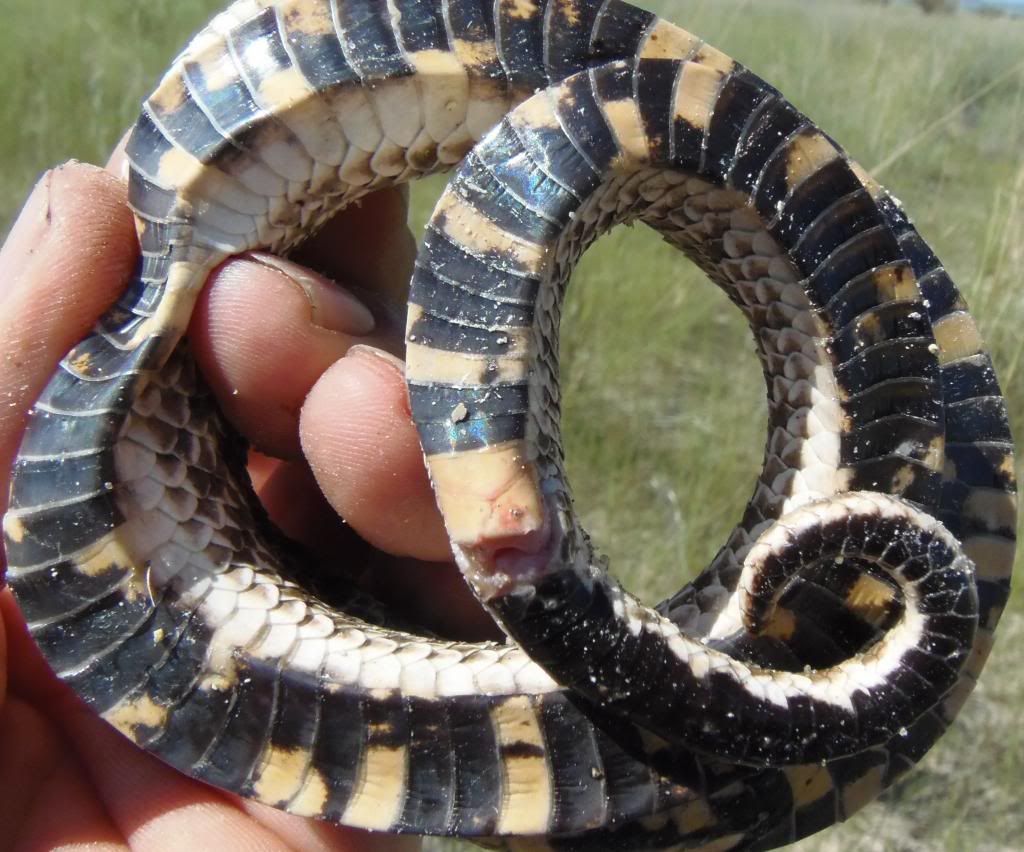
FR
Apr 05, 2014 10:34 AM
I also did some field work with Green ratsnakes. Its accepted the females are larger then males with those animals. And while true(on the roads) It too was not exactly correct.
Green rat adults, Males normally 30 inches, females from 36" to 66" inches. While most adults over 5 feet are female, I indeed recorded a number of males over 5 feet.
With C.atrox, I have been watching them for decades. Males get much larger then females. In the breeding groups(dens, congregations) females average 28 to 36 inches, males up to and slightly over 6 feet. On the roads, its so rare to find any gender over 3 feet.
Of interest, in 25 years, The large males, do not breed, with many many many events of copulation with smaller males. This is a report, not theory or being hypothetical.
What we have in the field is, prejudiced methods of collection(data) individuals crossing roads, moving on the surface a lot, may not necessarily represent an accurate picture of resident successful animals, but do represent a picture of transient individuals. Secondly, we do not have any idea of who fathered whom. Lastly the strategy of survival is complex, Whats more important, a small pair producing 5 to 8 offspring, or a large pair producing a couple clutches of 25 to 30 offspring? Please answer, thank you
DanKrull
Apr 05, 2014 04:25 PM
Where can I read your published field work, Frank?
Dan
FR
Apr 05, 2014 04:41 PM
right here, and its peer reviewed, This is a group of PEERS. And its published.
Also, a lot of my work has been published, In peer review, magazines, manuals, and books.
Why do you ask?
FR
Apr 05, 2014 07:37 PM
I don't ask you what you published, nor do I care, either way. Sir, this is a discussion board, which means to discuss these matters. Your opinion is great, how you support your opinion would be great. Etc.
In this thread, Its a question Tbrophy asked, You responded, and I responded. I respond to the best of my ability and experience on a personal level.
Both your response and mine, did not answer the question, as its pretty much common sense that selection pressures control the animal we are looking at. But that is not an answer, we do not WHAT selection pressures do what and when.
I also mentioned, that will Mexican hogs, there are large males, and I supported that with a picture from the field of a large male.
Can you add to that, or are going to continue do what ever your doing to subtract from a good thread.
For your education, no one asks, tells you, or expects you to own or believe anything you read here, or anything I say. If it helps you, then great, if not, also great. Best wishes
tbrophy
Apr 05, 2014 08:17 PM
At first blush, it seems reasonable to "assume" that the female with the largest clutch (or clutches) would have more offspring which could reach maturity, reproduce and contribute to the gene pool. Then she would be more important. But if the female with the smaller clutch has offspring that are larger, more robust, the she may prove to contribute more to the gene pool. Also, the female with the smaller clutch may be younger and have many more years to produce clutches than the "old girl" who deposits 30 eggs. I suppose a clutch of 30 eggs is much more likely to become lunch, than a clutch of just 8 eggs. Ultimately, we really cannot answer the question regarding which female is more important without knowing more about the selection pressure the population faces.
FR
Apr 06, 2014 09:04 AM
Thank you for the great reply.
I asked that question because it shows how we think, all of us. Which may hinder the reality of what is actually important.
Both are equally important. At different times or better yet under different situations. Both sizes are equal in a set environment. The smaller female produces less offspring, but takes far far less energy to reproduce. The larger female, of course can and does contribute a greater number of offspring when conditions are very good, but doesn't not contribute in poor years, or cannot exist in marginal conditions, peripheral habitats, etc. Reproduction(recruitment) is based on consumed energy. Smaller individuals require less, larger individuals require more.
There is another side of the coin as well, larger individuals within a population, can withstand longer periods of poor condtions as they can store more energy. So all the sizes from the smallest to the largest has its place in their reproductive strategies. Its important to understand, that they attack recruitment in many different ways, not one.
When talking about Selection pressures, we have to areas, the genotype and the phenotype. With phenotype is what we currently see. As my partner explains, its the animal you observe, pick up, pickle, etc, its what you found. And it does not matter if its normal or not. Its the result of current selection. Genotype, is the genetic possibilities a animal carries, and is a product of much more then current pressures. Past selection pressures, geneflow, its like a history book of that animal. The genotype is slow to change and stable. The phenotype, responds quickly to temporary conditions. The problem with genotype is, its a product of the past and most of the conditions are not known and science cannot prove them, so our understanding is academic, as in, unproven, theoretical, etc. part one
FR
Apr 06, 2014 10:13 AM
An example is, when hognose expanded across North America, we do not know what its preferred conditions were, or what the micro habitat was, or what type predators shaped them. Or even if there was a sized difference, or what size they were. Or even what color and patterns they had.
As to why males tend to be smaller then females, that is any ones guess. There are exceptions, and there are a million theories. It "could be" as simple as it allows more energy to go to the females in a given environment. As smaller individuals require less energy. Or something completely different, males in species where they are smaller, may not pair bond and are expendable. As they spend more time in dangerous activities such as crawling on the surface seeking females. As in, exposed to predators. I imagine I could come up with a bunch more "could be's" as they are academic(non proven} it would be easy.
The real problem is, currently we are very very poor at studying behavior, so if the answer to this question is behaviorally driven, there's little chance we will understand it anytime soon. End part
FR
Apr 06, 2014 11:07 AM
As Dan pointed out somewhere, being scientific is to question. Apparently what he may be missing is, what to question. This section of my reply may explain why this type of material is not in peer review, at this time.
Its common sense, if you are going to study something, you should consider what is the best method to reveal what your interested in learning. In the case of behavior, and lets say that behavior is very important in the understanding of any animal species(just for the sake of discussion). Behavior is included in the area of biology called ethology. Ethology[color=red)Ethology is the scientific and objective study of animal behavior, and is a sub-topic of zoology. The focus of ethology is on animal behavior under natural ...please look this up
The problem is, current and past methods of study accepted in peer review, REQUIRE interference. That is, they require the researcher to penetrate, to breach, to alter behavior in order to study it. Which is totally foreign to the rules of study required in ethology. Peer review requires the violation of the rules to study ethology. look this stuff up folks, basically, ethology outlines three simple approaches of study(to use all three, not one) 1. observation 2. naturalistic observation(isolated tests to reveal areas of behavior) 3. participant observation, that is, the observer becoming part of and not interfering with. The Jane Goodall, Diane Fossey methods. They both completely changed the understanding of animal behavior, and were outcasts at the time. They did was science dictates, QUESTION THE METHODS, and make new methods until the results are accurate. For folks like Dan, who was asking someone to check out a capture relocation study. Its so very odd that people even entertain those type of reports as valid. To relocate an animal, is dismissing that the animal has behavior. Its dimissing that living within a small area(its home range) has influenced the animal in any way. Research this
OrangeHeterodon
Apr 06, 2014 09:46 AM
I don't know if this is why Dan asked, but I rather enjoy finding published work. Peer reviewed journals in the scientific field cover a broader range of peers than what we have on this forum, generally resulting in the author of the paper, journal, or book compiling every last detail, including ones that can be easy to overlook on accident. I can likely find all of these details by nit-picking through past posts and compile it all so that I have it all on one word document or notepad for me to read all at once, but for convenience I like having a hard-copy or at least pre-compiled digital copy.
That being said, if you have have already or are anticipating to publish a journal or book in regards to Western and/or Mexican hogs I would look forward to such a publication. Also, if you have anything on Crotalus atrox, being that Heterodon and Crotalus snakes are my two favorite genus of snakes.
FR
Apr 06, 2014 03:11 PM
I too enjoy them and for the same reasons. But why is it, This or that, not this and that? Normally when I get envolved in a subject like hognose, I gather papers, read them, books, read them Keep some in captivity, read and test them and do field work. That is normal, I also consult outside areas, like I did here, when I came here I asked if anyone kept hogs in a hognose sort of way. And of course I received a beating. fights, arguments, etc, all because I was interested in a particular area.
There are a couple of points I would like to make you aware of, 1. peer review, is not intended for us. That is, its not taken for or aimed at the average person or captivity. And its certainly not for cutting edge research. Think about this, if it has to be OK'd by peers, then its not going to be new.
2. the most important aspect of peer reviewed is to make the reader AWARE of something, not believe in that something. In fact, every paper ever written is suppose to be under constant attack. Such areas as behavior, is "new" to the culture of peer review. In most cases, behavioral papers are published in non peer reviewed journals. Got to go, please continue with more questions
OrangeHeterodon
Apr 06, 2014 04:41 PM
If by this or that not this and that you refer to me preferring a compilation of work into one read instead of going through and nit-picking, its just merely for ease because my college assignments have me going back and doing enough nit-picking through stuff as it is for now haha.
And I agree with you on the peer-review, as far as peer-reviewed journals etc as I was referring to, I was using it as a broad encompassing term for "officially published" in a news letter or collection or journals or individual book. And yes, new information is always going to be attacked. Anyone can take any "early" or general/basic biology class and the first section of the course work always talks about scientists having ideas that are now commonly accepted, having their work passed off as wrong and incorrect at first. The process of attacking and criticizing findings is quite important, otherwise we might find that good information may be flawed and also clouded amongst hordes of faulty information that is worded in a fancy manner.
Any how, good luck with your work!
FR
Apr 07, 2014 09:49 AM
I wasn't referring to nit-picking. With that, I would make sure of context. As we are on a captive husbandry forum, the context is information that can help in this area.
Information on animals in the field, including animals in captivity are missing. Yet, the animals are the same bag of genes.
While reading and nit picking is great, it can be academic, This word is a sore spot, while in the field with my degreed, great friend and field partner, he was questioning my use of academic. As it sort of pea-ed off academics. Google academics and pay attention to 2.
An easy example is, take ranching and farmers, but grow something, cows, sheep, plants. They do it. Then there universities working on genetics and with the intention of helping the farmers and ranchers by creating better stock. In the lab, the work is academic(not proven) once that stock hits the dirt and proven, its no longer academic and its proven with positive results. The test is when theory hits the dirt. In our case, peer reviewed data is not aimed at captivity, and its not aimed at helping animals in nature. The information you read, has not been field tested, or tested in the lab, with animals. It seems to be data taken, for the sake of taking data. To obtain a degree and add to a data base(to be included) I question the current purpose.
We are all allowed to take whatever path we want. For instance, do you read for a purpose, or to be entertained. most reading is for entertainment value, as the reader is not going to apply the information.
Or do you read to apply the information, say, improve captive results, or improve your understanding of X species in nature.(non academic purposes)
Or do you read to gain an academic knowledge to pass an academic test. You see, they are all valid, but of different context.
The context here is, to be applied, and that application will have results. end part 1
FR
Apr 07, 2014 10:42 AM
So, since I came here, people battle, fight, argue, attack, but mostly fail to understand context.
Over the decades, my work was to use nature to improve captivity. Simple. And I have effected in a positive way, the basic keeping of many types of reptiles.
With hogs, the "normal" method to keep them, has nothing to do with hogs or hogs in nature, zero. no reason to have a turned up nose. Or anything hognose. Does it matter, yes and no. It does matter to the hognose. possibly not so much to the keeper.
With the exception of when there's problems, and more importantly problems that can be cured, EASILY. Like nesting. When a snake scatters eggs, its aborting, not nesting. yet aborting is promoted here and in books. That made my stomach hurt. Seriously, go up to a wife, doesn't have to be yours, and tell her to hold that child 14 more days, or until shes near dead. Please wear a Kevlar suit and armor plating.
Or stuff(crap) about females under 200 grams getting eggbound, please, they cycle when they are sexually mature, they ovulate, with the intention of carrying out normal reproduction. Its not your call. Your(people who say that crap) job as a keeper is to support what is natural to them, not manipulate them to fit our crappy conditions. Or rationalize by comparing wild animals to humans. Which is commonly done here. The word HUSBANDY, means to support. Not control.
So,the reading your doing, is it in context to this forum? Is it in context to something that can be applied? Or is it used as a tool to argue? Please understand, that's normally how that data is used in academic institutions. to discuss, to debate, to compare to other data, all academic situations not to be applied to the living animal. Therefore, "academic" to this forum. End part 2
FR
Apr 07, 2014 11:31 AM
Having done what your doing, I can offer some advice. Question what you read, not believe it or not, question two basic areas.
1. is this information in context for your purposes, is it useful
2. question methods, this area is extremely important. Sometimes the methods used to take data is extremely odd. One example from a famous well known Great herper, Walter Auffenburg. We, several varanid authors, biologists and I, were discussing useful temps and body temps of varanids. I published useable normal basking temps of 135F to 150F, as recommended temps. They countered with Auffenburgs paper on lethal temps in varanids. My temps were tested and true and produced extremely successful results in all areas. Auffenburgs temps were academic. That is, not applied to the context of the discussion. The debate was long and boring, so I asked, why don't you guys research the paper, one did. Then that one, an author of several books, stated what Auffenburg did was wrong. Auffenburg, obtained his data from tying monitors to a post in the sun and measuring the temps at death. Which is completely out of context to how monitors or any reptile uses heat. And WRONG. Yet its was published in peer review. That data is about as useless as data can get(my opinion) and for many reasons, temp tolerance is based on size, and conditions. Maximum temps are based on the ability do cool, not the heat itself. long thin reptiles, can move to cool areas and loss body heat quickly, thick heavy mass animals cannot. Aquatic types, are normally dark and absorb heat quickly and take high temps, then drop in cool water and cool off quickly. Consider, dark(black) is not just absorbing heat, but also releasing heat. Auffenburgs paper stated 108F as lethal to a point of the cells turning to liquid. yet, varanids, had no problem with short term body temps over 108F, in fact, expressed superior results. Any questions
OrangeHeterodon
Apr 07, 2014 02:06 PM
Nope, all makes since to me.
Thanks!
FR
Apr 07, 2014 07:42 PM
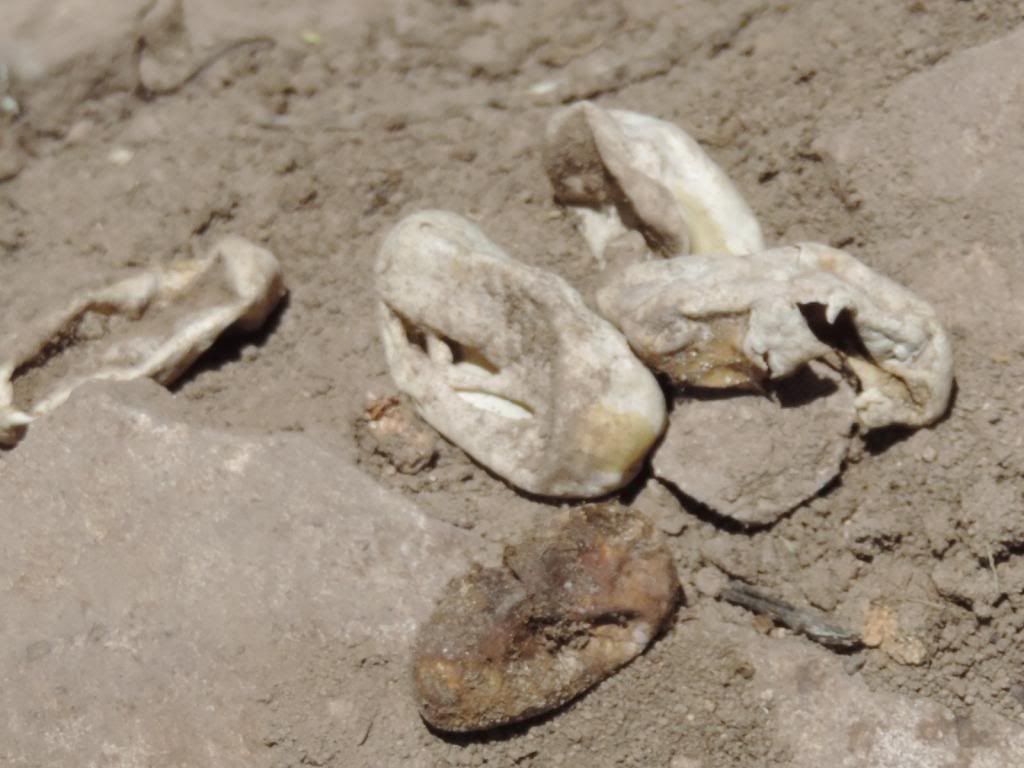
hmmmm not sure it suppose to make sense, anyway, here's some hatched eggs from the bush that shows an infertile. I try to keep track of such things. Also some other pics, two days ago.
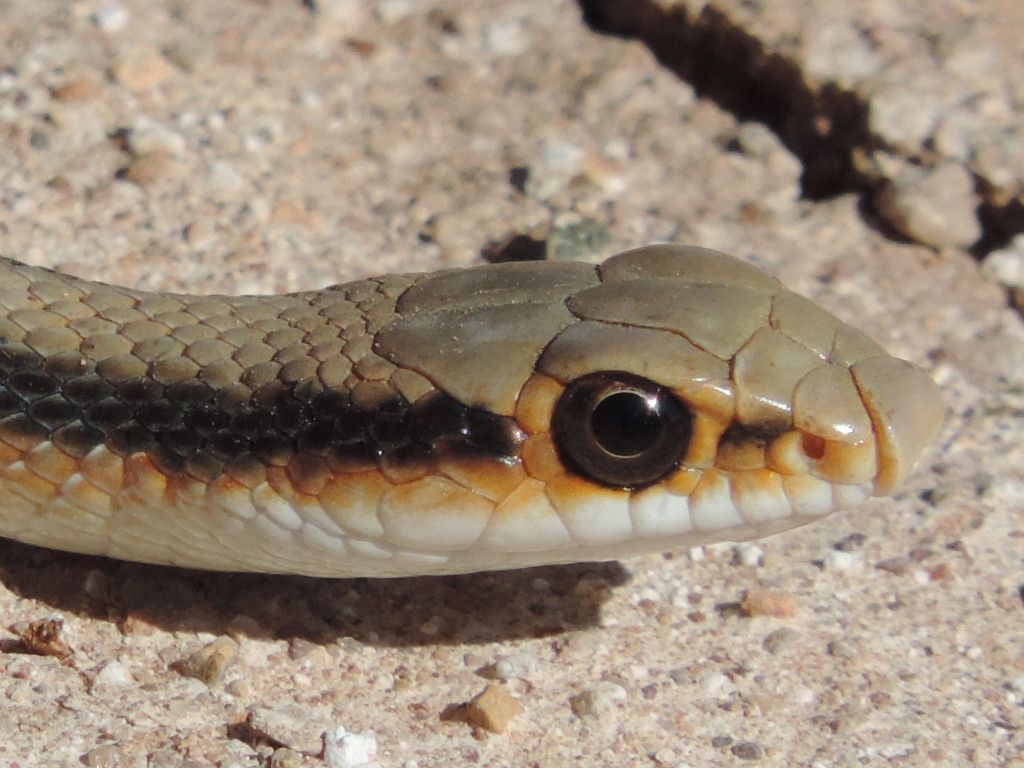
Heres a snake of another nose.
Mule deer portrait
WILD HEN TURKEY portrait
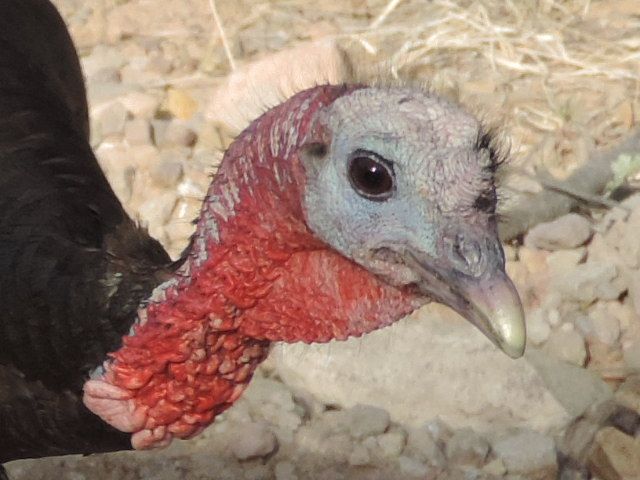
DanKrull
Apr 06, 2014 04:50 PM
I am researching a book, and I'm trying to read as much published material as possible. When you said you had done field research, I did a quick search for any papers with your name on it. I found your co-authored range extension paper from on Rana = (Lithobates) tarahumarae from 1976, but that was all. I was asking, so that you could direct me to your article(s) on hognose. No biggie if you don't have any.
Dan
FR
Apr 07, 2014 11:50 AM
I tend to be one who does background work(field rat), a place I like.
Daniel Bennett, Hugh McCrystal, William Garska, Denny Miller, Dave Barker, and more.
Also, not sure Barkers work was published, it was a masters project or C.willardi.
Also, much of the results published, I did not agree with. hahahahahahahaha but that is not my job, my job was to produce data.
I do see my name pop up in pet shop books, mostly on kings, do not know the authors names off hand.
There were many articules in Reptiles mag, and the Vivarium. Mostly interviews, as I do not publish. YET.
One I was most proud of was a talk at the all Fla herp meetings. I gave a talk on the cultural aspects of localized populations within species. That was many years ago. The talk was discussing how behavioral aspects with different populations of one species, can vary greater then species differences. Such things as pairing, nesting, densities, congregating, prey type, etc
I apologize for thinking you were being arguementative.
