Hey Everyone,
I'm new to keeping kingsnakes and I've read a little bit about bonding them. And I know this may be redundant but can someone explain how to bond kingsnakes to me? Thanks in advance.
Welcome to kingsnake.com's message board system. Here you may share and discuss information with others about your favorite reptile and amphibian related topics such as care and feeding, caging requirements, permits and licenses, and more. Launched in 1997, the kingsnake.com message board system is one of the oldest and largest systems on the internet.



Hey Everyone,
I'm new to keeping kingsnakes and I've read a little bit about bonding them. And I know this may be redundant but can someone explain how to bond kingsnakes to me? Thanks in advance.
Honestly, kingsnakes don't have brains like us, they can't bond to anything. You can condition the snakes for handling, and some even appear to enjoy it. They are active and curious, but they will never miss you or even desire attention. The best you can do is handle them a couple times a week(wait at least 2 days after a meal)and they will eventually learn your not a threat and get used to being handled. I have some kings that will crawl right out onto my hand, because they know they can get out and explore.(and escape if your not careful, they are also not loyal, lol)Handling tame kings is in my opinion, one of the highlights of having a snake.
He said "explain how to bond kingsnakes to me", but I think he meant it like "explain to me how to bond kingsnakes (to one another)".
-----

They may tolerate each other, but most should be kept apart. Maybe Breeding? In which case there is an excellent link on breeding colubrids on this site, http://www.kingsnake.com/colubrid/
On a side note- I was just 'catching up' on the forum, and noticed some breeders have a method of wintering snakes together they call 'bonding'. There are some sensible and informative discussions on the different methods of this, and and with what species of kings it works best with ect. Maybe a forum search would help too.
Sorry my computer died, so I am a little late on this thread
Yes, read more. First let me attack you a bit. You mentioned these are not mammals and do not have the brain power for such things. To me this is you rationalizing your limited understanding. That is, you pick something to support what you do not understand. So I ask, why not pick other things to support bonding? Its about that simple. The facts, kingsnakes live in colonies, they do not eat eachother, they also do not egg eachothers eggs, or offspring. Simply put, if they did, kingsnakes would be rare as they know where the eggs, offspring, and other kings are. Also, animals above them and below them on the evolutionary chain, live is flocks, schools, groups etc. To occur in flocks, groups, schools etc is too recognize those in your group and form a bond. I can go on and on about this, but whats important is, kings do it. and its easy to see, duplicate, and prove. You just have to do it, not NOT do it. end part 1
I have been keeping kings for over fifty years and during that whole time, I keep kings together in pairs an groups, there whole life, as I am now. I throw in piles of food and they eat it without problem. Bluerosy also does this. So why on earth do you or other folks have problems, or perceive to have problems or come up with what your saying? What we are working with is ethology, which is behavior. Behavior is driven by loose rules, which are non exacting, as in trends. Even trendy. Which in this case means, if something works, repeat it. If something does not work, avoid it. That's how snakes work and learn.
In the case of being social and bonding. Nature is a cruel mistress, a couple of mistakes and your gone, toast, turned to poop. So how do they do this, Well its so very simple. like with all animals, this occurs early in life, very early.
Snakes nest, in with kings they lay eggs. The eggs are stuck together. Which means close. They slit the egg and poke their heads out. they stay this way for a period time. They leave the egg and stay in the egg chamber for a period of time. We know snakes have an incredible sense of smell, but we have no idea what that means. What it means is, they can smell lots and its important in their world. If they can track a mouse running, they are smell so so so much more.
We know they all have scent glands, but dismiss what that means. It appears that scent is how they navigate the world. Their world is a world of scent trails left by animals, prey, and those first scents in life. those of your littermates and mother, the nesting chamber is full of the mothers scent. All folks who work with animal behavior understand, imprinting. When a animal bird or mammal is born/hatched, it imprints on the first thing it sees/smells. While this is logical, its also something easily tested. end p2
This is so easy to test. Raise clutches together and they not only do not eat eachother, but they form bonds even within a group. Yes, they pair bond. And will seek their mate out to be with(attend) and to copulate.
When they are raised together, they will not eat eachother until starving. And keepers commonly starve snakes, by routine(ask if your interested) But if you put an individual from another clutch in with them, simply put its dinner. And visa versa.
We do have to understand, its behavior, and again, behavior is not all or nothing. So from that point, bonding can also be done with young animals from different clutches. And even rarely with adults. But its all about degree. The strongest bonds are from the nest.
Let me make something clear, when putting adults together, I would not call that bonding or bonded in any way. So I agree, if you practice raising a social animal in a solitary way, I would not expect the to bond with others of their own kind and the reason is simple, they do not know what their OWN kind is.
Now for the kicker, once you see truly bonded pairs, Its hard to keep them separate, In fact, its heart breaking.
Bluerosy and I keep bringing this up from time to time and its because off the Joy we have watching such a beautiful thing. And because we actually see animals living a life, doing something anything other then living in an empty box. My question is, why do folks HAVE to keep them separate????? This subject is far more important then anything to do with snakes. Cheers
My "limited understanding" comes from over ten years of keeping snakes and breeding multiple species. I have also been studying reptiles namely snakes, on the field and in my own home. I suggest you take your attacks elsewhere, they are not taken well in this forum. When somebody gives you an honest answer from experience, and an open one at that, you should be a little more polite please. As for the colonizing, this is not a social behavior, most snakes only do it for wintering or breeding. The biggest mistake new kingsnake keepers make is applying human emotions an animal that is built on INSTINCT. Do some research on the brain of a snake. Scientifically, they lack a fully developed cerebrum(the part of the brains that controls emotions like love, trust affection). So they are not physically capable of these emotions. I am sure there are bonding methods, but if you think you can put any two kingsnakes together, and they will just bond like puppies, you are in for some BIG disappointments. I was also nice enough to give you pointers in the right direction about the subject you were interested in, without condoning your beliefs. I will not argue with you or attack you back, as I am very secure in my knowledge of these animals, and what they are like. If you are going to be in the kingsnake world, I suggest you keep an open mind and do ALOT research before attacking ANYONE on this forum.

I wish you all the luck in the world. Keep reading if your interested. If not, That's ok too.
In reality, I am not attacking you, but I am attacking your limited experience and knowledge on this subject. As that's what occurs when folks have different opinions. So instead of acting all tuff and stuff, how about making some points of importance.
A simple one would be, how can Bluerosy and I(and others) keep our kings in groups, and others cannot? That is the real question here. Answer that and we will be off to a good start.
Haha, I am not acting tough, I am just VERY passionate about my snakes As are you, and it seems everyone else on this forum, so why people butt heads a little. I find your experience very intriguing, and it is something I will try one day, when I branch into other snakes. But, my main point is, I cant do it with my Cali's. And I have tried, and learned the hard way. My one male cali is about 16 years old, and has for his WHOLE life, only excepted his mate at breeding season. Any other time, he will freak out if she is near, and she does the same. They are only bred to each other, and you'd think they would get used to one an other. Nope, he wont allow ANY snake near him normally. He viciously bunts and strikes them, and gets so stressed out and agitated. And the rest of my kings? Lets just say when I breed them, I always have one eye on them. They can turn in the blink of an eye, and have on many occasion. They can be normal one minute, and than constricting each other in the next. And trust me, i have tried a million different methods to prevent it, they are just unpredictable. I housed two ball pythons together for years, they where fine. I have kept boas together, and yes, boas breed the best when brumated together. But not my Cali kings. They are a whole other ball game lol. And I will gladly read anything that you have to say, like I said, I am very open to others experiance, how else can we lear if not from each other?
-med.jpg)
My one male cali is about 16 years old, and has for his WHOLE life, only excepted his mate at breeding season. Any other time, he will freak out if she is near, and she does the same. They are only bred to each other, and you'd think they would get used to one an other. Nope, he wont allow ANY snake near him normally.
That is not bonding kingsnakes. I suggest you read FR post again as you completely missed out what and HOW to bond snakes.
I keep my Florida kings together that I kept together (usually multi het siblings)when they start feeding on hoppers. I tend to do things a little different than FR does in I keep the group together in a rack (in close proximity) until they feed on hoppers (about 3 months of age) and then put them together in groups of 1.2 where they remain together for the rest of their lives in that group.
I will post a part of FR's post again since you missed it:
This is so easy to test. Raise clutches together and they not only do not eat each other, but they form bonds even within a group. Yes, they pair bond. And will seek their mate out to be with(attend) and to copulate.
When they are raised together, they will not eat each other until starving. And keepers commonly starve snakes, by routine(ask if your interested) But if you put an individual from another clutch in with them, simply put its dinner. And visa versa.
We do have to understand, its behavior, and again, behavior is not all or nothing. So from that point, bonding can also be done with young animals from different clutches. And even rarely with adults. But its all about degree. The strongest bonds are from the nest.
Let me make something clear, when putting adults together, I would not call that bonding or bonded in any way. So I agree, if you practice raising a social animal in a solitary way, I would not expect the to bond with others of their own kind and the reason is simple, they do not know what their OWN kind is.
I think my two kingsnakes bonded so well they said the hell with breeding and started a bff relationship! Hahahahaha :-D
There you go. hahahahahahaha.
Frank,
Have you ever tested putting 2 different clutches that are due to emerge around the same time together? I'm curious if the babies coming out and being around each other from the very begining is enough to ensure they will get along, or if they know certain babies arent "us" and problems arise.
also, when feeding multiple snakes in the same enclosure by dumping food in, have you ever had snakes accidently eat each other. one starts at the head of a rodent, other starts at the rear and one accidently overtakes the other. I've seen it with young corns on 2 occasions, but they are the only species ive ever seen fed together.
Also, I am open to ALL methods that are seen on this site, so why it is here. Everyone has different experiences, we all have the right to share them. You have some great points, but don't ever forget kingsnakes are cannibals, and that is what can make them very different from other snakes. Be careful about applying human emotions to snakes, especially kingsnakes. They are if nothing else, unpredictable. I have a 'colony' of boas, that I keep together because as of yet, they are not stressed by each other. But I personally would never ever put my California kings together, they try to eat anything and everything that moves, and ALL my Calis are like that. Doesn't matter how much or what I feed them, they will try and eat my finger haha. So why I say keep an open mind and talk to others. Especially if you are just starting with kings, they are incomparable to most snakes because they are soo varied in there behaviors. I cant stress it enough, be careful. Again, I am not undermining your knowledge, I am giving you what I have learned through extensive research, and hands on experience and a bit of heartbreak. Bonding will not work with all snakes! Hopefully someone with more experience with bonding will give their advice, in what king species are best to try it with.

QUOTE: But I personally would never ever put my California kings together, they try to eat anything and everything that moves, and ALL my Calis are like that.
hahaha you need to learn to speak snake kate, kingsnake specifically.
they are telling you they want more food, simple.
also you seem to want to argue about kings bonding?!?!? some of mine actually STRESS OUT when separated from one another, that speaks volumes.
also FR pioneered kingsnakes you look pretty foolish talkin as if you know more about kings than him the simple FACT is FR has forgotten most of all "WE" know.
good luck
,,,,,,,,,,thomas davis
-----
Morphs... just like baseball cards BUT ALIVE, how cool is that???
my website www.barmollysplace.com
Trust me, I stuffed the little buggers. I figured if they were always full, they wouldn't chow down on my fingers. Lol, nope. The only time the finger eating attempts stopped was when I upgraded to fuzzies as they grew. My theory, pink fingers and fuzzies look a lot alike if your a snake.
As for housing them together from birth, this too I have tried, back when I was pressed for space. I had heard some people had success with this. They were fine up until their first sheds. after, they would bite each other, and crush each other against things anytime one made contact with the other. I would feed them a ton of food, I gave them a bigger terrarium, and still it got worse. Eventually they wouldn't eat, and so I separated them. It was stressful on all of us lol, but after wards they did thrive. to this day, if I handle them with out washing my hands in between snakes, they either try to bite me, or freak out.
I keep some of my boas together, I always strait from birth, and this usually works for them too. But again, all boas are different, and sometimes it didn't work with them either. Like we all know, nature can't be predicted or controlled, and the out come, will always vary based on the individual. And new keepers need to remember that.
So my question to you guys, does this method work for every one of your snakes? And do you believe everyone can do it, if so how? And have you ever had a negative experience doing this, or something that could be avoided by someone else?
Kate, your not saying anything. Just this and that happened. You say you stuffed them, what does that mean. I feed kings daily and a lot. Feeding is based on metabolism, which is controlled by temps. So a lot could be one mouse a week when at low temps. Or daily or twice daily at hot temps.
Simply put, if they try to eat your fingers, they are hungry.
what is important is, snakes go by hunger levels, not by schedules. people go by schedules.
Your still missing the point, you keep asking stuff based on your failures, instead you should be asking who or what we did to succeed. As many of the morphs you have, came from my groups.
I have been keeping a large collection of Florida kings (which are more known snake eaters than Cali kings) for over 20 years and never had one occurance of cannibalism with my bonded groups . I have such a large collection that it would be impossible to watch their feeding habits . I just throw in sevral chicks (I feed mostly FT chicks to my Florida kings) and walk away.
I used to watch and when one would bite down on another I would rush to the cage and try and separate them (which isn't easy when you are forcing them). Then one day I started leaving them alone and watching what would happen if one "accidentally" bit down on another in a feeding rush. Guess what? They LET GO!
So even if bonded Floridas bite down on another individual they will eventually let go once they realize what they have in their mouth. Which is left alone they figure out in less than a minute.
This is REAL common during feeding time. I just fed over 100 adults a few minutes ago and this very thing is probably happening now as I type. I just dump 6 or 7 chicks into a corner and they go at them. If they bite down onto another cage mate they will let go and figure out where is the food.
I have had them bite down on the edge of their cage when opening it. They will bite down on anything that moves once they see the cage open (a learned response) and sometimes I am just changing the water dishes. It is common and no big deal to me because this is daily routine for them and myself.
But remember these snakes have to be bonded at a young age! They know each other.
Kingsnakes cannibalistic as defined by the zoological dictionary. That is consuming their own species. But not cannibalistic in a group behavioral point of view.
The point is, no one told kingsnakes, that a snake that occurs outside its range is a kingsnake or not. They do not read it, or even know what species are. That is your human thoughts that you warm me of. In the world of kingsnakes, you need to learn what WE means. You, we vs. Them. Them is everything not WE(or us)
Bonding is inherent and learned. THey cannot bond with something that Is not present. Bonding in animals is primarily age based. That is, its done when young.
I want to ask you this, in a world where there are no laws, And nothing prevents anything else from killing you. What would be safer, establishing bonds with those you hatched and grew up with. or wandering around hoping to find another snake that may or may not eat you. Then if you find a mate and it works out good. Would it be better if you keep looking for a new mate, they may or may not eat you. Or go back and visit the same one that you already established a working relationship with(he didn't eat you) Its not complicated and its simple. And its what they do.
You can argue all you want, but I asked you to explain how come my kings have lived in pairs and groups or decades and decades, same for Bluerosy and others, and we are talking WITH THE EXACT Same snakes you have. Oh by the way, Those high whites and yellows are a line I developed decades ago. I also was the first to breed albino kings and established albino banded, stripes, desert black and whites. Newporters etc. And they all lived in groups.
Wow,
Not to disappoint you, but with ten years under your belt, your still a rookie. Ten years is nothing. Many of us have been keeping kings and other species for 30, 40 and fifty years. With ten years down, your likely still in care sheet mode. You've read about what works (marginally) and have had success with that, so you think that your decade is a lifetime. Most real learning in this hobby occurs well past the stage that you are at, when you start looking outside the box/recipe approach, often because you are bored with the typical results you see.
Also, you are the one who is anthropomorphizing here. You are taking your limited understanding about the relationships that Frank, Rainer and others are talking about, and you are applying human rules to what you do not understand. Your explanation about your cal king clearly shows us that. You did not raise this adult animal to be in the company of others, so why would it react to other snakes with any response other than aggression?
I have been keeping eastern kings together for about ten years (a relatively short time). For the previous twenty years that I worked with the species, I kept them as you did and received similar results. I also keep/kept blackheaded pythons, Boelen's pythons, jungle carpets pythons, sinaloan milksnakes and diamond pythons together in pairs and groups. It can be done and done relatively easily if people would stop applying their own rules/judgements as to how it should be done, then griping that is doesn't work. Of course, that is if they choose to keep their animals together, as it is a choice. Good luck.
Will
just gotta say i'm seriously jealous that you kept boelen's... been my dream snake since I saw one at the zoo about 20 years ago.
Hi Aaron,
Thanks man.
They are awesome, but they are BIG, nearly burm sized. I still haven't cracked 'em yet though. My problem is space. In order to accommodate the huge range of temp choices necessary to get giant black snakes to breed I need more heat and more cool in the same cage. Work in progress man. Thanks again.
Will
My knowledge is by no means limited, and comes from my experiences with WILD snakes in regard to there behavior. If I thought i knew all, I would not be picking your brains for info. I have been herping since I was a kid, and closely studying snake behavior. And what I have learned from them, if vastly different from what I learned from you guys here, and from my own snake colony. I'm not here to preach experience, I am merely curious to know your methods, why not take the time to explain your reasoning and experiences about the snakes to me, rather than tell me what I don't know...what good is that going to do anyone? Its a puzzle to me and I would like to piece it together and see how it all fits. You dont need to be defensive, I want to know about your experiences and respect your opinions, so please give me the respect of explanations and not condemnation.
Heres The problem, you started off by saying you know this and that, based on your ten years experience and your field work. You can tell us your age if you like, but by your comments, your young, in both areas, AND THAT IS A GOOD THING.\
In my case, I am a SoCal boy, and caught my first cal king in the late 50's, hahahahahahahaha Bred my first cal kings in 1962 and have bred them ever since. If you ask me what I learned in the first decade, my answer would be, not a whole lot. Well absolutely nothing. Very little. That is compared to what I know now. What I did learn was, not much is known about snakes. I learned how to find them, but not how to find what is important to them. For instance, have you found pairs? Eggs? nesting sites? watched them year after year? have you found more then one king under one piece of AC? Or several within a small area, like 100 ft by 100ft.
My bet is, you've done the last two. If you have, how come you did? Cause if they were cannibilisitic you would not find that. Do you find one area is better for kings then others in the same general area? These type things are telling. The key here is for you to think, not know.
Hi,
That's the thing, your knowledge is limited, but that's not a bad thing. I consider my knowledge to be limited as well and I've been looking at herps in the field and in captivity for 35 years. At ten years, you're of to a good start, and its great that you are looking into exploring other methods, because that and the keeping of more challenging species is what keeps this fun (for me anyway). It also makes us better keepers.
If I would give any unsolicited advice, it would be to read what people say on this topic (and others that interest you) on both sides of the issue and ask questions without judgment and prejudice. Then, as Frank said, test it based on the description of the methods that work, not those that adapted working methods to their own convenience and failed. Good luck and have fun.
Will
Haha, saying what one 'knows' is the only way to get a response on here sometimes I am not that young, I should have clarified, I have been breeding kingsnakes for 10 years, I have been studying herps alot longer. They fascinate me and are my entire life. Im sure you can relate. I also have a few connects of my own(scientifically) and have learned alot about the snake brain. There are some un-disputable facts regarding the snake brain, that new herpers should know. Like you guys said, it has taken YEARS to learn what you know, and most of us have to start with the basics before advancing to the level of bonding. It may be simple to you, but to others it can be misinterpreted. The one thing that I hear from you guys repeatedly is it took you more than 10 years to think outside the box. But you still had to start with the basics inside the box to advance to your level.
And in my area, we don't have king snakes, so I can only relay what I have learned from my captives. I am usually out observing and documenting garter and water snakes, but also milk snakes, fox snakes dekays snake. 90% of the time they are alone. But when they are together, its by their choice. I have even found different species sharing space(a little awkwardly)and if I am really lucky sometimes I find garter dens. Its amazing what you can learn from a mass amount of garter snakes. Especially if you return through the season, there is a set pattern of behavior they repeat year after year. I have no doubt snakes have colonizing behavior, we as humans just need to be very careful how we duplicate it, and if we can. My kings may be so far from there native land and bred so many times, they may have adapted their behavior to be loners. I'm telling you, if you saw they're behavior, you would know what i mean. They are very threatened by other kings. And while I don't have the wealth of knowledge you guys have, I do know bonding is brilliant, but not for the inexperienced.
I'm telling you, if you saw they're behavior, you would know what i mean. They are very threatened by other kings. And while I don't have the wealth of knowledge you guys have, I do know bonding is brilliant, but not for the inexperienced.
I have explained my methods to bran new newbies and they kept their kings the way I suggested. It is simple and they knew less than .. well, lets just say they are very new to keeping any snake. Today they have raised their bonded snakes together and they never have a problem.. actually it is easier and safer than breeding the "traditional" way.. Think about this: You don't have to know when a female ovulates to introduce the male! You don't have to worry about cannibalism if you introduce a male into a "NEW" females cage during breeding season! and sit there and worry about them eating each other.. I wish I had a nickel every time I heard someone say I put my male into the females cage and he/she is FREAKING OUT! With bonding you take out all guesswork and make it easy for a newbie.
So I say this method is perfect for newbies.. They learned early on that it is not "us" that breed the snakes.. They are perfectly capable to do it without our "help". They are first time doers.. and it is easy for them because they did not follow the old THF methods.
Do you allow your snake temperature gradient choices? If so, how much..what are the cold and hot spots on each side? What temps do your snake choose? when and why?
Do you do a forced cooling period during winter ? These are some other things that the herp community at large thinks what they are supposed to do.. But in reality there are much easier ways that do not involve the keeper so much. So it takes the guesswork out.. perfect for newbies because of less risk, higher success rate for multiple clutches and no worries of forced cooling and heating processes.
I tell ya. After 10 years you might have stumpled on a gold mine of people here who think outside of the box (not really we just been doing this for a while).. and that simply means to learn about the snake ethology and try to get as close as possible in a box. Once you learn the new method you will realize the unlearning of the old way is the hardest part.. When you do, you will understand the snakes better and all this is only a puzzle because of what you have been first indoctrinated in. People usually tend to believe the first things they are taught and treat it as gospel. Especially if they have been doing that way for a long time. This is where thinking outside the box comes in for you.. not so hard for a newbie.. more difficult for someone as experienced as yourself.
Yet another excellent point! My kings have a warm spot and cool spot, ranges from the 70 to 80s. I brumate them by slowly reducing the amount of heat they receive, and eventually getting rid of the heat source and leaving them be. Temps in the 50's and 60's at its coolest. I wait until they slow their activity down, and give me the signs via inactivity. My kings tend to do this in October November. They stay quiet until about February, and begin to return to their normal activities. I usually introduce them for breeding around this time, and it either goes 2 ways. The male runs for his life lol, or he jumps the female right away. He will usually try to eat her after...perhaps his genes are part of the problem? haha
I brumate them by slowly reducing the amount of heat they receive, and eventually getting rid of the heat source and leaving them be. Temps in the 50's and 60's at its coolest
I think you are so indoctrinated in your way of understanding that you read over what me and FR have been saying and had already mentioned.. but you are reading right over it because you are so indoctrinated.
I guess you did not know about giving the snake choices in brumation as that is what I was writing about.
The first thing you said was "I" . You don't breed the snakes.YOU don't cool them! the snakes can do it by themselves withouit your help -if you can take yourself out of it. . What I was getting at is the snakes do not need a forced cooling. That is why I said "forced" cooling. Forced cooling periods is not good for them!W hat is good is giving them choices!
Put them in a cold room and keep the heat 'ON' one side ALL WINTER so the temp ranges are 50-80F. Leave the heat tape on all winter and feed the snakes all winter and they will brumate and cycle themselves. This is a good time to keep healthy weight on breeder females as well.
First is it is a lot healthier for the snakes and allow them choices. Forcing them to be cooled for two to three months is just nuts IMO and a concept from the 70's.
Second is, the snake might even breed when you don't expect them to. I get eggs year round. EVen in jan and feb.
How it works:
They sit on the cold side . I hit them with a temp gun and they are at 50F. I offer a mouse and they eat at this temp.. So then they move over to the warm side to digest their food. They may move back and forth from 80f to 70F and back 80f and then 65F ect..all to digest their bolus with different temps at different stages.
What do you think they do when they are finished digesting? That's right!. they move back to the coldest spot at 50F. why do suppose they do this? Because they want to conserve calories.
cont..
So you see they are quite capable to brumate themselves.. Also I guess you did not understand what FR was saying in his very first posts about this (make sense now, so you should read again).. Hopefully it will come together and you will be able to put the pieces of the puzzle together. But remember, it is only a puzzle to you because you are indoctrinated for 10 years without thinking outside the box a little.
A newbie will understand more quickly and can emulate what we are suggesting and digest it better because they have not been doing the breeding and the cooling and all the things "we" thought we were accomplishing by "us": breeding the kingsnake when in fact the snakes can do it all by themselves-with less work for the keeper, I might add.
Well said, and true. I think folks do not have a handle of snake temps. Even here in the hot arse desert. Kings seek temps from the sixties to the mid eighties, IN THE SUMMER, In the winter, they are forced by winter temps to use temps from the mid forties to whatever they can find that's usable.
What's of interest is, Body temps are more aligned with prey availability then season. As Rainer mentioned, they seek heat to digest prey, and as mentioned, they generally seek high temps to start the breakdown of prey, then move cooler and cooler as the process continues. Also, they have no need to utilize high temps with small prey items.
Oddly, or no so oddly, prey is scarce in winter, so snakes stay at their lower temps.
Higher temps are required for extreme metabolic processes.
1. digestion
2. rapid growth
3. reproduction
4. Immune system
Even during the above heat seeking events, its space with cooler temps as needed.
As Rainer says, give them both, and they then can utilize energy to the best of their abilities.
Its not your king its how it was conditioned. You know, I get some biologist telling me snakes are not capable of making choices, yet that's what they do with every movement in nature. Now your telling me they don't bond. Hmmmmmmm it must be the work bond. Maybe theres a better word out there. Maybe its a formed relationship bases on success and trust. Call it what you will.
About your garder dens, do the same ones go to the same dens. If they do WHY? You also say, they repeat the same stuff, year after year, WHY and how? I have been watching wild reptiles for a while. Like a pair of gilas(of the 85 or so I see a year) that has been together for 35 years and go to the exact same place, to the inch. Rattlesnakes that live in groups and mate the same female for 25 years and they were not young when I first found them. Its common to see reptiles of different species hanging out together for extended periods of time. Year after year. Oddly, its the same individuals. year after year. This tells me they form a relationship with other individuals, including individuals of other species and even with potential prey.(and they don't eat them) This is a type of bond. They trust certain individuals and not others. p1
This is when individuals select and copulate with another individual, and repeat year after year, even if other males are in the cage or area(in nature)
Pair bonding is common in nature, I find the same individuals together at their breeding sites, year after year. And this includes types of kings.
About what they cannot do because of some brain studies. Not sure I would trust academic studies, that is, Studies that do not produce a result. In nature they are far more complex then we are led to believe.
With rattlesnakes, they not only pair bond and den in groups, but females Brood their offspring. Females even brood the offspring of other females. And I have observed a blacktailed rattlesnake, brooding the offspring of a banded rock rattlesnake.
You may want to goggle up Melissa Armarillo and her social snakes site. She has observed this and more, much more with time lapse cameras. By the way, I use them as well, both in the field and in captivity. Hang on, what I was getting at is, I could careless if science says they cannot do something based on academic dissection of brains. Particularly when that something is observed to occur in nature and captivity.
When I think bond, I think mammals. Its hard for me to apply that word to reptiles, because they do not bond like we do. NOT saying they don't bond, I see how they thrive in each others company, and how they form habits and routines together and what not. So why I would like to give it a try with my kings. Its just going to take me some time to get used to the whole bond thing, and if I see it with my kings, I know I will be comfortable with it.
And give me a break, you guys just dumped ALOT of info on me, I am still trying to read it all and go back and read the ones i missed.(missed a few lol) I lost my job recently, so I am focusing on my snakes. I haven't been on the king snake forums in a long time.
And I should have went into more detail about how I brumate. Got a daughter that keeps me pretty distracted haha. I wait until they give me the indication that they want to brumate. For example, they are usually out and about exploring, especially when they are hungry. They go through a phase of crazy appetite, and then they start to hide after that, and rarely come out. This is when I lower the temps. But I have noticed, like you said, they do come out sometimes while they brumate, and on those days I usually give them a heat source, and remove it when they are done. But I like the way that you do it, with a range. I think I will try that. That being said, some years they they stay active, so I keep the options of heat and just make things a little cooler. Most years this is what happens. I act on their cues. Sometimes it trial and error, I don't speak snake, but I am learning
And with their brains, I do not trust science either. I was heart broken as a child when people kept telling me that they are stupid and emotionless. And when I got my first snake, a king, I realized this was not the case. But I also realized they are VERY different from us, or mammals in there thinking, so why people think they are stupid. They are not, most just dont understand them.
.jpg)
I just want to quickly elaborate on what I mean by my aversion to the word bonding. Most of my snakes are very docile. I love educating people on these wonderful animals. I have turned many fears to love, and its the best feeling in the world to change a person perception on snakes. BUT in my personal experience, people tend to apply human and mammal emotions to snakes, people who don't KNOW snakes. For example- I see this almost weekly, someone will handle a snake, get comfortable with it, and assume the snake feels the same as them. They then will do things like snuggle, hug and even kiss it in the face. This is not wise with snakes, and part of the reason they earn a bad rep. Another thing I have seen people do, is assume snakes are like cats and dogs, ad will learn to except other animals. I had one friend attempt to 'introduce' a snake and dog(I was not around or this would never go down) The dog was bitten on the nose by the snake, and everyone ended up a little traumatized. So THAT is what I mean when I say they don't bond like us. Why I am intrigued, Is because I have always felt snakes toleration for each other goes beyond they're toleration for handling.They have a way of interacting, that I want to know more of. And that's why I am interested in your bonding methods. I have just seen ALOT of stupid human behavior, because they think snakes will relate to them, like their dog or cat. That being said, I do find most of my snakes are the most comfortable with me. But its taken me years of getting to know them to get to that point of understanding, and now I want to expand.
Not to write a novel, but I do have some questions that I did not see(or may have misses) If someone could please answer.
What size and type of enclose do you use, and up to how many kings do you keep together?
What kind of hides and and how many do you use?
Do you feed them ALL communally? Have you ever had problems with this?
What is the best way to start baby kings together(external factors, I understand they need to be kept with their clutch mates from birth) and what should I do if there is issues, like bunting or aggression?
Will adding their mothers scent to an environment help?
Do you believe this can work with any snake, and what could I do in general to make it more successful?
Don't mean to beat a dead horse, having had a bad experience before I just am a little nervous, and want to do it right. I understand what you guys have said before, I just want to elaborate on a few things so I am 100% sure.
Getting ready to go bush, so only have a minute.
Of course you had a bad experience, You had no idea what you were doing.
There is no one answer, There is a trend. The very best is, clutchmates or clutches hatched together. The as young as possible. Then before sexual maturity. Then after that, you have to get lucky, but its entirely possible.
With adults, that have not been kept together, put them together in the beginning of your brumation period. Then anytime their feeding response is low. Then forget about it.hahahahahahaha
At one point I hibernated my snakes by species, the getula in this box, the Mexicana in that box, etc. That plus raising them together, allowed for very socially tolerant snakes.
Also, forget about the all or nothing approach, like did you ever have a problem, Not sure I can remember, but I had lots of problems doing it your way. That I remember.
The reality is, over the decades I have lost animals. In most cases, I let them out(forgot to close the door right)
What is so weird is, its common sense and well known, that if you raise any social animal in solitary confinement, to adulthood it will not make a good candidate for a breeding group. And that includes humans. It includes chickens, cows, horses, birds, mice rats, crickets, anything. We know this, yet folks get their control on and rationalize keeping snake solitary in little plastic things, then suddenly expect them to be SOCIAL. What you just did is something they specialize on every night on criminal minds. Mass murderers. Of course you had problems.
thanks FR, I keep my snakes in terrariums, one thing I find hard to swallow is the plastic boxes, kings are active snakes, how can they not suffer in a little box? I find my kings thrive in terrariums with rocks, sticks, dirt and substrate to dig through. Not good for space, but good for my kings and other snakes.
Dude, I'll go out on a limb here and say that I think that when bonding is referred to with kingsnakes it means they get to know each others sent and establish that each other isn't a threat so they are able to coexist at the least. If the snakes are well fed, I don't see why one would want to eat the other.
I agree, I believe that's why I mentioned that they have their own bonding, with each other...did you read all of my post? My whole point was that people try and apply how THEY feel to the animal, and because I have seen alot of stupid mishaps. Especially people unfamiliar with snakes. So why I try and differentiate between FR and Bluerosy's methods, which involve the snakes and there natural behavior. That is an amazing tactic. That's the key, keep the human aspect out of snakes. That's where I got in trouble lol, because it came off like I am against bonding. No, I am against humans attempting to bond with snakes or other animals. Because when people hear bond, alot of them assume its snakes to people and think they can treat their snake like a dog or human. That is bad for this culture. beating a dead horse again, THAT was my whole point lol.
I am thinking your method of sorting this out is flawed and will hold you back.
The point is, TRUTH is best. What goofy people make of it, is what they make of it, cannot control that.
If you modify the truth to appease some people, your hindering other people. Those that can deal with the truth. The truth is the reality of these animals, not the perception of these animals.
In short and folks do not yell at me, IS, dumbing down information to appease those not smart enough to grasp it, is RECIPE husbandry. I have faith folks will sooner or later get it. And your right, its already later. But indeed the time will come, the time when it will be "important" is when humans have to maintain wild populations( in modified nature) Its then we will have to know what makes them tick. Cheers
Well bonded kings can strave to death and not eat eachother.
Sorry Dear, your talking about anthropomorphism. And your heavy into doing that. No offense, you are. As mentioned by others.
In biology, you are warned against being anthropomorphic. Now understand this, a division of biology ethology is different, with a different set of rules. Behavior, is widespread across the entire animal world. Its not confine to species, or humans, it encompasses all. Please if your going to think about how an animal works, then by all means aim your questions in the proper area, ETHOLOGY. In ethology, anthropomorphism is not an area to avoid. Its an area to embrace and here's why, we are human and do not and can not think in any other way. So the only way we will understand animals is embracing common behaviors. Which IS ethology. So Again, I recommend you studying ethology, and the reason is what your questioning Is completely ethology based.
If you investigate biology and such, it will take you a good 30 years to get past all the horseshat. I know that from personal experience. Biology seems to not embrace ethology, yet ethology embraces biology. Hmmmmmmmm
Ethology, 1.non interference observation 2. naturalistic observation, in captivity to test specific behaviors) 3. participant observation, to become part of and not interfere with. You as a lady(kate?) I would hope you research Jane Goodall and Diane Fossy, Both revolutionized Field work by inventing number 3. By the way, I have met Jane Goodall and worked for her, for a day. hahahahahahaha Do some of this please.

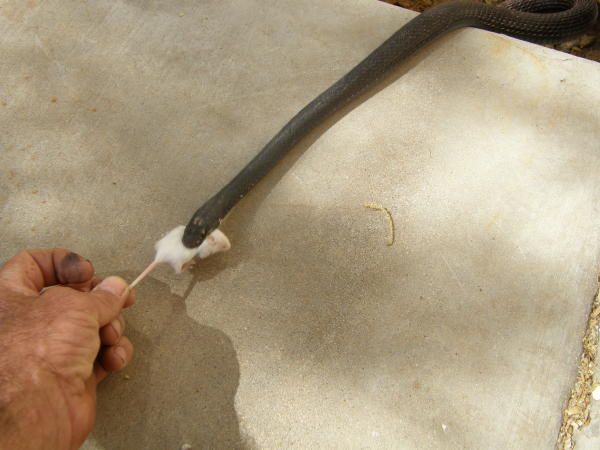
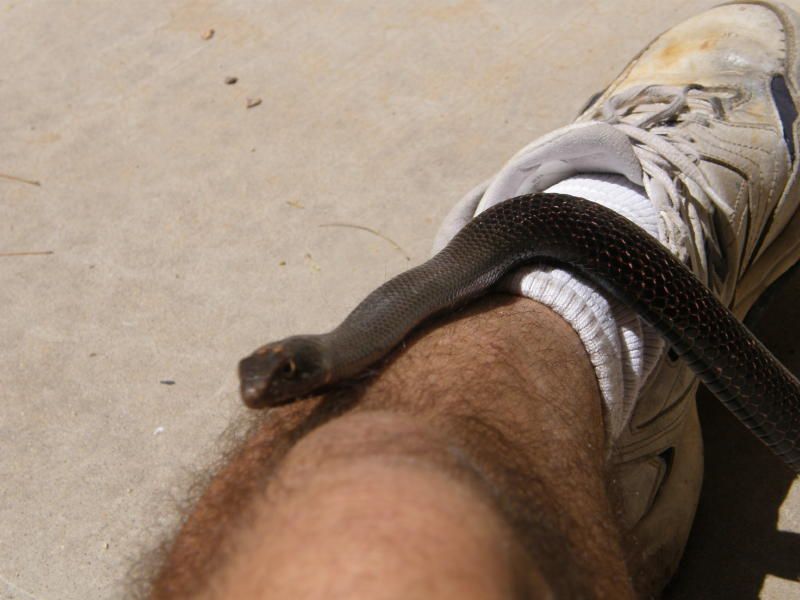
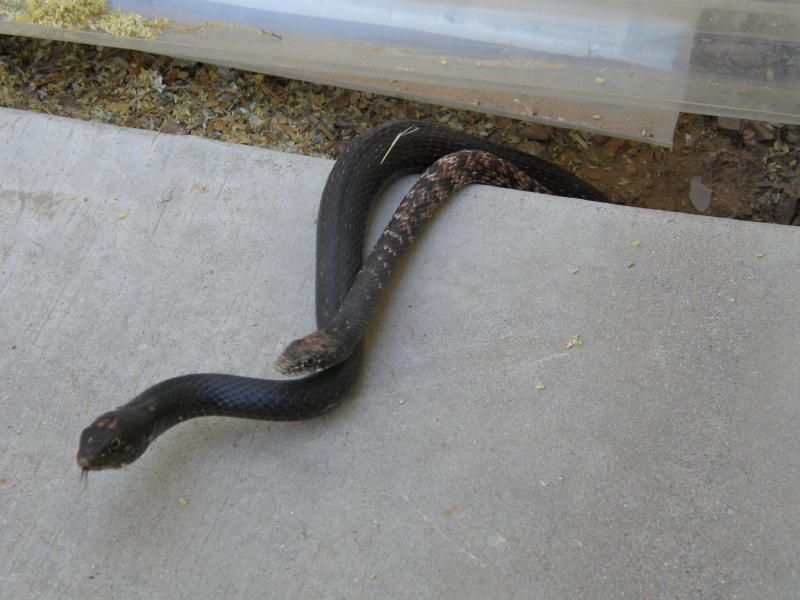
gaining trust, then observing behavior of wild animals. And these are wild. I got to record feeding, to a degree I did not comprehend, pairing courting copulation and nesting. And all with a species that HATES PEOPLE. Guess I am not people
That's awesome!
Well, I certainly tried! I love the sequence of photos of the snakes, makes me a little jealous lol. I am in the city, there is not alot of good reptile habitats around. I am trying to get out to the country so I can find set locations to herp. And holy crap Jane Goodall, that would make my life.
Heres something grasp, Science is not knowing anything or believing, Its all about questioning. Then requestion, and question again. Knowing is an end to questioning, so thinking you know something is the worse approach possible. You can and should read, but reading only should make you aware, its not to believe. In the field, we constantly remind ourselves to not prejudice observation. our job is to take accurate reports. Not influence those reports by what we THINK we know.
Also, discovery is easy, but most cannot do it. Take Jane Goodall, how she did what she did was, she told "biology"(of the time) to go to heck and did what she felt was right. And she was right. What that means is, in order to advance, we must change the landscape of learning. Doing the same things over and over expecting to learn something else, is the definition of insanity. That is what is occurring, science still uses methods that are fit for preserved specimens, Not living animals. It must change. So whats a boy to do(or girl) change it.
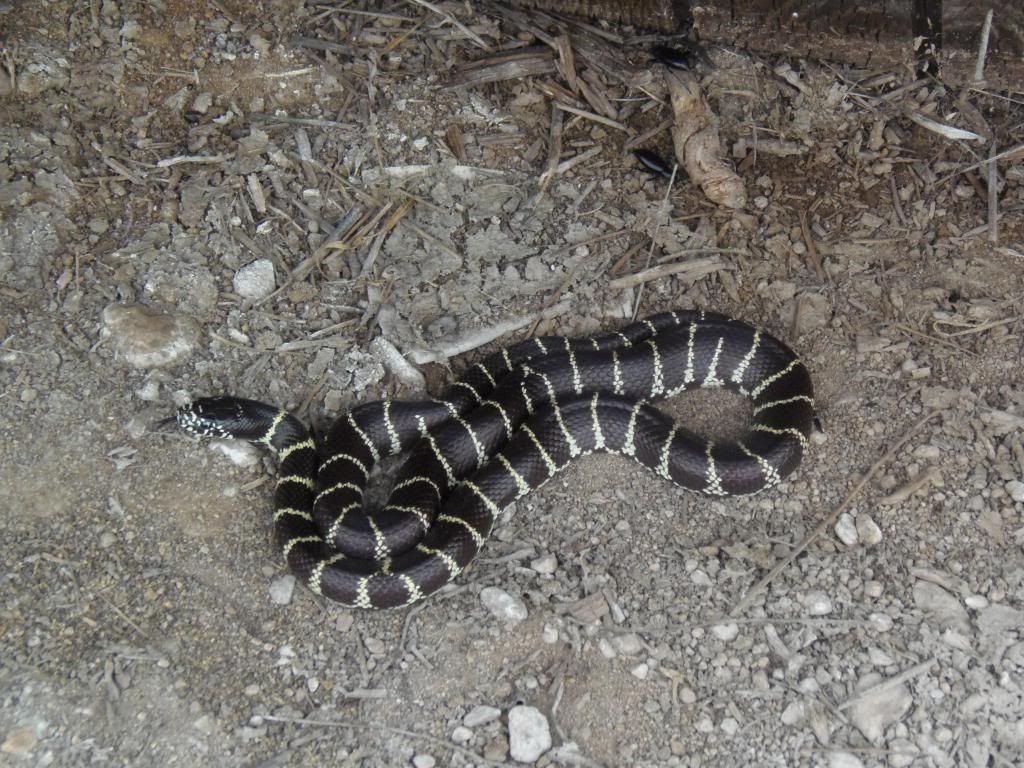
in situ sitting next to where a hognose laid the day before
I got laid off work and watching my daughter too......also first year breeding. Mindset for breeding last February and started investing money in some super-nice animals (my opinion),functional heating and cage system until tax return then got a few decent racks, thermostats and a mini freezer and a ton of frozen mice!
I understand where you are coming from......not your first post that started the entire "who's got the bigger dick" thread..... :-D
I think Rainer and FR make a lot of sense....stepping out of the box and trying different things is what really smart people do and make really cool things happen!
Ahahaha!! Sooo true. And I was thinking that FR was the original poster, and so I was taken back until i realized it wasn't. My bad. But thats why I LOVE this site, the debates on her are glorious. Lay offs are the best reason to dive into snakes! I am biting at the bit to expand into other kings and garters.
If you make it about Penis stuff, or social or whatever you want that's off topic clutter, then you sir are only hurting yourself.
Lets put it this way, there are right ways to do anything and wrong ways as well. Most people dwell on wrong ways, they let clutter stop them, that will not get them very far. The point is, all of life is full of clutter, smart is getting past clutter. Not dwelling on clutter etc.
The key here is, to some people, its the clutter that's important, to others, its the subject, kingsnakes that are important. When reading any and all posts, concentrate on the subject, not the clutter. There are people here(to lurk) that mainly attempt to clutter every thread. Its normal and in all areas, so you as a reader must learn to get past clutter.
Let me say this, penis size as nothing to do with keeping kingsnakes, unless your copulating your snakes. Then large penis keepers would most likely be found on retic and burm forums.
Hahahahahaa.........right you are FR
Also when others come to clutter the place up and the thread has lost its meaning, I have no problem screwing with their brains. I too love to play. After all playing is fun.
If the modes allow it, then I will be their huckleberry.
A very good point! But not all newbs are lucky enough to have someone as experienced as you around, or your guidance! You guys should write up a detailed article for the site on this alternate method so people can do it right. I for one am FASCINATED by snake brain capacity, and the mess that whole subject can start. I have been experimenting with how much they can learn and adapt.
I'd like your help with an experiment, if you can give me some advice. I have two little cali eggs ready to hatch in a month or so, I want to see if they can learn to bond. What should I do to succeed? Are there any little tricks or housing tactics to ease them into being comfortable around each other? (especially with siblings history of tweekyness)

Snakekate, you certainly have the passion!
You kind of remind me of me, when I first bred snakes, they were Cal kings, and I was sure I knew it all. Twenty years later, I realize so much more and less. I know a bit more about kingsnake behavior, but I have new questions too that are tough to answer.
My advice is to read FR's comments on kingsnake behavior.
A friend of mine over a period of years sketched Cal king head patterns of snakes he found in one field near where I live. Over 3 or 4 years, he found a group of the same individuals and some new ones. All in a very small area. These snakes did not wipe one another out. And those are just the ones he found. There are probably some he did not find that occur there too. This area is constrained on 4 sides by houses and highways. If the kings were hell-bent on eating one another, they would be gone. Clearly there is behavior that prevents this as long as prey is available.
My advice is to read FR's comments on kingsnake behavior.
HA HA! I advice people the same thing-to read FR's post only!.. Everyone can ignore my posts which are mostly chicken scratch anyway.
-----
FR quote:
"Doing the same things over and over expecting to learn something else, is the definition of insanity"
Rainer, I like your posts, And I done so many combinations its ridiculous. My early king breeding, before the advent of plastic boxes was like you do. 1.3 or 1.4. That was the most fun I ever had with snakes.
They were so attacked to eachother, that when I wanted to outbreed one female, the other females would freak out, until I put the female back. I actually did this, I open the cages doors, and the female that was separated, would crawl back to her cage. And folks wonder why we like this.
Also, folks think we are forcing them into something. Whats funny is, we are just opening a door that will allow them to learn and have fun. Also as you mentioned, its far easier as well. Bluerosy, please keep it up. Thanks so much
Agreed FR's post and Bluerosy's post are the ONLY information I can find ANYWHERE about king snake behavior involving the bonding aspect, and really in general as well. That's a tad bit sad. And I made one big error at the beginning of the post, I mistook FR's post as coming from the original poster of the question, and immediately got defensive because I was trying to help out lol. But yes, I am very passionate about snakes, and crave all knowledge, so why I get people going. I find that people will only tell you so much when neutral, but when fired up, they tell all. Ahh passion Honestly, I have learned so much over my span with snakes, but yet nothing at all, because no matter how much we study analyze and whatnot, something new will pop up and have us re think everything we learned. So why I love snakes.

If your really want to learn, work with varanids. If you figure it out, what works with them, works with all reptiles, But what you learn for colubrids and other herps, does not work with varanids. Think about that.
An example, if you do not nest them right and I mean right, they die. If you nest them right, they lay clutch after clutch until you cannot see strait. I had a female I hatched and raised here, produce over 100 clutches. She lived to 14
They have razor teeth and if not socialized, shred eachother to death in a couple minutes. If they are, They look like teenagers in love. Following their girls everywhere wanting a kiss and yes, they kiss and hold hands and more gross girly things. Oh by the way, I have not told you much yet, your not ready, I can tell you stuff that will make your head spin. Got pics too
I love head spins in reptile society. Because they usually indicate more complexities about the animals. If you ever feel like making a post about some of the behavior you have seen, you'll have my attention.
Help, tips & resources quick links
Manage your user and advertising accounts
Advertising and services purchase quick links
