NO is some naturalistic observation, and comparison. So Bare with me and have fun.
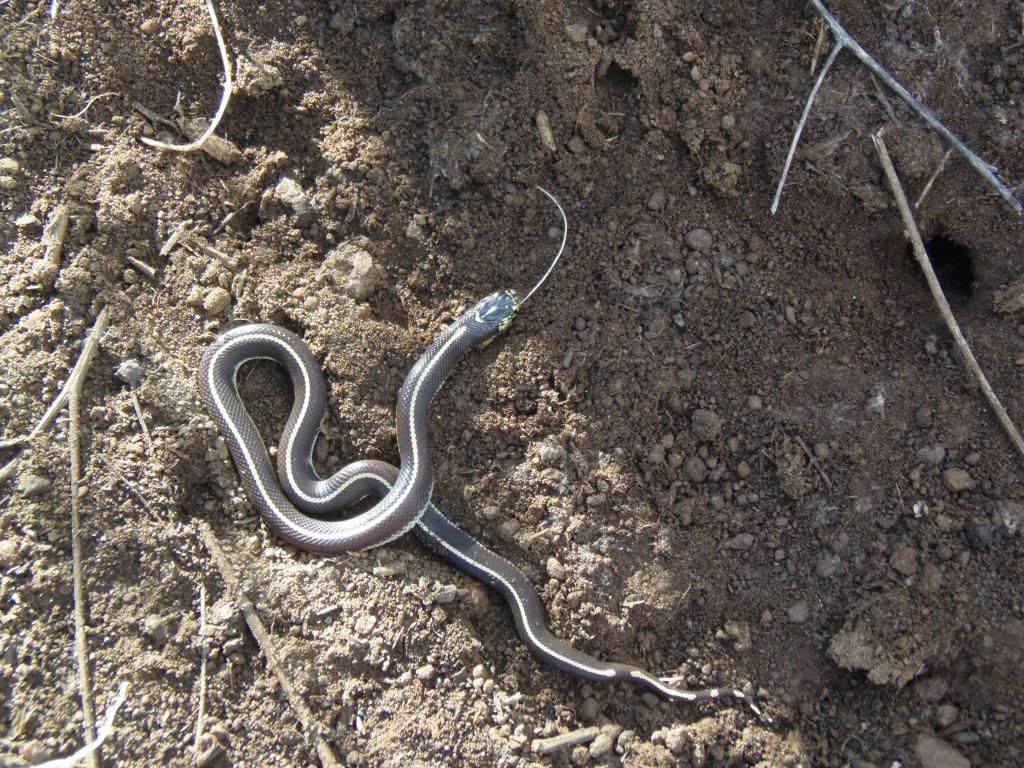
A little striped king in nature, under AC. Notice the snake and the holes.
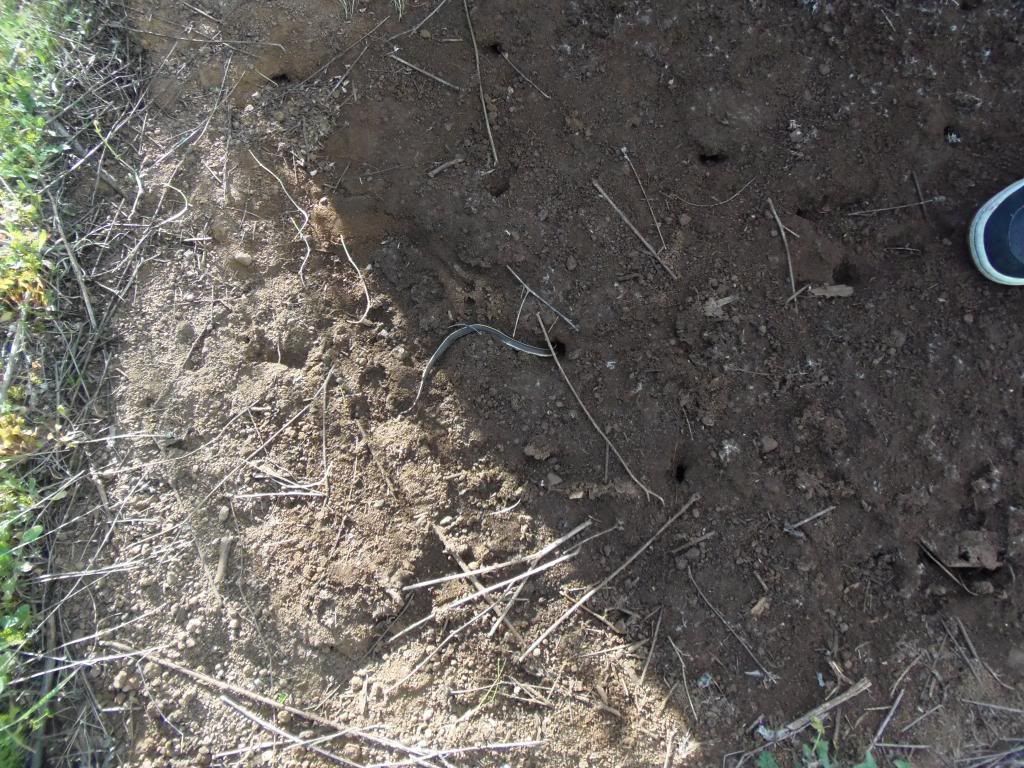
Of course, the snake when in the hole,
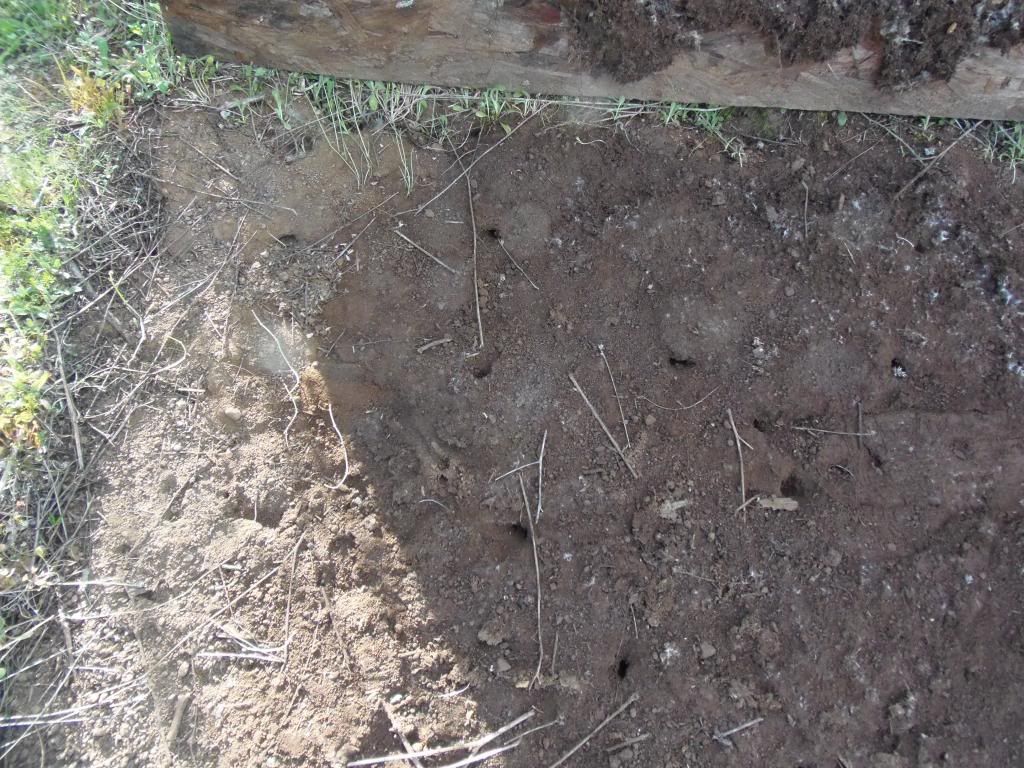
Here we see a series of holes, mind you they are all under a tight piece of AC. Which means they are underground. The whole area is riddled with underground holes. I/we found lots of kings under AC, which means they were not out. Just close to the surface. The point of this series is to show the holes and what they look like. END pt1
Reptile & Amphibian Forums
Welcome to kingsnake.com's message board system. Here you may share and discuss information with others about your favorite reptile and amphibian related topics such as care and feeding, caging requirements, permits and licenses, and more. Launched in 1997, the kingsnake.com message board system is one of the oldest and largest systems on the internet.


Nesting and NO
FR
Apr 24, 2014 09:09 AM
Replies (21)
FR
Apr 24, 2014 09:45 AM
So in captivity, We attempt to reproduce what we saw in nature. Which is simple, Find a container, any container, fill it with the sort of substrate we saw in nature, and have it about the same temps and moisture level. please note, if its dry under AC, there is no snakes, they drop down to a level of suitable moisture to keep from dehydrating. EVEN is it means they and attain the temps they want.
So lets see what we can do.
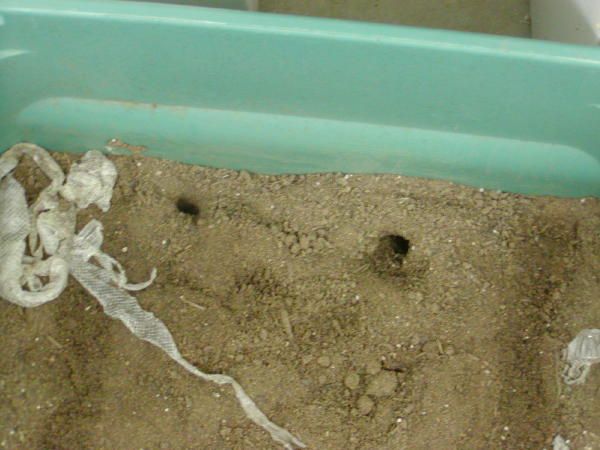
I placed suitable soil in a storage tub, its about 18 inches tall, so about 12 inches of dirt. placed plywood boards(retes boards) over that, much like the AC in the above post. put a small lite in the lid for a hot spot, a water bowl. So the surface is like any cage and the snakes can live for long periods in the cage. Here you see sheds from the pre-egg laying shed and holes into the substrate, just like the picture above.
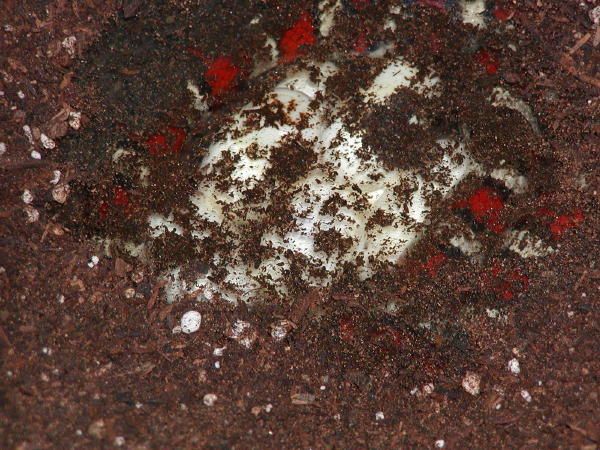
Sorry I do have these exact pics with cal kings, but I would have to find them. They do the exact same thing as this king. I bury a piece of glass or lexan aprox 4 to 6 inches deep. They normally, pretty much always, lay right under the glass. The glass is more about the keeper and is a nice viewing window to see whats going on without disturbing the animal too much. The snake builds a nesting chamber, shapes it to fit the conditions.
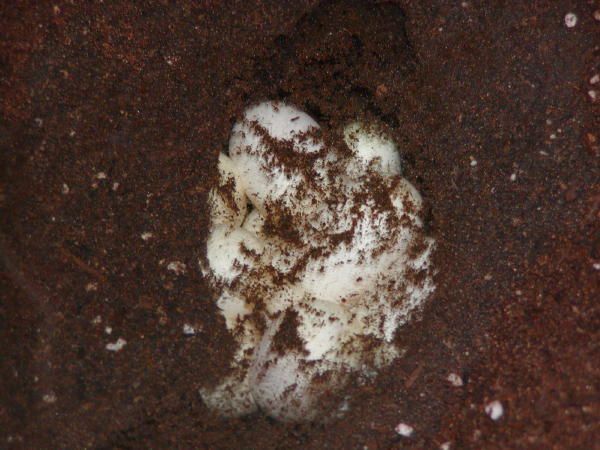
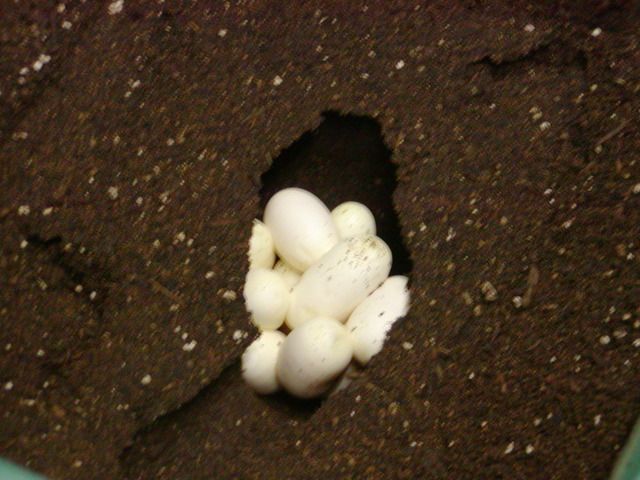
END pt 2
FR
Apr 24, 2014 10:44 AM
Here I get to whine a bit. The point of testing is to reproduce an observed behavior, that is what naturalistic observation is for. My whining part is, I flat do not understand how people think. They want to learn something then do as little as possible. That is, they want to learn but not in a realistic manner. They(not all, many) seem to let the clutter that restricts learning get in the way.
I tend to hear, I can't because of "this and that" or They make it A or Z and not the million levels in the middle. Or make it about "forever". All That is clutter.
Its only a box with dirt, anyone an everyone can do it.
Consider, in the first picture, if that was an adult gravid kingsnake, the area under the AC is at least ten times larger then the box I showed in the pics(plan view) And much deeper.
So what I did here is very minimal to start with.
People see what I did and reduce it. WHATS WITH ALL THIS TINY CRAP? One day, someone will do "more then" and I will pass out dead. So DO IT.
When I was produced lots and lots of colubrids, I had six boxes, that's all it took. Also because I kept groups, You can put several females in one box, if needed. In nature, many kings communal nest. So its normal. part 3
FR
Apr 24, 2014 11:17 AM
What chaps my hide is, as a normal human being, when you see the females doing "what they do" With a drive and focus that's amazing, and to see how little laying eggs effects them. Its simply a joy to see. So when I see NICE folks, confine gravid females in tiny boxes, that light shines in, with a hand full of sphagnum moss, eggs scattered all over the box, it not only does not give me joy, it actually makes my stomach hurt. That's based only on the poor female snake, nothing to do with the keepers. If someone forces me to think about why nice people would torture a snake like that. I have no answer. None what so ever. I simply cannot see that. So please explain to me, WHY WOULD ANYONE PUT A ANIMAL YOU, like? love? tolerate, thru that? Forgive me please. I just do not understand how this slips by folks. Heck I do not understand it at all. The reality is, its not my problem. Its not others problem, the problem is the female snakes that are forced to lay their eggs in the most unnatural way a person can think of. Discussion welcome in both areas, the nesting and my whining. please understand, I don't whine much. But this crap nesting knots my poor gut up. I will end with a semi quote, so many put tiny boxes in side tiny boxes,Jack Nicholson in the movie, One flew over the Coo coo's nest. What's with all the F'in BOXES
AaronBayer
Apr 24, 2014 12:24 PM
I really liked the info/pics in this series of posts.
I have always used nesting boxes and never had issues, but it is obvious that this is just a better way of doing it for the animal as it closely mimics what is natural for them to do.
I have 3 55gal aquariums that used to be turtle tanks that I think will now become massive nesting enclosures. I may even set up the big nesting enclosure and put a nesting box in there too just as an experiment to see the animal choose a more natural method over the man-created box.
I also found the part about kings communal nesting interesting. I've seen pics of rat snake nests, and seen for myself a communal nest for at least 3 bull snakes (41 eggs)under a giant stack of hay bales and i've also seen communal nest for fence lizards (57 eggs!!!! no clue how many females it took)under a stump I pulled up in my yard.
now for a question. what species have you used this method for?
FR
Apr 24, 2014 01:26 PM
once found 6 gravid female pyros, 16 eggs and a whole lot of hatched eggs in one spot. Next best was 4 females.
If you link this with the bonding thread, then you will start to understand how colonies come about.
I have a friend that did Mtdna on some crots in dens and found they had a common mother.
Then if you link this with the female driven system that snakes use, you get a fairly good picture of whats going on. Of course there is so much more to it.
Lastly, in our 18 year pit tag study, we found then they have the ability to change behavior when conditions change. Indicating more then one mode of survival. The dang things are complicated. What caused us to miss all this over so many years was the approach that snakes were mindless killing machines. And all instinct. We were so far off, there was too much middle ground, and its still that way. When I mention these resident animals, the ones that pair bond, tight home range, live for many decades etc. To be clear, this is only a part of the reproductice system. Maybe 30% but produce a high percentage of successful neonates. Say, 80%. So its a very important part.
Its also the part, all the population is seeking, but fail to find. This also requires some thinking.
AaronBayer
Apr 24, 2014 02:07 PM
I do enjoy all of the change of pace info that doesnt go along with the status quo. when I got into snakes around 11-12 years old I learned from who was in my mind were "experts"... the pet store owners and the 10 dollar snake books sold in pet stores.
luckily a few years into my snake keeping I joined local herp society and there were a handful of people kind enough to actually talk to the 13 year old kid running around asking a million questions. Some of those people had advice and used methods that were a complete 180 from what I had been reading in books and I was very drawn to it. I take pride in having an open mind and being up for new ideas and experimenting with new things.
so now 15 years later when I read about some of the stuff you and Rainer do, it's kind of the same experience all over again. some of what i know is good, but more of what i "know" should be reevaluated because it could/should be better even if it is currently working.
FR
Apr 24, 2014 02:50 PM
You young man, have a great approach. Its not about knowing its about learning and continuing to learn.
Its easy to understand, all you have to do is look outside. What do they do to live and continue to exist out there? Whatever that is, IS THEM. Its what makes them, what refines them and has refined them for tens of thousands of years(phenotypic Selection pressures)
Anyway my next thread is going to blow your mind. I hope you find it interesting.
Bluerosy
Apr 25, 2014 12:39 AM
Anyway my next thread is going to blow your mind. I hope you find it interesting.
I hope so.. I heard that there are some people stopping in now to peak what is going on ,but not yet posting. They are a new lot of more intelligent guys and one who also knows rattlesnake behaviors.
So I am sure we will have some interesting (for a change) debates. 
-----
FR quote:
"Doing the same things over and over expecting to learn something else, is the definition of insanity"
Bluerosy
Apr 25, 2014 12:45 AM
They are a new lot of more intelligent guys and one who also knows rattlesnake behaviors.
For those that don't know what I was referring to.. I was not referring to present company and current posters here..but to past company who have since departed.
-----
FR quote:
"Doing the same things over and over expecting to learn something else, is the definition of insanity"
scaledverts
Apr 25, 2014 10:33 AM
Thanks for putting all of this together Frank! I appreciate it! I'm using a slightly smaller container (but still going to have some depth to it). How much moisture to you typically add? Your dirt looks relatively dry. I'm using a combination of: peat moss (mainly), loose sphagnum, and some coco-bark as the substrate with at 12*12 heavy tile sitting on top with a water dish on top of that.
Do you find that the light is required or just the heat it provides?
Cheers,
Kyle
-----
Kyle R. Mara
Common sense is genius dressed in its working clothes. - Ralph Waldo Emerson
FR
Apr 25, 2014 12:42 PM
Hi Kyle, The part about larger and smaller is about the same as a suitcase. The larger they are, the more you can put it them.
Which means the smaller then are, the less you can put in them.
how that works here is, The smaller you make it, the more accurate you need to be. As in no room for error. The larger it is, there is more range of conditions the animal can pick from. Therefore, we are not forced to know or be right. Let the animal be right.
So with my larger boxes, I can be dry on top and become more humid as it gets deeper. Which is absolutely natural.
This brings this up. They have a range of conditions that each INDIVIDUAL prefers. We know the some of that like, it must be dark and secure. It must have a certain level of humidity and within a certain range of temps. And they do have a range they "understand" how to work with. The problem with small boxes is, Do YOu understand those conditions and that range. This is the area that chaps my hide. Newbies want to start off as if they are not newbies. I will say, getula can be problematic, even with deep choices. Other things like putting two pieces of glass to they can build a nest between them can work for those indiviuals, or black plastic, It appears so getula do not prefer to place eggs on dirt. So even after you practice deep nesting, there is room to improve results.
Take Shanes report on his king laying eggs, it appeared to have deep substrate of the right type but his female did not build a chamber. So while it was good, it can be way better. How is easy, offer more choices. Please understand, I have nested thousands of females of many species, and I do not KNOW, exactly what each individual picks.
It should be like this, start with large nesting with lots of options, then as you gain experience, you can narrow it down if you WANT, but it never is better by narrowing down choices. All that does is put more responsibility on you. So if the nesting fails, do not blame the method.
FR
Apr 25, 2014 12:57 PM
Part 2, Kyle, do you think in lew of what I said above, that the box I posted was large or largest? or do you think it was the smallest I could get away with and still cover the bases?
I ask, because there is some human perception that because my containers are larger then most, that they are the largest and they surely can do with less.
I do not understand why folks think animals do not have a sense of space. They live in the same world we do. So that is a common place to start. If you have a four foot female, what do you think about a one foot wide box that's two feet long. Consider, to burrow, it means making a tunnel that's longer then your body. Or its not a burrow. So just to start, a one foot box is nearly the size of the chamber on a big king. Please give the and animals some credit, They understand space and most likely far better then we do. For instance, we look at a cage, and decorate it like some scene in nature and call it that scene. yet, to the animal. Its a cave in the ground they cannot get out of and has nothing to do with whats on the surface. Its a box. Its never going to represent its environment, except to other people. I build and built naturalistic zoo enclosures for a living. Do you understand the most important principle we go by? Illusion. Its never real, or rock or trees, its stuff we form to make the illusion of those things.
scaledverts
Apr 25, 2014 02:15 PM
Well, of course, we would all love to give our snakes SUPER large outdoor cages that had a variety of habitats for them to explore and live in. The same goes for nesting/egg laying options. I think most, if given the choice, would choose to have larger egg laying containers with deeper materials etc. However, there are constraints that must be placed (unfortunately so) on the animals due to time, money, space, etc issues. Ultimately, there are always going to be compromises to keeping snakes in captivity (or really anything in captivity for that matter). I think that our goal as keepers should be to minimize those compromises while also being realistic about what we can accomplish without a large animal facility with large naturalistic enclosures.
-----
Kyle R. Mara
Common sense is genius dressed in its working clothes. - Ralph Waldo Emerson
FR
Apr 25, 2014 04:31 PM
If I can be honest, your rationalizing. Making excuses. We should do whats important. Nesting is important. It should be considered a captive requirement. If you do not have the room for a two foot by three foot box, you should not be breeding them. That is not much to ask.
Your statement seems to indicate a box beyond reasonable size. That is not whats going on here. Even a two by four box is reasonable. To me that's a really good size nesting box. Please explain to me any real condition where you cannot do that? I am serious. consider the value, people pay all manner of money for some snakes, and racks, and rodents and will not place $40 value on better nesting that improves both results and the health of the female.
hang around here a bit, some many nice folks bring up this, my beloved kingsnake, LINDA, shes so sweet I love her so much and she became eggbound and died. Why? I know why, do you?
FR
Apr 25, 2014 06:57 PM
Please understand, I am not being mean, but your one of the progressive thinkers here, so I want you to think. Let me try again.
You said;
Well, of course, we would all love to give our snakes SUPER large outdoor cages that had a variety of habitats for them to explore and live in. The same goes for nesting/egg laying options. I think most, if given the choice, would choose to have larger egg laying containers with deeper materials etc. However, there are constraints that must be placed (unfortunately so) on the animals due to time, money, space, etc issues. Ultimately, there are always going to be compromises to keeping snakes in captivity (or really anything in captivity for that matter). I think that our goal as keepers should be to minimize those compromises while also being realistic about what we can accomplish without a large animal facility with large naturalistic enclosures.
When is it too small? When it compromises physical health? When it compromises, mental health? Why is it normal to compromise a captive animals health? If we do not understand something, then that is a poor excuse. But when we do understand there is a problem and choose to ignore it because of Time, money, space, etc. That is something that should not be so acceptable.
I measured my king egg laying cages, and they are aprox 18 inches wide, 2 feet long, and 18 inches deep. Oh I would use larger for large females, say over four feet.
In Europe, some countries have size requirements for snake cages and truly I do not remember what they are, but they were huge, like three times the length of the snake. Can you imagine that. We are not talking about that, but someday we may..
To me, its not about cage size, it is about nesting size. Nesting is very important to these animals. And your right, in a sense, their nesting cages are larger then their normal cages. Well, its sad. Again, this conversation is about exploring the issue.
Bluerosy
Apr 25, 2014 08:28 PM
FR,
I don't know if my memory serves me right but I think it was you that once mentioned rubbermaid or plastic trash cans stacked with nesting material and boards for a communual nesting area for kings.
Well I heard it somewhere.. I am pretty sure it was you? I never tried it, but the idea it stuck with me and was thinking of a way to make it simple and easier (on me  ). The only thing holding me back is trying to empty the darn container every week to find the eggs. But maybe it is not that hard and I should just give it a go with about three females this year and see how it works in practice.
Anyway it seemed like a great idea especially since I have about 5 of those empty cans sitting around and not used most of the year.
Sounds crazy but I might try it and if I can find the snakes making nests in them it will work out well. It is worth playing around with new ideas. LOL!
I keep thinking how easy it would be to jus grab the gravid females and just toss them in the cans and viola' =..eggs!
anyway, my point is there are many ways to make nice big nesting containers and they can be reused for an entire season. That does not seem to be to hard to do.
-----
FR quote:
"Doing the same things over and over expecting to learn something else, is the definition of insanity"
FR
Apr 25, 2014 11:13 PM
I started with metal drums like you mentioned, but they were metal. And its easy to dig up snake eggs, the substrate is soft and lite. Monitors tons of dirt and sometimes you need a jack hammer. To me its fun to see nests they make. Maybe when I am too old and feeble, I will change to something easier.
scaledverts
Apr 26, 2014 08:40 PM
Hey Frank, As a scientist, I try to keep an open mind to things that might work better for my snakes.
Yes, there is a bit of rationalizing here because, while it shouldn't, snake captive husbandry is always going to have compromises in some way or another. I'm trying to minimize those compromises when it comes to egg laying. I've been around the forms for a while (not quite as long as you but not an insubstantial amount either) and I too have seen egg bound females and people freaking out about it. I've also personally had females hold their eggs too long for my comfort.
My container is ~18 wide, 24 long, and 12 deep. I'm not too much smaller than yours (the picture you posted looks like a much larger bin than the dimensions you mentioned).
How do you deal with multiple gravid females? Communal nesting is not an option for me because of the need to know genetics of the babies (100% hets etc). My worst nightmare is all my females go into shed at the same time and all start looking to lay at the same time.
Kyle
-----
Kyle R. Mara
Common sense is genius dressed in its working clothes. - Ralph Waldo Emerson
FR
Apr 27, 2014 11:26 AM
Most of what is done with captive snakes is convenience based. All stages are minimized because the snakes SURVIVE it. Not prosper or excel. they can survive being kept in solitary confinement.
Its not even all snakes, its certain kinds of snakes, species that are very fossorial, low metabolism, etc. Such as hognose, ball pythons, sand boas, etc. Not species like coachwhips, racers, patchnose or other active medium to high metabolism reptiles. Those species do not like rack type cages. They tend to fail QUICKLY.
The point being, practices that actively cause health problems like poor nesting, should be addressed. And proper nesting, SHOULD BE mandatory. When females abort eggs and scatter them around a box, its not nesting, its an abortion. Yet to many, that's fine because the female lived and some eggs hatched. hmmmmmmmm Please, this is not about science, or biology, its more about human traits like lazy, self-centered, narcissistic. etc, you know to cause an animal to suffer for our convenience. This sir is a people thing and its why folks fight so hard against doing it for the sake of the animal.
Group nesting, I do not get what your being limited by. These methods I did/do, were developed for and by, line breeding for genetic traits. Common sense applies here, bigger snakes, bigger box, smaller snakes, smaller box, several smaller females, use the box for a larger female, etc.
The key is, once you have provided normal nesting, it hurts to not support them in such a way. Again to me, its about people and their fear of wrong. You know, making stuff right and wrong. If they find out they are wrong. And they hate being wrong. So they avoid something that would point out they were wrong. The key here is, don't make it about right or wrong, make it better or worse. There are many degrees of each. pt1
FR
Apr 27, 2014 11:53 AM
You mentioned science. So I will run with that. Science is to question. Questioning, then testing, produces results(answers) You can stop there or be scientific, that is, ask better questions and receive better answers, etc etc. That is scientific, not stopping at the first answer/result. Scientific is a line of questioning then keep questioning. There is no end.
In this case, you as a scientist want to ask questions that will give the best opportunity to understand a concept. Nesting is not a question that reveals one answer. There is more to it.
Nesting is both physical and behavioral. And may I add, cultural. They require certain physical elements like temps humidity, which are easy, then other stuff like mass and security, no lite, being able to sustain long periods without drying out. Those are requirements we do not understand. Done by thousands of years of phenotypic pressures. Do you really think a female in nature would lay eggs in an area that has the right moisture that's only six inches by six inches. No it won't, and the reason is, those areas would dry out too quickly. So they learn to find areas large enough to withstand long periods of time and not dry out. Hence mass or size is a real requirement.
ALso, reptiles work is a success based approach. That is, if it work, do it again. That is how they survive, this really goes for nesting. They have a drive to nest where they hatched, next they have a drive to nest where they successfully nested. ETc. Remember discovery in nature is costly. So some(these) species, attempt to nest in the same area, over and over. p2
FR
Apr 27, 2014 12:13 PM
Kings do that.
So how this relates to science, ask question(to test) in a way that will teach you more, not in a way that will teach you less. Small cages, small nesting, teach you less to nothing. Larger cages and larger nesting allow you to place more variables so you can learn more. Remember, science is to understand what is not understood and to correct what is misunderstood.
Its my opinion that my problem comes from this, the advent of rack systems hinders the ability to learn(about the animals) Follow the instructions and it works(to a point) Because these systems are blind keeping(you cannot watch them without disturbing them. and there is very little the animals can do. No reason to make choices when there is no ability to make them. So its a poor way to learn. There is no A or B to choose from. Newbies start with this, then think the animals are stupid. As the animals in racks are mindless, do nothing units. No sir, its the people who are stupid. Not ignorant, as we/you, know better.
You Kyle said some of this torture is inevitable and you may be right. But that does not make it the right thing to do. What should be inevitable is, doing what is ALSO right for the animals in the box. What is also inevitable is, losing the right to keep animals. I have said this a million times, if you kept a dog or cat or horse, or mouse like that, you would be fined, have the animals confiscated, even jail time. Whats funny is, government does not care about snakes, we are the ones who supposedly care about them, yet we are the ones who as you say, inevitably keep them in a minimalistic way. To the extreme. Odd I tell you. Best wishes
