Reptile & Amphibian Forums

Welcome to kingsnake.com's message board system. Here you may share and discuss information with others about your favorite reptile and amphibian related topics such as care and feeding, caging requirements, permits and licenses, and more. Launched in 1997, the kingsnake.com message board system is one of the oldest and largest systems on the internet.

Click here to visit Classifieds
Southwestern Center for Herpetological Research
Click for 65% off Shipping with Reptiles 2 You

Interesting...

caracal Jul 12, 2014 10:02 PM

I have one young girl - poss het albino.
I threw an abino anaconda on her just as an afterthought.
She laid 25 eggs, yesterday, 11 days after pre lay shed.
She now weighs 190g.

I weighed her eggs - they weigh 188g.
It's been 24 hours since they were laid - I don't know how much difference that would make.

I've never weighed the eggs before and was surprised.
I usually just weigh the female before and after, but I thought maybe they lose fluid weight too, so I thought I'd check that.

25 perfect looking eggs, no slugs.
I'm delighted with that, now I hope she proves out.

Replies (8)

caracal Jul 16, 2014 04:14 AM

....to determine the relevance, if any, of how soon the females drop their eggs after shedding as it relates to the issue of egg binding, it would be useful to get some measurements and weights of the eggs laid.

So far my experience leads me to think otherwise.
My healthiest looking, largest clutches with the least number of slugs also tend to consist of eggs that are larger and I find it hard to believe the size of the egg is causing the problem.

FR Jul 16, 2014 10:32 AM

I think common sense applies here. Caracal, your entitled to believe anything you want. Have you had any become egg bound? If not, then you have nothing to talk about.
Common sense, if they become eggbound, they did not lay eggs, so there is no measurable days from shed, as the female did not drop eggs. So its easy to say, the longer it takes from the pre egg laying shed, the higher the chance of egg binding. On the other side of the coin, the closer to shed they lay eggs, the less chance, as they already laid them. That is very easy to understand.
The point of concern is, where is the breaking point? We KNOW, they can lay one day after the pre egg laying shed(Gregg and others) we know they can become egg bound(many many others) So the question is, what is normal, and when is it abnormal. This is a simple problem. Its not about what you think, its a simple set of conditions and numbers.
As we are working with reptiles, the exact number of days is variable, as they are ectotherms. We each have similar, but different base temps, and we each have an individual tolerance level in which we control to different levels. So exact days will not occur. But trends do occur.
The point is, from what day to what day is normal, not only based on days, but ALSO on the condition of the female.
Its fairly clear and easy to see, if eggs are deposited from 1 to 6 days after shed, there is very little negative effect on the female. Conditions that support the original body weight of the female(pre-copulation) have to be considered good. Any loss of weight that is not regained in a couple of days, can indeed be measured. From 7 to 10 days can cause some weight loss. 10 days plus, can lead to higher percentages of body weight loss and egg binding. This is not something to question. It is what it is and it does occur. The question is, when does it become harmful? As mentioned, there are many factors. pt 1

FR Jul 16, 2014 11:15 AM

The problem is, in order to understand this, one must try/test/experiment, the different conditions that may cause, holding eggs. Not using a method and predicting what others will do.
The problem with many on this site is, they do not understand testing. In order to gain an understanding, one must test the different methods.
In Caracals case, he mentions one method, then forms opinions on everything else. Which is poor science. Caracal, if you want to understand egg binding, then you must provide conditions that CAUSE egg binding. Its only then you can gain an understanding of how it works and how to avoid it.
From my experience here, either folks do not understand how to test. or they are worse and only want to attack and disparage. For instance, comparative testing is to set up snakes in different conditions and measure the differences. Either with numbers or behavior. As seen here, I am testing, aspen, soil, and pine shavings. When I mention pine or aspen, I get attacked. Oddly, that's how you test.
In your case Caracal, keep some in poor conditions, shallow nesting in lite, not use your labor room or whatever you call it. Poor diet, poor conditions, just to observe. That's how you learn, not by giving it your all and receiving good results, then saying, the other stuff is not a problem. well sir, its not for you, but it is for others, just a few weeks ago, one poster was brave enough to say he had an egg bound female. I would think that most that have egg binding, do not post it. which is normal. Very few here post failures. To me, this forum is more of an ego based forum(nothing wrong with that). And most post successes. End pt 2


FR Jul 16, 2014 11:34 AM

please understand the First wave of husbandry was discovery. That is learning how to keep and breed a species. With Hogs, that was done in the early seventies(along with many many species) So how to successfully breed Hogs has been known and done for decades. So there is no discovery to be done here.
The second wave of husbandry was more about simplifying it, and breaking it down to the least base requirements. The start of commercial breeding occurred here.
The Third wave and what Philippe de Vosjoli, was attempting to get to the public was, the above, based on the species and individuals animals, normal natural characteristics.. Not materials and conditions foreign to the animals. As I mentioned from the beginning, THAT IS MY INTERESTS. Not so much being successful with a hognose, as mentioned, that was done many decades ago. I mention this because it seems to be some weird goal that I become like you folks. Which would be great if I had the same interests, but I don't. My interest is third wave based. So please don't expect me to do or think otherwise. end pt 3

FR Jul 16, 2014 11:58 AM

The animals I use to base my methods on, are not yours, or any other keepers, they are wild natural free ranging hognose.
For instance. your captives are babied, pampered and coddled. hahahahahaha, All the food they can eat, water at all times etc.
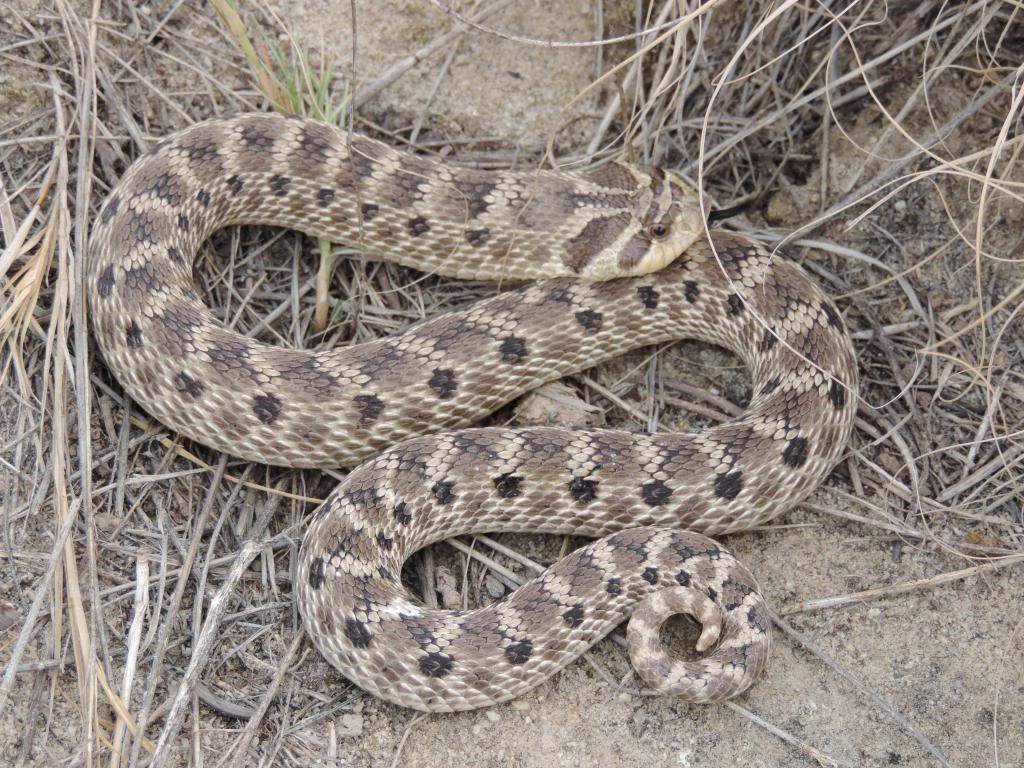
Lets look at wild hogs here. It rained once this winter, Oct. to the end of May. A lite rain. The hogs lived, bred, nested, all without water and food for that long. They are not just finishing the nesting season. The adult females that laid, are healthy strong and its very difficult to tell they laid. This is a recently emerged female, she recently laid.

Remember, no water since sept. would yours look like that. Also remember, she consumes parasites with every meal. Toads and lizards are full of parasites. How would yours look?
Whats interesting is, with wild snakes, reproduction is a normal natural occurrence. It doe not effect their health or causes weight loss. They appear the same before and after reproduction. Again, without the advantage of a steady food source. Or any food source for long periods of time. So yes, these are my questions.

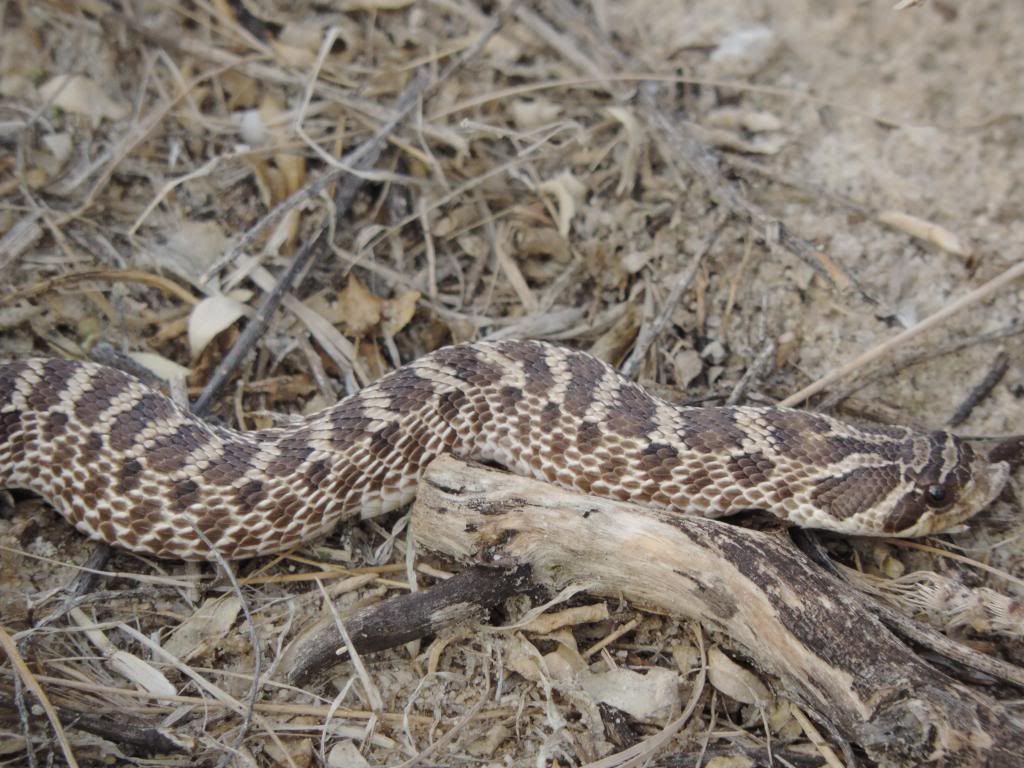
Or this healthy young female, no water for how long?
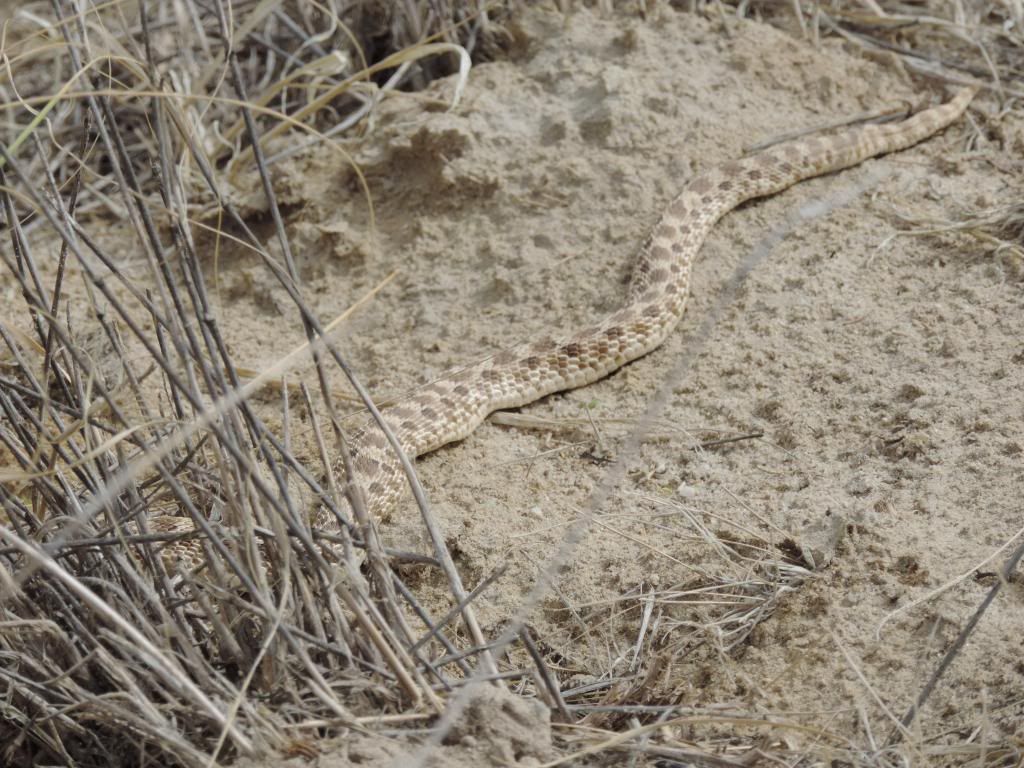
Or why is this one so skinny? having a hard time. Interesting is, I found this individual 6 days apart, and it traveled almost a mile. And I did not touch it. So yes, its these successes and failures that drive me. What you do is great. The harshness of nature, brings up my questions. Have a great day.

Gregg_M_Madden Jul 16, 2014 02:45 PM

I do not think your test on this means anything to be honest. What is the correlation between the weight of eggs to egg binding if the female dropped. The eggs without a peoblem?

caracal Jul 16, 2014 07:33 PM

I meant to say that if we are to entertain the idea that the longer the female takes to lay after shed, the more likely she is to become egg bound because the eggs are bigger, then it would be interesting to see if the eggs really do gain in size over the course of those extra days.

If you find after measuring many clutches that eggs that are laid 10 days after shed are no larger than eggs that are laid a 2 days after, then it would seem that the supposed increase in size due to the delay in laying isn't the issue.

Similarly, if you see with females that become egg bound (with just an egg or two remaining) that the eggs in their clutches are no larger than the eggs of females that don't retain any eggs then it again would seem that size isn't the issue. (obviously, one would have to compare similar sized females and the more clutches one compared the more informative the data)

I, for one, can say that the females that became egg bound in my collection did not lay eggs that were bigger than my females that didn't retain eggs (probably smaller). I can also say they never showed any attempt to expel the last egg and, furthermore, when I massaged the egg that remained it always slid very easily down to the vent are, so it wasn't stuck. Also significant is that it was always the last egg, meaning the others all came out fine.
I'm sure there are other scenarios - I'm just relating my experiences (which I think is reasonable and informative).

I think that with all these females that don't 'bother' attempting to even move the last egg towards the vent that there is another reason.

nasicus Jul 16, 2014 08:49 PM

Measuring everything over a long term period with many subjects is the key to good outcomes in science. A bad example is simply using one or two pairs of Mexicans in one season with one breeding type and calling it good science or good research. You need many many test subjects using the exact same controlled variables to formulate a solid outcome or reproducible predictor or phenomenon. Switching media type year after year to run tests on only one pair is useless and doesn't provide real data that can be axtrapilated across the entire species. It's not until you have enough numbers to formulate a verifiable and reproducible outcome or trend can you then and only then claim anything.

So set them up the same next year and measure again. Repeat enough times to get solid data then change one variable and see if that variable changes your outcomes. That's when you can narrow it down to what variables actually do cause change. Changing to many variables at once will lead to confusion because you can't prove which one was the factor or if they were working in tandom.

In the Mexican example changing everything from year to year proves nothing because you can't prove what variable is the real issue that causes the outcomes to change. That's useless gibberish...

So keep doing what your doing and collect the data. The data will tell you what it means once you have enough to see a trend.

Good luck.

Site Tools