I kinda understand what your talking about with your definitions, my confusion is based on approach and usage.
When you talk to a actual geneticist about this and I have, they have another view.
You say, co dom is like a recessive but different, and polygenic also similar but different, etc. Not your actual words.
You seem to want this categories to be exacting. yet they are far from exacting. That geneticist explained to me that we create these categories as a teaching tool, the reality is, they are not all so confined.
My interest comes from nature, which is totally different then deli cupping genetics. please no offense. Basically we have normal color and patterns, and recessives, like Leu, albino, melanistic and axanthic. The normal genetics consist of co doms and multifactorial(polygenic) etc. When describing these, the word, "usually" occurs, because of the prevalence of exceptions. This areas are heavily influenced by phenotype(S factors) which is missing in captivity.
What I am sorta getting at is, the normal genetics like cod and multifactorial, always include a range of results. degree of red, yellow and black. Which appears to be random within the genetics. That is, all clutches will vary in these traits, even with the same genetic mode. this is revealed in the constant range of neonates produced. As in, no two look alike. So, yes, I understand you CAN pick examples in those clutches and call them this or that. But you also pick other examples in the very same clutches and call it something else. hence the confusion.
Heres a pic of a Mexican hog. not mine
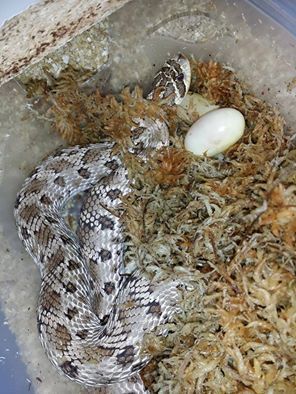
Please understand, its not about right or wrong.
Reptile & Amphibian Forums
Welcome to kingsnake.com's message board system. Here you may share and discuss information with others about your favorite reptile and amphibian related topics such as care and feeding, caging requirements, permits and licenses, and more. Launched in 1997, the kingsnake.com message board system is one of the oldest and largest systems on the internet.



For Gregg
Replies (3)
Hey Frank,
Co-dominance is pretty cut and dry like recessive genes and not something that is normally found in nature. In fact, co-dominance seems to occur less than recessives do. At least that's how it is in captive collections thus far.
Here are a few definitons of co-dominance.
A condition in which the alleles of a gene pair in a heterozygote are fully expressed thereby resulting in offspring with a phenotype that is neither dominant nor recessive.
Genetics. of or relating to two different alleles that are fully expressed in a heterozygous individual.
A heterozygous condition in which both alleles at a gene locus are fully expressed in the phenotype.
(genetics) (of genes) having both alleles expressed equally in the phenotype of the organism
As you can see from the definitions, it is not just a random mixing of phenotypes that brings about co-dominance. It is a rather specific genetic event.
Thanks again, Please understand, I get those definitions.
I also get other input, like from the Ball python folks and others.
As you known what we are calling cod in snakes is not the same as actual genetic cod, when cod expresses both cod and other in one snake. not one clutch.
If you know me, I look at these things as intended, from the product first. Or better yet, in practice first.
Many years ago, 1971, I acquired a very slightly odd Blairs from a clutch. I bred it and kept a very slightly odd opposite gender from that clutch. Bred those two and produced striped blairs. Not all in the clutch in the clutch were striped, It was a one in eight type of thing. If the striped(supers) were bred to eachother, they mostly produced striped. I then bred that gene into alterna phase, and produced totally speckled alterna. Of course at that time, there wes no Codom associated with snakes.
I also bred other traits out of many many species, It all worked in a very similar manner. Notice an oddity and bred it out, With snakes, It worked easily and regularly. Odd traits were always expressed in a way that Codom(cod) does. Generally within three generations, you could completely change the snake. You could do it with pattern, striping, colors, etc.
As you know, I worked varanids, with them, it was a horse of a different color. breeding for color and or pattern was a lot of work and inconsistent. With Red ackies, I bred for red and achieved black. Hmmmmmmmm hated it. I did succeed in producing a line of banded flavi/gouldi crosses. And a different line of banded gouldi. But by and large, their genetics is set in stone. part 1
Again, from an ethology stand point, its was easy to see that there were two types of genetics to deal with the S factors(phenotypic pressures)
Loose genetics of our colubrids that were the genetics is easily effected by changing conditions. And the shotgun effect of many ozzie odatriads or ozzie varanids. In their case, they throw a huge variation of offspring, where color and pattern is concerned, and hope that covers the constantly changing conditions. Consider, Australia is either in DROUGHT, or too wet. Its what it does. The conditions change regularly and are short term. Less then five years. Here, massive changes are rare and generally long term. For example, it would have been interesting to see what genetic changes occurred during the dust bowl of the mid west. And it is interesting to see what is occurring during during our 18 year drought(desert SW)
There is a distinct possibility that these axanthics are a real product of the drought. In their habitat, the local area has Whitish soil, when dry and with very little plant cover. When its normal(rainfall), the soils brownish and has a lot of plant cover.
What we see at this site is, Axanthics, very white hogs, axanthic type hogs that are not genetic recessives. Also, reds, yellows,etc. Which indicate unstable S factors.
The above explains why I have a different view that deli cup genetics. With out wild snakes, most all traits concerning color and pattern can be produced in a Codom type of approach. So to me and my area of concern whether its genetic Codom, or not, does not and did not matter, as it all worked the same.
Another problem is, many of these captive Codom traits, were the product of inbreeding normal phenotypes. Which on the surface means, the co DOM part was buried and "not" dominate.
In a nutshell some of you western hog folks really should explore the White sands area of New Mexico. Thanks again for the conversation, I appreciate it.
