Do you think brumation is absolutely nesseccary. When I bred boas everyone cooled theirs and I just manipulated photo period and they bred great. I got 100% success one year with 9 breeding. Last year I had a female that was kept in complete darkness in the brumation room. I brumate in complete darkness. But she was in an incubator at 88 degrees. She was the first to ovulate and become gravid. She laid 10 eggs a month before any of the others no double clutch. I only got 1 to Do that last year. It was my first year breeding hogs so I'm trying to to improve my results. does anyone else have any input on this. Or do you feel cooling is absolutely nesseccary.
Reptile & Amphibian Forums
Welcome to kingsnake.com's message board system. Here you may share and discuss information with others about your favorite reptile and amphibian related topics such as care and feeding, caging requirements, permits and licenses, and more. Launched in 1997, the kingsnake.com message board system is one of the oldest and largest systems on the internet.


Brumation
Jonrice
Apr 02, 2015 08:53 PM
Replies (13)
mingdurga
Apr 03, 2015 08:45 AM
Used to years ago, but not anymore. I let my apt. room temps dictate feeding schedule. Also turned the belly heat off in the winter / fall. My apt rarely got below 60 degrees. When pairs introduced and mating observed, the females were fed more often.
Also don't use an incubator for eggs. Temps hovered in the low 70's. Takes longer to hatch, but babies are larger.
Mike
FR
Apr 03, 2015 09:27 AM
I think this subject has been talked to death over the years. Hibernation is a subject taken in mostly odd ways, which have nothing to do with snakes. its mostly about keepers, it allows for time off from their snakes.
What is needed is a choice of temps. Not many species actually hibernate, but instead move to temps where they use little energy and lose little water. The reasons are, there is no food available. Normally at this time of year, they group up in pairs or groups. This allows socialization to occur and mates are picked at this time. At least this is what the successful ones do. Of course how they do this varies a whole lot. by both species and local. Consider, 90% of all the snakes, numbers and species, do not occur in areas where hibernation is required. Required means to survive.
That said, hogs do not require hibernation. But in practice, hogs are not one of the cold loving species. They are active at extremely hot temps, and the minute it gets cool(below 75F and no sun to heat the ground) they go down. They choose temps similar to speedy snakes like racers and coachwhips, but are not speedy. But they can move pretty darn fast. The latest I have observe a hognose surface active in nature was 12-31-12, when I found one that had just consumed a lizard, on my way to a new years party. So far, that appears to be an exception.
FR
Apr 03, 2015 10:08 AM
If you want to reach their full potential, the key is understanding how they work. Give them choices to conserve energy and moisture, and ways to expend it. That is, a usable heat range and feed them. No not once or twice a week, feed them when they are hungry. Consider, if they feed on their own, they are hungry. If they grow long and thin, its all good, If they grow short and fat, then they need to have more heat. Last year, I observed wild hogs feeding until they had prey hanging out their mouths. Then feeding the next day.
obesity is more about improper temps then amount of food. Of course individuals like old males, can become obese.
Such things like fatty liver Disease are products of not being able to process energy/fat due to low temps. Unable to place fat normally.
Lastly something to think about, snakes are not bound by air temps, in fact, that is a very poor tool to understanding reptiles. Its about like using a hammer to set a screw. You can do it, but not so well. Mass or surface temps are key. They do not have a thermometer. They feel temps with their bodies. Consider, air temps in the seventies can produce surface temps in the 130F area. Air temps of 90's or above, up to 145F or more. depending on the surface type and angle to the sun.
This also works in captivity. Temps travel thru mass. So cage air temps while a lot closer then in nature, are not the same as mass temps. You need to check mass temps to actually say what a snake is doing. With hogs, its far more important as they live "in" the mass. Also, Good luck this year with your animals, I am sure your going to do great.
FR
Apr 03, 2015 10:11 AM
I forgot to answer you, hahahhahahaha No hibernation is not needed or required to breed reptiles. Any kind. In a very general way, just don't force them to be too hot or too cold all the time. Most reptile species(with the exception of some bloody lizards) reproduce with there is a choice of hot and cool.
Jonrice
Apr 03, 2015 10:43 AM
Thanks frank. I got my fingers crossed
FR
Apr 03, 2015 02:29 PM
Did you allow them to cool or not? Mine did only because at this time, I have that set up. After I am breeding them for a while, I most likely not cool some individuals.
In the old days, early sixties, I never cooled colubrids. Then in the middle seventies, I did, then Both, or whatever.
The only thing was, cooling "set" them as far as timing goes. After that, there normally was no need to.
Jonrice
Apr 03, 2015 10:07 PM
I cold last year but I havnt yet this year. Was going to start in 2 weeks
FR
Apr 04, 2015 10:05 AM
Nice, it will be a good test. My guess is, some will and a couple won't. How many females and are some first time breeders?
Anyway, what ever happens I would like to hear about it.
My year is going totally different then last year. I only had two possible females last year, It was their first season, they were W/C juvi's originally. They did not cycle for a couple months out of cooling, which I thought was odd. This year I have six females, including one western, the first three introduced to males copulated after only a few days out of cooling. Of the remaining three, one is a small young female. So it will be interesting to see if she responds the same way.
Last year, I did not do so well, only ended up with three neonates but all three were Kennerlyi axanthics. 1.2 and are doing wonderful.
A problem I have here with any type colubrid is heat. Its very problematic for colubrids after June starts, as its so bloody hot, its hard to keep temp control on the animals. As there is no where including in the house that's below 85F Which is seriously not good for colubrid reproduction. Normally everything is done by then and feeding works great at those temps. This year, I air conditioned a small room to keep the temps down. Hopefully that will help. If indeed they cycled, there is no worries(about that) as they have two almost three months to go before its cooking here. Best wishes
Jonrice
Apr 04, 2015 02:15 PM
Hey frank send me ur number so we can talk hogs. Jonrice31@yahoo.com
Gregg_M_Madden
Apr 05, 2015 10:25 AM
So my take on this is, it is not needed for breeding. I brumate because it is easier for me to figure out ovulatory cycles. It is also something I do for snakes that go off feed during the winter. I would rather have them cooled and not using energy than to keep them at active temps while they are not feeding and burning up energy stores. Temperature has very little to do with them being triggered to not feed in my opinion. They will be at full temps and go off feed. They stop feeding before temps drop in order to clear out the digestive tract. I believe it has more to do with light cycles and barometric pressure changes.
Brumation is a part of their natural cycle so I incorporate it into their captive husbandry. Its easy on me and natural for the snakes.
FR
Apr 06, 2015 09:50 AM
First let me say that your doing great. But, this type of statement, its natural for snakes, tends to induce me to comment.
I do not mean to be argumentative, but your reasoning is more of a rationalization.
First, you can cool, hibernate, brumate, or estivate snakes if you want. Or not, its all good. But its surely not natural.
As I walk nature and attempt to understand snakes, to say captive hibernation is natural, is simply something we make up.
In nature, snakes seek conditions that support them. Most move to conditions that extend their active season for as long as possible.
Most species divide the year into to distinct areas, reproductive and feeding(not necessarily foraging) These two areas are aprox. 6 months each. And are also age dependent.
In the U.S. The summer, give or take when, is foraging, the winter is reproductive. Snakes gather, pair up, trio up, or bunch up, in the fall. They seek thermo mass in order to stay active all winter. They move around, socialize etc. until early spring. When the temps start to increase on the surface, they finish that years cycle by copulating, nesting(not restricted to one clutch) then restoring fat by feeding.(feeding season) If fat stocks are replaced, they repeat this the next fall.
Individuals that are young, growing, or non reproductive adults, normally have no need to gather, and simply do down until the temps return that support feeding and growth.
In my area, heat and drought causes snakes to estivate after the nesting season and before the rains. So most individuals stay down until the rain cools the surface. heat and dry are the two factors here. Back east, its not hot, but can be dry.
If temps and humidity permit, many snakes choose to stay active year around. Of course, not to the degree of the summer months. ALso, here at altitude, snakes are often out and active year around, even thought night time temps are well below freezing.
FR
Apr 06, 2015 10:28 AM
I mention the above because its only one small apart of what they are doing. It just happens to be a part WE THINK ABOUT.
In captivity, we give them temps, but nothing else that is important to them. Nothing, then we call it natural.
Naturally they gather with family or clan members and naturally with other species of snakes and reptiles. Naturally they are doing more then sleeping. They are interacting with future mates, etc.
ALso, as mentioned already, the vast majority of species occur in the tropics, the need to hibernate for survival is simply not there. Yet they still gather and go down.
The confusion of up(surface) and down(below the surface) is anthropomorphic. We somehow think down is sleeping, Its not. They live down, which is why they do not have legs.
Bottom line is, go see them hibernate in nature, then look at what we are doing, then try to call what we do natural. To offer cool temps, is only one small part of natural.
Whats plain to me is, we keepers really do not understand what temps these snakes utilize. The real fact is, they commonly use low temps, both winter and summer(when available)
I often mention, its funny but, I commonly see snakes crawling on the surface with temps between 40 and 60F. I have seen five species of pythons crossing roads between 50 and 60F. Oh and boas, they love those hibernation temps. Saw them on the surface and crawling as low as 42F. So to think 55F is hibernating, is a bit foreign to me.
So Gregg, its fine, cool them cause you want to and it works well for you. Which is great. But its not natural.
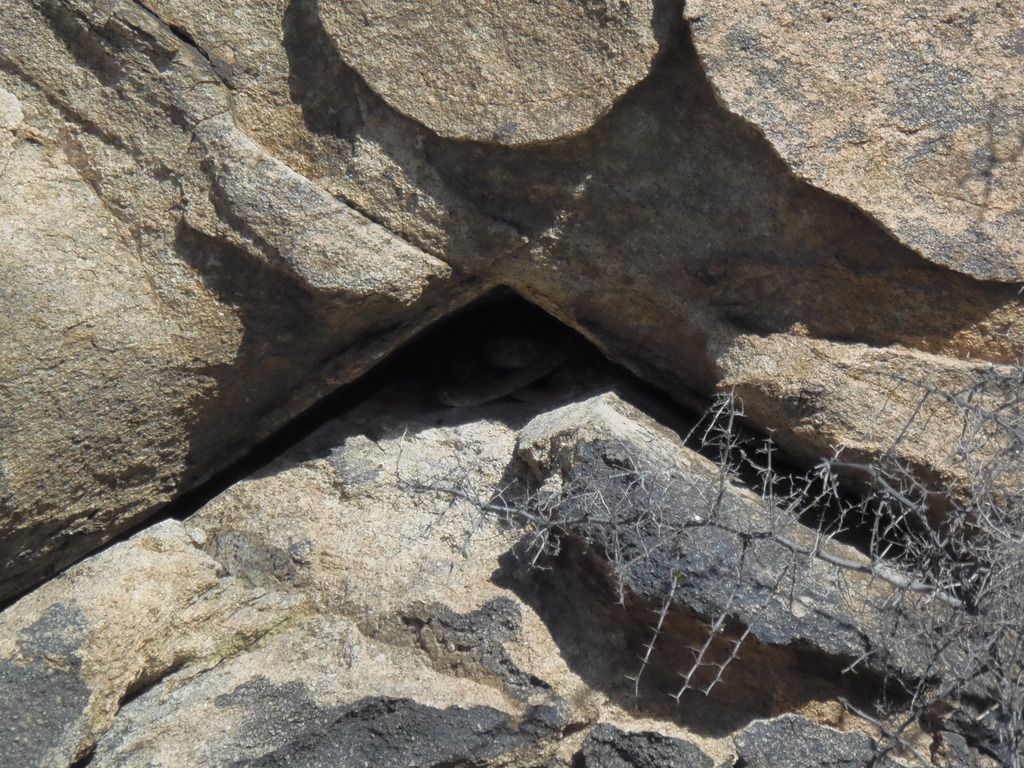
One last point, snakes do "enjoy" the world. Even in places they hibernate, they utilize places with a VIEW. They sit and watch the world go by.
FR
Apr 06, 2015 10:37 AM
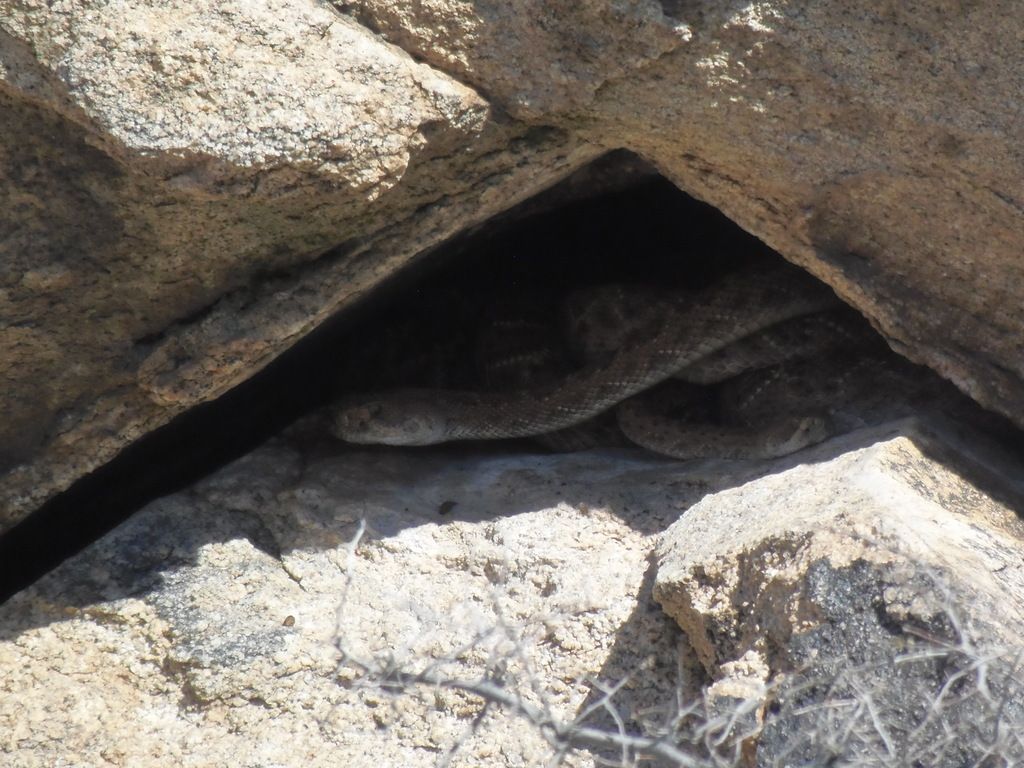
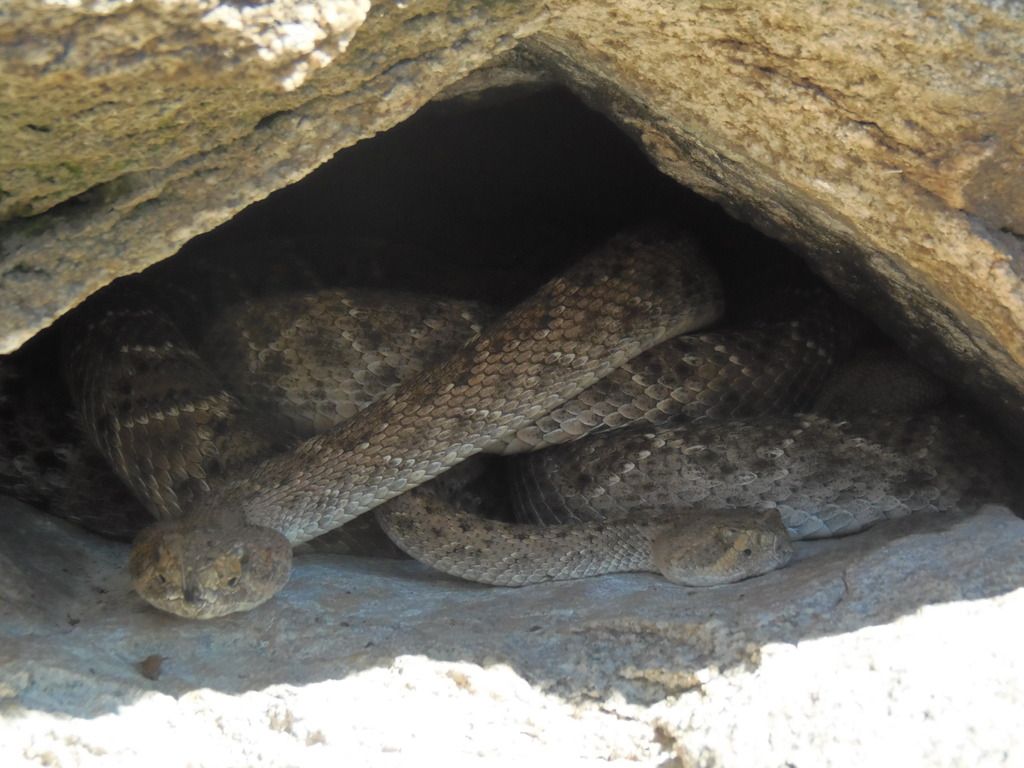
Sitting in the dark, watching the lite. These animals watched me coming from hundreds of feet away. They moved in the shade to get a better look but would pull back as soon as the sun lite hit them.
The point is, even when hibernating, they are doing, doing doing. Doing what, hard to say, but they are doing it. Even in winter. So no, cooling in a box is not natural. hahahahahahahahaha
