I am in the process of aquiring a pair of true ghost san felipe. I mean these things are almost solid white...a little grey tinge to them. They come from a person that got them from vision. I see someone in the classifieds is selling a ghost that looks nothing like what i am getting...his looks more like a hypo...what gives...I need some history here?
-----
Michael Enriquez
Reptile & Amphibian Forums
Welcome to kingsnake.com's message board system. Here you may share and discuss information with others about your favorite reptile and amphibian related topics such as care and feeding, caging requirements, permits and licenses, and more. Launched in 1997, the kingsnake.com message board system is one of the oldest and largest systems on the internet.



True Ghost San Felipe
dumje
Sep 20, 2005 04:42 PM
Replies (30)
James Wilson
Sep 20, 2005 05:08 PM
Post pics...
-----
James Wilson
Pacific Coast Herpetological
www.pacificcoastherpetological.com
AncientDNA
Sep 20, 2005 06:54 PM
If these are the pair I'm thinking of, I passed up on buying them b/c I couldn't get a straight answer from either the seller or the breeder concerning their true genetics. That said they were great looking snakes, but I'm quirky in wanting to 'know' the history & genetics of the snakes I buy. Especially for the kind of $$$ they were talkin'...
A 'true ghost', or are they better called a 'genetic ghost'?, is a rosy that is both anery and hypo at the same time. To my knowledge only 1 person has true 'genetic ghost' rosyboas. Somebody else chime in if they know more on that story.
In rosies, the term ghost has also been used for the extreme form of hypomelanism seen in the San felipe hypo. I believe the term originated with Vision?
Recently, the use has been brought up again as witnessed in the add for ghosts in the classifieds.
Also, hypo rosies tend to start out with alot more orange, then fade away to almost no color at all but the white.
That's all I can remember right now...
And like James said, post some pics.
Damn, photo gallery seems to be down! Maybe this pic of my female hypo San felipe will load up later...

-----
Thanks,
-JC
Rosyboas.to
1.1 San felipe (CB'93)
0.1 hypo San felipe (CB'98)
1.0 hypo San felipe (CB'03)
0.1 het hypo San felipe (CB'04)
1.1 hypo-line San felipe (CB'98)
1.1 hypo Borrego (CB'99)
0.1 hypo Borrego (CB'05)
1.1 albino Whitewater (CB'02)
1.1 double het snow rosy (CB'95)
0.1 anery rosy (CB'05)
1.0 snow rosy (CB'04)
1.1 Joshua Tree (CB'96)
1.0 Bagdad (CB'99)
1.1 Harquahala Mts. (CB'04)
1.1 Limburg albino (CB'02)
0.1 Limburg albino (CB'05)
1.1 Limburg anery (CB'05)
0.1 Boa constrictor (CB'92)
AncientDNA
Sep 20, 2005 07:15 PM
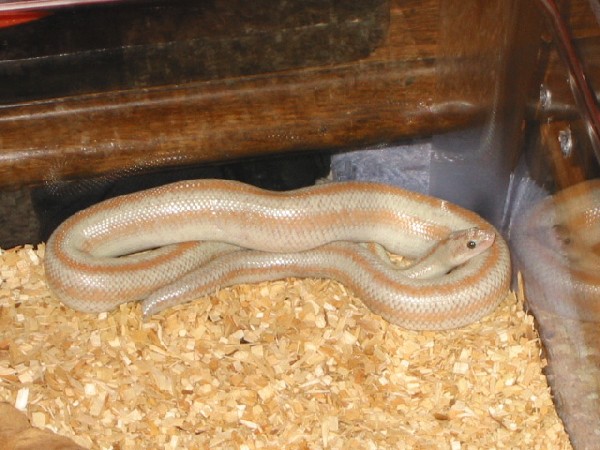
WooHoo she loaded up. In person she is nearly white with faint peach striping. For her, for some reason, my camera creates contrast that isn't there.
Personally, the hypo SF's are my favorite rosy. As if you couldn't tell...
Below is the male I purchased last year.
-----
Thanks,
-JC
Rosyboas.to
1.1 San felipe (CB'93)
0.1 hypo San felipe (CB'98)
1.0 hypo San felipe (CB'03)
0.1 het hypo San felipe (CB'04)
1.1 hypo-line San felipe (CB'98)
1.1 hypo Borrego (CB'99)
0.1 hypo Borrego (CB'05)
1.1 albino Whitewater (CB'02)
1.1 double het snow rosy (CB'95)
0.1 anery rosy (CB'05)
1.0 snow rosy (CB'04)
1.1 Joshua Tree (CB'96)
1.0 Bagdad (CB'99)
1.1 Harquahala Mts. (CB'04)
1.1 Limburg albino (CB'02)
0.1 Limburg albino (CB'05)
1.1 Limburg anery (CB'05)
0.1 Boa constrictor (CB'92)
James Wilson
Sep 20, 2005 08:34 PM
If yes, then I think that John and I were both considering buying them! I could not get any straight answers either, and the guy brokering them was horrible with communications and had a less than glowing history on the BOI, so I am glad I did not deal with him.


-----
James Wilson
Pacific Coast Herpetological
www.pacificcoastherpetological.com
dumje
Sep 20, 2005 09:03 PM
I am getting this pair from Joe Terry...he got them from vision. I am not sure if the pics you have are from the same broker he sometimes uses. Give me a name and I will tell you yes or no. I was looking for info and I believe i got everything i need...thanks for everything and yes I am getting the pair...actually i am making a trade for them...just curious...what value would you put on an adult pair of these that will breed this coming year?
-----
Michael Enriquez
Desertboas
Sep 20, 2005 09:54 PM
Michael:
The neonates I have this year are related to that pair from Joe Terry. Remember, these boas fade out over time, pics of young ghost San Felipe show more stripe contrast.
Beware of health issues...
Larry
American Desert Boas
James Wilson
Sep 20, 2005 09:59 PM
Craig told me that he was brokering them for Joe terry. Craig also told me that he (Craig) sold them at the Daytona show... Looks like he fibbed...
-----
James Wilson
Pacific Coast Herpetological
www.pacificcoastherpetological.com
bluerosy
Sep 20, 2005 09:33 PM
I recognise those from Joe terry. I belive he sold them to Craig Trumbower at the '04 expo in Daytona. They are not a ghost but a hypo. They are the best looking hypo I have yet seen..
Desertboas
Sep 20, 2005 09:50 PM
I recently published a brief this subject at www.rosyboa.com, since I own the site I will reprint below. I'm sorry but I must have missed church the day the preacher said: "...and God crossed a hypo with an anery, and it was good - thus it was so named a genetic ghost". LOL
Excerpt:
"The appearance of the first "hypomelanistic" San Felipe Rosy Boa was independently discovered in two separate collections during 1995. These two lighter phase San Felipe boas were distinct from their littermates by a marked pigment reduction. Fortunately, these two boas were a male and female respectively, and later bred to establish the founding stock of today's Ghost San Felipe Rosy Boa.
That's right, I said "ghost". Firstly, these little rosy boas are not your typical "hypo", but rather a true single mutation genetic "ghost". The gene knocks out a significant percentage of all three color pigments, making it a more true ghost than one manipulated through combining 2 different mutations. Eye color is black or purple-black, and in extreme examples the boas look more like "snow" boas. It also is clear to me the phenotypic expression is co-dominant, with almost 50% expression in heterozygotes. These we now refer to as "partial ghosts" or "50% ghosts". Thus far, the San Felipe Ghost Boa gene is the only example of such a "ghost" genetic mutation in rosy boa collections today.
This gene mutation, can, however, exhibit some deleterious effects. These rosy boas seem to be more fastidious than normal San Felipe boas and have a higher associated captive mortality rate. Even so, to the individual seeking a very unique rosy with a significant future in designer applications, the Ghost San Felipe Rosy Boas should be considered high on the collector list."
Yours truly,
Larry Risen
American Desert Boas

American Desert Boas
bluerosy
Sep 20, 2005 10:39 PM
I recently published a brief this subject at www.rosyboa.com, since I own the site I will reprint below. I'm sorry but I must have missed church the day the preacher said: "...and God crossed a hypo with an anery, and it was good - thus it was so named a genetic ghost". LOL
Well you should have gone to church that day because theologically speaking you have become a heretic. 
Though I understand what you are saying that the two rosys in question have a ghost or snow like appearance it is still a form of hypomelanism. By confusing these term will just make people turn away from an already devaluated species.
It has been accepted throughout herpetoculture that a ghost is a hypo x anery/axanthic. Otherwise why don't we name each snake on an individaul basis? Like how about calling them snows? or Pastels? LOL! *sarcasim over*
A better name would be Extreme hypo or something along those lines.
Desertboas
Sep 20, 2005 11:35 PM
You missed the whole point, HYPOMELANISTIC = REDUCTION IN MELANIN, WE ARE TALKING NOT JUST ABOUT MELANIN HERE. The genetic defect knocks out the other two pigments (red and yellow), not just melanin. It creates a ghost effect with each pigment, so calling them hypos is no more correct than calling them axanthic, etc.
What do you call a boa that has all three pigments reduced in relative similar proportions but not 100% eliminated? I'm open to suggestions, but until then, they are "ghosty" for me.
Now my Long Canytons, the ones you and I have communicated about, are hypos.
Larry
bluerosy
Sep 21, 2005 12:10 AM
PRODIGAL, ha ha. Thats a good one. Just because a couple whiter looking "extreme" hypos come out of a clutch does not mean they are something new and different. It just means they have been selectily bred for more white.
AncientDNA
Sep 21, 2005 08:26 AM
There is something else bugging me about hypomelanism...like how it's defined.
To me hypomelanism isn't necessarily only the reduction of darker Eumelanins, but can include the lighter Pheomelanins as well. We have several different examples of hypomelanism that are very different from one another(San felipes, Long canyons, etc) Some show an obvious reduction in darker colors, leaving more orange animals, while others the a reduction in both. The same can be said to be true for other snakes as well, like balls or corns.
I think of hypomelanism in different terms than it usually gets used. I consider it a 'general' reduction in pigmentation! It's a sliding scale though; hypos from different locales will display different phenotypes.
From the below pic, it's obvious that since both light and dark melanins come from the same starting material, that both can be effected by an adverse event at the beginning of the melanin pathway.

-----
Thanks,
-JC
Rosyboas.to
1.1 San felipe (CB'93)
0.1 hypo San felipe (CB'98)
1.0 hypo San felipe (CB'03)
0.1 het hypo San felipe (CB'04)
1.1 hypo-line San felipe (CB'98)
1.1 hypo Borrego (CB'99)
0.1 hypo Borrego (CB'05)
1.1 albino Whitewater (CB'02)
1.1 double het snow rosy (CB'95)
0.1 anery rosy (CB'05)
1.0 snow rosy (CB'04)
1.1 Joshua Tree (CB'96)
1.0 Bagdad (CB'99)
1.1 Harquahala Mts. (CB'04)
1.1 Limburg albino (CB'02)
0.1 Limburg albino (CB'05)
1.1 Limburg anery (CB'05)
0.1 Boa constrictor (CB'92)
James Wilson
Sep 21, 2005 09:04 AM
"I think of hypomelanism in different terms than it usually gets used. I consider it a 'general' reduction in pigmentation!"
I am not so sure I agree with that. Hypomelanism simply means Reduced melanin which is only one of the pigments we are discussing. If the reduction in pigmentation that you speak of includes melanin, then yes it is a hypo, If the reduction in picmentation does not involve melanin, then it is not a Hypo. Melanin is the key word. There are specimens (anerys for example) with reduced pigmentation that still possess normal amounts of melanin. These would not be Hypomelanistic. They would be "Hypopigmented" or more specifically anerytheristic. Again Melanin is the key word here. It is a hypo as long as the reduction in pigment involves melanin. If other pigments are also reduced along with it then it may be able to have other terms applied to it as well, but is is still safely refered to as a hypo.
Hypomelanism is a very broad, and often confusing, term covering everything from animals with simple recessive genetic mutations such as leucism, albinism, and amelanism to animals that are on the lighter end of the spectrum of what is considered to be normal for them. However, when most people think of a “hypo” they are usually thinking of something that falls somewhere in between these two extremes.
Most people in the hobby consider a “hypo” to have reduced amounts of melanin to a lesser extreme than that of the amelanistics, albinos, and Leucistics but to more of an extreme than that of a light specimen that still falls within the range of what is expected for that type. In addition, many people do not consider something to be a “true hypo” unless there is some reproducible genetic marker that is responsible for causing the melanin reduction. Weather that genetic marker is co-dominant or a simple recessive trait, usually depends on the species being discussed. I should also mention that the notion that hypomelanisn has to be a genetically reproducable trait is only a perception by many hobbyists; it is not part of the actual definition of hypomelanism.
There is one other thing to consider when deciding if a specimen is a hypo or not. The term Hypomelanism refers to an specimen that displays reduced amounts of melanin, possessing smaller amounts than would the norm for that population, be it species, subspecies, or local. So, when determining whether a certain specimen is hypomelanistic one must compare it to a sample population, and the size or type of that sample population can often be the factor that determines if that specimen is going to be considered a hypo or not.
For example, a Hogg Island Boa Constrictor is often considered a naturally occurring hypo, and this is true, if you are looking at Boa Constrictors in general as a species. However, it is not true if you are just looking at the island(s) where they occur, as that is their “normal” coloration for these Boas in that specific area.
-----
James Wilson
Pacific Coast Herpetological
www.pacificcoastherpetological.com
AncientDNA
Sep 21, 2005 09:51 AM
I mostly agree, but to be too specific about hypomelanism only affecting production of darker pigments seems misleading to me.
-----
Thanks,
-JC
Rosyboas.to
1.1 San felipe (CB'93)
0.1 hypo San felipe (CB'98)
1.0 hypo San felipe (CB'03)
0.1 het hypo San felipe (CB'04)
1.1 hypo-line San felipe (CB'98)
1.1 hypo Borrego (CB'99)
0.1 hypo Borrego (CB'05)
1.1 albino Whitewater (CB'02)
1.1 double het snow rosy (CB'95)
0.1 anery rosy (CB'05)
1.0 snow rosy (CB'04)
1.1 Joshua Tree (CB'96)
1.0 Bagdad (CB'99)
1.1 Harquahala Mts. (CB'04)
1.1 Limburg albino (CB'02)
0.1 Limburg albino (CB'05)
1.1 Limburg anery (CB'05)
0.1 Boa constrictor (CB'92)
Desertboas
Sep 21, 2005 10:05 AM
James and JC,
Those are a couple of great replys with some real thought put into it, as well as good scientific thinking. In reality the Ghost San Felipe most likely has the upstream metabolic defect that JC proposed. "Hypopigmented" is a more accurate term, but honestly sounds like a disease or a bad date. LMAO
The working definition of hypomelanistic in the herp community refers to the reduction of black pigmentation only. "Ghost" may not be the right term either but does refer to a shadowing effect which is what we see in these boas. I can see why there may be sensitivities, because those rosy breeders currently doing a hypo x anery project will feel their prospects somewhat devalued by the alternative use of "ghost".
Larry
American Desert Boas
AncientDNA
Sep 21, 2005 10:14 AM
Thanks Larry,
That's what I really wanted to know; how the term hypomelanism is used within the herp community.
-----
Thanks,
-JC
Rosyboas.to
1.1 San felipe (CB'93)
0.1 hypo San felipe (CB'98)
1.0 hypo San felipe (CB'03)
0.1 het hypo San felipe (CB'04)
1.1 hypo-line San felipe (CB'98)
1.1 hypo Borrego (CB'99)
0.1 hypo Borrego (CB'05)
1.1 albino Whitewater (CB'02)
1.1 double het snow rosy (CB'95)
0.1 anery rosy (CB'05)
1.0 snow rosy (CB'04)
1.1 Joshua Tree (CB'96)
1.0 Bagdad (CB'99)
1.1 Harquahala Mts. (CB'04)
1.1 Limburg albino (CB'02)
0.1 Limburg albino (CB'05)
1.1 Limburg anery (CB'05)
0.1 Boa constrictor (CB'92)
Eimon
Sep 20, 2005 11:46 PM
Brother Rainer, hypo & anery = ghost is accepted....in Colubrid morphs. But "ghost" is still just the man made label for that expression. Next is the use of "hypo", especially in mid Baja boas. Like the old lady used to say......where's the beef (in this case, melan) that has been reduced? Anyway here's a much better compendium of thoughts I sent in an email earlier today. Remember above all, let's keep it open......but when it come to cults, all I can say is three (3) albinos!...lol.
Email excerpt:
One of the characteristics of his ghost offspring that leads him to believe that a co-dominate genetic may be at work, is that there is a variance of expression of the "ghost" look in all the offspring (even "hets" . It ranges from almost normal (actually very bright) looking San Felipes, up to "super" ghost looks,
even within the same litter. There doesn't seem to be the all or nothing one gets with a simple recessive expression, such as albinism. As far a the term Hypo being used with mid Baja boas, I've personally wondered how one could define hypo in them to begin with. Not saying that it isn't genetically possible, but they don't show any real melan influence naturally, so how can one look hypo when they already "look" hypo. Do you follow what I'm thinking? I also feel the same way with the true orange Calif boas (Joshua Tree, Cottonwood, Corn Springs, etc, even Pioneertown to a degree.) These are just my thoughts, not necessarily fact, when it come to hypo. In my opinion a lot of the confusion comes from the actual difference between true
genetic traits, and marketing terms used to describe them, as well as marketing terms to describe a compatible look. Comparing how a "true ghost" Corn is produced, with a "true ghost" Rosy is not necessarily applicable. I feel it may be two different
things happening, that end up being called the same. The bottom line is, I really like that all this is being brought up and discussed. I think there are things to be learned that may operate differently with Rosys, than they do with Colubrids. And even if it isn't, it certainly makes things more interesting along the way.
Eimon
bluerosy
Sep 21, 2005 12:29 AM
This a pic yearling hypo brooksi taken a few months ago. Today it is solid white. Its still a hypo and just because it does not display reds and yellows makes it a ghost?
My point is don't use another phrase (ghost) that has already been assigned to a proven double het reccsessive. Call them white hypos, extreme hypos, white aryan, skinhead rosys, white whatever. Just don't call them ghosts.
Eimon
Sep 21, 2005 04:03 AM
Don't even get me started with your "banana boat" brooksi....
Actually, that's a pretty cool looking snake. I'd say congrats, but this is the Rosy forum...hehe. But remember, a one off doesn't always mean it's reproduceable. There are several examples of single aberrancies that were never reproduced. Now, ghost has been used with these (or similar form of) Rosys already. Nobody came up with, or is promoting anything new in that regard. Maybe just trying to define it better in relation to Rosy Boas. And I called the President of herpetoculture and he couldn't find the regulation/statute restricting the use of the term ghost to aformentioned genetic combination only. Although, with other Colubrids I would tend to agree with you, but we're talking Rosys. There is nowhere near the available standard/common genetic morph gene pool base to utilize with Lichanura. But it's still just a "coined" name brought to you by the makers of the wonderful & wacky world of Corns. It's the damn corn morph union that started all this, and they think they control it throughout the snake world....lol. BTW- where's all this white your talking about. I'm still waiting for "true" white to show up on a Rosy. Light or very light silver/grays and nice pearlesence yes, but no real white (yet.) Now, explain hypomelanism in snakes that naturally exhibit no expression/use of melan.
Eimon
dumje
Sep 21, 2005 05:43 AM
The term is not restricted. The originator of the morph can call it what they want...in this case it looks appropriate. Think about the Ball Pythons...although a few people call them Hypos...myself included...Ghosts are still called Ghost by the majority of people involved in Balls. I am just curious at the health issues involved with this morph...what are they?
-----
Michael Enriquez
bluerosy
Sep 21, 2005 09:23 AM
Okay lets say one bred a axanthic SF to a Hypo SF. What would you call it then????????
See what I mean? It just confuses things in the hobby and new people to rosys will be turned off because rosy hobbiests can't get it together.
My .02
Ssp123
Sep 21, 2005 12:55 PM
I love reading these threads especially the heated ones. I find all of this very interesting but must say for someone that is learning the basics, or people just wanting a pet the term ghost is appropriat for an animal that shows a distinct shadowing apperance. Most of you seem to discussing scientific data and then trying to come to an agreement on what would be a good DISCRIPTIVE name for that. Hypo,amel,anery,axanthic, albinism, ect, all refer to some sort of scientificly proven or accepted definition regarding pigment in herps and is difficult to say the least for us newcomers to understand. I don't see it turning me away from these animals. I do however feel that the "big guys" here on this forum will suffer as far as what newcomers and other breeders will think of them and there animals. There seem to be a group of you that are the pro when it comes to Rosys and it would be benifical to the rosy enthusiasts to get together and use scientific name to describe scientific trates and possibly get away from the catchy, more sellable names that have been being used. To face facts who is going to buy a new morgh for big bucks? probably those who will also understand what the scientific name represents. Just how I see it as someone whos been in this for only a year or so.
bluerosy
Sep 21, 2005 02:04 PM
I love reading these threads especially the heated ones. I find all of this very interesting but must say for someone that is learning the basics, or people just wanting a pet the term ghost is appropriat for an animal that shows a distinct shadowing apperance. Most of you seem to discussing scientific data and then trying to come to an agreement on what would be a good DISCRIPTIVE name for that. Hypo,amel,anery,axanthic, albinism, ect, all refer to some sort of scientificly proven or accepted definition regarding pigment in herps and is difficult to say the least for us newcomers to understand. I don't see it turning me away from these animals. I do however feel that the "big guys" here on this forum will suffer as far as what newcomers and other breeders will think of them and there animals. There seem to be a group of you that are the pro when it comes to Rosys and it would be benifical to the rosy enthusiasts to get together and use scientific name to describe scientific trates and possibly get away from the catchy, more sellable names that have been being used. To face facts who is going to buy a new morgh for big bucks? probably those who will also understand what the scientific name represents. Just how I see it as someone whos been in this for only a year or so.
We are not dicussing sientific names here but genetics. If one wants to call a certain animals a blue rocket ship there is nothing immoral about it. But assigning names to animals based on how each individual snake looks is just that. Otherwise the rest of herpetoculture thinks a ghost is a double het reccessive (axanthic x hypo) trait. That is what the assumption would be. Otherise it not set in stone or layed down by any scientific journals. Since when does herpetoculture listen to the academic community anyway?
James Wilson
Sep 21, 2005 02:44 PM
"We are not dicussing sientific names here but genetics. If one wants to call a certain animals a blue rocket ship there is nothing immoral about it. But assigning names to animals based on how each individual snake looks is just that. Otherwise the rest of herpetoculture thinks a ghost is a double het reccessive (axanthic x hypo) trait. That is what the assumption would be. Otherise it not set in stone or layed down by any scientific journals. Since when does herpetoculture listen to the academic community anyway?"
I think you mean Double homozygous, as in a specimen that is displaying two simple recessive traits (in this case anerytherism and hypomelanism) in their homozygous form.
However, this is also not always the case as, Hypomelanism is also a co-dominant trait in some species, in which the het actually displays the trait at about 50% of the severity that it would be if it were manifested in its homozygous form. In this situation a ghost would be a specimen that is hetrozygous for co-dominant hypomelanism that is also homozygous for simple recessive anerytherism.
-----
James Wilson
Pacific Coast Herpetological
www.pacificcoastherpetological.com
dumje
Sep 21, 2005 09:13 PM
My reply to that is...is there an anery SF and I would have to see what the cross comes out like to give it a name...the bottom line is you really do not know what the final result would be on that...you could guess but it has to be done first...man...I like this forum better than the ball forum..LOL
-----
Michael Enriquez
AncientDNA
Sep 21, 2005 07:33 AM
This has been an excellent thread! I'd been hoping for some posts like this for a while now...
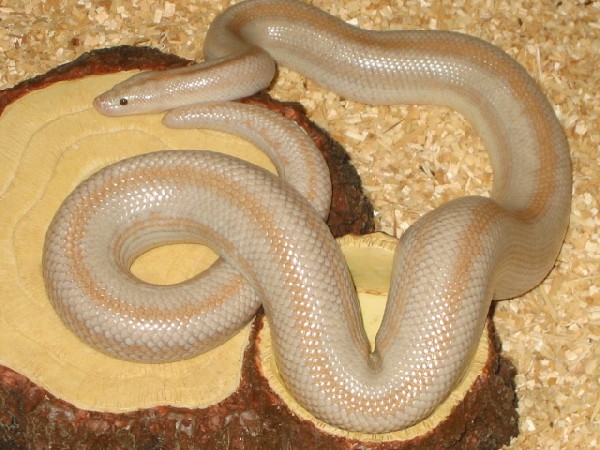
There is precedent in calling this apparently 'extreme'(I like that term!) form of hypomelanism a ghost, but I just think it should be clearly stated that the San felipe ghosts are not a designer(anery/hypo) morph; whatever they may really be.
As for the health aspects, generally, these snakes just don't seem as hardy as other rosies. It's taken mine longer than normal to get them to a size I feel comfortable breeding them at. Hets, on the other hand, seem to behave just like any other San felipe.
-----
Thanks,
-JC
Rosyboas.to
1.1 San felipe (CB'93)
0.1 hypo San felipe (CB'98)
1.0 hypo San felipe (CB'03)
0.1 het hypo San felipe (CB'04)
1.1 hypo-line San felipe (CB'98)
1.1 hypo Borrego (CB'99)
0.1 hypo Borrego (CB'05)
1.1 albino Whitewater (CB'02)
1.1 double het snow rosy (CB'95)
0.1 anery rosy (CB'05)
1.0 snow rosy (CB'04)
1.1 Joshua Tree (CB'96)
1.0 Bagdad (CB'99)
1.1 Harquahala Mts. (CB'04)
1.1 Limburg albino (CB'02)
0.1 Limburg albino (CB'05)
1.1 Limburg anery (CB'05)
0.1 Boa constrictor (CB'92)
James Wilson
Sep 21, 2005 08:33 AM
"This has been an excellent thread! I'd been hoping for some posts like this for a while now... There is precedent in calling this apparently 'extreme'(I like that term!) form of hypomelanism a ghost, but I just think it should be clearly stated that the San felipe ghosts are not a designer(anery/hypo) morph; whatever they may really be."
John, I agree with you. I really like the activity that I am seeing here the last couple of days!
-----
James Wilson
Pacific Coast Herpetological
www.pacificcoastherpetological.com
trivirgata
Sep 21, 2005 01:09 PM
Jerry Hartley
LocalityRosys.com
AncientDNA
Sep 21, 2005 02:04 PM
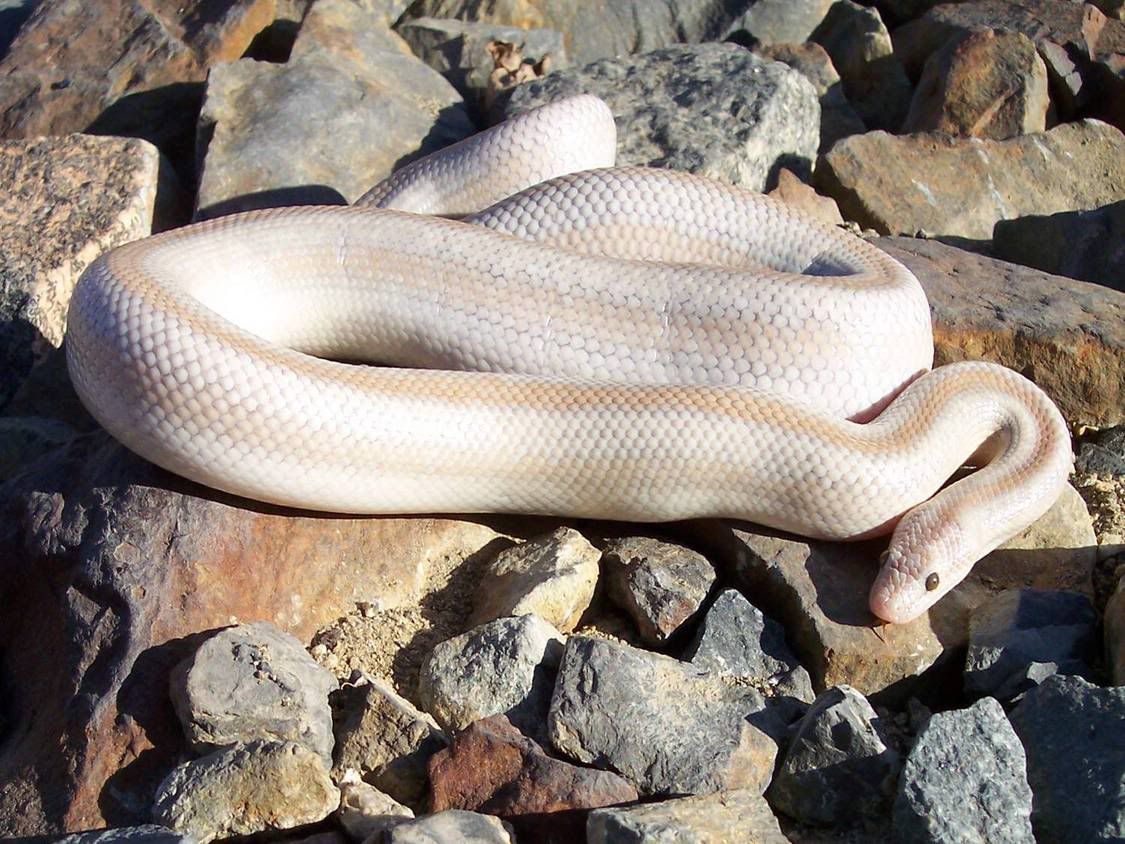
Now that is a sweet pic!
I wish my photos came out that nice.
Maybe it's actual sunlight I should be taking hypo pics in.
The flash just creates too much contrast or something.
-----
Thanks,
-JC
Rosyboas.to
1.1 San felipe (CB'93)
0.1 hypo San felipe (CB'98)
1.0 hypo San felipe (CB'03)
0.1 het hypo San felipe (CB'04)
1.1 hypo-line San felipe (CB'98)
1.1 hypo Borrego (CB'99)
0.1 hypo Borrego (CB'05)
1.1 albino Whitewater (CB'02)
1.1 double het snow rosy (CB'95)
0.1 anery rosy (CB'05)
1.0 snow rosy (CB'04)
1.1 Joshua Tree (CB'96)
1.0 Bagdad (CB'99)
1.1 Harquahala Mts. (CB'04)
1.1 Limburg albino (CB'02)
0.1 Limburg albino (CB'05)
1.1 Limburg anery (CB'05)
0.1 Boa constrictor (CB'92)
