<?xml version="1.0" encoding="UTF-8"?>
<rdf:RDF xmlns:dc="http://purl.org/dc/elements/1.1/" xmlns:h="http://www.w3.org/1999/xhtml" xmlns:hr="http://www.w3.org/2000/08/w3c-synd/#" xmlns:rdf="http://www.w3.org/1999/02/22-rdf-syntax-ns#" xmlns="http://purl.org/rss/1.0/">
<channel rdf:about="https://forums.kingsnake.com/rss/?catid=173">
  <title>Kingsnake.com - Herpforum - Plated Lizards</title>
  <link>https://forums.kingsnake.com/forum.php?catid=173</link>
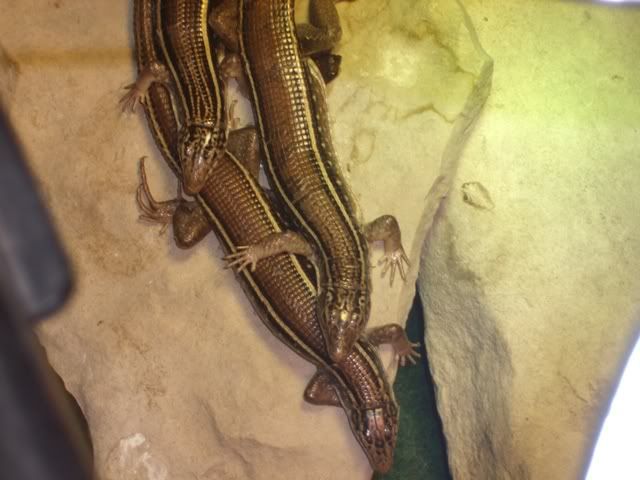
  <description><![CDATA[The Plated Lizard, Gerrhosaurus is a genus of lizards native to southern and eastern Africa. There are six species found in dry, rocky semi-open habitats. The Sudan plated lizard is the most heavily plated of the Gerrhosaururidae, the most readily identifiable, and the most common in reptile collections.The Sudan Plated lizard is a diurnal reptile, active mostly during the day and sleeping at night. When threatened, they will run for cover and wedge themselves in rocky crevices and with their heavy armour, this makes them almost invulnerable to predators.

Sudan Plated lizards are omnivores, living from a wide range of vegetable matter, insects and on occasion small vertebrates like other lizards and rodents.

Here you may post messages or questions pertaining to all aspects and issues regarding the keeping, breeding, health, and conservation of all Mountain Dragon species and subspecies.

If you are a new user to this forum, please take the time to review the rules first before posting: Terms of Service.]]></description>
  <items>
    <rdf:Seq>
      <rdf:li rdf:resource="https://forums.kingsnake.com/view.php?id=2021046" />
      <rdf:li rdf:resource="https://forums.kingsnake.com/view.php?id=1995665" />
      <rdf:li rdf:resource="https://forums.kingsnake.com/view.php?id=1993822" />
      <rdf:li rdf:resource="https://forums.kingsnake.com/view.php?id=1990151" />
      <rdf:li rdf:resource="https://forums.kingsnake.com/view.php?id=1961591" />
      <rdf:li rdf:resource="https://forums.kingsnake.com/view.php?id=1945772" />
      <rdf:li rdf:resource="https://forums.kingsnake.com/view.php?id=1916109" />
      <rdf:li rdf:resource="https://forums.kingsnake.com/view.php?id=1890868" />
      <rdf:li rdf:resource="https://forums.kingsnake.com/view.php?id=1883672" />
      <rdf:li rdf:resource="https://forums.kingsnake.com/view.php?id=1868539" />
      <rdf:li rdf:resource="https://forums.kingsnake.com/view.php?id=1853639" />
      <rdf:li rdf:resource="https://forums.kingsnake.com/view.php?id=1813300" />
      <rdf:li rdf:resource="https://forums.kingsnake.com/view.php?id=1780344" />
      <rdf:li rdf:resource="https://forums.kingsnake.com/view.php?id=1752817" />
      <rdf:li rdf:resource="https://forums.kingsnake.com/view.php?id=1720041" />
      <rdf:li rdf:resource="https://forums.kingsnake.com/view.php?id=1719034" />
      <rdf:li rdf:resource="https://forums.kingsnake.com/view.php?id=1706580" />
      <rdf:li rdf:resource="https://forums.kingsnake.com/view.php?id=1663796" />
      <rdf:li rdf:resource="https://forums.kingsnake.com/view.php?id=1649705" />
      <rdf:li rdf:resource="https://forums.kingsnake.com/view.php?id=1647469" />
    </rdf:Seq>
  </items>
</channel>

<item rdf:about="https://forums.kingsnake.com/view.php?id=2021046">
  <title>Yellow throated plated lizard sexing</title>
  <link>https://forums.kingsnake.com/view.php?id=2021046</link>
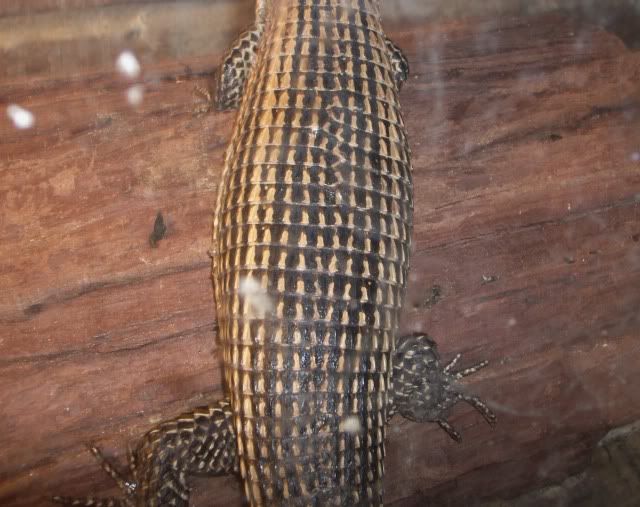
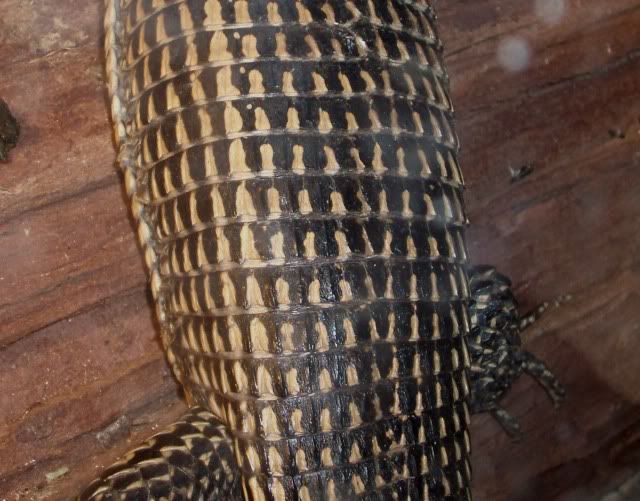
  <description><![CDATA[<div class="rss-post"><p><strong>Original post</strong> by crysygail &mdash; 2014-01-25 17:23:19 GMT</p><p>I think I have a male plated lizard but I'm not 100% sure. Does anyone have any pics of the underside of a female or I can post a pic of my lizard.</p></div>
<p><a href="https://forums.kingsnake.com/view.php?id=2021046">View full thread on Kingsnake.com</a></p>]]></description>
  <dc:date>2014-01-25T17:23:19+00:00</dc:date>
  <dc:creator>crysygail</dc:creator>
</item>
<item rdf:about="https://forums.kingsnake.com/view.php?id=1995665">
  <title>Questions about egg guarding females</title>
  <link>https://forums.kingsnake.com/view.php?id=1995665</link>
  <description><![CDATA[<div class="rss-post"><p><strong>Original post</strong> by Rosebuds &mdash; 2012-09-03 21:50:17 GMT</p><p>I am looking for information about plated species in which the female guards her eggs after laying. I have a trio of zonosaura karsteni, and collected 4 fertile eggs out of their viv about a month and a half ago and I think there are now more eggs.</p>
<p>When I collected the eggs, they had been laid in the biggest cave where all three zonos stay, especially at night. They are in a large enclosure on organic garden soil, and they are outside where they get partial sun throughout the day. So the eggs had been laid in this large round cave, and they had been sort of pushed into the middle. The females had dug a trench around them where they had obviously been slithering around the eggs and along the cave wall.</p>
<p>Now one of them was probably gravid again. She was enormous and ate like there was no tomorrow for weeks. She then dug a long tunnel, but poked her head out for worms (they will take them off my tongs). The tunnel and opening have been maintained, so I am trying to determine if zono females guard their eggs. I can afford to leave the eggs for a bit as our weather is still very hot here, but if the eggs in the box take 2-3 months to hatch, then the eggs outside will probably have to come in when the weather turns.</p>
<p>Are there species of plated lizards that the females guard eggs? Any known Zono species that do this?</p></div>
<p><a href="https://forums.kingsnake.com/view.php?id=1995665">View full thread on Kingsnake.com</a></p>]]></description>
  <dc:date>2012-09-03T21:50:17+00:00</dc:date>
  <dc:creator>Rosebuds</dc:creator>
</item>
<item rdf:about="https://forums.kingsnake.com/view.php?id=1993822">
  <title>Which plated lizard?</title>
  <link>https://forums.kingsnake.com/view.php?id=1993822</link>
  <description><![CDATA[<div class="rss-post"><p><strong>Original post</strong> by cochran &mdash; 2012-08-19 18:25:48 GMT</p><p>I'm hoping that someone can tell me which of the plated lizards I have here! He is fairly docile and eats with no issues.Thanks in advance!<br />
Jeff<br />
<img class="img-fluid" src="http://gallery.kingsnake.com/data/96920male_plated_lizard.jpg"></p></div>
<div class="rss-post"><p><strong>Reply</strong> by LizardCane &mdash; 2014-02-17 21:22:47 GMT</p><p>No, this is a Gerrhosaurus major.</p></div>
<div class="rss-post"><p><strong>Reply</strong> by iamthelizardking &mdash; 2013-04-14 23:11:11 GMT</p><p>this is a yellow-throated plated lizard</p></div>
<p><a href="https://forums.kingsnake.com/view.php?id=1993822">View full thread on Kingsnake.com</a></p>]]></description>
  <dc:date>2014-02-17T21:22:47+00:00</dc:date>
  <dc:creator>cochran</dc:creator>
</item>
<item rdf:about="https://forums.kingsnake.com/view.php?id=1990151">
  <title>Zono Karsteni Eggs. Need Inc. temps!</title>
  <link>https://forums.kingsnake.com/view.php?id=1990151</link>
  <description><![CDATA[<div class="rss-post"><p><strong>Original post</strong> by Rosebuds &mdash; 2012-07-21 01:22:59 GMT</p><p>I just pulled fertile eggs from my Zono karsteni enclosure and need incubation temps or someone's best guess. I have two hovabators set up, one at 90F and the other at 85f. I put them in the 85f because these are not desert lizards, but I wish that I had a better idea about optimal inc. temps.</p>
<p>Anybody?</p></div>
<p><a href="https://forums.kingsnake.com/view.php?id=1990151">View full thread on Kingsnake.com</a></p>]]></description>
  <dc:date>2012-07-21T01:22:59+00:00</dc:date>
  <dc:creator>Rosebuds</dc:creator>
</item>
<item rdf:about="https://forums.kingsnake.com/view.php?id=1961591">
  <title>care sheets</title>
  <link>https://forums.kingsnake.com/view.php?id=1961591</link>
  <description><![CDATA[<div class="rss-post"><p><strong>Original post</strong> by phiff1 &mdash; 2012-01-09 20:07:42 GMT</p><p>Hi,</p>
<p>I know someone else just asked this but, I am about to be given a Plated Lizard by someone headed to college and looking for care sheets.  I don't know the specific species yet but any info links would be appreciated.</p>
<p>thanks,</p>
<p>Chris</p></div>
<div class="rss-post"><p><strong>Reply</strong> by phiff1 &mdash; 2012-01-10 13:43:20 GMT</p><p>Just checked out Rosebuds' links below which are basically what I was looking for!  If anyone has advice I'm still looking for all input.</p>
<p>- P</p></div>
<p><a href="https://forums.kingsnake.com/view.php?id=1961591">View full thread on Kingsnake.com</a></p>]]></description>
  <dc:date>2012-01-10T13:43:20+00:00</dc:date>
  <dc:creator>phiff1</dc:creator>
</item>
<item rdf:about="https://forums.kingsnake.com/view.php?id=1945772">
  <title>Gerrhosaurus major major?</title>
  <link>https://forums.kingsnake.com/view.php?id=1945772</link>
  <description><![CDATA[<div class="rss-post"><p><strong>Original post</strong> by kouneli &mdash; 2011-09-20 02:48:05 GMT</p><p>I've seen pictures of G. major major, but sometimes they just look so different. I've never heard of there being different morphs of the Sudans, but I know it's possible.</p>
<p>Also, what would be the breeding set up for these guys? <br />
<img class="img-fluid" src="http://fc00.deviantart.net/fs70/i/2011/262/3/0/sudan_plated_lizards_by_fuzzybuttbunny-d4ad5md.jpg"><br />
<img class="img-fluid" src="http://fc04.deviantart.net/fs71/i/2011/262/e/d/sudan_plated_lizard_head_by_fuzzybuttbunny-d4ad5tn.jpg"><br />
-----<br />
Owned by the following;<br />
1 male minilop rabbit<br />
1 male shetland sheepdog<br />
1 male maine coon mix cat<br />
1 female winter white dwarf hamster<br />
1.1 corn snakes<br />
3.0 white's tree frogs<br />
0.1 Leptopelis vermiculatus<br />
1.3 crested geckos<br />
1.3 leopard geckos<br />
1 male crowntail betta<br />
1 male veiled betta</p></div>
<p><a href="https://forums.kingsnake.com/view.php?id=1945772">View full thread on Kingsnake.com</a></p>]]></description>
  <dc:date>2011-09-20T02:48:05+00:00</dc:date>
  <dc:creator>kouneli</dc:creator>
</item>
<item rdf:about="https://forums.kingsnake.com/view.php?id=1916109">
  <title>6x3 cage for plated lizards?</title>
  <link>https://forums.kingsnake.com/view.php?id=1916109</link>
  <description><![CDATA[<div class="rss-post"><p><strong>Original post</strong> by varanid &mdash; 2011-05-28 04:18:13 GMT</p><p>Currently I have several reticulated pythons in 6x3 cages. In the next 5-6 months I plan to upgrade them to 10x4s (or maybe bigger).</p>
<p>I've always liked plated lizards and was wondering if a 6'x3x18&quot; would be good for a group of maybe 1.2?  I was thinking the good old Sudanese plateds...I'd have to install a light fixture or two.  I was thinking 2-3 halogen floods and a 4' UV fixture installed inside the cage, coupled with rocks and a dirt/sand substrate? I've never kept plateds but what little I've found makes them seem fairly hardy...<br />
-----<br />
We wouldn't have 6 and a half billion people if you had to be beautiful to get laid.<br />
1.3 African House Snakes<br />
3.2 reticulated pythons<br />
1 corn snake<br />
4.3 Florida Kings<br />
2 speckled kings<br />
1.2 ball pythons<br />
1 Argentine boa<br />
1 Texas Rat Snake<br />
1 checkered garter snake</p></div>
<p><a href="https://forums.kingsnake.com/view.php?id=1916109">View full thread on Kingsnake.com</a></p>]]></description>
  <dc:date>2011-05-28T04:18:13+00:00</dc:date>
  <dc:creator>varanid</dc:creator>
</item>
<item rdf:about="https://forums.kingsnake.com/view.php?id=1890868">
  <title>What kind of Plated Lizard is this?</title>
  <link>https://forums.kingsnake.com/view.php?id=1890868</link>
  <description><![CDATA[<div class="rss-post"><p><strong>Original post</strong> by amber3614 &mdash; 2011-02-01 05:20:29 GMT</p><p>I just bought this Plated Lizard, but I was not told what kind it was. I would really like to know for sure, so I can make sure I provide the proper care. I am thinking Sudan Plated Lizard...is this right?<br />
<img class="img-fluid" src="http://i70.photobucket.com/albums/i90/amber3614/platedlizard1.jpg" alt="Image"></p></div>
<div class="rss-post"><p><strong>Reply</strong> by LizardCane &mdash; 2011-02-01 16:32:04 GMT</p><p>Yes, this is a Gerrhosaurus major</p></div>
<p><a href="https://forums.kingsnake.com/view.php?id=1890868">View full thread on Kingsnake.com</a></p>]]></description>
  <dc:date>2011-02-01T16:32:04+00:00</dc:date>
  <dc:creator>amber3614</dc:creator>
</item>
<item rdf:about="https://forums.kingsnake.com/view.php?id=1883672">
  <title>New cage build</title>
  <link>https://forums.kingsnake.com/view.php?id=1883672</link>
  <description><![CDATA[<div class="rss-post"><p><strong>Original post</strong> by MDFMONITOR &mdash; 2010-12-27 17:34:45 GMT</p><p>Just about finished my new plated lizard cage ( yellow throated/lined), there's hopefully 2 females & 1 male in there!<br />
<img class="img-fluid" src="http://i915.photobucket.com/albums/ac357/MDFMONITOR/PLATED%20LIZARD/PictureorVideo753.jpg"><br />
<img class="img-fluid" src="http://i915.photobucket.com/albums/ac357/MDFMONITOR/PLATED%20LIZARD/PictureorVideo766.jpg"><br />
<img class="img-fluid" src="http://i915.photobucket.com/albums/ac357/MDFMONITOR/PLATED%20LIZARD/PictureorVideo768.jpg"></p></div>
<div class="rss-post"><p><strong>Reply</strong> by mshill90 &mdash; 2011-09-08 02:05:59 GMT</p><p>This is awesome! Is this a built in wall cupboard of some sort?</p>
<p>I've been playing around with what I am going to do with my yellow throats for an enclosure.</p>
<p>This is a great Idea flow-er!</p></div>
<p><a href="https://forums.kingsnake.com/view.php?id=1883672">View full thread on Kingsnake.com</a></p>]]></description>
  <dc:date>2011-09-08T02:05:59+00:00</dc:date>
  <dc:creator>MDFMONITOR</dc:creator>
</item>
<item rdf:about="https://forums.kingsnake.com/view.php?id=1868539">
  <title>Gerrhosaurus major bottegoi (Western pla</title>
  <link>https://forums.kingsnake.com/view.php?id=1868539</link>
  <description><![CDATA[<div class="rss-post"><p><strong>Original post</strong> by Bigtattoo &mdash; 2010-10-24 17:54:13 GMT</p><p>I just received 1.2 Gerrhosaurus major bottegoi (Western plated lizard) from Tails N More last Thursday. They're W/C adults but in excellent condition. Set them up with deep potting soil bedding, stone hides/basking spots and a big water bowl. Basking area is 110* F on top 80* F in the lowest hide area and 70* F on the cool end. The stone hides are very secure and they have several levels to hide in for thermal gradient.</p>
<p>When I first put them in the big male dove into the hides immediately. The first female I pulled out may give me a surprise as her sides were so distended that she had little or no folds. Hopefully she's gravid. (crossing fingers) She just stood still and watched me for a while. The second female did the same as the male and dove straight for cover. Finally the other female ambled over into the hides.</p>
<p>I didn't expect to see much of them for a while but mostly am concerned with getting them eating and settled in. Next morning I put on their lights and put fresh salad and left for the day. Came home and nothing had been eaten. So I made up a little tray of turkey &quot;meatballs&quot; and left them alone. Went back later to turn off their lights and almost all of the turkey was gone. Yea baby.</p>
<p>They didn't eat Saturday but to my surprise after their lights had been on for a couple hours today I went down for something else and here are the 2 females out and about. They stayed out for a minute after noticing me then scooted for cover. While there I put in fresh salad and more &quot;meatballs&quot;. Left them alone and they ate again. So I'm stoked that they are at least eating and starting to venture out in such a short time.</p>
<p>They were amazingly calm while I was handling them as I unpacked them. No struggling, fussing or attempting to bite. So I have hope these will acclimate well and be good pets and hopefully breeders.</p>
<p>Tails N More did a great job from start to finish on the transaction. They arrived very well packed in fresh packaging and brand new bags. Obviously very healthy and plump.</p>
<p>I will let them acclimate a while longer then treat them with Panacur. A trick I learned after Panacur treatments is to feed some live culture yogurt with the next feeding and this helps replenish beneficial digestive bacteria.</p>
<p>I'll keep this updated as things progress.<br />
-----<br />
BigT<br />
There is a difference between ignorance and stupidity. The ignorant can be taught, stupidity is beyond our control.<br />
1.2 P. m. melanoleucus B/W N. J. Northern Pines<br />
1.2 P. d. deppei Mexican Pines<br />
2.2 P. l. lineaticollis Linis or Lined Pines<br />
1.2 P. m. lodingi Black Pines<br />
1.1 Drymarchon melenurus Blacktail Cribo<br />
1.2 M. s. cheynei Jungle Carpet<br />
2.6 L. p. pyromelana Arizona Mt. Kings<br />
1.1 L. g. californiae B/W Cali kings</p></div>
<div class="rss-post"><p><strong>Reply</strong> by GerrhosaurusRex &mdash; 2010-11-18 20:06:17 GMT</p><p>I'm happy for you! Gm bottegoi is my absolute favorite plated lizard. Keep updating us!</p>
<p>- Maggie</p></div>
<p><a href="https://forums.kingsnake.com/view.php?id=1868539">View full thread on Kingsnake.com</a></p>]]></description>
  <dc:date>2010-11-18T20:06:17+00:00</dc:date>
  <dc:creator>Bigtattoo</dc:creator>
</item>
<item rdf:about="https://forums.kingsnake.com/view.php?id=1853639">
  <title>Z. Karsteni EGGS Need Incu Temps???</title>
  <link>https://forums.kingsnake.com/view.php?id=1853639</link>
  <description><![CDATA[<div class="rss-post"><p><strong>Original post</strong> by rosebuds &mdash; 2010-08-29 19:06:41 GMT</p><p>I was surprised with three Z. Karsteni eggs this morning, and probably more to come from the other female. Has anyone bred these or any of the zono species successfully? The eggs definitely look fertile, so I have them in damp vermiculite in an incubator set between 84-86. Is this about right?</p></div>
<p><a href="https://forums.kingsnake.com/view.php?id=1853639">View full thread on Kingsnake.com</a></p>]]></description>
  <dc:date>2010-08-29T19:06:41+00:00</dc:date>
  <dc:creator>rosebuds</dc:creator>
</item>
<item rdf:about="https://forums.kingsnake.com/view.php?id=1813300">
  <title>validus are smart!</title>
  <link>https://forums.kingsnake.com/view.php?id=1813300</link>
  <description><![CDATA[<div class="rss-post"><p><strong>Original post</strong> by LizardCane &mdash; 2010-05-09 02:42:05 GMT</p><p>My female validus has escaped twice now--it's my own fault really. I took the lid off their cage so they could get sunlight since it's so nice out lately. well the male is pretty shy but the female is not and she crawled right out!</p>
<p>I found her under my one bookcase the first time she escaped. I could hear her moving and that is what led me to her.</p>
<p>The 2nd time, she was looking out of the cage and saw me and didnt move. once I left, she was gone!</p>
<p>For a week I looked everywhere. but I know she came out during the day--poop was on the floor! ON friday I came home early and it was very nice out. She was by the window sunning. She made a beeline for the kitchen and the refrigerator!</p>
<p>The thing is, from where I surprised her there was no way she could see the refrigerator. she could remember how to get to her &quot;home base&quot; and used visual cues to do it. They are so fast!</p></div>
<p><a href="https://forums.kingsnake.com/view.php?id=1813300">View full thread on Kingsnake.com</a></p>]]></description>
  <dc:date>2010-05-09T02:42:05+00:00</dc:date>
  <dc:creator>LizardCane</dc:creator>
</item>
<item rdf:about="https://forums.kingsnake.com/view.php?id=1780344">
  <title>USF&amp;W to add &amp;quot;Big 9&amp;quot; to Lacey Act</title>
  <link>https://forums.kingsnake.com/view.php?id=1780344</link>
  <description><![CDATA[<div class="rss-post"><p><strong>Original post</strong> by PHFaust &mdash; 2010-01-21 17:57:05 GMT</p><p>In yet another attack on the reptile community, today Secretary of the Interior Ken Salazar announced that the U.S. Fish and Wildlife Service will look to list the &quot;Big 9&quot; from the USGS survey published in October on the Lacey Act as injurious species:</p>
<p>Secretary of the Interior Ken Salazar today announced the U.S. Fish and Wildlife Service will propose to list the Burmese python and eight other large constrictor snakes that threaten the Everglades and other sensitive ecosystems as &quot;injurious wildlife&quot; under the Lacey Act.</p>
<p>Salazar made the announcement at the Port of New York, which serves as the largest point of entry in the nation for imports of wildlife and wildlife products. Last year, U.S. Fish and Wildlife Service Inspectors at John F. Kennedy International Airport handled more than 27, 000 separate wildlife shipments valued at more than $1 billion, or 16 percent of all U.S. wildlife imports.</p>
<p>The proposal, which will be open to public comment before Salazar makes a final decision, would prohibit importation and interstate transportation of the animals.</p>
<p>&quot;The Burmese python and these other alien snakes are destroying some of our nation’s most treasured – and most fragile – ecosystems,&quot; Salazar said. &quot;The Interior Department and states such as Florida are taking swift and common sense action to control and eliminate the populations of these snakes, but it is an uphill battle in ecosystems where they have no natural predators. If we are going to succeed, we must shut down the importation of the snakes and end the interstate commerce and transportation of them.&quot;</p>
<p>This allows us yet another opportunity to refute the bad science involved with both HR2811 and S373. The FWS will publish the proposed rule change in the federal register in early February.</p>
<p>Once it's published, the public will have sixty days to offer comment, after which the waiting game begins again.</p>
<p>As soon as the comment period opens, we'll let you know what action to take, and where.</p>
<p>Even now, it's not too late -- or too early! -- to make calls, reach out to your senators and representatives. Let them know this proposal is based on bad science, that you're part of the reptile community and that you vote!<br />
<a href="http://www.pethobbyist.com/sitenews/index.php?/archives/470-Fish-Wildlife-to-add-pythons-to-Lacey-Act.html">USF&amp;W to add &quot;Big 9&quot; to Lacey Act</a></p>
<p>-----<br />
Cindy Steinle<br />
<a href="mailto:phfaust@pethobbyist.com">phfaust@pethobbyist.com</a><br />
PHFaust<br />
<a href="http://www.facebook.com/pages/kingsnakecom/56444808084?ref=ts" target="_blank">Visit kingsnake on Facebook!</a><br />
<a href="http://twitter.com/kingsnake_com" target="_blank"> Follow Kingsnake on Twitter!</a></p></div>
<p><a href="https://forums.kingsnake.com/view.php?id=1780344">View full thread on Kingsnake.com</a></p>]]></description>
  <dc:date>2010-01-21T17:57:05+00:00</dc:date>
  <dc:creator>PHFaust</dc:creator>
</item>
<item rdf:about="https://forums.kingsnake.com/view.php?id=1752817">
  <title>G. validus temperatures</title>
  <link>https://forums.kingsnake.com/view.php?id=1752817</link>
  <description><![CDATA[<div class="rss-post"><p><strong>Original post</strong> by LizardCane &mdash; 2009-10-22 11:55:04 GMT</p><p>Hi guys--I just got a pair of adult G. validus. beatiful animals. very shy, but they are warming up. Now I can watch them and they wont usually run away! The male is not as bad as the female.</p>
<p>My question is this: how low of a temprature is safe for them. they have a heat lamp during the day. AT night the temps are in the low 70s---that is with heat on. without heat they would drop to mid to low 60s. I'm wondering if they would be ok in an unheated room at night.</p>
<p>Anyone who has/had these care to shed some light? thanks</p></div>
<p><a href="https://forums.kingsnake.com/view.php?id=1752817">View full thread on Kingsnake.com</a></p>]]></description>
  <dc:date>2009-10-22T11:55:04+00:00</dc:date>
  <dc:creator>LizardCane</dc:creator>
</item>
<item rdf:about="https://forums.kingsnake.com/view.php?id=1720041">
  <title>After a few months in the incubator...</title>
  <link>https://forums.kingsnake.com/view.php?id=1720041</link>
  <description><![CDATA[<div class="rss-post"><p><strong>Original post</strong> by ravenspirit &mdash; 2009-07-22 22:20:06 GMT</p><p>A Gerrhosaurus major bottegoi comes out to greet the world.</p>
<p>These are the species that is being imported and generally are being incorrectly called Black Lined Plated Lizards -</p>
<p>Info about the REAL Black lined Plated Lizard (Gerrhosaurus nigrolineatus) can be found here - http://www.grisus welt.de/Gerrhosauridae/Gerrhosaurus/Gerrhosaurus_nigrolineatus/gerrhosaurus_nigrolineatus.html</p>
<p>I have heard these called various things, including Giant Rainbow Plated Lizard, and I usually refer to them as Giant West African Plated Lizards, as the large male in my collection is 27&quot; long from nose to tail.</p>
<p>The &quot;proper&quot; name for these animals appears to be the Eritrean Plated Lizard, and this paper describes the species and where it lives in a decent amount of detail.<br />
http://www.bioone.org/doi/pdf/10.2982/0012-8317(1997)86[61:AACOTL]2.0.CO;2</p>
<p>The females are both smaller, around 22&quot;, with duller markings, and have shorter less pronounced snouts then the male. These are very distinct looking animals compared to the nominate form, G.m.major. These are true CBB animals, not from fresh wild gravid females, as they have been in my collection for over 3 years now and the females have laid eggs for the past 2 years. I found this information on them being bred before by others overseas.<br />
http://www.grisus-welt.de/Gerrhosauridae/Gerrhosaurus/Meine_Schildechsen/meine_schildechsen.html<br />
http://www.terrarista.hu/index.php?mod=content&id=243</p>
<p>Has anyone else heard of these animals being produced in the states yet ? Has anyone on this list bred them ? I am very interested to hear experiences with raising the hatchlings.<br />
<img class="img-fluid" src="http://img.photobucket.com/albums/v497/crazycrowman/Africanplatedhatch109.jpg" alt="Image"></p></div>
<div class="rss-post"><p><strong>Reply</strong> by ravenspirit &mdash; 2009-07-22 22:26:03 GMT</p><p>One of the little ones sitting on dads back.<br />
<img class="img-fluid" src="http://img.photobucket.com/albums/v497/crazycrowman/Africanplatedcompare109.jpg" alt="Image"></p></div>
<div class="rss-post"><p><strong>Reply</strong> by ravenspirit &mdash; 2009-07-22 22:23:44 GMT</p><p>The whole group of 4.<br />
<img class="img-fluid" src="http://img.photobucket.com/albums/v497/crazycrowman/Africanplatedhatchlings109.jpg" alt="Image"></p></div>
<div class="rss-post"><p><strong>Reply</strong> by ravenspirit &mdash; 2009-07-22 22:22:58 GMT</p><p>In my hand.<br />
<img class="img-fluid" src="http://img.photobucket.com/albums/v497/crazycrowman/Africanplatedhatched109.jpg" alt="Image"></p></div>
<div class="rss-post"><p><strong>Reply</strong> by ravenspirit &mdash; 2009-07-22 22:22:02 GMT</p><p>Hatching.<br />
<img class="img-fluid" src="http://img.photobucket.com/albums/v497/crazycrowman/Africanplatedhatch209.jpg" alt="Image"></p></div>
<p><a href="https://forums.kingsnake.com/view.php?id=1720041">View full thread on Kingsnake.com</a></p>]]></description>
  <dc:date>2009-07-22T22:26:03+00:00</dc:date>
  <dc:creator>ravenspirit</dc:creator>
</item>
<item rdf:about="https://forums.kingsnake.com/view.php?id=1719034">
  <title>Gravid BL plated -- Need advice!</title>
  <link>https://forums.kingsnake.com/view.php?id=1719034</link>
  <description><![CDATA[<div class="rss-post"><p><strong>Original post</strong> by Rosebuds &mdash; 2009-07-20 22:36:44 GMT</p><p>I am pretty sure that my female BL is gravid since she has grown progressively wider in the last few weeks to the point that her side flaps are completely extended toward her back legs. So, I set up a bricked nesting area at the cool end with potting soil. I have the male in with her. Should I take him out until she lays?</p>
<p>At what temps should eggs be incubated?</p></div>
<div class="rss-post"><p><strong>Reply</strong> by Rosebuds &mdash; 2009-07-24 00:35:34 GMT</p><p>Your babies are so cute! Yeah, these two were surrendered to my rescue, and they were very thin. I wormed them and they ate so much it was unbelievable! Now they eat normally. Here they were before she started widening<br />
<img class="img-fluid" src="http://i126.photobucket.com/albums/p86/Crittermister/Sudan%20Plated%20Lizards/PlatedsBasking.jpg"></p>
<p>Here is her torso, about a week ago. Sorry about the spots. I didn't see those until I processed the pic!<br />
<img class="img-fluid" src="http://i126.photobucket.com/albums/p86/Crittermister/Sudan%20Plated%20Lizards/Femaletorso.jpg"></p>
<p>And a close up<br />
<img class="img-fluid" src="http://i126.photobucket.com/albums/p86/Crittermister/Sudan%20Plated%20Lizards/Femalesidetorso.jpg"></p>
<p>Does she look gravid?</p></div>
<div class="rss-post"><p><strong>Reply</strong> by Ravenspirit &mdash; 2009-07-24 00:22:50 GMT</p><p>I don't see a need to separate them, as it may stress her more likely then not. I would add some sand to the current enclosure so she has enough room to dig down, and just keep an eye on them so you can pull the eggs as soon as she lays them.</p>
<p>Is she refusing food, or picking at it ? My females ate very little before laying, both become amazingly plump, and as with some other lizard species I have bred, they lost mass around the tail base. Both times, after laying, they appeared quite thin and exhausted, (the eggs are huge by comparison to the lizards!) but put the mass back on within a few days and some good meals.</p>
<p>The hatchlings had their first meal of crickets last night!</p></div>
<div class="rss-post"><p><strong>Reply</strong> by Rosebuds &mdash; 2009-07-24 00:15:10 GMT</p><p>Yes, mine are the same as yours. They are on several inches of organic potting soil. She is still very wide. Do you have a pic of your female while she was gravid? Should I get her into a tank by herself with sand instead?</p></div>
<div class="rss-post"><p><strong>Reply</strong> by Ravenspirit &mdash; 2009-07-24 00:04:22 GMT</p><p>I am going to assume that you have a Gerrhosaurus major bottegoi and not a true Black lined Plated Lizard (Gerrhosaurus nigrolineatus), and that we have the same species, even though I imagine that the incubation on these animals would be similar.</p>
<p>My females dug down about 6&quot; into the sand in the enclosure, and laid the eggs there, and then piled more sand into the area. A moister area for laying was made available, but was not used be either female.</p>
<p>I took the eggs out, spritzed the sand off of them, marked the date, and by doing so the top of the egg with a sharpie marker, and incubated them in a semi closed deli cup on slightly damp moss at 84/86 degrees. I had problems with the eggs in the past so the moss was sort of an experiment to see what would happen. See my post above for photos of the hatchlings.<br />
<img class="img-fluid" src="http://img.photobucket.com/albums/v497/crazycrowman/Africanplatedhatchlings209.jpg" alt="Image"></p></div>
<p><a href="https://forums.kingsnake.com/view.php?id=1719034">View full thread on Kingsnake.com</a></p>]]></description>
  <dc:date>2009-07-24T00:35:34+00:00</dc:date>
  <dc:creator>Rosebuds</dc:creator>
</item>
<item rdf:about="https://forums.kingsnake.com/view.php?id=1706580">
  <title>Care References</title>
  <link>https://forums.kingsnake.com/view.php?id=1706580</link>
  <description><![CDATA[<div class="rss-post"><p><strong>Original post</strong> by RMCADguy &mdash; 2009-06-19 01:47:03 GMT</p><p>Hello, I am most likely getting a few baby South African Giant Plateds, though, I know very little about them right now. So I was hoping some of you could provide me some good links/books for reference on care. Or if you don't have a link, some examples of your setups and diets would be fantastic.</p>
<p>Thanks in advance for any advice!</p>
<p>Phil</p></div>
<div class="rss-post"><p><strong>Reply</strong> by Rosebuds &mdash; 2009-06-20 04:18:48 GMT</p><p>BTW, I treat them like beardies as far as temps go, because they come from a similar environment. They do not like it super hot, but will bask at 105, then spend most of the day on the cool side watching the birds, in hides, or buried. They do need UVB and supplements.</p>
<p>Here is one care sheet that seems pretty good, but these guys can actually live more like 20 years.<br />
http://www.aquamania.co.uk/plated-lizards-care-sheet.asp</p>
<p>Here is Melissa Kaplan's care sheet on them<br />
http://www.anapsid.org/plated.html</p>
<p>This is also a really detailed one. And it is true that they make a MESS of their food with the digging, so I am planning on cordoning off the substrate part and feeding them on a tiled section. Simply using a piece of tile on the substrate won't work. They will dig under it and tip everything over! They are compulsive, obsessive diggers!<br />
http://www.thereptilefile.com/wiki/index.php?title=Sudan_Plated_Lizard</p>
<p>And another:<br />
http://www.unc.edu/~dtkirkpa/stuff/plated.html</p>
<p>These should at least give you an idea. <img class="img-fluid" src="https://forums.kingsnake.com/images/smiles/wink.gif" border="0" alt=""></p></div>
<div class="rss-post"><p><strong>Reply</strong> by Rosebuds &mdash; 2009-06-20 03:54:10 GMT</p><p>I have a pair of black lined plateds. I posted about them below. I assume the diet is similar to the giant plated. I feed mine the same basic salad that I feed the chucks, beardies and uros daily, and a few times a week, I top their salad with thawed frozen beans and veggies. Then a few times a week I give them bugs. Mine love supers and I trained them to stick their heads in a large jar to eat crix. I keep a Megaray over mine and they do bask. They are from semi desert regions of Africa, I think, but they do love water, and they love to dig. I would not use sand, though. Mine do well in organic top soil or organic potting soil. I wish that I could construct a really large enclosure with a small shallow pond for them to swim in and plants, but they would destroy the plants unless they were potted. Mine are a bit shy, but do warm up and are really personable and interactive. I will try to find some of the care sheets and articles that I read when these came in. <img class="img-fluid" src="https://forums.kingsnake.com/images/smiles/wink.gif" border="0" alt=""><br />
<img class="img-fluid" src="http://i126.photobucket.com/albums/p86/Crittermister/Sudan Plated Lizards/PlatedsBasking.jpg"></p></div>
<p><a href="https://forums.kingsnake.com/view.php?id=1706580">View full thread on Kingsnake.com</a></p>]]></description>
  <dc:date>2009-06-20T04:18:48+00:00</dc:date>
  <dc:creator>RMCADguy</dc:creator>
</item>
<item rdf:about="https://forums.kingsnake.com/view.php?id=1663796">
  <title>Sudans: Are they all this adorable???</title>
  <link>https://forums.kingsnake.com/view.php?id=1663796</link>
  <description><![CDATA[<div class="rss-post"><p><strong>Original post</strong> by Rosebuds &mdash; 2009-02-27 00:53:42 GMT</p><p>I reluctantly took in a pair of sudans that a young woman couldn't take care of, and they were very thin and dehydrated when I got them a few weeks ago.<br />
<img class="img-fluid" src="http://i126.photobucket.com/albums/p86/Crittermister/Sudan%20Plated%20Lizards/SudansDay1.jpg"></p>
<p>Female. Spine showing<br />
<img class="img-fluid" src="http://i126.photobucket.com/albums/p86/Crittermister/Sudan%20Plated%20Lizards/Sudanfemale.jpg"></p>
<p>I got them hydrated and am putting them through a round of panacur, and they are slowly starting to gain. But their personalities! The male especially runs to the front of the quarantine enclosure to see what I have to eat, and they both eat right out of my hand! I have also trained them to eat crix from a jar. Both of them will now dive head first to the waist into a large jar to eat crix!Is this level of interaction and brightness typical of sudans?</p>
<p>They are devouring a large salad topped with veggies, fruit and bird and ig pellets every day (same salad that my herbivores and other omnivores get) plus they get a boatload of bugs. Once they gain good weight and are ready to just maintain, what should the veg/bug ratio be?</p></div>
<div class="rss-post"><p><strong>Reply</strong> by Amazonreptile &mdash; 2009-04-30 22:12:56 GMT</p><p>I bred these in the 80's.  The first lizard I ever bred and hatched! I fed dog food twice a week, fruit salad weekly and kept a bowl of superworms topped off every day.  I would guess the pair ate 200-300 large Superworms a week.  They also polished off a full chicken eggs shell every month, year round.</p>
<p>First year I only got one HUGE egg. The next three years she gave me three HUGER eggs. Had the pair for over ten years (adults when I got them).  The male died of old age (I guess) and the female? She seemd heartbroken and died a year later.  She failed to thrive after he died.</p>
<p>The females have orangish chins and the males steel to sky blue.  brighter in both genders during spring.<br />
-----<br />
<a href="http://www.amazonreptile.com/" target="_blank">AMAZON REPTILE CENTER</a></p></div>
<div class="rss-post"><p><strong>Reply</strong> by rosebuds &mdash; 2009-04-06 16:04:49 GMT</p><p>I am glad to know their true identity! They are beautiful lizards, and I love their personalities!</p>
<p>Hey, are you Spawn on Fauna?</p></div>
<div class="rss-post"><p><strong>Reply</strong> by Spawn &mdash; 2009-04-06 15:30:16 GMT</p><p>Hello:<br />
Those are some great looking Plated Lizards and it looks like you're really doing well with them.<br />
Actually the one's you have are known by several names including Giant Plated or black-lined Plated (even though that is another species entirely).  They are, however, not Sudan Plated Lizards (Gerrhosaurus major major).  The Latin name for yours is (Gerrhosaurus major grandis).<br />
There is a lot of confusion with the common names of this group of lizards for some reason.  The Sudan Plated is a solid red/brown on top with a lighter belly.  Some males (like mine) have a bluish-grey color on the underside of the chin. <br />
The Plateds you have are subspecies of Sudans so they are very closely related.  They are very beautiful lizards that can live for nearly twenty years.<br />
Have a Great Day!!!</p></div>
<div class="rss-post"><p><strong>Reply</strong> by Rosebuds &mdash; 2009-03-31 01:25:05 GMT</p><p>Well, as you can see in those early pics, these poor things were very thin. You could see their spines and their legs were baggy. They are now polishing off a large salad plus about 20 bugs a piece daily, but they still have catching up to do. Here they are now! <img class="img-fluid" src="https://forums.kingsnake.com/images/smiles/wink.gif" border="0" alt=""><br />
<img class="img-fluid" src="http://i126.photobucket.com/albums/p86/Crittermister/Sudan Plated Lizards/PlatedsBasking.jpg"></p>
<p>I will put them on a diet if they keep eating like this, but they went for awhile with improper care. They do have adorable personalities. These are a bit flighty, but quick to turn back around to see whats up, or see what the big human has in her hands! <img class="img-fluid" src="https://forums.kingsnake.com/images/smiles/smile.gif" border="0" alt=""></p></div>
<div class="rss-post"><p><strong>Reply</strong> by DocOp &mdash; 2009-03-31 01:15:15 GMT</p><p>I only have experience with one individual.  He tends to be a bit more feisty at first, but calms down once he's in your hand.</p>
<p>We tend to feed him 4-5 crickets (dusted) and about 2-3 fork fulls of veg/salad 3 times a week (mixed greens, zucc/squash, repcal, and sometimes a little fruit and other vegs).  I dont know if thats too much or too little, but he's been in our collection for at least 8 months and is doing great.  Hope that helps.</p></div>
<p><a href="https://forums.kingsnake.com/view.php?id=1663796">View full thread on Kingsnake.com</a></p>]]></description>
  <dc:date>2009-04-30T22:12:56+00:00</dc:date>
  <dc:creator>Rosebuds</dc:creator>
</item>
<item rdf:about="https://forums.kingsnake.com/view.php?id=1649705">
  <title>New Zonosaurus Karsteni Trio -- Pic</title>
  <link>https://forums.kingsnake.com/view.php?id=1649705</link>
  <description><![CDATA[<div class="rss-post"><p><strong>Original post</strong> by Rosebuds &mdash; 2009-01-22 13:51:31 GMT</p><p>I just got this trio in yesterday. They are in great shape. I have them in a 55 gal tank under a Megaray, set up with a temp range 75-85, basking 110. I plan to put a soil/sand mix in tomorrow. Any other advice?<br />
<img class="img-fluid" src="http://i126.photobucket.com/albums/p86/Crittermister/skinks and zonos/ZonotrioDay1.jpg"></p></div>
<div class="rss-post"><p><strong>Reply</strong> by Rosebuds &mdash; 2009-01-26 14:11:06 GMT</p><p>Well, we'll have to see if this group does anything! LOL! They are healthy enough.</p></div>
<div class="rss-post"><p><strong>Reply</strong> by Pauly &mdash; 2009-01-26 06:04:22 GMT</p><p>Best of luck with it.  I'm envious that you have a group at your disposal.  Years ago, before I really had any interest in them, I had a pair of quads that produced eggs regularly.  Of course, I got rid of them...now that I actually have an interest, the group I have now does nothing lol.  Isn't that always the way...</p></div>
<div class="rss-post"><p><strong>Reply</strong> by Rosebuds &mdash; 2009-01-26 00:52:41 GMT</p><p>Yeah, that sounds about how I have them set up. They are basking on flat limestone at 100-105, and the substrate is organic potting soil/sand. They have a cave under the basking spot and I plan to add a few more, but they seem to like to burrow like my fire skinks. They are starting to acclimate pretty well, ie, not bolting the second they hear or see me. <img class="img-fluid" src="https://forums.kingsnake.com/images/smiles/smile.gif" border="0" alt=""></p>
<p>I hope to breed them. <img class="img-fluid" src="https://forums.kingsnake.com/images/smiles/wink.gif" border="0" alt=""></p></div>
<div class="rss-post"><p><strong>Reply</strong> by Pauly &mdash; 2009-01-26 00:12:10 GMT</p><p>I had a Z. karsteni in with my Z. quads. for several years until I got rid of him/her because I couldn't find any others.  Lately I have seen them advertised online...c'est la vie.  Seemed to thrive under the same conditions that I kept them...which was pretty basic to begin with.  Very sandy soil mix, with some cypress thrown on top.  a small rock pile and a stack of wood to climb in, on, and around.  Ate anything also, just like the quads.  They sort of pick at chopped fruits and veggies, but they are crazy for any type of insects.  Although I gave them hotter areas, I never saw any of them bask above a surface temp @100.  Night never got lower than 60.  <br />
My guess is about all of the zonosaurs could be kept like that, with the exception of Z. maximus.  Zonosaurs are pretty much bullet-proof in my experience.</p></div>
<p><a href="https://forums.kingsnake.com/view.php?id=1649705">View full thread on Kingsnake.com</a></p>]]></description>
  <dc:date>2009-01-26T14:11:06+00:00</dc:date>
  <dc:creator>Rosebuds</dc:creator>
</item>
<item rdf:about="https://forums.kingsnake.com/view.php?id=1647469">
  <title>Zonosaurus karsteni care?</title>
  <link>https://forums.kingsnake.com/view.php?id=1647469</link>
  <description><![CDATA[<div class="rss-post"><p><strong>Original post</strong> by Rosebuds &mdash; 2009-01-16 20:51:10 GMT</p><p>I am likely getting a pair of Zonosaurus karsteni next week, and am having a very hard time finding care info, and least very little in English. Is anyone familiar with this species, or a similar species from a similar environment? Anyone have a sense of their temperaments?</p>
<p>Here is what I have gathered and what I assume. It is a semi desert species, so I would keep the viv dry. It likes to burrow, so a mix of sterile potting and a bit of sand?<br />
Viv size: Min. 36x18 (lizards reach 10-13 inches?)<br />
UVB: High ( I would use a Mercury Vapor bulb)<br />
Basking Surface temps 105-115<br />
Temp gradient 75-85, night 70-75<br />
Diet, omnivorous, gut loaded insects, veggies and fruit, cal/vit suppliments</p>
<p>Is there anything that I am missing?</p></div>
<div class="rss-post"><p><strong>Reply</strong> by Rosebuds &mdash; 2009-01-18 23:39:49 GMT</p><p>Does anyone have experience with this species that they can share?</p></div>
<p><a href="https://forums.kingsnake.com/view.php?id=1647469">View full thread on Kingsnake.com</a></p>]]></description>
  <dc:date>2009-01-18T23:39:49+00:00</dc:date>
  <dc:creator>Rosebuds</dc:creator>
</item>
</rdf:RDF>