<?xml version="1.0" encoding="UTF-8"?>
<rdf:RDF xmlns:dc="http://purl.org/dc/elements/1.1/" xmlns:h="http://www.w3.org/1999/xhtml" xmlns:hr="http://www.w3.org/2000/08/w3c-synd/#" xmlns:rdf="http://www.w3.org/1999/02/22-rdf-syntax-ns#" xmlns="http://purl.org/rss/1.0/">
<channel rdf:about="https://forums.kingsnake.com/rss/?catid=223">
  <title>Kingsnake.com - Herpforum - Rubber Boas</title>
  <link>https://forums.kingsnake.com/forum.php?catid=223</link>
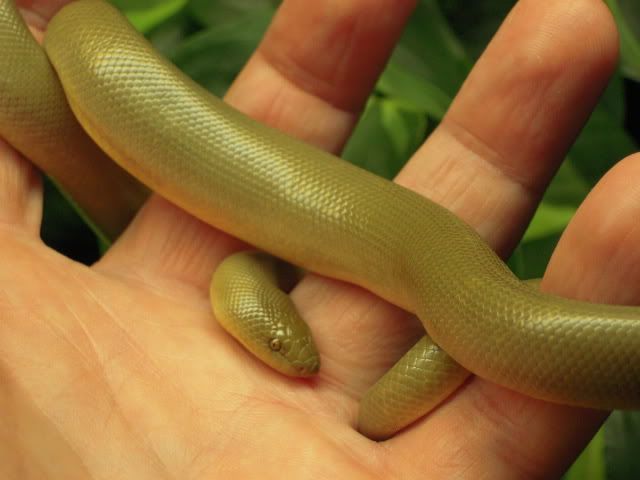
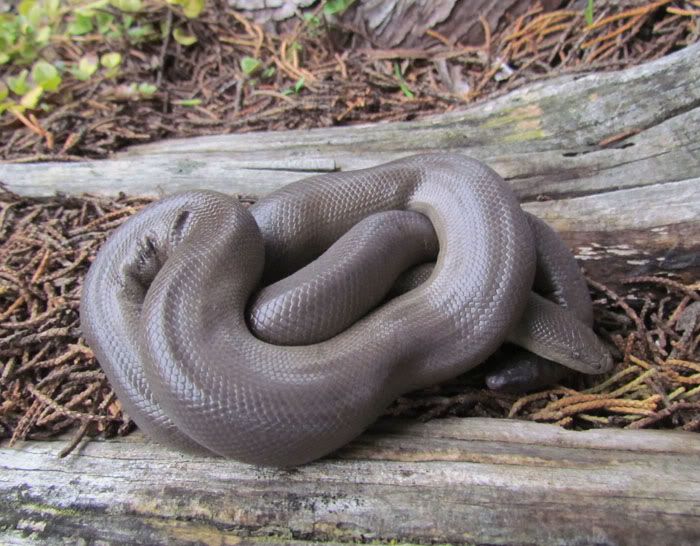
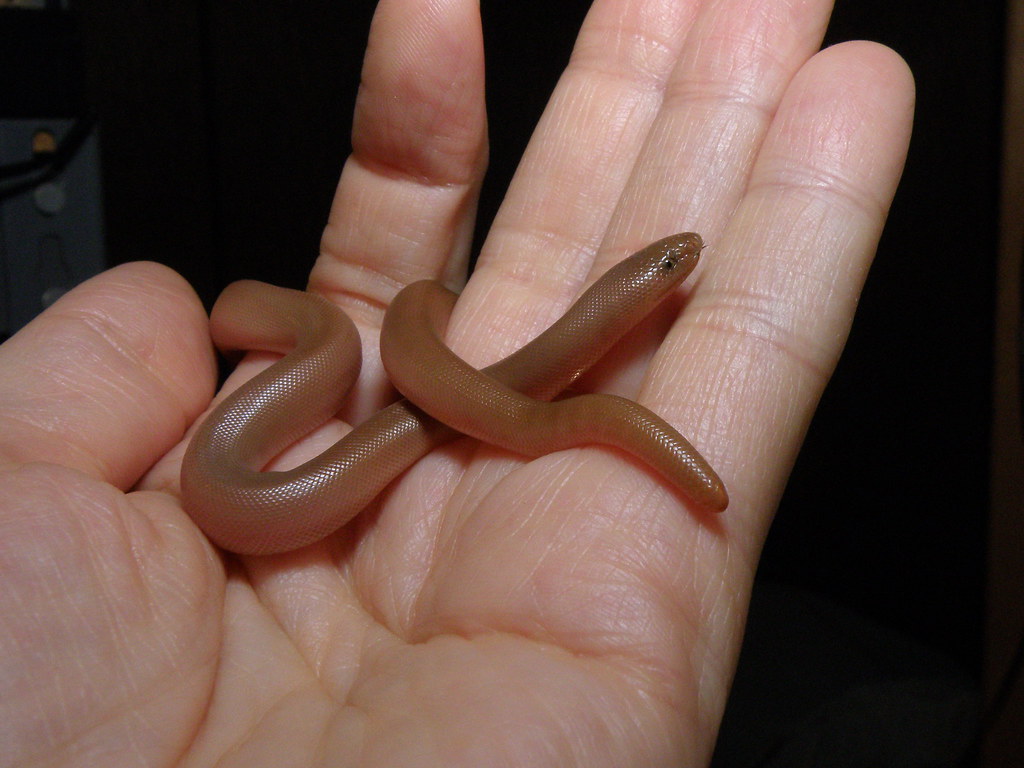
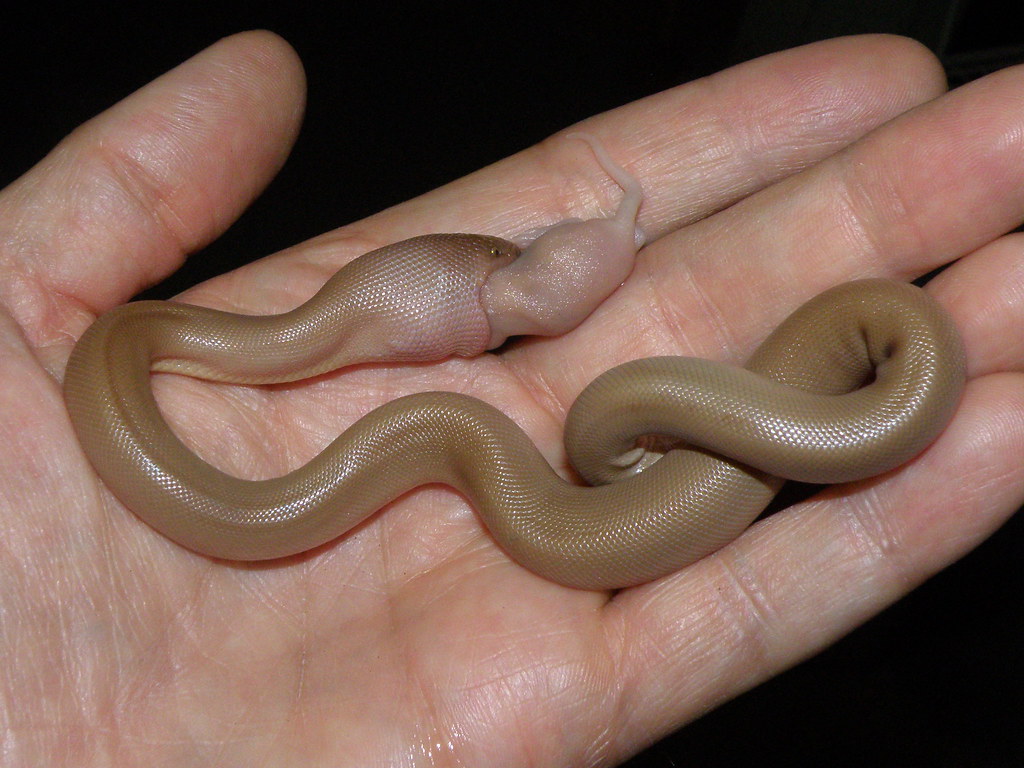
  <description><![CDATA[Rubber Boas are one of the smaller boa species, with adults anywhere from 15 to 33 inches and newborns typically 7 to 9 inches long. The common name is derived from their skin which is often loose and wrinkled and consists of small scales that are smooth and shiny, characteristics which give the snakes a rubber like look and texture. Coloration is usually tan to dark brown with a lighter ventral surface but sometimes olive-green, yellow, or orange. Newborns often appear pink and slightly transparent but darken with age. Rubber boas have small eyes with vertically elliptical pupils and short blunt heads that are no wider than the body. One of the most identifiable characteristics of Rubber Boas is their short blunt tails that closely resemble the shape of their head. Here you may post messages or questions pertaining to all aspects and issues regarding the keeping, breeding, health, and conservation of Rubber Boas. If you are a new user to this forum, please take the time to review the rules first before posting: Terms of Service.]]></description>
  <items>
    <rdf:Seq>
      <rdf:li rdf:resource="https://forums.kingsnake.com/view.php?id=2113114" />
      <rdf:li rdf:resource="https://forums.kingsnake.com/view.php?id=2112654" />
      <rdf:li rdf:resource="https://forums.kingsnake.com/view.php?id=2023870" />
      <rdf:li rdf:resource="https://forums.kingsnake.com/view.php?id=2021638" />
      <rdf:li rdf:resource="https://forums.kingsnake.com/view.php?id=2018630" />
      <rdf:li rdf:resource="https://forums.kingsnake.com/view.php?id=2014508" />
      <rdf:li rdf:resource="https://forums.kingsnake.com/view.php?id=2014004" />
      <rdf:li rdf:resource="https://forums.kingsnake.com/view.php?id=2013800" />
      <rdf:li rdf:resource="https://forums.kingsnake.com/view.php?id=2011691" />
      <rdf:li rdf:resource="https://forums.kingsnake.com/view.php?id=2011488" />
      <rdf:li rdf:resource="https://forums.kingsnake.com/view.php?id=2009363" />
      <rdf:li rdf:resource="https://forums.kingsnake.com/view.php?id=2008786" />
      <rdf:li rdf:resource="https://forums.kingsnake.com/view.php?id=2005759" />
      <rdf:li rdf:resource="https://forums.kingsnake.com/view.php?id=2003040" />
      <rdf:li rdf:resource="https://forums.kingsnake.com/view.php?id=2001830" />
      <rdf:li rdf:resource="https://forums.kingsnake.com/view.php?id=2000602" />
      <rdf:li rdf:resource="https://forums.kingsnake.com/view.php?id=1997243" />
      <rdf:li rdf:resource="https://forums.kingsnake.com/view.php?id=1991502" />
      <rdf:li rdf:resource="https://forums.kingsnake.com/view.php?id=1988094" />
      <rdf:li rdf:resource="https://forums.kingsnake.com/view.php?id=1986567" />
    </rdf:Seq>
  </items>
</channel>

<item rdf:about="https://forums.kingsnake.com/view.php?id=2113114">
  <title>Rubber boas</title>
  <link>https://forums.kingsnake.com/view.php?id=2113114</link>
  <description><![CDATA[<div class="rss-post"><p><strong>Original post</strong> by Dennisguy84 &mdash; 2018-03-23 14:37:23 GMT</p><p>Anyone else still read this forum? I would love for people to keep it going.</p></div>
<div class="rss-post"><p><strong>Reply</strong> by RichardFHoyer &mdash; 2018-10-28 05:31:36 GMT</p><p>Dennis,<br />
I cannot answer you question as I have no means of checking humidity.  I have always considered that hydration / dehydration is a issue with the species.  So when I was maintaining a number of boas, I had a small pan of water beneath one hide.  And I sometimes would mist the moss I had under another one of the hides.</p>
<p>But to insure hydration, periodically I would soak boas for 5 - 10 minutes in a jar with shallow water.</p>
<p>Richard F. Hoyer</p></div>
<div class="rss-post"><p><strong>Reply</strong> by Dennisguy84 &mdash; 2018-10-26 23:31:53 GMT</p><p>Mr. Hoyer-What would you consider a good humidity level for charina in captivity?<br />
- Dennis</p></div>
<div class="rss-post"><p><strong>Reply</strong> by RichardFHoyer &mdash; 2018-10-18 04:39:17 GMT</p><p>Sorry for not finding your message sooner.</p>
<p>I have no idea why others may house their Rubber Boas individually.   When I use to maintain a fair number of the species, I always had specimens of like sizes housed together.</p>
<p>In the wild, it is more common than not to find two or more boas together under cover objects.  About two or three years ago, I recall finding 8 male boas under one piece of roofing tin that was bout 16 inches square.</p>
<p>Richard FH</p></div>
<div class="rss-post"><p><strong>Reply</strong> by Dennisguy84 &mdash; 2018-10-08 17:58:41 GMT</p><p>Mr. Hoyer- I remember speaking to you years ago on here.life happened and I did away with all my reptiles. Now that my kids are a little older,I was able to get back into the hobby. I acquired a few Cb neonates and enjoy working with them again.<br />
It’s 10/8/18 and my boas are starting to shut down on feeding.I did something differently with these boas. I know most frown upon it, but I’m keeping all boas cohabitated together. It has really worked smoothly. All feed in separate feed containers and Iplan on keeping it this way.when they get some size to them I might separate the sexes. What would your take on this be?</p></div>
<div class="rss-post"><p><strong>Reply</strong> by RichardFHoyer &mdash; 2018-08-07 18:05:21 GMT</p><p>Dennisguy84,<br />
Years ago, 'Kingsnake' made changes which lead to the decline in the participation of many forums that use to have regular posts and replies.  It has been so long ago that I do not recall why they made those changes.   The former Rosy, Sand, and Rubber Boa forum use to be a neat forum.</p>
<p>I doubt if it is now possible to resurrect much interest.  But I could post three ‘announcements’ that involve updated information regarding the taxonomy of the Rubber Boa.  However, I am uncertain if such information would be of any interested.</p>
<p>Richard F. Hoyer  (Corvallis, Oregon)</p></div>
<div class="rss-post"><p><strong>Reply</strong> by mrkent &mdash; 2018-06-12 04:24:35 GMT</p><p>Its been a long time.  I bet one of the big reasons people are using it much is how cumbersome it is to upload photos.</p>
<p>These are some old pics of boas I used to have.  Very cool snakes.<br />
<img class="img-fluid" src="http://gallery.kingsnake.com/data/139118photo_(3)-med.JPG"></p>
<p><img class="img-fluid" src="http://gallery.kingsnake.com/data/139118photo_(2)-med.JPG"></p>
<p><img class="img-fluid" src="http://gallery.kingsnake.com/data/139118photo_(4)-med.JPG"></p>
<p>-----<br />
Kent</p></div>
<p><a href="https://forums.kingsnake.com/view.php?id=2113114">View full thread on Kingsnake.com</a></p>]]></description>
  <dc:date>2018-10-28T05:31:36+00:00</dc:date>
  <dc:creator>Dennisguy84</dc:creator>
</item>
<item rdf:about="https://forums.kingsnake.com/view.php?id=2112654">
  <title>Bruminating w/c rubber boa in fridge</title>
  <link>https://forums.kingsnake.com/view.php?id=2112654</link>
  <description><![CDATA[<div class="rss-post"><p><strong>Original post</strong> by rudedogsurfrat &mdash; 2017-09-26 23:48:34 GMT</p><p>Hello all,</p>
<p>I've got a WC rubber boa that doesn't seem interested in eating right now.  I've had CB RB's in the past but since this one is WC I'm thinking about bruminating it for the winter.  My area averages around 40L/55H in the coldest part of the winter so I'm considering putting it in the fridge.  <br />
My question is do you think it is fine to put it in my fridge in normal 35-40 degree refrigerator temps without any problem? Does anyone think the normal usage of of the refrigerator would disturb the RB too much?<br />
All opinions welcome.</p>
<p>Thanks<br />
-----<br />
0.1 Rubber Boa<br />
1.1 Leopard tortoises<br />
0.1 Pembroke Welsh Corgi</p></div>
<p><a href="https://forums.kingsnake.com/view.php?id=2112654">View full thread on Kingsnake.com</a></p>]]></description>
  <dc:date>2017-09-26T23:48:34+00:00</dc:date>
  <dc:creator>rudedogsurfrat</dc:creator>
</item>
<item rdf:about="https://forums.kingsnake.com/view.php?id=2023870">
  <title>Rubber Boa Turning White</title>
  <link>https://forums.kingsnake.com/view.php?id=2023870</link>
  <description><![CDATA[<div class="rss-post"><p><strong>Original post</strong> by RandonCaleb &mdash; 2014-05-18 21:59:38 GMT</p><p>About a month and a half ago I received a rubber boa from a friend of mine. It hasn't eaten since I've had it, I offered it food last week, 3 pinkie mice but it just pushed them around, never seemed to take interest in eating. That's not the main concern, I have some ideas to try and stimulate a feeding response, but tips and tricks for getting rubbers to eat would be appreciated. The real issue is that the boa is beginning to turn white. The scales that are turning white look like perfectly normal scales except that they lack pigment. After doing research online I read that sometimes snakes will start to turn calico later in life. It happens a lot in retics and corns. Another thing I read is that some snakes lose scale pigment from coming in contact with certain types of plastic, like plastic water bowls. It happens sometimes to dogs noses when they have plastic water bowls, their noses start to turn pink. It also said that losing pigment does particularly harm the snake, so would leaving the plastic water bowl in the tank be considered cruel, or just an experiment...? (wouldn't it be interesting to see and all white rubber boa?)</p>
<p>Also, if you'd like to see pictures of the boa I can find a way to send them to you, is there a way to post them on here? I'm new to this forum.</p>
<p>Thanks, <br />
-Randon</p></div>
<div class="rss-post"><p><strong>Reply</strong> by RichardFHoyer &mdash; 2014-05-27 04:47:44 GMT</p><p>Randon:<br />
You haven't provided enough detail in order to assess your situation.   All I can say is that Rubber Boa scales turning white is not normal.  After injury, replacement skin and scales with be white before total healing has taken place.  But as the healing continues, such new skin and scales will become pigmented.   In the case of burns and some major injuries, scales will often become pigmented black as well as brown.</p>
<p>How large is your specimen?  Was it captive bred from the wild and if the latter, from what state or region?</p>
<p>When did this phenomena begin happening or did the snake have some white scales when received?  What percent of the snake's scales have now turned white.   If the condition is progressing from few to many scales becoming white, that would suggest some chemical irritant or a pathogen (fungus?) many be the cause.   Are the white scales of normal size or are they slightly enlarged or is the tissue beneath the scales somewhat swollen ?  Is the boa's skin supple or somewhat dry looking?  How do you insure the snake is hydrated?</p>
<p>Give details as to how you are maintaining the specimen.  What is the type and size of cage or container in which the snake is housed?  What substrate is being used?  What temperature(s) and lighting is being used over the 24 hour period?</p>
<p>Richard F. Hoyer</p>
<p>P.S. I can be contacted at charinabottae@earthlink.net</p></div>
<p><a href="https://forums.kingsnake.com/view.php?id=2023870">View full thread on Kingsnake.com</a></p>]]></description>
  <dc:date>2014-05-27T04:47:44+00:00</dc:date>
  <dc:creator>RandonCaleb</dc:creator>
</item>
<item rdf:about="https://forums.kingsnake.com/view.php?id=2021638">
  <title>Any rubber boas available?</title>
  <link>https://forums.kingsnake.com/view.php?id=2021638</link>
  <description><![CDATA[<div class="rss-post"><p><strong>Original post</strong> by tkim &mdash; 2014-02-16 09:26:56 GMT</p><p>Hi, I am wondering if there were any CB rubber boas available from breeders on here. I am looking for a pair or even a lone specimen. I've been looking for a while with no success. Please contact me if you have any available. Cheers. moreliaviridis.tk@gmail.com</p></div>
<div class="rss-post"><p><strong>Reply</strong> by RichardFHoyer &mdash; 2014-02-24 05:16:36 GMT</p><p>Kent:<br />
Okay but give me a little advanced notice.</p>
<p>Richard FH</p></div>
<div class="rss-post"><p><strong>Reply</strong> by mrkent &mdash; 2014-02-24 04:16:19 GMT</p><p>Good to know Richard.  My male has taken one meal so far.  The females have been moving about a little, although I have not increased their heat yet.</p>
<p>Lets try to plan on a weekend in Mid to late March when I can come down and accompany you in the field.<br />
-----<br />
Kent</p></div>
<div class="rss-post"><p><strong>Reply</strong> by RichardFHoyer &mdash; 2014-02-23 06:15:01 GMT</p><p>Mrkent:<br />
In mid January, I found an adult male boa at the KVNE site.  Then yesterday, I found 2 adult male boas at the Old House site south of Philomath and two more adult male boas at the KV Barn site along the Kings Valley Hwy.  I am not certain you have been to the Old House site but you have been to the KV Barn site with only two tins.</p>
<p>My non-herper, falconer friend and his wife from Eugene dropped by this afternoon.   And just for the fun of it, he  accompanied me herping this afternoon.  We didn't come across any Common Sharp-tailed Snakes at my former Polk Co. study site.  So I then took him to the KVNE site where the male boa I found in January was still under the same tin along with another adult male.  Then I took my falconer friend to the new site I showed you last year and we came up with 5 adult male boas.</p>
<p>Thought you might be interested to know that adult male boas are now breaking out of brumation locally.</p>
<p>Richard F Hoyer</p></div>
<div class="rss-post"><p><strong>Reply</strong> by RichardFHoyer &mdash; 2014-02-23 05:57:55 GMT</p><p>moreliaviridis.tk@gmail.com</p>
<p>I can't help you with commercial breeders.  Oregon does not allow any barter or selling of native species.  But individuals can collect any non-game species not listed in some category of concern and that includes the Rubber Boa.  So if you were able to travel to Oregon, I could help you find a pair of boas.</p>
<p>I encountered 4 adult male boas yesterday and 7 more adult male boas today with a non-herping friend along for the fun of it.  We also observed two adult male Northwestern Garter Snakes at one site and an adult male S. Alligator Lizard at a second site.   Here in northwestern Oregon, my field season has begun each February since 1971 when temperatures reach into the 50s (as was the case the past two days) along with a reasonable amount of sunshine.  I can be contacted at  charinabottae@earthlink.net</p>
<p>Richard F. Hoyer   (Corvallis, Oregon)</p></div>
<p><a href="https://forums.kingsnake.com/view.php?id=2021638">View full thread on Kingsnake.com</a></p>]]></description>
  <dc:date>2014-02-24T05:16:36+00:00</dc:date>
  <dc:creator>tkim</dc:creator>
</item>
<item rdf:about="https://forums.kingsnake.com/view.php?id=2018630">
  <title>Pics from today</title>
  <link>https://forums.kingsnake.com/view.php?id=2018630</link>
  <description><![CDATA[<div class="rss-post"><p><strong>Original post</strong> by tspuckler &mdash; 2013-10-13 20:47:05 GMT</p><p>These are CB 2011 and have &quot;shut down&quot; feeding for the year. I thought I'd get a couple of pics of them before they go into Winter cooling.</p>
<p><img class="img-fluid" src="http://i265.photobucket.com/albums/ii204/tspuckler/Snakes%202013/rubberboa029_zpsc155b77f.jpg"></p>
<p><img class="img-fluid" src="http://i265.photobucket.com/albums/ii204/tspuckler/Snakes%202013/rubberboa031_zps9a56df83.jpg"><br />
<a href="http://www.thirdeyeherp.com/">Third Eye Herp</a></p></div>
<div class="rss-post"><p><strong>Reply</strong> by mrkent &mdash; 2013-10-17 04:19:58 GMT</p><p>Thanks Tim.  I guess I will be sharing my experiences with them next spring.  For now they are in the garage enjoying a nice long sleep.  Hmm... that sounds good!<br />
-----<br />
Kent</p></div>
<div class="rss-post"><p><strong>Reply</strong> by tspuckler &mdash; 2013-10-15 12:49:48 GMT</p><p>I got them in August 2011, so they were a few months old and the breeder already had them feeding on f/t pinks. I have heard that they will sometimes eat small fish or fish-scented pinks.</p>
<p>Also, if you make a nest out of wood chips from an adult mouse cage that have the rodent scent and put the pinks in that, you might get a feeding response.</p>
<p>I've also heard of newborns not eating until after brumation.</p>
<p>So those would be my thoughts, though I've never produced Rubber Boas and had to raise non-feeding neonates.</p>
<p>Tim</p></div>
<div class="rss-post"><p><strong>Reply</strong> by mrkent &mdash; 2013-10-14 23:07:23 GMT</p><p>Nice looking snakes.  Did you get them as newborns?  If so, would you mind telling us about how they were to get started?  (Such as: live vs prekilled, domestic mice or deer mice, in their first summer/fall or the following spring.) I have a group of this year's neonates that I have put into brumation, in hopes that they will start feeding for me in the spring.<br />
-----<br />
Kent</p></div>
<p><a href="https://forums.kingsnake.com/view.php?id=2018630">View full thread on Kingsnake.com</a></p>]]></description>
  <dc:date>2013-10-17T04:19:58+00:00</dc:date>
  <dc:creator>tspuckler</dc:creator>
</item>
<item rdf:about="https://forums.kingsnake.com/view.php?id=2014508">
  <title>Babies</title>
  <link>https://forums.kingsnake.com/view.php?id=2014508</link>
  <description><![CDATA[<div class="rss-post"><p><strong>Original post</strong> by mrkent &mdash; 2013-08-06 00:20:09 GMT</p><p>Four of these were born today from a wild caught Oregon Rubber Boa.</p>
<p><a href="http://s670.photobucket.com/user/mrkent75/media/Rubber%20Boas/photo_zpseb35bdae.jpg.html" target="_blank"><img class="img-fluid" src="http://i670.photobucket.com/albums/vv61/mrkent75/Rubber%20Boas/photo_zpseb35bdae.jpg"></a><br />
-----<br />
Kent</p></div>
<div class="rss-post"><p><strong>Reply</strong> by tspuckler &mdash; 2013-08-26 20:31:45 GMT</p><p>Nice, I hope to produce those someday!</p>
<p>Tim</p></div>
<div class="rss-post"><p><strong>Reply</strong> by mrkent &mdash; 2013-08-07 23:23:07 GMT</p><p>I have two more females that are expecting.  The fun part will be in getting them to eat.<br />
-----<br />
Kent</p></div>
<div class="rss-post"><p><strong>Reply</strong> by BobS &mdash; 2013-08-07 01:14:02 GMT</p><p>Very cool! Congratulations! <img class="img-fluid" src="https://forums.kingsnake.com/images/smiles/smile.gif" border="0" alt=""><br />
-----<br />
&quot;If people are only good because they fear punishment, and hope for reward, then we are a sorry lot indeed.&quot; Albert Einstein.</p></div>
<p><a href="https://forums.kingsnake.com/view.php?id=2014508">View full thread on Kingsnake.com</a></p>]]></description>
  <dc:date>2013-08-26T20:31:45+00:00</dc:date>
  <dc:creator>mrkent</dc:creator>
</item>
<item rdf:about="https://forums.kingsnake.com/view.php?id=2014004">
  <title>Wasatch Mtns, Utah</title>
  <link>https://forums.kingsnake.com/view.php?id=2014004</link>
  <description><![CDATA[<div class="rss-post"><p><strong>Original post</strong> by markg &mdash; 2013-07-29 21:54:50 GMT</p><p>I visited the Wasatch Mtns in Utah last week. I stayed in a residence at about 8000ft elevation. Wondering about rubber boas..</p>
<p>I know of many records of rubber boas in those mountains at elevations below 7000ft. I am even knowledgeable of the flora in the habitat associated with those sightings. Just curious if rubber boas have been found at or above 8000ft? That 8000 mark seems like a transition. So hard to hike around up there when you are a coastal flat-lander like me. 6000 ft easy, 8000 ft difficult.</p></div>
<div class="rss-post"><p><strong>Reply</strong> by markg &mdash; 2013-07-30 18:59:10 GMT</p><p>Great stuff, thanks for sharing. I wonder if the rubber boa would be the highest elevation snake in many areas.</p></div>
<div class="rss-post"><p><strong>Reply</strong> by markg &mdash; 2013-07-30 18:20:51 GMT</p><p>I did see some habitat just above 8000 ft that looked quite nice. Like Ryan said, this was on the South and West side of the mountain I was on. Would be fascinating to find a boa up there. Most of the records that I have seen, including unfortunate roadkills from this year, are well below 8000 ft in the area I was in. Then again, how many people are looking at 8000ft.</p>
<p>Thank you Richard and Ryan for answering this question.</p></div>
<div class="rss-post"><p><strong>Reply</strong> by RichardFHoyer &mdash; 2013-07-30 16:29:08 GMT</p><p>Here is the response I received from my son Ryan in Utah:<br />
-------------------------------------------------------------<br />
I don't recall the year, but there was a point that I started to investigate this very aspect.  I was setting up a site, and searching for other sites, near 9,000 ft in an attempt to determine if they were that high near the SLC area.  I haven't had time/interest to pursue that in the last 8-9 years.</p>
<p>When I used to commute from SLC to Clearfield, I observed high elevation peaks where there is adequate habitate (cover, food), and the south-facing slopes at 8700 did have sufficient periods of time several years in a row that were clear from snow to allow boas to live and reproduce there.  And nearby weather stations indicated enough daytime warmth and frost-free nights to indicate that they could be there.</p>
<p>Since then, I have become aware of other finds at elevations above 8,000 nearby, but not specifically within the Salt Lake/Ogden area of the Wasatch.  Near Logan, they are common near a lake above 8,000.  And there is the one found recently to the east in the Unita Mts at over 9,400 ft.</p>
<p>Especially in south-facing areas at or near 9,000 along the Wasatch Front there are many areas that I have observed that seem like likely spots to hold boas.  I think at the highest elevations, food sources become a limiting factor more than temperatures or cover/access to underground.  As long as the vegitation and substrate are sufficient for the rodent populations, I highly suspect they are at 9000  ft elevations just east of SLC.</p>
<p>Ryan</p></div>
<div class="rss-post"><p><strong>Reply</strong> by RichardFHoyer &mdash; 2013-07-30 04:31:37 GMT</p><p>Mark:<br />
I have son that lives in Utah so he might have an answer to your question ---I'll ask.</p>
<p>Last week I received a photo a boa individuals came across on the trail around Convict Lake on the East Side of the Sierra Nevada Mts. in Calif., Mono County.</p>
<p>To document that locality sighting, I copied the photo and then Googled Convict Lake to get coordinate and elvation.  The elevation at the surface is at 7850 ft., not all that far below 8000 ft.</p>
<p>Richard F. Hoyer</p></div>
<p><a href="https://forums.kingsnake.com/view.php?id=2014004">View full thread on Kingsnake.com</a></p>]]></description>
  <dc:date>2013-07-30T18:59:10+00:00</dc:date>
  <dc:creator>markg</dc:creator>
</item>
<item rdf:about="https://forums.kingsnake.com/view.php?id=2013800">
  <title>Rainy Day Rubber Boa</title>
  <link>https://forums.kingsnake.com/view.php?id=2013800</link>
  <description><![CDATA[<div class="rss-post"><p><strong>Original post</strong> by tspuckler &mdash; 2013-07-27 17:54:26 GMT</p><p>Here's one of my CB 2 year old Rubber Boas. <br />
I was cleaning cages today and took a few photos.<br />
<img class="img-fluid" src="http://i265.photobucket.com/albums/ii204/tspuckler/Snakes%202013/rubber_2525_zps076dabdc.jpg" alt="Third Eye Herp"><br />
<a href="http://www.thirdeyeherp.com/">Third Eye Herp</a></p></div>
<div class="rss-post"><p><strong>Reply</strong> by RichardFHoyer &mdash; 2013-07-30 04:23:03 GMT</p><p>Right on Kent.  His heading is rainy day boa and the substrate is wet.  I was brain dead last night.</p>
<p>Richard FH</p></div>
<div class="rss-post"><p><strong>Reply</strong> by BobS &mdash; 2013-07-30 00:57:22 GMT</p><p>Very nice. <img class="img-fluid" src="https://forums.kingsnake.com/images/smiles/smile.gif" border="0" alt=""><br />
-----<br />
&quot;If people are only good because they fear punishment, and hope for reward, then we are a sorry lot indeed.&quot; Albert Einstein.</p></div>
<div class="rss-post"><p><strong>Reply</strong> by mrkent &mdash; 2013-07-29 23:58:51 GMT</p><p>Richard those look like rain drops to me.</p>
<p>Nice boa Tim.<br />
-----<br />
Kent</p></div>
<div class="rss-post"><p><strong>Reply</strong> by RichardFHoyer &mdash; 2013-07-29 04:23:09 GMT</p><p>TSP:<br />
Your boa (female?) is in good condition. The photo is not all that clear but is seems there are some very small blips across her dorsal side.  Do you have a problem with snake mite or what are the small irregularities on the snakes back?</p>
<p>Richard F. Hoyer  (Corvallis, Oregon)</p></div>
<p><a href="https://forums.kingsnake.com/view.php?id=2013800">View full thread on Kingsnake.com</a></p>]]></description>
  <dc:date>2013-07-30T04:23:03+00:00</dc:date>
  <dc:creator>tspuckler</dc:creator>
</item>
<item rdf:about="https://forums.kingsnake.com/view.php?id=2011691">
  <title>Robbur Boas with Mouth infections</title>
  <link>https://forums.kingsnake.com/view.php?id=2011691</link>
  <description><![CDATA[<div class="rss-post"><p><strong>Original post</strong> by JLoyacano &mdash; 2013-06-13 01:15:16 GMT</p><p>Here is a video of my rubber boas. One had passed just before taking the video. The other has a mouth infection. Any input or advice is appreciated.</p>
<p><object width="425" height="350"><param name="movie" value="http://www.youtube.com/v/GeKb91SiyEc"></param><param name="wmode" value="transparent"></param><embed src="http://www.youtube.com/v/GeKb91SiyEc" type="application/x-shockwave-flash" wmode="transparent" width="425" height="350"></embed></object></p></div>
<p><a href="https://forums.kingsnake.com/view.php?id=2011691">View full thread on Kingsnake.com</a></p>]]></description>
  <dc:date>2013-06-13T01:15:16+00:00</dc:date>
  <dc:creator>JLoyacano</dc:creator>
</item>
<item rdf:about="https://forums.kingsnake.com/view.php?id=2011488">
  <title>looking for a rubber boa breeder</title>
  <link>https://forums.kingsnake.com/view.php?id=2011488</link>
  <description><![CDATA[<div class="rss-post"><p><strong>Original post</strong> by bigtyny2 &mdash; 2013-06-09 12:23:32 GMT</p><p>I am looking for a rubber boa breeder I use to have some when I lived in Fresno California but didn't bring them with me</p></div>
<p><a href="https://forums.kingsnake.com/view.php?id=2011488">View full thread on Kingsnake.com</a></p>]]></description>
  <dc:date>2013-06-09T12:23:32+00:00</dc:date>
  <dc:creator>bigtyny2</dc:creator>
</item>
<item rdf:about="https://forums.kingsnake.com/view.php?id=2009363">
  <title>Excessive Rubber Boa prices</title>
  <link>https://forums.kingsnake.com/view.php?id=2009363</link>
  <description><![CDATA[<div class="rss-post"><p><strong>Original post</strong> by BobS &mdash; 2013-04-22 00:50:09 GMT</p><p>I lurk here and have often been on Rubberboa.com. I enjoy Rubber Boas, but the prices I have recently seen on ads have been so excessive for such a small plain worm like looking animal.</p>
<p>I know prices are driven by demand and they are not commonly bred by those of us that like them and litters are small but still, anything over $50.00 or $60.00 seems SO excessive. I'd hate to see people plunder them in areas because there are now some folks willing to pay more than $100.00.</p>
<p>Cute, awesome, personable little guys but REALLY?</p>
<p>Just my opinion. You may feel differently and are entitled to your opinion too but sheesh!<br />
<img class="img-fluid" src="http://i83.photobucket.com/albums/j291/BobS_/059.jpg"><br />
-----<br />
&quot;If people are only good because they fear punishment, and hope for reward, then we are a sorry lot indeed.&quot; Albert Einstein.</p></div>
<div class="rss-post"><p><strong>Reply</strong> by BobS &mdash; 2013-06-10 22:16:46 GMT</p><p>Nice pic<br />
-----<br />
&quot;If people are only good because they fear punishment, and hope for reward, then we are a sorry lot indeed.&quot; Albert Einstein.</p></div>
<div class="rss-post"><p><strong>Reply</strong> by mrkent &mdash; 2013-05-20 04:17:41 GMT</p><p>Looks like a nice fat female.  It interesting how clean she looks.  Most of the wild boas I have seen in Oregon have a lot of scarring.<br />
-----<br />
Kent</p></div>
<div class="rss-post"><p><strong>Reply</strong> by tspuckler &mdash; 2013-05-19 01:05:01 GMT</p><p>Like anything else, it's a supply and demand thing. I wrote an article for &quot;Reptiles&quot; on Rubber Boas and had an endless string of e-mails from people wanting them (I am raising a CB pair that are not up to breeding size).</p>
<p>I've seen them cheap and I've seen them expensive over the years. Their seeming &quot;seasonal availability&quot; tends to get people crazed and willing to pay more than if the snakes were available year round.</p>
<p>I have not seen either WC or CB Rubber Boas advertised that much over the last two or three years and that presents the idea of scarcity.</p>
<p>I started keeping them after finding my first wild ones in 2011. Luckily there was a local breeder working with them.</p>
<p>Tim</p>
<p>NorCal Boa that I found last year:<br />
<img class="img-fluid" src="http://i265.photobucket.com/albums/ii204/tspuckler/California%202012/IMG_5851.jpg" alt="Third Eye Herp"><br />
<a href="http://www.thirdeyeherp.com/">Third Eye Herp</a></p></div>
<div class="rss-post"><p><strong>Reply</strong> by BobS &mdash; 2013-05-05 22:52:44 GMT</p><p>Pretty cool. <img class="img-fluid" src="https://forums.kingsnake.com/images/smiles/smile.gif" border="0" alt=""><br />
-----<br />
&quot;If people are only good because they fear punishment, and hope for reward, then we are a sorry lot indeed.&quot; Albert Einstein.</p></div>
<div class="rss-post"><p><strong>Reply</strong> by RichardFHoyer &mdash; 2013-05-05 16:37:34 GMT</p><p>I have never been involved with the pet industry side of herps so am pretty much ignorant in that regard.  I suspect that the price for any species is pretty much governed by supply and demand.</p>
<p>Essentially every species on earth are gems in their own way possessing unique life history aspects that could be fascinating if such were to be revealed.  I began my continued involvement with the Rubber Boa in July, 1962 and then in 1965, decided to learn all I could about the species.  At the time, I had never encountered the species in the wild and didn't do so until about 1966 or 1967 when I was 32 or 33 years of age.</p>
<p>Richard F. Hoyer</p></div>
<div class="rss-post"><p><strong>Reply</strong> by BobS &mdash; 2013-05-03 03:01:21 GMT</p><p>Wish Oregon wasn't so far away. Lol <img class="img-fluid" src="https://forums.kingsnake.com/images/smiles/smile.gif" border="0" alt=""></p>
<p>The local shows out this way like Hamburg PA and White Plains usually bring an asking price of $45 to $60. The basic novice folks perusing all the snakes are more into the shiny, colorful and &quot;pretty&quot; snakes. Little Rubber Boas are looked over because there's not much out there less interesting to the majority of folks in that category other than DeKays snakes and brown Anoles.</p>
<p>It's the seasoned hobbyist that generally notices them and understands there is beauty in this cute little worm snake. They are drab by Milksnake and Ball Python standards, not impressive and don't generate tons of interest from the folks who see snake breeding as income because they can't be bred in large numbers.</p>
<p>I think they are awesome little guys but I still think prices of $100.00 or more is excessive.  To me it's like charging $80.00 for a ho hum Drab Eastern Garter snake or $60.00 for an Anole. You can ask that kind of price and some folks might pay that much but most sensible folks are going to pass.</p>
<p>They lack curb appeal but folks like me are always going to see them as a gem and I like it that way. <img class="img-fluid" src="https://forums.kingsnake.com/images/smiles/smile.gif" border="0" alt=""><br />
-----<br />
&quot;If people are only good because they fear punishment, and hope for reward, then we are a sorry lot indeed.&quot; Albert Einstein.</p></div>
<div class="rss-post"><p><strong>Reply</strong> by RichardFHoyer &mdash; 2013-04-30 16:39:17 GMT</p><p>BobS, others:<br />
The only restrictions on the take of non-protected species of herps in Oregon is that native species, including the Rubber Boa, cannot be sold or bartered.   So for years, I have had a standing offer to anyone willing to travel to the Corvallis, Oregon area, I would take them out so they could collect their own boa.  And over the years, I have had a few individuals do that very thing.</p>
<p>As for price, many years ago I looked into the commercial sale of the species and the asking prices in the Kingsnake web site's ad section.  At that time, prices ranged from about $100 to $150 as I recall.  So it would seem that not much has changed price wise.  And yes, a number of individuals posted photos of the Rubber Boas they had purchase as having been captive bred but with grossly scarred tail tips indicating they had been wild caught.</p>
<p>The reason the species has been considered to be rare is due to a number of factors not the least of which is the species is mostly fossorial and secretive.  Then on top of that aspect, most professional and amateur herpetologist make searches for snake during warm, sunny weather from mid spring through the summer months.  That is fine for finding some species of snakes but not very conducive for finding the boa.</p>
<p>I begin my field season for finding the species in February here in northwestern Oregon and continue until it gets overly warm and hot which usually occurs by late spring.</p>
<p>As for abundance, consider the following:  For over 40 years, I have traveled a certain road west of Corvallis and have spied a couple of abandoned sheds in a field on the east side of the highway.  I have always felt that the site was a prime place for finding the species as the field had remained undisturbed all of this time.  On April 19th, when driving by those two sheds, I though I could see a roofing on the ground by the north shed.</p>
<p>I have been able to contact the owner of the property and got permission to see what I could find.  On the first visit, in 5 - 10 minutes of turning about 10 roofing tins, I came away with 9 Rubber Boas.  After recording data on those specimens at home, when I returned to release those boas, I found two more.</p>
<p>Richard F. Hoyer</p></div>
<div class="rss-post"><p><strong>Reply</strong> by BobS &mdash; 2013-04-27 22:00:21 GMT</p><p>Yes, I've seen that, where CB babies arrive with scarred tails and skin problems. <br />
<img class="img-fluid" src="https://forums.kingsnake.com/images/smiles/sad.gif" border="0" alt=""><br />
-----<br />
&quot;If people are only good because they fear punishment, and hope for reward, then we are a sorry lot indeed.&quot; Albert Einstein.</p></div>
<div class="rss-post"><p><strong>Reply</strong> by rosyluvr &mdash; 2013-04-27 04:03:57 GMT</p><p>The sad thing and what is wrong, is alot of the so called captive bred rubber boas are wild caught. At least call them what they are.<br />
They are not even close to being rare at all, in fact I have caught more in one night than any other snake that I have looked for.<br />
They were all photographed and released, except for one female that I caught over eight years ago which I have have.</p></div>
<div class="rss-post"><p><strong>Reply</strong> by BobS &mdash; 2013-04-22 13:54:47 GMT</p><p>I realize folks can ask anything they want for things. I guess I just enjoyed this little corner of the reptile hobby that is not mainstream? Where just some few folks enjoy a neat little snake that is somewhat drab and unattractive and overlooked by the masses.  Oh well.... Sorry for the rant.<br />
-----<br />
&quot;If people are only good because they fear punishment, and hope for reward, then we are a sorry lot indeed.&quot; Albert Einstein.</p></div>
<p><a href="https://forums.kingsnake.com/view.php?id=2009363">View full thread on Kingsnake.com</a></p>]]></description>
  <dc:date>2013-06-10T22:16:46+00:00</dc:date>
  <dc:creator>BobS</dc:creator>
</item>
<item rdf:about="https://forums.kingsnake.com/view.php?id=2008786">
  <title>Rubber Boas Breeding</title>
  <link>https://forums.kingsnake.com/view.php?id=2008786</link>
  <description><![CDATA[<div class="rss-post"><p><strong>Original post</strong> by mrkent &mdash; 2013-04-07 22:15:31 GMT</p><p>I have set up a breeding group of 3 females and 4 males.  These are wild caught from Oregon.</p>
<p>When I caught a pair in the act today, the female quickly moved from the transparent moss hide to a more secluded spot, dragging the male behind her.</p>
<p><img class="img-fluid" src="http://gallery.kingsnake.com/data/139118photo_(4)-med.JPG"></p>
<p>-----<br />
Kent</p></div>
<div class="rss-post"><p><strong>Reply</strong> by mrkent &mdash; 2013-04-14 21:13:20 GMT</p><p>I don't know what your experience level is with rubber boas.  I am still a newby (but have bred corns and kings.)  I do know that you want to feed the females as much as they will eat, in order for them to be in reproductive condition.  I have the warm end of the cage in the low 70s, but I think I will increase the heat to closer to 80 soon, so they can develop their youngsters.  Leave the male with the female until late may.</p>
<p>Maybe Mr. Hoyer will chime in with some good info for you.  You can also scroll down and read some of the old posts.  There is lots of good info there.</p>
<p>Good luck!<br />
-----<br />
Kent</p></div>
<div class="rss-post"><p><strong>Reply</strong> by Boaloco &mdash; 2013-04-14 14:08:48 GMT</p><p>Thanks for the weights, I have put my male in with my biggest female and he was mating her within in minutes, so fingers crossed! Thanks again for the information</p></div>
<div class="rss-post"><p><strong>Reply</strong> by mrkent &mdash; 2013-04-09 01:02:19 GMT</p><p>At their last weighing, one week after their last meal, the three females weighed 136, 141, and 193 grams.   The males range from 40 to 83 grams.<br />
-----<br />
Kent</p></div>
<div class="rss-post"><p><strong>Reply</strong> by Boaloco &mdash; 2013-04-08 17:55:13 GMT</p><p>They look great, do you know roughly what your females weigh? I have 1.2 and they are 3-4years old and I am thinking of pairing them up this year but the females are still small!</p>
<p>Thoughts and comments welcome</p>
<p>Thanks</p>
<p>Matthew</p></div>
<div class="rss-post"><p><strong>Reply</strong> by mrkent &mdash; 2013-04-07 22:16:49 GMT</p><p>By the way, thanks Richard!</p>
<p>Here are a couple more shots.<br />
<img class="img-fluid" src="http://gallery.kingsnake.com/data/139118photo_(3)-med.JPG"></p>
<p><img class="img-fluid" src="http://gallery.kingsnake.com/data/139118photo_(2)-med.JPG"></p>
<p>-----<br />
Kent</p></div>
<p><a href="https://forums.kingsnake.com/view.php?id=2008786">View full thread on Kingsnake.com</a></p>]]></description>
  <dc:date>2013-04-14T21:13:20+00:00</dc:date>
  <dc:creator>mrkent</dc:creator>
</item>
<item rdf:about="https://forums.kingsnake.com/view.php?id=2005759">
  <title>Season begins in NW Oregon</title>
  <link>https://forums.kingsnake.com/view.php?id=2005759</link>
  <description><![CDATA[<div class="rss-post"><p><strong>Original post</strong> by RichardFHoyer &mdash; 2013-02-16 05:40:03 GMT</p><p>I mentioned in field notes forum about encountering 13 adult male Rubber Boas this afternoon.  That is likely to be the most  number of boas I have found in one day during the winter.</p>
<p>Richard F. Hoyer  (Corvallis, Oregon)</p></div>
<p><a href="https://forums.kingsnake.com/view.php?id=2005759">View full thread on Kingsnake.com</a></p>]]></description>
  <dc:date>2013-02-16T05:40:03+00:00</dc:date>
  <dc:creator>RichardFHoyer</dc:creator>
</item>
<item rdf:about="https://forums.kingsnake.com/view.php?id=2003040">
  <title>Cohabitation and subspecies questions</title>
  <link>https://forums.kingsnake.com/view.php?id=2003040</link>
  <description><![CDATA[<div class="rss-post"><p><strong>Original post</strong> by hoggymomma &mdash; 2012-12-20 03:58:59 GMT</p><p>This post is mostly directed toward Mr. Hoyer, but since I figured it might also be useful to other rubber boa afficionados so I am doing a general RB forum post.</p>
<p>Background: I am getting a new male rubber boa, and was planning on putting him into the same 15 gallon tank as my female (her name is Bonita) when he is over the quarantine period.</p>
<p>1) How long should I quarantine this new male RB?  My CB Western hognoses and corn snake were each quarantined for a month, but didn't know if a (presumably) wild caught RB would need more time.</p>
<p>2)Also, since Bonita is brumating, I wasn't going to introduce them until she was active again.  Or can I put them together just as soon as the quarantine period is done, whether or not she is up?</p>
<p>3) Will I need to increase to a 20gal long tank if I want to house them together?  Or will the 15gal be all right for 2 RBs?</p>
<p>I have tried to figure out these next few questions via the internet, but no luck.  So I am appealing to the venerable Mr. Hoyer.  <img class="img-fluid" src="https://forums.kingsnake.com/images/smiles/smile.gif" border="0" alt=""></p>
<p>1) Is there any visual way to tell between a Northern RB and Southern RB?  (I ask because the woman who gave me my new male didn't know, and I wasn't sure if this was even much of an issue.  My female is a Northern, I assume, since I found her in San Mateo County.  I get the male tomorrow (I haven't actually seen him yet), and according to the picture, he is olive colored with a yellow underside--just like my female.  I assume he is a Northern as well.  But you know what they say about assuming things...)</p>
<p>2) If he is a Southern RB (doubtful), can he still eventually be put together with the female (again, I am assuming she is a Northern)?  Or are the distinctions between the two subspecies too minimal to make any difference?</p>
<p>3) My female will be a yearling come 2013, but is that too young to be stuck with an adult male who will make overtures?    Since 1 male   1 female usually equals babies, I want to make sure it's not too soon for her.  She is a healthy girl, pounding 3-4 pinkies at a time, and has been gaining weight and shedding regularly.  (Currently she is brumating, refusing to eat and rarely coming up to the surface at dawn or dusk like she normally does.  She's been like this for almost 2 months, and I am expecting her to continue until at least February.)</p>
<p>I will say &quot;Thank you&quot; in advance, and hopefully, these questions and their respective answers will be informative for others here on the RB forum.</p>
<p>Thank you in advance!!  <img class="img-fluid" src="https://forums.kingsnake.com/images/smiles/smile.gif" border="0" alt=""></p>
<p>Laila</p>
<p>p.s.  Mr. Hoyer, I am sorry I missed out on meeting/herping with you this year.  I hope I can get the chance in 2013!</p></div>
<div class="rss-post"><p><strong>Reply</strong> by RichardFHoyer &mdash; 2012-12-25 19:07:35 GMT</p><p>Laila:<br />
With respect to your reference to the SRB, that particular designation pertains only to populations of the species in the San Bernardino and San Jacinto Mts.  Those two populations have been listed by the CDFG as 'Threatened' and thus are in a hands-off protected status.</p>
<p>Question #1:  If the male you received measures 20 inches or greater (stretched length), it is highly unlikely to be a SRB.   If its maximum dorsal scale row count is 43 or greater, then it is not a SRB.  If the boa's ventral count is in excess of about 210, it is not likely to be a SRB.  If the suture between the parietal and frontal head plates is moderately to strongly curved, it is highly unlikely to be a SRB.  (Add details below).</p>
<p>Question #2:  There is no problem with having specimens of different origins or subspecies being housed together.<br />
Question #3:  I believe I answered that inquiry in my response to your private email.</p>
<p>Richard F. Hoyer<br />
=========================================================================</p>
<p>Based on only two specimens, one from each of the San Jacinto and San Bernardino mountain ranges, in 1943, Lawrence Klauber proposed those two populations be assigned the subspecific status of Charina bottae umbratica, Southern Rubber Boa.</p>
<p>In 1971, the CDFG placed the SRB in a protected status officially claiming the subspecies to be &quot;RARE&quot;.  In the early 1980s, CDFG changed the status from 'RARE' to 'Threatened' to conform with federal terminology.</p>
<p>The primary distinguishing features of the SRB are as follows:  They are a dwarf form of the Rubber Boa as shown by a study myself and Dr. Glenn Stewart undertook between 1993 and 1997.  Recorded maximum lengths of adult males and females are about 19 1/2 inches and 22 1/4 inches respectively.  Males above about 17 1/2 inches and female over 21 inches are uncommon.   Most SRBs generally vary from light brown to tan dorsally and the ventrals are also a light shade of yellow.   The maximum mid dorsal scale row count on the SRB is 42 however the vast majority of specimens have 41 or fewer dorsal scale rows.  The suture between the frontal and parietal head plates tends to be flat or have less curvature than boas from other regions.  Ventral counts are also lower than other populations.</p>
<p>There exists problems with the above features that once were defining  traits of the SRB.  That is, since the late 1990's, I have found that there are a number of other boa populations in S. Calif. that are of the dwarf phenotype.  Most of those populations also are tan dorsally with light yellow ventrals.  Although the other dwarf populations have somewhat higher mean dorsal scale row counts, higher mean ventral counts, and on the average have somewhat more curvature to the parietal / frontal suture, there exists considerable overlap in those traits between the SRB and these other dwarf boa populations.  For instance, last year I determined that 38% of the sample of boas I had examined from Mt. Pinos (west of I-5 and Frazier Park, CA.)  would key out to be SRBs using the combination of the above defining SRB features.</p>
<p>RFH</p></div>
<p><a href="https://forums.kingsnake.com/view.php?id=2003040">View full thread on Kingsnake.com</a></p>]]></description>
  <dc:date>2012-12-25T19:07:35+00:00</dc:date>
  <dc:creator>hoggymomma</dc:creator>
</item>
<item rdf:about="https://forums.kingsnake.com/view.php?id=2001830">
  <title>Accurate gestation times and litter size</title>
  <link>https://forums.kingsnake.com/view.php?id=2001830</link>
  <description><![CDATA[<div class="rss-post"><p><strong>Original post</strong> by Warren_Booth &mdash; 2012-11-23 23:14:42 GMT</p><p>Folks,<br />
As part of a study being undertaken by a graduate student in my department, I am looking for accurate data on gestation time (either ovulation to parturition, or POS to parturition), and also litter size, including still borns and slugs.</p>
<p>I don't care if its one litter or 1000. If you have accurate date, we would love to get it. Also, we need to know which species it is from.<br />
If anything comes of it that is worth publishing, your contribution will be fully acknowledged.</p>
<p>You can PM me or post directly to here. If you have larger datasets (excel spreadsheets for example) PM me and I will pass on my email address.</p>
<p>Thank you,</p>
<p>Warren<br />
-----<br />
Dr Warren Booth / Director USARK<br />
North Carolina State University<br />
Department of Entomology</p>
<p><img class="img-fluid" src="http://usark.org/banners/usark_1.jpg"></p></div>
<div class="rss-post"><p><strong>Reply</strong> by RichardFHoyer &mdash; 2012-11-25 05:33:09 GMT</p><p>Dr. Booth:<br />
At a symposium in Bellevue, Washington in June, 1991, I gave a presentation entitled &quot;Reproductive Biology of the Rubber Boa,(Charina bottae)&quot;.   The following year, the proceedings of that symposium were published.</p>
<p>Because I had about 9 months to prepare for the presentation, the draft that ended up being published is crude but the data is extensive and solid.</p>
<p>If you wish a copy of that information, you can provide me with your mailing address.</p>
<p>Richard F. Hoyer     charinabottae@earthlink.net</p></div>
<p><a href="https://forums.kingsnake.com/view.php?id=2001830">View full thread on Kingsnake.com</a></p>]]></description>
  <dc:date>2012-11-25T05:33:09+00:00</dc:date>
  <dc:creator>Warren_Booth</dc:creator>
</item>
<item rdf:about="https://forums.kingsnake.com/view.php?id=2000602">
  <title>rubber boas?</title>
  <link>https://forums.kingsnake.com/view.php?id=2000602</link>
  <description><![CDATA[<div class="rss-post"><p><strong>Original post</strong> by duckyboa &mdash; 2012-10-31 23:11:06 GMT</p><p>Looking for a rubber boa. Anyone have one for sale?</p></div>
<div class="rss-post"><p><strong>Reply</strong> by duckyboa &mdash; 2012-10-31 23:12:49 GMT</p><p>Contact me at twerpmonkey@gmail.com</p></div>
<p><a href="https://forums.kingsnake.com/view.php?id=2000602">View full thread on Kingsnake.com</a></p>]]></description>
  <dc:date>2012-10-31T23:12:49+00:00</dc:date>
  <dc:creator>duckyboa</dc:creator>
</item>
<item rdf:about="https://forums.kingsnake.com/view.php?id=1997243">
  <title>female boas passing ova</title>
  <link>https://forums.kingsnake.com/view.php?id=1997243</link>
  <description><![CDATA[<div class="rss-post"><p><strong>Original post</strong> by RichardFHoyer &mdash; 2012-09-19 05:22:04 GMT</p><p>With respect to some female boas producing slugs, consider the following:  Of the 9 gravid females I maintained this summer, three were captive bred and 6 were gravid when captured.  The three captive bred females produced their litters first with one female producing 8 neonates, another 4, and the third female produced two neonates plus two 'slugs'. Both slugs appeared to have been fertilized but arrested early before any embryos had developed.</p>
<p>Of the 6 gravid females from the wild, one has yet to produce her litter.  Of the other 5, four produced healthy neonates but the 5th female was captured June 29th. well  after ovulation, fertilization, and the onset of gestation had commenced.  That female produced one stunted neonate and 5 slugs that appeared not to have been fertilized.</p>
<p>In years past, I have captured gravid female in August that during parturition, produced slugs.  So it should be understood that although conditions of confinement likely will produce problems with some captive bred females, the evidence I have recorded indicates that similar situations of passing 'slugs' sometimes occur in the wild as well.</p>
<p>Richard F. Hoyer</p></div>
<p><a href="https://forums.kingsnake.com/view.php?id=1997243">View full thread on Kingsnake.com</a></p>]]></description>
  <dc:date>2012-09-19T05:22:04+00:00</dc:date>
  <dc:creator>RichardFHoyer</dc:creator>
</item>
<item rdf:about="https://forums.kingsnake.com/view.php?id=1991502">
  <title>Slugs</title>
  <link>https://forums.kingsnake.com/view.php?id=1991502</link>
  <description><![CDATA[<div class="rss-post"><p><strong>Original post</strong> by mrkent &mdash; 2012-08-01 04:12:43 GMT</p><p>My female rubber passed 5 infertile eggs yesterday.  They were all about an inch-and-a-half long.  One seemed to have some blood vessels in it, and maybe a very tiny embryo.</p>
<p>Not sure what went wrong.  She was with two males all spring until the end of May.  All were brumated.</p>
<p>Maybe better luck next year.  Now I just hope I can get some good meals into her before fall.<br />
-----<br />
Kent</p></div>
<div class="rss-post"><p><strong>Reply</strong> by AnnaCB &mdash; 2012-08-15 06:36:07 GMT</p><p>Yup, I'm just outside of Portland, and we've had a few nasty hot spells (for here, anyway) looks like 97-100ish for the next few days.</p>
<p>My house doesn't even cool down at night- the last time we had a short heat wave, we didn't cool below 87 until 3 or 4 in the morning.  Can't wait to move.</p>
<p>Anyway, I ended up completely changing how I deal with the cage- they've got coco husk/soil substrate now, quite deep, and very moist on one side heading to dry on the other.</p>
<p>I still keep 'em on the floor, no lights even for display, and in the coolest room.  Not enough, but a start. I've definitely noticed they don't leave the deep wet side of the cage much right now.  Still trying different ways to keep them safe.</p></div>
<div class="rss-post"><p><strong>Reply</strong> by mrkent &mdash; 2012-08-06 20:06:16 GMT</p><p>Since I live in Washington State, I can usually get the snake room cool at night if leave windows open.  Then I close it up in the morning, and close the blinds so the sun doesn't heat the room up.  We have been having a &quot;heat wave&quot; the last few days, so it has been more challenging.  It got up to 102 in the Portland/Vancouver area on Saturday the 4th.</p>
<p>I always provide them with a moist hide, which they use frequently, and also soak them in water occasionally to make sure they stay hydrated.</p>
<p>Since they go for long periods without eating, keeping them cool is very important.  Normally this time of year I think they spend most of their time underground to stay cool.<br />
-----<br />
Kent</p></div>
<div class="rss-post"><p><strong>Reply</strong> by AnnaCB &mdash; 2012-08-06 19:31:53 GMT</p><p>I hadn't realized how hard it is to keep these guys cool until acquiring a few for the long-term.  My house normally reaches the low 80's easily during the day in the summer, and I've had to resort to some odd solutions, the only real working one is leaving a loud, power-hogging portable A/C unit running in their room all of the time.</p>
<p>How do you normally manage it?  I could use some new ideas.</p></div>
<div class="rss-post"><p><strong>Reply</strong> by mrkent &mdash; 2012-08-06 14:34:15 GMT</p><p>Since she is a wild caught young adult, I do not know how old she is, or if she has produced young previously.  I collected her in 2010.  The problem this time of year is providing her with a way to stay cool.  She has not resumed feeding yet, so I don't want her to burn up her reserves.  I will soak her today to make sure she is well hydrated, then try feeding again tonight.<br />
-----<br />
Kent</p></div>
<div class="rss-post"><p><strong>Reply</strong> by CarlKoch &mdash; 2012-08-06 02:49:34 GMT</p><p>Wow, I'll bet that was disappointing <img class="img-fluid" src="https://forums.kingsnake.com/images/smiles/sad.gif" border="0" alt=""></p>
<p>Hopefully, next time will go well. I know there are some herp species that tend to have duds the first time they breed...perhaps rubber boas are one of them.<br />
-----<br />
Carl</p></div>
<p><a href="https://forums.kingsnake.com/view.php?id=1991502">View full thread on Kingsnake.com</a></p>]]></description>
  <dc:date>2012-08-15T06:36:07+00:00</dc:date>
  <dc:creator>mrkent</dc:creator>
</item>
<item rdf:about="https://forums.kingsnake.com/view.php?id=1988094">
  <title>Rubber update, 7 months since purchase</title>
  <link>https://forums.kingsnake.com/view.php?id=1988094</link>
  <description><![CDATA[<div class="rss-post"><p><strong>Original post</strong> by CarlKoch &mdash; 2012-07-06 04:48:19 GMT</p><p>My rubber boa has fed well on f/t domestic mice and rat pinks all along, but after feeding from my hand the very first time I fed her, she had insisted on the food being left overnight under the warm hide. For the last two feedings, however, she has been eating from my hand. Here is a pic of her from 12/5 when I first got her...</p>
<p><a href="http://www.flickr.com/photos/kochiedust/7512631872/" target="_blank"><img class="img-fluid" src="http://farm8.staticflickr.com/7125/7512631872_507d38644f_b.jpg"></a><br />
<a href="http://www.flickr.com/photos/kochiedust/7512631872/" target="_blank">PC050021</a> by <a href="http://www.flickr.com/people/kochiedust/" target="_blank">Carl Koch</a>, on Flickr</p>
<p>...and here are 2 pics of her feeding tonight.</p>
<p><a href="http://www.flickr.com/photos/kochiedust/7512628712/" target="_blank"><img class="img-fluid" src="http://farm9.staticflickr.com/8014/7512628712_bb79fb73d5_b.jpg"></a><br />
<a href="http://www.flickr.com/photos/kochiedust/7512628712/" target="_blank">P7050122</a> by <a href="http://www.flickr.com/people/kochiedust/" target="_blank">Carl Koch</a>, on Flickr</p>
<p><a href="http://www.flickr.com/photos/kochiedust/7512626084/" target="_blank"><img class="img-fluid" src="http://farm9.staticflickr.com/8428/7512626084_ed2f384926_b.jpg"></a><br />
<a href="http://www.flickr.com/photos/kochiedust/7512626084/" target="_blank">P7050127</a> by <a href="http://www.flickr.com/people/kochiedust/" target="_blank">Carl Koch</a>, on Flickr</p>
<p>Love the way these snakes look, feel, and behave! Their natural history is fascinating, as well (much thanks to Richard & Ryan Hoyer for sharing so much about that!).<br />
-----<br />
Carl</p></div>
<div class="rss-post"><p><strong>Reply</strong> by CarlKoch &mdash; 2012-07-11 00:46:18 GMT</p><p>Yeah, mine just kept feeding.<br />
-----<br />
Carl</p></div>
<div class="rss-post"><p><strong>Reply</strong> by batesz &mdash; 2012-07-10 23:20:40 GMT</p><p>Carl- Thanks for the update and great feeding pics! I'm glad she's still doing great. Did she eat through the winter? My rubber boas shut down feeding in October and didn't eat again until late April, which was a bit unnerving but (of course) not unusual for the species.</p></div>
<div class="rss-post"><p><strong>Reply</strong> by mrkent &mdash; 2012-07-08 21:59:37 GMT</p><p>That is great that it is eating well for you.  My pair of wild-caughts only ate in March and April so far this year.  Last year my male ate March through June, and my female ate March through August.</p>
<p>They can sure go a long time without eating, and do fine as long as they can stay cool enough.<br />
-----<br />
Kent</p></div>
<div class="rss-post"><p><strong>Reply</strong> by CarlKoch &mdash; 2012-07-06 20:11:35 GMT</p><p>Sweet! Prophylactic boas rock! I may name mine &quot;Rough Rider&quot; <img class="img-fluid" src="https://forums.kingsnake.com/images/smiles/smile.gif" border="0" alt=""><br />
-----<br />
Carl</p></div>
<div class="rss-post"><p><strong>Reply</strong> by tspuckler &mdash; 2012-07-06 20:02:50 GMT</p><p>Nice Carl,</p>
<p>Mine are a little over a year old. My male is growing slower than my female, but they both have changed their colors and are eating pretty regularly (for now).</p>
<p>Tim<br />
<img class="img-fluid" src="http://i265.photobucket.com/albums/ii204/tspuckler/Snakes%202012/rubber12.jpg" alt="Third Eye Herp"><br />
<a href="http://www.thirdeyeherp.com/">Third Eye Herp</a></p></div>
<p><a href="https://forums.kingsnake.com/view.php?id=1988094">View full thread on Kingsnake.com</a></p>]]></description>
  <dc:date>2012-07-11T00:46:18+00:00</dc:date>
  <dc:creator>CarlKoch</dc:creator>
</item>
<item rdf:about="https://forums.kingsnake.com/view.php?id=1986567">
  <title>Rubber boa procurement</title>
  <link>https://forums.kingsnake.com/view.php?id=1986567</link>
  <description><![CDATA[<div class="rss-post"><p><strong>Original post</strong> by AnnaCB &mdash; 2012-06-25 05:55:43 GMT</p><p>I know this question gets beaten to death constantly, but I am looking for a rubber boa breeder!<br />
I have a VERY long-term female captive obtained from some folks who found her in Nevada about nine years ago.<br />
I would absolutely love to find a healthy CB male- these guys seem to be tough to find.  Not sure if anyone breeds locality specific, or if it matters, but finding one that traced back to the same state or area of the state would be incredible but obviously not a deal-breaker.</p>
<p>I'm located in Oregon and am even willing to travel quite far for one that someone doesn't want to ship, if that helps anything.</p>
<p>Thanks, folks!</p></div>
<div class="rss-post"><p><strong>Reply</strong> by RichardFHoyer &mdash; 2012-06-26 05:29:54 GMT</p><p>Anna:<br />
As you may or may not know, in Oregon you can collect and maintain as many Rubber Boas (non-protected species), as your heart desires but with the provisions that they cannot be sold or bartered and have to be maintained in a humane manner.</p>
<p>As a serious hobby, I conduct both field and laboratory research on the Rubber Boa.  You might  consider the option of taking on a wild male and either maintaining it yourself or just use it for mating with your female then releasing it where found.  This is something I have done over the years.</p>
<p>If you can travel to Corvallis, you could go out with me and capture your own male boa.  A number of individuals have done that very thing over the years.  My email address is   charinabottae@earthlink.net  should you wish to contact me directly.</p>
<p>Richard F. Hoyer   (Corvallis, Oregon)</p></div>
<p><a href="https://forums.kingsnake.com/view.php?id=1986567">View full thread on Kingsnake.com</a></p>]]></description>
  <dc:date>2012-06-26T05:29:54+00:00</dc:date>
  <dc:creator>AnnaCB</dc:creator>
</item>
</rdf:RDF>