<?xml version="1.0" encoding="UTF-8"?>
<rdf:RDF xmlns:dc="http://purl.org/dc/elements/1.1/" xmlns:h="http://www.w3.org/1999/xhtml" xmlns:hr="http://www.w3.org/2000/08/w3c-synd/#" xmlns:rdf="http://www.w3.org/1999/02/22-rdf-syntax-ns#" xmlns="http://purl.org/rss/1.0/">
<channel rdf:about="https://forums.kingsnake.com/rss/?catid=224">
  <title>Kingsnake.com - Herpforum - Sand Boas</title>
  <link>https://forums.kingsnake.com/forum.php?catid=224</link>
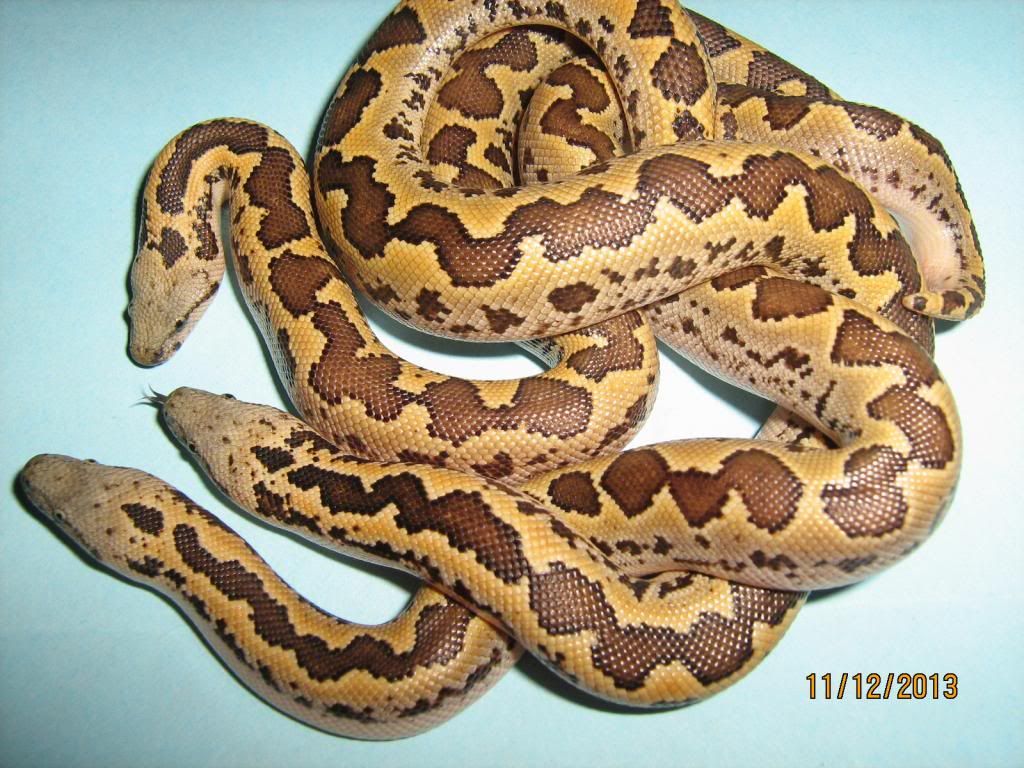
  <description><![CDATA[Eryx is a genus of nonvenomous boas found in southeastern Europe, northern Africa, the Middle East and southwestern Asia. Eight species are currently recognized. The majority of these snakes spend much of their time basking below the surface of the sand, with only their eyes or head exposed on the surface. When a potential prey item approaches, they erupt out of the sand, bite and employ constriction to subdue it. Adults rarely exceed two feet in length , although they sometimes reach 3 feet . Adapted to burrowing, their heads are wedge-shaped with narrow nostrils and very small eyes. Here you may post messages or questions pertaining to all aspects and issues regarding the keeping, breeding, health, and conservation of Sand Boas. 
If you are a new user to this forum, please take the time to review the rules first before posting: Terms of Service.]]></description>
  <items>
    <rdf:Seq>
      <rdf:li rdf:resource="https://forums.kingsnake.com/view.php?id=2116163" />
      <rdf:li rdf:resource="https://forums.kingsnake.com/view.php?id=2111687" />
      <rdf:li rdf:resource="https://forums.kingsnake.com/view.php?id=2111139" />
      <rdf:li rdf:resource="https://forums.kingsnake.com/view.php?id=2111123" />
      <rdf:li rdf:resource="https://forums.kingsnake.com/view.php?id=2027609" />
      <rdf:li rdf:resource="https://forums.kingsnake.com/view.php?id=2027344" />
      <rdf:li rdf:resource="https://forums.kingsnake.com/view.php?id=2025529" />
      <rdf:li rdf:resource="https://forums.kingsnake.com/view.php?id=2021755" />
      <rdf:li rdf:resource="https://forums.kingsnake.com/view.php?id=2020982" />
      <rdf:li rdf:resource="https://forums.kingsnake.com/view.php?id=2020820" />
      <rdf:li rdf:resource="https://forums.kingsnake.com/view.php?id=2019646" />
      <rdf:li rdf:resource="https://forums.kingsnake.com/view.php?id=2019639" />
      <rdf:li rdf:resource="https://forums.kingsnake.com/view.php?id=2019638" />
      <rdf:li rdf:resource="https://forums.kingsnake.com/view.php?id=2019165" />
      <rdf:li rdf:resource="https://forums.kingsnake.com/view.php?id=2017428" />
      <rdf:li rdf:resource="https://forums.kingsnake.com/view.php?id=2017427" />
      <rdf:li rdf:resource="https://forums.kingsnake.com/view.php?id=2014829" />
      <rdf:li rdf:resource="https://forums.kingsnake.com/view.php?id=2014746" />
      <rdf:li rdf:resource="https://forums.kingsnake.com/view.php?id=2014290" />
      <rdf:li rdf:resource="https://forums.kingsnake.com/view.php?id=2014248" />
    </rdf:Seq>
  </items>
</channel>

<item rdf:about="https://forums.kingsnake.com/view.php?id=2116163">
  <title>The forums are alive once again!</title>
  <link>https://forums.kingsnake.com/view.php?id=2116163</link>
  <description><![CDATA[<div class="rss-post"><p><strong>Original post</strong> by AlexNevgloskiJr &mdash; 2025-11-22 19:44:44 GMT</p><p>Now to figure out how to add an image. I used to use Photobucket. Either way, I'm glad Kingsnake is active again.<br />
<img class="img-fluid" src="https://mycloud.verizon.com/public/share/HwpnJjGgMM" alt="Image"></p></div>
<div class="rss-post"><p><strong>Reply</strong> by PHFaust &mdash; 2025-12-15 20:46:45 GMT</p><p>>>Third time's a charm?<br />
>></p>
<p>Are you using the URL link? If you look at the lower right hand corner there is the tools and toys area that will give you the old HTML codes needed too! I know it has been a while!</p>
<p>And WELCOME BACK!!!!!!!!!<br />
-----<br />
Cindy Steinle<br />
PHFaust<br />
<a href="http://www.facebook.com/pages/kingsnakecom/56444808084?ref=ts" target="_blank">Visit kingsnake on Facebook!</a><br />
<a href="http://twitter.com/kingsnake_com" target="_blank"> Follow Kingsnake on Twitter!</a></p></div>
<div class="rss-post"><p><strong>Reply</strong> by AlexNevgloskiJr &mdash; 2025-11-22 20:33:35 GMT</p><p>Third time's a charm?<br />
<img class="img-fluid" src="https://imgur.com/a/fDjPU4i" alt="Image"></p></div>
<div class="rss-post"><p><strong>Reply</strong> by AlexNevgloskiJr &mdash; 2025-11-22 20:30:30 GMT</p><p>Captive hatched '25 Saharan sand boa.<br />
<img class="img-fluid" src="https://imgur.com/a/su2UGuE" alt="Image"></p></div>
<p><a href="https://forums.kingsnake.com/view.php?id=2116163">View full thread on Kingsnake.com</a></p>]]></description>
  <dc:date>2025-12-15T20:46:45+00:00</dc:date>
  <dc:creator>AlexNevgloskiJr</dc:creator>
</item>
<item rdf:about="https://forums.kingsnake.com/view.php?id=2111687">
  <title>Noob question about breeding.</title>
  <link>https://forums.kingsnake.com/view.php?id=2111687</link>
  <description><![CDATA[<div class="rss-post"><p><strong>Original post</strong> by sheenac &mdash; 2016-09-16 15:00:30 GMT</p><p>Hello,</p>
<p>I'm considering buying an albino stripe female sand boa and was wondering what possibilities there are for breeding. I'm trying to steer away from getting too many "normals " in the babies, but not going to be upset about it! I was thinking a stripe anery? But my research says I'd get more normal than unique but with recessive traits in their genes.</p>
<p>Please correct me if I'm wrong in any way, I want to learn.</p>
<p>But what should I breed her to?</p>
<p>Thank you! I appreciate any advice.</p>
<p>Sheena</p></div>
<p><a href="https://forums.kingsnake.com/view.php?id=2111687">View full thread on Kingsnake.com</a></p>]]></description>
  <dc:date>2016-09-16T15:00:30+00:00</dc:date>
  <dc:creator>sheenac</dc:creator>
</item>
<item rdf:about="https://forums.kingsnake.com/view.php?id=2111139">
  <title>Albino gene x albino paradox gene</title>
  <link>https://forums.kingsnake.com/view.php?id=2111139</link>
  <description><![CDATA[<div class="rss-post"><p><strong>Original post</strong> by markg &mdash; 2016-03-23 19:50:35 GMT</p><p>If an albino is bred with a paradox albino, are the offspring normally colored, het for both albino strains?</p></div>
<p><a href="https://forums.kingsnake.com/view.php?id=2111139">View full thread on Kingsnake.com</a></p>]]></description>
  <dc:date>2016-03-23T19:50:35+00:00</dc:date>
  <dc:creator>markg</dc:creator>
</item>
<item rdf:about="https://forums.kingsnake.com/view.php?id=2111123">
  <title>Trick to get sandboas on F/T mice</title>
  <link>https://forums.kingsnake.com/view.php?id=2111123</link>
  <description><![CDATA[<div class="rss-post"><p><strong>Original post</strong> by markg &mdash; 2016-03-18 17:46:39 GMT</p><p>Here is something I have been doing with pretty good success for getting stubborn rosyboas and sandboas to eat frozen/thawed mice. By stubborn snakes, I mean snakes that will eat live no problem but snub f/t.</p>
<p>1. Thaw the food item.<br />
2. Warm it up through and through to 95-100 deg and immediately feed.</p>
<p>I use warm water typically, and sometimes a heat gun depending on how many I am feeding.</p>
<p>Although this does not work necessarily for every individual, it has made a big difference with my stubborn snakes. These animals want warm prey, not cold. Give it a try if you have snakes that refuse f/t. Like I say, it does not work for every snake, but it has gotten some of my otherwise staunch live feeders to feed  well on f/t.</p></div>
<p><a href="https://forums.kingsnake.com/view.php?id=2111123">View full thread on Kingsnake.com</a></p>]]></description>
  <dc:date>2016-03-18T17:46:39+00:00</dc:date>
  <dc:creator>markg</dc:creator>
</item>
<item rdf:about="https://forums.kingsnake.com/view.php?id=2027609">
  <title>Who&apos;s working with Eryx johnii</title>
  <link>https://forums.kingsnake.com/view.php?id=2027609</link>
  <description><![CDATA[<div class="rss-post"><p><strong>Original post</strong> by AlexNevgloski &mdash; 2015-01-13 00:07:57 GMT</p><p>I was hoping to connect with those working with this species. I just got my first animal (a young adult male) and I'm looking for people who are keeping and/or breeding them. I may also be looking to purchase more.</p></div>
<div class="rss-post"><p><strong>Reply</strong> by markg &mdash; 2016-03-18 17:31:24 GMT</p><p>Lol, motion-detection camera. You picked the wrong type of snake for that. (said in jest, but there is definitely some truth in it.)</p>
<p>I have some sandboas too, not johnii, and I have some children's pythons. I can look into the python cages during the day and very rarely see them crawling. Yet, when I place some wine corks in the cage upright as indicators of snake movement, I can walk out of the room for 20 minutes, come back, and the corks are all knocked down but the snakes are again hiding. Those pythons are sneaky little buggers, and they have learned my patterns quite well.</p>
<p>My sandboas on the other hand will leave corks intact for days sometimes. For sure they are mostly lie-in-wait snakes.</p>
<p>Corks - my cheap motion detector. I finally found a use for them besides BB gun targets. God knows I have many corks.</p></div>
<div class="rss-post"><p><strong>Reply</strong> by reknirt &mdash; 2015-12-11 15:47:13 GMT</p><p>I have a 6 month old male sunset eryx johnii. I really like the sand boas, except for the fact that I haven't seen him in 5 days, even with a motion detecting camera on his tank.</p></div>
<p><a href="https://forums.kingsnake.com/view.php?id=2027609">View full thread on Kingsnake.com</a></p>]]></description>
  <dc:date>2016-03-18T17:31:24+00:00</dc:date>
  <dc:creator>AlexNevgloski</dc:creator>
</item>
<item rdf:about="https://forums.kingsnake.com/view.php?id=2027344">
  <title>Perfect pet snake - the sandboa</title>
  <link>https://forums.kingsnake.com/view.php?id=2027344</link>
  <description><![CDATA[<div class="rss-post"><p><strong>Original post</strong> by markg &mdash; 2014-11-26 19:18:57 GMT</p><p>I recently got a few hognose snakes, thinking these might be the ultimate snake pet. They are certainly alot of fun and have interesting behaviors, but I still think the sandboas have it. Specifically the &quot;Kenyan&quot; or East African sandboa. In my opinion these days, these are my favorite pet snake. Just a shout-out to them here.</p>
<p>Sandboas have relatively slow metabolisms, kind of a general trait of boas in general. Feedings do not need to be as frequent as some colubrids. Neonates may eat often, but adults are fine on less.</p>
<p>Sandboas seem to relish smallish cages. No complaint here.</p>
<p>Sandboas (in my care anyway) are just as happy on sheet paper substrates (I use packing paper that is really unprinted newspaper) as on particulate substrates as long as they can hide under or between the sheets.</p>
<p>Sandboas tolerate a sizable range of humidity as long as extremes are not constant.</p>
<p>Sandboas tolerate mistakes in temperature, both low and high. Probably the toughest snake I have kept. Better than rosy boas in this regard.</p>
<p>They have a built-in barometer if you will. The girth of the hind section is a rough indicator of hydration and food intake, kind of like with leopard geckos.</p></div>
<p><a href="https://forums.kingsnake.com/view.php?id=2027344">View full thread on Kingsnake.com</a></p>]]></description>
  <dc:date>2014-11-26T19:18:57+00:00</dc:date>
  <dc:creator>markg</dc:creator>
</item>
<item rdf:about="https://forums.kingsnake.com/view.php?id=2025529">
  <title>Getting a Kenyan Sand Boa</title>
  <link>https://forums.kingsnake.com/view.php?id=2025529</link>
  <description><![CDATA[<div class="rss-post"><p><strong>Original post</strong> by sean12wilk &mdash; 2014-07-21 15:14:09 GMT</p><p>I have been interested in getting a Kenyan Sand Boa and I am going to get one. I have a 10 gallon terrarium that will house my male Boa once I get it. I have done plenty of research on what I need to get for it and how to take care of it. On LLL Reptile I have in my cart everything I need besides the snake itself and its food. The four items, aspen bedding, analog thermometer and hygrometer, digital temperature probe, and under tank heater, some to a total of around $50. My question, that I am hoping one of you will be able to answer is, should I go ahead and buy these things online or would I be better off going to a reptile expo? On Underground Reptiles that snake itself is $35 for a 2014 baby, that plus $40 for shipping, so it is actually around $75. Would I be better off getting it at a reptile expo? <br />
Thank you.</p></div>
<div class="rss-post"><p><strong>Reply</strong> by CindySteinle &mdash; 2014-07-25 10:59:28 GMT</p><p>The biggest advantage of buying at a show is being able to choose face to face between animals.  The other advantage is not paying shipping.  You will see cheaper prices than say a big box store at shows, but the only real difference price wise on everything else will be to cut the shipping costs off.  Remember the same vendors you buy from online are the same vendors you buy from at shows.  They have staff and overhead no matter what.</p>
<p>So does skipping shipping costs equal what it takes to go to the show?</p></div>
<p><a href="https://forums.kingsnake.com/view.php?id=2025529">View full thread on Kingsnake.com</a></p>]]></description>
  <dc:date>2014-07-25T10:59:28+00:00</dc:date>
  <dc:creator>sean12wilk</dc:creator>
</item>
<item rdf:about="https://forums.kingsnake.com/view.php?id=2021755">
  <title>sand boa eggs???</title>
  <link>https://forums.kingsnake.com/view.php?id=2021755</link>
  <description><![CDATA[<div class="rss-post"><p><strong>Original post</strong> by vjl4 &mdash; 2014-02-23 18:31:54 GMT</p><p>Hi All,</p>
<p>Does anyone have any Eryx muelleri or jayakari eggs they'd like to donate to science?</p>
<p>Vinny<br />
-----<br />
“There is a grandeur in this view of life, with its several powers, having been originally breathed into a few forms or into one; and that whilst this planet has gone on cycling according to the fixed laws of gravity, from so simple a beginning endless forms most beautiful and most wonderful have been, and are being, evolved.” -C. Darwin, 1859</p>
<p><a href="http://pantheon.yale.edu/~vjl4/NSR/" target="_blank">Natural Selection Reptiles</a></p></div>
<div class="rss-post"><p><strong>Reply</strong> by vjl4 &mdash; 2014-02-24 16:36:06 GMT</p><p>No worries, its not widely known that a coupe of species are oviparous. Turns out that muelleri is not even closely related to Kenyan sands even though the patterns are similar.</p>
<p>Vinny<br />
<img class="img-fluid" src="http://gallery.kingsnake.com/data/67166flame.jpg"></p>
<p>-----<br />
“There is a grandeur in this view of life, with its several powers, having been originally breathed into a few forms or into one; and that whilst this planet has gone on cycling according to the fixed laws of gravity, from so simple a beginning endless forms most beautiful and most wonderful have been, and are being, evolved.” -C. Darwin, 1859</p>
<p><a href="http://pantheon.yale.edu/~vjl4/NSR/" target="_blank">Natural Selection Reptiles</a></p></div>
<div class="rss-post"><p><strong>Reply</strong> by VanPerry &mdash; 2014-02-24 07:41:21 GMT</p><p>I stand corrected, I should have recognized the species difference. I will go to bed with egg on my face tonight.</p></div>
<div class="rss-post"><p><strong>Reply</strong> by vjl4 &mdash; 2014-02-24 01:55:43 GMT</p><p>Almost all boas are  live-bearers. E. muelleri and E. jayakari lay eggs, google  them there are cool pics!</p>
<p>Vinny<br />
-----<br />
“There is a grandeur in this view of life, with its several powers, having been originally breathed into a few forms or into one; and that whilst this planet has gone on cycling according to the fixed laws of gravity, from so simple a beginning endless forms most beautiful and most wonderful have been, and are being, evolved.” -C. Darwin, 1859</p>
<p><a href="http://pantheon.yale.edu/~vjl4/NSR/" target="_blank">Natural Selection Reptiles</a></p></div>
<div class="rss-post"><p><strong>Reply</strong> by VanPerry &mdash; 2014-02-24 00:59:14 GMT</p><p>I should qualify that, Eryx mulleri, (Kenya) are live bairers.</p></div>
<div class="rss-post"><p><strong>Reply</strong> by VanPerry &mdash; 2014-02-24 00:50:13 GMT</p><p>No one will have sand boa eggs since they give live birth.</p></div>
<p><a href="https://forums.kingsnake.com/view.php?id=2021755">View full thread on Kingsnake.com</a></p>]]></description>
  <dc:date>2014-02-24T16:36:06+00:00</dc:date>
  <dc:creator>vjl4</dc:creator>
</item>
<item rdf:about="https://forums.kingsnake.com/view.php?id=2020982">
  <title>Stuck Shed Question</title>
  <link>https://forums.kingsnake.com/view.php?id=2020982</link>
  <description><![CDATA[<div class="rss-post"><p><strong>Original post</strong> by scottico &mdash; 2014-01-23 01:23:23 GMT</p><p>Our adult Sand Boa has stuck shed over one eye and half of his face.  It's been there for over a week, but we discovered it this morning.</p>
<p>Is is still possible manually to remove the shed?  If so, how?</p>
<p>Thanks!</p>
<p>Scott</p></div>
<div class="rss-post"><p><strong>Reply</strong> by VanPerry &mdash; 2014-01-26 01:06:20 GMT</p><p>It is not to late, soak him in luke warm water or place a damp towel in the cage.  If the shed does not rub off by itself then very gently swipe the towel over the stuck shed.</p></div>
<p><a href="https://forums.kingsnake.com/view.php?id=2020982">View full thread on Kingsnake.com</a></p>]]></description>
  <dc:date>2014-01-26T01:06:20+00:00</dc:date>
  <dc:creator>scottico</dc:creator>
</item>
<item rdf:about="https://forums.kingsnake.com/view.php?id=2020820">
  <title>hide and enclosure size</title>
  <link>https://forums.kingsnake.com/view.php?id=2020820</link>
  <description><![CDATA[<div class="rss-post"><p><strong>Original post</strong> by fearsome &mdash; 2014-01-15 06:53:27 GMT</p><p>We acquired a kenyan sand boa at NARBC tinly park and have been keeping him in a 10 gallon tank as advised by the person who sold him to us. He is a male so we are told. For the time being the tank has been very bare. It has sanichips and a heat pad under it, and nothing more. We are now going to start building him the palace he deserves even if he doesn't care about it lol. So I have a couple questions because I know that some times sellers give you the bare minimum but that's not always what is best.</p>
<p>Can an adult male sand boa really live his whole life in a 10 gallon tank? Is this advisable or is it too small?</p>
<p>Second how big should the hides be for an adult male? If making a rectangular hide for him what would be good dimensions he would like?</p>
<p>Also the heat pad we bought had these little rubber feet to go under the tank so it could vent heat, well they suck and we already lost one are there any better alternatives you guys use?</p></div>
<div class="rss-post"><p><strong>Reply</strong> by markg &mdash; 2014-02-19 19:14:00 GMT</p><p>Males usually are not very large when fully grown, and you can keep one in a 10gal, but a bit larger is always better for an adult. 10 gals do not give alot of space for temperature gradients in my opinion when the occupant is of size to fill up a good part of the cage.</p>
<p>Baby sand boas are easy pickin's for predators if exposed. That is why they do so well in small plastic shoebox cages when small - they feel secure. They also feel secure with the weight of substrate on top of them. They feed like mad when they have that going on. He will be OK in the 10 gal if you want. I would cover 80-90% of the screen top with plastic or styrene foam. Full screen tops are great for lizards but are not ideal for snakes that spend most of the time in the ground. I would put a water dish large enough to maintain a moderate humidity in there. Impossible with a full screen top. If your ambient humidity is already moderate, you can ignore. Remember, heat pads dry out animals when moisture is allowed to escape freely thru the cage top.</p>
<p>If you want to try hides, make them low. I made some out of 1/2 inch styrene foam. The walls are only 1/2 inch high made by cutting the foam in thin strips. I glued them onto the top piece with a glue gun and painted the hide black inside and out.</p>
<p>With sand boas, you can probably just lay a piece of cardboard or foam flat onto the substrate. Wrinkled up packing paper works really well on top of the substrate. My adult sandboa will sit under that paper on top of the substrate with her nose peeking out waiting to attack. Obviously she feels secure with the weight of the paper on her.</p>
<p>I understand that you probably want a display cage. Otherwise I would suggest a plastic storage box that measures more or less in the area of 22 inches x 14 inches for an adult. A 20 gal long would be nice for an adult or two.</p>
<p>Sand boas are IMO the best boid snake to keep in terms of ease of care.</p></div>
<div class="rss-post"><p><strong>Reply</strong> by VanPerry &mdash; 2014-01-18 00:09:26 GMT</p><p>vpi.com has a good care sheet for sand boa's.  Although he can live in a 10 gallon tank he will use as big as enclosure as you provide.  If you building a palace give him some room.  As for hides I don't provide one as they seem to prefer just burrowing in the substrate.</p>
<p>Enjoy your snake, sand boa's are one of my favorites.</p></div>
<p><a href="https://forums.kingsnake.com/view.php?id=2020820">View full thread on Kingsnake.com</a></p>]]></description>
  <dc:date>2014-02-19T19:14:00+00:00</dc:date>
  <dc:creator>fearsome</dc:creator>
</item>
<item rdf:about="https://forums.kingsnake.com/view.php?id=2019646">
  <title>Introducing Wide back Nuclears</title>
  <link>https://forums.kingsnake.com/view.php?id=2019646</link>
  <description><![CDATA[<div class="rss-post"><p><strong>Original post</strong> by Roy Stockwell &mdash; 2013-11-18 01:36:08 GMT</p><p>For a few years now, I have been holding back Nuclears with the widest, brightest orange backs, with the hope of selective breeding for this wide orange swath down their backs.<br />
Today, I got my first litter.   I can hardly wait till they shed, they are born in  opaque and the colour in Nukes comes in with every shed.  Take a look...   These are pure Nukes, no other genes or crosses have been added.<br />
<img class="img-fluid" src="http://www.reptilescanada.com/gallery/data/581/medium/IMG_2411.JPG" alt="Just born, Wide Backed (striped) Nuclears"><br />
<a href="http://www.reptilescanada.com/showthread.php/68949-Just-born-Wide-Backed-%28striped%29-Nuclears">Just born, Wide Backed (striped) Nuclears</a></p></div>
<div class="rss-post"><p><strong>Reply</strong> by vjl4 &mdash; 2013-11-19 21:08:45 GMT</p><p>The albinos were nice, but these are spectacular! If I send a self addressed stamped envelope will you send me some?</p>
<p><img class="img-fluid" src="https://forums.kingsnake.com/images/smiles/smile.gif" border="0" alt=""></p>
<p>Vinny<br />
-----<br />
“There is a grandeur in this view of life, with its several powers, having been originally breathed into a few forms or into one; and that whilst this planet has gone on cycling according to the fixed laws of gravity, from so simple a beginning endless forms most beautiful and most wonderful have been, and are being, evolved.” -C. Darwin, 1859</p>
<p><a href="http://pantheon.yale.edu/~vjl4/NSR/" target="_blank">Natural Selection Reptiles</a></p></div>
<p><a href="https://forums.kingsnake.com/view.php?id=2019646">View full thread on Kingsnake.com</a></p>]]></description>
  <dc:date>2013-11-19T21:08:45+00:00</dc:date>
  <dc:creator>Roy Stockwell</dc:creator>
</item>
<item rdf:about="https://forums.kingsnake.com/view.php?id=2019639">
  <title>Gold Rough Scales</title>
  <link>https://forums.kingsnake.com/view.php?id=2019639</link>
  <description><![CDATA[<div class="rss-post"><p><strong>Original post</strong> by Roy Stockwell &mdash; 2013-11-18 01:11:10 GMT</p><p>Is anyone else selective breeding conicus? I'm working on gold phase ones.<br />
<img class="img-fluid" src="http://i197.photobucket.com/albums/aa33/UncleRoy_bucket/IMG_2633.jpg" alt="Gold phase Conicus"></p></div>
<p><a href="https://forums.kingsnake.com/view.php?id=2019639">View full thread on Kingsnake.com</a></p>]]></description>
  <dc:date>2013-11-18T01:11:10+00:00</dc:date>
  <dc:creator>Roy Stockwell</dc:creator>
</item>
<item rdf:about="https://forums.kingsnake.com/view.php?id=2019638">
  <title>Introducing Nuclear Albinos</title>
  <link>https://forums.kingsnake.com/view.php?id=2019638</link>
  <description><![CDATA[<div class="rss-post"><p><strong>Original post</strong> by Roy Stockwell &mdash; 2013-11-17 22:38:50 GMT</p><p>This is a much anticipated birth from a Nuclear albino het mother... The bright orange ones will be Nuclear Albinos.Only the second time, they've been produced. This has been a long term project to increase the orange content in Bell albinos, which has always been somewhat faded and variable. I took my best Bell albino, bred it to my best Nuclear, and produced hets(years back) I am now breeding the hets and this is the resulting litter.<br />
The pic below are two of the first 3 produced several years ago.They are almost mature now. Click the link to see neonates and the 2013 litter<br />
<img class="img-fluid" src="http://www.reptilescanada.com/gallery/data/581/medium/IMG_2627.JPG" alt="Nuclear albino birthpics &amp; update"><br />
<a href="http://www.reptilescanada.com/showthread.php/70429-Nuclear-albino-birth-pics-amp-update">Nuclear albino birthpics &amp;amp; update</a></p></div>
<p><a href="https://forums.kingsnake.com/view.php?id=2019638">View full thread on Kingsnake.com</a></p>]]></description>
  <dc:date>2013-11-17T22:38:50+00:00</dc:date>
  <dc:creator>Roy Stockwell</dc:creator>
</item>
<item rdf:about="https://forums.kingsnake.com/view.php?id=2019165">
  <title>Eryx johnii-How To Breed?</title>
  <link>https://forums.kingsnake.com/view.php?id=2019165</link>
  <description><![CDATA[<div class="rss-post"><p><strong>Original post</strong> by VICtort &mdash; 2013-10-30 00:06:52 GMT</p><p>I have 1.3 E. johnii of the Staub/Treacher line.  They are about 7 years old, and they have never bred despite both fall and spring introductions.  I am trying to examine and improve my husbandry...but I don't know where I failed.  I am wondering if they need brumation, and how cold for how long?  Should they be treated similar to temperate Colubrids?</p>
<p>Any helpful advice or tips from the successful breeders out there is much appreciated.  The lack of breeding success has been frustrating.</p>
<p>Gratefully, Vic</p></div>
<div class="rss-post"><p><strong>Reply</strong> by Rick Staub &mdash; 2013-11-03 01:02:54 GMT</p><p>Vic,</p>
<p>Shoot me an email. I assume you still have it.<br />
-----<br />
Rick Staub</p></div>
<p><a href="https://forums.kingsnake.com/view.php?id=2019165">View full thread on Kingsnake.com</a></p>]]></description>
  <dc:date>2013-11-03T01:02:54+00:00</dc:date>
  <dc:creator>VICtort</dc:creator>
</item>
<item rdf:about="https://forums.kingsnake.com/view.php?id=2017428">
  <title>Paradox albino</title>
  <link>https://forums.kingsnake.com/view.php?id=2017428</link>
  <description><![CDATA[<div class="rss-post"><p><strong>Original post</strong> by pythonas &mdash; 2013-09-15 20:04:34 GMT</p><p>Also had a few other litters with albinos, and albino paradox.<br />
<img class="img-fluid" src="http://gallery.kingsnake.com/data/127647geckos_036-med.JPG"></p>
<p><img class="img-fluid" src="http://gallery.kingsnake.com/data/127647geckos_039-med.JPG"></p>
<p>-----<br />
Luckey</p></div>
<p><a href="https://forums.kingsnake.com/view.php?id=2017428">View full thread on Kingsnake.com</a></p>]]></description>
  <dc:date>2013-09-15T20:04:34+00:00</dc:date>
  <dc:creator>pythonas</dc:creator>
</item>
<item rdf:about="https://forums.kingsnake.com/view.php?id=2017427">
  <title>23 baby litter</title>
  <link>https://forums.kingsnake.com/view.php?id=2017427</link>
  <description><![CDATA[<div class="rss-post"><p><strong>Original post</strong> by pythonas &mdash; 2013-09-15 19:53:12 GMT</p><p>My hypo anery ksb just dropped 23 yes 23 babies. That is a record for me. She was over 650 grams before she had the litter.<br />
<img class="img-fluid" src="http://gallery.kingsnake.com/data/127647091413_020-med.JPG"></p>
<p><img class="img-fluid" src="http://gallery.kingsnake.com/data/127647091413_019-med.JPG"></p>
<p><img class="img-fluid" src="http://gallery.kingsnake.com/data/127647IMG_0203-med.jpg"></p>
<p>-----<br />
Luckey</p></div>
<p><a href="https://forums.kingsnake.com/view.php?id=2017427">View full thread on Kingsnake.com</a></p>]]></description>
  <dc:date>2013-09-15T19:53:12+00:00</dc:date>
  <dc:creator>pythonas</dc:creator>
</item>
<item rdf:about="https://forums.kingsnake.com/view.php?id=2014829">
  <title>Humidity problems</title>
  <link>https://forums.kingsnake.com/view.php?id=2014829</link>
  <description><![CDATA[<div class="rss-post"><p><strong>Original post</strong> by queso &mdash; 2013-08-09 00:12:40 GMT</p><p>Just bought my first Sand Boa and absolutely love her. Having a problem regulating humidity in her tank. I have read it needs to b 40% and can't get it much under 55-60%. Have a very small amount of water in a bowl and hotspot in cage runs around 100 degrees.</p></div>
<div class="rss-post"><p><strong>Reply</strong> by chrish &mdash; 2013-08-12 23:35:06 GMT</p><p>I don't think humidity is a big deal in sandboa cages as long as the cages aren't wet.  Particular for species like Kenyans that live in areas that occasionally receive heavy rainfall.</p>
<p>Don't worry about it.  50% is fine.  I kept and bred colubrinus in areas that had humidities higher than 50% most of the year.<br />
-----<br />
<i>Chris Harrison<br />
San Antonio, Texas</i></p></div>
<p><a href="https://forums.kingsnake.com/view.php?id=2014829">View full thread on Kingsnake.com</a></p>]]></description>
  <dc:date>2013-08-12T23:35:06+00:00</dc:date>
  <dc:creator>queso</dc:creator>
</item>
<item rdf:about="https://forums.kingsnake.com/view.php?id=2014746">
  <title>Some new johnii</title>
  <link>https://forums.kingsnake.com/view.php?id=2014746</link>
  <description><![CDATA[<div class="rss-post"><p><strong>Original post</strong> by Rick Staub &mdash; 2013-08-08 07:25:33 GMT</p><p>Just showing off some newborn F3/F4 Sunset johnii and a yearling I held back from last year.</p>
<p>First the yearling<br />
<img class="img-fluid" src="https://gallery.kingsnake.com/data/465yearling-johnii-cb2012.jpg"><br />
<img class="img-fluid" src="http://gallery.kingsnake.com/data/4652013males-r-med.jpg"></p>
<p><img class="img-fluid" src="http://gallery.kingsnake.com/data/4652013females-r-med.jpg"></p>
<p>-----<br />
Rick Staub</p></div>
<div class="rss-post"><p><strong>Reply</strong> by VICtort &mdash; 2013-10-25 01:57:20 GMT</p><p>Those are nice, they just keep getting more and more orange...</p>
<p>Will you please explain how cool you keep them in the winter?  Are they treated like temperate climate Colubrids?  I have some E. johnii from Warren and yourself, but I have been unsuccessful breeding them.  I wonder if they need more cooling or if my male just does not have the stimulus he needs.  They 1.3 are large and about 7 years old.  Any advice on breeding them is much appreciated.<br />
Gratefully, Vic</p></div>
<p><a href="https://forums.kingsnake.com/view.php?id=2014746">View full thread on Kingsnake.com</a></p>]]></description>
  <dc:date>2013-10-25T01:57:20+00:00</dc:date>
  <dc:creator>Rick Staub</dc:creator>
</item>
<item rdf:about="https://forums.kingsnake.com/view.php?id=2014290">
  <title>Kenyan vs Egyptian..  same thing?</title>
  <link>https://forums.kingsnake.com/view.php?id=2014290</link>
  <description><![CDATA[<div class="rss-post"><p><strong>Original post</strong> by AaronBayer &mdash; 2013-08-02 19:23:44 GMT</p><p>Quick question about kenyan vs egyptian sand boas.  Are they the same?  I've seen what looks like the same snake advertised as both names, but I've also heard that kenyans are orange/brown and egyptians are yellow/brown.</p>
<p>Also, a few years back I saw a sand boa that was orangeish yellow and grey rather than brown. It was advertised as an egyptian sand boa, but I've never seen another like it. Any idea on what it actually was?<br />
-----<br />
1.1 Argentine Boas<br />
1.1 Dumerils Boas<br />
1.1 Black Milk Snakes<br />
2.3 California King Snakes<br />
1.1 Nelsons Milk Snakes<br />
2.2 Corn Snakes</p></div>
<div class="rss-post"><p><strong>Reply</strong> by vjl4 &mdash; 2013-10-01 16:32:25 GMT</p><p>I think we can all agree that Eryx taxonomy is kind of a mess and in dire need of revision. I know there is some new molecular data in the works that includes &quot;all&quot; described species of Boid, but I'm not sure when it will be published. If I get an undergrad interested in snake phylogenetics I'll be sure to put them to work figuring out what is going on with the Ruffies, finding museum vouchered species may not be easy though!</p>
<p>Vinny<br />
-----<br />
“There is a grandeur in this view of life, with its several powers, having been originally breathed into a few forms or into one; and that whilst this planet has gone on cycling according to the fixed laws of gravity, from so simple a beginning endless forms most beautiful and most wonderful have been, and are being, evolved.” -C. Darwin, 1859</p>
<p><a href="http://pantheon.yale.edu/~vjl4/NSR/" target="_blank">Natural Selection Reptiles</a></p></div>
<div class="rss-post"><p><strong>Reply</strong> by chrish &mdash; 2013-09-28 04:00:00 GMT</p><p>Reading your reply made me wonder exactly what the &quot;current&quot; validity of loveridgei is anyway.  Last I knew, Tokar had sunk it and no one had ressurected it.</p>
<p>In doing some quick research, I reread parts of this paper -<br />
http://www.fupress.net/index.php/tropicalzoology/issue/view/16<br />
which is the original description of Eryx borri (bogus, IMHO).</p>
<p>But the authors point out that &quot;rufescens&quot; type snakes were originally described as Eryx jaculus var. sennaariensis which means that the subspecies name sennaariensis has precedence over rufescens if that taxon has any validity at all.<br />
-----<br />
<i>Chris Harrison<br />
San Antonio, Texas</i></p></div>
<div class="rss-post"><p><strong>Reply</strong> by vjl4 &mdash; 2013-09-26 16:28:14 GMT</p><p>Hey Chris,</p>
<p>&quot;Wouldn't that be what you expect from a group of 6 specimens of the same taxon/evolutionary group? &quot;</p>
<p>Not necessarily, if for example loveridgei and colubrinus were distinct (sub)species then I would expect them to be reciprocally monophyletic with a monophyletic clade of colubrinus and a monophyletic clade of loveridgei. Instead loveridgei nests within colubrinus so at the very least they are not species by the phylogenetic species concept (for whatever worth that may be to you).</p>
<p>&quot;With regard to the specimens of colubrinus that ended up coming out closer to loveridgei, what was the basis for calling those specimens colubrinus, not loveridgei?&quot;</p>
<p>I don't think these molecular data had anything to do with the sinking of loveridgei into colubrinus (they are not published as far as I know). Rather I think it's a matter of priority, if memory serves me right (and it may not), colubrinus was named first so it has priority on the species name.</p>
<p>Actually I would probably not be so ready to sink loveridgei yet, I would prefer many more individuals sampled from throughout the range and to have Ruffies sampled to. Also the current molecular data is a single mitochondrial gene so it would be good have some nuclear markers as well. Lots of things could make a true species of  loveridgei nest within a true species of colubrinus (incorrect species IDs, incomplete lineage sorting, a single introgressing female line of loveridgei into colubrinus, poor sampling leading to spurious results, etc..)</p>
<p>Vinny<br />
-----<br />
“There is a grandeur in this view of life, with its several powers, having been originally breathed into a few forms or into one; and that whilst this planet has gone on cycling according to the fixed laws of gravity, from so simple a beginning endless forms most beautiful and most wonderful have been, and are being, evolved.” -C. Darwin, 1859</p>
<p><a href="http://pantheon.yale.edu/~vjl4/NSR/" target="_blank">Natural Selection Reptiles</a></p></div>
<div class="rss-post"><p><strong>Reply</strong> by chrish &mdash; 2013-09-24 01:36:24 GMT</p><p><i>With respect to each other. There is a clade of three colubrinus specimens that is sister to a clade of two colubrinus and one loveridgei. The tree looks like ((col,col),col),(col,(col,lov)).</i></p>
<p>Wouldn't that be what you expect from a group of 6 specimens of the same taxon/evolutionary group?  <br />
With regard to the specimens of colubrinus that ended up coming out closer to loveridgei, what was the basis for calling those specimens colubrinus, not loveridgei?<br />
-----<br />
<i>Chris Harrison<br />
San Antonio, Texas</i></p></div>
<div class="rss-post"><p><strong>Reply</strong> by vjl4 &mdash; 2013-09-20 19:12:30 GMT</p><p>With respect to each other. There is a clade of three colubrinus specimens that is sister to a clade of two colubrinus and one loveridgei. The tree looks like ((col,col),col),(col,(col,lov)).</p>
<p>Vinny<br />
-----<br />
“There is a grandeur in this view of life, with its several powers, having been originally breathed into a few forms or into one; and that whilst this planet has gone on cycling according to the fixed laws of gravity, from so simple a beginning endless forms most beautiful and most wonderful have been, and are being, evolved.” -C. Darwin, 1859</p>
<p><a href="http://pantheon.yale.edu/~vjl4/NSR/" target="_blank">Natural Selection Reptiles</a></p></div>
<div class="rss-post"><p><strong>Reply</strong> by chrish &mdash; 2013-09-19 15:49:55 GMT</p><p>Sorry, should clarify my question.</p>
<p>You are saying colubrinus and loveridgei are paraphyletic compared to what outgroup/ingroups.</p>
<p>I know that Gongylophis (sensu Tokar) is paraphyletic, but what makes colubrinus and loveridgei paraphyletic?<br />
-----<br />
<i>Chris Harrison<br />
San Antonio, Texas</i></p></div>
<div class="rss-post"><p><strong>Reply</strong> by chrish &mdash; 2013-09-19 15:47:14 GMT</p><p>..<br />
-----<br />
<i>Chris Harrison<br />
San Antonio, Texas</i></p></div>
<div class="rss-post"><p><strong>Reply</strong> by vjl4 &mdash; 2013-09-16 17:33:09 GMT</p><p>Thanks for the reference. It's interesting because I have an old molecular dataset that suggests Eryx colubrinus colubrinus and Eryx colubrinus loveridgei are paraphyletic, I never could get rufescens DNA though.</p>
<p>Vinny<br />
-----<br />
“There is a grandeur in this view of life, with its several powers, having been originally breathed into a few forms or into one; and that whilst this planet has gone on cycling according to the fixed laws of gravity, from so simple a beginning endless forms most beautiful and most wonderful have been, and are being, evolved.” -C. Darwin, 1859</p>
<p><a href="http://pantheon.yale.edu/~vjl4/NSR/" target="_blank">Natural Selection Reptiles</a></p></div>
<div class="rss-post"><p><strong>Reply</strong> by chrish &mdash; 2013-09-16 11:24:47 GMT</p><p>Sorry, hadn't checked in here for a while.</p>
<p>It was Anatoly Tokar's revision of colubrinus that officially sunk the subspecies.</p>
<p>Tokar, A.A. 1996. Taxonomic revision of the genus Gongylophis Wagler 1830: G. colubrinus (L. 1758) (Serpentes Boidae). Tropical Zoology 9: 1-17.<br />
-----<br />
<i>Chris Harrison<br />
San Antonio, Texas</i></p></div>
<div class="rss-post"><p><strong>Reply</strong> by vjl4 &mdash; 2013-08-23 01:55:53 GMT</p><p>I'd also like to know who officially sunk them all into a single species. I don't think it was Noonan, for that matter I can't think of any genetic studies that included an &quot;Egyptian&quot; and a Ruffie. If anyone has access to vouchered Egyptians and Ruffies I'd do the genetic work in my lab <img class="img-fluid" src="https://forums.kingsnake.com/images/smiles/smile.gif" border="0" alt=""></p>
<p>Vinny<br />
-----<br />
“There is a grandeur in this view of life, with its several powers, having been originally breathed into a few forms or into one; and that whilst this planet has gone on cycling according to the fixed laws of gravity, from so simple a beginning endless forms most beautiful and most wonderful have been, and are being, evolved.” -C. Darwin, 1859</p>
<p><a href="http://pantheon.yale.edu/~vjl4/NSR/" target="_blank">Natural Selection Reptiles</a></p></div>
<p><a href="https://forums.kingsnake.com/view.php?id=2014290">View full thread on Kingsnake.com</a></p>]]></description>
  <dc:date>2013-10-01T16:32:25+00:00</dc:date>
  <dc:creator>AaronBayer</dc:creator>
</item>
<item rdf:about="https://forums.kingsnake.com/view.php?id=2014248">
  <title>How long before newborn johni sheds?</title>
  <link>https://forums.kingsnake.com/view.php?id=2014248</link>
  <description><![CDATA[<div class="rss-post"><p><strong>Original post</strong> by phelsuma &mdash; 2013-08-02 02:26:20 GMT</p><p>Opened my female's cage today to find 4 babies after I had given up hope. Didn't see anything a couple of days ago when watering but its possible they were hidden in the mulch. Question is the babies have shed already so, I'm wondering if anyone knows how long before a hatchling sheds so I can pin point their birthdate?</p></div>
<div class="rss-post"><p><strong>Reply</strong> by englishaussie &mdash; 2013-08-02 15:55:56 GMT</p><p>most hatchlings / newborns shed in about 7-10 days maybe up two weeks after hatching or birth. Congrats,</p>
<p>Andy.</p></div>
<p><a href="https://forums.kingsnake.com/view.php?id=2014248">View full thread on Kingsnake.com</a></p>]]></description>
  <dc:date>2013-08-02T15:55:56+00:00</dc:date>
  <dc:creator>phelsuma</dc:creator>
</item>
</rdf:RDF>