<?xml version="1.0" encoding="UTF-8"?>
<rdf:RDF xmlns:dc="http://purl.org/dc/elements/1.1/" xmlns:h="http://www.w3.org/1999/xhtml" xmlns:hr="http://www.w3.org/2000/08/w3c-synd/#" xmlns:rdf="http://www.w3.org/1999/02/22-rdf-syntax-ns#" xmlns="http://purl.org/rss/1.0/">
<channel rdf:about="https://forums.kingsnake.com/rss/?catid=33">
  <title>Kingsnake.com - Herpforum - Softshell Turtles</title>
  <link>https://forums.kingsnake.com/forum.php?catid=33</link>
  <description><![CDATA[Trionychidae comprises a number of turtle genera commonly known as softshells, also sometimes called pancake turtles. Softshells consist of some of the world's largest fresh water turtles, though many can adapt to living in highly brackish areas. Members of this family occur in Africa, Asia, North America, and Southeast Asia. They are called "softshell" because their carapace lacks horny scutes (scales). The carapace is leathery and pliable, particularly at the sides. The light and flexible shell allows them to move more easily in open water, or in muddy lake bottoms.

Most are strict carnivores, with diets consisting mainly of fish, aquatic crustaceans, snails, amphibians, and sometimes birds and small mammals.

Here you may post messages or questions pertaining to all aspects and issues regarding the keeping, breeding, health, and conservation of species and subspecies of Softshell Turtles.

Show off your softshell turtles and upload your pictures to our Softshell Turtle Photo Gallery! Don't forget to check out our other turtle related forums. 

If you are a new user to this forum, please take the time to review the rules first before posting: Terms of Service.

Articles of interest:
Fire Safety
Finding a Good Herp Veterinarian
Preventing Transmission of Salmonella]]></description>
  <items>
    <rdf:Seq>
      <rdf:li rdf:resource="https://forums.kingsnake.com/view.php?id=2025815" />
      <rdf:li rdf:resource="https://forums.kingsnake.com/view.php?id=2022840" />
      <rdf:li rdf:resource="https://forums.kingsnake.com/view.php?id=2020018" />
      <rdf:li rdf:resource="https://forums.kingsnake.com/view.php?id=1996158" />
      <rdf:li rdf:resource="https://forums.kingsnake.com/view.php?id=1993027" />
      <rdf:li rdf:resource="https://forums.kingsnake.com/view.php?id=1951268" />
      <rdf:li rdf:resource="https://forums.kingsnake.com/view.php?id=1935025" />
      <rdf:li rdf:resource="https://forums.kingsnake.com/view.php?id=1917328" />
      <rdf:li rdf:resource="https://forums.kingsnake.com/view.php?id=1873122" />
      <rdf:li rdf:resource="https://forums.kingsnake.com/view.php?id=1868370" />
      <rdf:li rdf:resource="https://forums.kingsnake.com/view.php?id=1868063" />
      <rdf:li rdf:resource="https://forums.kingsnake.com/view.php?id=1856910" />
      <rdf:li rdf:resource="https://forums.kingsnake.com/view.php?id=1852640" />
      <rdf:li rdf:resource="https://forums.kingsnake.com/view.php?id=1840573" />
      <rdf:li rdf:resource="https://forums.kingsnake.com/view.php?id=1829270" />
      <rdf:li rdf:resource="https://forums.kingsnake.com/view.php?id=1780460" />
      <rdf:li rdf:resource="https://forums.kingsnake.com/view.php?id=1774682" />
      <rdf:li rdf:resource="https://forums.kingsnake.com/view.php?id=1759763" />
      <rdf:li rdf:resource="https://forums.kingsnake.com/view.php?id=1731815" />
      <rdf:li rdf:resource="https://forums.kingsnake.com/view.php?id=1720886" />
    </rdf:Seq>
  </items>
</channel>

<item rdf:about="https://forums.kingsnake.com/view.php?id=2025815">
  <title>Softie Shopping</title>
  <link>https://forums.kingsnake.com/view.php?id=2025815</link>
  <description><![CDATA[<div class="rss-post"><p><strong>Original post</strong> by JBugDragon &mdash; 2014-08-02 06:58:23 GMT</p><p>I'm looking to get a shoftshell turtle!I love the little guys!</p>
<p>I was wondering what species, from your experience, is the best to keep. I have a nice local reptile shop that orders in reptiles, so I wouldn't want something that costs hundreds and is very rare! Thanks!</p></div>
<p><a href="https://forums.kingsnake.com/view.php?id=2025815">View full thread on Kingsnake.com</a></p>]]></description>
  <dc:date>2014-08-02T06:58:23+00:00</dc:date>
  <dc:creator>JBugDragon</dc:creator>
</item>
<item rdf:about="https://forums.kingsnake.com/view.php?id=2022840">
  <title>Baby soft shell with wrinkled shell</title>
  <link>https://forums.kingsnake.com/view.php?id=2022840</link>
  <description><![CDATA[<div class="rss-post"><p><strong>Original post</strong> by gtlife2 &mdash; 2014-04-14 02:43:38 GMT</p><p>I have a baby softy that I got about a month ago. At first she was very active in the water but in the past week she hasn't wanted to be in the water except to eat then goes right back under the UVB bulb on the basking rock. Her shell is very wrinkled looking and rippled near her feet. I'm not sure what changed. She eats baby turtle pellets, worms and shrimp mostly. 30 gallon tank with sand substrate. She's about 1.5in. Can anyone tell me what's wrong and how to help her thrive?</p></div>
<div class="rss-post"><p><strong>Reply</strong> by CindySteinle &mdash; 2014-04-16 15:03:11 GMT</p><p>I am not a pro with softys by any means, but maybe this care sheet can give you a bit of insight<br />
<a href="http://www.chelonia.org/Articles/softshellcare.htm">Soft Shell care sheet</a></p></div>
<p><a href="https://forums.kingsnake.com/view.php?id=2022840">View full thread on Kingsnake.com</a></p>]]></description>
  <dc:date>2014-04-16T15:03:11+00:00</dc:date>
  <dc:creator>gtlife2</dc:creator>
</item>
<item rdf:about="https://forums.kingsnake.com/view.php?id=2020018">
  <title>Baby with Sores?</title>
  <link>https://forums.kingsnake.com/view.php?id=2020018</link>
  <description><![CDATA[<div class="rss-post"><p><strong>Original post</strong> by anvilman &mdash; 2013-12-07 16:29:35 GMT</p><p>this is my baby soft shell turtle, just got him recently. Didn't realize the entire amount if care that can go into soft shells and they require. however they are and amazing species and i have done best research i could and spent a lot of money making him/her comfortable. now i have this problem being he has a strange sore i think on his belly was wondering what it is i have researched and found no help.<br />
<img class="img-fluid" src="https://www.facebook.com/photo.php?fbid=708080199205044&amp;set=a.195350677144668.50741.100000092119736&amp;type=1&amp;theater" alt="Image"></p></div>
<div class="rss-post"><p><strong>Reply</strong> by anvilman &mdash; 2013-12-07 16:36:41 GMT</p><p>picture of belly<br />
<img class="img-fluid" src="https://gallery.kingsnake.com/data/206751fitz-med.jpg" alt="Image"><br />
<img class="img-fluid" src="http://gallery.kingsnake.com/data/206751fitz-med.jpg"></p></div>
<div class="rss-post"><p><strong>Reply</strong> by anvilman &mdash; 2013-12-07 16:34:56 GMT</p><p>http://gallery.connectedbypets.com/photo.php?id=428379</p></div>
<p><a href="https://forums.kingsnake.com/view.php?id=2020018">View full thread on Kingsnake.com</a></p>]]></description>
  <dc:date>2013-12-07T16:36:41+00:00</dc:date>
  <dc:creator>anvilman</dc:creator>
</item>
<item rdf:about="https://forums.kingsnake.com/view.php?id=1996158">
  <title>Colorado River Spiny Softie spotted!</title>
  <link>https://forums.kingsnake.com/view.php?id=1996158</link>
  <description><![CDATA[<div class="rss-post"><p><strong>Original post</strong> by tylorp &mdash; 2012-09-08 07:38:55 GMT</p><p>35 years on the Parker Dam stretch of the Colorado River. Never once seen what we saw tonight! It was impressive... An easy 22&quot; Long x 14&quot; Wide Softie! It was a brown to brick red top color with cream granite skin and underside.. What a sight to behold! Was no way to photograph it either, bet I never see one again! ;(</p>
<p>I was curious if anybody could put an age on something like that... It was impressive!  All I could say... And it was not like the ones I'd seen in the Pet Shops! I'm so sorry to share with no pics ;(</p>
<p>Tom P.</p></div>
<p><a href="https://forums.kingsnake.com/view.php?id=1996158">View full thread on Kingsnake.com</a></p>]]></description>
  <dc:date>2012-09-08T07:38:55+00:00</dc:date>
  <dc:creator>tylorp</dc:creator>
</item>
<item rdf:about="https://forums.kingsnake.com/view.php?id=1993027">
  <title>Adopted softshell</title>
  <link>https://forums.kingsnake.com/view.php?id=1993027</link>
  <description><![CDATA[<div class="rss-post"><p><strong>Original post</strong> by STANK &mdash; 2012-08-12 23:57:51 GMT</p><p>We adopted this turtle from a local who had had it since the size of a quarter. He has done well after the move and is eating great. He says its a Florida softshell, what do you guys think?<br />
<img class="img-fluid" src="http://i44.photobucket.com/albums/f7/jstank/8-12-12036.jpg"></p>
<p><img class="img-fluid" src="http://i44.photobucket.com/albums/f7/jstank/8-12-12037.jpg"></p>
<p>Thanks for any info.</p></div>
<div class="rss-post"><p><strong>Reply</strong> by wlcmmtt &mdash; 2012-08-22 05:20:18 GMT</p><p>That's awesome. My pair are currently residing in a 120 gallon tank, but are either being upgraded to a homemade 500 gallon indoor pond, or a 290 gallon preform pond (that will also be indoors.) I'm looking forward to getting them in to something larger. We're about to move though, so things are on hold for a few weeks. No reason to finalize 4000 lbs of water, just to break everything down in a couple weeks.</p></div>
<div class="rss-post"><p><strong>Reply</strong> by stank &mdash; 2012-08-22 00:16:58 GMT</p><p>Thanks for info, its in 150 Stock tank with a FX5 running it and a couple of heaters. It will be be going into a custom 250 gallon aquarium soon.</p></div>
<div class="rss-post"><p><strong>Reply</strong> by wlcmmtt &mdash; 2012-08-18 17:12:54 GMT</p><p>I'd say so. I've got a pair of florida softshells that are about 3 years old. Look just like that! What are you keeping him/her in?</p></div>
<p><a href="https://forums.kingsnake.com/view.php?id=1993027">View full thread on Kingsnake.com</a></p>]]></description>
  <dc:date>2012-08-22T05:20:18+00:00</dc:date>
  <dc:creator>STANK</dc:creator>
</item>
<item rdf:about="https://forums.kingsnake.com/view.php?id=1951268">
  <title>Wild Spiny Softshell</title>
  <link>https://forums.kingsnake.com/view.php?id=1951268</link>
  <description><![CDATA[<div class="rss-post"><p><strong>Original post</strong> by tspuckler &mdash; 2011-10-26 19:21:11 GMT</p><p>I was doing some herping in southern Illinois earlier in the month and saw this Spiny Softshell on the bank of the Cache River.</p>
<p>Tim<br />
<img class="img-fluid" src="http://i265.photobucket.com/albums/ii204/tspuckler/Cypress%20Swamp/spinysoftshell.jpg" alt="Third Eye"><br />
<a href="http://www.thirdeyeherp.com/">Third Eye</a></p></div>
<p><a href="https://forums.kingsnake.com/view.php?id=1951268">View full thread on Kingsnake.com</a></p>]]></description>
  <dc:date>2011-10-26T19:21:11+00:00</dc:date>
  <dc:creator>tspuckler</dc:creator>
</item>
<item rdf:about="https://forums.kingsnake.com/view.php?id=1935025">
  <title>Spiny Softshell health advice (fungus?)</title>
  <link>https://forums.kingsnake.com/view.php?id=1935025</link>
  <description><![CDATA[<div class="rss-post"><p><strong>Original post</strong> by gimmetruth19 &mdash; 2011-08-09 06:46:53 GMT</p><p>Roughly two weeks ago I captured a hatchling spiny softshell in apparent good health. I initially housed he/she in a 10 gallon aquarium (6 to 7 gallons of water) with proper filtration, a basking spot, 5.0 UVB lighting along with a 60 W basking bulb, and small smooth rocks for substrate. The water temp. fluctuates from 77 F at night to 84 or 86 F during the day. I offered reptile sticks, guppies, and crickets with no success for the first week. So I decided to change the substrate to sand, and now I've witnessed he/she eating guppies and snails on several occasions and I'm also offering river shrimp.Now, my main concern is something I first realized today. While eating a guppy I noticed a white, flaky, skin-like film on the front edge of the shell and partially covering the neck. I assume that this is some kind of fungus and not shedding skin due to it's location on the shell. Is that a valid assumption? If so, what is the best course of action? I've read that the &quot;dry-tank method&quot; with a betadine solution rinse every day for a week or so, along with neosporin on the shell afterwards will do the trick. But I'm concerned that this regiment could be too stressful and/or harmful for a very young spiny. Are there any other reliable cures/treatments? The turtle is fairly active and doesn't seem to be ailing in any way, yet. I've read a lot online and I'm pretty worried considering all the fungal infection caused deaths I've come across.</p>
<p>Sorry for the novel, but I wanted to provide as much info as possible to help you experts, help me. Thanks in advance!</p></div>
<div class="rss-post"><p><strong>Reply</strong> by caracal &mdash; 2013-07-04 07:09:02 GMT</p><p>I've had amazing success with silver sulfadiazine - you'll need a prescription from the vet.</p>
<p>I leave the turtle out of the water for a couple of hours while I apply it. (dry the infected area first and apply liberally)</p>
<p>Also add some salt to the water.</p>
<p>I've used it several times with almost 100% success, but smaller turtles are more fragile.</p>
<p>Good Luck!!!</p></div>
<div class="rss-post"><p><strong>Reply</strong> by Odyssey &mdash; 2011-08-15 02:36:59 GMT</p><p>Also, don't forget that the &quot;shell&quot; of a softshell turtle is actually skin over a stiff but flexible frame. What you are seeing could actually be shedding skin from the growing turtle.</p></div>
<div class="rss-post"><p><strong>Reply</strong> by Odyssey &mdash; 2011-08-15 02:34:30 GMT</p><p>My best results have come from using a product called &quot;Fungus Eliminator&quot; made by Jungle Laboratories. It's marketed for ponds, but you just use a proportionally smaller amount for your aquarium. I have used it on snapping turtles several times and it works very well. I have also recommended it to others here at Kingsnake over the years and they also have had great results, one lady saying that I saved her turtle's life with it. Just use the correct amount. Don't be one of those people who think &quot;If this much is good, twice as much will be twice as good.&quot; Good luck.</p></div>
<p><a href="https://forums.kingsnake.com/view.php?id=1935025">View full thread on Kingsnake.com</a></p>]]></description>
  <dc:date>2013-07-04T07:09:02+00:00</dc:date>
  <dc:creator>gimmetruth19</dc:creator>
</item>
<item rdf:about="https://forums.kingsnake.com/view.php?id=1917328">
  <title>Requesting UVB info for Spiny Soft-shell</title>
  <link>https://forums.kingsnake.com/view.php?id=1917328</link>
  <description><![CDATA[<div class="rss-post"><p><strong>Original post</strong> by DottieR &mdash; 2011-06-03 01:05:30 GMT</p><p>Just got a 3&quot; Spiny Soft-Shell turtle - he's in a 29 Long tank, with sandy substrate, heater at 78 degrees,  a floating, basking shelf, and another shelf with enough sand to bury in, and still have his head out of the water.  Water is 11 inches deep & filtered by a Fluval-3. He LOVES wax worms & crickets.... will try dried krill, and the Retp krill pellets.  Doesn't seem at all interested in minnows, either alive or dead.</p>
<p>He seems quite content.  But I'm concerned about how to set up the UVB light... and the pet store says that he doesn't need the basking light????    How far away from the basking shelf should the UVB light be?   And how many hours should it be on?</p>
<p>Also, he doesn't use the basking shelf - I videotape him, when I'm not in the room... and he's climbed onto the shelf only 3x, and left it within a minute.  The air temp is 77 degrees.</p>
<p>Thanks for any comments <img class="img-fluid" src="https://forums.kingsnake.com/images/smiles/smile.gif" border="0" alt=""></p></div>
<p><a href="https://forums.kingsnake.com/view.php?id=1917328">View full thread on Kingsnake.com</a></p>]]></description>
  <dc:date>2011-06-03T01:05:30+00:00</dc:date>
  <dc:creator>DottieR</dc:creator>
</item>
<item rdf:about="https://forums.kingsnake.com/view.php?id=1873122">
  <title>is it flipper or a turtle?</title>
  <link>https://forums.kingsnake.com/view.php?id=1873122</link>
  <description><![CDATA[<div class="rss-post"><p><strong>Original post</strong> by rpolinsk &mdash; 2010-11-09 23:06:30 GMT</p><p>I picked up a baby softshell turtle this spring.  It's in a 40 breeder with a heater, filter, basking platform and basking light.  It gets around fine, basking swimming and eating well.....BUT for the past week the front and the back of the shell is flipping up!  seems like he is good weight, active and healthy.  I don't see and discoloring or fungus.  There is a red ear and map also in the tank and they appear healthy.  Does anyone have any clue why the shell would start to flip?</p></div>
<p><a href="https://forums.kingsnake.com/view.php?id=1873122">View full thread on Kingsnake.com</a></p>]]></description>
  <dc:date>2010-11-09T23:06:30+00:00</dc:date>
  <dc:creator>rpolinsk</dc:creator>
</item>
<item rdf:about="https://forums.kingsnake.com/view.php?id=1868370">
  <title>Florida Softshell Will Not Eat!</title>
  <link>https://forums.kingsnake.com/view.php?id=1868370</link>
  <description><![CDATA[<div class="rss-post"><p><strong>Original post</strong> by rapplean17 &mdash; 2010-10-23 22:12:59 GMT</p><p>I have had my softshells for a week now they are babies only about 2 inches in diameter. I can not get them to eat. The people I purchased them from recommended baby guppies or dried shrimp but they will not eat anything nor do they seem interested in eating. I am worried about them. We have a 30 gallon tank, a heat bulb as well as the UVB bulb, a filter and a place for them to bask (which they are not doing either)...Any suggestions to get them to eat please?????</p></div>
<div class="rss-post"><p><strong>Reply</strong> by Paradon &mdash; 2010-10-31 04:41:05 GMT</p><p>Unless you are planning on hibernating them (which I don't recommend), you will need a water heater, or they can get sick and die when the temperature drops too low.  Hibernating water turtles is kindda tricky and a lot of people loose their turtles in the process, especially babies and juvies.  So, unless you are familiar with the process, I wouldn't recommend anyone doing it, especially beginners.  I don't think it's necessary to hibernate water turtles.  Hope this helps! <img class="img-fluid" src="https://forums.kingsnake.com/images/smiles/smile.gif" border="0" alt=""></p></div>
<div class="rss-post"><p><strong>Reply</strong> by rapplean17 &mdash; 2010-10-30 21:26:24 GMT</p><p>your probably right, we just put a water heater in there a few days ago and they started eating yesterday. im so glad i was beginning to worry. the water temp was around 70 degrees and now were keeping it around 80 and they seem more active as well. thank you for your advice.</p></div>
<div class="rss-post"><p><strong>Reply</strong> by Paradon &mdash; 2010-10-30 17:28:58 GMT</p><p>Do you have water heater?  Where do you live?  Right now it is getting pretty cold the farther north you go.  If the water temperature is too cold, they won't eat.  Do you know the temperature of the water?  You should get one of those aquarium thermometer to check the eater temp.  IF it's below 72 degree, they won't eat so well.</p></div>
<p><a href="https://forums.kingsnake.com/view.php?id=1868370">View full thread on Kingsnake.com</a></p>]]></description>
  <dc:date>2010-10-31T04:41:05+00:00</dc:date>
  <dc:creator>rapplean17</dc:creator>
</item>
<item rdf:about="https://forums.kingsnake.com/view.php?id=1868063">
  <title>DC Press: Even Turtles Need Recess</title>
  <link>https://forums.kingsnake.com/view.php?id=1868063</link>
  <description><![CDATA[<div class="rss-post"><p><strong>Original post</strong> by  &mdash; 2010-10-22 12:42:09 GMT</p><p><b><u>U.S. NEWS & WORLD REPORT</u></b> (Washington, DC) 21 October 10  <i>Researcher Defines Play, Discovers Even Turtles Need Recess</i><br />
Knoxville:  Seeing a child or a dog play is not a foreign sight. But what about a turtle or even a wasp?<br />
Apparently, they play, too.<br />
In fact, according to Gordon Burghardt, a psychology professor at the University of Tennessee, Knoxville, many animals—not just dogs, cats, and monkeys—need a little play time.<br />
“I studied the behavior of baby and juvenile reptiles for many years and never saw anything that I thought was play. Then I had an epiphany when I saw Pigface, a Nile softshell turtle, batting around a basketball at the National Zoo in Washington, D.C. I realized reptiles play, too,” said Burghardt.<br />
The article, entitled “Recess,” highlights Burghardt’s five criteria for play. Burghardt is one of the first researchers to define “play” in people and also in species not previously thought capable of play, such as fish, reptiles and invertebrates. Topics raised in the article appeared in Burghardt’s book, “<u>The Genesis of Animal Play—Testing the Limits</u>.”<br />
Burghardt sums up his five criteria in one sentence: “Play is repeated behavior that is incompletely functional in the context or at the age in which it is performed and is initiated voluntarily when the animal or person is in a relaxed or low-stress setting.”<br />
According to Burghardt, by more accurately characterizing play and observing it throughout the entire animal kingdom, humans may better understand themselves.<br />
“In animals we can evaluate more carefully the role of play in learning skills, maintaining physical and mental fitness, improving social relationships and so on than we can in people,” said Burghardt. “We can then develop ideas and apply them to people to see if the same dynamics are at work. For example, the role of play in lessening the effects of attention deficit hyperactivity disorder in children is being studied based on research in rats.”<br />
Play has already helped therapy with disturbed children. Also, studies are under way on the beneficial role of active and intellectually stimulating leisure for retirees. Similarly, jobs that resemble play are highly coveted by humans.<br />
“Human children and adults often want to do enjoyable self-rewarding activities and will work hard to have the opportunity to do so. For the luckiest people, their work is itself play when it meets the five criteria,” said Burghardt.<br />
Burghardt’s research illustrates how play is embedded in species’ biology, including in the brain. Play, as much of animals’ psychology including emotions, motivations, perceptions and intellect, is part of their evolutionary history and not just random, meaningless behavior, he said.<br />
“Play is an integral part of life and may make a life worth living.”<br />
Burghardt’s findings are discussed in the October issue of <u>The Scientist</u>. To read the article and view Burghardt’s videos of various animals playing, visit http://www.the-scientist.com/2010/10/1/44/1/.<br />
<a href="http://www.usnews.com/science/articles/2010/10/21/researcher-defines-play-discovers-even-turtles-need-recess.html">Researcher Defines Play, Discovers Even Turtles Need Recess</a></p></div>
<p><a href="https://forums.kingsnake.com/view.php?id=1868063">View full thread on Kingsnake.com</a></p>]]></description>
  <dc:date>2010-10-22T12:42:09+00:00</dc:date>
  <dc:creator></dc:creator>
</item>
<item rdf:about="https://forums.kingsnake.com/view.php?id=1856910">
  <title>VT Press: Rare turtle finds its voice</title>
  <link>https://forums.kingsnake.com/view.php?id=1856910</link>
  <description><![CDATA[<div class="rss-post"><p><strong>Original post</strong> by  &mdash; 2010-09-09 12:19:06 GMT</p><p><u><b>FREE PRESS </b></u>(Burlington, Vermont) 05 September 10  <i>Rare turtle finds its voice:  Biologist leads a charge to save a species from predators - and from the humans who want them gone </i>(Candace Page)<br />
Swanton:  The morning sun burned hotly one day last week as biologist Steve Parren dug the wrong end of a paintbrush in a circle around a tiny escape hatch in a shale beach.<br />
Wed come to this turtle nesting sanctuary at Lake Champlains northeastern corner in search of just such little tunnels, a sign that hatchlings were emerging from the nest.<br />
Oh, shoot, Parren muttered in alarm. A creature the size of a quarter and the exact color of sandy gravel squirmed at the bottom of the hole where the paintbrush had struck it.<br />
Parren plucked the newly hatched Eastern spiny softshell turtle, checked it for injuries and gently introduced it to its temporary home, a recycled Wilcox Dairy ice-cream tub.<br />
This hatchling, at least, would get a helping hand in the harrowing, usually fatal, turtle journey toward adulthood.<br />
If this species is going to recover, it wont recover on its own, Parren had told me before our field trip. I can give them a jump on most other turtles, but they still are just snack food for a lot of predators out there.<br />
I hoped my morning with Parren would give me a snapshot of the sometimes extreme measures necessary to protect the locally rare softshell turtle, an ancient creature, a fast swimmer  and a political hot potato.<br />
As a bonus, I came away with a picture of one biologists dedication, and with an education in the biology of softshell turtles, their dangerous  infancy, their 20th century decline and their surprising appeal despite a drab exterior and a really, really ugly nose.<br />
To get to this beach  I promised not to reveal its precise location  Parren and I had to pass through three ranks of fences, one of them chest-high and one of them electric. The beach itself was covered with long mats of chicken wire laid on the ground.<br />
The place was armored like Fort Knox, to protect a turtle that many bay residents wish would go away and stay gone.<br />
Eastern spiny softshell turtles are included on Vermonts list of threatened species. They are a leathery-shelled, water-dwelling species with a long, brown nose like a tube. The Cyrano de Bergerac snout allows the turtle to stay submerged with only its nose sticking above the surface.<br />
Although more common in the Midwest, softshell turtles in Vermont number just 200 to 300 and are found only in Missisquoi Bay and the Lamoille River. In Quebec, where the turtle also is a threatened species, it is found only in the Missisquoi watershed.<br />
In the bay, softshells appear to rely on habitat created by the Vermont 78 causeway, the old link between Swanton and Alburgh. A big new bridge replaced the causeway in 2007, so it isnt needed except by turtles that bask there in autumn and submerge at its base in winter.<br />
Residents ardently desire the causeways removal in the belief that will increase water circulation, rebuild eroded beaches and improve their sometimes poor water quality. (Scientific models show that removing the causeway would improve water quality 1 percent.)<br />
Claire Taplin, a summer resident of the bay for nearly 77 years, speaks for many of her neighbors. As she sat in the shade contemplating the soupy-looking bay last week she said, Because of those turtles, we cant remove the causeway and take our bay back to what Mother Nature gave us originally.<br />
As long as scientists conclude the causeway is important to the health of a threatened species, its unlikely the entire causeway will be taken out. In fact, Fish and Wildlife Commissioner Wayne Laroche told me last week the state no longer plans to remove the causeways western arm at all, because it is more important to the turtles. Removing the eastern arm someday should be sufficient to open up the bay, he said.<br />
Taplins neighbor Colin Gray has been summering on Missisquoi Bay since he was 6 months old. He remembers when the turtles were so common that children would dig them up and bring the eggs home to hatch. Hes now 78. He nodded vigorously as Taplin spoke.<br />
Its a waste of money to help those turtles, he said. Theyre not a threatened species in the U.S. Maybe in Vermont, sure, but who cares?<br />
Parren would have to be counted among those who do care about the fate of the softshell turtle.<br />
Turtles are part of his job, but 10-hour days on the beaches during nesting season and a home hallway converted to a turtle nursery are testament that his commitment outruns the time clock.<br />
I kinda work 24/7 this time of year, he said.  Predators dont take the weekend off.<br />
At 57, he has a salt-and-pepper beard, a quiet voice and a matter-of-fact way of talking about the turtles that only occasionally lapses into anthropomorphism (hes christened one injured snapping turtle Wiggles).<br />
He deserves a lot of credit for the effort hes put in, herpetologist Jim Andrews of Salisbury said last week. Its way above and beyond his job.<br />
Parren has been interested in turtles since the day he brought one home from the woods as a boy. (His father made him put it back  good advice still today. Its illegal in Vermont to catch or possess a wild turtle.)<br />
I tend to look down more than up, he said, adding that he self-assigned himself to turtles when he was in charge of all the states endangered species.<br />
His work concentrates on the nesting beaches, because thats the place where turtles are most vulnerable. Beside aiding the hatchlings, he and volunteers clean the beaches in spring and fall, pulling up plants that would provide too much shade and hauling away debris. For a week before nesting season begins, he traps and removes skunks and raccoons to reduce their numbers.<br />
I just try to make it hard for them, he said, referring to the predators. I dont want them to think this is a good place to come to eat eggs.<br />
Spiny softshell turtles  like many turtle species  are long-lived. Females that survive to maturity can live 50 to 60 years, laying a clutch of eggs each year. But only 1 to 2 percent of their hatchlings will make it to adulthood, Parren said.<br />
One year, of the 200 nests I found on one beach, predators found all but 12 before I did, he said.<br />
Despite Parrens fences, we found evidence last week that some predators had sneaked in. A swath of plowed-up beach showed where a skunk had tunneled under the chicken-wire matting.<br />
Humans havent helped. Theyve made the turtle nests more vulnerable, by forcing the females to concentrate on fewer and fewer beaches.<br />
Skittish females are looking for undisturbed stretches of sun-baked shale and sand to dig their nests. As Missisquoi Bay developed its summer colonies, more and more of the shoreline was converted to seawall and rip-rap, and to summer use by bathers and boaters.<br />
The softshells, in particular, avoid beaches where they encounter people. Parren remembers the day he surprised a female on the beach.<br />
These guys can gallop like a horse, he said. <br />
She came up off the ground and hit the water going so fast she hydroplaned for three feet. <br />
As nesting habitat has disappeared, pressure on remaining space has increased. Now, four species of turtles share this small beach. Some spots are so crowded, the nests are nearly on top of one another.<br />
After we made our way through the protective fencing, Parren began a methodical patrol. He paced along the chicken wire looking for the telltale dimples of collapsed shale gravel that mark hatchling emergence.<br />
He excavates those nests, because once one newborn turtle emerges and crawls toward the lake, the remaining eggs are even more vulnerable to predators and to a parasitic fly whose larvae feed on the eggs and nestlings. He hatches any remaining eggs at home, cares for the hatchlings and releases the healthy ones back to the lake.<br />
What were hoping is that through my work well see more young turtles reach reproductive age, he said. One sign of that would be more of the small nests that are laid by females just reaching maturity. Since turtles take a decade or more to mature, that day remains far in the future.<br />
On this warm morning, Parren quickly found signs of one, two, then three nests. I patrolled a bit on my own, but every dimple in the beach looked the same to me.<br />
I spent a lot of time digging up anthills, wasp nests and deer prints before I got the right search image, Parren said.<br />
I returned to where he was rolling up chicken wire. He pulled out a set of decidedly low-tech tools: a notebook, pencil, paintbrush and plastic tubs. He carefully excavated a 6-inch deep circle around each potential nest site, creating what looked like a childs sandcastle surrounded by a moat. Then he brushed shale away from the central mound with cautious strokes.<br />
Hes a self-taught turtle conservationist, he said, who has learned from his mistakes: Overlap your chicken-wire mats, or foxes will dig along the edges and get in; put your feet down evenly when walking on a turtle beach to avoid crushing nests; dig around a nest, not directly into it, again to avoid crushing eggs.<br />
The days first nest yielded 11 empty shells, one spoiled egg and a single newly hatched map turtle, the concentric rings on its back looking just like the contour lines on a topographic map. Although map turtles arent an endangered species, Parren includes any hatchlings he finds on the beach in his work. <br />
Unlike human and many animal babies, infant turtles look  to my eye anyway  like perfectly formed miniature replicas of adults.<br />
Parrens 2-inch-long infant snapping turtles carry all the heavy, spiky armor of their parents. Newly hatched softshell turtles show the distinct spots and leathery shells of the adults. They have the same long brontosaurus necks and long, skinny noses as the adults. Id always found the adult softshells alien and slightly repulsive, but the infants were more endearing, with noses tiny and sharp as the point of pen.<br />
The second nest we found turned up a disgusting mass of maggots eating map-turtle eggs and turtle embryos. The third nest yielded a clutch of empty map-turtle shells, their inhabitants recently escaped.<br />
Then Parren began digging a wide circle around a fourth map-turtle nest.<br />
But a softshell female had laid her eggs so close by that his paintbrush overturned one tiny hatchling.<br />
Thats when he exclaimed, Oh, shoot, scooped up the infant, rinsed it off and tucked it safely in its own plastic tub.<br />
He excavated a second circle around the softshell nest and brushed at the gravel until the startlingly white surface of an egg peeked out, then another and another. The hole in the sand held eggs buried three deep, 13 intact and two infertile.<br />
Parren filled a bucket with gravel and gently reburied the eggs. He would take them home to hatch under a warming light in his front hallway. Once they were hatched and healthy he would bring them back to Missisquoi Bay and release them in the shallows.<br />
He had brought two with him last Monday to release. He waded out among some lily pads and dropped a tiny female into the water. She darted away instantly, swimming like a pro, and stopped by a long blade of water grass. Her submerged body was the color of the water, nearly invisible. Only the little black dot of her nose poked up, taking in air.<br />
About 200 baby softshells make it off this beach on their own in a good year. Parren rescues and releases another 90  a nearly 50 percent boost in the years potential addition to the softshell population.<br />
In the larger scheme, all Gods creatures have a place, Parren said. Turtles have been here for millions of years. They survived the Jurassic when the dinosaurs didnt. They just arent adapted to us, to people, roads and shoreline development. They need a little help.<br />
<a href="http://www.burlingtonfreepress.com/article/20100905/LIVING09/100904009/Rare-turtle-finds-its-voice">Rare turtle finds its voice</a></p></div>
<p><a href="https://forums.kingsnake.com/view.php?id=1856910">View full thread on Kingsnake.com</a></p>]]></description>
  <dc:date>2010-09-09T12:19:06+00:00</dc:date>
  <dc:creator></dc:creator>
</item>
<item rdf:about="https://forums.kingsnake.com/view.php?id=1852640">
  <title>Guadelupe hatchlings</title>
  <link>https://forums.kingsnake.com/view.php?id=1852640</link>
  <description><![CDATA[<div class="rss-post"><p><strong>Original post</strong> by brhaco &mdash; 2010-08-26 21:59:08 GMT</p><p>Thought you all might be interested in seeing this group of newly-hatched Guadelupe spiny softshells-way too cute!<br />
<img class="img-fluid" src="http://gallery.kingsnake.com/data/99190sotshells-med.jpg"></p>
<p>-----<br />
Brad Chambers<br />
WWW.HCU-TX.ORG</p>
<p>Breeder of:<br />
Green Tree Pythons<br />
Pastel, Pinstripe, FIRE, Piebald, Clown, Lavender Albino, Leucistic, and Spider Ball Pythons<br />
Striped Colombian Boa Constrictors<br />
Kenyan, Rufescens, and Conicus Sand Boas<br />
Red Phase Western Hognose Snakes<br />
Spider Western Hognose Snakes<br />
Albino Western Hognose Snakes<br />
Locality Trans-Pecos Mexican Hognose Snakes<br />
Southern Hognose Snakes<br />
Eastern Hognose Snakes<br />
Tricolor Hognose Snakes<br />
Hypo Checkered Garter Snakes<br />
Eastern Blackneck Garter Snakes<br />
Stillwater Hypo Bullsnakes<br />
Patternless Bullsnakes<br />
S. GA Eastern Kingsnakes<br />
Locality Desert Kingsnakes<br />
Albino Desert Kingsnakes<br />
Hypo Desert Kingsnakes<br />
Mexican Black Kingsnakes<br />
Desert Phase and Striped Desert California Kingsnakes<br />
Locality Mexican Milksnakes<br />
Spotted Mexican Milksnakes<br />
Tangerine Mexican Milksnakes<br />
Locality Alterna<br />
Abbott Okeetee Cornsnakes<br />
Mexican Baird's Ratsnakes<br />
Cape Housesnakes<br />
Tangerine Albino African Fat -Tailed Geckos<br />
Locality Spotted Turtles</p></div>
<p><a href="https://forums.kingsnake.com/view.php?id=1852640">View full thread on Kingsnake.com</a></p>]]></description>
  <dc:date>2010-08-26T21:59:08+00:00</dc:date>
  <dc:creator>brhaco</dc:creator>
</item>
<item rdf:about="https://forums.kingsnake.com/view.php?id=1840573">
  <title>ALBINO CANDY</title>
  <link>https://forums.kingsnake.com/view.php?id=1840573</link>
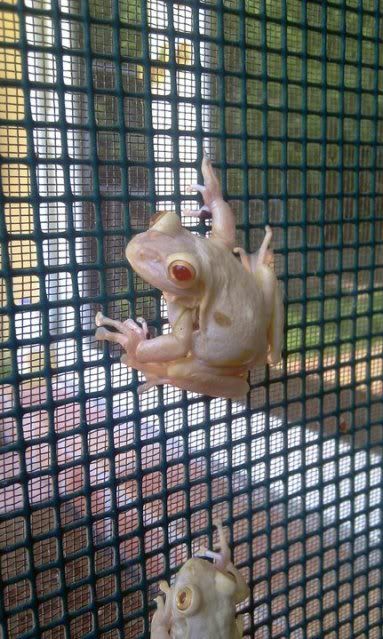
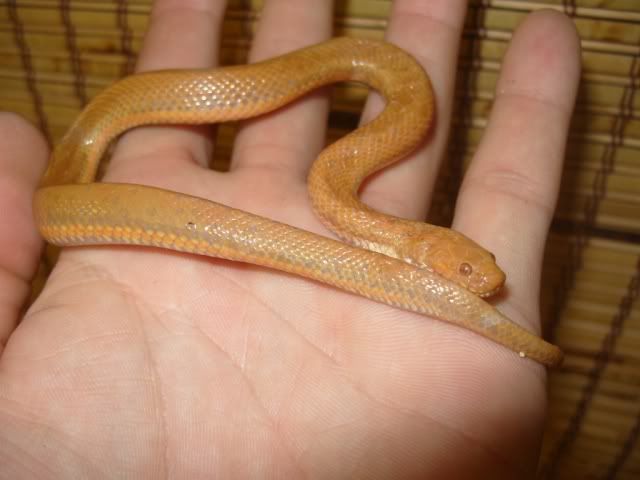
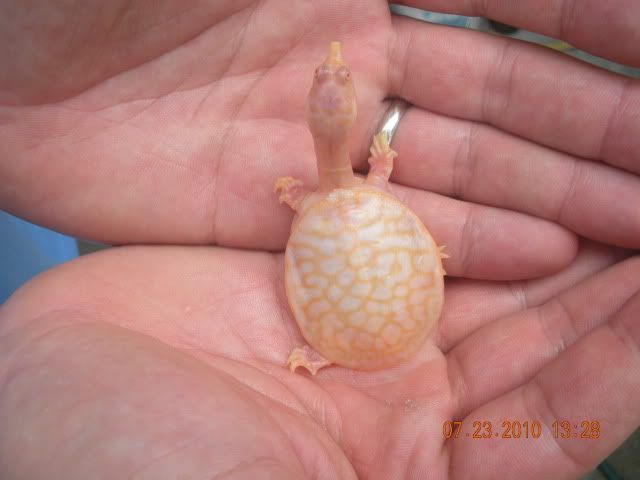
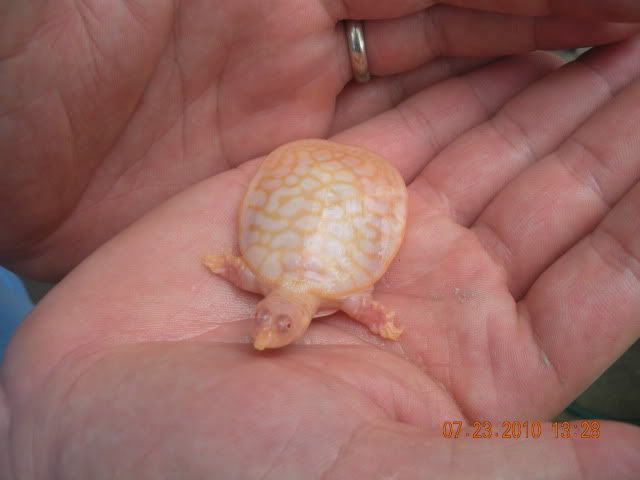
  <description><![CDATA[<div class="rss-post"><p><strong>Original post</strong> by Snakesatsunset &mdash; 2010-07-23 21:22:49 GMT</p><p>We got a good run of albino stuff this year and last. Between us and a few select friends, <br />
Pictured is an albino leopard in nice goo <img class="img-fluid" src="https://forums.kingsnake.com/images/smiles/smile.gif" border="0" alt=""><br />
<img class="img-fluid" src="http://i443.photobucket.com/albums/qq154/leaftails/S1050200.jpg"><br />
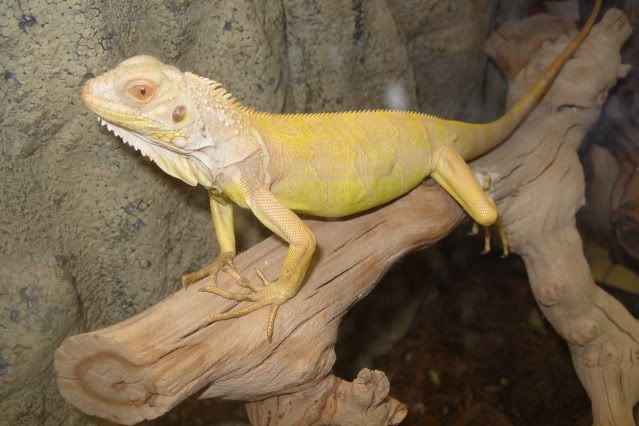
Albino Iguana from normal line, not one of our LUTINOS<br />
<img class="img-fluid" src="http://i443.photobucket.com/albums/qq154/leaftails/S1050150.jpg"><br />
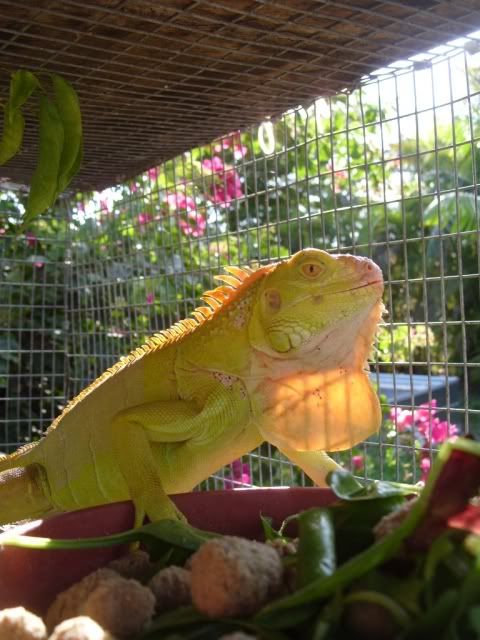
Breeding Machine WC Lutino Male Iguana<br />
<img class="img-fluid" src="http://i443.photobucket.com/albums/qq154/leaftails/lutinomale.jpg"><br />
Albino Cuban Tree Frogs<br />
<img class="img-fluid" src="http://i443.photobucket.com/albums/qq154/leaftails/cubanalbino.jpg"><br />
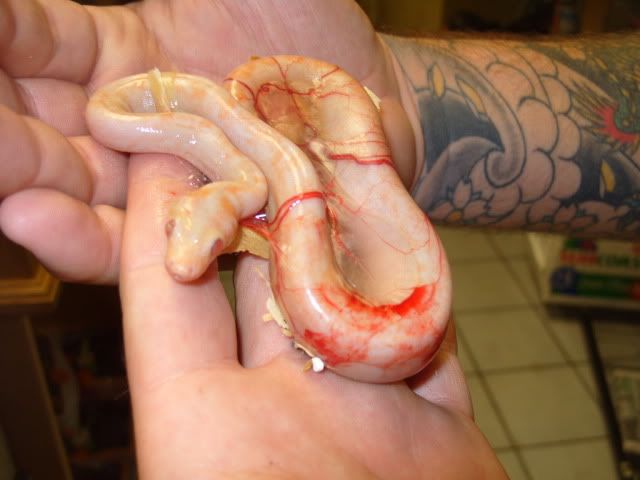
Albino Chinese Water Snake<br />
<img class="img-fluid" src="http://i443.photobucket.com/albums/qq154/leaftails/albinowatersnake.jpg"><br />
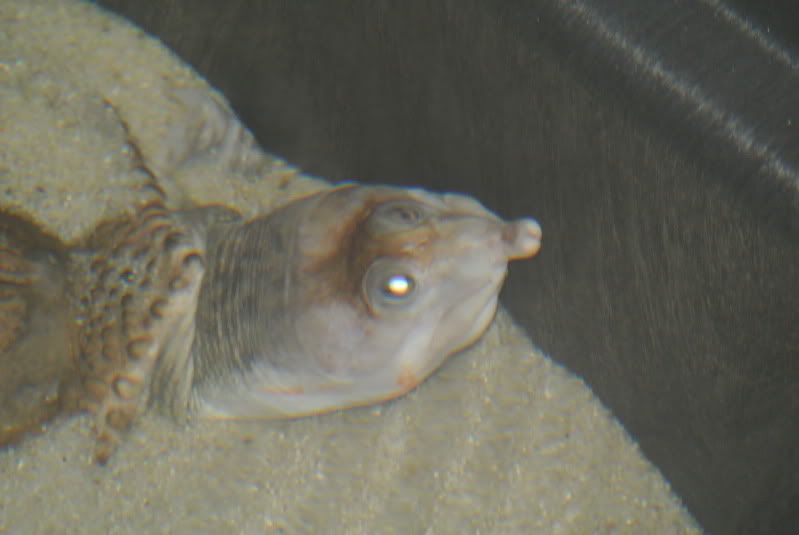
Albino Florida Softshell<br />
<img class="img-fluid" src="http://i443.photobucket.com/albums/qq154/leaftails/albinosoftshell.jpg"><br />
<img class="img-fluid" src="http://i443.photobucket.com/albums/qq154/leaftails/albinosoftshells.jpg"></p>
<p>Edited on July 24, 2010 at 14:11:50 by PHFaust.</p></div>
<div class="rss-post"><p><strong>Reply</strong> by demonsnakes84 &mdash; 2010-07-29 02:22:27 GMT</p><p>are these for sale? if so, do you have a number where I can call you?<br />
-----<br />
-----<br />
&quot;In order to succeed, your desire for success should be greater than your fear of failure.&quot;<br />
------------<br />
0.1 Normal<br />
1.0 Albino<br />
0.2 100% Het Albino<br />
0.1 Pastels<br />
1.0 Amir Line YB</p></div>
<div class="rss-post"><p><strong>Reply</strong> by Gerards &mdash; 2010-07-28 03:18:32 GMT</p><p>I will get some better pics of the softshell once she starts eating real good.</p></div>
<p><a href="https://forums.kingsnake.com/view.php?id=1840573">View full thread on Kingsnake.com</a></p>]]></description>
  <dc:date>2010-07-29T02:22:27+00:00</dc:date>
  <dc:creator>Snakesatsunset</dc:creator>
</item>
<item rdf:about="https://forums.kingsnake.com/view.php?id=1829270">
  <title>so check out this and ID turtle please..</title>
  <link>https://forums.kingsnake.com/view.php?id=1829270</link>
  <description><![CDATA[<div class="rss-post"><p><strong>Original post</strong> by gaboonviper615 &mdash; 2010-06-24 20:50:41 GMT</p><p>My son found this video on youtube, its of jeremy wade from river monsters catching a giant softshell in asia, I believe the Yangtze river. Um heres the thing....this turtle looks awfully familiar to me....like a shanghai giant softshell...but theres no way right? see for your self. that would be crazy if it were....I dont think he knew exactly what kind of softshell it was.</p>
<p>http://www.youtube.com/watch?v=JharT0XcAxM&feature=fvst</p></div>
<p><a href="https://forums.kingsnake.com/view.php?id=1829270">View full thread on Kingsnake.com</a></p>]]></description>
  <dc:date>2010-06-24T20:50:41+00:00</dc:date>
  <dc:creator>gaboonviper615</dc:creator>
</item>
<item rdf:about="https://forums.kingsnake.com/view.php?id=1780460">
  <title>USF&amp;W to add &amp;quot;Big 9&amp;quot; to Lacey Act</title>
  <link>https://forums.kingsnake.com/view.php?id=1780460</link>
  <description><![CDATA[<div class="rss-post"><p><strong>Original post</strong> by PHFaust &mdash; 2010-01-21 20:17:59 GMT</p><p>In yet another attack on the reptile community, today Secretary of the Interior Ken Salazar announced that the U.S. Fish and Wildlife Service will look to list the &quot;Big 9&quot; from the USGS survey published in October on the Lacey Act as injurious species:</p>
<p>Secretary of the Interior Ken Salazar today announced the U.S. Fish and Wildlife Service will propose to list the Burmese python and eight other large constrictor snakes that threaten the Everglades and other sensitive ecosystems as &quot;injurious wildlife&quot; under the Lacey Act.</p>
<p>Salazar made the announcement at the Port of New York, which serves as the largest point of entry in the nation for imports of wildlife and wildlife products. Last year, U.S. Fish and Wildlife Service Inspectors at John F. Kennedy International Airport handled more than 27, 000 separate wildlife shipments valued at more than $1 billion, or 16 percent of all U.S. wildlife imports.</p>
<p>The proposal, which will be open to public comment before Salazar makes a final decision, would prohibit importation and interstate transportation of the animals.</p>
<p>&quot;The Burmese python and these other alien snakes are destroying some of our nations most treasured  and most fragile  ecosystems,&quot; Salazar said. &quot;The Interior Department and states such as Florida are taking swift and common sense action to control and eliminate the populations of these snakes, but it is an uphill battle in ecosystems where they have no natural predators. If we are going to succeed, we must shut down the importation of the snakes and end the interstate commerce and transportation of them.&quot;</p>
<p>This allows us yet another opportunity to refute the bad science involved with both HR2811 and S373. The FWS will publish the proposed rule change in the federal register in early February.</p>
<p>Once it's published, the public will have sixty days to offer comment, after which the waiting game begins again.</p>
<p>As soon as the comment period opens, we'll let you know what action to take, and where.</p>
<p>Even now, it's not too late -- or too early! -- to make calls, reach out to your senators and representatives. Let them know this proposal is based on bad science, that you're part of the reptile community and that you vote!<br />
<a href="http://www.pethobbyist.com/sitenews/index.php?/archives/470-Fish-Wildlife-to-add-pythons-to-Lacey-Act.html">USF&amp;W to add &quot;Big 9&quot; to Lacey Act</a></p>
<p>-----<br />
Cindy Steinle<br />
<a href="mailto:phfaust@pethobbyist.com">phfaust@pethobbyist.com</a><br />
PHFaust<br />
<a href="http://www.facebook.com/pages/kingsnakecom/56444808084?ref=ts" target="_blank">Visit kingsnake on Facebook!</a><br />
<a href="http://twitter.com/kingsnake_com" target="_blank"> Follow Kingsnake on Twitter!</a></p></div>
<p><a href="https://forums.kingsnake.com/view.php?id=1780460">View full thread on Kingsnake.com</a></p>]]></description>
  <dc:date>2010-01-21T20:17:59+00:00</dc:date>
  <dc:creator>PHFaust</dc:creator>
</item>
<item rdf:about="https://forums.kingsnake.com/view.php?id=1774682">
  <title>shelter adopting out softshells</title>
  <link>https://forums.kingsnake.com/view.php?id=1774682</link>
  <description><![CDATA[<div class="rss-post"><p><strong>Original post</strong> by feather135 &mdash; 2010-01-06 00:30:23 GMT</p><p>This is an interesting article in today's newspaper.... shelter adopting out rare turtles..... http://www.denverpost.com/news/ci_14125500</p></div>
<p><a href="https://forums.kingsnake.com/view.php?id=1774682">View full thread on Kingsnake.com</a></p>]]></description>
  <dc:date>2010-01-06T00:30:23+00:00</dc:date>
  <dc:creator>feather135</dc:creator>
</item>
<item rdf:about="https://forums.kingsnake.com/view.php?id=1759763">
  <title>purchasing a soft shell</title>
  <link>https://forums.kingsnake.com/view.php?id=1759763</link>
  <description><![CDATA[<div class="rss-post"><p><strong>Original post</strong> by Keithatron &mdash; 2009-11-15 02:52:07 GMT</p><p>Hello and I am purchasing a soft shell and had a few questions.</p>
<p>I have a decent amount of sand and a few pieces of wood.  But it used to be a fish tank so its not designed for a turtle so the water has to be rather high, but I made it just low enough so the filter would still work.  But I have heard if I keep the water temperature a proper level the soft shells dont often back. IS this true? Also are florida soft shells meant ONLY for brackish tanks? it seems they only require like a tbsn every gallon.  Would that be enough salt to kill my pleco? And if you think the water level is too high and the baby soft shelll wont handle it what species do you think would be better? it is a 60 gallon fish tank.  By the way I will still add a dock and UV  lamp even when the water temp is the proper level it will just a be a bit higher for him to reach.  Also I will only have one soft shel and a few fish .</p>
<p>Any tips and help appreciated.<br />
-Keith</p></div>
<p><a href="https://forums.kingsnake.com/view.php?id=1759763">View full thread on Kingsnake.com</a></p>]]></description>
  <dc:date>2009-11-15T02:52:07+00:00</dc:date>
  <dc:creator>Keithatron</dc:creator>
</item>
<item rdf:about="https://forums.kingsnake.com/view.php?id=1731815">
  <title>spiny is sick PLEASE HELP!!!</title>
  <link>https://forums.kingsnake.com/view.php?id=1731815</link>
  <description><![CDATA[<div class="rss-post"><p><strong>Original post</strong> by snotagain &mdash; 2009-08-25 00:42:45 GMT</p><p>Hi everyone,</p>
<p>I'm really worried about my 5 year old spiny softshell- she has always been active and eaten plenty of food. However, about two days ago her skin started sloughing off and it seems that the underside of her shell has darkened. She is also balancing on her side, and is just letting her head hang. Her tail also seems swollen. I've tried to clean the tank out in case something in there is bothering her, but I've been following the same routine since I first got her. I can take her to a vet tomorrow, but I'm worried that they may not be able to do anything and that the trip may just make her worse. Please help! Thank you so much for whatever information/advice you can provide!</p></div>
<p><a href="https://forums.kingsnake.com/view.php?id=1731815">View full thread on Kingsnake.com</a></p>]]></description>
  <dc:date>2009-08-25T00:42:45+00:00</dc:date>
  <dc:creator>snotagain</dc:creator>
</item>
<item rdf:about="https://forums.kingsnake.com/view.php?id=1720886">
  <title>FLY RIVER TURTLE / PIG NOSED....HELP</title>
  <link>https://forums.kingsnake.com/view.php?id=1720886</link>
  <description><![CDATA[<div class="rss-post"><p><strong>Original post</strong> by Sarahlzbthz &mdash; 2009-07-24 20:33:55 GMT</p><p>It's very weird, my sister's neighbor found a Pig Nosed Turtle in his backyard, and gave it to her...... Where did it come from, and why was it on land, I don't know, I suppose someone dumped it there... ....I looked it up, and found out it's a rare threatened species.......Well....My sister cannot take care of it, she has no tank or tub to put it in..... She lives in Riverside, California....So I called the LA Zoo, and they said they might call back if they can take it.....But if they don't,  Who can take it????  It needs an experienced turtle owner with the right facilities to care for it.....I know they grow pretty large..... Right now it's in a pan of water, and we're afraid it's going to die.....DOES ANYBODY KNOW WHO WE CAN CONTACT??????   Thanks</p></div>
<div class="rss-post"><p><strong>Reply</strong> by Amazonreptile &mdash; 2009-10-08 23:01:45 GMT</p><p>it is not a pig nose. it is a spiny softshell. super common in all waterways in riverside.<br />
-----<br />
<a href="http://www.amazonreptile.com/" target="_blank">AMAZON REPTILE CENTER</a></p></div>
<div class="rss-post"><p><strong>Reply</strong> by Sarahlzbthz &mdash; 2009-07-25 19:31:47 GMT</p><p>Nevermind..... She gave it to a reptile rescue.</p></div>
<p><a href="https://forums.kingsnake.com/view.php?id=1720886">View full thread on Kingsnake.com</a></p>]]></description>
  <dc:date>2009-10-08T23:01:45+00:00</dc:date>
  <dc:creator>Sarahlzbthz</dc:creator>
</item>
</rdf:RDF>