Posted by:
DMong
at Tue Mar 8 23:57:00 2011 [ Email Message ] [ Show All Posts by DMong ]
Well, in alot of older literature, you will see that they mention that orange irises and red tongues are only indicative of Everglades Ratsnakes. But over the years it seems that there can often be exceptions to this previously thought "hard rule".
Orange irises and red tongues are always nice to see in attempting to key-out nice examples of Everglades, but I have also seen a good number of very orange Ratsnakes with mostly black, or mottled black and red tongues that made me think that this once thought "decisive" indicator may not be as decisive as once thought.
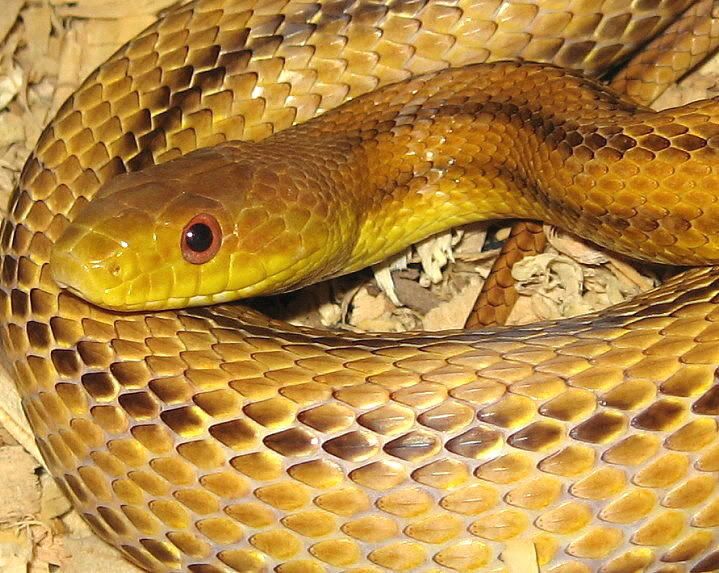
This locality Yellow Ratsnake male I captured myself on the extreme east coast of central Florida in Brevard County is nowhere even CLOSE to any Everglades range, yet it has VERY noticeable orange/red irises, whereas most typically have more tan colored irises. It did have a black tongue however and was a very definitely a true Yellow Ratsnake by every definition and range.
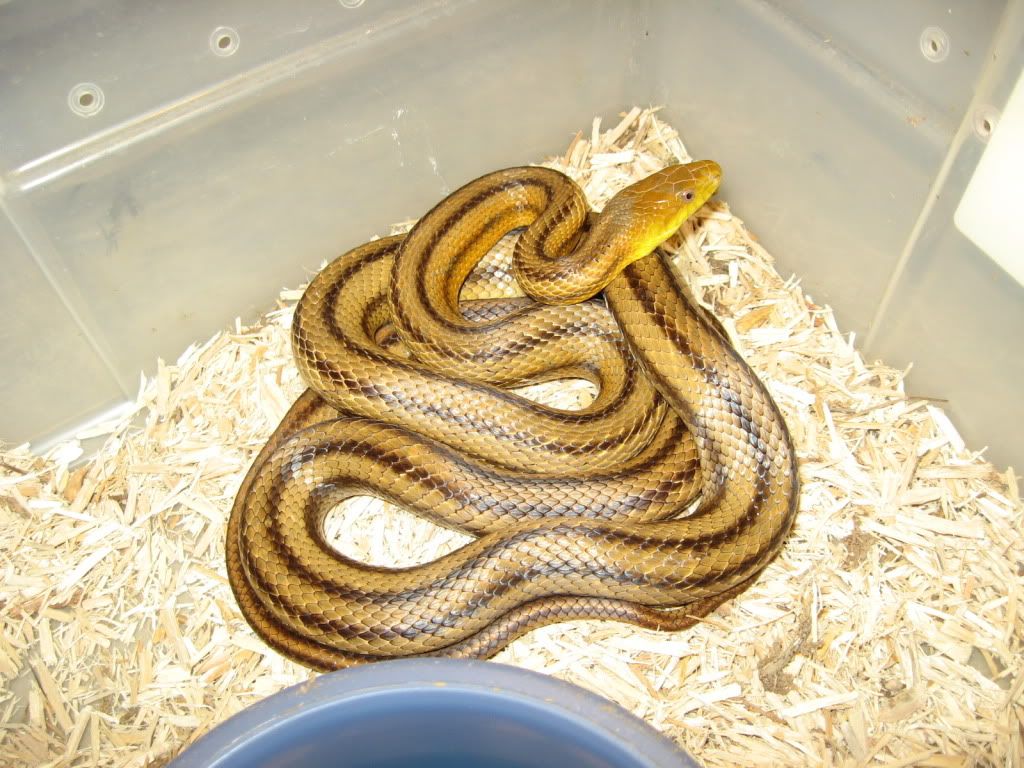
Here is another wild-caught Yellow Rat female I captured exactly 10.5 miles SSE of the above male Yellow Rat. Note her more typical tan-colored irises.
Most Everglades seem to start out a fairly pinkish to rusty color, then gradually become more orange, or orange/red as the gradually mature. This one I used to own was VERY rusty brown as a young hatchling, and progressively followed suit by getting richer and richer orange/red as it got older.
The real proof of what it really is and what it might ultimately look will have to be seen when it is an adult more than likely. Seeing what the parent lineage looks like can be a great indicator too.
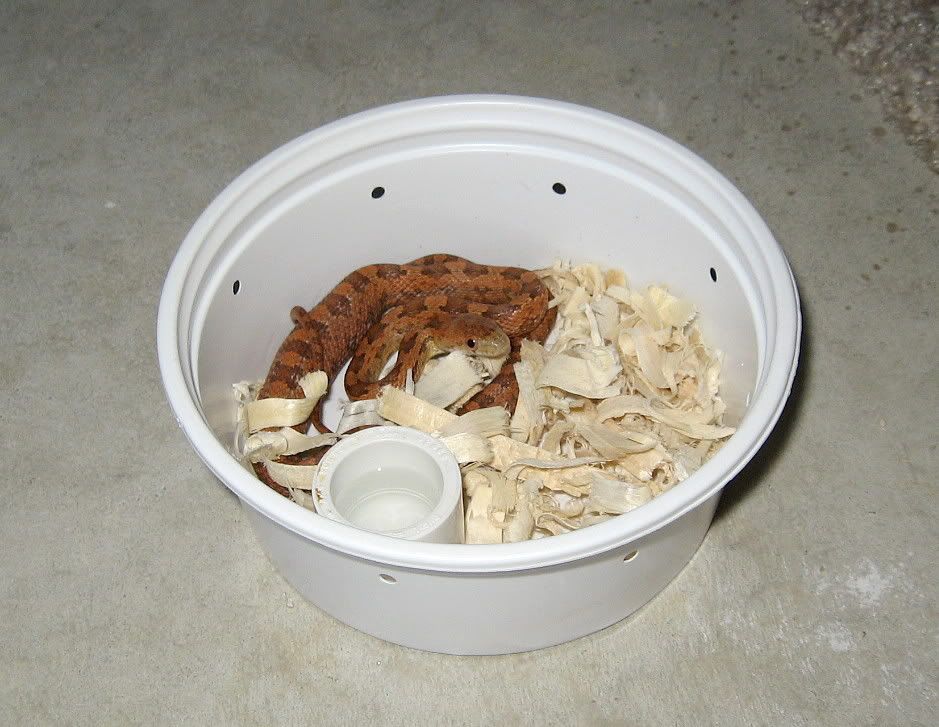
same hatchling.....
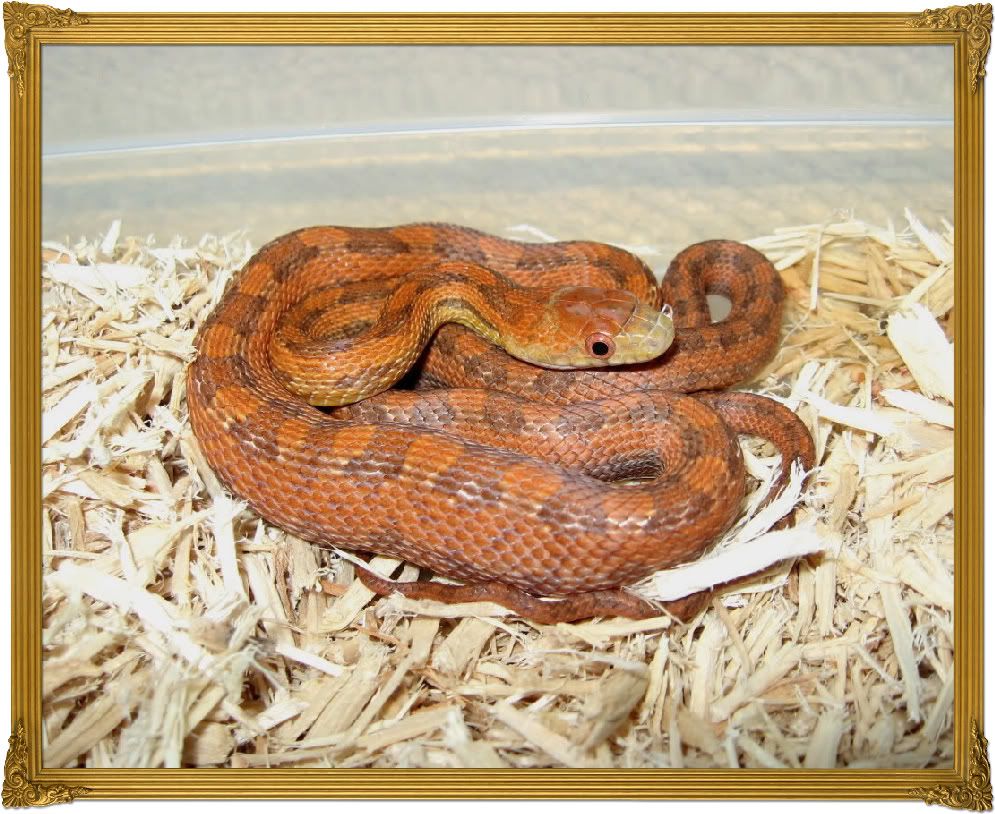
Showing the red tongue....

As it got a bit older.....
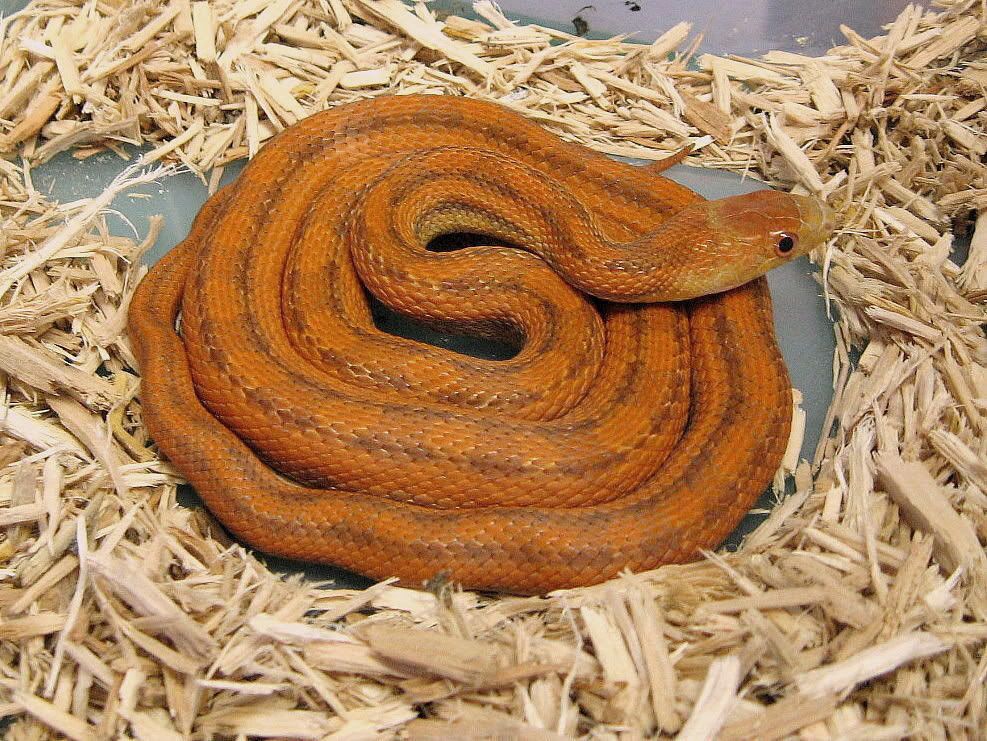
a good bit older......
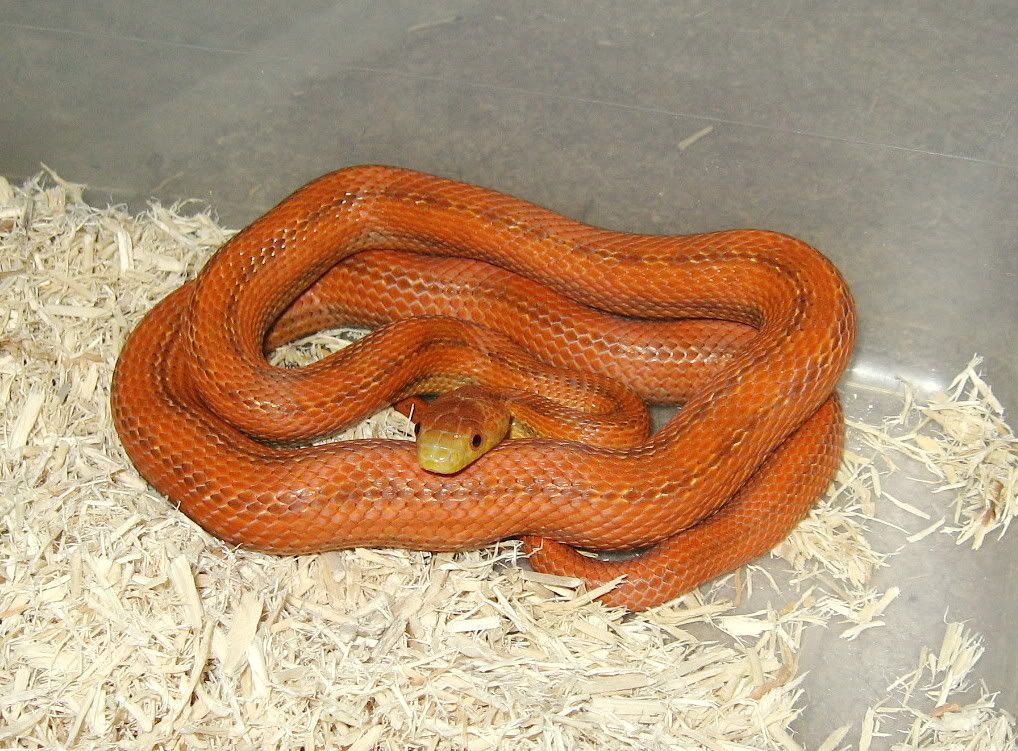
And as a nice two year old young adult....
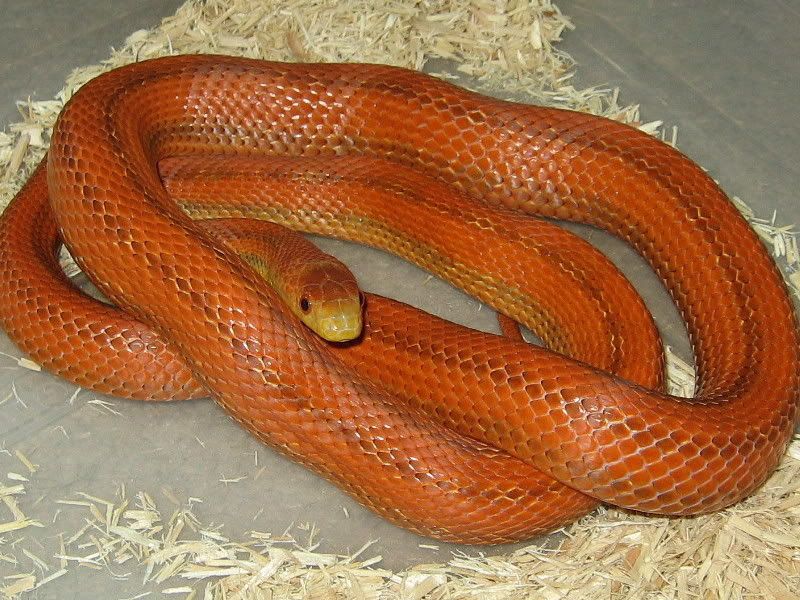
Here is the nice wild-caught mother of the Everglades in the above photos that was found and bred by Mark Kenderdine.
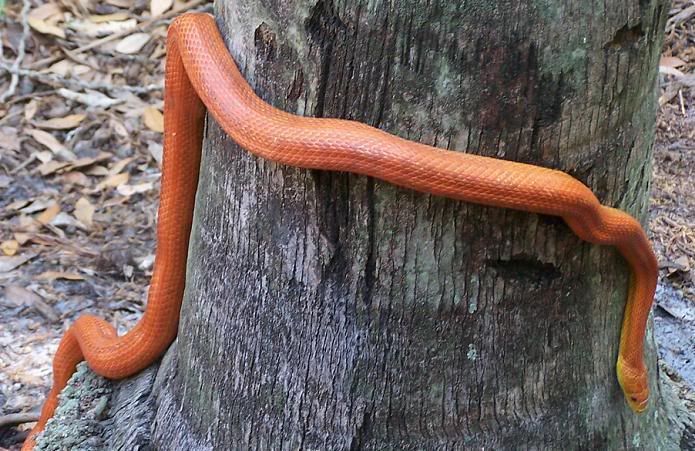
Anyway, I'm not real sure anymore that all Everglades necesarily have to have red tongues anymore, but it seems that "most" probably do is all. Also one has to keep in mind that there are many Yellow x Everglades out there too, and what exactly would they look like?. I am quite sure there would be some pretty decent variation of phenotypes within any given clutch of either type. 
I think the bottom line here is that Everglades Rat identification might not be as absolute as it was once thought, even though many nice examples of them DO have the orange irises and red tongues. Because on the flip-side of the coin, there have been some very surprisingly nice orange snakes that did not have solid red tongues. And it it=s also interesting to see a 100% pure Yellow specimen with red/orange irises too.
~Doug
-----
"a snake in the grass is a GOOD thing" 
my website -Serpentine Specialties
[ Hide Replies ]
|









 RE: Yellow vs. Everglades Rat Snake - DMong, Tue Mar 8 23:57:00 2011