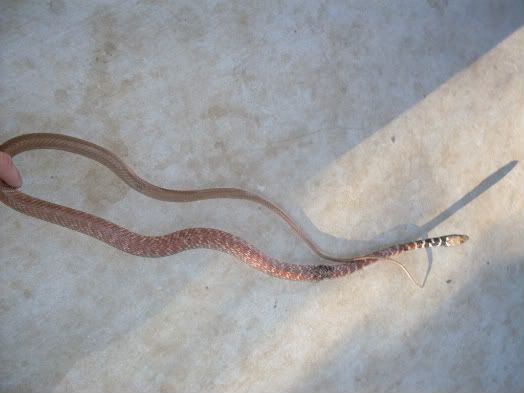
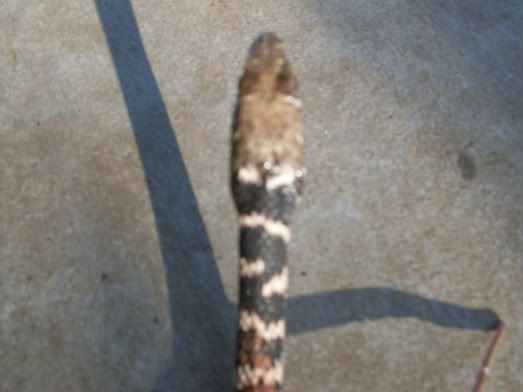
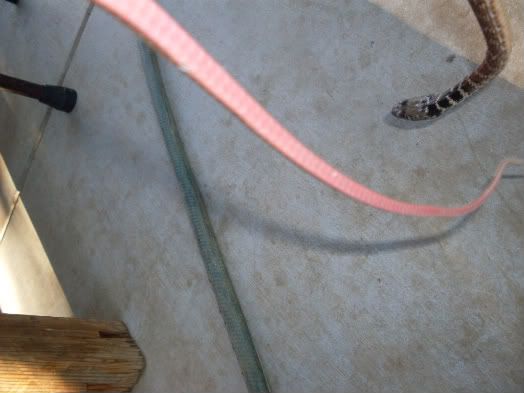
I was cleaning my backyard and found this snake tangled up really bad in some garden mesh. I live in southern california.

Welcome to kingsnake.com's message board system. Here you may share and discuss information with others about your favorite reptile and amphibian related topics such as care and feeding, caging requirements, permits and licenses, and more. Launched in 1997, the kingsnake.com message board system is one of the oldest and largest systems on the internet.


I was cleaning my backyard and found this snake tangled up really bad in some garden mesh. I live in southern california.
That is a Coachwhip (Masticophis flagellum). That subspecies is often called the "Red Racer".
-----
Chris Harrison
San Antonio, Texas
Thank you. It's in bad shape. I have it in a tank with a water dish. should i leave it alone for a couple of days before i try to feed it:?
If the snake recovers I'd release it. Coachwhips are very active snakes. Until then , just let it be. If it starts getting spunky (hopefully it does) then turn it loose away from people. That's my suggestion anyway. Good luck.
-----
2 tham radix
1 Chicago Tham s. semifasciatus
2 elaphe vulpina
1 gray tiger salamander
4 Aphonopelma hentzi
1 G rosea
1 Haplo minax
1 Brachy angustum
1 Brachy sabulosum
1 Brachy vagans
1 Cent. hentzi scorp
If and when it becomes more active i will let it go.
Coachwhips do not acclimate easily, if the snake is sick, trying to keep it will just make it worse. If you do not intend on keeping it, then let it go sooner rather then later. If you intend on keeping it, do the following:
Keep several inches of substrate so that the snake can remain completely hidden from view.
Use an under the tank heater, these snakes require alot heat to be active!
Try various foods, such as frogs, lizards and mice.
I have seen these snakes die relatively quickly from not being provided enough heat and from simply refusing to adapt to captivity.
Help, tips & resources quick links
Manage your user and advertising accounts
Advertising and services purchase quick links
