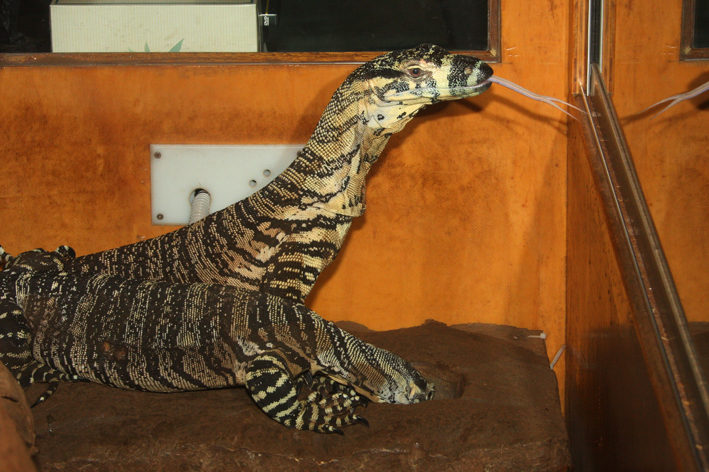
Reptile & Amphibian Forums

Welcome to kingsnake.com's message board system. Here you may share and discuss information with others about your favorite reptile and amphibian related topics such as care and feeding, caging requirements, permits and licenses, and more. Launched in 1997, the kingsnake.com message board system is one of the oldest and largest systems on the internet.

Click for 65% off Shipping with Reptiles 2 You
https://www.crepnw.com/
Click here to visit Classifieds

more on nest boxes, from below

crocdoc2 Feb 05, 2012 09:22 PM

Following on from the discussion further down about nest boxes, I thought I'd mention exceptions to the rule. In general, I agree with the broadly accepted idea that burrowing monitors should be provided with suitably deep substrate in their enclosures which can be used for both hide burrows and nests. Of course it doesn't hurt to have a nest box as an added option and I can see how having a nest box only, without suitable substrate elsewhere, is limiting the female's options and forcing her to use the nest box.

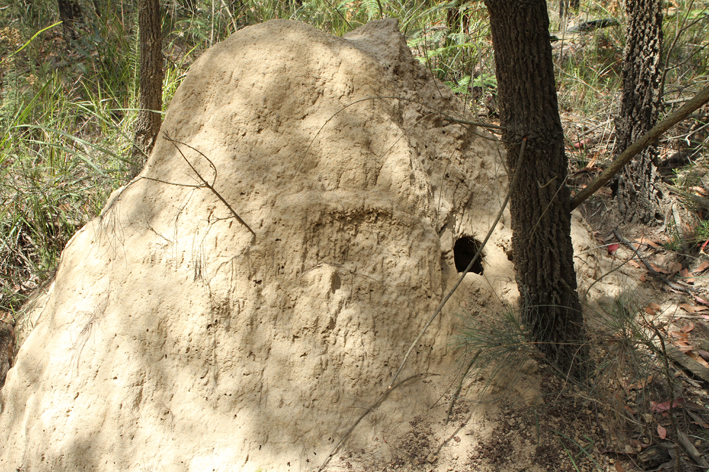
With the lace monitors, Varanus varius, that I breed, though, I think nest boxes are the preferred option. Having deep substrate as an added option is good (it's generally good to have deep substrate in any enclosure to retain humidity, anyway) but not offering a heated nest box is limiting the female's option and consequently forces her to nest in the ground/enclosure substrate, which is not natural. The reasoning behind this is that in the wild, in most of their range (actually, in all of their range until proven otherwise), lace monitors nest in termite mounds. There's never been much solid proof of them nesting anywhere else, although I could imagine how they could nest successfully in the ground in the tropical north of their range.

The reason lace monitors nest in termite mounds is simple. Like other monitors, lace monitor eggs do best when incubated at a temperature of around 30C and consequently females prefer to lay their eggs in spots which maintain that temperature. Although lace monitors are found in the tropics, the bulk of their range is outside of the tropics and they are found quite far south, into temperate areas. The ground temperature in much of their habitat would be too cool to incubate eggs for a long period, especially in a species whose incubation goes right through the cold winter months. Luckily, termites happen to be very good at controlling the temperature (and humidity) within their mounds such that it is usually in the 30C range and very humid. They also seal the mound and protect it, so it's a perfect spot to incubate their eggs. It's no coincidence that the only other Australian monitor whose range extends as far south as the lace monitor (and further), the heath monitor, Varanus rosenbergi, also nests in termite mounds.

In captivity, simulating the conditions within a termite mound by building a nest box is quite easy and effective. I've been using a nest box for years and have helped others set theirs up, with similar results. I know of one breeder whose lace monitors lay in dirt mounds on the ground, but he lives in the tropics (at the very far extreme of lace monitor range, almost as far as they go) and the ground temperature in his area is hovering around 30C during the breeding season.

I realise there aren't many lace monitor keepers on this site, but as there was a long discussion about nest boxes further down I thought I'd put this out there.

Replies (37)

MikesMonitors Feb 06, 2012 07:38 AM

Crocdoc
That is some great information.
One question though, the termites seal the entrance hole the Monitors dig into.

Have you seen or do you know if the female just walks away or does she kick the dirt back towards the hole?
I would imagine this would be difficult to impossible on an arboreal mound.

I know your's backfill the nest box...again do they do this in the wild?
Thanks for sharing!
Mike
-----
Mike's Monitors!

FR Feb 06, 2012 10:35 AM

Hi Mike, we had a lacie nest in an upright hollow log, she covered the eggs with sawdust she made by scratching the insides of the log.

I heard all this scratching and I had no idea what she was doing. The log was in a large mound of leaflitter, and I thought she would go in the log and nest in the leaflitter, she fooled me.

We have had many leaflitter nests.

Do you remember the series of pics I took when a female lacie went down, laid some eggs, then came up and tossed a dead mouse out of the nesting area, then laid two eggs outside the nest and carried them in and completed the nesting normally? I have pics of that somewhere.

MikesMonitors Feb 06, 2012 09:38 PM

Frank
I do remember you reporting this event, but I can't recall the photo's.

I am more interested to hear if Varius rely on the termites to seal the nest.
Crocdoc cleared that up below in both captive and wild Varius.

Take care.
Mike
-----
Mike's Monitors!

Paradon Feb 09, 2012 12:26 AM

You learn something new everyday!

FR Feb 06, 2012 10:30 AM

You stated, the bulk of the range is not tropical.

Let me be the devils advocate, Where does the tropics start? better yet, at what part of their range is there consistant warm conditions, where other monitors become abundant, you know, not termite mound nesters.

So lets take a look at this, Lacies occur from south of Sydney, to a little north of Carins. With anything north of Brisbane being without a cold winter. And the area where varanid species become more abundant.

So in reality, Lacies are not at all restricted to colder ozzie climates, and in fact have a extensive range in the area considered "Tropical". The Tropic if capricorn pretty much disects LACIE range in half, does it not?

So to me, your saying your Southern lacies may be termite nesters, but surely they are not obligate termite mound nesters. Not as a species or even your local Lacies.

I asked you this question many years ago, How many lacies lay eggs each and every year, in their whole range? how many lacie nests have been recorded?

To make it simple, there are tens of thousands of lacies nesting yearly, yet only a handful of mound nests have been discovered. Consider, termite mound nests leave a taletail scare, so they are identifiable, is that a word, hahahahaha

Yet you feel free to say, LACIES perfer termite mounds, which I feel is wrong for many reasons. But you can say is, your female, you have only bred one female right? perfers a nest box.

The point could be made that you have not tested other types of nests. But there is not need to go there.
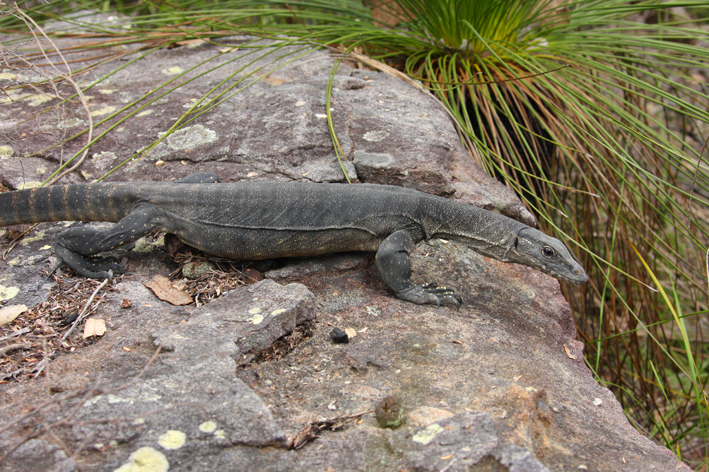
The reality is, many individual monitors lay eggs in termite mounds, for the reasons you mentioned. But those monitors also nest in many other ways as well.

The point can also be made that the use of nest boxes is very situational. That is, works best in cold climates. I know here, they are more successful in our winter, I am using one now as we speak, but they are of no use in our summer, when most of our monitors lay. Its simply too hot about substrate level. Consider, our normal room temps in my area is around 80F so any kind of heat lamp takes the above substrate area way above the temps you mentioned. So any box sitting on the ground is HOT. Therefore not usable.

Which I believe is a very common problem with varanid cages.

The problem with this discussion is, anytime we nest a varanid in a cage, the cage is restrictive and is a nest box of sorts. Anytime you put a favorable box inside a cage with unfavorable conditions, its even more restrictive. This has often caused stress with varanids. Of course you can get it right if you know what your doing and the timing is right.

Now Crocdoc, you may have a good idea of what your LACIE(one lacie?) needs, so you can support her in your conditions, with your education level of her and lacies around your area. I ask, do you think others have that same understanding and feel as you?

So to recomend a very restrictive box to those without your understanding of your local lacies and their nesting perferences, may not be all that wise. I would think offering others the best chance at success is a better option.

Now, with that out of the way, have you tested or considered filling your females cage with many options of tight secure places to nest and see is that changes anything.

As I tried to discuss below, its about results, and your results are what, one or two clutches a year, maybe three. With with whole cage nesting we had many females lay five clutches a year. Perfectly sucessful at that.

I do think we both agree, with varanids, nesting is of prime importance, so this conversation is not an A or Z type discussion, but rather one of what will help others allow their varanids a good chance of success and repeated success. So to disucss this is a very good think. Thanks

crocdoc2 Feb 06, 2012 07:38 PM

Glad you joined in, FR, so we can discuss this and others can learn from it.

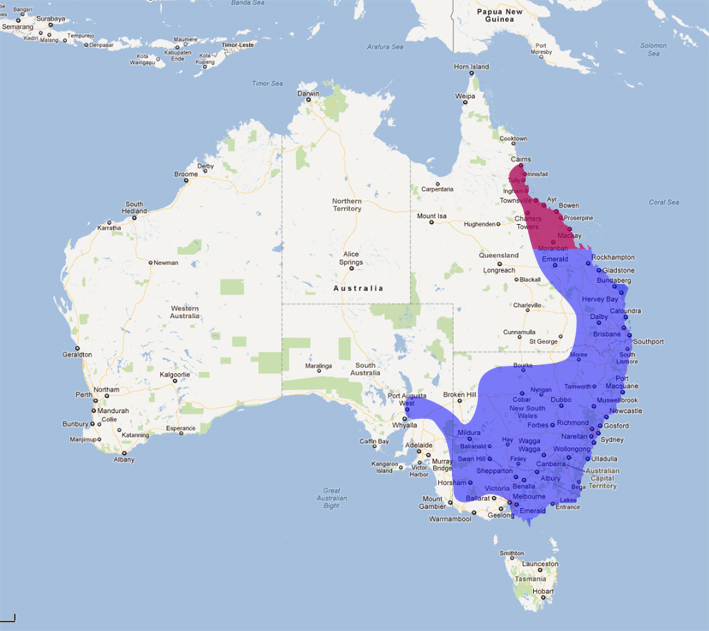
In response to your queries, here's a rough outline of lace monitor range with the tropical part indicated in red.

If we were to discuss your lace monitors, FR, based on pattern and colouration my guess is that your founder stock came from the blue/purple bit. Your original male, George, would have been from somewhere near the Brisbane area (around half way down the range) and your original female, Gracie, from somewhere in southern NSW (around three quarters of the way down).

FR: So to me, your saying your Southern lacies may be termite nesters, but surely they are not obligate termite mound nesters. Not as a species or even your local Lacies.

I wouldn't say that, as I happen to think the local lacies are obligate termite mound nesters. Winters here are too cool for the eggs to survive otherwise.

FR: I asked you this question many years ago, How many lacies lay eggs each and every year, in their whole range? how many lacie nests have been recorded? To make it simple, there are tens of thousands of lacies nesting yearly, yet only a handful of mound nests have been discovered.

You know, FR, you've never actually asked me that question. I'm aware that you've posted a number of times that you had and that my response was 'eight'. I don't know where you'd got that number from, but if it was from me it was likely in response to an entirely different question, for I would never have responded that the total number of termite mound nests ever found was eight.

That aside, and in answer to your question, the number of lace monitor nests found in termite mounds would be in the hundreds, if not thousands. Keep in mind that it isn't just herpers that see them, but some zoos with large bird collections remove chunks of mounds to feed termites to their small birds and farmers occasionally knock mounds over when clearing land. I've just recently learned that in parts of Queensland, farmers are meant to have reptile aware observers on hand when removing mounds, in case there are nests within. The eggs are usually taken to a particular vet that's into reptiles for later release.

By comparison, the number of reliable reports of lace monitors nesting in situations other than within a termite mound currently stands at 0 (zero).

FR:The reality is, many individual monitors lay eggs in termite mounds, for the reasons you mentioned. But those monitors also nest in many other ways as well..

Actually, until proven otherwise, the reality is that they nest in termite mounds. Even if other examples are found, those lace monitors will be the outliers, displaying an uncommon behaviour. If one were to talk about what this species 'does', it would be nesting in termite mounds. In other words, if someone were to join the forum today and have reliable proof of a wild lace monitor nesting elsewhere, the numbers would then be thousands in termite mounds to one elsewhere.

FR: yet only a handful of mound nests have been discovered. Consider, termite mound nests leave a taletail scare, so they are identifiable.

Yes.


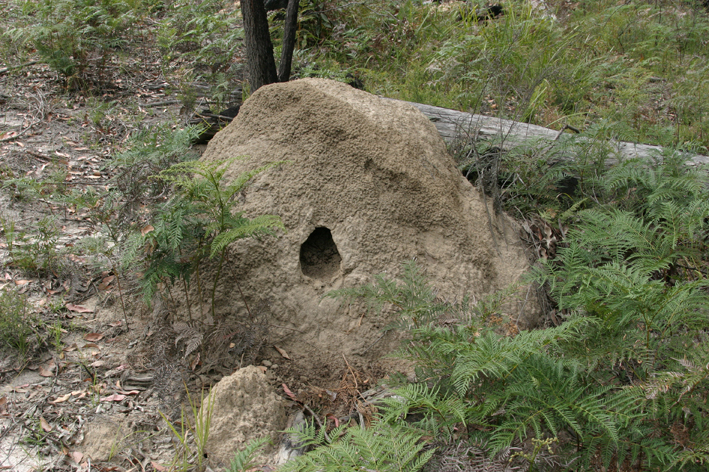
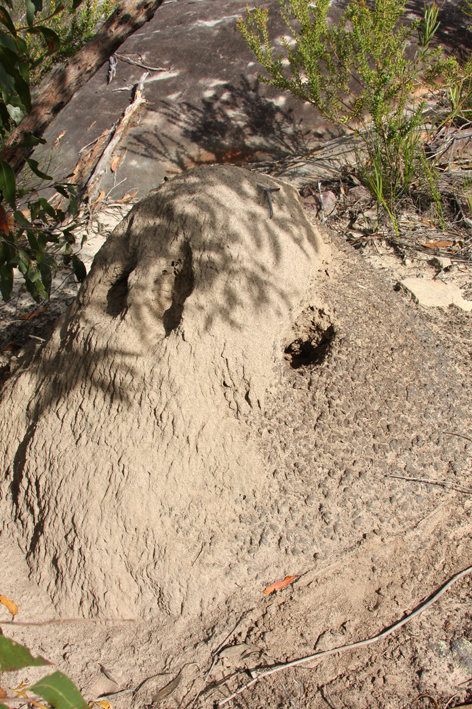
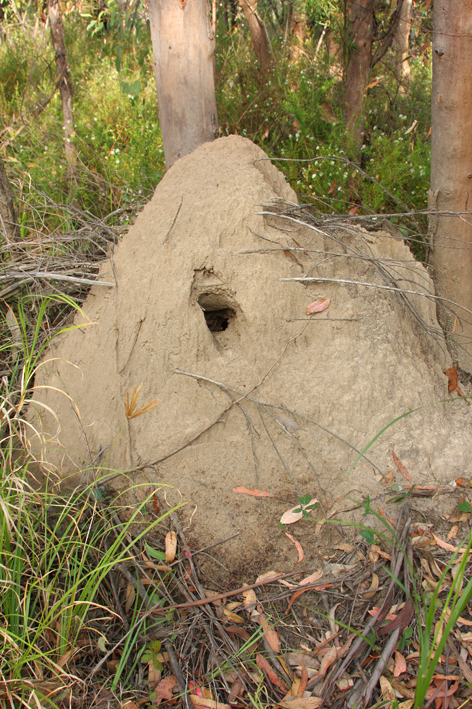
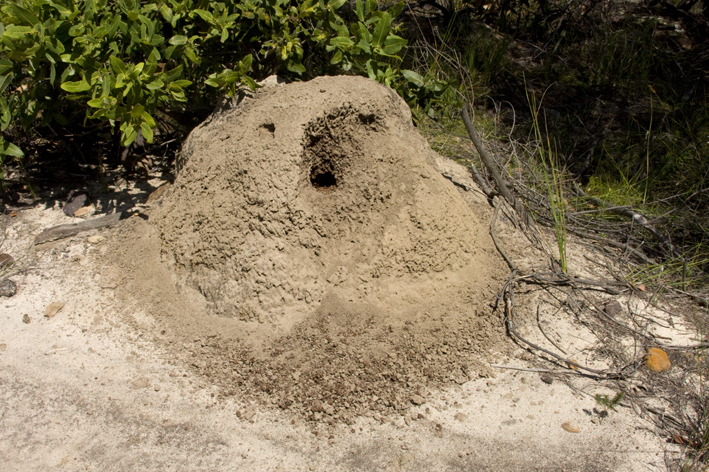
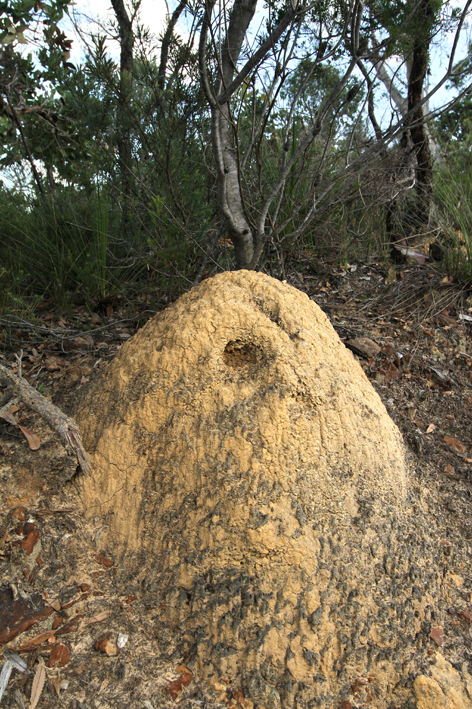
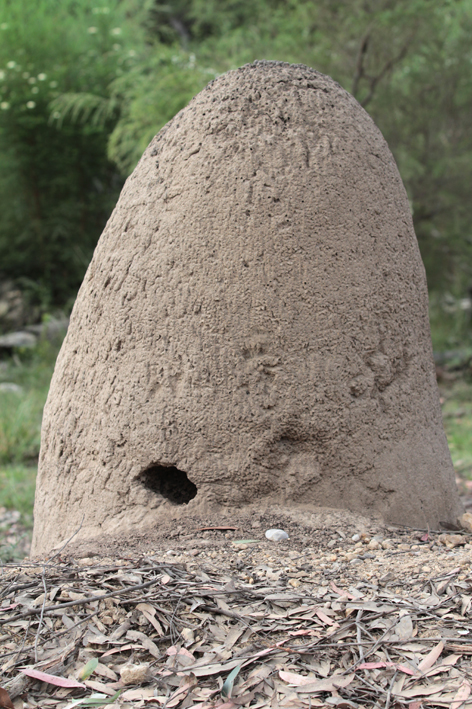
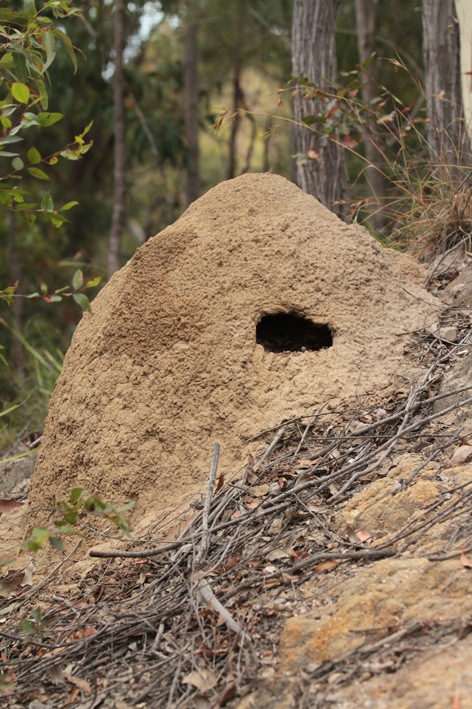
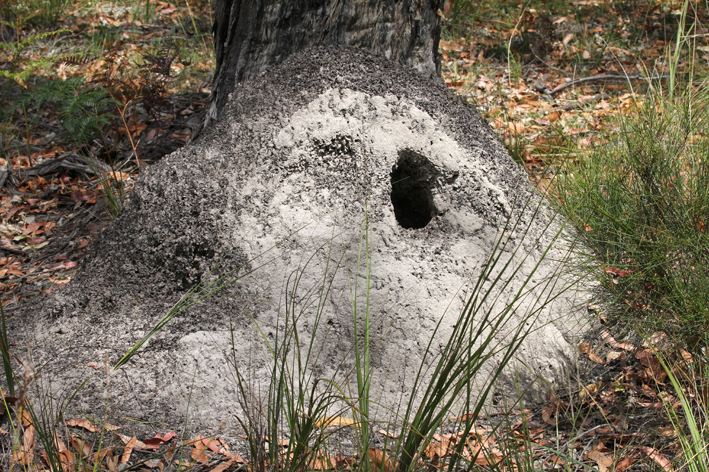
I have dozens of photographs like these but only a few uploaded onto my photo hosting site at the moment. Some of these are test digs into dead termite mounds, others are fresh digs into live termite mounds. For the latter one just needs to know where to look and at what time of year. In a good year a healthy termite colony will repair the hole pretty quickly, but it is still identifiable if one knows what one is looking for.

crocdoc2 Feb 06, 2012 08:20 PM

The previous post was mostly about what happens in the wild and whether or not lace monitors do or do not nest in termite mounds. That's neither here nor there unless it's applicable to captivity, because this is a forum about captives. FR, when you and I first had this discussion many years ago (before I even started breeding lace monitors, in fact) you thought all of this was purely academic and not applicable to captivity. A few years after our discussion, you mentioned it to another lace monitor keeper on this forum:

FR: The real truth is, the academics do not have to be right or wrong. Its not about that. Its about whether if what they think(theorize) can be applied or be effectively applied.

For instance, years ago, an ozzie lacie keeper and now breeder, agrued that lacies need termite mounds to lay eggs in. Science showed that in nature, lacies had laid eggs in them. The reality is, we do not have termite mounds and neither does that person(unless he builds a cage around a living termite mound). So that input was useless for us to apply. Not about whether its right or wrong. For us keepers without termite mounts, that information is wrong.

(here's the link: forums.kingsnake.com/viewarch.php?id=910618,912753&key=2005)

That's pretty much where you and I went our separate ways. I thought the information was valuable in terms of setting up nesting for captives and you didn't. Now, many years later, we can contrast and compare.

We would both agree that one way to know whether or not a female has nested successfully is the amount of time it takes her to go from first mating to egg laying. You've even mentioned this recently:

FR:Again, its not success vs. failure, its about success vs. success. I have found when they are given a number of good choices, they can decrease the amount of time it takes to lay eggs and increase the number of eggs laid. Its fairly simple, the longer they hold eggs the more stress it is on the female.

(link: forums.kingsnake.com/view.php?id=1964323,1965253)

Recently I was following a thread on another forum in which you were giving someone advice on breeding perenties. What really caught my eye was one sentence, in which you mentioned what you thought was the normal mating to egg laying time for a few species of monitor.

FR: our croc monitors, lacies, and the perenty did not follow the 30 day gestation guideline. They normally went about 6 weeks successfully(reabsorption for the perenty).

(link: www.varanus.net/forums/read.php?2,22012,22124#msg-22124

I have no experience with croc monitors, but have worked with both lacies and perenties and can say, without a doubt, that the average gestation in these two species is 30 days. In a good run, both species can go shorter (I've seen 23 days with perenties and 21 days with lace monitors), but anything over 35 days is a sure sign of trouble. Discounting your perentie, which was a lone female resorbing clutches and therefore bound to show oddities, I was surprised that you thought six weeks was 'normal' for lace monitors, given that you've had experience with so many other species and you know the general rule is 30 days for large monitors, less for Odatria. Unless the animals were housed outdoors and there'd been unusually bad weather delaying things, a female lace monitor holding eggs for 45 days (six weeks) would only be able to do that for a few clutches before dying of reproductive failure. Which is the result you got. You were right in guessing that lace monitors were different, but incorrect in assuming it was their gestation time that was different rather than their nesting preferences.

Which takes us back to nest boxes.

FR:The point can also be made that the use of nest boxes is very situational. That is, works best in cold climates. I know here, they are more successful in our winter, I am using one now as we speak, but they are of no use in our summer, when most of our monitors lay. Its simply too hot about substrate level. Consider, our normal room temps in my area is around 80F so any kind of heat lamp takes the above substrate area way above the temps you mentioned. So any box sitting on the ground is HOT. Therefore not usable.

My animals nest in summer, when the enclosure is quite warm. The nest box is packed full of substrate and heated internally (not by heat lamps), so it maintains a good temperature even when the enclosure gets too hot.

I was under the impression that your problem was your lacies trying to nest when the ground was cold? You implied something to that effect in a post below, when you said they nested out of season (which to me would have been winter rather than summer). You even said that you should have heated the ground. That's where heating a nest box, rather than the ground, would have been ideal. Here's the quote:

FR: The problem we have is southern hemispere varanids wanting to reproduce, on your seasons and not ours. This creates lots of problems which includes nesting. You know, nesting worked well when we could trick them into reproducing in our seasons, which was easy their first couple of years.

I guess I should have installed a hot water system like John Egan did, as all it takes is one failed reproductive event. Then then that occurred with John as well. BUt then, I am human, and it worked until it didn't.

(link: forums.kingsnake.com/view.php?id=1964323,1965390)

FR: Now Crocdoc, you may have a good idea of what your LACIE(one lacie?) needs, so you can support her in your conditions, with your education level of her and lacies around your area. I ask, do you think others have that same understanding and feel as you?

I have offered the same advice to many lace monitor keepers in the past. Some don't have the same understanding and feel, but decide to do their own 'version' of a nest box with varied success. The ones that have followed me to the letter have had success. I have one good friend who regularly breeds lace monitors and whose females nest in mounds of dirt on the ground, rather than in nest boxes, but he lives in the tropics and his ground temperature is hovering around 30C throughout the breeding season. He and I had a chat about this a couple of weeks ago and, interestingly, he said his females make the sort of short nest tunnels they often do in small termite mounds.

crocdoc2 Feb 06, 2012 08:57 PM

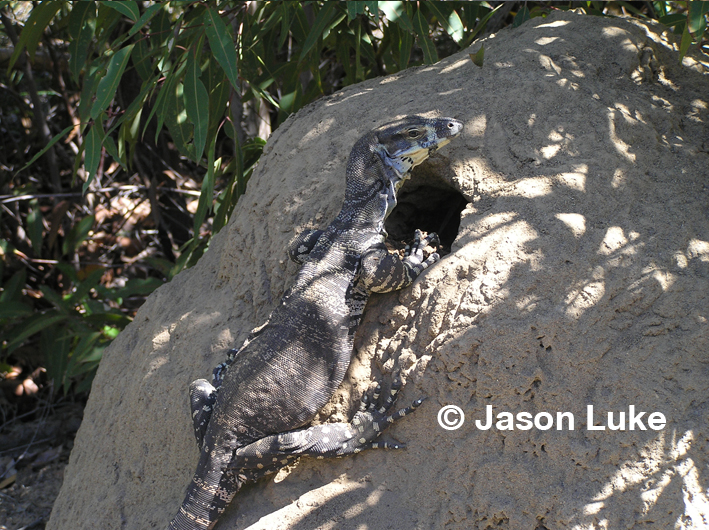
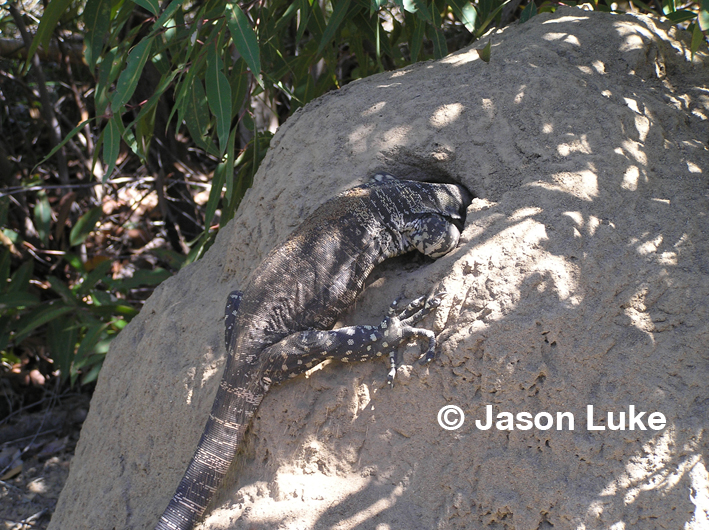
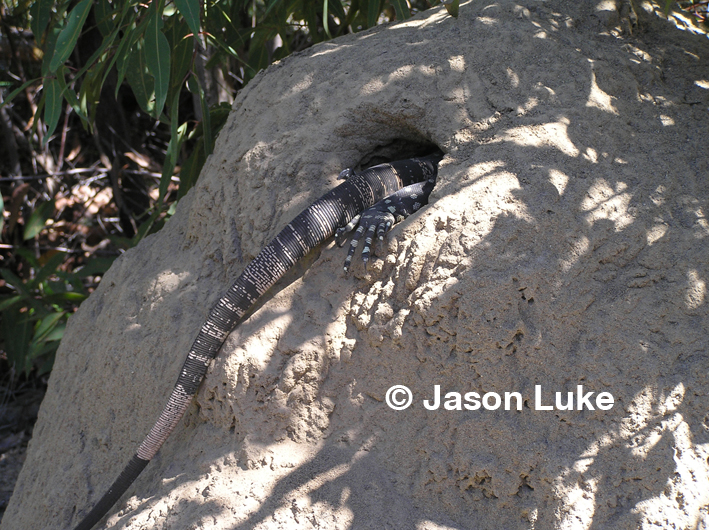
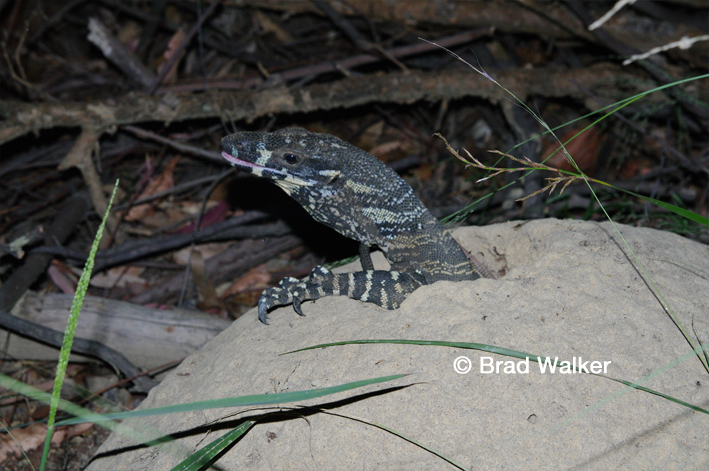
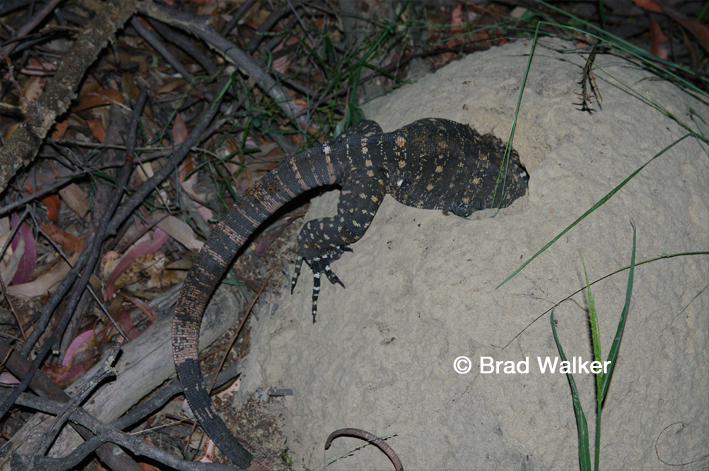
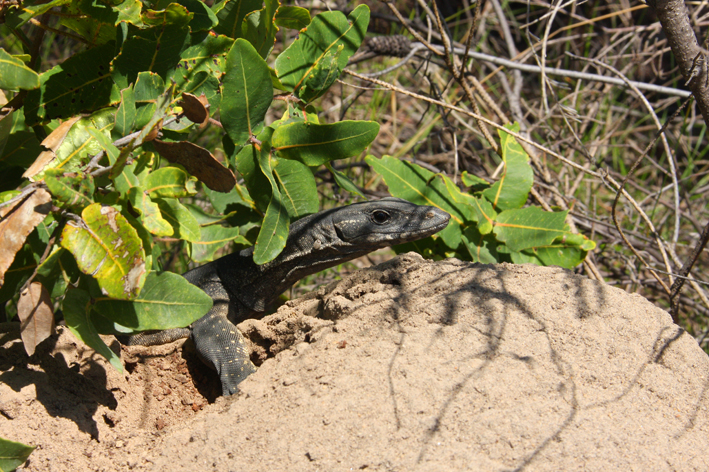
As I said in another post, lace monitors nesting in termite mounds is a known thing in Australia. Although I have found many lace monitor nests, from very fresh to fairly old, I admit that I haven't yet been lucky enough to catch a female in the act of digging a nest and laying. It only happens for a few hours on one day of the year and the timing can vary by a few weeks, depending on the climate that season. I have photographed a heath monitor, Varanus rosenbergi, digging into a nest, though and others I know have managed to chance upon lace monitors nesting. Here's one set of photographs showing the behaviour:


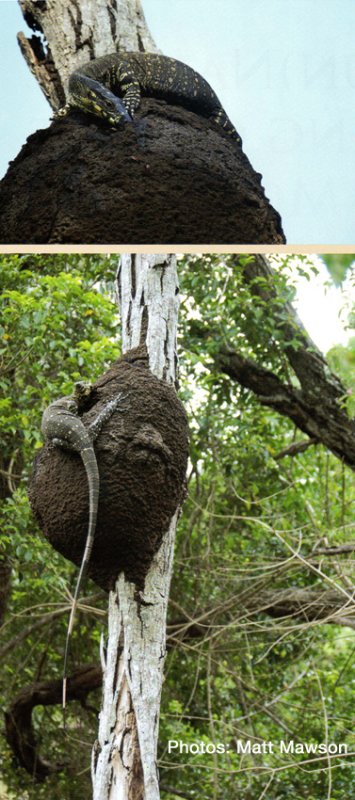
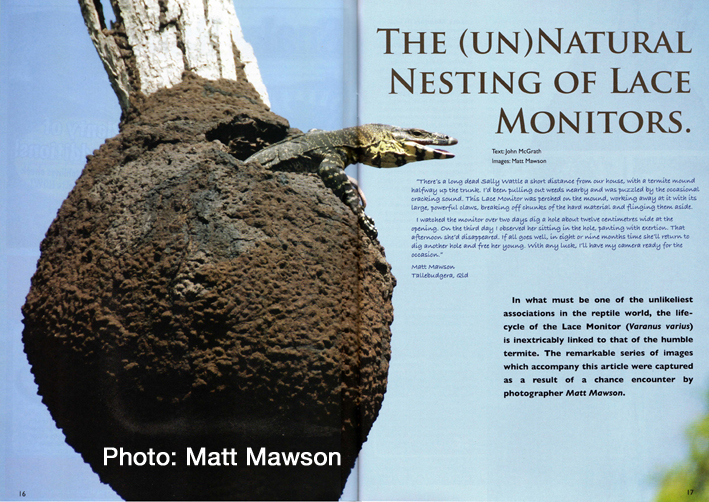
Here's an interesting sequence that was published in a magazine, showing a lace monitor nesting in an arboreal mound. This is less well known than ground mound nesting. I have photographed holes in arboreal mounds in the past but rarely consider them as definitive proof of a lace monitor nest because 1. I can't get close enough to see the tell-tale scratches and 2. Kookaburras are also known to nest in these arboreal mounds, so a hole on the side of an arboreal mound at certain times of the year is more likely to be one of those.


A year ago a very good friend stumbled upon a female in the
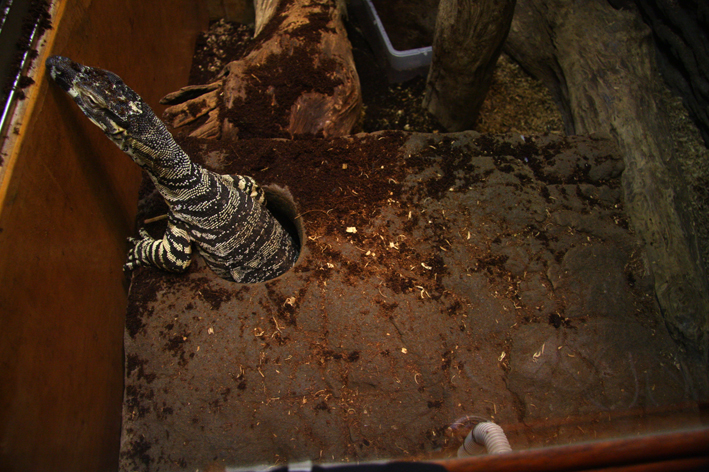
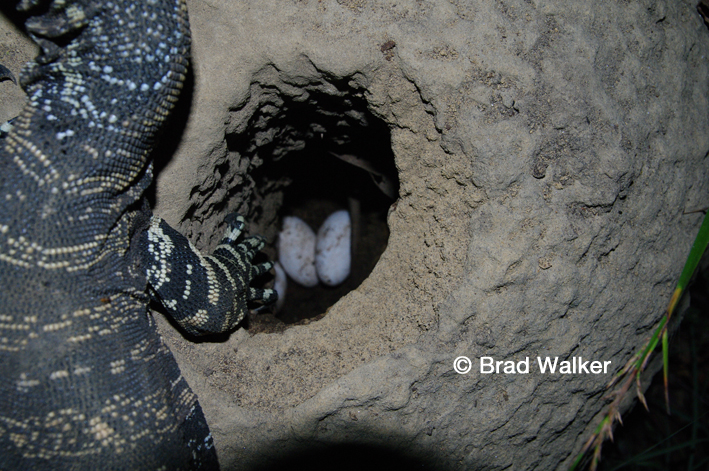
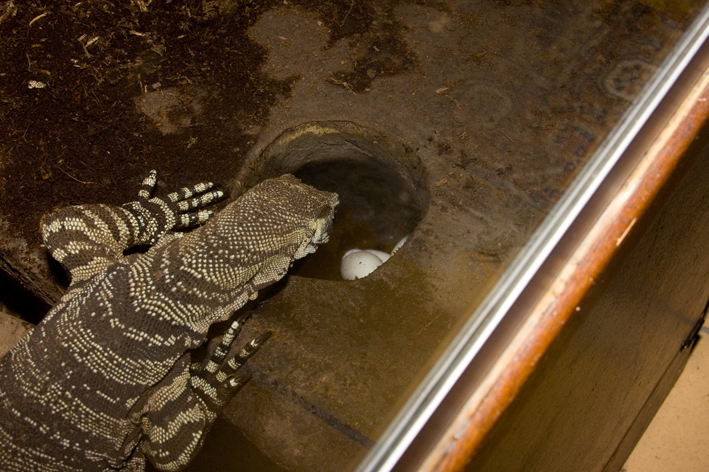
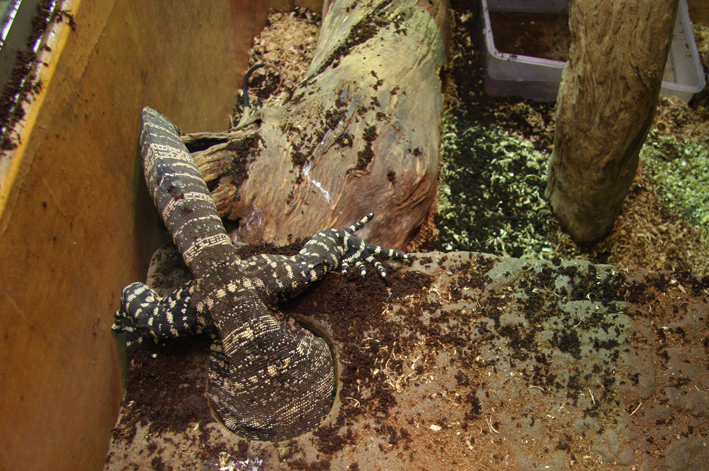
process of digging into a termite mound. He didn't have a camera on him, so he contacted a mate of his that lived nearby, who was able to photograph the entire sequence. He and I had a good long chat about it and what blew me away when I looked at his photographs was how similar the behaviours were between the wild female and my captive. One of the interesting things I learned from this was just how much of a stupor the female goes into while laying. I was well aware of this behaviour with turtles and crocodilians and suspected it was the case with my female (she'd just barely react to me photographing her), but was never game enough to open the enclosure while she was nesting. After seeing Brad's photographs and talking to him, this past breeding season I had no qualms about opening the enclosure and getting right in there with my video camera. I'll put some videos on youtube later in the year, when I have more time. In the meantime, Brad's photographs of a wild lacie nesting in comparison to my captive female using her nest box.

Wild female

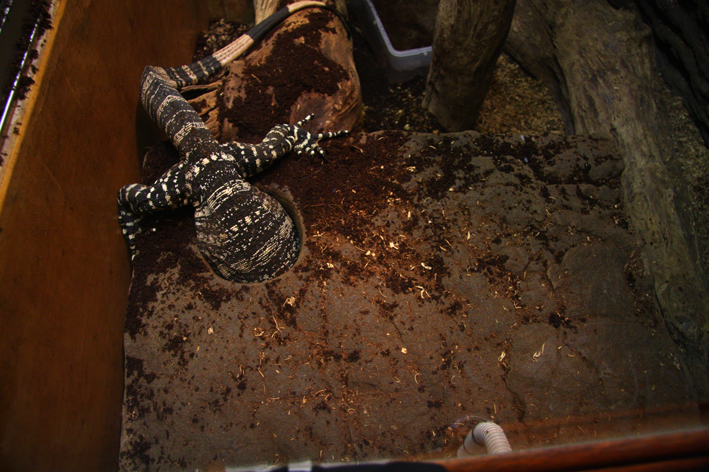
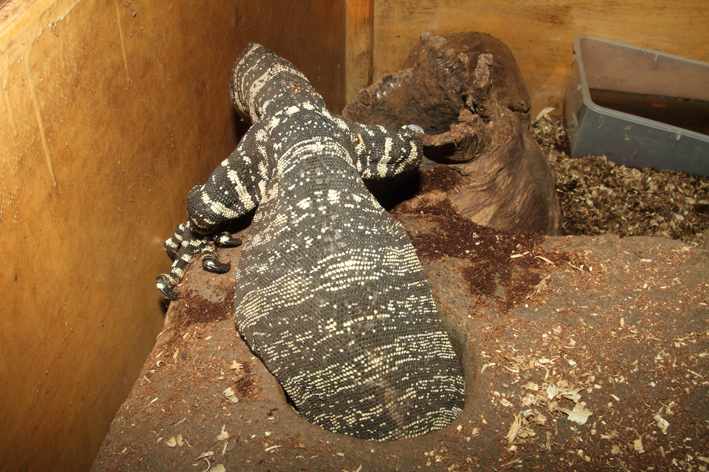
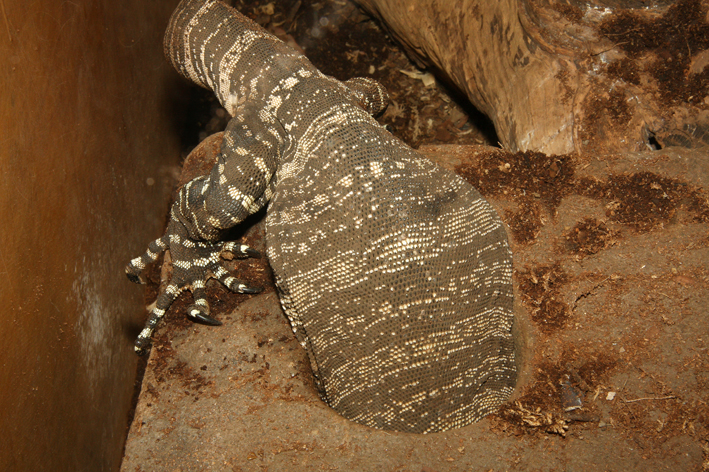
My captive (five different reproductive events - I've watched her nest many times and usually video tape it, but sometimes I photograph it)


Wild female leaving the nest, turning around and then going back in to pack them in

My captive, doing the same

Wild female packing the eggs in.

My captive, doing the same (four different reproductive events)


Fabrizio13 Feb 07, 2012 12:17 AM

Those are some really nice pictures you compiled. The one of the lacie nesting the the tree mound is awesome, talk about luck being there when it happened. I'd love to read the paper on that.

Has your female laid in the substrate before? It'll be cool if you had a chart of your female's laying habits that you could show us. Maybe you do....? But like I said, cool pictures man.
-----
Jason

crocdoc2 Feb 07, 2012 01:35 AM

Fabrizio:I'd love to read the paper on that.

It's just a magazine article, rather than a paper, written by someone who didn't seem to be overly familiar with lace monitors and had consequently gleaned the information from elsewhere to write the article. Aside from his direct observations, that is. The photos alone tell as much or more than the article. He was fortunate enough to have all of that happen right behind his house, which is how quite a number of lacie nestings in termite mounds get observed. Otherwise it's a matter of visiting the same mound daily for several weeks, which is tricky if one has a life.

Not that I haven't tried. I often visit friends that live on the south coast and they have a lot of lace monitors on their property, as well as termite mounds. Two years ago I found four really fresh nest digs, all of which had been excavated two days before I arrived, at most. Last year I decided to head down there at the same time of year, but a week earlier. I also drove, rather than flew, so I could really load up with camera gear (video camera and tripod, as well as still camera). From the day I arrived until the day I left I did the rounds of several known termite mounds that had been nested in previously. Unfortunately, as many people in NSW can attest, we are having a horrible summer this year, weatherwise, and there was absolutely no activity on any of the mounds. It's quite possible that most of the females may even skip a season. I did find one fresh nest, off the property, and it is one of the photographs I included in another post in this thread.

I do have a few photographs of this female heath monitor (Varanus rosenbergi) surprised while digging her nest, though. I am very familiar with this female as I've seen her nests several years in a row and have found her on the mound itself on a couple of occasions.

Gravid female

She hangs around the mound for two to three weeks after laying, too. It's just a matter of knowing where to look for her. I've never seen her anywhere near the mound at any other time.

Fabrizio:Has your female laid in the substrate before? It'll be cool if you had a chart of your female's laying habits that you could show us.

She's never laid in the substrate. There's always been deep substrate available, but the most she's ever done is a few cursory digs at the start of the cycle (or messing around after laying).

Strangely, I do have a chart showing timelines for everything (start of cycle, start and end of mating, ovulation, egg laying) but it would be way too complex to post on here as an image. I use it when I'm giving talks on reproduction in monitors.

What's more informative is calculating the average timelines for all of the stages of the reproductive cycle, for they're pretty consistent. If I managed to catch her ovulating I can predict her laying date to within a couple of days - something I've demonstrated a number of times on another forum on which I usually post.

That's how I know when to set up my camera to do time lapse of her laying while I'm away at work (I don't know how to embed videos into the text, so the video may appear randomly below).

When I've compared notes with other breeders here, there's have been really consistent with mine as well. Even the perenties at my old workplace, which are an entirely unrelated species, showed near identical timelines for events. Aside from nesting, which was very different from lace monitors (perenties are ground nesters), breeding them was nearly identical in practice.

crocdoc2 Feb 07, 2012 01:39 AM

I meant to say 'their' instead of 'there'.

MikesMonitors Feb 07, 2012 06:03 PM

Crocdoc
How do the hatchlings escape the confines of the hard mounds?
I've have heard that they are inadvertenly released by nesting females.
Yes, no?

Great photos!
Mike
-----
Mike's Monitors!

crocdoc2 Feb 07, 2012 07:34 PM

The females do release the young from the mounds but the how and why has been conjectured for years. My theory is that cycling females doing test digs early in the season inadvertently release the previous year's young. Monitors are creatures of habit and will likely keep returning to the same termite mound to nest if it keeps working. I've looked at data from studies of wild monitors and there would be hatchlings in the mound at almost exactly the same time as the wild females start cycling for the next clutch.

The big question is, would they still be able to escape if the female didn't let them out? My guess is yes. This is where it gets interesting. Heath monitors, Varanus rosenbergi, nest in mounds constructed by the very same species of termite. They have a shorter incubation period, though, so they nest later than lace monitors in order for their hatchlings to emerge in spring. What this means is that female heath monitors are not cycling/digging at the time their eggs are hatching, so the hatchlings must escape on their own. A mate has photographed babies emerging and cruelly sent them to me at work, from his phone. I say 'cruelly' because the evening before we had a chat about heath monitors at a herp meeting and when he told me he was envious of me seeing females nesting I told him he should keep a look out for emerging babies, as they should start appearing at that time of year. He had a job which gave him free afternoons and he would often go mountain-biking in an area that was full of heath monitors, so the very next day he went out and found babies emerging. What are the chances of that? Sadly, all I've seen so far is the tiny holes the babies make when they emerge.

FR Feb 07, 2012 07:49 AM

Ok Crocdoc, lets get real, I will now ask you a question. Can lizards such as lacies, invent new ways to nest? That is, can they cognitively figure out methods to nest when there are no termite mounds available?

Because when you say, they are obligate termite mount nesters, then your saying that is ALL they genetically can only nest in those termite mounds. Thanks for the answsers

crocdoc2 Feb 07, 2012 03:02 PM

F:...when you say, they are obligate termite mount nesters, then your saying that is ALL they genetically can only nest in those termite mounds.

No, when I say they are obligate termite mound nesters in (at least) a good chunk of their range it's because to nest anywhere else would mean failure, as the eggs wouldn't survive the winter. Studies have shown that even eggs laid in termite mounds, but in which the termite colonies later died, did not survive the winter. There's strong selective pressure against nesting anywhere but termite mounds here. Nothing else is implied by 'obligate'.

F:I will now ask you a question. Can lizards such as lacies, invent new ways to nest? That is, can they cognitively figure out methods to nest when there are no termite mounds available?

Yes, of course they can invent new ways to nest if they have to. I will now ask you a question - why force them to? If you have a species known to do X in the wild and we are able to approximate X in captivity, why force them to do Y?

The reason I started this thread on nest box exceptions was because we know we don't have to force them to nest elsewhere in the absence of a termite mound, for the conditions within a termite mound can be easily mimicked with a nest box. It's known to work, not just here in my home, but with many other breeders I know. If you'd never had a female die of reproductive failure, we wouldn't even be having this conversation for we'd both agree that anything goes with this species. That doesn't seem to be the case, though.

We all know that offering a monitor options is the key to success, so in my opinion not offering a lace monitor a nest box is removing an important option and forcing them to nest in a manner that is out of the norm for them. Yes, they'll 'make do', but the end result is delayed nesting and, eventually, reproductive failure. You've had stacks of experience with breeding monitors - surely you must question the loss of all of your female lace monitors to reproductive failure? If you'd seen photos of termite mounds like those I've posted in this thread before your nesting female scraped out the inside of a hollow log, would you have interpreted what she was trying to do differently?

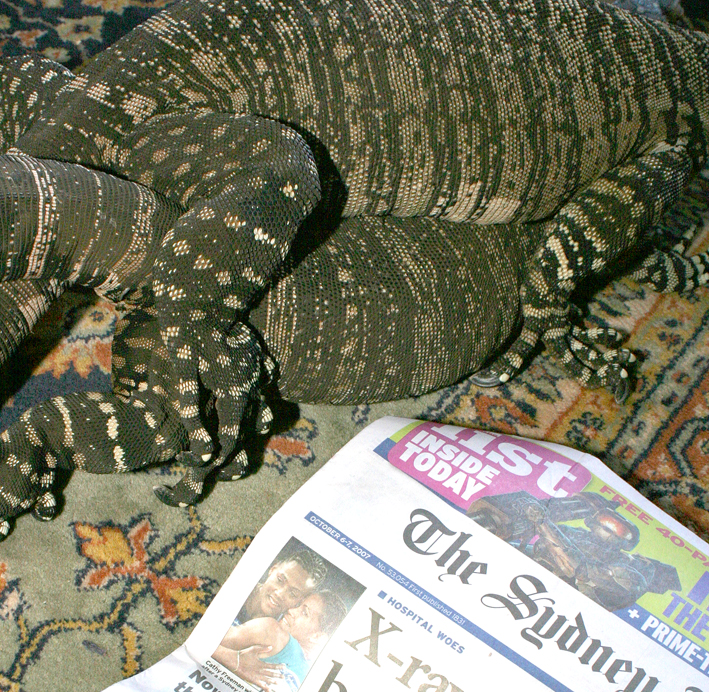
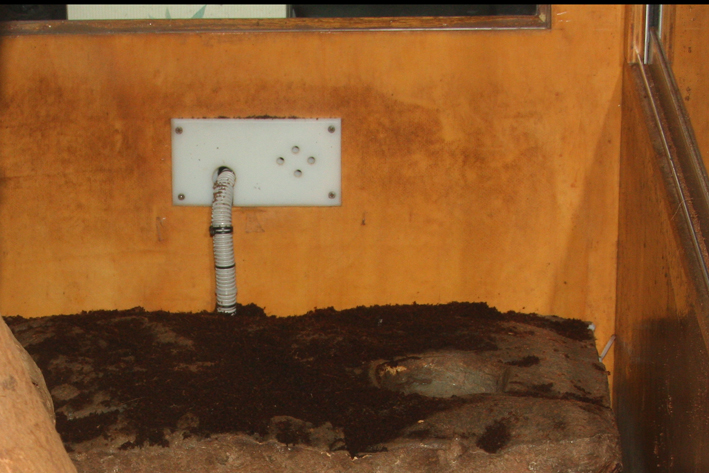
I'll tell you a funny story that relates to this. A number of years ago, a documentary crew wanted to film a female lace monitor laying eggs, viewed from within the nest. One of those things that would be a logistical nightmare to do in the wild, but theoretically easy to do in captivity. In preparation, I drilled a hole in the side of the enclosure so a tube could be installed into the side of nest box. The tube would lead to the outside enclosure and would allow the lens to be inserted into the nesting tunnel. The cameraman was going to build a special nest box to accommodate the tube and I gave him the specifications. I winter my lacies, so it's quite easy for me to time reproductive events based on when I choose to start warming them up and feeding them, as the female is like clockwork. I told the cameraman and producer exactly which day the pair would start mating, giving me a rough idea (to within a week) of when she'd lay, so it would coincide with when the cameraman was already booked to be in town with his gear to shoot another segment for the same documentary. It was all going according to plan - the pair started mating on the exact weekend I told the producer they'd start. I had even sent both him and the cameraman photographs of the pair mating, next to a Saturday newspaper displaying the date. This was part of a running joke between us and I still have the photographs:

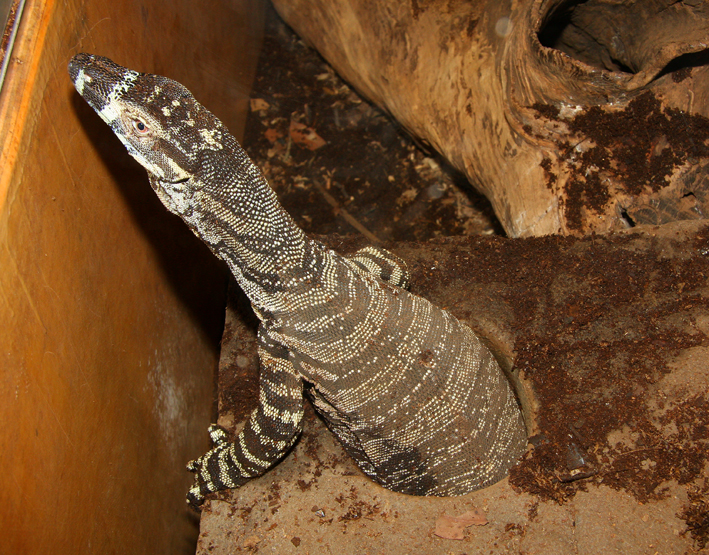
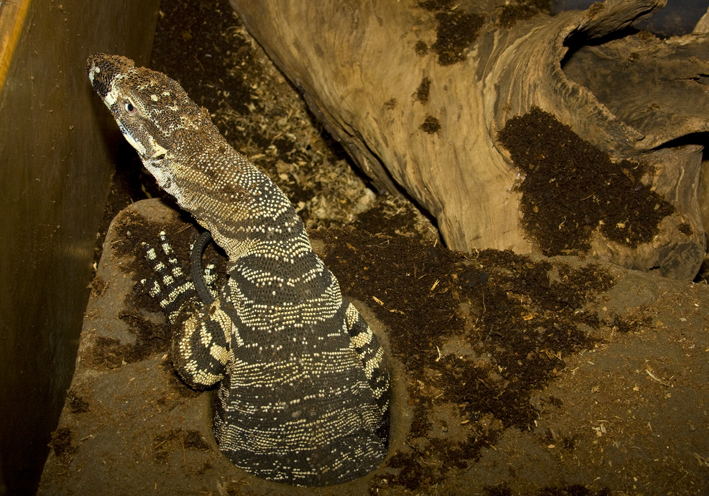
I had expected the new nest box to arrive before the pair started mating, but the cameraman got caught up with other things and was delayed. I had already removed the usual nest box in preparation, which was a major mistake on my part. The female started looking around for nest spots, as she always does at the start of a cycle, and this is where it gets interesting. In the absence of a nest box, one day while I was at work she started to scratch away at the mock rock near one of the basking sites. The mock rock has the same texture and feel as the surface of a termite mound (albeit a bit harder) and it was warm because of the basking surface nearby, so her choice was not surprising to me. There was a deep layer of substrate in the enclosure (I was still using leaf litter at the time, but have been experimenting with other substrates since), but she didn't give that much more than a cursory dig. The mock rock, however, she worried at until she found a weak spot and by the time I got home from work she had dug a burrow through the tough polyurethane elastomer outer coat of the mock rock and into the polyurethane foam backing. No mean feat, even with weaknesses in the mock rock. The cameraman eventually sent up the modified nest box and I put it into place, but it was too late. Although the female went through the process of looking gravid I didn't see her ovulate and she didn't end up laying. She'd resorbed the clutch. I've never mucked with her nest box since. That's why she still has the same nest box she's always had, even though she's grown a lot over the years. If it ain't broke, don't fix it. This is her a day or two before laying - she has no difficulty digging into that little hole, turning around and laying.

murrindindi Feb 07, 2012 03:59 PM

Although this seems now to be a discussion between two people, I like to make a comment:
Crodoc2, you have CLEARLY succeeded repeatedly where many have failed, and over a relatively long time period. With your knowledge and experience you are providing the female Lace monitor with the conditions most closely resembling where they deposit eggs in the wild both in your location, and what`s KNOWN to occur in many other parts of their range.
Is it possible your monitor`s using a box rather than the whole substrate due to it being on/above the ground, which obviously a termite mound is, so perhaps the female will be likely to at least explore that option first?
And it`s surely somewhat easier to get the conditions right in a box than the whole floor in a relatively large enclosure, especially. (Just a thought, reasonable or not)...
I totally agree with you; if it ain`t broke, don`t fix it!!

crocdoc2 Feb 07, 2012 04:42 PM

That's a good question, Stefan - do they target an above ground option first in captivity? I honestly don't know the answer to that. My female has done cursory digs in the substrate at times, while cycling, but has always chosen the nest box in which to lay. Her very first digs at the start of every cycle, though, are in the nest box.

Lace monitors would have little difficulty targeting mounds in the wild and in most areas it's hard to find a mound that doesn't have signs of at least some lace monitor activity. The one exception is a spot I found last year that seemed to be ideal for termites, so there were stacks of mounds in a very small area and most of those had no sign of monitor activity. The monitors were spoiled for choice.

An important factor here is that these aren't tropical animals and only a very small proportion of the population lives in the tropics. To get a female to nest in the substrate, at very least part of the substrate would have to be heated to that sweet spot of 30C, which would mean the whole enclosure would be warmer than it should (or need) be. The other thing to consider is that when local female lace monitors start their cycles in spring and are checking out nest sites, the ground temperature would be nowhere near what they are looking for.

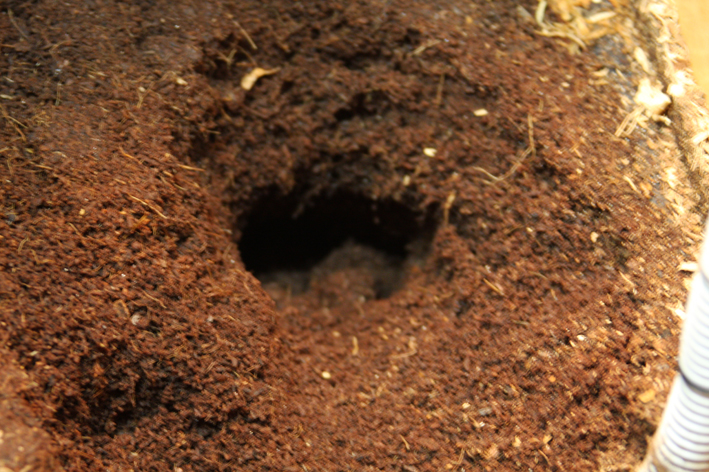
Getting back to those first test digs in the nest box that I mentioned at the start of this post, they are usually in the form of what I call 'nose holes'. She digs a bit and then pushes her nose right into the substrate, forming a little conical hole. I can't say for sure, but if I were to guess I'd say monitors use their snout to determine the temperature within potential nest sites.

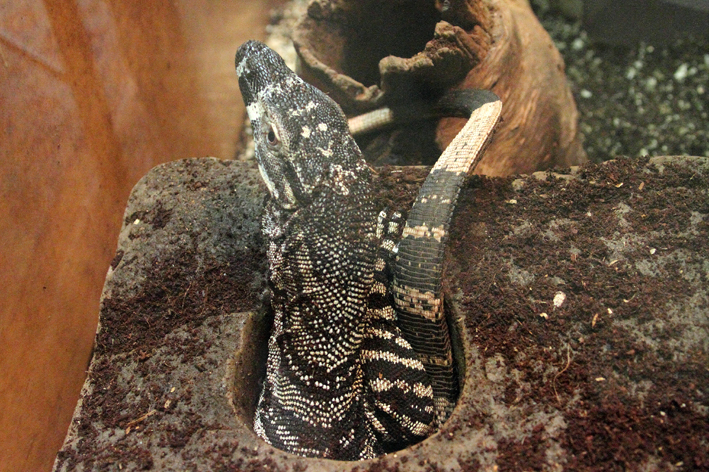
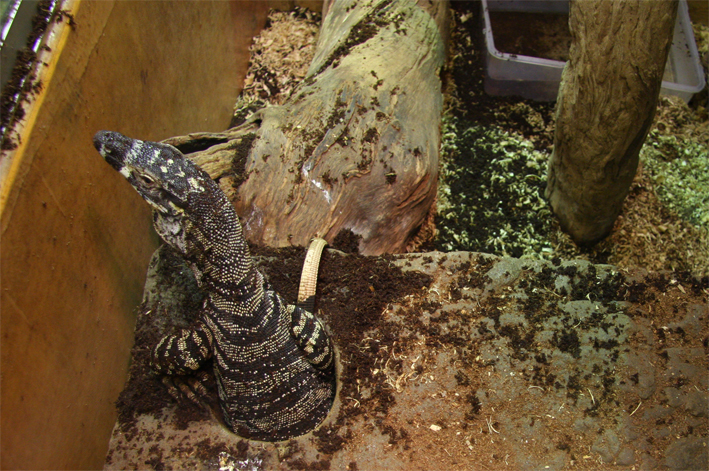
Here's a little sequence I took a couple of years ago. I had just repacked the nest box a short while before I took this photograph. The pair had climbed on top, as that's the spot at which I let them out of the enclosure - the female immediately checked out the new substrate in the nest box.

A short while later, there was substrate on the lid of the nest box and it looked like this:

I lifted the lid of the nest box and took a photograph of the nose hole she had made:

I know this female well enough that if I saw no physical changes in her appearance and no other behaviour, that nose hole would be enough for me to know she'd started a cycle.

MikesMonitors Feb 07, 2012 05:55 PM

Crocdoc
"Getting back to those first test digs in the nest box that I mentioned at the start of this post, they are usually in the form of what I call 'nose holes'. She digs a bit and then pushes her nose right into the substrate, forming a little conical hole. I can't say for sure, but if I were to guess I'd say monitors use their snout to determine the temperature within potential nest sites."

I couldn't agree more.
When my female Jobiensis laid 2 clutches in the substrate(rather than the nest box I couldn't see these events) but the open nesting she did do a small dig and the snout test.
I believe this in not only to check temps but humdity as well.
Mike

-----
Mike's Monitors!

Fabrizio13 Feb 08, 2012 12:18 AM

For Mike,
I read your paper on breeding your peachies in Biawak, the only paper I've found on breeding peach throats, kudos.

Back on the subject, what is the usual nesting habits on the prasinus complex? I know in captivity they lay in raised boxes. Do they lay in tree hollows and what not? I do remember reading a something that reported a clutch of recently hatched green tree babies in a termite mound. I would think any gravid varanid that stumbles upon a mound would lay in it, but that's just my opinion. Factoring in how my ackie would outsmart me, I think they could figure out how to lay in a termite mound hahaha.
-----
Jason

jburokas Feb 08, 2012 07:34 AM

It isn't well known or documented exactly what V. prasinus or other "Tree" Monitors nest in. There have been a couple scattered reports as you mention of baby Prasinus found in arboreal termitaria. So that's a possibility along with decomposed tree hollows and in the ground even.

What many keepers do with Trees, almost exclusively, is to NOT offer deep ground substrate heated up into the low 80's °F and to ONLY offer the nest boxes, so naturally (or un-naturally) they use that vs nothing. I think the best way to 'hedge your bets' with species notorious for reproductive failure in captivity after a few clutches, is to offer both deep ground and some boxes strewn about and elevated in the cage and let them choose. I can attest that given some earth to dig into, Prasinus do dig underneath things and form little tight-fitting long tunnels as hides along with wedging themselves in cork tubes and other hides. I say throw everything at them and let them choose what they want.....

MikesMonitors Feb 08, 2012 08:21 AM

Justin
Well said!
Per our emails choices are your best bet.

Good luck with your Prasinus!
Mike
-----
Mike's Monitors!

MikesMonitors Feb 08, 2012 09:26 AM

How deep of a substrate do you offer your Prasinus?

I hope others with "Tree" Monitors chime in on this question as well.

Mike
-----
Mike's Monitors!

tectovaranus Feb 08, 2012 01:30 PM

I give my beccarii a full 2+ ft of substrate and they dig extensive burrows and have laid eggs deep in the substrate. They also have access to potential nesting options up to 8ft above the ground.
Unfortunately, I travel so much now that it's become very difficult to dig up the eggs in a timely manner. I am close to finishing a totally new enclosure for them that will include a surveillance system that should help me be able to keep closer tabs on their activities.
So far I haven't found eggs in the above ground boxes, but we'll see what I find when I tear out the old enclosure.
Nice to see some acknowledgement from other experienced keepers that not all monitors are the same and although they do have many similar captive requirements (access to proper high/low temps, deep substrate,tight fitting humid burrows, etc) they should not all be kept the same.
Ben Aller

MikesMonitors Feb 10, 2012 02:34 AM

n/p
-----
Mike's Monitors!

MikesMonitors Feb 08, 2012 08:22 AM

n/p
-----
Mike's Monitors!

murrindindi Feb 08, 2012 12:19 PM

For crocdoc2 and MikesMonitors: I think you both made an excellent assumption re using their snouts to check the temps and humidity in the potential nesting site/s; it`s known they have microscopic "hairlike" structures in their scales (around the head at least), and clearly, the tongue wouldn`t work in that way, as wonderful a sensory organ as it is. R.G. Sprackland did some work on the structures I mention, I know I have the article/book, but can`t remember the title?
I`ve noticed very many times in my Varanids that they use the snout to "feel" things, so perhaps not just for texture, but in the way you both described, too. They must have the ability to check those things, otherwise, they`d surely use "dead" mounds to deposit their eggs quite regularly, as well as too cold earth.
A new discovery, perhaps!?

crocdoc2 Feb 07, 2012 04:48 PM

It's not a discussion just between two people - it's a public forum and there's always room for rational input.

FR Feb 08, 2012 09:14 AM

Heres the point Crocdoc, I do allow our lacies a choice. Which is what i find as the funny part.

I find it funny as, its us keepers that are not quite so smart.

For instance, your box IS NOT A TERMITE MOUNT. It is the most suitable place in your setup, as she lays her eggs there.
Here, we have different problems and as such have different results.

For instance, I have always offerred hollow logs, and did recieve an amazing nesting, the time when the female covered her eggs with sawdust she created by scratching it off the inside of the log. And we provide, deep leaflitter, which is what was picked the most often here. Including nesting in a ant nest with no ill effects, except to my hands. Whats odd is, that species if ant is what eats all our other species of varanid eggs.

Or the time a female was nesting in deep leaflitter and then came back out and started digging right above the nest, she dug until she located something odd. A dead rotting mouse, she then threw the mouse out of the nesting area and laid two eggs on the surface, then carried the eggs into the nest(I have pics of the whole sequence) Then finished laying IN THE NEST and covered it up normally. If you did not see what occurred, you would think it was a normal nesting.

Whats odd is, I have tried deep soil and never had a lacie nest or attempt to nest in soil. Only to have one of the females I hatched(our bloodline) Successfully deposit eggs in deep soil, and have them hatch there for John Egan. A dirt nesting no different from perenties or gouldi types, etc.

So to invent new ways, no I do not think they can do that. But to have an inventory of methods to nest, yes they do have that. And its no surprise to me, as so do all the other reptiles I work with.

All of the reptiles I watch deposit eggs or babies, based on the type of year/s we are having, in most cases, they place them on hillsides with certain conditions, except when its drought, then they place them right next to washes where there is enough moisture to hatch the eggs. Live bearers are pretty much the same, they have a number of methods to secure success, depending on prevailing conditions.

And while you are not wrong, termite nests are a good place to hatch eggs, surely they are not the only place or these animals would not have developed the ability to lay in other conditions.

Your success truely makes that point, your box is NOT a termite mound. Its a box in a cage. Does that box have termites living and working in it?????? If not, then what makes you think the monitor is fooled into thinking its a termite mound?

I am not trying to argue but the point is clear, a next box is not a termite mound. its just a box.

I asked you a question about how many clutches your female lays a year. I ask that because the answer reflects support and stress levels. But you will not address that.

Any person with some understanding of biology, knows that there is range of reproductive effort, that effort is judged by level of recruitment. Level of recruitment is based on enviornmental conditions, which include naturalsupport and stress.

We also understand that each species moves to the least supportive conditions. that is, they fill their nitches until support is at a minimum, both in prey and shelter.

Sorry, I am wandering, the point is, lacies in captivity have proved they have a range of methods to nest, Now as humans, we can discuss which method fits in what conditions.

Also I would appreciate not isolating paragraphs, as it takes away from the meaning of the whole post. doing that can easily missdirect the overall intent of the reply,

overall, you seem to be stating that lacies can and will use tight spaces, as they have done so in nature, such spaces are termite mounds and limb hollows/trunks hollows etc. In this I agree.

But they have also shown the ability to use such things as leaflitter and dirt burrows as well.

As in nature, this makes it a situational problem. For you, you live in a cool place, your mass temps in house is cool in the spring. So you can easily use a box above mass level. Here in the states, in the hot arse desert, we have no such luxury, anything above substrate level is hot as heck, much to hot to nest in. So our situation is much different. I wonder, what would you do if you lived in Marble Bar?

As you should know, most of us are not fortunate to live with Lacies outside our door. Most of us have to use conditions foreign to natural lacie conditions. Its here that this question becomes very very important.

You see, we have reverse seasons, and totally different conditions, yet have succeeded with lacies. I do think its the same lacies.

YOu said, why force them to do something, to me, your the one applying recipe conditions, that is, cooling them at X time, raising them temps at X time, and then having the cop at X time, then laying at X time and X place. Again to me, thats boring, of course they can and will follow that regime. But what are they capable of, what is their genetic potential, Whats the max, whats the minimum?

All in all, I think you love to repeat the same thing over and over, just to prove a point, and I do not know who your proving it to.

I on the otherhand, am not that kind of person, I explore. So I explore the range of what they do. And surely they do have a range.
So what has your female(one or more females) reproductive effort/s been like. Number of clutches per year, number of eggs etc.

And please sir, this is not a pissing contest, its the only way to compare methods, and that is to compare results. Thanks

murrindindi Feb 08, 2012 12:42 PM

Hi Frank R.,
the box doesn`t need to have termites living in it for the monitor to decide whether it`s a suitable place to deposit her eggs, it just needs to be a secure place which offers the required temps/humidity/consistancy at the time of egg deposition, and a box might resemble a termite mound if it`s on/above ground, even if only superficially (to us and them)!

FR Feb 08, 2012 03:33 PM

Thats what I am saying, monitors do not sense things or label things like we do. They have a far better sense of knowing then we do. They use sight, feel and smell, if not more, those dang lip pits. With smell, they "understand" "realize" the workings of material in a realistic way. As in, a usable way.

Which is what makes this termite mound thing funny, In our cages, its a box, not a termite mound.

Its like using the term aboreal when talking about a cage thats taller then wide. That shape does not define aboreal, being UP high in a tree is aboreal. Yet most people call a tall cage an aboreal cage and think the animal thinks the same thing.

Or thinking substrate is the earth or ground. Its not the ground, its stuff on the bottom of the cage.

A silly example of this type of thinking is when a monitor gets out of a cage. Keepers think its out. Well if the cage is in a room, its not out, its out of a cage in a room. Its still in, then its down a hallway, then possibly out the door to the outside, when outside, monitors absolutely understand that. And that is not to be confused with being locked in a house, but out of a cage.

These type things are conceptual things, I do not think a tall cage is aboreal, or the dirt on the ground is the earth, or a box is a termite mound.

I simply offer conditions and see what the animals pick, Then if they pick something, try to improve it until it works really well.

Where that sits in our conversation is, a little box(whatever you want to call it) thats in a big box, the cage. None of these are wild, or termite mounds.

We have found that if varanids have choices they can increase their production by lowering stress levels.

Twenty some odd years ago, you could argue failure vs. success, hopefully these days, some of us can discuss different levels of success.

For instance I asked how many clutches per year and how many eggs. This is yearly reproductive effort. Reproductive effort is how you gauge success.

An example is, one method routinely results in one medium clutch a year, other two clutches. Or another method, results in five or more. obviously five clutches are superior to one or two. Right?

Not exactly, reptiles can produce small clutches or large clutches. As I mentioned, we had at least three females produce five clutches a year. These clutches were normally five eggs. So a total of 25 eggs per year.

Our largest clutch was 11 eggs, So two large clutches can equal or surpass five small clutches.

These are numbers, its these numbers that can make an actual discussion, not Lacies are termite mound nesters.

As I/we already understand lacies can and do nest in other ways, so how do we tell which way or method is best? How? Well you compare numbers, thats how.

Yet, no one wants to compare numbers. They want to discuss obligate this or that. Which is out of context with captivity.

Many years ago I told Crocdoc, if lacies require termite mounds, then I am screwed, because we do not have them. But I wasn't screwed, I produced many many lacies from several females. All without termite mounds or nest boxes.

Which is entirely the point. Which is better, got me, these folks do not want to compare numbers. Truth is, how great would it be if one of our methods out produced the other. Thats a win win situation.

Again, truth is, I tested nest boxes, dirt, leaflitter, comb inations of those. And I have results. All I ask is, what are the results so we can actually compare and understand.

My bet is, if you built a cage of a termite mound in nature, a lacie may not use it. As it may have lost its advantage by being covered and not exposed to the sun. Just a thought. Thanks

Robert_Mendyk Feb 08, 2012 04:58 PM

"Success" is a subjective term that can be measured and interpreted in many different ways.

But if we were to take the stance that reproduction is the only true measure of success in monitor lizard husbandry, then wouldn't the number of successive clutches without a female experiencing or dying from reproductive complications also be a fair determinant of "success"?

Females producing 5,6,7,8.....23 clutches of eggs a year may be quite the marvel and might even deserve a pat on the back, but what good is cranking out that many clutches a year if all of your females die prematurely from reproductive complications (as you've indicated with your lace monitors)?

Knowing that reproductive complications are usually caused by or related to inadequate nesting conditions, can this really be considered a sign of "success"?

murrindindi Feb 08, 2012 05:20 PM

If I hadn`t got timed out, I`d have gotten in first!! (Wink)...

FR Feb 09, 2012 10:46 AM

I am sorry, of course thats part of it,

in all reality, nature does not guarantee a next year. Period.

So the thought of years is based more on humans, then nature. Nature makes every attempt to not have a next year.

So as humans, as biologists, we look at reproductive effort as a level of success. that can be broken down from year to year, or over a lifetime.

A simple example is, whats more important, a female producing 100 offspring, or a female producing fifty? IN HER LIFETIME?

The simple answer is both, Reptiles have a complicated reproductive stradgy, which includes both short term levels of success and long term levels of success. Both have their place.

For instance, a high percentage of young reproductive females will not make it to the next year(in nature), yet some resident females will be successful for many years. Some females will produce every year and others will not. etc etc.

So for you to place importance on one part of their reproductive stradgy is only you and only about you. Its not about them as a species or as reptiles.

In reality, step one is the most important, put out as many offspring as you can in as short of period as possible. Then hopefully you can repeat the next year, etc.

If you look at longevity logically, then its only important if the female is reproductively limited. That is, if it takes years and years to accomplish recruitment, then it becomes important. But its not important if the female accomplishs that task quickly. Both are part of their stradgy of exsistance.

Why you make only one as important, is yours and about you.

For instance, we have a female we hatched produce over 80 clutches in her lifetime, her lifetime was 14 years. Not bad at all in both cases.

Whats even more odd, in nature the vast majority of females observed are young, not old. While it does occur, its rare, but indeed part of the RS.

of course, you are indeed entitled to achieve the goals you want with varanids.

I feel we should understand more then longevity. Althought, we at goannaranch have acheived many longevity records as well. Even with multiclutching.

A much better question would be, what is the average reproductive lifespan for a captive female? what is the average reproductive lifespan for a wild female?

The answer is, WTFKs, which means, who the frog knows. There is not data on wild females, period. And overall, captive females do not live past a year. So having females produce 30 to 50 clutches in a lifetime is something I will take with a feeling of accomplishment. Yet, I still feel good about having a female produce 10 or 12 clutches before I somehow screw her up. Which I do and do so in many ways.

All the while you ask these questions based on your level of accomplishments of what?

let me offer you a lesson. Being a biologist is nothing more then taking data, you take data. Being a good keeper is sort of the same, you allow data(results)

To sit about like you do and judge everything like some back seat driver is simply not important. A wise person would wait until theirs enough data to actually make some manner of conclusion with.

All in all, I am happy to support any level of success. From one dang hatchling to hundreds from one female. If I wanted to be a big fella, I could be just by hatching one monitor, which is more then most have done. Buts its not about that.

Its about effort, in the monitors cases and in the keepers cases. Whether what I have seen is right or wrong, as you know, I could give a flying shat. The story is not over. You have heard that saying, how a book ends is based on what chapter you stopped reading at. I keep reading. What about you? reading means doing.

I do put forth an effort. As do my captive monitors.

So thank you for your imput. Best wishes

murrindindi Feb 08, 2012 05:17 PM

I just typed a reply and got timed out....
A short reply this time; if you`re judging success by numbers alone, perhaps you "win" just now (maybe not)?
I judge success by how many times I do something successfully without harm coming to the animal/s. In which case, crocdoc2 "wins" hands down, his female`s still producing eggs/offspring, and looks as healthy and productive as ever, as opposed to your dead female/s Lace monitor/s...
I think you`re both a credit to the hobby, why make a contest out of it (I don`t think crocdoc2 is doing that, you Frank R. seem to be)?
Just keep on offering your experience and knowledge so others can one day have at least a taste of success too, THAT`S a real "win win" situation!

FR Feb 09, 2012 11:06 AM

How can you say that without data, how old is his female, you do remember, I was on F3 by the time Crocdoc started.

So how do you know how long at least one of my females produced for.

I will also add something here, we are not apples to apples, Crocdoc lives exactly where lacies occur. Which means his overall conditions are exactly what those animals were designed for.

For me, its not nesting that ages some monitors, its heat and extreme cold(10F last winer), I wonder why theres no lacies in marble bar? I am not making excuses, but a big part of our husbandry is based on HEAT and COLD, as in to much of it.

I may be easy, but I am very happy with our results considering. Again, how easy would it be to keep a lizard in a box, that occurs in my yard?

One of the reasons I did not keep indos for so long was, HEAT, as in we could not logically keep the building cool enough, we had to many monitors, with means to many heat lamps and all with outside temps over 100F. As it is, I pay about $400 per month of the lizards electricity.

But back to the subject, how long did my a female produce for me?????

Also, in my opinion, and experience, all females when kept healthy, will end of dying from reproductive complications. That seems to be how they pass without predation.

Lastly, I know I have an odd perception of reptile life. It comes from living with reptiles here in Az.

TAke a tort. they can live for decades, say 50 years. Yet they are only active 30 days a year or so. So is staying in a burrow with a low metabolism waiting or suitable conditions, LIVING? Not exactly, its waiting to live.

This is going to sound even funnier, and I can be funny, but what the heck do you think they are thinking about in a burrow for years at a time?????

When they come out, they are thermo regulating, seeking food, mates, nests, going here and there etc. They are living, but back to that burrow for very extended periods, hahahahgahahahaha?????????

I think we humans confuse longevity with living. Reptiles are not mammals, yes??

Gregg_M_Madden Feb 09, 2012 07:05 PM

FR says "I was on F3 by the time Crocdoc started."

So why is there such a huge lack of lace monitors available in the States if you produced so many???

Also, seems like CrocDoc passed you up pretty quickly with one female even though you were what, 6 years ahead? LOL.

What a joke.

crocdoc2 Feb 08, 2012 05:18 PM

Just so this thread doesn't get deleted, as I think it contains information that may be useful to some people, I've responded to your request for results here:

Results, for FR, from below

Site Tools