Reptile & Amphibian Forums

Welcome to kingsnake.com's message board system. Here you may share and discuss information with others about your favorite reptile and amphibian related topics such as care and feeding, caging requirements, permits and licenses, and more. Launched in 1997, the kingsnake.com message board system is one of the oldest and largest systems on the internet.

Click here for Dragon Serpents
https://www.crepnw.com/
Click for 65% off Shipping with Reptiles 2 You

Mexican Black Kingsnake

SouLou Sep 14, 2014 08:27 AM

I just obtained a young specimen (16 inches). I was really taken with its high gloss. I have several kings but I was surprised that this snake didn't immediately retreat to its hide box when placed in its new home but instead seemed to be more laid back. Really good king snake.

Anyone out there with a full grown? How big does it get?

Replies (38)

AaronBayer Sep 15, 2014 09:13 AM

you can plan on it being about 4'. some get a little smaller and some get a little bigger, but 4' is about average.

I've never owned a MBK, but I've had a bunch of desert kings and many consider them to be the same snake. I think my smallest desert king was about 3.5' as a young adult (3-4 years) and my largest was a wild caught desert/speckled intergrade/intermediate that was a touch over 5'.

DavidM85 Sep 15, 2014 02:07 PM

I have a couple and they are really cool. Mine is just at 4' they have a good feeding response and can dig and make tunnels like moles.

FR Sep 15, 2014 04:04 PM

It surely is fun to play with cages like that. Its also educational.
There are so many ways to test behavior, like putting a dead mouse on the substrate. Normally the snake will quickly pop up and eat it. So how did it know it was there. In our outside cages, they can be two feet down and they still know.
Or placing a mouse on the lid, then watching what the snake does. Or taping it to the glass. Or making small mazes. So much fun to be had. Keep it up and if you do any of the above, post pics please. Thanks again for posting those pics

DavidM85 Sep 17, 2014 09:49 PM

That is strange.. I put a live rodent in the cage and it was hopping around for at least two days.

I think its because it was the first meal he had in that cage. I put him in there and he buried down and stayed down for a week before I first fed him.

AaronBayer Sep 18, 2014 01:27 PM

You left a live rodent in the cage for 2 days?

FR Sep 18, 2014 04:45 PM

mice are rarely a problem, especially younger ones. old haggard mice may be more of a problem, and rats are the worst.
I think the problem is, the trade, particularly the recent trend to recipe keeping, has toooooo many rules and most of which are WRONG and stupid. Hmmmmmmm that's a little harsh, but its true. If you make a list of what harms captive snakes, leaving feeder mice in the cage will be somewhere in the 85 to 100 range. The first twenty reasons are based on folks not knowing anything about husbandry. And the next bunch of reasons are, making mistakes, leave the cage open, drop something on the snake, Cutting its head off in the door(seen it) etc etc.
When a problem has occurred, its when someone feeds a healthy large mouse to a nearly dead snake that has no physical ability and could not digest it anyway. Rats, that's another story all together.

AaronBayer Sep 19, 2014 09:03 AM

While I agree that a live mouse isn't at the top of the danger/problem/hazard list for captive snakes, I still feel that it is an unnecessary risk.

Early in my snake keeping days I left a mouse in with a ball python overnight despite being told by numerous people not to. The next morning I discovered a snake that had about 1/10 of its scales/skin chewed off. the snake died about 2 hours later.
talk about feeling like a total moron... I know of a few other well respected folks that had the same problem too... I believe one involved an indigo... what a nightmare.

I just figure, why take completely unnecessary risk? Granted, I've only had somewhere between 1000 - 1500 snakes (including babies) in my care which is a fraction of what some people have, but I've never seen a snake that would only take live animals. Also, in the wild a snake would have the option to get away from a mouse that poses a problem, in captivity that option is taken away.
So why chance it?

FR Sep 20, 2014 09:15 AM

Personally, I would rather see folks learn their animals, then play the prevent all danger type of husbandry.
As you know, these days, folks take snakes put them in plastic boxes, nothing natural, nothing for the snake, a box and a water bowl. All in the name of safety, I would rather support the snakes in a way, they ARE safe and are not protected safe. This also means using my head, if I have a snake that is compromised, health wise, or behaviorally, then I do not offer it prey that can hurt it.
As I mentioned, and you did not mention, the size and age of the mouse is important. Particularly with compromised captives.
So ONE, learn your snakes is more important for many more reasons then this, two, support your snakes to a position of strength and health, three, use your head, don't put a wolverine with a gophersnake. A simple lesson, my son keeps live mice with his snakes at all times, never has a problem. There are two reasons, the above and two, the most important, the snakes have the ability to get safely away from the prey. They have secure hiding. Like Davids, deep burrowing, crevices etc. Which addresses the will to live and the ability to escape. Did I say, don't put wolverines in the cage, at any time. And yes, as an individual, I hate people forcing me to be safe, when only my danger is envolved. I ride a Harley, in my state, its not required to wear a helmet, its also legal to carry, even hidden. I wear a helmet and do not carry. Thanks David for giving your king the ability to be safe.


FR Sep 20, 2014 09:29 AM

Also the rationalizing that wild snakes can escape. hmmmmmm they also kick some rodent arse, and much much larger and aggressive then captive mice. In nature, they LIVE in safe places. Try doing that instead.
About not feeding live, hmmmmmmmm it's what they do, how about learning to support, what they do. I could say, they like to kill their prey, and it sure seems that way, but that is not necessary, why, because its WHAT THEY DO. Somehow, people forget they are keeping obligate predators. Their bodies are designed to kill. I guess you could feed them oatmeal, fortified with fake rodent meal. hahahahahahahahahahahaha Please understand, I am having some fun with this, but its also true, do not go by rules for day old beginner keepers, as you keep snakes, learn those snakes, advance your own skills and use common sense. Wait, I am going to take my daily pill to keep my heart attack away, horse crap on that, I will do some cardio. Best wishes

AaronBayer Sep 22, 2014 09:13 AM

I'm now seeing that it's not putting a live rodent in with a snake that is the problem, it's putting a live rodent in with a snake that is not properly set up that is the problem.

I can see how a healthy animal with proper hides (not just a dark place, but a secure location) would be much better able to deal with a live rodent that it didn't want to eat right away. In the case of my ball that met an untimely end and I guess many snakes that keepers have had killed over the years, there was no way for the snake to either get away or maintain a "defensive fighting position".

personally, i'll continue to offer frozen/thawed for many reasons, but I'm glad I'm looking at this aspect of keeping from a different angle now.

FR Sep 22, 2014 09:38 AM

Hi Aaron, this is why I like and respect you. a great reply. Conversation does not have to change folks, right and wrong, does not either. You are so welcome to feed dead mice, if that is what you like and want.
One more very important part. That's the reason the ball python let the mouse chew on it. Of course, that cannot EVER be considered normal. But it does occur. It occurs when a snake behaviorally gives up. In ethology there is a term for it. Its when an animal is restricted to doing something, sooner or later it stops trying. In captivity where everything is taken from them, they can and do go into a coma like state where they do nothing but eat, sleep and crap. Its a coping mechanism. It has nothing to do with the mouse or how dangerous it is or could be. The snake is in a living death state. This is what was important to understand. And thanks so much for contributing.

DavidM85 Sep 22, 2014 05:39 PM

So they get "institutionalized"?? well that is interesting I guess that is why zoos have environmental enrichment with their animals so they don't just go blank.

Jokes aside. I did take a required psychology class in university and they had a simple series of pictures showing a mouse in a cage with nothing to do but eat sleep and drink and another in a cage with tunnels, wheels and things to chew on and many different dens to sleep in. The photos of there brains were very different and the neurons were more active in the brain of the mouse with enrichment.

FR Sep 23, 2014 09:52 AM

As one who built enrichment for zoos. That's not what I am talking about. There is a difference between enrichment, which is considered, above and beyond(normal) and shutting down from not having the basic necessities.
In zoos, as well as here, its not about the animals. Zero is not the basic needs. Zero is the point of death or insanity.
for instance, food/water and shelter are basic necessities. In your case David, you provide a basic normal shelter for your kingsnake. Its not enrichment, enrichment would be things above and beyond the basic. In your case, kingsnakes live IN the earth. You provided a "little bit" of normal, not a lot of normal, At least your king can make a chamber and bedding area, as it wants. Thank you for that

DavidM85 Sep 23, 2014 10:34 AM

Hey FR. I understand I am giving a basic need. But What would be enrichment for a snake? Especially a shy species. A larger cage? Or a few days to go in a outdoor cage? All of that seems stressful.

AaronBayer Sep 23, 2014 03:57 PM

I'd like some input on enrichment ideas/options as well.

I try to keep my captive's lives somewhat interesting... they are handled often, get to cruise around the back yard on a regular basis, I even have a small plastic pool that they get to swim in from time to time (the pool is actually interesting, most of my kings/milks/corns swim right out but sometimes they stay in and the boas stay in often swimming around under the surface as if they are exploring), sometimes i'll wiggle the dead mouse around and really make them "kill" it, and I have most cages set up with a cage within a cage design... a smaller tub in a large tub/tank/cage that acts as 2 hides, a moist area, and something to climb on.

I'd really like more ideas on how to provide an even slightly more interesting life for my charges though.

FR Sep 23, 2014 08:08 PM

Yes, a larger cage is good with more to do inside. normally enrichment means bringing out natural behaviors, like different type of prey, or making the animals work for food. That's done by hiding food and or placing in in many different areas of the cage.
With varanids, they always became bored with any cage you gave them. So from time to time, I simply put them in a different cage. This almost always induced reproduction. Monitor are no different then other species except they are expressive. They simply do not put up with sweater box set ups and such, they simply fall over dead.
One easy trick is placing something new in the cage like a log and keep changing it out every week or so.
This is why I feed live, it without question simulates hunting and killing behavior, which is WHAT THEY DO. So, what can you guys come up with. Oh wait, one more, I keep reptiles in groups, even kingsnakes and the reason is simple, it gives them something to do while I am away and I am away most of the time. Again its what they do. Not that I am all that, its just that I have visited this question for decades. What can we do for the captives. Best wishes and keep up the good work. That you are talking about this is excellent.

AaronBayer Sep 24, 2014 09:10 AM

I actually have a pair of kings together right now. I'm not ever going to put all of my stuff into pairs or groups, but you and Rainer have convinced me that opening my mind, trying something new (to me), and experimenting is a good thing even if 99% of folks say it's a no-no.

so far so good. I left an entire clutch together for a while and noticed the same 2 bundled up together quite frequently... sometimes just those 2, sometimes with more included. So I figured they had something going on.

now that they are in a cage together they are curled up together what seems like about 75% of the time. They are in a large cage compared to what most hatchling kings get, have multiple hides, and I watch during feeding time... hopefully no issues arise.

also, this will sound crazy, but one didn't eat the first 2 meals offered and when the 3rd meal was offered, the non-feeder seemed to watch the feeder eat... crawled over to the other side of the cage and just hung out a few inches away. then 5 min later was back at it's pinky chowing down. I doubt their brains are capable of learning something by watching, but that's sure what it looked like.

tbrophy Sep 24, 2014 02:00 PM

I think it is entirely possible that they can observe and watch and learn. Particularly if the behavior is somewhat innate anyway (feeding on smaller vertebrates). It would be fun to experiment with recognized tough first time feeders, like green tree python babies. Cool that you are observing and having fun with it. Because, damn, it is fun!

snakekate Sep 24, 2014 03:23 PM

Wow, that whole strain was very insightful, I love reading the various view points. I was on the whole don't feed live thing(I simply feel bad for the feeder) and I agree with Aaron about it not being natural as well, but as usual FR opened up a whole knew world and mindset. Its a fine balance, and we are responsible for the outcome ultimately.

The same goes with keeping kingsnakes together. At one point I would have balked at that, but I too have managed to open my mind to the idea. And imagine, I finally am having success with two little normal banded siblings I have.(My high yellows of another clutch, not so much haha, working on that)Watching the snakes interact with each other and their environment is fascinating, and opens so many doors. Specifically, these little kings are way more tolerant to touch and handling, more alert and generally less fearful. And the tunnels they make! Amazing.I hope to keep all my future kings in social groups one day.

Ultimately I think if every reptile keeper could learn to open their minds, and drop the primitive BS we are fed when first entering the world of reptiles, it would change husbandry for the better. I remember being devastated when I continuously read that snakes are like a robot, lacking emotions and basically just existing. The longer I keep them, the more I feel like a kid in a candy store, because I have learned so much via this site, other hobbyists and just plain observation.

Seems like there's always a learning curve in this forum, keeps me checking in for tidbits of info and experiences. keep em coming!

tbrophy Sep 24, 2014 03:48 PM

Yeah, fun to think out of the box, but I am still a wuss about feeding live. I have no ethical problem with it in the least and I will feed live to kings and corns and pines. But the thought of some squirrelly little mouse taking an eye out of an indigo scares me!
To me, the main point of this thread is to enjoy keeping snakes because it is fun. Lots of fun. It is so easy to fall into the trap of building a collection which becomes a chore. Most folks who keep snakes have developed this passion as kids. I know I did. If you keep them in a box and just open the box to feed and clean, you might as well collect stamps! They do elicit behavior if you take the time to watch and set them up reasonably.

FR Sep 25, 2014 11:30 AM

Hi Aaron, I have to ask this question, why do you think they do not have the ability to learn? This is a very serious question. Please understand, animals both slightly above them and slightly below them, on the evolutionary chain are known to "learn". Lizards have shown the ability to count, and tell the difference between different colored lites. etc etc etc and snakes supposedly evolved from lizards, which means they are more advanced. etc etc. Yes I know some yahoo's that claim biology training, will say, they do not have this or that brain part, which is silly stupid. As one who studies ethology, we do not need parts that we THINK do this or that, whats important in ethology is the animal doing something, the mechanical ability of HOW comes after the behavior, not before the behavior. I test learning in wild reptiles all the time and their learning ability can be compared to birds. Heres the deal, no, they are not going to design rockets and mechanical self defense equipment. but the can learn what is a benefit and what is deleterious. The simple choice of good vs. bad, what they do on a daily basis. They seek beneficual and avoid detrimental. You can test this so very easily.

FR Sep 25, 2014 11:56 AM

How to test learning, get a little box cut a hole in it. Place snakes food in the box. Soon the snake will learn the food is in the box. Repeat until the snake understands the box is where food is. Then cover the hole and observe the snake. Then move to box to a different location. Also, put the box in without food and place the food in another area of the cage. These and many more easy to do and fun tests will give you an idea of primary motivation and learning, then secondary, etc.
You can also teach your snake to count. place two food ideas, do this for many feedings, then reduce it to one and observe behaviors. There are a many variations of this test to teaches you the animals can count(keep track of numbers)
You can also feed in that box every 5th day, do that until the snake knows when the fifth day is, then stop doing that and monitor how long it takes for your snake to stop going to the box every fifth day. And yes, there is more. Place food in the box daily for a week every year(during feeding season) but keep the box there at all times, similates a nest, the snake will learn to go to that box the same time every year. To the day.
Aaron, these are all things you can do and prove those folks wrong. When you do, be prepared for the aftermath. The subject will quickly change from ethology to psychology, and they will go to self defense/attack mode, calling you names and all such, you see that here all the time. These tests also are a form of enrichment. It allows your captives to use their brains. I warn you, once you start these tests, you will pay more attention to your snakes.

FR Sep 25, 2014 12:07 PM

The problem we all have is our own pee poor education system. One that teaches us, its the right answer or the wrong answer. What I am getting at is, this ignorant habit of judging what we read as right or wrong, went there is no need to judge it at all. Education and learning is to be aware, not judge everything.
This is about folks telling you what brain power snakes do not have, when you and others have the complete ability to prove them wrong. You have the animals, the tools, and because of the dumb things people say, you should have the motivation to prove them completely wrong and ignorant. hahahahahhahahahaha you guys have that power. Use it. hahahahahaha and always have fun. Cause it is fun.

AaronBayer Sep 25, 2014 01:22 PM

you know, Frank... you're a pretty motivational guy. lol

I think if people would/ could be less sensitive and realize that you're planting seeds of ideas rather than insulting them, there would be a lot more action/ learning going on in this forum.

I've had many ideas over the years on ways to test snakes ability to think, learn, and problem solve with food as a reward... many using boxes or dishes and experimenting with timing, shapes, numbers, colors, etc. but I've never done it. I think it's time to start.

what's funny... in life I'm very critical of anyone who is satisfied with "good enough" or anyone who lacks the drive/passion to find even a slight improvement in something. I've been a bit of a hypocrite in my snake keeping because while I try to have an open mind, I quickly dismiss any unconventional ideas I have because I figure it must be a stupid thought since nobody else is doing it. well... no more.

FR Sep 25, 2014 02:02 PM

Thanks, and I love when we "get it". The problem is, fear motivated keeping is not how we should learn. Keeping snakes for many decades is easy, so its about time we made it fun, for the keeper and the kept.
About the fighting, its easy to understand, people like to fight and fighting here is harmless. The screen cannot hit you back.

AaronBayer Sep 25, 2014 01:09 PM

I didn't mean to imply that I think they are unable to learn. I have seen many learn things. I just assumed they didn't have the ability to copy the action of another after viewing it one time. I could certainly be wrong about that though.

I've seen snakes in my collection learn routines. Some very clearly know when it's handling/ cleaning time or feeding time even before the door to my freezer in the snake room opens... they just know what's up based on what I'm doing or possibly the time of day or time since last feeding. I usually feed in the evening every wed and sat and several snakes are ready for food within seconds of me entering the room during those times, but will remain calm any other time.

I've also seen western coachwhips doing some pretty amazing things. 1. hunting young cottontail rabbits in a group. 2. crawling up a pickup, onto a tin carport, across the carport, putting their head down and around the edge to reach a bird nest... it's was like something you'd see a squirrel do to get at a bird feeder.

FR Sep 25, 2014 01:53 PM

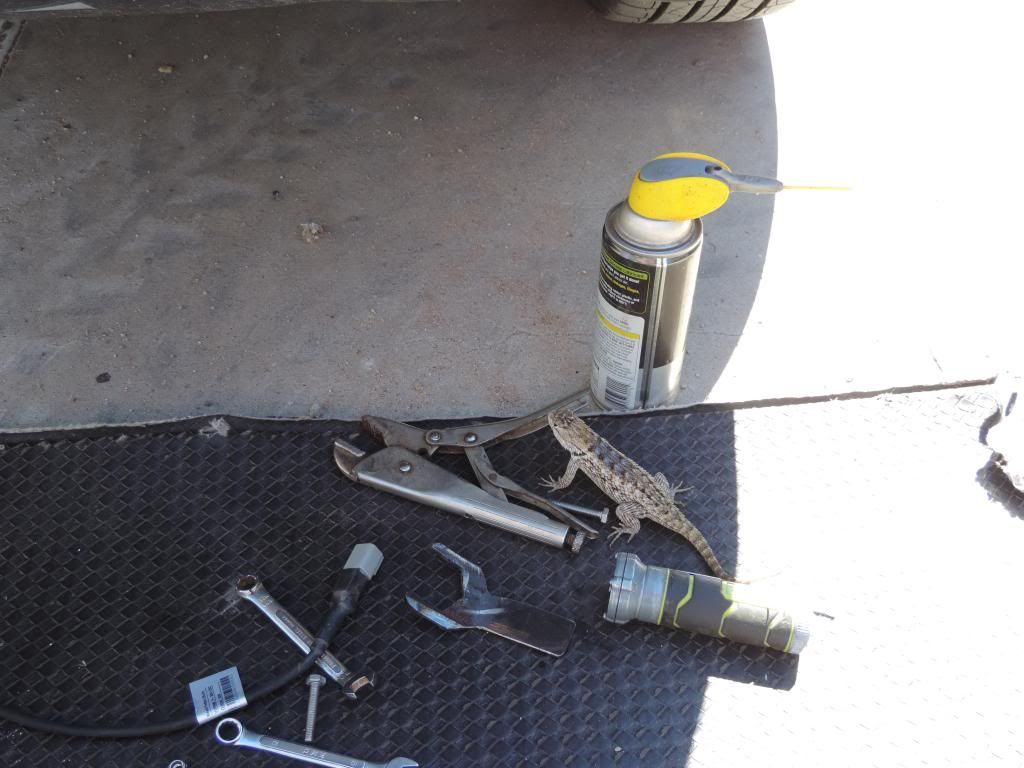
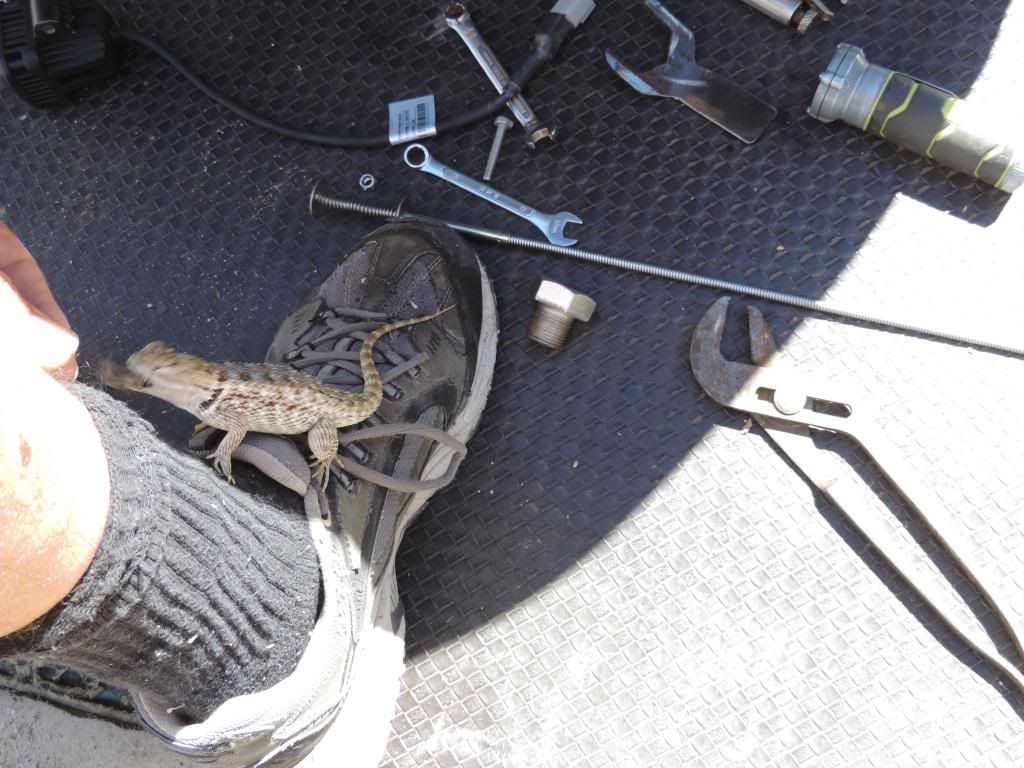
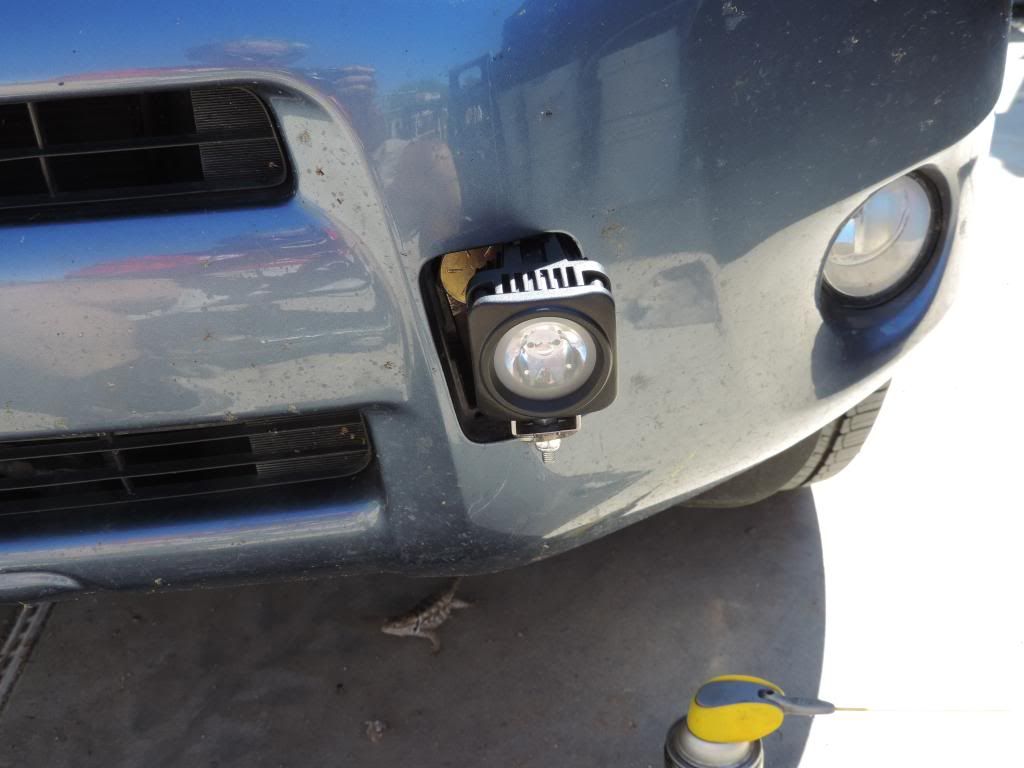
Did you see my photos of our black coachwhips? I taught a young female to take mice of tongs, until she would crawl up my leg for food, She then took a young mate, a small male, both were not sexually mature, he learned to do the same, only faster. Nothing special so far. The next year, they returned and she cycled, when she did, she attracted five young boys. All fed off tongs without being trained to do so. Interestingly, she copulated with the original male and produced three clutches that year. All of this is recorded with both notes and pics. I also do that with roadrunners, and they were exactly alike, the new ones learned from watching the one that was trained. Also with Magisters scalys, In fact, I am working with a new young scaly now, shes my mechanic. Does my work for me. have pics of that too. So don't tell me, they don't learn, if they can install my off road lites, then surely the other stuff is easy.

here she is checking out the job at hand.

I have to pay her first or she will not work

finished product.
I have done this with rattlesnakes, coachwhips and many species if lizards and roadrunners, all wild animals to start with. I really does tell they can learn to work out of their genetic box. Those bio boys, need to get their arses out more. push the limits you know.

mwentz Sep 25, 2014 04:46 PM

Cool thread guys!

I am learning a lot.

Hey can your mechanic change a timing belt? I will gladly pay him in roaches or crickets.

FR Sep 25, 2014 05:30 PM

She said, both crickets and roaches, and she's good at working in tight spaces. Thanks

AaronBayer Sep 26, 2014 09:53 AM

yeah, I remember seeing your pictures feeding the wild coachwhips, which is incredible in my mind.

one of my kids spends countless hours in field near my house chasing/ catching lizards. I showed him these pics and he's convinced that you're a lizard god for being able to hand feed a wild one. he's going to begin trying it this weekend.

FR Sep 26, 2014 10:41 AM

oh my, FR 2.0, the world is not ready, hahahahahahahaha. Tell your son, do approach with intent, approach them as if it does not matter, almost ignore them. Do not make direct eye contact. Never chase them. All of that threatens them. Then let them come to you.
Its a bond of trust first, then apply reward training. Give the animal a reason to be your partner.
With these lizards and snakes to a lessor extent, just want to be around you. They want to watch you, see what your doing, be part of it. Got me, its just what they do.
All the reptiles that I worked with in the field, always position themselves to see.(when not down in deep shelters. When in deep shelters, they are normally with eachother.

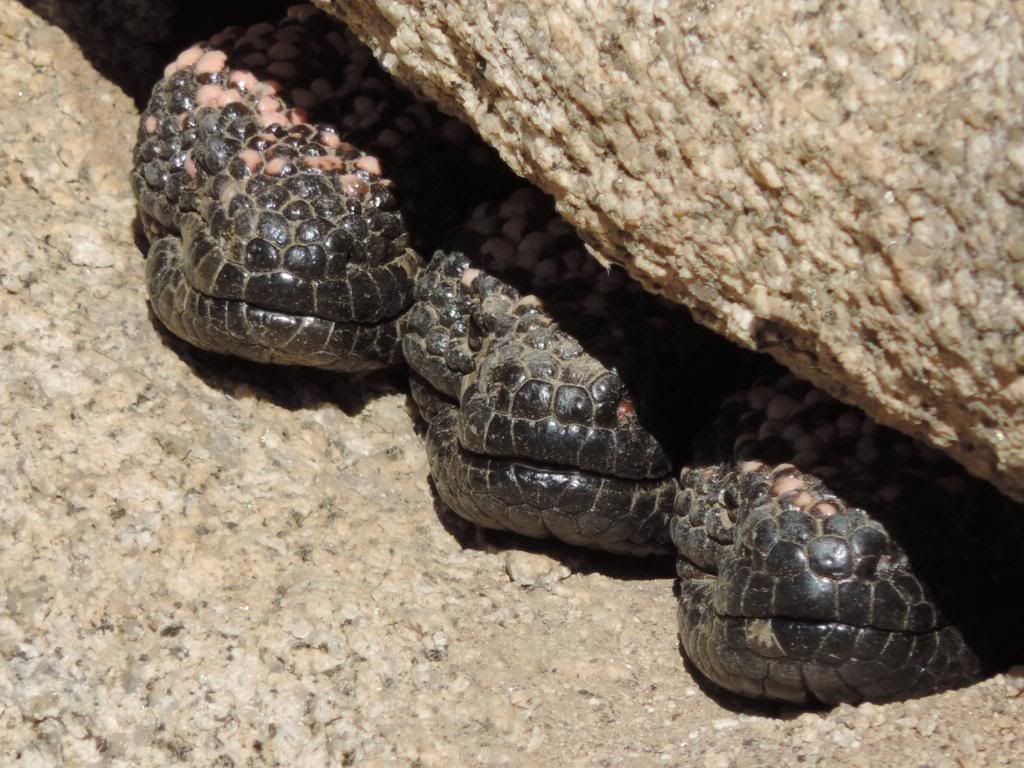
These three gilas, perch in the elevated crevice, which is shallow and goes no where. They sit there day after day, watching the other gilas below them and the valley beyond. Why you ask? got me, they just do.

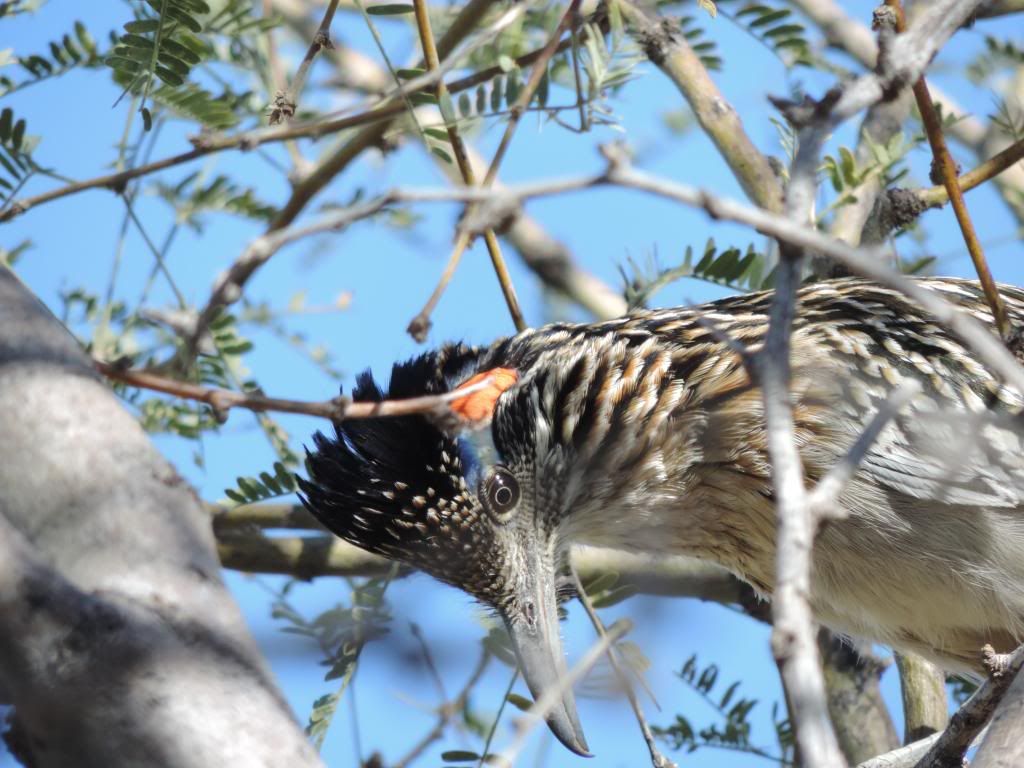
This is a totally wild roadrunner, I saw it running down the road, so I called it. It quickly turned around and came up to the car window to have a chat. I have never seen this animal before.

FR Sep 26, 2014 10:42 AM

Don't approach with intent. sorry had to get that one right.

DavidM85 Sep 26, 2014 03:31 PM

I have a garden in the front of my yard that is covered in brown anoles they have gotten so used to me just walking in and out of my house and gardening around them that they don't care and I can get within inches of them.

DavidM85 Sep 19, 2014 03:34 PM

Okay what am I missing in my husbandry FR?

FR Sep 20, 2014 09:42 AM

I think you addressed Aarons problem, by supporting your snake with deep substrate, you allowed the snake to not be attacked from the top. And to protect itself in a natural way. After years and years of pit tag studies in nature, you quickly learn that snakes retreat into holes, then quickly turn around and face you with only the business end. Snakes are kings of "in the ground" on the surface, they are at risk. In captivity, keepers think, they live on the surface. They keep them in open air, no place to hide, which by itself is physically and mentally demanding.
ALso, keepers need to learn what snake insanity is, not accept it as normal. Any animal that does not defend itself is INSANE. Try to address that insanity, and not support it. I hope folks attack this paragraph. Best wishes and good job.

p.s. Aaron, you know I like your approach and respect you. I hope you take your intellect and think about this. The real problem, not preventing the results from captive insanity. a snake allowing itself to be chewed to death(piss poor method of killing) is not normal, its insane.

DavidM85 Sep 19, 2014 03:31 PM

Yeah I did, and I have always heard of people having the snakes torn up by feeder rodents. And it happened to me when I was young with a ball python. But this snake can stay underground and it has a strong feed response.

I did use a young SFR.

FR Sep 20, 2014 02:44 PM

ASF's are nasty nasty rodents. And snakes love them.

DavidM85 Sep 20, 2014 03:20 PM

I am going to switch over to mice eventually I just like my rats personality wise.

Site Tools