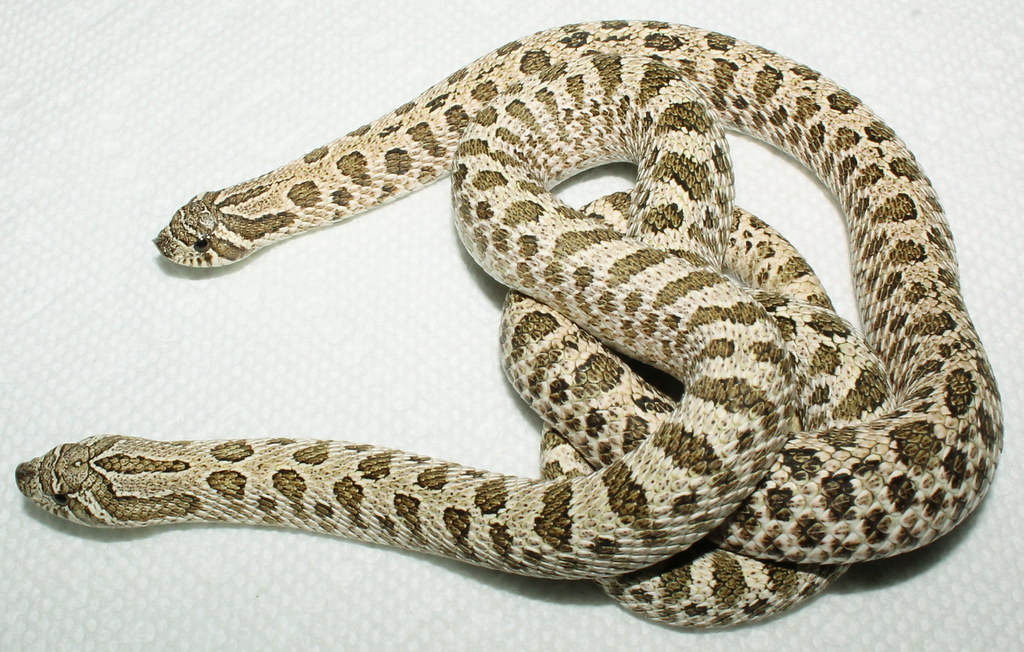
The are both over 60 grams now. Cant wait to pair these two up next season to make supers... This is probably the best morph to hit hognose snakes yet.
Welcome to kingsnake.com's message board system. Here you may share and discuss information with others about your favorite reptile and amphibian related topics such as care and feeding, caging requirements, permits and licenses, and more. Launched in 1997, the kingsnake.com message board system is one of the oldest and largest systems on the internet.


The are both over 60 grams now. Cant wait to pair these two up next season to make supers... This is probably the best morph to hit hognose snakes yet.
I understand, I am prejudiced because these are mine, but I do like my white axanthics better. Your artics can be found normally in the field here. So can my whites as I found them. hahahahahahahahaha
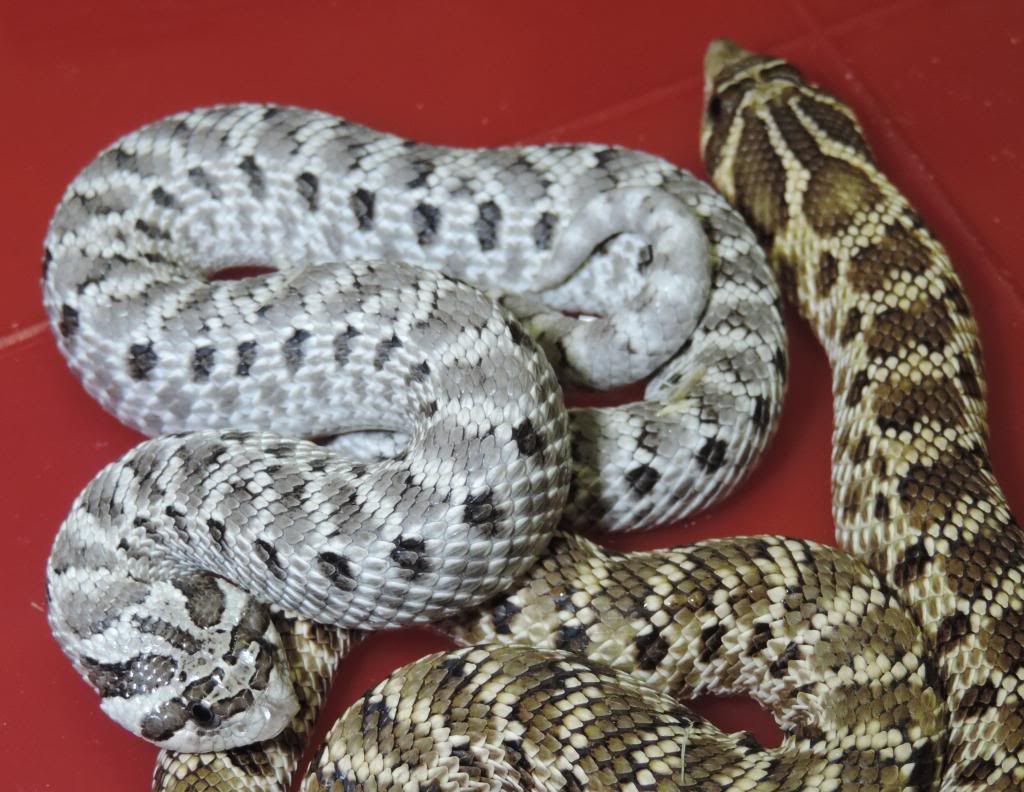
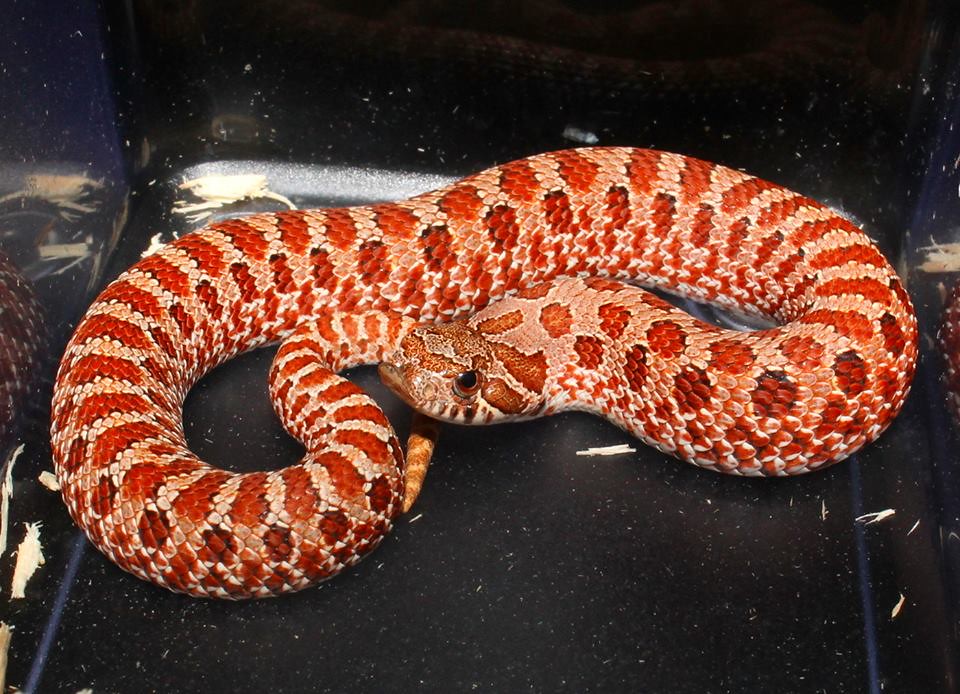
ALso heres a pic of a red hog I purchased in 04 or 03, that was sold to me as a red hog. Now days the red hogs are not so red
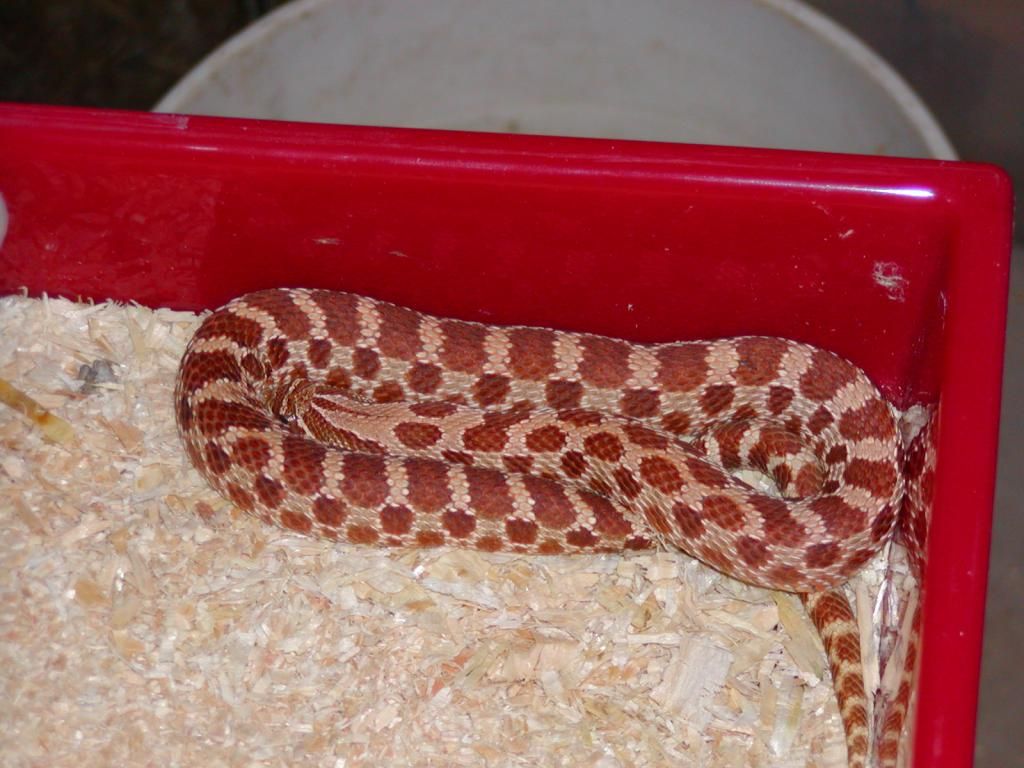
I had a pair of these red ones, but sadly I did not keep them, varanids you know.
Those are really nice. I will find some pics of local hogs that are as lite as those artics. Cheers
Hey Frank, any chance you can capture a pair of Arctics and send them to me? I will pay shipping. 
I can't wait until I can one day afford one.
I agree, one of the best morphs for sure.
First, the snake you posted looks nothing like a JMG axanthic and could not be more genetically distant from eachother.
Your axanthic kennerlyi are very nice indeed but it is a recessively inherited trait. The JMG axanthics are a co-dominant morph that produces a super form. Again, your axanthic kennerlyi are awesome but those and the snake you posted will never produce a snake that looks like this.

Gregg, I never said they would. I said, I think my white axanthics are nicer then the ones you posted and I also said I am prejudiced.(as I should be)
I also mentioned they're normal lite animals on my site that are, in my opinion nicer looking then the ones you posted. They have a much liter background. I have no idea what the supers look like. Post a pic of one.
My bet is and the future will prove it out (or not), my white axanthics will produce much liter animals, then they are. Again, time will tell.
Please understand, I am new and not tied up in genetics. It appears many western breeders are as interested in the genetics as they are in what the genetics produces. I could careless if the genetics are co-doms or recessives or whatever, what interests me is the final result.(at this time). The genetics are only the way to get there. If you have an incredible animal, I could careless how it came about. Thanks so much. Cheers
Frank,
These are your exact words.
"Your artics can be found normally in the field here."
The fact is, my arctics CAN NOT be found normally in the field where you are because they do not carry the genetics to produce a duper form. So the end result with the animals you have in the field will not equate to the same results I will get with my arctics. I don't care how light the individuals are that you can find in field. Breeding them together will never create a super form that has a bleach white background color with black tiger striping and distortion of the face mask. I also forgot to mention the blackening of the iris giving the eye a jet black marble appearance.
On top of all that, please show me a photo of an animal from the field that even vaguely resembles what I posted in this thread.
Here is a super arctic/JMG axanthic. The end result.
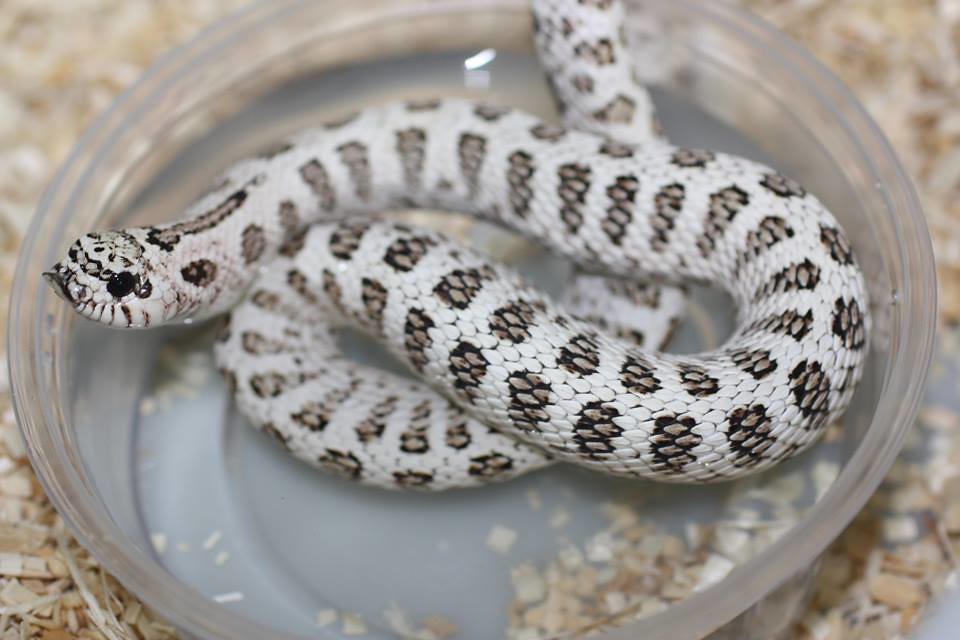
Photo by Jeff Galewood
Wanta fight, Holy moly Gregg, ones that "LOOK" like those.
That is lite animals with lite markings. And what is a super, white? And of course a pair of white type wild phenotypes will indeed produce both liter and darker offspring.
ALso, my axanthic whites, the axanthic morph of normal whites, are founders and as such will benefit from captive line breeding, just like the animals your talking about.
My opinions are based on being an outsider, I have no interest in westerns, so I get to look at them from a third party view.
It seems like a race to make names, more then a race to make morphs. Greens with little to no green, reds that are not red, etc etc. And artics that are not white. Its not based on you Gregg, its based on the ones I see at shows, and the internet. At shows, the deli cups have all manner of names and contain "normal looking" hogs.
So I ask, when am I going to see a hog that's actually green and not have some green tinges, at least yours have tinges of green, others have zero. Or Reds that are red. etc.
I will say this, from a conservation point of view, I thank you guys for what you've done, I would guess that at least 90% if not more of all captive western hognose, are captive bred and hatched, that sir is a wonderful job. So all this promotional naming that goes on, that makes me scratch my head, Is a wonderful thing. So thanks so much for that, in the mean time, I will keep looking in deli cups and scratching my head, waiting for a green, green, or a red, red, or a white, artic. And no Gregg, I am not here to argue genetics, all in all, genetics is a means to an end, I am waiting for the ends. Thank again sir
Frank,
You should know me better than that by now. No, I am not looking to fight with you at all. Just making the point that you can not have the same outcome with your axanthic kennerlyi as I will breeding 2 arctics together. You will also not be able to make axanthic kennerlyi if you breed a visual to a normal. However, if you breed an arctic to a normal, statistically, you will get half a clutch of normals and half a clutch of arctics. When you breed arctic to arctic, you get 25% normals,50% arctics, and 25% super arctics.
And the other point was, you can not compare the animals you find in the field with the arctics because of the fact that the arctics are a genetic mutation that is reliably reproducible and can be calculated on the punnett square. The same can not be said for wild type variation or polygenic trait like red and green coloration which are commonly found in the field.
With that, here are some greens and reds for you to check out. Yep, there are some of us who do still have the real deal...
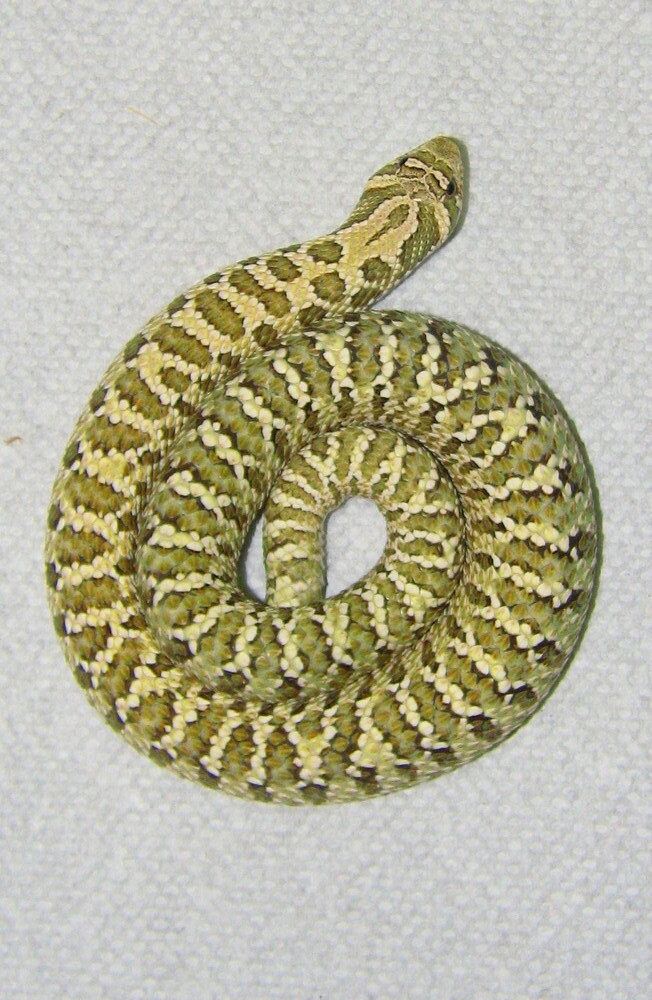
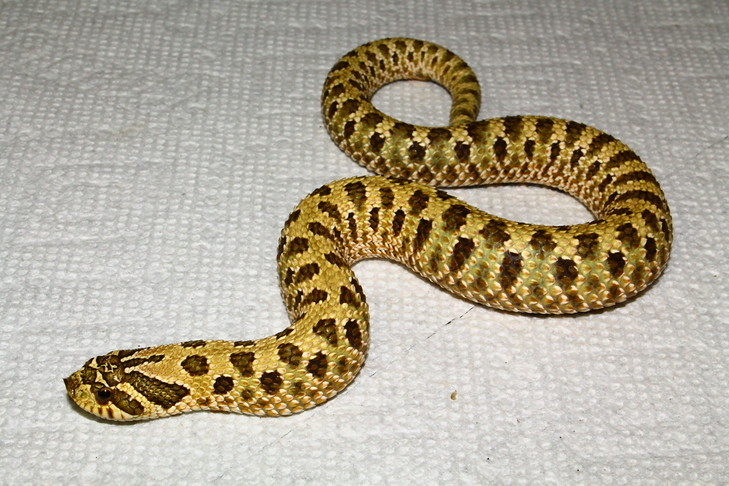
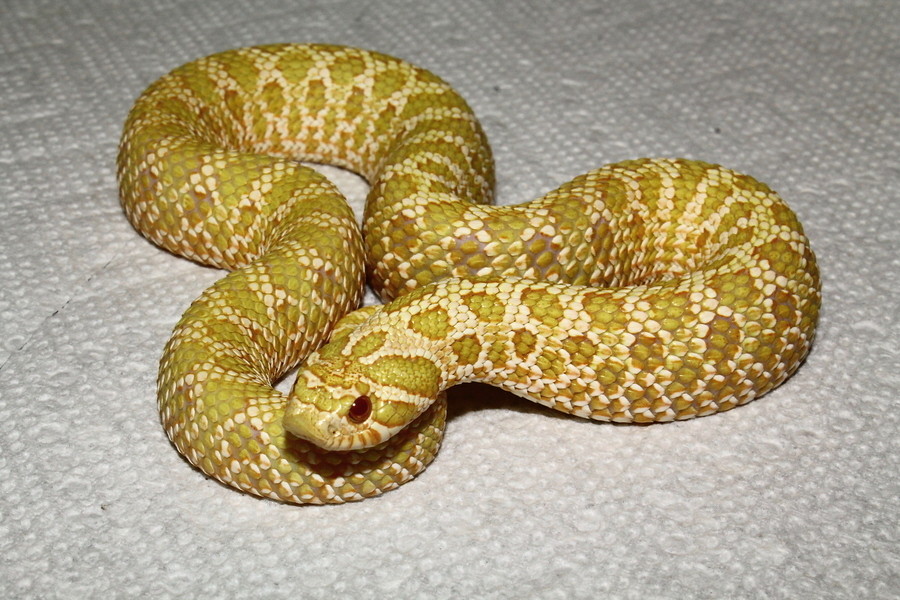
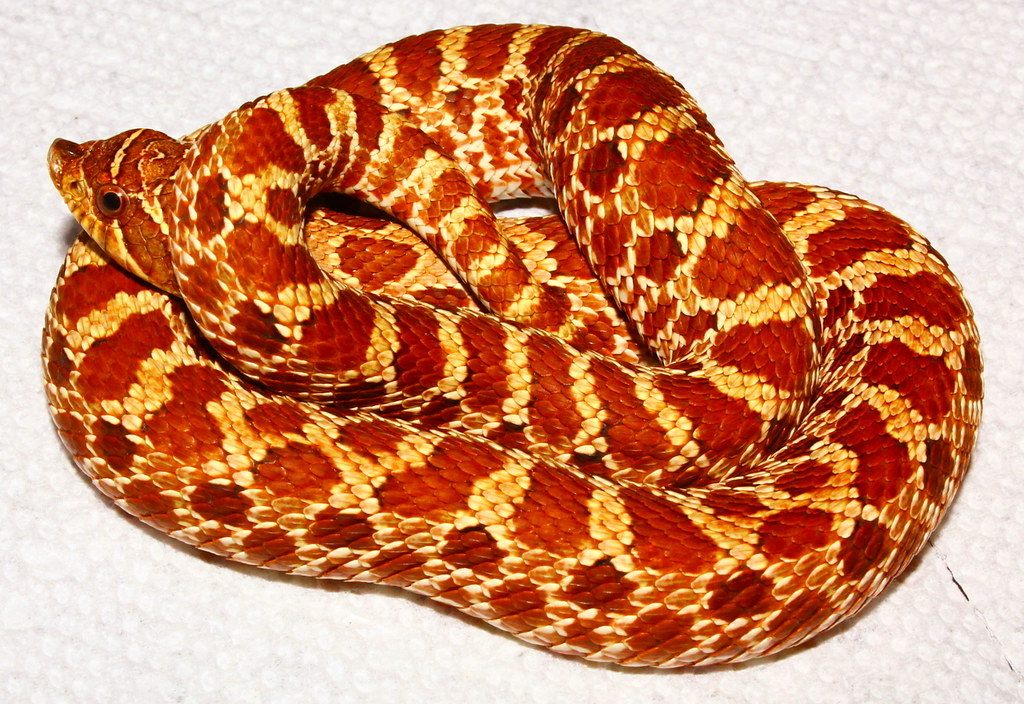
Gregg, all the morphs you work with, the genetics came from nature. In the population I am working with, aprox. 85% are normal looking, with the remaining 15% representing a few morphs, and because they regularly occur, they must be genetic. Of those morphs, there are Reds, yellows and whites. A few hypos, and of course a few axanthics.
The genetics of how these occur I would assume will be similar to what was seen in Westerns. Some recessive, some co-doms, etc.
Of course, westerns were exactly the same.
I do assume that when these morphs are bred out, you will see the same things occur that are now seen with westerns.
I should have kept or collected a pair of each and placed them in breeders hands. I did keep some axanthics and a couple of other morphs. My son commonly yells at me for not picking up the others(I show him the pics) My problem is, I hate taking animals out of nature, so I took as few as possible. I keep telling myself to pick them up, but I just can't seem to get myself to do it. Also I do not take breeder adults, no matter what they are, they stay(all bets are off if an albino or leus. pops up) I am hoping to see a black one, as one was found at another local. A herper saw it get hit. So what I am saying is, there is no way for you to know the genetics of wild morphs. As a field guy, we understand that genotype includes lots and lots of potential.
Can we see some of those pics?
And I keep offering to take some of those axanthic Mexican hogs, but you never answer me. Haha.
But you are running into what everyone else runs into with FR, a complete lack of understanding of basic science. It's painfully obvious to everyone that this understanding eludes him based on his defence of his ignorance in the previous posts. For someone that is doing "research" on hogs you would think he would have the most basic of knowledge on genetics and how they occur. Even FRs axanthics cant really be called that until he finds out if they are a recessive, codom or dom trait. Wonder how long it will take him to figure out how to prove that out without a working knowledge of genetics.
Nice Arctics btw. Cant wait to add them to my collection some day. Im really looking forward to the combos that will be made with them. Im wondering if they will make a snow and how they will turn out. Expecially the super form of a snow. Hoping it turns out all white like the lesser lucy and codom form has a pattern.
One would assume, seeing as he bred axanthic to axanthic and got all axanthic babies, that it is recessive.
-----
"What is man without the beasts?
If all the beasts were gone,
men would die from great loneliness of spirit.
For what happens to the beasts,
soon happens to men.
All things are connected."
-Chief Seattle (Duwamish Tribe)
www.youtube.com/reptilenexus
Talk about a lack of understanding. Axanthism is simply a lack of yellow pigment. Whether it's inherited as a recessive trait, dominant, or co-dominant has nothing to do with it. Axanthism can and is also inherited in a polygenetic fashion, through the selection of animals from a particular location because mother nature favors a lack of yellow for whatever reason. His animals clearly lack yellow, so they are axanthic. The type of inheritance is certainly of interest, but it absolutely does not reflect whether they are axanthic or not. You might consider getting your own facts strait.
Will
Axanthics In the hognose interpretation, lack yellow and red. And my animals fit that bill. Other areas like sand boas and ball pythons have their own definitions as well. Or so it seems.
The Hogs from my area seem to carry yellow, red, and black.
Mine are lacking all red and yellow.
Theres a lot of weirdness in the hog keepers union, as many of the western hognose axanthics are BROWN, which must include red to occur. In the trade, axanthism is actually based on belly color, not so much the dorsal colors. They could careless what snake appears like, as long as it has a black and white belly.
So yes, my axanthics are totally lacking red and yellow and have total black and white bellies.
The crap they post here is to disparage me and nothing to do with the snakes.
The reason is, and its what they feared most. They feared I would do what I did with varanids, I would DO SOMETHING. And I have and will continue to do so. They do not want an outsider coming in and changing things, they liked it like it was and they worked hard to keep it the way they wanted it. The first day I posted here, It was explained to me. They keep the "bad guys" out. They did not know yet, I was as bad guy. That took about a week.
Wonderful animals Gregg, your reds deserve their name. The greens, while yours are as green as I have seen. No others even came close to yours. Put it this way, when your greens are as green as your reds are red, I will be all in.
So the question is, is the ones being offered for sale, not genetic greens and reds, or just poor quality individuals? Or are they simply misrepresenting them?
"So the question is, is the ones being offered for sale, not genetic greens and reds, or just poor quality individuals? Or are they simply misrepresenting them?"
Thanks for the compliment Frank.
To answer your question, I think it is a combination of all your point.
The reds and greens for the most part are polygenic traits that are not reliably reproduced. Or not as reliable as lets say recessive, dominant, or co-dominant genes. So you will see a wide variation within a single clutch. Some lines are stronger than others and will be more reliably produced.
So the ones we see for sale for the most part are not the best of the best. I am somewhat of a hoarder when it comes to what I produce so the best animals in my clutches usually stay with me. I will sell off the ones that I do not feel with improve my personal projects. While the ones I do sell are really high quality, the ones I keep for me are even higher in quality.
And one of my pet peeves is people misrepresenting their animals. The problem seems to stem from people being caught up on line names. We often see ads for extreme reds that are not even close to being red. It just perpetuates as people get into the line name and are not paying attention to what is actually going on with the animal itself. They will still call it an extreme red even though the animal clearly is not red. Pretty sad in my opinion.
I like to see how brown the red hogs are. Maybe its the camera.
Your axanthics are awesome, very light.
Thanks, I was very lucky to find both normal and lite axanthics. A sexual pair of each. On they site, the super lite normal hogs are fairly rare, so finding a pair of axanthics of that type was indeed fortunate and saved a lot of work.
The day I decided to keep the next lite normal, I found the first lite axanthic. Its my son who is really into morphs. He was yelling at me for not keeping some of the really nice/odd non-axanthics. I said, I know we should, but I make up reasons to not take snakes from nature. Anyway, in the future, I hope to see how recessive and polygenetic works. Or would it be recessive and co-dom.
Nasicus,
You said this.....
"The real test if they are a true genetic axanthic is if they make a snow.
Can't wait to see how long it takes him to figure out how to do that since he doesn't understand genetics."
That is not the real test to see if Franks axanthic are genetic. He already did the real test by breeding them together and producing more axanthics. While it will take more breedings to see how it is being inherited, chances are it will be recessive based on the results thus far.
And making a snow by adding albino to the mix will not determin if an axanthic is an axanthic. My buddy Troy and I have talked about this topic extensively on the phone and touched on it again because of this very post last night. We both conclude that Just because one gene is recessive to the normal wild type gene, it does not mean it can not be dominant, recessive, co-dominant, or incompletely dominant to another gene. Past breedings with other species has proven that adding albino to axanthic does create a snow, but it is not the rule. You can have a double homozygous albino axanthic and the albino can technically be dominant over or recessive to the axanthic gene not resulting in a visual snow.
Hi Mark,
I agree, most, if not all of the "red" hogs in the classifieds are crap. I don't know where folks get off with such false advertising. It must be that they are of reddish genetics or some nonsense. Anyway, the red ones that Frank and Gregg posted are the reddest I've seen. That is the form that I am most interested in and as of yet, most disappointed in. Thanks.
Will
Help, tips & resources quick links
Manage your user and advertising accounts
Advertising and services purchase quick links
