Unfortunately, I am limited as to how many I can keep, So I have not picked up some real interesting individuals.
But I did pick up these two "normal" As they are surely not normal. But not albino or axanthic in the traditional use of the words.
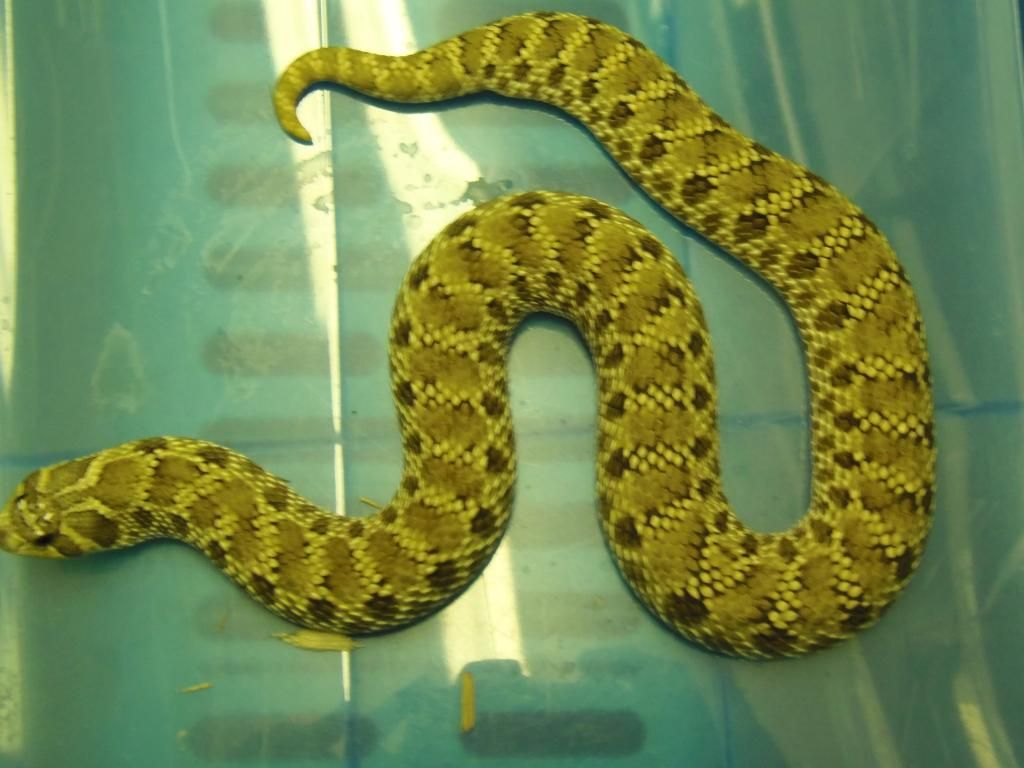
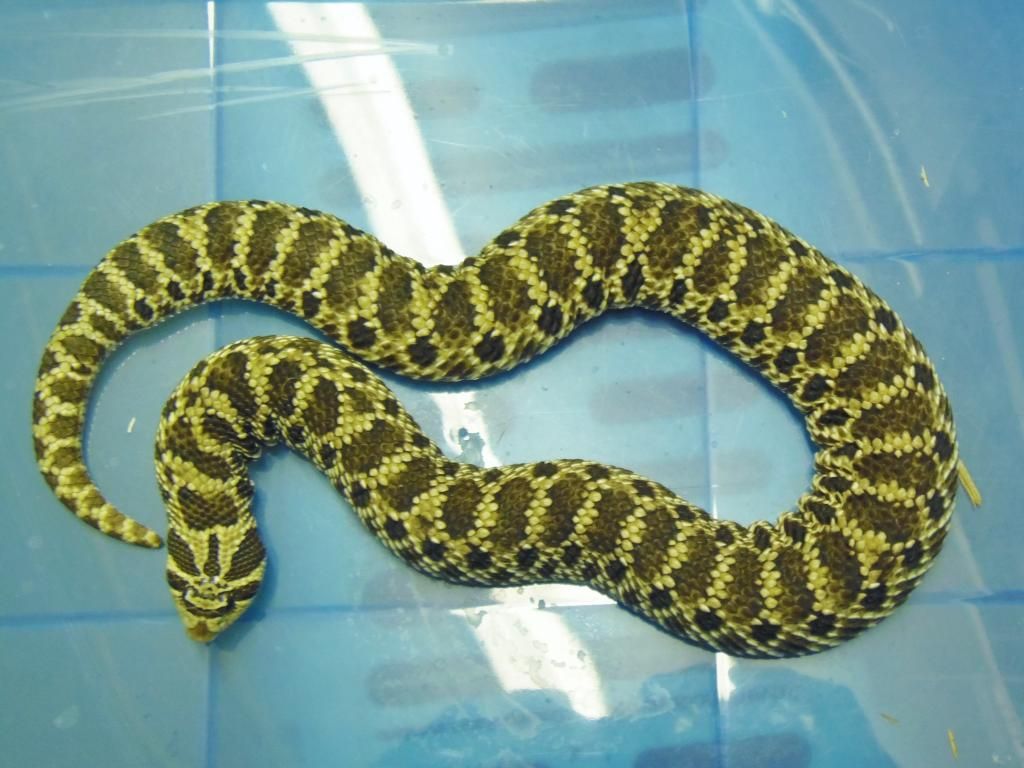
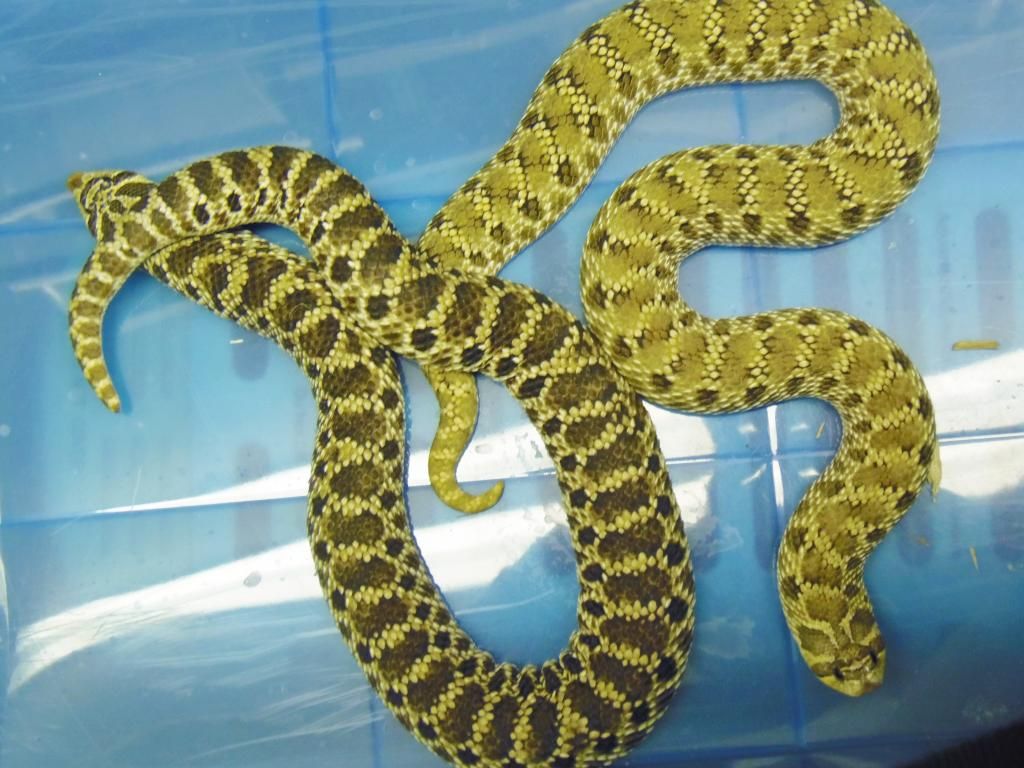
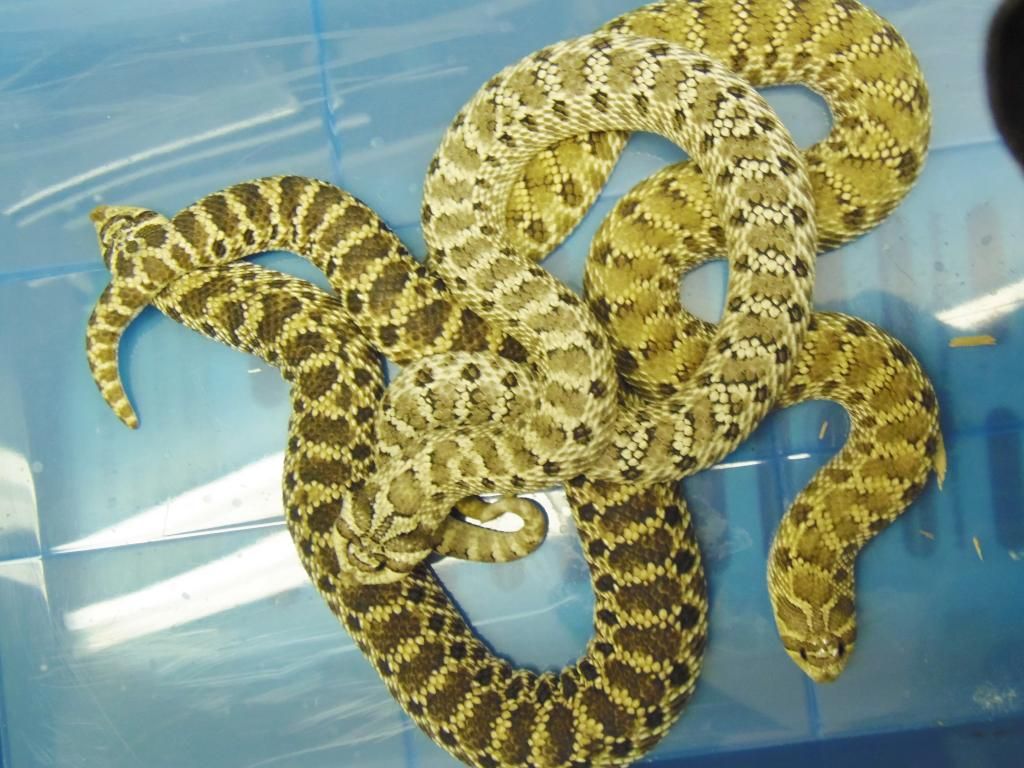
So Gregg, what the heck are these, both show yellow and no red or even brown. Both are black and yellow bellies. No orange or red. And both are extremely rare, much more so then axanthics in the population. I have two of the dark ones and maybe four of the yellowish ones. And the one above is not as yellow as I have seen. I simply decided to pick up the next one. The other pic includes an axanthic female. All are females, as I am sure you can see. I would include a normal, normal, but I do not have any.
The vast majority are greyish to brownish from this local. And I mean vast majority. Normals for that area, show black, yellow and orange bellies.
Reptile & Amphibian Forums
Welcome to kingsnake.com's message board system. Here you may share and discuss information with others about your favorite reptile and amphibian related topics such as care and feeding, caging requirements, permits and licenses, and more. Launched in 1997, the kingsnake.com message board system is one of the oldest and largest systems on the internet.


Some kennerlyi oddballs for Gregg
Replies (14)
First, those are really nice and not colors I have seen in kennerlyi up until right now.
The only thing I have to compare it to are the "blond" or yellow phase westerns. Even the polygenic trait known as the "lemon ghost". Here is a photo.

Wow Frank,
They both look hyper xanthic, and that outrageous top one looks hypomelanistic too, with its faded dorsal blotches. In a couple of generations you could have mustard yellow Mexicans. Very nice.
Will
Will, the fade dorsal does not make it look hypo. Faded patterns in kennerlyi is fairly common. In order for it to be a hypo. It would have to have a reduction in melanin, not pattern. A hypo will have grey where there should be black. With that being said, I would agree that it appears to be hyperxanthic. Which to me is much cooler than hypo. All Frank needs to do is find an albino.
Gregg,
Great points. I was so taken by the yellow, I didn't notice the full colored lateral blotches. Upon re-examination, I agree, not hypo, but awesome, none the less. Thanks, man.
Will
Yeah, that yellow is pretty eye catching for sure. I would not mind producing even westerns with that coloration.
Hi Gregg,
I certainly defer to you in the subject of hognose coloration, and I have a couple of questions:
Would you consider that light patterned, yellow animal to be hypoish if the lateral, face and belly blotches were as light as the dorsal blotches? I ask because that would seem to indicate a reduction in overall melanin (which the general term hypo implies).
I know that the term hypo in hognose lingo refers to a very specific appearance, however across the spectrum of herps, the term hypo means different things depending on the type of animal in question. In some cases black is replaced with lavender grey, or lavender brown and in other cases black is replaced just by lighter shades of grey and brown, or the black pattern elements are just reduced in size. Again, depending on the animal.
In hypo hogs, is the iris and pupil of the eye affected as well? Thanks Gregg. I appreciate your insights.
Will
There is one more, many hobbyist call a captive line, hypos, even when in nature, normal phenotypes have many times less melanin. I do have a story, but its with pits. hahahahahahaha
I do not know a lot about westerns. But I am gaining experience with kennerlyi.
With kennerlyi, there appears to be three separated areas on these hogs. As far as color and pattern. The top can and does vary from the sides which varies from the ventral color and pattern. These areas can be uniform to eachother, or not. For instance, in my area, hogs can commonly be axanthic on the top and sides, but have lots of red and yellow on the belly. Some hogs show little black on the sides and top and have total black bellies. Or black on the top and browns on the sides, and all three colors on the belly.
Also, our hogs are interesting as the blotches, brownish with black borders, can and do reverse, and become just about anything up to brown with black X's in the middle of the blotch. Or grey with same. They're goofy, sums it up. hahahahaha.
my problem is, I am limited to what I can keep, So my approach was to keep some axanthics and a couple of goofy females to add into that line.
The problem is, I did not know, what the heck I was going to see. Such animals as this mustard individual, deserves to be line bred, as do some of the others. But again, I am limited as to what I personally can keep.
So as you can see, I picked up females and no males to these morphs. which was a bit wrong.
And I am not even talking about the red individuals. This year, I found but did not take, a sexual pair of reds. hahahahahahahahaha I suck but at least those snakes are still toad feeders. hahahahahahahaha that is, still wild.
Heres the problem, the mustard doe not have normal side markings. Hmmmmmmm I ask questions here because I do something to ask about. When I ask about how does an exanthic have brown. I ask for a reason.
It appears hogs can make Brown, without yellow or red. If you look close, the brown on axanthics is a weird brown. It normally occurs on the head and tail. If you look at normal hogs, the brown on the tail sometimes does weird things, maybe a way to describe it is, Hollow brown.
That mustard is indeed a hypo, that is, its lacking a high degree of melanin. Where black would be on a normal, it has brown. And black borders and black on the mid side spots, is very normal. In fact, its how I find them in the field. I can see the rows of black dots at distance. Of course, it does have melanin, just much less then normal, which is what hypo means.
The next problem is, it may not be a good Idea to compare kennerlyi oddballs to existing nasicus morphs. As its possibly a whole new ball of wax. But then it may not be as well.
There is no question, some of these are lacking only red, but then that has to be improved(and proved) genetically, right?
Some of my disagreements with Troy was over this, nasicus morphs were established with far fewer founders that I am looking at. An example is, nasicus axanthics were established from one, possibly two founder snakes. I have seen 8 wild axanthics, and as shown, of different color types. Folks like Troy are prone to be bible thumpers, that is, force what they know on others. When in fact what they know is very limited. That is based on very few animals.
So here we are with a new gene pool, which may or may not be similar to nasicus. particularly in non recessives. pt1
Back to the hypo question, The mustard, is a yellow hypo(reduced black and lacking red(=darker browns), by using the trade term, visual. Its visually a yellow hypo. I have seen several normal hypos(yellow/red hypos) but did not pick them up. They were visually orange brown, lacking all Black markings. They were not the nicest looking hogs, but were indeed lacking dorsal black.
So I ask, with nasicus hypos, do they have black on their bellies??? fun stuff hey? So, snakes like Evans hypos, they are lacking black and yellow, correct. Do they have black on their bellies?
To confuse things(me) even more. I have seen several individuals that appeared patternless until you took their pics. In pictures you could see markings, but by the naked eye, markings were almost non visual. I hope this makes some sense.
Again, I have to use two approaches, one, what folks do with nasicus morphs, and two not doing that, as the genotype of these animals in unique from nasicus. That is, it may not be the same at all. My guess is, 75% 25%. That is, 75% will cross over, with 25% being unique to kennerlyi. That's just a guess.
Frank,
Here is the confusion. The Evans hypos are not really hypos. They are a type of amelanistic. It differs from the classic or T- "albino". The Evans "hypo" does not show any level of melanin but it does express a copper containing enzyme called tyrosinase. That is why the Evans hypos have copper tones to them. And no, Evans hypos do not have black bellies.
Will,
I do agree that by definition, an animal expressing less than normal amounts of melanin can technically be called a hypomelanistic. However, this term is usually reserved for genetic mutations that take black away and replace it with grey, brown or light black when it comes to describing the trait in reptiles. Now, with hognose snakes, including kennerlyi, it is normal for them to have very little black to no black on the dorsal. The tell tale signs of it truly being a hypomelanistic would be if the belly is not black.
Thanks Gregg,
I particularily find that copper comment of interest. Years ago, I had a lavender albino eastern king that displayed copperlike tones dorsally. I found that odd, but never thought much of it. Having seen t albinos of many types, I was sure that was what was being expressed in this particular snake.
This is very interesting stuff. Thanks again.
Will
"prone to be bible thumpers, that is, force what they know on others. When in fact what they know is very limited."
Sir, that is a great line by the way, and I'm gonna use it.
Will
Will, Dang it, it sounds a bit rude and FR like when taken out of context. hahahahahahahahahahahahhaha Awwww it is what it is. And you can quote me.
Gregg, What would be of interest to me is, how many individual founders did it take to develop all the western hognose morphs? Not individual animals, but founders, the ones that came directly out of nature. My bet for nasicus is, very few. Maybe less then fifty. But most likely between fifty and a hundred. Since I have started this, I have seen over three hundred founders, including the unfortunate road kills.
